
Plush Toy Market Trends — What Is Driving Growth and Where the Opportunities Are
Plush Toy Market Trends — What Is Driving Growth and Where the Opportunities Are
Adult Collectibles · Anime Merchandise · Sustainability · DTC Growth · Therapeutic Plush · IP Licensing · Creator Economy
The global plush toy market has experienced sustained growth through economic cycles that have challenged other consumer product categories — a resilience that reflects plush toys’ unique position as both functional comfort objects and emotionally significant personal possessions. Understanding the structural trends driving this growth is essential for brands planning product development, market entry, and long-term investment in the category.
This analysis draws on KINWIN’s 17+ years of manufacturing experience across 1,000+ brands in 30+ countries — the pattern of what brands are commissioning, what is selling through, and where new buyers are entering the market provides a ground-level view of trend direction that supplements market research data with real commercial signal.
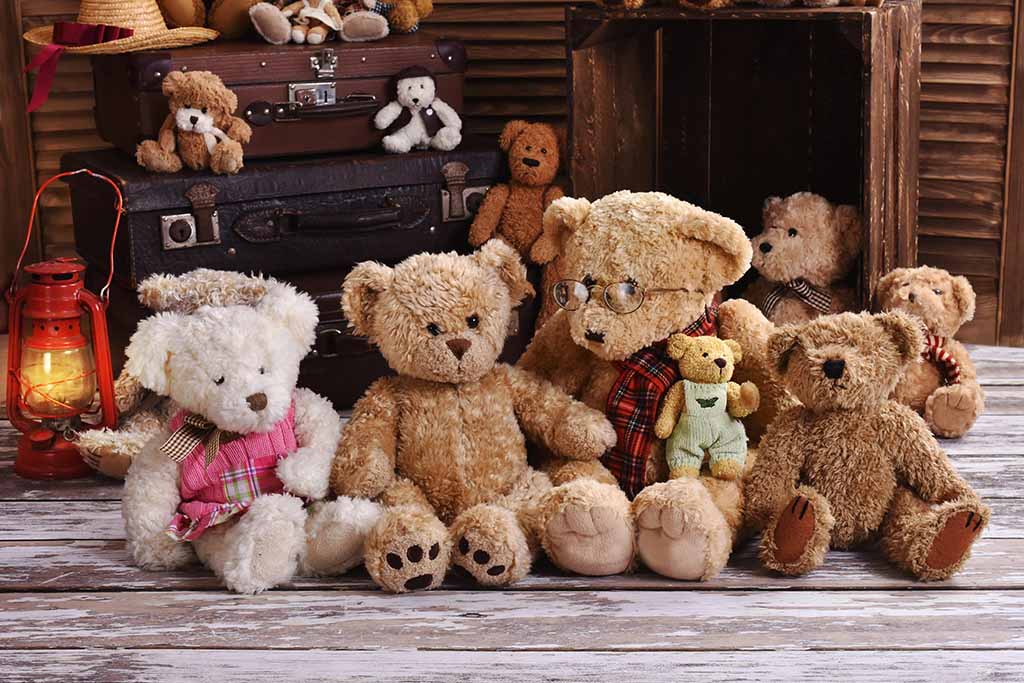
7 Structural Trends Driving Plush Toy Market Growth
7 Structural Trends — Analysis from 17+ Years of Manufacturing Across 1,000+ Brands
Trend 1 — The Adult Plush Collector Market Is Now Mainstream
Trend 1 — The Adult Plush Collector Market Is Now Mainstream
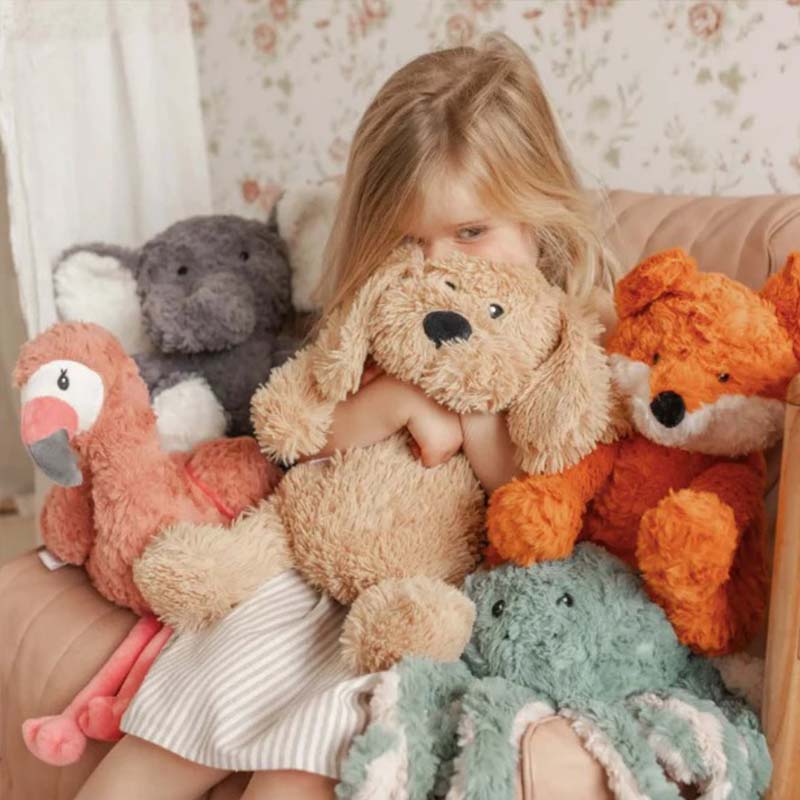
The most significant structural shift in the plush toy market over the past decade is the normalization of adult plush purchasing. Adults buying plush toys for themselves — not as gifts for children, not ironically, but as genuine personal purchases for comfort, collection, or emotional connection — has moved from a niche behavior to a mainstream one. This has fundamentally expanded the addressable market for plush toys beyond children’s toy retail into adult lifestyle, gifting, collectibles, and wellness categories.
What Is Driving Adult Plush Purchasing
- Mental health mainstreaming: adult comfort objects have become socially acceptable as mental health self-care gains mainstream acceptance — owning a plush toy is no longer associated with childishness but with self-awareness and emotional intelligence
- Nostalgia consumption: adults who grew up with branded plush characters — from 1990s-2000s cartoon characters to video game mascots — are purchasing adult-format versions of childhood favorites as collectibles and comfort objects
- Social media normalization: TikTok and Instagram content from adults openly sharing their plush toy collections has accelerated normalization — when millions of adults see other adults proudly displaying plush, the social permission barrier drops
- Anime and gaming culture: the global expansion of anime fandom and gaming culture has brought character merchandise — including high-quality character plush — into mainstream adult consumer behavior
- Gifting for adults: premium plush has become an accepted adult gift category — replacing flowers, candles, and generic gift items in contexts from Valentine’s Day to corporate gifting
Commercial Implications for Brands
- Product design: adult plush can be more sophisticated in character design, more premium in materials, and more nuanced in emotional expression than children’s toy market plush
- Positioning: adult-positioned plush is marketed through wellness, lifestyle, and collector channels — not children’s toy retail
- Price point: adult collectors and adult gift purchasers support higher price points than children’s toy retail — premium fabric and packaging investment generates stronger margin
- Social content: adult plush purchasers are active social media sharers — the product itself generates organic marketing if designed to be photogenic

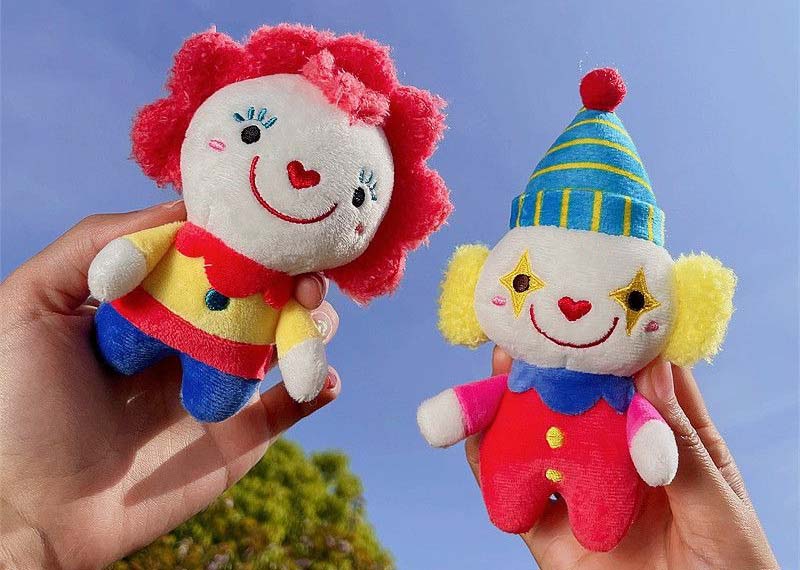
Trend 2 — DTC and the Creator Economy Are Restructuring How Plush Brands Launch
Trend 2 — DTC and the Creator Economy Are Restructuring How Plush Brands Launch
The traditional plush toy brand launch path — develop a product, pitch it to retail buyers, achieve shelf placement, build distribution — has been fundamentally disrupted by direct-to-consumer e-commerce and the creator economy. Brands can now launch a plush toy character, build an audience, and generate significant revenue before approaching any retail buyer — and many are choosing to remain DTC rather than pursue retail at all.
The DTC Plush Brand Playbook
- Character first: successful DTC plush brands build character identity and audience before the product is manufactured — Instagram, TikTok, and YouTube content creates anticipation and community around a character before the plush exists
- Crowdfunding validation: Kickstarter and similar platforms allow brands to validate demand and fund production simultaneously — a 500-piece minimum order becomes viable when pre-orders have already funded it
- Low MOQ manufacturing: accessible minimum order quantities (KINWIN’s 500-piece minimum) allow DTC brands to launch without the capital requirements that previously limited plush toy entry to established companies
- Social commerce: TikTok Shop, Instagram Shopping, and Pinterest Product Pins create direct purchase paths from content — a video of a character that goes viral becomes immediate sales
Creator Economy and Plush Merchandise
- Content creators — YouTubers, streamers, podcasters, illustrators, and social media personalities — have emerged as a significant and growing buyer category for custom plush toy manufacturing
- A creator with 100,000 loyal followers launching a plush character of their persona or mascot can sell through a 500-piece order within days of announcement
- This category is characterized by relatively small individual orders, high brand specificity, and rapid repeat ordering as sell-through confirms demand
Trend 3 — Sustainability Has Moved from Differentiator to Expectation
Trend 3 — Sustainability Has Moved from Differentiator to Expectation
Consumer demand for sustainable products has shifted in the plush toy market from a premium differentiator to an emerging baseline expectation — particularly among adult purchasers, DTC brands targeting younger demographics, and retail chains with published sustainability commitments. Brands that could previously ignore material sustainability are now facing buyer questions, retail supplier requirements, and consumer pushback that make sustainable materials a commercial necessity rather than a brand positioning choice.
Key Sustainability Developments in Plush
- RPET fabric adoption: GRS-certified RPET pile fabric — made from recycled plastic bottles — has become commercially mainstream as a material option, with cost parity to virgin fabric increasingly achievable at volume
- Recycled fill: GRS-certified recycled fiber filling is now available at standard production volumes — eco-positioned brands can achieve a fully recycled bill of materials
- FSC packaging: FSC-certified paper and cardboard packaging has become standard practice for sustainability-positioned brands — low-cost addition to any program
- Greenwashing scrutiny: EU Green Claims Directive and equivalent regulations in other markets are increasing the scrutiny of vague sustainability claims — brands need certified, substantiated claims rather than generic ‘eco-friendly’ messaging
What Sustainability Means for Product Development
- Brands developing plush toys for the 2025+ market need to build sustainability credentials into the product specification from the start — not retrofit them after design
- The materials decision (RPET vs virgin fabric, recycled vs standard fill, FSC vs uncertified packaging) is a Day 1 product brief question, not an afterthought
- Brands that treat sustainability as a core specification requirement rather than a marketing layer will be better positioned as retail buyers and regulators increasingly require substantiated credentials
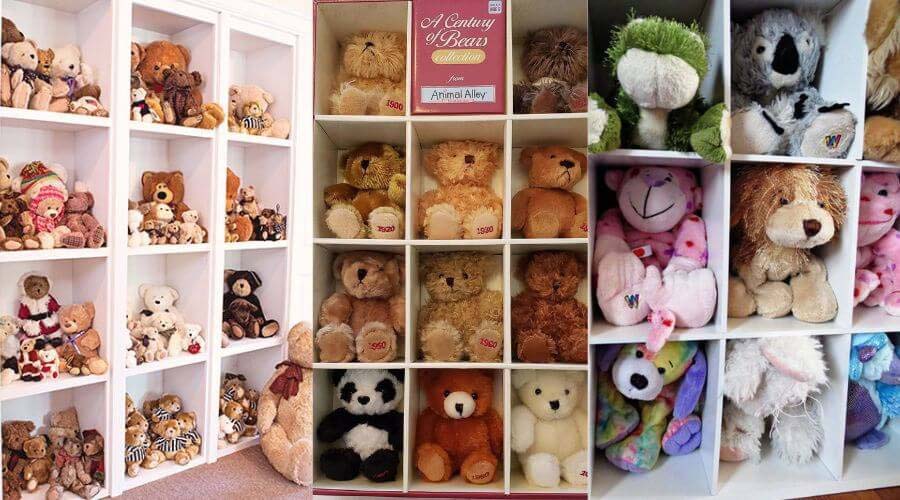
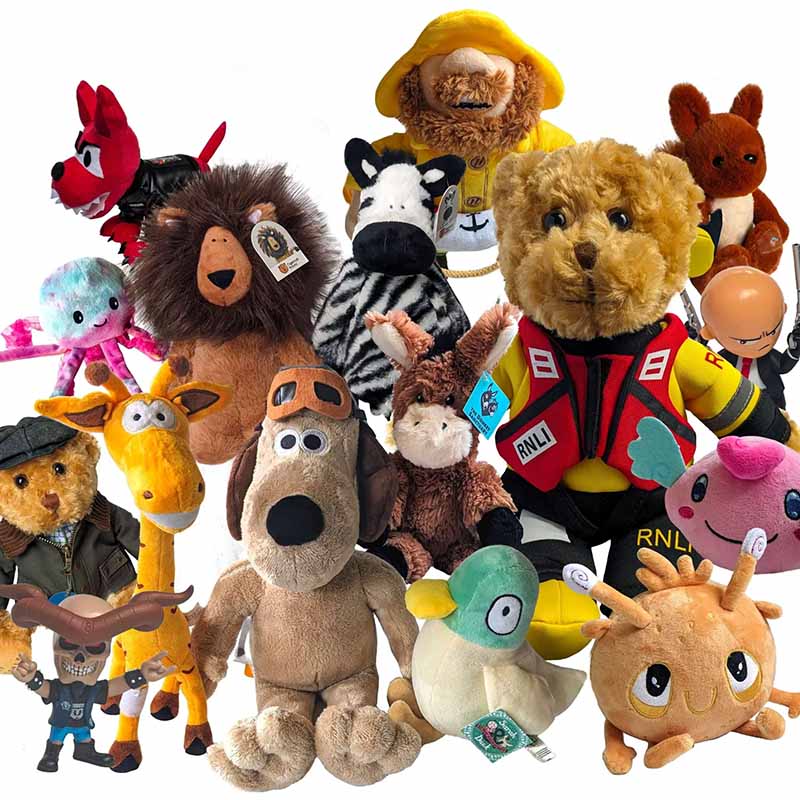
Trend 4 — Anime and Gaming IP Merchandise Is a Structural Growth Category
Trend 4 — Anime and Gaming IP Merchandise Is a Structural Growth Category
The global expansion of anime fandom beyond its traditional Japanese and East Asian base has created one of the largest and fastest-growing licensed merchandise markets in consumer products. Anime character plush — ranging from chibi collector figures to large-format premium plush — is among the highest-demand format within this market, driven by fans who have deep emotional investment in specific characters and who collect merchandise across multiple format types.
Anime Plush Market Characteristics
- Global fandom with concentrated purchasing behavior: anime fans are geographically distributed but highly engaged — a single major series launch can generate merchandise demand across 50+ countries simultaneously
- Character accuracy as the primary quality metric: anime fans judge merchandise primarily on how accurately it represents the character — quality failures are publicly shared and damage manufacturer reputation
- Series depth creates multiple SKU opportunities: a single anime series may have dozens of characters, each with multiple form factors — creating extensive SKU opportunities for licensed manufacturers
Gaming Character Merchandise
- Video game character plush has experienced parallel growth, driven by the same audience dynamics as anime — deeply engaged fans, character emotional investment, and a merchandise culture where physical collectibles represent a meaningful part of fan identity
- The gaming audience is particularly valuable for plush manufacturers because it spans a wide age range (many core gamers are adults with disposable income) and it is global (major game releases are simultaneous worldwide)
Trend 5 — Therapeutic and Wellness Plush Is Expanding Beyond Children
Trend 5 — Therapeutic and Wellness Plush Is Expanding Beyond Children
The market for plush toys with explicitly therapeutic or wellness positioning — weighted plush for anxiety, comfort characters for emotional support, sensory plush for developmental needs — has grown significantly and shows no signs of plateauing. Mainstream mental health awareness has legitimized comfort object use for adults, while the documented therapeutic benefits of weighted and sensory toys have driven adoption in occupational therapy, education, and healthcare settings.
Segments Within Therapeutic Plush
- Weighted plush: adults with anxiety; children with sensory needs — growth driver: weighted blanket market cross-over; OT adoption — requires calibrated glass bead fill, correct weight range
- Emotional support characters: adults; adolescents; hospital patients — growth driver: mental health mainstream acceptance — requires emotionally warm face design; premium tactile quality
- Sensory plush toys: children with autism; sensory processing differences — growth driver: SEN education and therapy adoption — requires multiple textures; safe auditory elements; no sharp edges
- Hospital comfort plush: pediatric patients; adult patients — growth driver: healthcare provider adoption — requires OEKO-TEX Class I; washable; no small parts
- Corporate wellbeing plush: employees in wellbeing programs — growth driver: corporate wellness program growth — requires premium quality; branded; gifting format
The Wellness Positioning Opportunity
- Therapeutic plush positioned as a wellness product rather than a toy competes on different terms — efficacy, quality, and therapeutic credibility rather than price
- Adult wellness plush supports significantly higher price points than children’s toy retail, improving margin structure for brands in this positioning
Trend 6 — Blind Box and Collectible Series Are Transforming Plush Economics
Trend 6 — Blind Box and Collectible Series Are Transforming Plush Economics
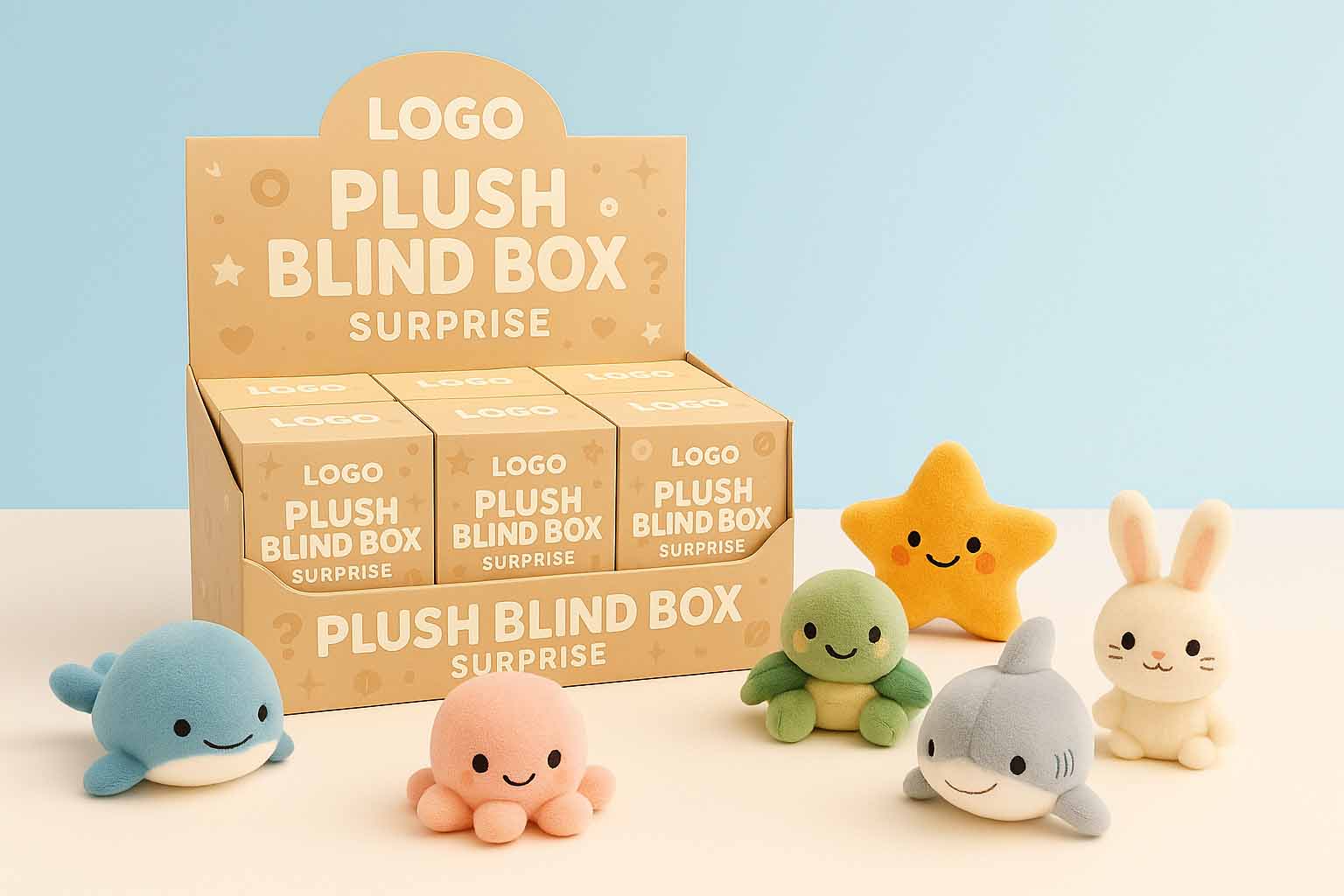
The blind box format — where the specific character or variant received is unknown at purchase — has created a collector dynamic in plush toys that generates repeat purchasing behavior at a scale impossible with standard retail. Originally popularized by art toy brands and then adopted by major toy companies, blind box plush has become a mainstream retail format that fundamentally changes the unit economics of character plush programs.
What Makes Blind Box Plush Work
- Series coherence: all characters in the series must share a consistent visual language — they are clearly from the same universe — while each being individually distinctive enough to be desirable on its own
- Set completability: the total number of characters in a series should be achievable — too few and there is no collection driver; too many and completability feels impossible
- Chase design: the chase variant must be genuinely desirable — a variant that fans would not specifically want does not drive collector behavior
- Packaging that conceals: the packaging must prevent identification of the specific character inside before purchase — consistent weight, opaque packaging
- Series sequencing: releasing new series before the previous series fully saturates the market maintains ongoing purchasing momentum
The Commercial Mechanic
- The commercial mechanics are straightforward: a collector who wants to complete a set of six characters must buy multiple units, because each purchase may reveal a character already owned
- Chase variants — rare characters that appear at a defined statistical rate — create outsized enthusiasm and trading behavior that amplifies organic marketing
- Brands that successfully execute blind box plush programs convert one-time buyers into ongoing repeat purchasers
Trend 7 — IP Licensing Is Expanding to New Categories and New Licensors
Trend 7 — IP Licensing Is Expanding to New Categories and New Licensors
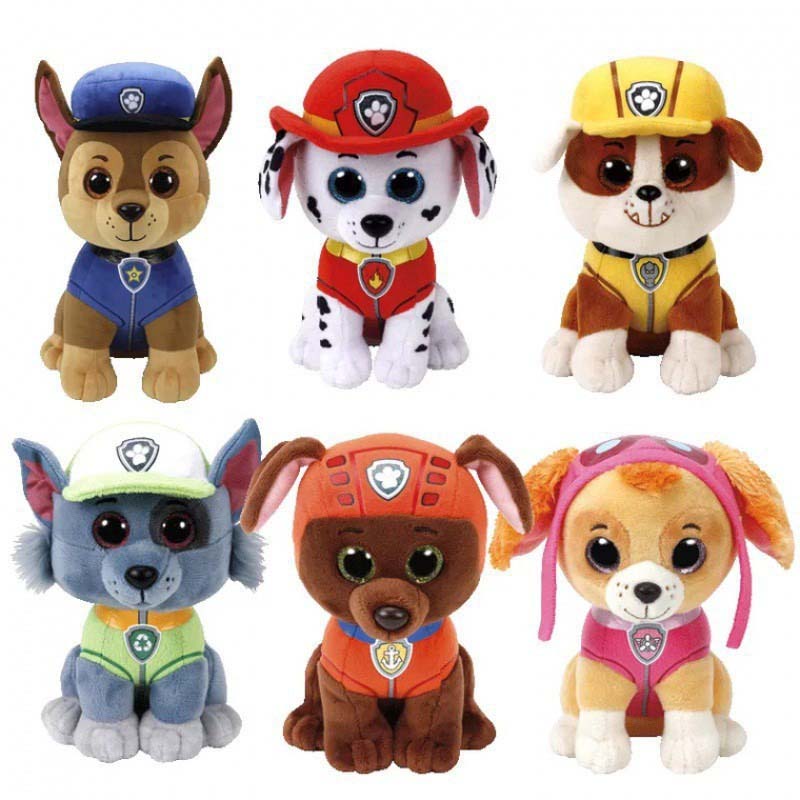
The IP licensing market for plush toys has expanded significantly beyond traditional entertainment licensing — movie studios, TV studios, and classic toy brands — to include gaming IP, sports team IP, influencer and creator IP, brand mascot IP, and art licensing. This expansion creates new licensing opportunities for plush manufacturers and new categories of IP holder seeking licensed plush merchandise production.
IP Category Expansion
- Entertainment (film/TV): established; highly competitive for major properties — licensed manufacturers with FAMA-equivalent approval required
- Gaming (video games): rapid growth; expanding beyond major studios to indie games — gaming companies seeking merch partners with character accuracy capability
- Anime / manga: global expansion; both major and indie IP — licensees with anime-specific manufacturing expertise
- Sports teams / athletes: established for mascots; growing for individual athlete brands — team merchandise buyers
- Creator / influencer IP: emerging; self-licensed by creators directly — individual creators and creator management companies
- Brand mascots: growing — brands investing in mascot characters for merchandise — brand marketing teams, promotional merchandise buyers
- Art licensing: growing — artist collaborations for limited edition plush — art-forward DTC brands, gallery retail
What IP Expansion Means for Manufacturers
- IP security protocols (Disney FAMA and equivalent) are increasingly required across all IP categories — not just Disney-licensed products
- The range of IP holders seeking licensed plush manufacturing has expanded significantly — creating more entry points for manufacturers with the right credentials
Manufacturing Implications of Current Market Trends
How Each Trend Translates into Product Specification and Manufacturing Requirement
Adult Collector Market
Manufacturing implication: Premium fabric (Minky, long pile); higher fill density; sophisticated face design; collector packaging
KINWIN capability: Full premium fabric range; design alignment for adult aesthetic; collector gift box packaging
DTC / Creator Economy
Manufacturing implication: Low MOQ accessibility; fast sampling; original character development
KINWIN capability: 500-piece MOQ; 7-day sampling; full OEM character development
Sustainability Demand
Manufacturing implication: RPET fabric; recycled fill; FSC packaging; GRS certification
KINWIN capability: Full GRS certified eco materials program; FSC packaging standard option
Anime / Gaming IP
Manufacturing implication: Character accuracy; chibi engineering; costume accuracy; IP compliance
KINWIN capability: Anime plush specialist experience; Disney FAMA IP protocols
Therapeutic Wellness
Manufacturing implication: Weighted fill calibration; memory foam squishy; premium tactile materials
KINWIN capability: Glass bead weighted plush; memory foam fill; therapeutic format engineering
Blind Box / Collectibles
Manufacturing implication: Series development; variant production; concealment packaging
KINWIN capability: Multi-character series coordination; variant manufacturing
IP Licensing Expansion
Manufacturing implication: Disney FAMA equivalent IP security; licensed character manufacturing capability
KINWIN capability: Disney FAMA approved; NDA standard; IP security protocols
Why KINWIN Is Positioned for the Current Plush Market
Why KINWIN Is Positioned for the Current Plush Market
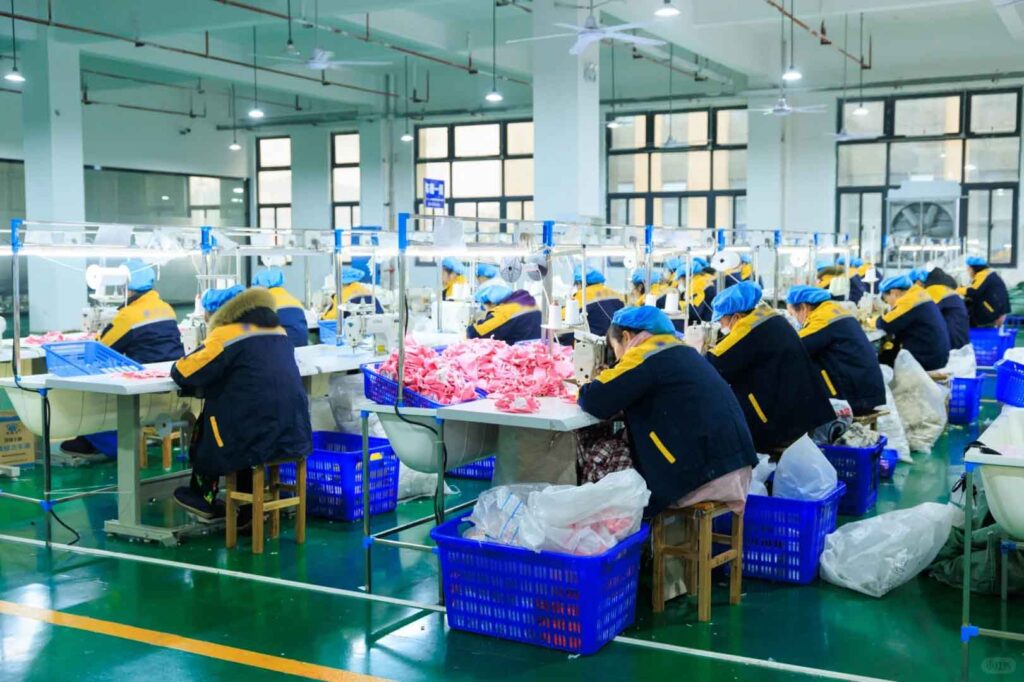
✓ 17+ years manufacturing experience spanning all seven major trend categories — not adapting to trends, but growing with them
✓ 500-piece MOQ enabling DTC and creator economy brands to enter the market
✓ Full eco materials program: GRS RPET fabric, recycled fill, FSC packaging — for sustainability-positioned brands
✓ Anime and gaming character specialist expertise: chibi engineering, eye embroidery precision, costume accuracy
✓ Therapeutic plush manufacturing: weighted glass bead fill, memory foam, sensory formats
✓ Disney FAMA approval: IP security for licensing programs across all major IP categories
✓ Blind box and collector series coordination: multi-character programs with variant production
✓ Adult-market design capability: premium materials, sophisticated character design, collector packaging
✓ CE, EN71, ASTM F963, OEKO-TEX — full compliance for all major global markets
✓ 1,000+ brands across 30+ countries — real-world market experience across every trend segment
The plush toy market is growing because people — at every age — want objects that make them feel something. KINWIN manufactures what makes them feel it.
Frequently Asked Questions — Plush Toy Market Trends
Frequently Asked Questions — Plush Toy Market Trends
Q1. Is the adult plush toy market genuinely large enough for new brands to enter?
Yes — the adult plush market represents a structural shift in the category’s demographics that is large enough to support significant brand activity. Several indicators confirm its commercial scale: major toy companies including Jellycat, Squishmallow, and Build-A-Bear have all repositioned or extended their offerings toward adult consumers in recent years; the average selling price of plush toys has risen as adult purchasers support higher price points than the children’s toy market; and social media content from adult plush collectors consistently achieves high engagement across demographics. For new brands entering the market, the adult segment is often more accessible than children’s toy retail because it does not require traditional toy retail shelf placement — DTC and social commerce channels reach adult plush buyers directly. The adult market also rewards brand character and story more than price, which means differentiation is achievable through design and positioning rather than requiring manufacturing cost advantages.
Q2. How do brands identify which trend their product is best positioned to benefit from?
The most reliable starting point is audience specificity — identifying not ‘who buys plush toys generally’ but ‘who specifically would buy this character, in this format, from this brand.’ A brand with an existing audience of anime fans is positioned to benefit from the anime IP trend; a wellness brand with adult customers is positioned to benefit from the therapeutic plush trend; a creator with a social media following is positioned to benefit from the creator economy trend. The brands that struggle with trend positioning are those trying to capture multiple trends simultaneously without a clear primary audience — resulting in a product that is vaguely relevant to several markets but compelling to none. KINWIN’s design alignment process specifically helps brands clarify which trend their product is serving, because the design decisions for a collector-grade anime figure are fundamentally different from those for a therapeutic comfort character, which are different again from a DTC brand character.
Q3. Is the blind box plush format accessible for smaller brands or does it require large volumes?
Blind box plush is accessible for smaller brands using KINWIN’s 500-piece minimum order — with appropriate series planning. A series of four characters at 500 pieces each (2,000 total) is a viable blind box launch volume for a DTC or convention-focused brand: enough to supply an initial launch and generate the collector behavior and social media content that drives the format’s commercial mechanics. The key planning consideration for small-scale blind box is that the concealment mechanic requires consistent unit weight and opaque packaging — both achievable at 500 pieces per design. Chase variants at very small quantities (50-100 pieces) require discussion with KINWIN about production planning, as very small quantities of a single variant have their own manufacturing considerations. The format scales well with brand growth — as total series volume increases, combined program pricing becomes more favorable and chase variant quantities can increase.
Q4. How is the sustainability trend affecting what retail buyers require from plush toy suppliers?
Retail buyer sustainability requirements for plush toy suppliers have been increasing steadily and show no sign of reversing. The current state varies significantly by retailer size and market: major European retail chains — particularly in Germany, Scandinavia, and the UK — are the most advanced in requiring specific sustainability credentials from suppliers, including OEKO-TEX certification, social compliance audits (BSCI/SMETA), and increasingly specific recycled material content. US mass market retailers are slightly behind European chains but accelerating. DTC platforms and independent retailers are often sustainability-driven from the founder’s values rather than procurement policy — the requirement is implicit in the brand’s positioning rather than formally stated. The trend direction is consistent: sustainability credentials that are today differentiators will be tomorrow’s baseline requirements. Brands that build certified eco credentials into their manufacturing now are building compliance with future requirements, not just responding to today’s buyer preferences.
Q5. What plush toy formats does KINWIN see the strongest growth demand for currently?
Based on KINWIN’s order patterns across 1,000+ brands, the formats showing the strongest growth demand in recent years are: premium DTC character plush in long pile or Minky fabric at adult price points — driven by the adult market normalization trend; anime and gaming character plush in chibi format — driven by global anime market expansion; weighted comfort plush for adults — driven by wellness trend mainstreaming; eco-material plush with GRS and OEKO-TEX certification — driven by sustainability positioning requirements; and small-format blind box series with collector mechanics — driven by the collectibles format’s commercial effectiveness. Classic children’s retail plush remains the largest volume category but is growing more slowly than these emerging adult-oriented and specialty format categories. The most commercially interesting opportunity KINWIN currently sees is the overlap between multiple trends — eco-certified anime collector plush for adult fans, or therapeutic premium DTC character plush — where multiple trend tailwinds reinforce a single product.
If You Can lmagine lt,We Will Create lt!
1.Tell Us What You Need
Tell us as specific as possible of your needs and share your idea.
2.Get Solution & Quote
We will work on the best solution according to yourrequirements,the specific quote will be provided within 24 hours.
3.Approve for Mass Production
We will start mass production after getting your approval.