 Skip to content
Plush Character Toys — Custom OEM Manufacturing for Original Characters
Plush Character Toys — Custom OEM Manufacturing for Original Characters
Original Character Development · IP Ownership · 95%+ Accuracy · 7-Day Sampling · CE/ASTM · DTC · Amazon · Retail · MOQ 500 pcs
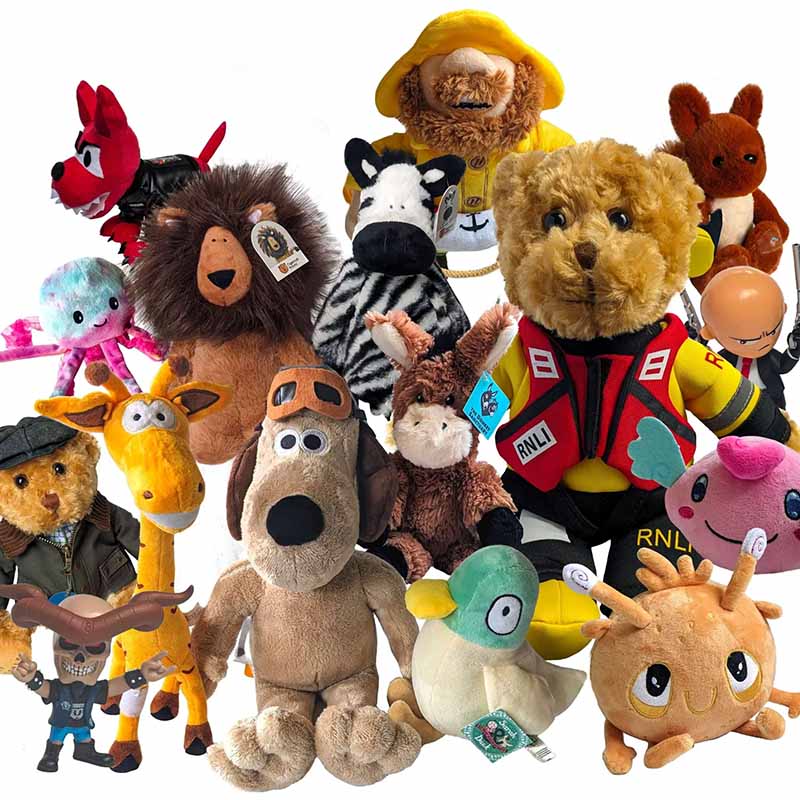
A plush character toy is not a stuffed animal — it is a personality made soft. The distinction matters commercially: a stuffed animal is a product, but a character toy is the beginning of a brand. The character has a name, a story, a personality, a world. When a customer buys your character plush, they are not buying a toy — they are buying a relationship with that character. That relationship, built over time through consistent character presence and quality, is what creates brand loyalty, repeat purchasing, and the kind of fan community that sustains a business.
KINWIN specializes in manufacturing original plush character toys for brands building character-based product lines — DTC founders launching their first character, IP holders bringing digital or illustrated characters into physical form, gaming studios producing player-favorite character merchandise, content creators monetizing their audience through character plush, and established toy brands adding original characters to their catalog.
0.8 Rounds
Average Revisions
vs 2.1 industry average — design alignment document process
95%+
Character Accuracy
Consistent similarity to approved reference
7 Days
Standard Sampling
From design alignment approval to first prototype
500 pcs
MOQ
Full OEM character development from first launch
What Makes a Character Toy Different from a Generic Plush
Character Toy vs Generic Plush — 8 Commercial Dimensions
Identity
Generic Plush: None — could belong to any brand
Character Plush: Specific — belongs only to your brand
IP Ownership
Generic Plush: Shared with many competitors
Character Plush: Exclusively yours
Customer Relationship
Generic Plush: Transactional
Character Plush: Ongoing — fan relationship
Repeat Purchase Driver
Generic Plush: Price, convenience
Character Plush: New character releases, variants
Price Defensibility
Generic Plush: Low — price comparison easy
Character Plush: High — exclusive product, no substitute
Brand Building Potential
Generic Plush: None — anonymous product
Character Plush: High — each sale is a brand impression
Social Media Value
Generic Plush: Low — easily replaced in photos
Character Plush: High — character creates community
Collector Appeal
Generic Plush: Minimal
Character Plush: Strong — series, variants, exclusives
Character Development — Starting Points KINWIN Works From
Character Development — From Any Starting Point to Production-Ready Specification
Character plush development at KINWIN follows a structured process that converts your character concept — at whatever stage of development it is currently — into a production-ready specification that can be manufactured consistently at scale.
Professional Multi-View Character Sheet
Approach: Direct to design alignment + sampling
Additional timeline: Fastest: 0 days extra
Single-View Digital Art
Approach: Back/side views developed from front reference
Additional timeline: +3-5 days design
Rough Sketch or Concept Drawing
Approach: Full character development from concept
Additional timeline: +5-10 days design
Verbal Concept + Mood Board
Approach: Full character concept creation
Additional timeline: +7-14 days design
Existing Physical Toy Reference
Approach: Reverse reference from physical; original pattern
Additional timeline: +3-7 days pattern
Game / Animation Model File
Approach: 3D to 2D pattern translation
Additional timeline: +5-10 days translation
Character Name / Story Only
Approach: Full original character design from brief
Additional timeline: +14-21 days design
The Design Alignment Document — Why It Exists
The Design Alignment Document — The Most Important Innovation in Character Development
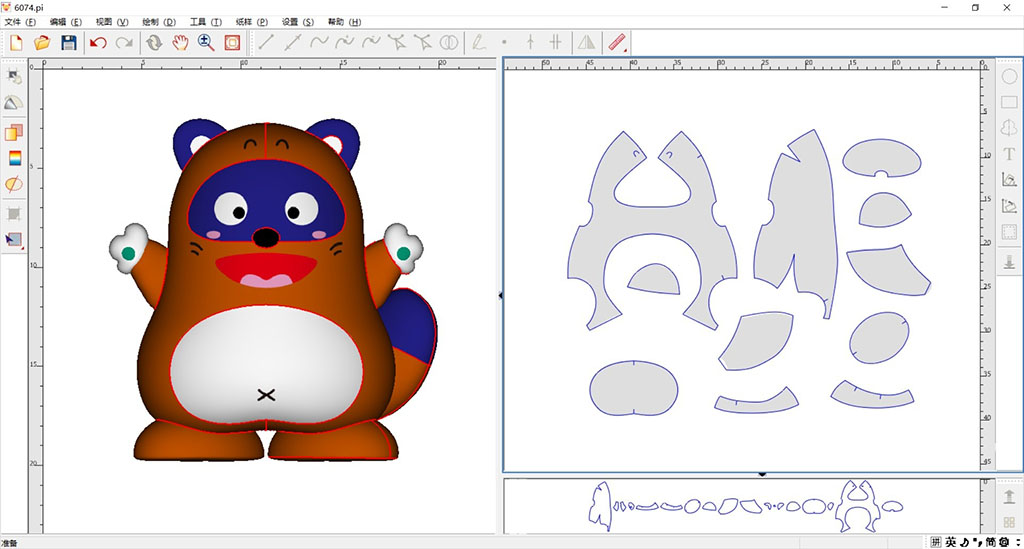
The design alignment document is the most important innovation in KINWIN’s character development process. Before any pattern is cut or any prototype is constructed, KINWIN produces a document that shows — in annotated visual format — exactly how every element of your character concept will be interpreted in three-dimensional plush form. Proportions, color zone assignments, facial feature dimensions, accessory construction, material selections, and filling targets are all confirmed here before sampling begins.
Why This Matters
The most common cause of first-sample rejection is not manufacturing error — it is design interpretation mismatch. When a brand approves a sample and says ‘the head is too small’ or ‘the eyes don’t look right’, they are responding to an interpretation decision that was never explicitly made. The design alignment document makes every interpretation decision explicit and approved before any physical work begins.
Result: KINWIN’s average revision rounds dropped from 2.1 to 0.8 — meaning more than half our character plush samples are approved on the first prototype. For brands with multi-view artwork and Pantone color references, 0-1 revision rounds is typical.
Key Design Elements That Determine Character Commercial Success
3 Design Elements That Most Determine Commercial Outcome
The Face — Your Character’s Commercial Center of Gravity
The Face — Your Character's Commercial Center of Gravity
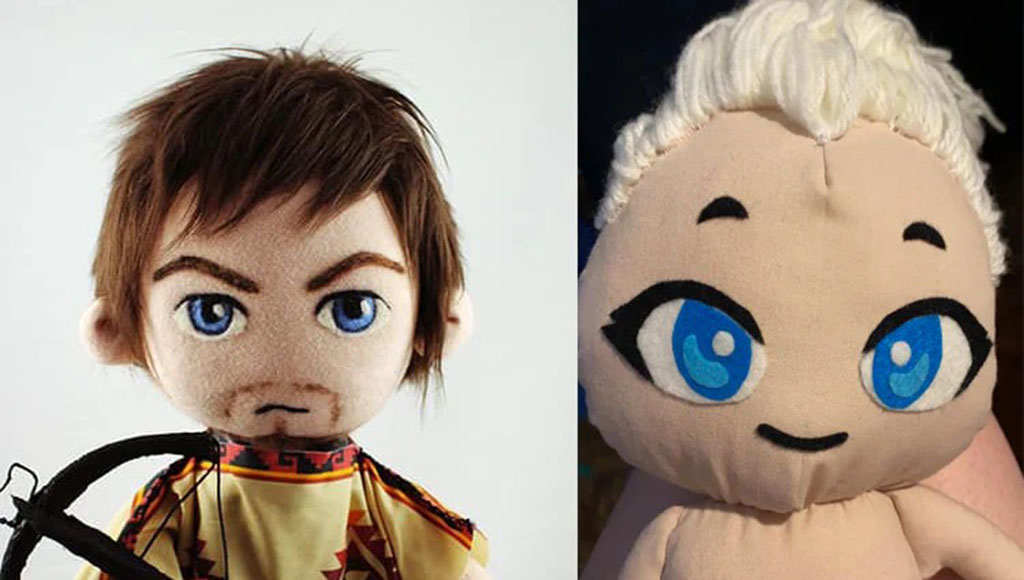
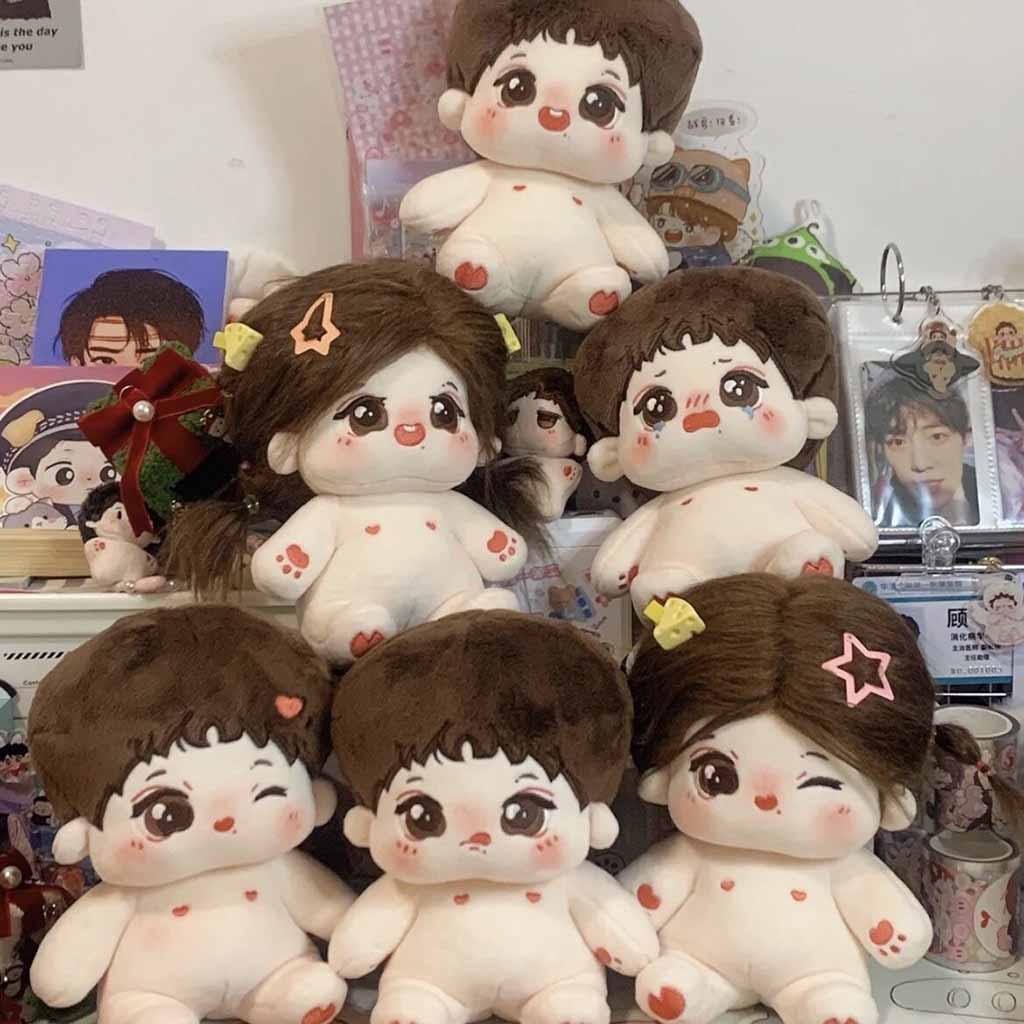
The face is the single design element that most determines whether a character plush sells. A face that creates emotional connection — that looks like the character feels something, that has personality in its expression — drives purchase decisions. A face that misses this connection can make an otherwise well-designed character commercially ineffective.
- Expression specificity: ‘happy’ is not specific enough. ‘Gently happy with a hint of mischief’ produces a more distinctive, memorable face than simply ‘happy’
- Eye design is personality: the shape, size, and expression of the eyes communicates more character personality than any other single element
- Highlight dots: small white highlight dots make eyes look alive and emotionally present — one of the highest-ROI design details in character plush
- Facial symmetry: asymmetric faces are read subconsciously as ‘wrong’ even when the asymmetry is small — precision embroidery placement is essential
- Cheek detail: subtle cheek blush (embroidered or printed) adds warmth and ‘aliveness’ to a face — particularly effective for cute character styles
Silhouette — How Your Character Reads at Distance
Silhouette — How Your Character Reads at Distance
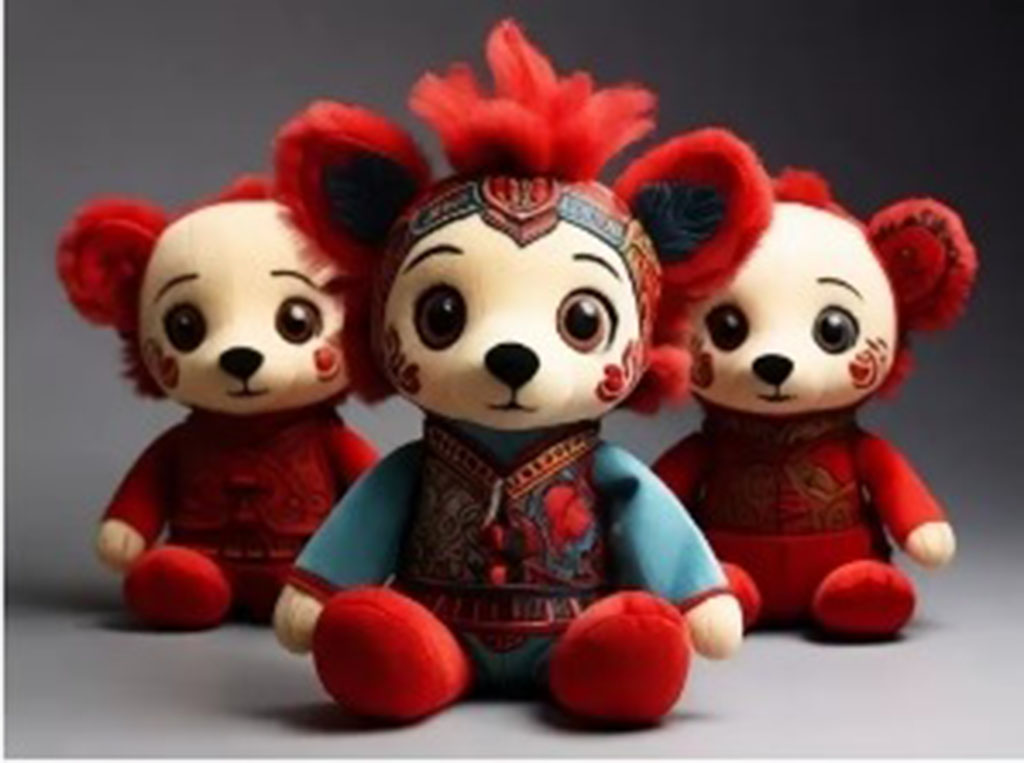
A character’s silhouette — its outline shape visible from a distance or in a small product image — determines whether the character is immediately recognizable as itself. Characters with distinctive silhouettes (unusually large ears, a specific body shape, a distinctive accessory or feature) are more commercially effective than characters with generic silhouettes, because they are recognizable at a glance across all the contexts where they will be seen: online thumbnails, shelf display, social media photos.
- Design for the thumbnail: your character’s silhouette must read clearly at 200×200 pixels — the size of an Amazon or Instagram thumbnail
- Distinctive features should be exaggerated: features that define the character should be visually prominent — an oversized head, extremely large ears, a specific body shape
- Avoid generic silhouettes: a round-headed bear with standard proportions has low silhouette distinctiveness; ears modified to a distinctive shape or unusual proportions significantly improve recognizability
Character Personality Consistency
Character Personality Consistency
The most commercially durable character plush toys have consistent personality that reads across every element of the design — the face, the body proportions, the color palette, the accessories, and the packaging. A brave character should look brave in every design element; a gentle character should look gentle. Inconsistency between character personality and design execution creates a product that feels ‘off’ to buyers even if they cannot articulate why.
- Define personality before design: write a 3-5 word personality description for your character before designing — and use it to evaluate every design decision
- Color palette communicates personality: warm colors (coral, peach, yellow) suggest friendliness; cool colors (blue, lavender) suggest calm; bright saturated colors suggest energy; muted tones suggest sophistication
- Proportion communicates personality: larger heads relative to bodies suggest youth and innocence; more balanced proportions suggest maturity and confidence
Character Types and Their Manufacturing Characteristics
Character Types — Manufacturing Complexity and Price Reference
Cute Animal (cat, bear, bunny)
Complexity: Low-Medium
Key considerations: Proportions, face expression, ear construction
Price tier: Economy-Standard
Original Brand Mascot
Complexity: Medium
Key considerations: Character accuracy to brief, IP consistency
Price tier: Standard
Fantasy / Mythical Character
Complexity: Medium-High
Key considerations: Unusual anatomy, wing/horn construction
Price tier: Standard-Premium
Human / Humanoid Character
Complexity: Medium-High
Key considerations: Proportions, hair construction, clothing
Price tier: Standard-Premium
Anime / Manga Character
Complexity: Medium-High
Key considerations: Eye translation, hair, specific aesthetic
Price tier: Standard-Premium
Food / Object Character
Complexity: Medium
Key considerations: Non-animal shape in plush, novel construction
Price tier: Standard
Complex Licensed IP
Complexity: High
Key considerations: IP accuracy to bible, licensed markings
Price tier: Premium
Weighted Therapeutic Character
Complexity: Medium
Key considerations: Bead distribution, reinforced seams, balance
Price tier: Standard-Premium
Character Series Strategy — Building a World, Not Just a Toy
Character Series Strategy — The Most Commercially Powerful Character Plush Model
The most commercially powerful character plush programs are series — multiple characters from the same character universe that share visual and narrative cohesion while remaining individually distinctive. A series transforms customers from one-time buyers into collectors, and collectors into community members who recruit new customers on your behalf.
Series Architecture Principles
- Visual cohesion: all characters in a series share a consistent design language — similar eye style, similar proportions, similar material palette — so they read as a family
- Individual distinctiveness: within the shared aesthetic, each character is unambiguously itself — different species, different expression, different color story
- Narrative connection: characters in a series share a world — they could be friends, family, or inhabitants of the same universe — giving collectors a reason to want them all
- Staggered release: releasing characters sequentially creates a launch event for each new addition rather than overwhelming buyers with a full catalog at once
- Chase/secret variants: a rare variant within the series — different expression, special colorway, limited quantity — creates collector excitement disproportionate to its production cost
The 'Series Starter' Character — What to Launch First
The first character in a series establishes the design language and personality of the entire universe. It must be strong enough to carry the series on its own — because until subsequent characters are launched, it is the series.
The launch character should be the most universally appealing: typically the most ‘cute’ rather than the most unique, the most emotionally accessible rather than the most distinctive. Save the boundary-pushing characters for later in the series when the audience is established.
Protecting Your Character IP During Manufacturing
Protecting Your Character IP — Before, During and After Production
Your character design is a brand asset — potentially your most valuable one. The pattern of behavior that protects IP in a manufacturing relationship is established from the very first interaction, not retroactively.
- NDA before design sharing: KINWIN signs NDA before any character reference is exchanged — this is standard for all clients
- IP ownership clause: explicitly document that all patterns, specifications, and production files for your character remain your property — no manufacturer should retain rights to your character
- Project isolation: your character files should only be accessible to personnel working on your specific order — KINWIN’s Disney FAMA approval includes IP security as an assessed criterion
- Register your character: for original characters with significant commercial potential, register the design as intellectual property in your home market before beginning production
- Design originality: ensure your character is genuinely original — references to other copyrighted characters create IP risk that KINWIN cannot protect you from

Channel Strategy for Character Plush Toys
Channel Strategy — How Selling Channel Shapes Design and Pricing
DTC Website
Dynamics: Character story is fully controllable; fan community building
Design implications: Premium fabric; rich packaging; story hang tag
Pricing: $25–$65
Amazon
Dynamics: First impression via thumbnail; search discovery; reviews critical
Design implications: High-contrast design; FBA-ready; strong main image
Pricing: $18–$45
Independent Toy Retail
Dynamics: In-store discovery; display appeal; retailer relationship
Design implications: Window box or display packaging; shelf appeal
Pricing: $22–$50
Pop-up and Event
Dynamics: Character meet-and-greet context; fan community event
Design implications: Event-specific packaging; collector appeal
Pricing: $25–$60
IP Licensing to Retail
Dynamics: Retail chain distribution; high volume; margin compression
Design implications: Retail-grade packaging; mass appeal design
Pricing: $15–$35
Subscription Box
Dynamics: Surprise context; community sharing; series release format
Design implications: Series format; collectible feel; unboxing experience
Pricing: $18–$40
Quality Standards Specific to Character Plush Toys
Quality Standards Specific to Character Plush — Beyond Standard Stuffed Animal Spec
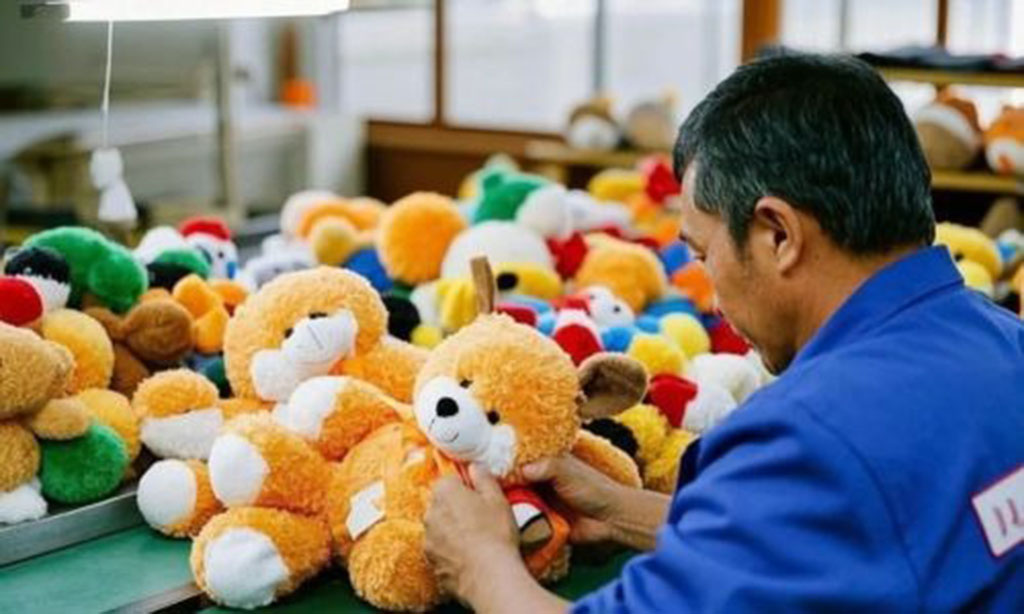
Character plush toys have quality requirements that go beyond the standard stuffed animal specification — because the character’s identity depends on precise, consistent execution of design details across every unit in the production run.
- Facial symmetry tolerance: eye placement variation must not exceed ±1.5mm left-to-right — larger variation is visible and breaks character identity
- Embroidery color consistency: all embroidery thread colors matched to Pantone specification — color variation between units breaks character recognition
- Fabric color consistency: pile fabric color matched to Pantone TPX within ΔE ≤ 2.0 — visible color variation between units undermines brand consistency
- Filling density consistency: gram-weight targets per body section — variation in filling density produces visible shape inconsistency
- Golden sample comparison: 100% of units compared against golden sample during production — not AQL sampling
- Character identity check: final QC includes a character identity verification step — does this unit unmistakably look like the character it is supposed to be?
Why Brands Choose KINWIN for Plush Character Toys
Why Brands Choose KINWIN for Plush Character Toys
✓ 30+ senior pattern makers specializing in plush toy construction — the most critical skill for character accuracy
✓ Design alignment document process — 0.8 average revision rounds vs 2.1 industry average
✓ 95%+ character similarity target — measured, accountable accuracy standard
✓ Works from any starting point: professional art, rough sketch, description, 3D file, physical reference
✓ 7-day standard sampling turnaround after design alignment approval
✓ Unlimited free revisions until character matches vision
✓ Disney FAMA IP security approval — your character is protected throughout manufacturing
✓ NDA before first design exchange — standard for all clients
✓ CE, EN71, ASTM F963 full certification — character plush market-ready for all major markets
✓ Series development: multiple characters coordinated from shared design brief
✓ Golden sample and production documentation retained indefinitely — consistent reorders for years
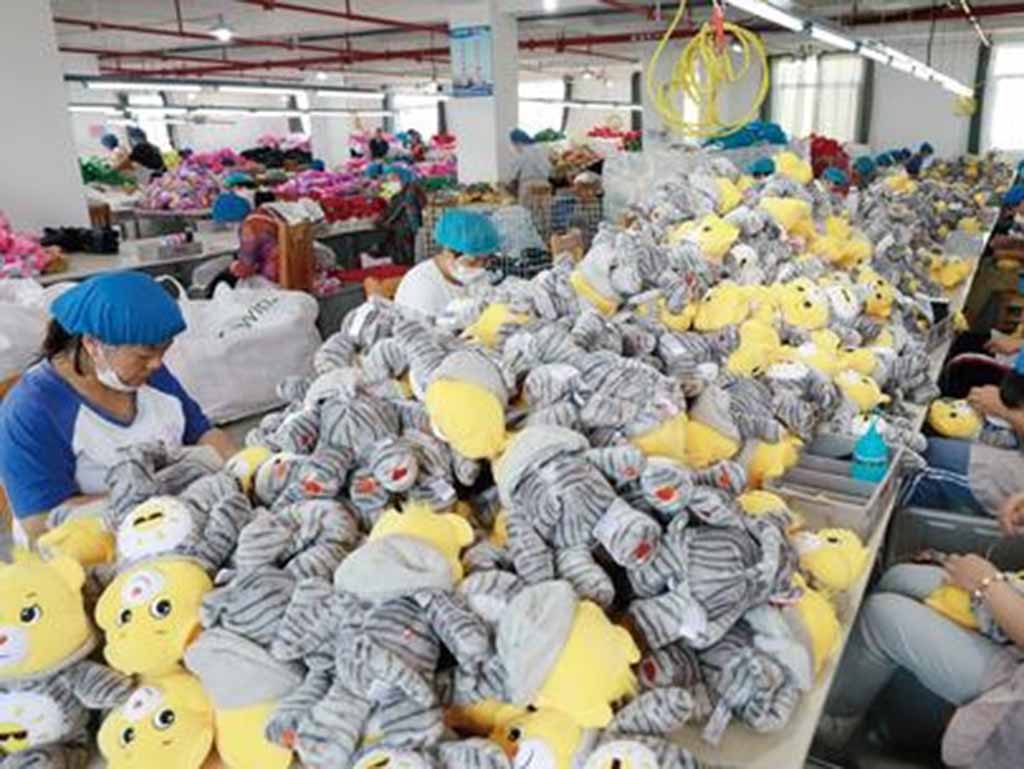
A character is not manufactured. A character is brought to life. KINWIN is where characters become real.
Frequently Asked Questions — Plush Character Toys
Frequently Asked Questions — Plush Character Toys
Q1. How do I turn my illustrated character into a plush toy that actually looks like the character?
The key to accurate character translation is KINWIN’s design alignment document process — which confirms how every 2D design element will be interpreted in 3D before sampling begins. For maximum accuracy, provide: multi-view reference artwork if possible (front, back, side views); Pantone TPX color references for each color zone in your design; notes on character personality and expression intent (what emotion should the face convey?); any specific design elements that are non-negotiable for character recognition; and reference images of existing plush styles you find appealing. With these inputs, our design team prepares the alignment document for your approval — you see exactly how each element will be realized before fabric is cut. The remaining variation between 2D illustration and 3D plush is inherent to the medium: lines become volumes, sharp geometry becomes rounded, and the pile texture adds dimension that flat artwork does not represent. KINWIN’s pattern makers optimize for capturing the character’s personality and recognizability, not geometric precision.
Q2. I want to create a series of 6 characters. Should I develop them all at once or one at a time?
A phased approach — developing and launching characters sequentially rather than all at once — is almost always the better commercial strategy, with one important design exception. The design exception: develop the visual language and design specifications for all 6 characters together before sampling any of them. This ensures visual consistency across the series (all characters share the same eye style, the same proportion philosophy, the same material palette) and allows you to plan the series arc — which character launches first, which is the fan favorite, which is the collector’s chase. The commercial logic for phased launches: launching character 1 first tests market response before you invest in development of all 6; each new launch creates a sales event that generates organic interest from existing fans; and the sequence creates a reason for fans to return — they know more characters are coming. At KINWIN, we can develop all 6 characters to production-ready specification simultaneously (sharing production documentation) while production is staged according to your launch calendar.
Q3. My character has some features that seem difficult to make in plush — how do I know what's possible?
Almost everything is possible in plush — but some things require different construction approaches than you might expect, and some things require adaptation rather than direct translation. Common features and their plush solutions: wings (rigid wings — wire armature; soft wings — oversized flat fabric panels; small decorative wings — embroidered or appliqued); horns (single horn — stuffed fabric point; multiple horns — wired and stuffed multi-panel construction); unusual hair (structured hair using internal wire or stiffened fabric; flowing hair using long pile fabric panels; specific hair colors using separate fabric panels for each color zone); very small features (features under 5mm become embroidery rather than separate components); glossy surfaces (satin fabric for specific elements; no full-body gloss possible in standard plush). The most reliable way to understand what is possible for your specific character: submit your design reference to KINWIN at the brief stage — our pattern makers will identify any elements that require adaptation and propose solutions before development begins, so you can decide how to proceed.
Q4. What happens to my character's production files when I want to reorder years later?
KINWIN retains all production files for your character indefinitely — there is no expiry on your product specifications. The retained files include: the complete pattern set (all fabric panels with dimensions and seam allowances), the tech pack (all specifications, material references, embroidery files, Pantone color references), the golden sample (physically retained in our archive), embroidery digitization files, and material sourcing records (fabric supplier and specification for your approved fabric). When you reorder — whether 6 months or 5 years after the original order — the same files are retrieved and used as the production benchmark. A material confirmation step verifies that the new fabric batch matches the original specification before production begins. This is one of the most commercially important aspects of the KINWIN relationship for character brands: the ability to reorder consistently without investing in re-development — your character remains exactly as approved, indefinitely.
Q5. Can I sell my plush character toy on Amazon and through my own DTC website simultaneously?
Yes — most character plush brands use a multi-channel strategy, typically combining Amazon for discovery and DTC for community-building and margin optimization. The same physical product can be sold through both channels, but packaging and pricing may differ by channel. For Amazon: FBA-ready packaging (poly bag with FNSKU label, suffocation warning, age label), pricing optimized for the competitive Amazon marketplace, professional main product image optimized for thumbnail. For DTC: premium gift box or story-focused packaging, higher retail price reflecting the direct relationship, and richer brand storytelling on the product page. KINWIN can produce both packaging formats from the same production run — specify both at the brief stage. For Amazon-specific compliance, KINWIN provides all required documentation for Seller Central upload: ASTM F963 test report, CPSC CPC for US; CE Declaration and EN71 test reports for EU marketplaces.
If You Can lmagine lt,We Will Create lt!
1.Tell Us What You Need
Tell us as specific as possible of your needs and share your idea.
2.Get Solution & Quote
We will work on the best solution according to yourrequirements,the specific quote will be provided within 24 hours.
3.Approve for Mass Production
We will start mass production after getting your approval.
