
Custom Plush Toys from a Drawing — From Rough Concept to Production-Ready Character
Custom Plush Toys from a Drawing — From Rough Concept to Production-Ready Character
Rough Sketches Welcome · Concept Development · Character Creation from Scratch · NDA Protected · 7-Day Sampling · MOQ 500 pcs
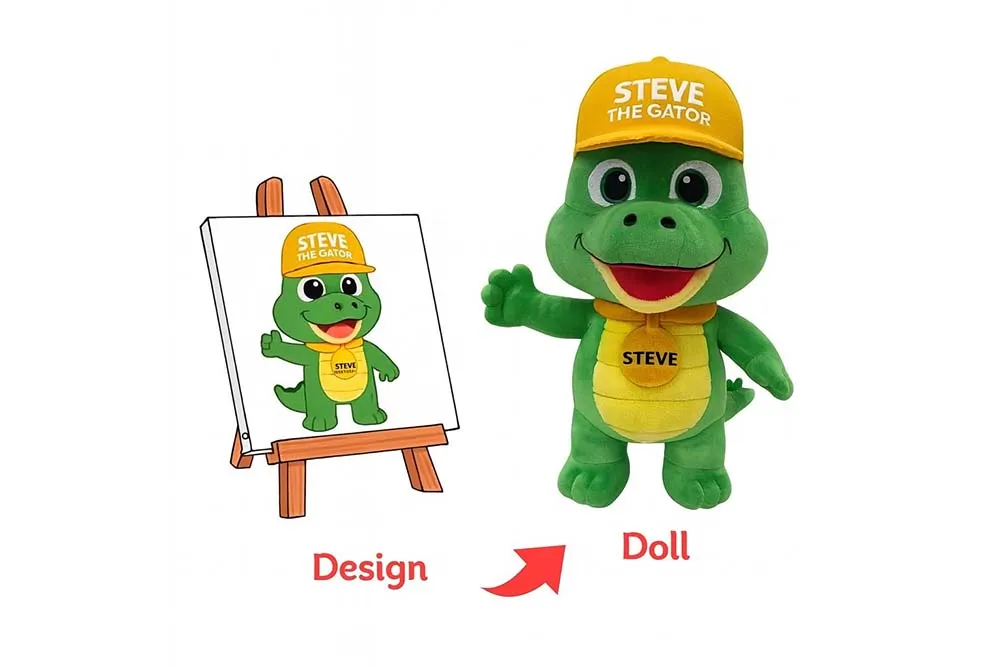
Most custom plush toy commissions do not start with a finished design. They start with a rough sketch on paper, a doodle in a notebook, a concept in someone’s head, or a character that exists only as a vague idea of what it could be. KINWIN’s design and development capability is built for exactly this starting point — not for brands who already have a finished design ready for production, but for creators, founders, and brands who have a character concept and need a manufacturing partner who can help develop it into a production-ready specification.
This page is specifically about the design development phase that comes before manufacturing — the process of taking a rough drawing, an incomplete concept, or an early-stage character idea and turning it into the detailed specification from which a consistent, high-quality plush toy can be produced at scale.
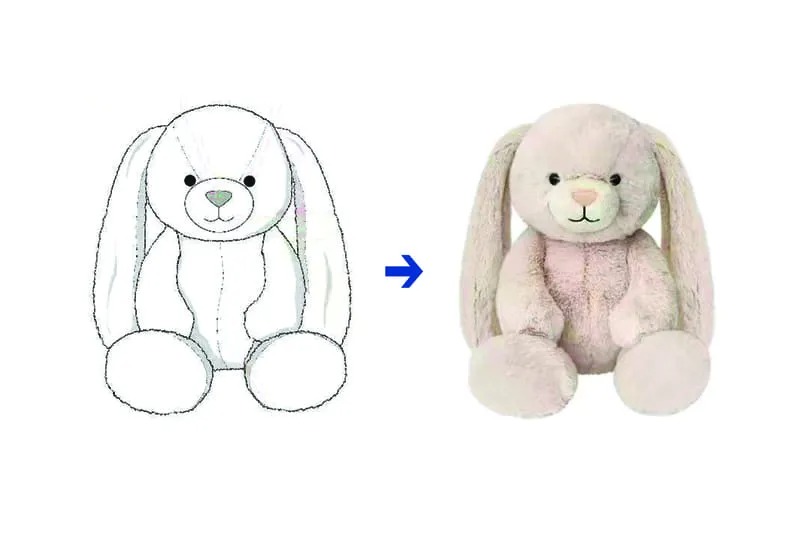
The Gap Between a Drawing and a Production-Ready Specification
7 Things a Drawing Shows vs What Manufacturing Actually Needs
A drawing — even a good one — is not a production specification. The gap between what a drawing shows and what a manufacturer needs to produce a consistent plush toy is substantial, and it is where most first-time custom plush commissions run into unexpected delays and revision rounds. Understanding this gap is the first step to navigating it efficiently.
Drawing shows: "Visual appearance from one angle"
Spec requires: Construction details from all angles — front, back, sides, top
Who fills this gap: KINWIN design team + client collaboration
Drawing shows: "Approximate shapes and proportions"
Spec requires: Exact dimensions, seam placements, panel shapes for every component
Who fills this gap: KINWIN senior pattern makers
Drawing shows: "Colors as the artist intended"
Spec requires: Pantone TPX fabric references; physical swatch confirmation
Who fills this gap: KINWIN material team + client color approval
Drawing shows: "Features as flat 2D elements"
Spec requires: 3D construction approach for each feature — how it is sewn, filled, attached
Who fills this gap: KINWIN pattern makers + design alignment
Drawing shows: "Character concept and personality"
Spec requires: Face embroidery specification — stitch types, sizes, thread colors, placement coordinates
Who fills this gap: KINWIN embroidery design team
Drawing shows: "Overall feel and aesthetic"
Spec requires: Fill density gram-weight targets per body section
Who fills this gap: KINWIN fill engineering
Drawing shows: "Character identity"
Spec requires: Golden sample — physical approved reference that governs production
Who fills this gap: First physical prototype + client approval
What KINWIN Does with a Rough Drawing — The Development Process
3 Development Stages: From Rough Drawing to Production-Ready Specification
Stage 1: Character Intent Extraction
Stage 1: Character Intent Extraction
The first step when working from a rough drawing is not to start correcting or refining the drawing — it is to understand the character’s intent. KINWIN’s design team reviews your drawing and asks the questions that extract the information the drawing does not yet contain.
- What emotion should this character convey — playful, calm, brave, gentle, mischievous?
- Who is the audience — young children, collectors, adult gift recipients?
- What makes this character distinctive from other characters of the same type?
- What elements are non-negotiable to the character’s identity, and what elements are you flexible on?
- The answers to these questions shape every design decision that follows
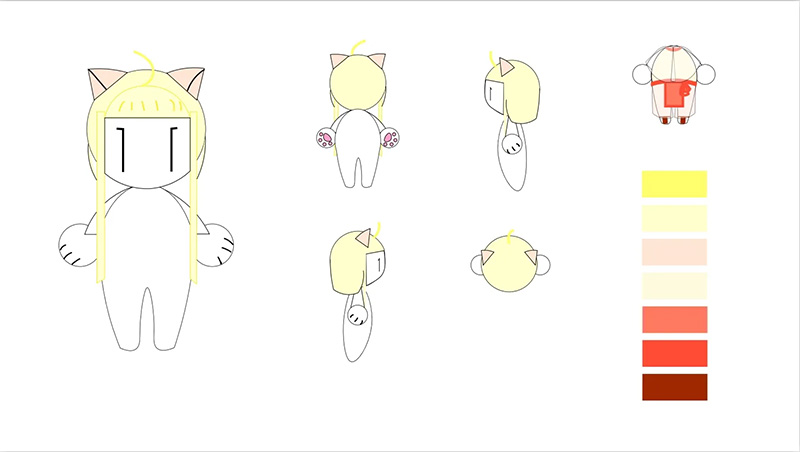
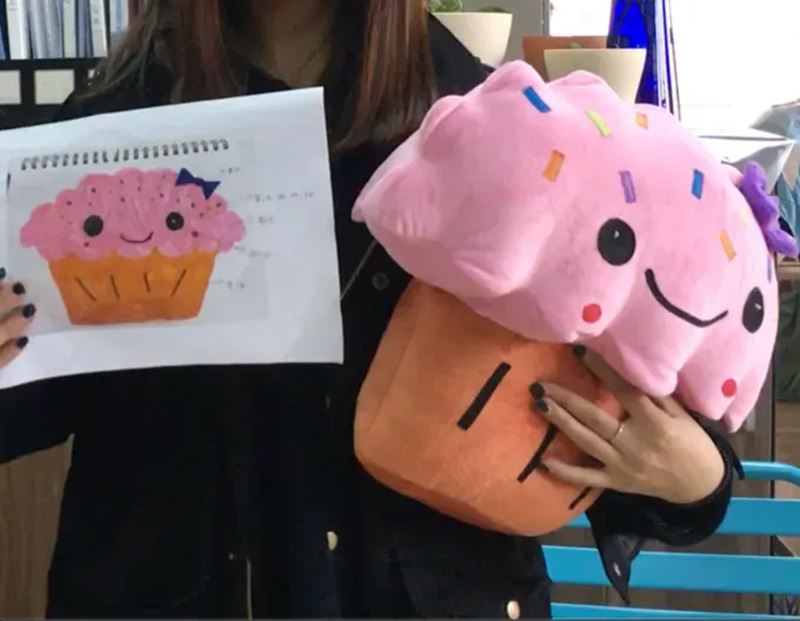
Stage 2: Design Consultation and Concept Refinement
Stage 2: Design Consultation and Concept Refinement
For rough or incomplete drawings, KINWIN’s design team may produce a refined concept interpretation — a cleaner version of the character that resolves ambiguities in the drawing while preserving what makes it distinctive. This is not KINWIN imposing a different design; it is KINWIN translating the character intent from rough form to a clearer specification.
- The client reviews and directs this interpretation — confirming what is correct, redirecting what is not, and making creative decisions about aspects the original drawing did not specify
- This stage is where many of the most important creative decisions are made: the exact facial expression, proportions of head to body, specific shade of each color zone, whether appendages are poseable or fixed
- Whether the character should sit or stand in its default posture, how accessories are attached — none of these need to be in the original drawing
Stage 3: Design Alignment Document
Stage 3: Design Alignment Document
The design alignment document is KINWIN’s most important innovation for clients working from rough drawings. Before a single pattern is cut or a single sample is sewn, KINWIN produces an annotated visual document that shows exactly how every element of the character will be constructed in 3D plush form.
- Proportions, color zones, embroidery specifications, material selections, fill targets, accessory construction — all confirmed in document form before physical work begins
- For clients who started with a rough drawing, this document is the moment the character becomes real in specification form
- KINWIN will not proceed to sampling without the design alignment document being approved
- This single step eliminates the most common and most expensive source of first-sample rejection: discovering that the manufacturer interpreted the drawing differently than the client intended
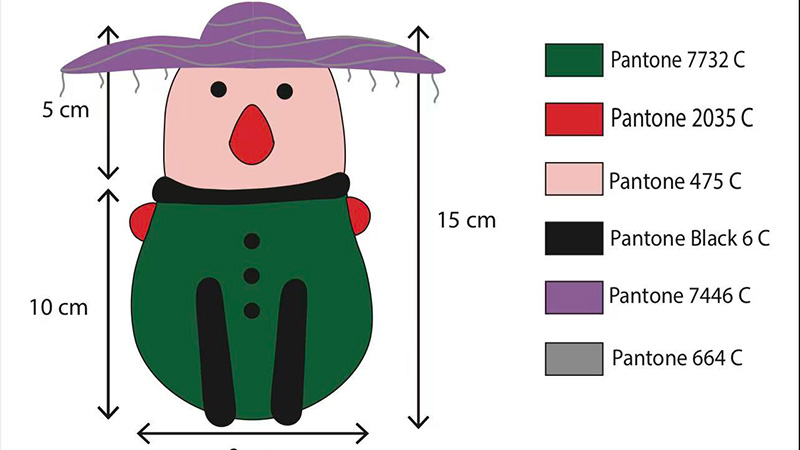
Common Challenges When Starting from a Rough Drawing
4 Common Challenges — And How KINWIN Resolves Each One
Ambiguous Proportions
What causes it: Rough drawings frequently show proportions that are approximate rather than intended — a head that appears large because of how the character was drawn on the page, not because a large head is a character-defining feature
How KINWIN resolves it: KINWIN asks directly: is this proportion intentional and character-defining, or is it an artifact of the drawing? If intentional, we preserve it. If incidental, we propose balanced proportions and confirm before sampling
Undefined Color
What causes it: Rough pencil or sketch drawings often have no color information at all, or have rough color shading that does not translate to specific fabric colors
How KINWIN resolves it: KINWIN resolves through structured consultation: asking for reference images capturing the intended color mood, identifying Pantone TPX references, producing physical fabric swatches for confirmation
Features Clear in 2D but Unclear as 3D Objects
What causes it: Many drawing elements that are perfectly clear in 2D illustration become ambiguous when translated to 3D construction — a nose shown as a simple curved line, a tail shown as a curved line from the side
How KINWIN resolves it: The design alignment document specifically proposes 3D interpretations of ambiguous 2D elements and confirms the approach before sampling — nothing is left to guesswork
Drawings That Change During Development
What causes it: It is common for clients working from rough drawings to evolve their character concept during the development process — as they see KINWIN’s design alignment interpretations, they may want to change aspects of the character
How KINWIN resolves it: KINWIN accommodates character concept evolution during the design alignment phase without additional development cost. Once the design alignment is approved and sampling begins, changes are managed as revision rounds
Starting from Even Less — Character Development from Description Alone
No Drawing at All — Full Character Concept Development from a Written Brief
For clients who do not have a drawing at all — only a character concept in their head or a written description — KINWIN can provide full character concept development as a pre-sampling service. This is appropriate for brands who know what their character should feel like and stand for but have not yet found a visual representation they are satisfied with.
What a Character Development Brief Needs
- Character type: animal, creature, human-adjacent, abstract, food character, or other
- Target aesthetic: cute and round, realistic, stylized, chibi, vintage/retro, modern minimal, other
- Emotional personality: what should the character feel like? List 3-5 adjectives
- Target audience: who will own this — children, adults, collectors, a specific demographic
- Colour direction: warm or cool palette, specific colours important or to avoid, brand colour requirements
- Visual references: other characters, artworks, or aesthetics that share elements of what you are going for — not copying, but providing visual vocabulary
- What the character is NOT: sometimes defining what the character should avoid is as useful as defining what it should be
What KINWIN Produces from a Written Brief
From a written character brief, KINWIN’s design team produces concept illustrations showing multiple character directions for client review and selection. The selected direction is then developed through the standard design alignment process into a full production specification.
This extended development path adds approximately two to three weeks to the total timeline compared to starting from an approved drawing, but produces a character that the brand fully owns and that was designed specifically for plush toy construction from the beginning.
Protecting Your Drawing and Character Concept
IP Protection from the First Rough Sketch — Not Just Finished Designs
A rough drawing or concept description shared with a manufacturer is your intellectual property — and it deserves the same protection as a finished professional character sheet. KINWIN signs an NDA before any creative material is shared, regardless of how rough or early-stage it is.
- NDA signed before any design material is exchanged — standard for all clients, not a special request
- Design files and concept work accessible only to KINWIN personnel assigned to your project
- All design development work produced during the alignment phase is your IP — KINWIN retains no rights to use it for other clients
- Disney FAMA IP security protocols apply to all client work — the same security standards that protect Disney’s characters protect your rough sketch
- Physical samples produced during development are either shipped to you or destroyed — not retained or repurposed
Why Creators and Brands Choose KINWIN for Drawing-to-Plush Development
Why Creators and Brands Choose KINWIN for Drawing-to-Plush Development
✓ Design team experienced in character development from rough and incomplete references
✓ Design alignment document process — the structured specification step that prevents interpretation mismatch
✓ Character concept development from written brief for clients without any drawing
✓ 30+ senior pattern makers — the craft specialists who translate design specifications into accurate physical form
✓ No minimum drawing quality required — KINWIN works from whatever you have
✓ NDA from first contact — rough drawings and early-stage concepts protected from day one
✓ 7-day standard sampling after design alignment approval
✓ Unlimited free revisions — character development requires iteration and KINWIN accommodates it
✓ CE, EN71, ASTM F963 certified — finished product compliant for all major markets from a rough drawing starting point
✓ MOQ 500 pieces — professional manufacturing accessible from the first idea
✓ Disney FAMA IP security protocols — same protection for your rough sketch as for major licensed IP
The roughest drawing contains a character waiting to exist. KINWIN’s job is to find it and bring it to life — precisely, consistently, at scale.
Frequently Asked Questions — Custom Plush Toys from a Drawing
Frequently Asked Questions — Custom Plush Toys from a Drawing
Q1. My drawing is very rough — stick figures and basic shapes. Can KINWIN still work from it?
Yes — KINWIN works from the roughest possible starting points, including stick figure sketches and basic shape drawings. What matters in a rough drawing is not the quality of the draftsmanship but the clarity of the character concept it is trying to communicate. A stick figure that conveys ’round body, large ears, small nose, friendly face’ gives KINWIN enough to begin a character development consultation. The design alignment process exists specifically to transform rough intent into precise specification — the rougher the drawing, the more of that work happens in the alignment phase rather than after sampling. The practical implication is that very rough drawings require a longer design alignment phase and slightly more client collaboration during development, but they absolutely produce accurate plush toys. KINWIN has produced highly successful character plush programs that started from drawings that the client themselves described as ‘terrible’ — what they communicated was good enough.
Q2. How does KINWIN's design development differ from hiring a freelance illustrator to finish my drawing first?
Hiring a freelance illustrator to finish your drawing before approaching a manufacturer is a common approach — but it has a significant limitation: most illustrators are not plush toy construction specialists, so the ‘finished’ drawing they produce may still contain design decisions that are difficult or impossible to execute in plush manufacturing. KINWIN’s design development is manufacturing-informed from the start — our design team works directly with our pattern makers, so design decisions are made with construction feasibility in mind. Features are proposed in forms that can be consistently manufactured. Proportions are adjusted for physical stability. Face designs are specified in embroidery-appropriate forms. A freelance illustrator produces a beautiful 2D illustration; KINWIN’s design alignment produces a specification that is both visually faithful to the character concept and physically manufacturable at scale. The two approaches are not mutually exclusive — if you have worked with an illustrator and have a polished character sheet, that is an excellent starting point. But you do not need to commission illustration work before approaching KINWIN.
Q3. What happens if I change my mind about aspects of the character during development?
Character evolution during the design phase is normal and expected — seeing KINWIN’s design alignment interpretations frequently prompts clients to refine or redirect aspects of the character they had not fully thought through in the original drawing. KINWIN accommodates character evolution during the design alignment phase without additional charge. The design alignment document goes through as many review rounds as needed until the specification is exactly what the client wants. Once the design alignment is approved and physical sampling begins, changes become revision rounds — each revision round adds approximately seven to ten days to the timeline. The practical guidance is: invest as much time as you need in the design alignment phase, because changes at that stage cost only time; changes after sampling cost time plus materials. KINWIN’s experience is that clients who are thorough and deliberate during design alignment typically complete the physical sampling phase faster and with fewer total revision rounds than clients who rush through alignment to reach sampling quickly.
Q4. Can I work with KINWIN remotely on character development, or do I need to visit the factory?
All of KINWIN’s design development and sampling process works fully remotely — factory visits are welcome but not required at any stage. The design alignment process happens through document exchange: KINWIN produces the alignment document; the client reviews it and provides feedback digitally; KINWIN revises and resubmits until approved. Physical prototype samples are shipped to the client’s address for evaluation. Revision feedback is provided in writing or via video call. The entire development process from rough drawing to production-approved golden sample can be completed without the client visiting Dongguan — and KINWIN has successfully developed hundreds of original characters for clients across North America, Europe, Australia, and Asia entirely through remote collaboration. For clients who want to visit, KINWIN welcomes factory visits at any stage of the process.
Q5. If I am not happy with how KINWIN has interpreted my drawing in the design alignment, can I redirect it?
Absolutely — the design alignment document is specifically designed to be a conversation, not a decision imposed on you. If KINWIN’s interpretation of your drawing in the alignment document does not match your vision, you direct the changes you want and KINWIN revises the alignment document. There is no limit on the number of design alignment revision rounds — the alignment document goes through as many iterations as needed until it accurately captures your character vision. This is intentional: the purpose of the alignment document is to fully resolve creative direction before physical manufacturing begins, and that purpose is only served if the client is genuinely satisfied with the alignment before approving it. Proceeding to sampling with a design alignment that does not fully reflect the client’s vision is the single most common source of costly revision rounds — KINWIN will not pressure you to approve an alignment document you are not satisfied with.
If You Can lmagine lt,We Will Create lt!
1.Tell Us What You Need
Tell us as specific as possible of your needs and share your idea.
2.Get Solution & Quote
We will work on the best solution according to yourrequirements,the specific quote will be provided within 24 hours.
3.Approve for Mass Production
We will start mass production after getting your approval.