 Skip to content
Baby Comfort Plush Toy Manufacturer — Safe, Certified Soft Toys for Infants and Toddlers
Baby Comfort Plush Toy Manufacturer — Safe, Certified Soft Toys for Infants and Toddlers
OEKO-TEX Class I · EN71 Under-3 · ASTM F963 · No Small Parts · Embroidered Features · Washable Options · MOQ 500 pcs
Baby comfort plush toys carry the highest safety responsibility in the entire soft toy category. The users are the most vulnerable — infants and toddlers whose immune systems, respiratory function, and developmental stage make chemical exposure, choking hazards, and strangulation risks genuinely life-threatening rather than merely regulatory concerns. A baby comfort plush toy that meets only the minimum letter of safety regulations is not good enough. A baby comfort plush toy that meets the spirit of those regulations — designed from the ground up for the safest possible interaction with an infant — is what KINWIN manufactures.
KINWIN manufactures custom baby comfort plush toys for nursery brands, parent-baby product companies, gifting brands, healthcare programs, and retail chains supplying the infant and toddler market. Our baby plush programs are built on OEKO-TEX Standard 100 Product Class I certification — the most stringent textile safety standard available — as an absolute non-negotiable baseline, alongside full EN71 under-3 compliance and ASTM F963 testing.

Why Baby Comfort Plush Is a Distinct Manufacturing Category
6 Infant-Specific Risk Categories — And How KINWIN Addresses Each
Baby comfort plush toys are not simply small plush toys with a safety label applied. The entire design and construction approach must be developed around the specific risks that arise when a soft toy is in close, prolonged, unsupervised contact with an infant — risks that do not exist in the same form for toys used by older children.
Chemical Exposure — Skin Contact
Why it matters for infants: Infant skin is thinner, more permeable, and more sensitive — toxic chemical absorption risk is significantly higher
Design / manufacturing response: OEKO-TEX Class I fabric mandatory — tests 100+ substances at the strictest infant-specific limits
Chemical Exposure — Mouthing
Why it matters for infants: Infants mouth objects constantly — oral exposure to dyes, heavy metals, and organic compounds is a primary exposure route
Design / manufacturing response: EN71 Part 3 chemical migration testing; OEKO-TEX Class I saliva color fastness requirement
Choking from Small Parts
Why it matters for infants: Infants can detach components and place them in their mouths — a component that passes adult fingers can be fatal to an infant
Design / manufacturing response: No small parts under any foreseeable abuse testing; embroidered features only; no buttons or sewn-on accessories
Strangulation from Cords
Why it matters for infants: Infants cannot disentangle themselves from cords — any accessible cord longer than 220mm is a strangulation hazard
Design / manufacturing response: No cords; no long decorative strings; no attached ribbons longer than safety limit
Suffocation from Fabric
Why it matters for infants: Very soft, very loose fabric can conform to an infant’s face and block airflow
Design / manufacturing response: Fabric construction that maintains structural integrity; no extremely loose pile that could detach in sheets
Allergen Exposure
Why it matters for infants: Infants with developing immune systems may react to allergens in dyes, treatments, or fiber — with more severe reactions than older children
Design / manufacturing response: OEKO-TEX Class I eliminates allergenic disperse dyes; hypoallergenic fill standard
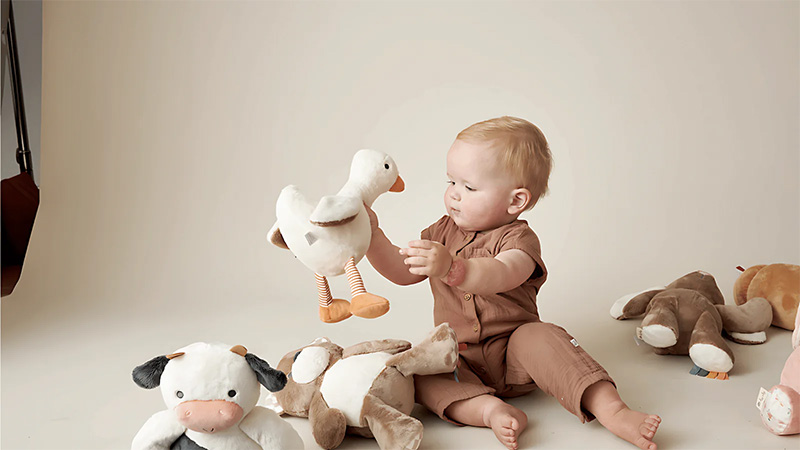
OEKO-TEX Standard 100 Product Class I — The Non-Negotiable Baseline
OEKO-TEX Standard 100 Product Class I — 8 Test Categories
OEKO-TEX Standard 100 Product Class I is specifically calibrated for products that come into direct contact with infant skin. It tests for over 100 harmful substances at limits calibrated specifically for the sensitivity of infant skin and the mouthing behavior of infants and toddlers.
KINWIN requires OEKO-TEX Standard 100 Product Class I certification from all fabric suppliers for any plush toy intended for the baby and toddler market. This is not a premium option or an upgrade — it is the baseline for all baby comfort plush programs.
pH Value
Tests: Skin-neutral range 4.0–7.5
Why infants: Fabric outside this range irritates sensitive infant skin
Formaldehyde
Tests: ≤ 20 mg/kg (Class I) vs ≤ 75 mg/kg (Class II)
Why infants: Respiratory sensitizer; particularly harmful to infants near fabric during sleep
Azo Dyes
Tests: Not detectable — zero tolerance
Why infants: Carcinogenic aromatic amines — highest risk at infant mouthing frequency
Heavy Metals (Extractable)
Tests: Strictest per-element limits — Lead ≤ 0.2 mg/kg
Why infants: Developmental neurotoxins at tiny exposure levels in infants
Allergenic Disperse Dyes
Tests: Not detectable
Why infants: Allergic contact dermatitis — more severe in infants
Pesticide Residues
Tests: 100+ compounds tested
Why infants: Residues from fiber growing; critical for chemically sensitive infants
Color Fastness to Saliva
Tests: Grade 4 minimum
Why infants: Dye transfer during mouthing — direct oral exposure risk
Color Fastness to Perspiration
Tests: Grade 3–4 minimum
Why infants: Dye transfer to infant skin during sweating
Under-3 Toy Safety Requirements — EN71 and ASTM F963
Under-3 Requirements — EU/UK and US Frameworks
EN71 Under-3 Requirements (EU / UK)
- No small parts: after all abuse testing (bite, pull, torque, drop), no component may fit entirely within the small parts cylinder (31.7mm diameter × 57.1mm depth) — zero-tolerance requirement
- Enhanced pull force: accessories and attached components must withstand 90N for 10 seconds (vs 70N for 3+ toys)
- No accessible cords: no accessible cord or string longer than 220mm anywhere on the toy or its packaging
- Stricter chemical limits: EN71 Part 3 chemical migration limits are lower for toys intended for under-3 use
- Mandatory age warning: ‘Not suitable for children under 36 months’ warning on the product and packaging, with the standardized warning symbol
- No sharp points or edges: under any foreseeable abuse — zero tolerance for any accessible sharp hazard post-testing
ASTM F963 Under-3 Requirements (US)
- Small parts prohibition: identical to EU — no components that fit the small parts cylinder after abuse testing
- Strangulation hazard: no cords, strings, or elastic longer than 305mm (12 inches) for under-3 products
- Fabric flammability: all fabric must meet slow-burn or non-flammable classification
- CPSC Children’s Product Certificate: required for all children’s products sold in the US — issued per product, per test
- OEKO-TEX or equivalent chemical testing strongly recommended alongside ASTM compliance
Design Requirements Specific to Baby Comfort Plush
Design Requirements — 4 Principles Built In From Concept
Safe baby comfort plush must be designed for safety from the concept stage — not reviewed for compliance at the end of development. These are the design principles KINWIN applies to all baby comfort plush programs.
No Small Parts — Embroidered Features as Standard
No Small Parts — Embroidered Features as Standard
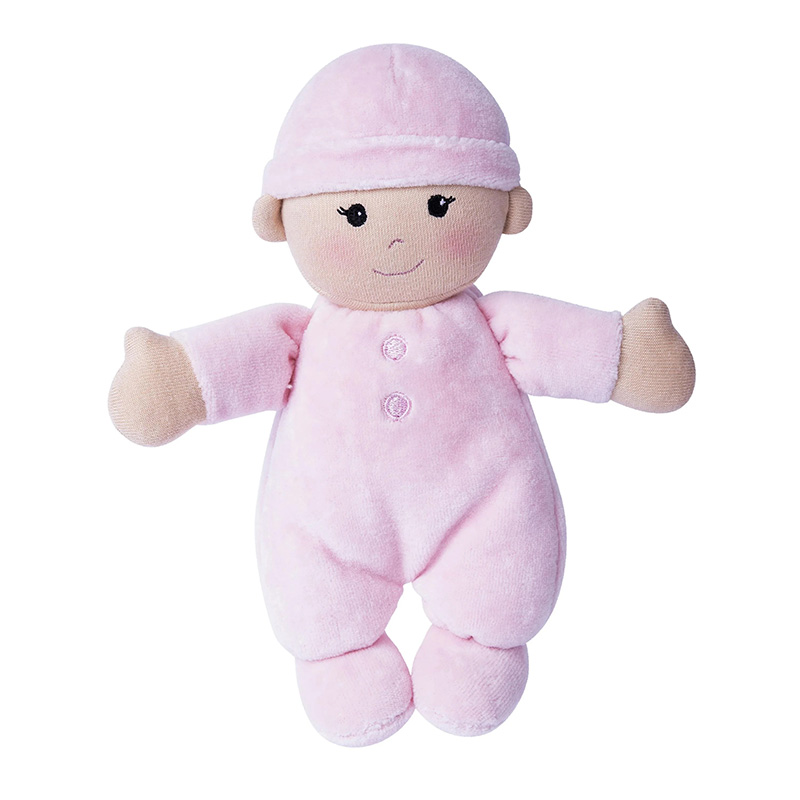
The single most important design decision for baby comfort plush is the face construction method. Standard plush toys use safety eyes — plastic component eyes that click through the fabric and lock from behind. For baby comfort plush in the under-3 category, safety eyes are not appropriate: even when correctly installed, abuse testing can result in eye component detachment, and any detached component that fits the small parts cylinder is a failure.
- Embroidered eyes: high-contrast oval or circular designs that create an expressive face without any component that could detach
- Embroidered nose: stitched nose shapes — no plastic nose pieces, no sewn-on felt noses
- Embroidered mouth: simple stitch mouth expression — no sewn-on accessories
- No buttons: not on the toy, not on clothing, not as accessories
- No sewn-on felt or fabric patches with edges that could be peeled away
- No ribbon, string, or cord decorations — even decorative
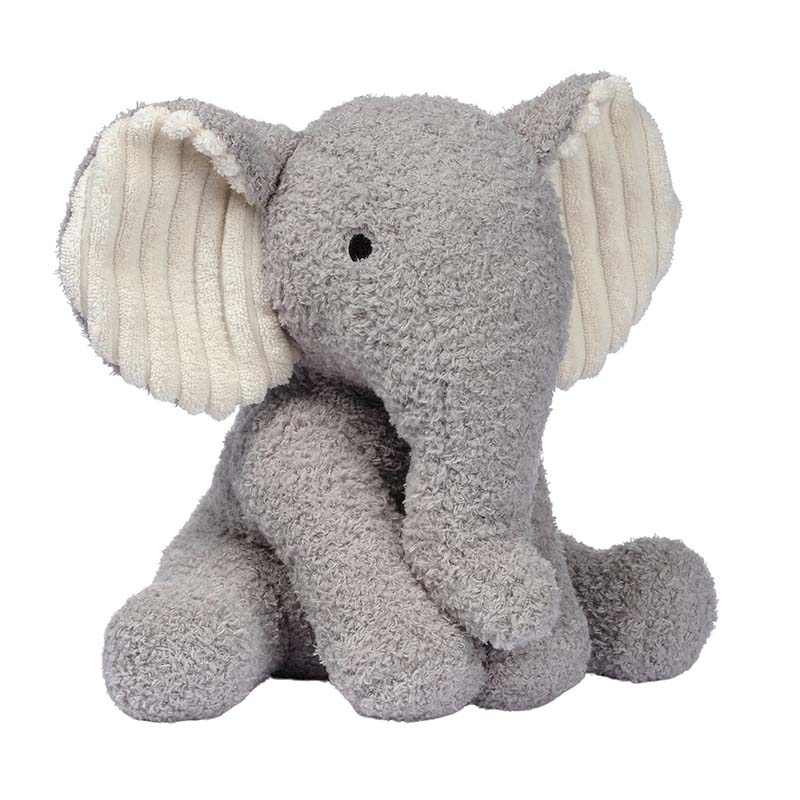
Fabric Selection for Baby Contact
Fabric Selection for Baby Contact
Fabric selection for baby comfort plush is driven by two requirements: OEKO-TEX Class I certification and tactile gentleness. The fabric must feel genuinely soft and gentle against infant skin — not just soft enough to pass a tactile check but genuinely pleasant for a baby to press against their face and hold throughout sleep periods.
- Short pile polyester (5-8mm), OEKO-TEX I: Excellent safety profile; soft, gentle, easy to clean — general baby comfort plush, most applications
- Minky / Crystal Super Soft, OEKO-TEX I: Excellent; ultra-soft, silky — highest tactile luxury — premium baby comfort, newborn gifts
- Organic cotton plush, GOTS certified: Excellent; soft, breathable, natural feel — eco-positioned baby brands
- Long pile (15mm+): Generally avoid for under-3 — fiber shedding risk near infant’s face and mouth; assess per product
Size and Weight for Baby Comfort Use
Size and Weight for Baby Comfort Use
Baby comfort plush is typically designed for holding, sleeping against, and carrying — which creates size and weight requirements different from display or play plush. A comfort toy that is too large cannot be held securely by an infant; a toy that is too heavy creates fatigue during carrying and becomes a drop hazard.
- Newborn comfort plush (0-6 months): 15-22cm sitting height; under 150g — small enough for tiny hands, light enough not to fatigue
- Infant comfort plush (6-18 months): 20-30cm sitting height; 150-300g — sized for developmental grip capability
- Toddler comfort plush (18-36 months): 25-35cm sitting height; 200-400g — still light enough to carry; large enough to hug

Washability — An Essential Functional Requirement
Washability — An Essential Functional Requirement
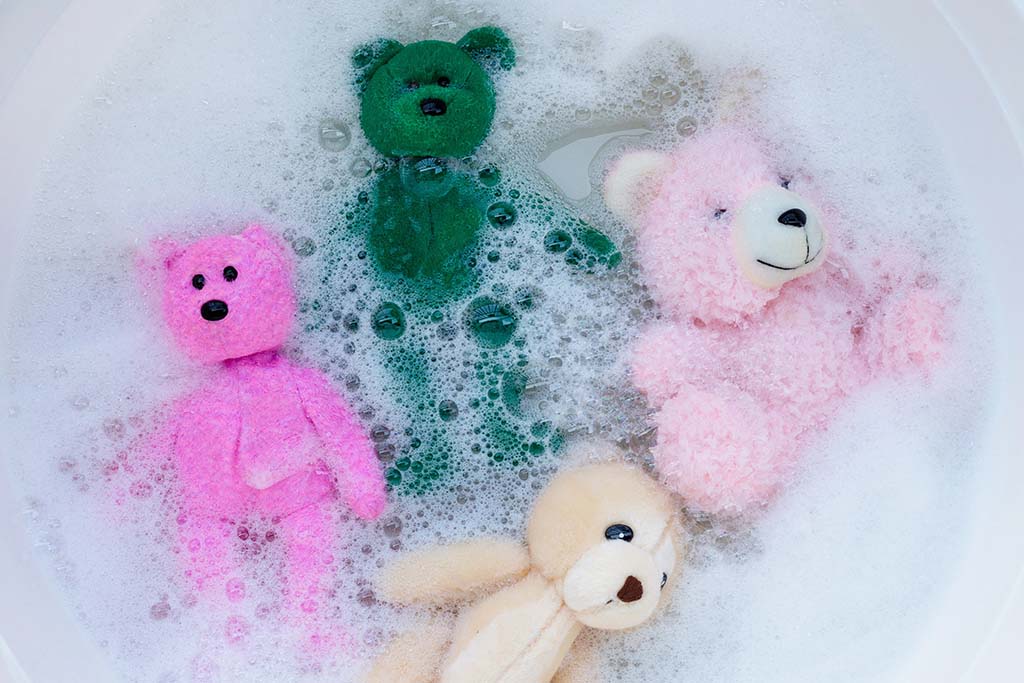
Baby comfort plush toys will be washed — repeatedly, throughout their useful life. A comfort toy that degrades significantly after two or three washes will be discarded, which is a product failure regardless of its initial quality.
- Reinforced seams designed for repeated thermal cycling
- Color fastness ratings that meet machine wash conditions
- Embroidery thread that maintains color through washing
- Fill material that retains loft after washing
Baby Comfort Plush Product Formats
7 Baby Comfort Plush Product Formats — Applications and Safety Considerations
Comfort Plush / Comforter Toy
Purpose: Primary attachment object — sleep association, emotional regulation
Key safety: No small parts; no cords; washable; under-3 certified
Typical size: 20–30cm
Taggy / Sensory Toy
Purpose: Tactile stimulation — different fabric textures on tags and panels
Key safety: All tag materials OEKO-TEX I; tags secure under 90N pull
Typical size: 15–25cm
Muslin Comforter with Plush Head
Purpose: Combines breathable muslin with soft character head
Key safety: Muslin OEKO-TEX I; head fully embroidered; secure attachment
Typical size: 25–35cm including muslin
Rattle Plush
Purpose: Auditory stimulation — internal rattle or crinkle element
Key safety: Rattle enclosed securely; cannot access rattle components; noise level testing
Typical size: 12–20cm
Teething Plush
Purpose: Oral stimulation — safe surface for teething
Key safety: Food-grade silicone teether element; fully safe for mouthing; EN71 Part 3
Typical size: 12–20cm
Activity / Developmental Plush
Purpose: Multiple sensory stimulation — mirrors, sounds, textures
Key safety: All elements independently safe under abuse testing; CE marking
Typical size: Varies
Plush Comforter Blanket
Purpose: Comfort + warmth for sleep and carrying
Key safety: No loose fibers; size appropriate to avoid suffocation; OEKO-TEX I
Typical size: 30–60cm
Baby Comfort Plush for Brand and Gifting Programs
Baby Comfort Plush for Brand and Gifting Programs
Baby comfort plush is among the most emotionally resonant gifting categories — a newborn gift that becomes a child’s primary comfort object for years is a brand impression that lasts far beyond any other marketing touchpoint. Brands that invest in quality baby comfort plush as a gifting or loyalty product create associations that parents carry for the entirety of their parenting journey.
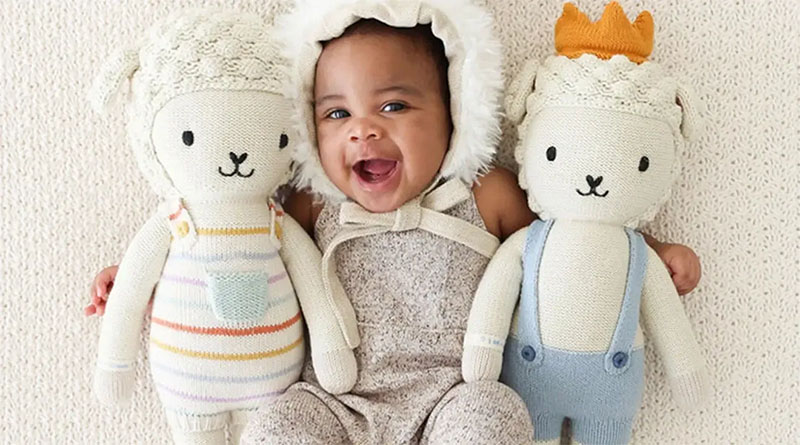
- Newborn gift programs: branded baby comfort plush given at birth, at hospital, or as a gift-with-purchase creates an immediate emotional brand association at one of the most significant moments in a customer’s life
- Baby registry products: original character baby comfort plush listed on baby registries exposes the brand to the new parent’s entire social network
- Corporate baby gifting: premium branded baby comfort plush for employee or client new parent gifts — quality and safety are paramount for this gifting context
- Healthcare and charity programs: KINWIN’s hospital plush capabilities extend fully to baby-safe comfort plush for NICU programs, children’s charity distribution, and healthcare gifting
- Nursery brand launches: an original character baby comfort plush as the flagship product of a new nursery brand — character identity that grows with the child
Why Baby Brands Choose KINWIN for Comfort Plush
Why Baby Brands Choose KINWIN for Comfort Plush
✓ OEKO-TEX Standard 100 Product Class I — mandatory on all fabrics for baby comfort plush, not optional
✓ Under-3 EN71 certification as standard for all baby plush programs — not an upgrade
✓ ASTM F963 + CPSC CPC for US market baby plush
✓ Embroidered facial features standard — zero small parts risk from face construction
✓ No cords, no buttons, no detachable accessories as default design rules
✓ Washable construction engineering — reinforced seams, color-fast embroidery, loft-retaining fill
✓ Short pile and Minky fabric specialization for baby contact
✓ Organic cotton options with GOTS certification for eco-positioned baby brands
✓ All 7 baby comfort product formats manufactured: comforter, taggy, muslin + head, rattle, teething, activity, blanket
✓ Character development for original baby brand mascots — NDA protected from first design exchange
✓ Disney FAMA IP security approval — IP protection for branded baby programs
✓ MOQ 500 pieces — professional baby comfort plush accessible for new nursery brands and gifting programs
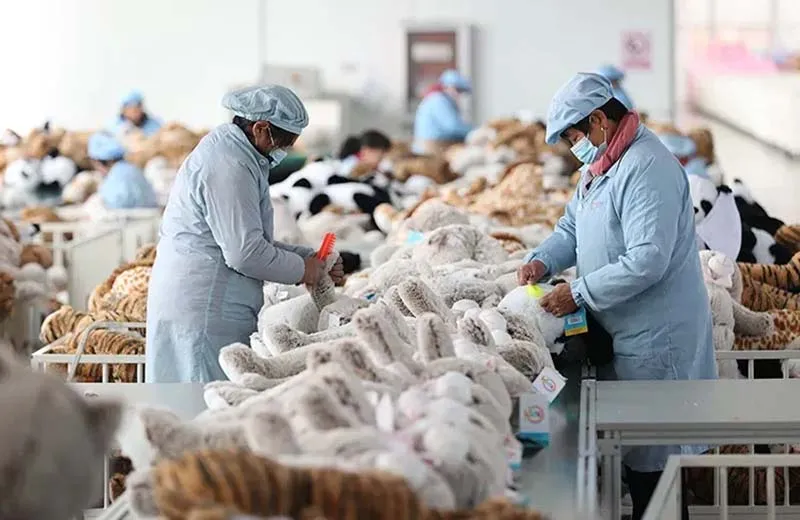
A baby comfort plush toy may become a child’s most trusted companion for years. KINWIN manufactures it with the care and rigor that trust demands.
Frequently Asked Questions — Baby Comfort Plush Toy Manufacturer
Frequently Asked Questions — Baby Comfort Plush Toy Manufacturer
Q1. What is the difference between standard plush toy safety and baby-specific safety requirements?
Standard plush toy safety (EN71 / ASTM F963) covers toys for children from 0-14 years, with specific additional requirements for the under-3 age group. Baby-specific safety goes further than the minimum legal requirements in several meaningful ways. Material purity: OEKO-TEX Standard 100 Product Class I, which is KINWIN’s mandatory standard for baby comfort plush, tests for over 100 substances at limits calibrated specifically for infant skin sensitivity — more stringent than the chemical testing required by EN71 alone. Design conservatism: legal compliance allows safety eyes to be used in under-3 toys if they pass pull force testing; KINWIN’s standard for baby comfort plush is fully embroidered features with no component risk whatsoever. Washability: legal requirements do not mandate washability; infant comfort toys will be washed repeatedly and KINWIN engineers for this. The minimum legal standard defines the floor; KINWIN’s baby comfort plush standard is built above that floor — because the users are too vulnerable and too important for a floor-level approach.
Q2. Can KINWIN make a baby comfort plush that is safe from birth (0 months)?
Yes — KINWIN manufactures newborn-safe comfort plush designed for use from birth. The specifications for newborn-safe comfort plush are the strictest in the baby category: OEKO-TEX Standard 100 Product Class I on all materials without exception, fully embroidered facial features with no components of any kind, no cords or strings anywhere on the product, size and weight appropriate for newborn grip capability (typically 15-22cm, under 150g), short pile or Minky fabric with no fiber shedding risk, washable construction that parents can launder frequently, and full EN71 under-3 and ASTM F963 certification. For brands supplying newborn products through hospitals, maternity wards, or gifting programs, KINWIN also applies hospital-distribution standards — combining newborn toy safety with healthcare hygiene considerations.
Q3. How does KINWIN ensure the embroidered facial features on baby plush won't come loose?
Embroidered features on baby comfort plush are integral to the fabric surface — they are stitched into the fabric with thread that becomes part of the textile structure, not attached as a separate component. The security of embroidery is confirmed through the same pull force testing applied to other toy components: EN71 Part 1 requires that all accessible elements withstand 90N for 10 seconds (for under-3 products) or 70N for 3+ products before being assessed for hazards. Because embroidery is thread-based rather than component-based, the pull test result is essentially a fabric tear test — the embroidery does not detach, the fabric around it would fail first, which is a different (and far safer) failure mode than a plastic component detaching and becoming a small part. KINWIN additionally tests embroidery thread color fastness to saliva and perspiration specifically for baby comfort plush — confirming that frequent mouthing of the face area does not result in dye transfer to the infant’s mouth.
Q4. My baby brand has a specific character concept. Can KINWIN develop a custom baby comfort plush from our design?
Yes — custom OEM baby comfort plush development is one of KINWIN’s core programs. The development process follows the standard KINWIN design alignment approach with additional baby-specific review stages: character proportions are assessed for infant grip suitability; face design is reviewed specifically for embroidery execution at baby plush scale; any proposed design elements are assessed against under-3 safety requirements before sampling begins — eliminating the risk of developing a design that cannot be manufactured safely. KINWIN signs NDA before any design is shared. The design alignment document specifically notes which design elements require adaptation for baby safety compliance and proposes alternatives, so you can make informed decisions before any physical work begins. Original baby character development typically adds 2-4 weeks to the first-order timeline compared to adult plush development, because the safety review stage is more rigorous.
Q5. Does a baby comfort plush need to be certified separately from standard plush toys, even if made by the same manufacturer?
Yes — toy safety certification is product-specific, not manufacturer-specific. Even if KINWIN has existing EN71 test reports and CE Declarations for other products, your specific baby comfort plush product requires its own testing and certification. The test reports must specifically describe your product — its materials, construction, dimensions, and intended age grade — and be based on testing of a representative sample of that specific product. This is not a bureaucratic formality: it is the correct structure for safety certification, because different materials and constructions produce different test results even from the same manufacturer. For baby comfort plush, KINWIN coordinates EN71 Parts 1, 2, and 3 testing at SGS, Intertek, or Bureau Veritas — all three parts are required for under-3 certification. The test reports and CE Declaration are prepared in your brand’s name as the EU responsible party. OEKO-TEX fabric certificates are provided alongside the safety documentation as material-level evidence supporting the product’s chemical safety.
If You Can lmagine lt,We Will Create lt!
1.Tell Us What You Need
Tell us as specific as possible of your needs and share your idea.
2.Get Solution & Quote
We will work on the best solution according to yourrequirements,the specific quote will be provided within 24 hours.
3.Approve for Mass Production
We will start mass production after getting your approval.
