 Skip to content
ECO PLUSH TOY MANUFACTURER
Eco Plush Toy Manufacturer
Custom eco plush toy manufacturing support for brands, retailers, baby product buyers, gift companies, museums, schools, promotional campaigns, and private label programs that need responsible material choices, documented claims, quality control, and shipment-ready production.
An eco plush toy manufacturer should help buyers make better material and sourcing decisions, not simply add the word eco to a standard stuffed animal. For modern brands and retailers, sustainability-related product development needs clear material choices, realistic claims, documented evidence, quality control, and packaging planning.
KINWIN supports custom eco plush toy projects using options such as recycled plush fabric, RPET filling, organic cotton fabric, lower-waste pattern planning, reduced packaging, paper-based tags, and buyer-specific sustainability documentation. We help buyers balance environmental goals with softness, safety, durability, cost, MOQ, testing, and retail presentation.
This page explains how to develop eco plush toys responsibly, what materials buyers can consider, how to avoid vague green claims, and how KINWIN helps projects move from concept to sample approval, material confirmation, production, inspection, packing, and shipment.
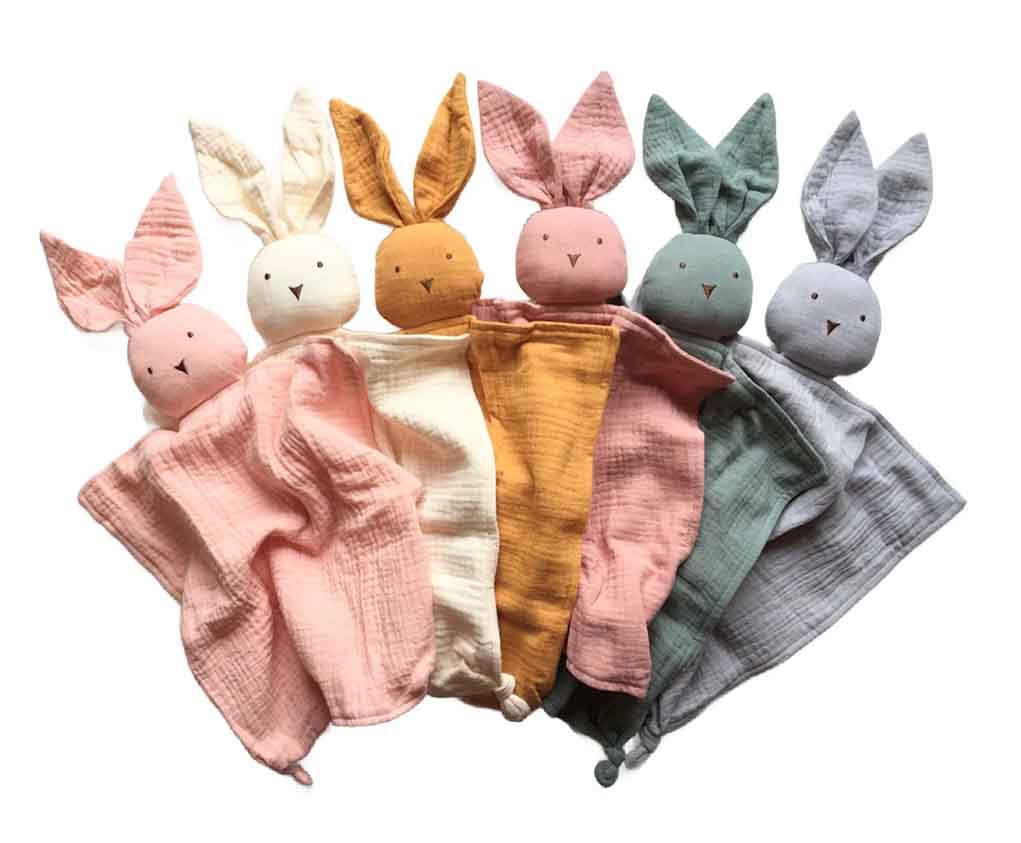

ECO SUPPLIER DECISION POINT
What an Eco Plush Toy Manufacturer Should Really Provide
Eco plush manufacturing is not only a material change. A buyer may want recycled fabric, organic cotton, RPET stuffing, kraft paper packaging, reduced plastic, or a more responsible supply story, but each option affects cost, handfeel, testing, labeling, availability, and production consistency.
A professional eco plush toy manufacturer should help buyers understand which environmental attributes are actually being improved and how those claims can be supported. Broad claims such as eco-friendly, green, or sustainable may sound attractive, but serious buyers need specific and verifiable details.
KINWIN supports buyers by reviewing material choices, claim wording, sample feasibility, testing expectations, packaging requirements, and bulk production control. The goal is to create plush products that are appealing, manufacturable, and easier for brands to explain responsibly.
Buyer decision point: choose a supplier that can explain the material and claim clearly, not only say the product is eco.
CLEAR ECO CLAIMS
Eco Plush Toys Should Be Built on Specific Claims
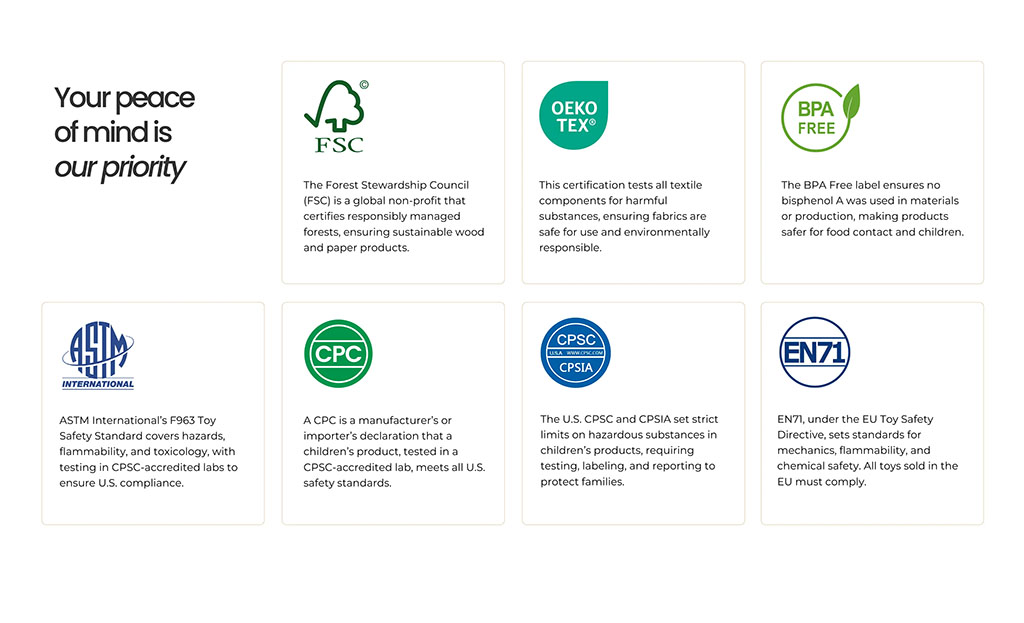
Environmental claims should be specific. Instead of saying a plush toy is simply eco-friendly, buyers can state more clearly that the product uses recycled polyester fabric, RPET filling, organic cotton fabric, FSC paper hangtags, reduced plastic packaging, or another defined improvement.
This matters because consumers, retailers, and regulators may interpret broad environmental claims in different ways. A vague claim can create confusion if the product includes only one improved component while the rest of the toy, packaging, or supply chain remains conventional.
KINWIN helps buyers separate product claims, packaging claims, and factory or sourcing claims. A recycled fabric claim is different from a recyclable packaging claim, and both are different from a claim about reduced plastic or responsible sourcing.
Buyer decision point: the best eco claim is narrow enough to be true and clear enough for customers to understand.
RESPONSIBLE MATERIAL OPTIONS
Eco Material Options for Custom Plush Toys
Different eco material options create different product effects. Buyers should choose based on product purpose, handfeel, safety, market requirements, and claim support.

Recycled Polyester Plush Fabric
Recycled polyester plush fabric can support brands that want to reduce reliance on virgin polyester. Buyers should confirm available pile length, softness, color options, MOQ, certification documents, and whether the fabric can meet product testing expectations.
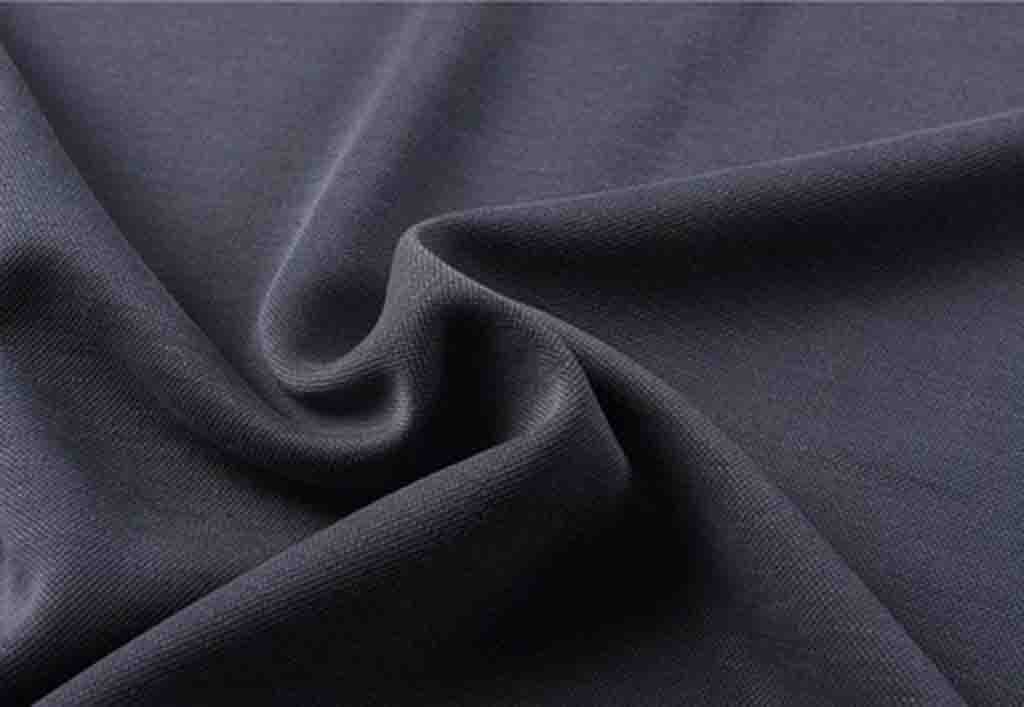
RPET Filling
RPET stuffing can be used in some plush projects when the buyer wants recycled filling content. The filling should still provide the required softness, shape recovery, cleanliness, and consistency for the final product.
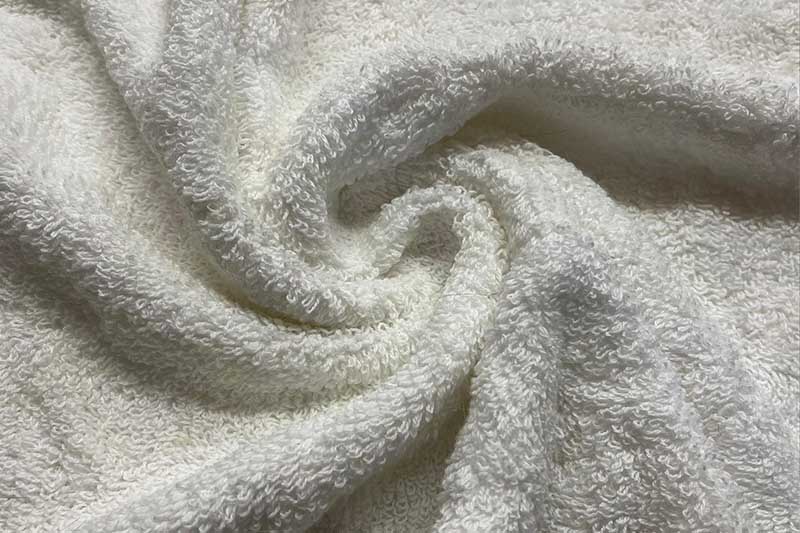
Organic Cotton Fabric
Organic cotton may be suitable for baby plush, comfort toys, natural-style gift products, and premium collections. Buyers should review fabric texture, shrinkage, color limitations, care instructions, and documentation requirements.
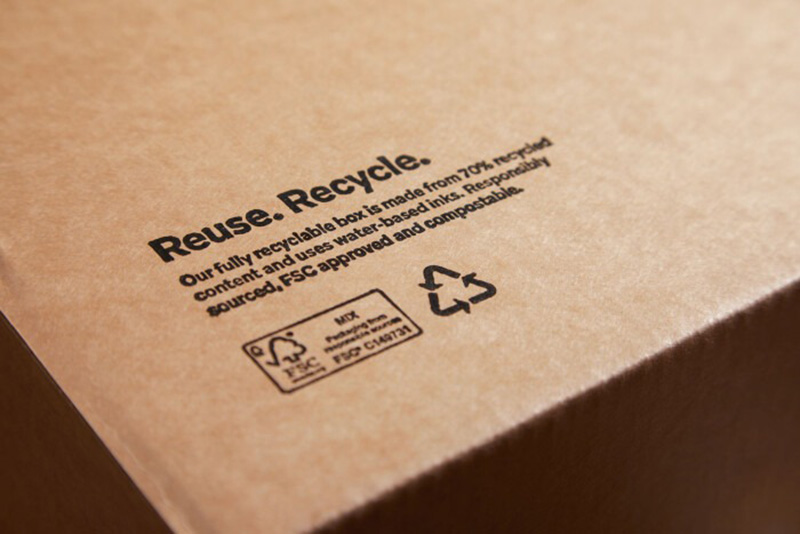
Lower-Impact Packaging Materials
Paper hangtags, kraft boxes, recycled paper cards, reduced polybags, and optimized carton packing can support a clearer sustainability story when they match the buyer's retail and shipment needs.
RECYCLED FABRIC DEVELOPMENT
Recycled Fabric Plush Toy Development
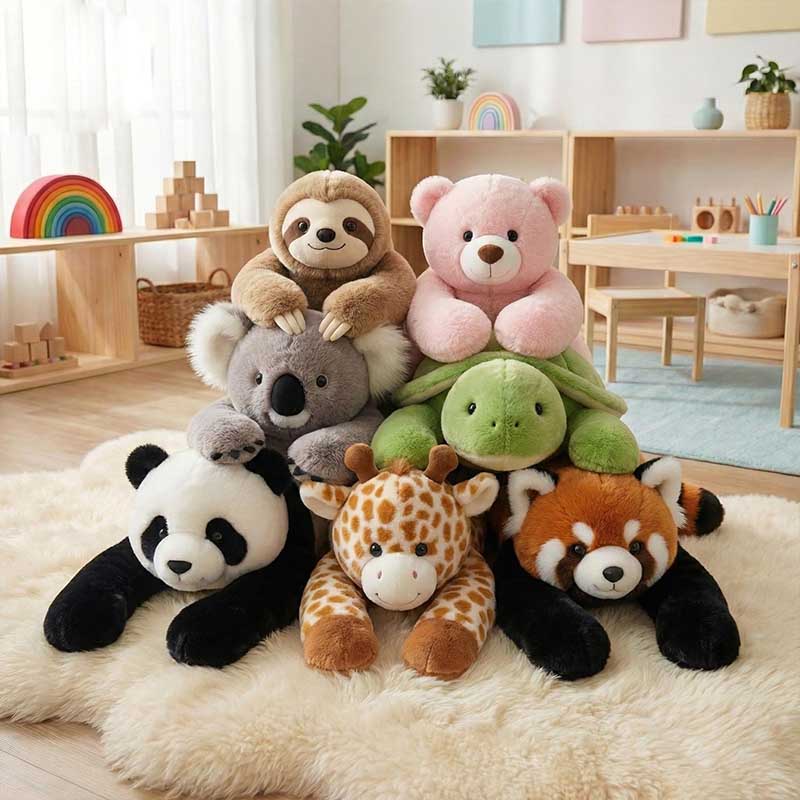
Recycled fabric is one of the most common directions for eco plush toys. It can be used for animal plush, mascot plush, retail plush, promotional plush, and private label stuffed animals when the buyer wants a more responsible material story.
The development process should still start with product needs. Buyers must confirm whether the recycled fabric can achieve the required color, pile height, softness, stretch, durability, and sewing performance. Some recycled fabrics may have different availability or MOQ from regular plush fabrics.
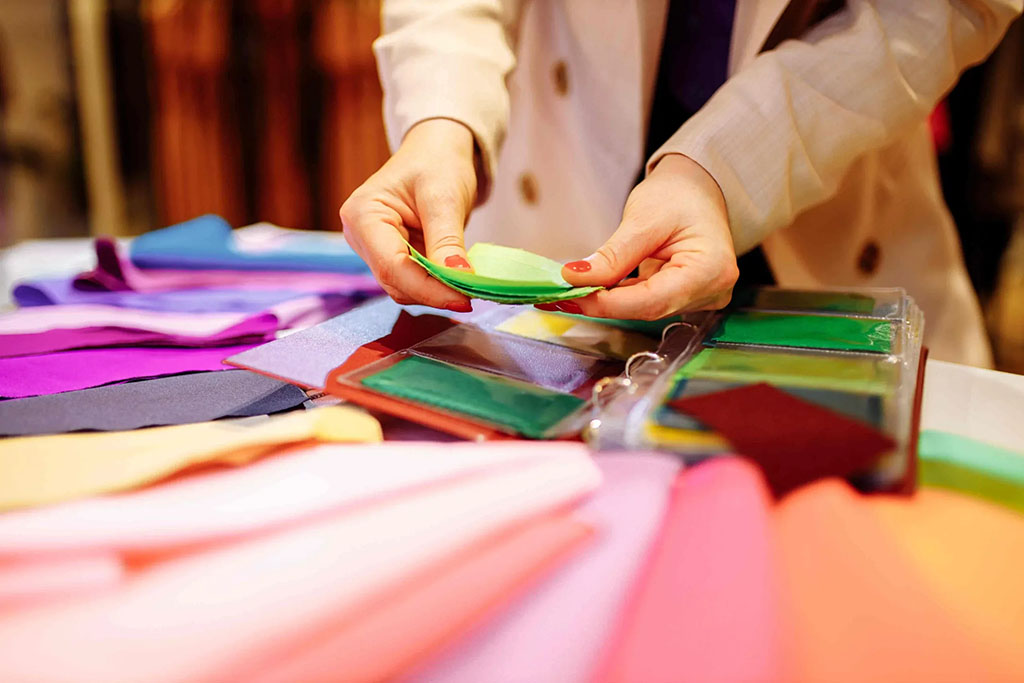
KINWIN helps buyers review recycled fabric swatches before sampling. Once a material is approved, fabric references and batch information should be controlled so bulk goods stay aligned with the approved sample.
Buyer decision point: recycled fabric should be approved through real swatches and samples, not only selected from a material name.
ORGANIC AND NATURAL FABRICS
Organic Cotton and Natural Fabric Plush Toys
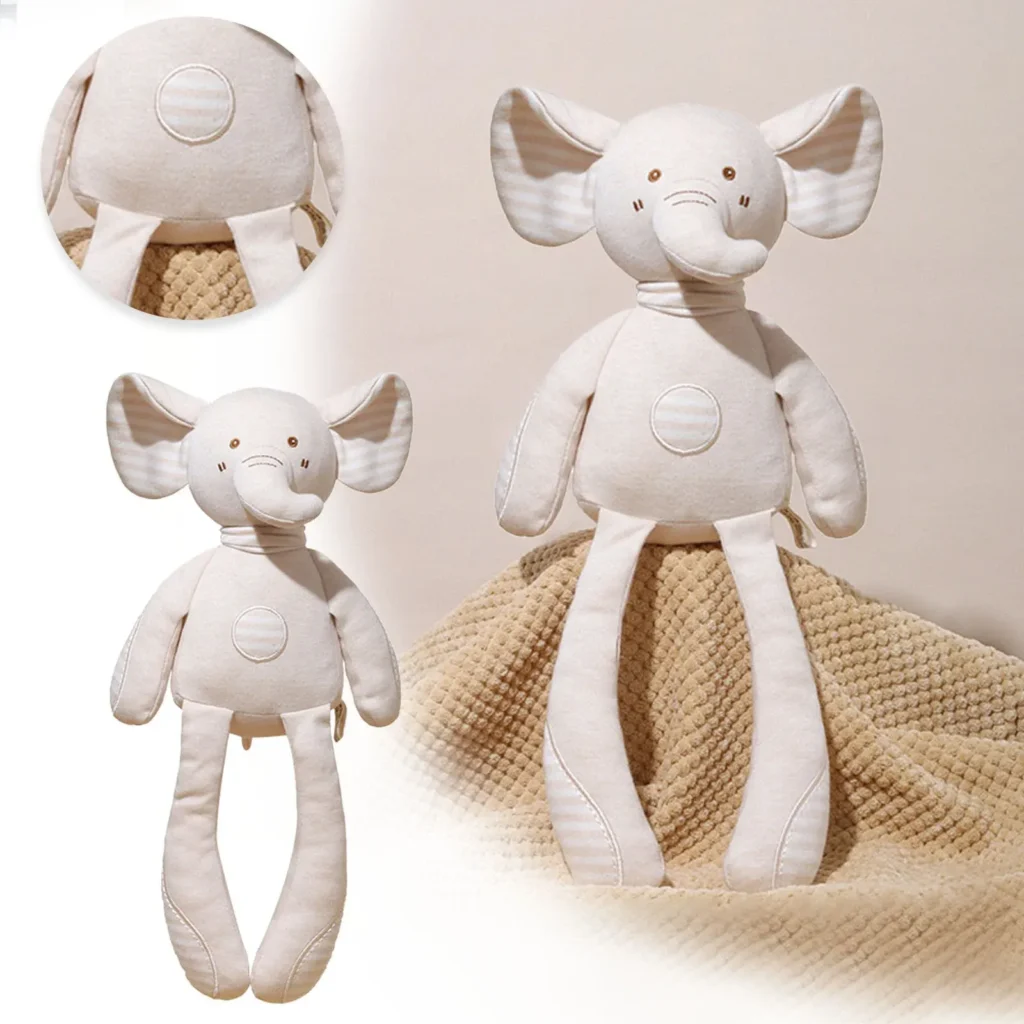
Organic cotton and natural-style fabrics can be attractive for baby products, wellness gifts, museum collections, educational toys, boutique retail, and brands that prefer a warmer and more natural product language.
These materials may not behave like synthetic plush. They can have different handfeel, color depth, surface texture, shrinkage, sewing behavior, and care label needs. Buyers should review whether the final product should feel soft and fluffy, flat and fabric-like, or simple and natural.
KINWIN helps buyers match natural material choices with product purpose. For baby plush and comfort toys, safety review, seam strength, label placement, and clean production handling should be considered together with the material story.
Buyer decision point: natural fabric should fit the product experience, not only the marketing direction.
RPET FILLING PLANNING
RPET Filling and Stuffing Choices
Stuffing choice affects softness, shape, weight, compression recovery, shipping volume, and environmental claims.
Softness and Recovery
The filling must support the intended handfeel and shape. A recycled filling option should still recover well after packing and shipment, especially for retail plush or premium gift products.
Claim Clarity
If only the filling is recycled, the claim should make that clear. A product with RPET filling is not automatically a fully recycled plush toy unless other components also support that claim.
Production Consistency
Filling density should be controlled from sample to bulk production. Too little filling may make the toy look flat, while too much filling may make it hard, heavy, or less comfortable.
LOWER-IMPACT PACKAGING
Eco Plush Toy Packaging Options
Packaging is often the easiest place to reduce unnecessary material, but it still has to protect the plush toy and support retail or warehouse requirements.
Reduced Plastic Packaging
Some projects can reduce individual polybags or replace them with paper-based packaging, depending on cleanliness requirements, destination warehouse rules, and retail presentation needs.
Paper Hangtags and Cards
Paper hangtags, recycled paper cards, kraft backing cards, and printed care cards can support an eco product story when the claim is accurate and the material is documented.
Optimized Carton Packing
Better carton dimensions and quantity planning can reduce wasted space and improve freight efficiency without crushing the plush toy or retail packaging.
Retail Presentation Balance
Eco packaging should still help the product sell. Buyers need to balance reduced material with barcode scanning, shelf display, product protection, and customer information.
CLAIM DOCUMENTATION
Documentation for Eco Plush Claims
Eco claims become stronger when they are supported by documentation. Depending on the material and buyer requirements, this may include recycled content certificates, organic cotton documentation, supplier declarations, material specifications, test reports, packaging information, or chain-of-custody style records.
Not every project needs the same documents. A small promotional plush using recycled hangtags may need different support from a retail baby plush claiming organic cotton fabric or recycled polyester content.
KINWIN helps buyers organize available material and production information. We recommend confirming final claim wording and documentation requirements with the buyer’s compliance team, retailer, importer, or qualified advisor before packaging is printed.
Buyer decision point: documentation should be planned before the eco claim appears on packaging, hangtags, or product pages.
GREEN CLAIM RISK CONTROL
Avoiding Greenwashing in Plush Toy Marketing
Greenwashing risk appears when a product claim sounds broader than the actual improvement. For example, a plush toy with recycled paper packaging should not be presented as fully sustainable if the toy itself uses conventional materials and no other environmental attributes are documented.
A stronger approach is to state the specific improvement: recycled polyester outer fabric, RPET filling, organic cotton body fabric, reduced plastic packaging, or recycled paper hangtag. The buyer can then explain what changed and what did not change.
KINWIN encourages buyers to use accurate, qualified, and product-specific language. This helps protect the brand, supports retailer review, and gives customers a clearer reason to trust the product story.
Buyer decision point: a narrow truthful claim is better than a broad claim that cannot be supported.
DESIGN FOR ECO PRODUCTION
Eco Plush Toy Design Considerations
Eco plush development should consider design, materials, durability, safety, packaging, and product life together.
Simpler Construction
A simpler plush structure can reduce production difficulty, material waste, and quality risk. It may also make the product easier to repeat in future orders.
Durability as Sustainability
A plush toy that lasts longer and remains attractive may support a more responsible product story than a fragile item that quickly becomes waste.
Material Mixing
Using many different materials can complicate claims, testing, sourcing, and end-of-life communication. Buyers should decide which materials are truly necessary.
Label and Story Placement
Eco information can appear on hangtags, care labels, packaging, product pages, or inserts. The wording should be clear and consistent across all channels.
ECO PRODUCTION QC
Quality Control for Eco Plush Production
Eco material choices still need the same strong production control as any other custom plush order.
Material Verification
Approved eco fabrics, filling, labels, and packaging materials should be checked against the confirmed sample and required documents before production.
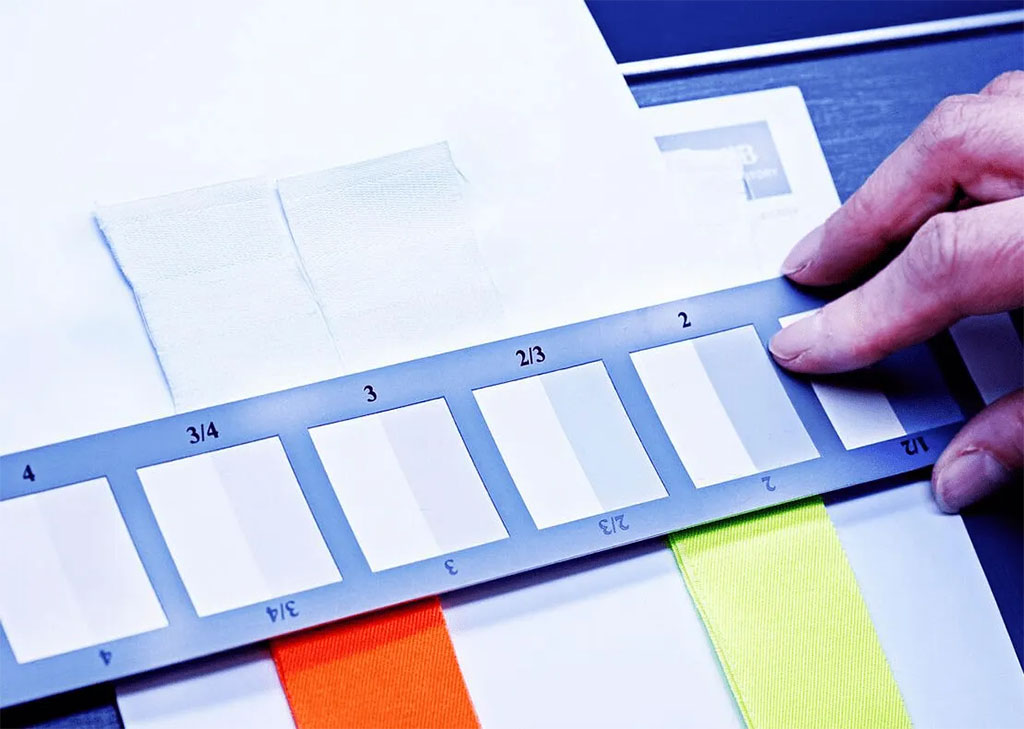
Color and Handfeel Control
Recycled or organic materials may have different texture and color behavior. Bulk production should be compared with approved swatches and samples.
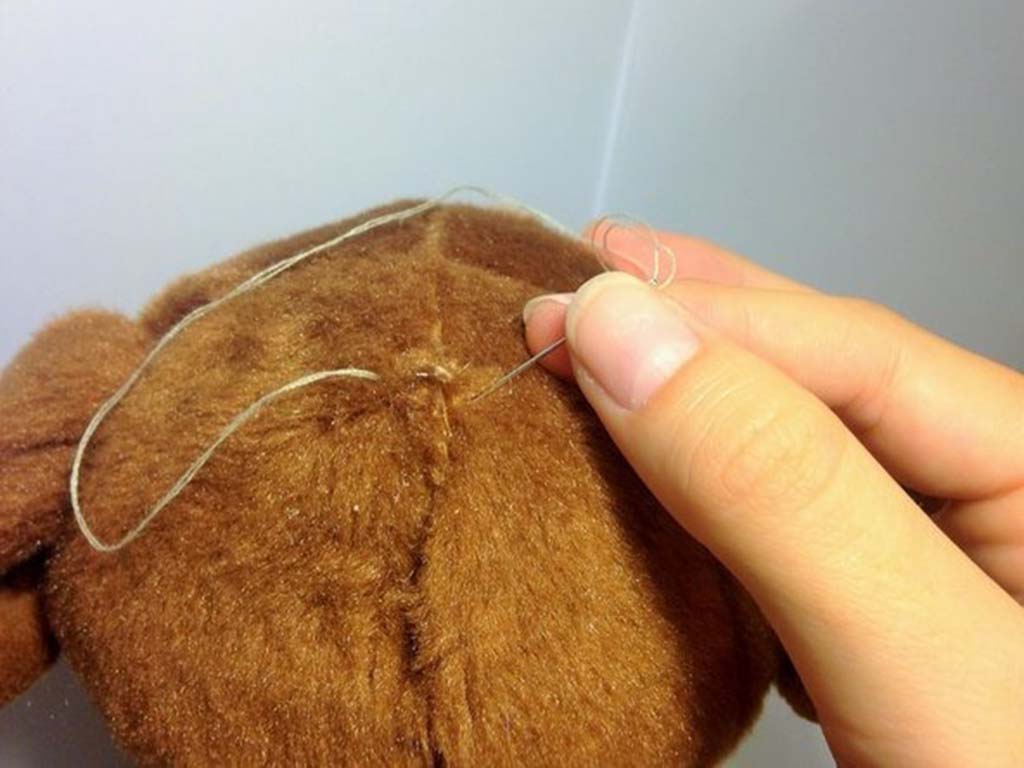
Sewing and Stuffing Standards
Seams, shape, filling density, closure strength, and surface cleanliness should remain consistent even when alternative materials are used.
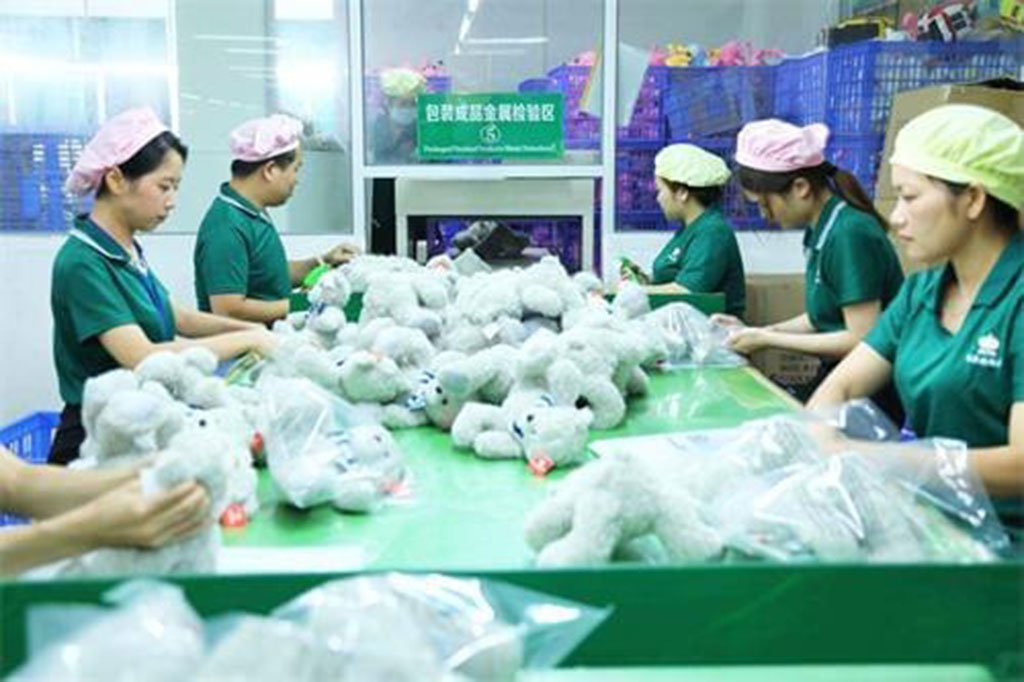
Final Packing Review
Before shipment, the factory should check label accuracy, packaging material, carton marks, quantity, cleanliness, and buyer-specific eco documentation needs.
ECO PLUSH CATEGORIES
Eco Plush Categories KINWIN Can Support
Eco plush concepts can be adapted to many product categories when materials, claims, and product requirements are planned together.
Baby and Comfort Plush
Soft fabrics, careful seams, clean stuffing, simple shapes, and clear care labels are important when developing eco-oriented baby or comfort plush toys.
Retail and Private Label Plush
Retail eco plush projects may need branded hangtags, packaging claims, barcode labels, material documentation, and repeat-order consistency.
Mascot and Character Plush
Eco materials can be used for mascot or character plush when the design can still meet color, proportion, expression, and durability expectations.
Promotional and Event Plush
Promotional eco plush can support brand campaigns when the material story, packaging, and delivery schedule are planned early.
QUOTE PREPARATION
What Buyers Should Prepare Before Quotation
Eco plush quotation needs both product information and sustainability expectations.
Product Design Information
Provide artwork, target size, plush style, fabric preference, color references, embroidery files, accessory details, and packaging direction.
Eco Material Expectations
Share whether you want recycled fabric, RPET filling, organic cotton, reduced plastic packaging, recycled paper tags, or another specific material direction.
Claim and Documentation Needs
Tell us what claim you want to make and what documents your brand, retailer, importer, or compliance team needs before production or shipment.
Commercial and Market Details
Provide target quantity, destination market, age group, testing expectations, target price direction, delivery schedule, and shipment destination.
WHY KINWIN
Why Work with KINWIN as Your Eco Plush Toy Manufacturer
KINWIN supports buyers who need practical eco plush development, not vague sustainability language.
Responsible Material Review
We help buyers compare recycled fabric, RPET filling, organic cotton, packaging materials, handfeel, availability, MOQ, and documentation requirements.
Custom Plush Manufacturing Experience
KINWIN supports baby plush, mascot plush, retail plush, promotional plush, sound plush, logo plush, character plush, and private label stuffed animals.
Claim and Packaging Coordination
We can help organize material information, label content, hangtags, packaging wording, carton information, and buyer-specific document needs.
MOQ for Custom Plush Projects
KINWIN's standard MOQ for custom plush toy projects starts from 500 pcs, depending on design, eco materials, size, packaging, testing expectations, and production complexity.
START YOUR ECO PLUSH PROJECT
Start Your Eco Plush Toy Project with KINWIN
If you need an eco plush toy manufacturer for a brand, retail line, baby product, gift program, museum collection, school project, promotional campaign, or private label plush series, KINWIN can help you review material options, claim wording, sample feasibility, packaging, quality control, and shipment preparation.
Send us your artwork, target size, material preference, eco claim expectation, quantity, destination market, packaging needs, testing requirements, and delivery schedule. Our team can help you build a more responsible and manufacturable custom plush solution.
- Custom eco plush toys with recycled fabric, RPET filling, organic cotton, or lower-impact packaging options
- Support for material review, claim documentation, sample development, QC, packing, and shipment
- Careful wording for eco claims to reduce vague or unsupported green marketing risk
- Standard MOQ for custom plush toy projects starts from 500 pcs
FREQUENTLY ASKED QUESTIONS
FAQ: Eco Plush Toy Manufacturer
What is an eco plush toy?
An eco plush toy usually refers to a stuffed animal that uses a specific environmental improvement, such as recycled fabric, RPET filling, organic cotton, reduced plastic packaging, or documented lower-impact materials.
Can KINWIN make plush toys with recycled fabric?
Yes. KINWIN can support custom plush toys using recycled fabric options when suitable materials, colors, MOQ, testing needs, and documentation requirements are confirmed.
Can plush toys use RPET filling?
Yes, some plush projects can use RPET filling. The final decision depends on softness, shape, recovery, product purpose, buyer claims, and available documentation.
Is every eco plush toy biodegradable?
No. Eco plush toys are not automatically biodegradable. Buyers should avoid biodegradable claims unless the claim is specifically supported by qualified evidence for the full product and disposal conditions.
Can KINWIN help with eco packaging?
Yes. KINWIN can help review reduced plastic packaging, paper hangtags, kraft boxes, recycled paper cards, carton optimization, and buyer-specific packaging requirements.
What documents are needed for eco plush claims?
Document needs depend on the claim. Buyers may need recycled content certificates, organic material documents, supplier declarations, material specifications, packaging information, or retailer-specific forms.
Can eco plush still be soft and premium?
Yes, but material selection matters. Buyers should review swatches and samples to confirm handfeel, appearance, color, durability, and production feasibility before bulk orders.
What is the MOQ for custom eco plush toys?
KINWIN's standard MOQ for custom plush toy projects starts from 500 pcs. Eco material availability, certification needs, size, packaging, and production complexity may affect final feasibility.
If You Can lmagine lt,We Will Create lt!
1.Tell Us What You Need
Tell us as specific as possible of your needs and share your idea.
2.Get Solution & Quote
We will work on the best solution according to yourrequirements,the specific quote will be provided within 24 hours.
3.Approve for Mass Production
We will start mass production after getting your approval.
