 Skip to content
Custom Mascot Plush Toys — Bringing Your Official Character to Life in Soft Form
Custom Mascot Plush Toys — Bringing Your Official Character to Life in Soft Form
Sports Teams · Schools & Universities · Corporate Mascots · Costume-to-Plush Matching · CE/ASTM · MOQ 500 pcs
A mascot is not a character a brand is discovering — it is a character the organization has already committed to. It has a costume, a name, a set of appearances at games or events, and a fan base that recognizes it instantly. A mascot plush toy’s job is different from an original IP character’s job: it does not need to establish identity from scratch, it needs to accurately extend an identity that already exists into a product people can take home.
KINWIN manufactures custom mascot plush toys for professional and collegiate sports teams, schools, corporate brands, minor league franchises, esports organizations, and civic institutions. Our process starts from what already defines your mascot — costume reference, brand guidelines, existing artwork — and produces a plush version that reads as unmistakably the same character, not a loose interpretation of it.

Why Mascot Plush Is a Different Manufacturing Problem
Why Mascot Plush Is a Different Manufacturing Problem
Most character plush projects begin with a blank page — a brand deciding what its character should look like. Mascot plush projects begin with constraints: an existing costume silhouette, an established color palette, a name and personality already known to the fan base, and often a governing body (league, university licensing office, brand marketing department) that must approve the final product against those constraints.
This changes the manufacturing priority. The central question is not “what should this character look like” — it is “how closely does this plush match what people already know.” Deviation reads as a mistake, not a creative choice.
Matching the Plush to the Existing Mascot Identity
Matching the Plush to the Existing Mascot Identity — 4 Reference Sources
Mascot Costume (Photos, In Person)
Provides: 3D silhouette, proportions, color relationships, texture cues
How KINWIN uses it: Primary shape reference — costume proportions translated to a stable plush-appropriate form
Team / Brand Style Guide
Provides: Approved color codes, logo usage rules, prohibited alterations
How KINWIN uses it: Locks fabric and embroidery color matching, logo placement rules
Existing 2D Mascot Artwork
Provides: Face design, expression, simplified graphic identity
How KINWIN uses it: Cross-checked against costume reference — 2D art and costume do not always agree, and KINWIN flags conflicts for the client to resolve
League / Licensing Requirements
Provides: Approval process, required markings, restricted design elements
How KINWIN uses it: Built into the design alignment and sample approval workflow
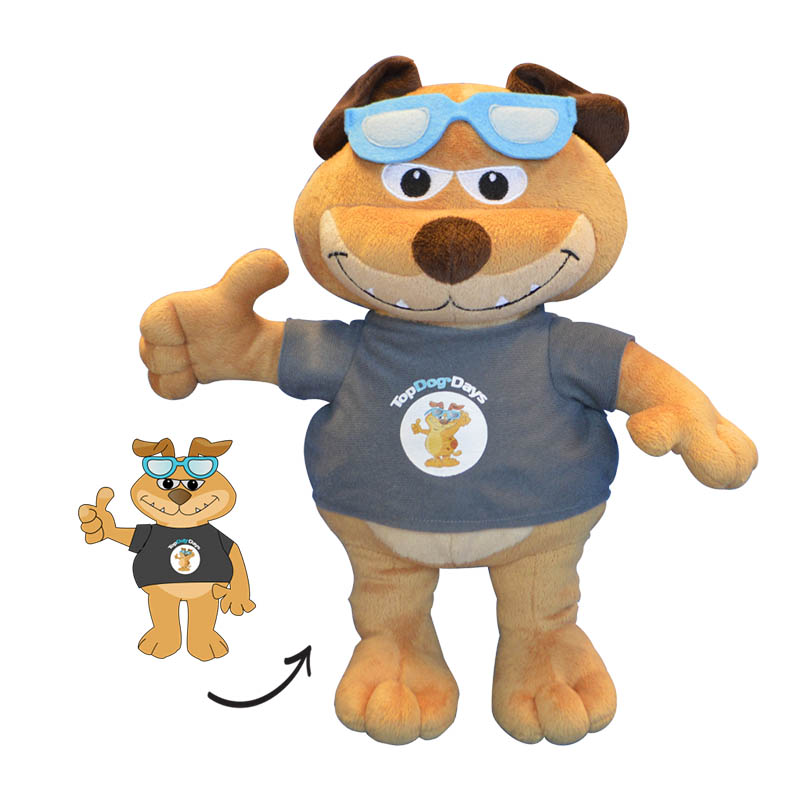
The Mascot-to-Plush Design Process
The Mascot-to-Plush Design Process — 4 Steps
1. Reference Consolidation
Costume photography, brand style guide, existing merchandise, and any prior plush attempts are reviewed together. Where sources conflict — a common situation, since costumes and 2D branding are often designed by different teams at different times — KINWIN identifies the conflicts and asks the client which reference takes priority.
2. Proportion Translation
Mascot costumes are built for a human performer inside them, which means their proportions are constrained by practical costume-making, not by what looks best as a standalone plush object. KINWIN’s design team adapts costume proportions into a form that reads correctly at plush scale — typically with a larger head-to-body ratio than the costume itself.
3. Color and Material Matching
Team and brand colors are matched to Pantone references using fabric and embroidery thread from KINWIN’s color-matched inventory. Where a brand’s official colors do not have an easy direct fabric equivalent, KINWIN proposes the closest achievable match and confirms it against a physical swatch before development proceeds.
4. Approval Routing
Many mascot programs — particularly professional sports, collegiate athletics, and licensed corporate brands — require sign-off from a marketing department, licensing office, or league office before a product can be sold. KINWIN builds development and sampling timelines around these external approval steps.
Fabric and Color Matching: The Technical Reality
Fabric and Color Matching — The Technical Reality
Color accuracy is the single most scrutinized element of any mascot plush program — a team, school, or brand will notice a color mismatch before they notice almost anything else, because color is what makes the character instantly identifiable at a glance.
Matching Standard Team and Brand Colors
Most solid team colors — navy, red, gold, forest green, and similar standard palette colors — have close fabric and embroidery thread equivalents in KINWIN’s color-matched inventory, typically matched within a tight Delta-E tolerance against a Pantone reference and confirmed against a physical swatch before bulk fabric is dyed.
The Metallic and Fluorescent Color Problem
Metallic gold, metallic silver, and fluorescent or neon team colors are the most common source of client disappointment, because standard dyed plush fabric physically cannot reproduce a metallic sheen or true fluorescent glow. KINWIN addresses this directly during design consultation, showing the achievable match before development proceeds.
Batch-to-Batch Consistency for Reorders
Dye lots vary between fabric production runs even when the same Pantone code is specified. KINWIN retains the original approved fabric swatch and embroidery thread reference for every mascot program and checks new production against that physical reference on every reorder.
Cross-Material Consistency
A single mascot plush order often uses several materials that all need to read as the same color — body fabric, embroidery thread, printed or heat-transferred elements, and sometimes a woven label or patch. KINWIN cross-checks all materials used in a program against each other under consistent lighting before finalizing a color-matched material set.
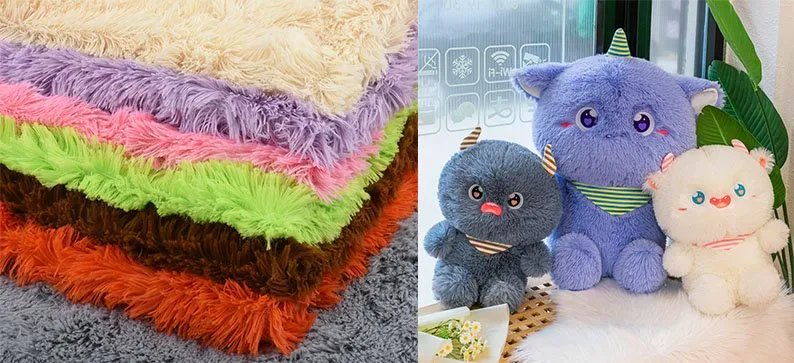
Construction and Durability for Real-World Mascot Plush Use
5 Stress Points — Failure Modes and KINWIN's Construction Response
Head-to-Body Seam
Common failure mode: Separation from repeated squeezing and swinging by grip
KINWIN response: Reinforced double-stitched seam with bar-tack reinforcement at the highest-stress point
Embroidered Eyes / Features on High-Handling Products
Common failure mode: Thread loosening, especially on giveaway-night volume products
KINWIN response: Securing stitches beneath embroidery layer, tested against a defined pull-force threshold
Appendages (Ears, Arms, Tail)
Common failure mode: Detachment — also a choking hazard concern for younger fans
KINWIN response: Reinforced attachment points meeting the same pull-force standard applied to safety-critical small parts
Surface Fabric Under Retail Lighting
Common failure mode: Color fading on products displayed in direct light for extended periods
KINWIN response: Colorfastness testing against light exposure as part of standard fabric qualification
Bulk Giveaway Packaging
Common failure mode: Compression damage, shape loss before the item reaches the fan
KINWIN response: Packaging engineered for the specific product size, avoiding over-compression during transit
Applying Jersey Numbers, Team Logos, and Uniform Detail
4 Application Methods — Best Use and Considerations
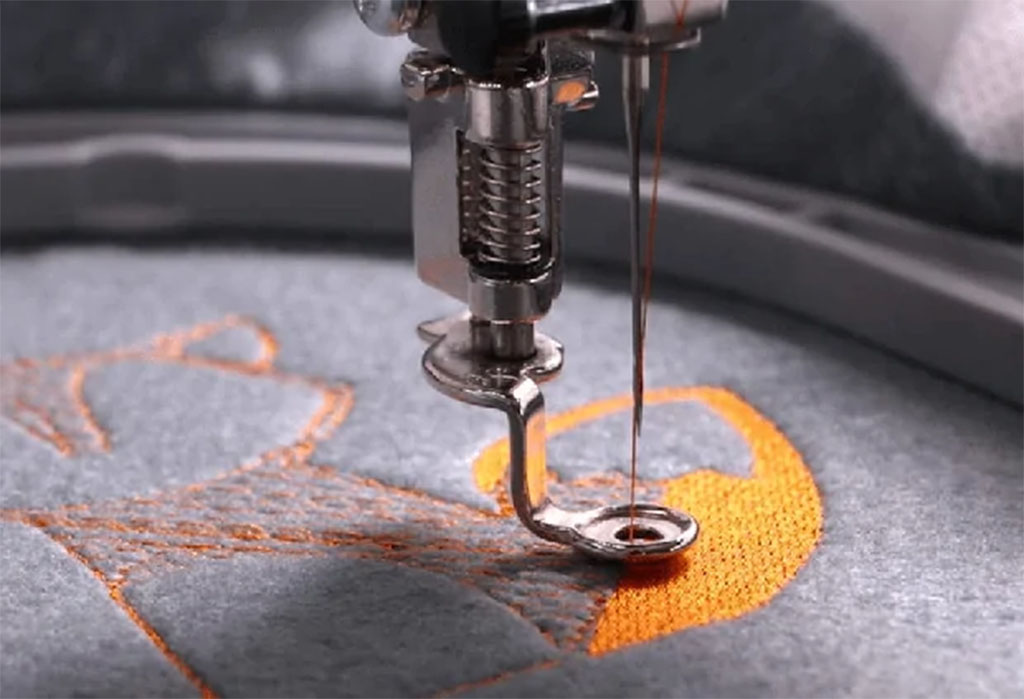
Embroidery
Best for: Team logos, numbers, crests requiring long-term durability
Considerations: Highest durability and most premium appearance; minimum feature size applies for fine detail
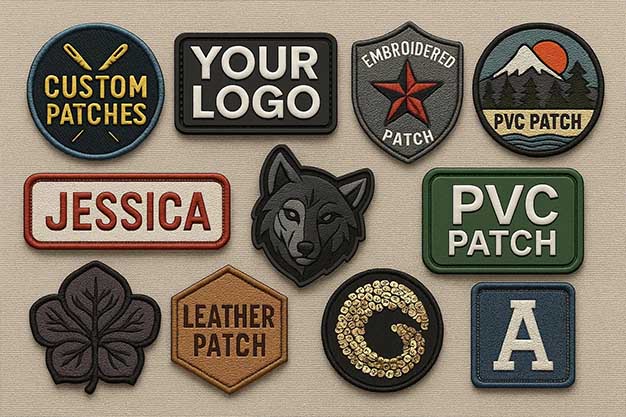
Woven Patch
Best for: Complex multi-color crests or seals
Considerations: Reproduces fine detail embroidery cannot achieve at small scale; sewn on as a separate applied piece
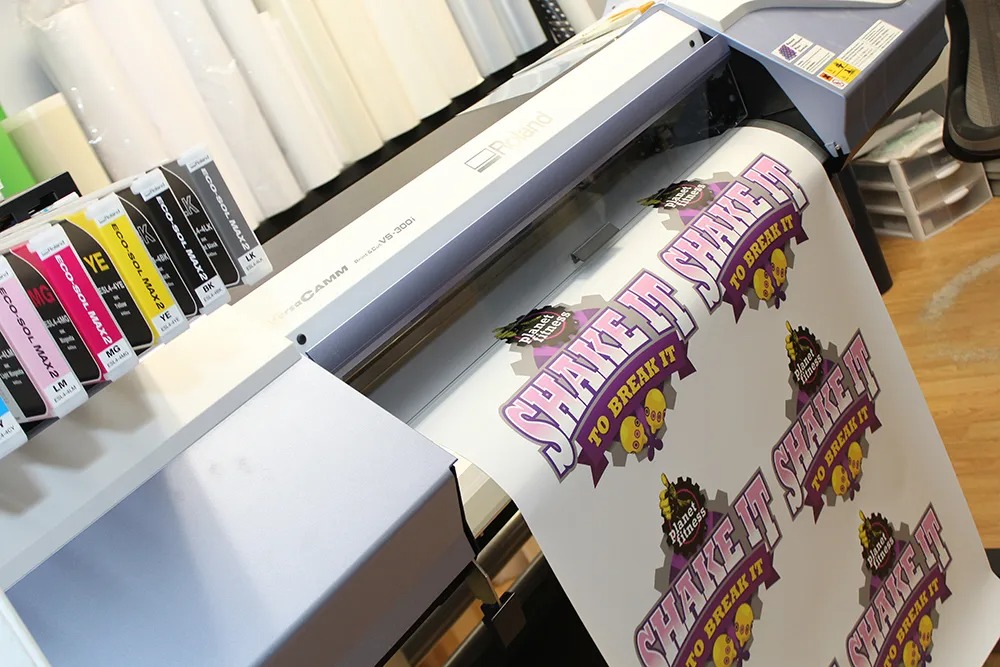
Heat Transfer / Sublimation Print
Best for: Full-color graphics, gradients, photographic-style logos
Considerations: Best for complex color work; less durable under heavy repeated handling than embroidery
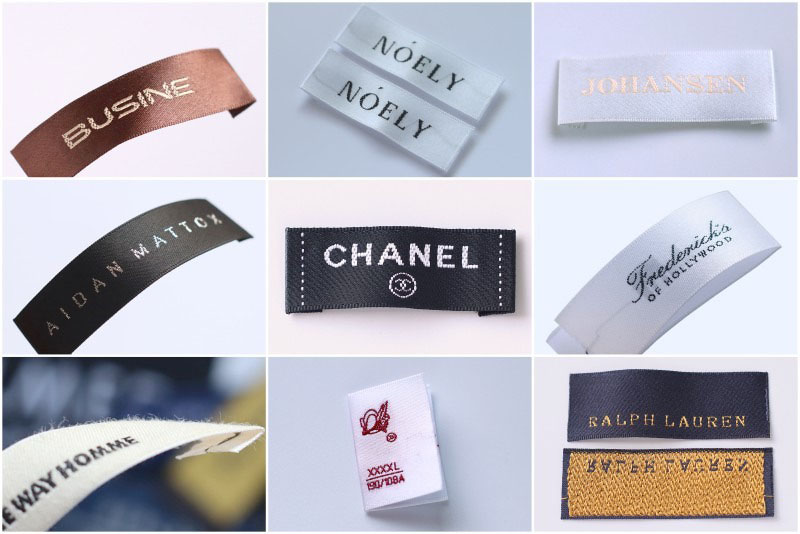
Woven Label
Best for: Official league or institutional markings, care and compliance labeling
Considerations: Standard for markings that must remain legible and unaltered over the product’s life
For programs involving multiple player numbers or personalized jerseys on the same mascot body — common in fan club or booster programs — KINWIN plans the embroidery digitization file once per number set and applies it consistently across the production run, rather than treating each number as a one-off customization.
Safety Compliance for Mascot Plush
Safety Compliance — 5 Requirements for Mascot Plush
CE Marking (EU/UK)
What it covers: Mechanical safety, flammability, chemical migration under EN71 Parts 1-3
KINWIN approach: Full EN71 testing on every mascot program; CE technical file provided under your brand name
ASTM F963 (US)
What it covers: Mechanical, flammability, and chemical safety for the US market
KINWIN approach: Testing and CPC (Children’s Product Certificate) documentation for US distribution
Small Parts / Choking Hazard
What it covers: Detachable components such as eyes, ears, and jersey accessories
KINWIN approach: Pull-force testing on all attached components against age-appropriate thresholds
Colorfastness and Dye Safety
What it covers: Migration of dye or color onto skin, azo dye restrictions
KINWIN approach: OEKO-TEX-aligned fabric and dye sourcing across all mascot color matches
Age Grading and Labeling
What it covers: Correct warning labels for small parts, cord length, and intended age range
KINWIN approach: Age grade determined during design review and reflected on hang tags and packaging
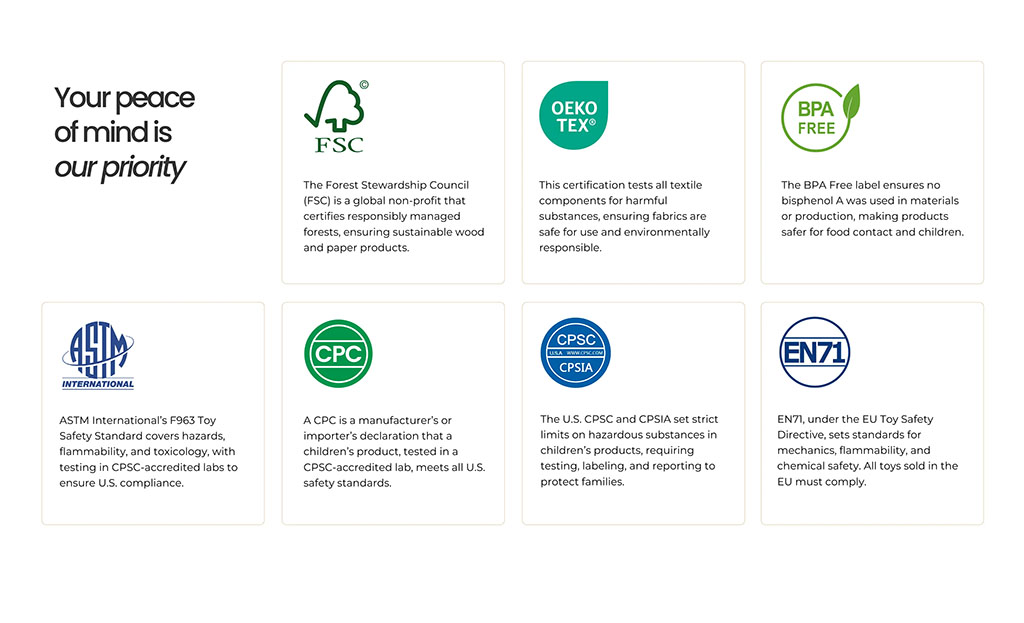
Compliance documentation — test reports, CE Declaration of Conformity, CPC — is issued in your organization’s name, not KINWIN’s, since your organization is the entity placing the product into the market.
Building a Full Mascot Program: Beyond the Single Character
5 Program Expansion Types Beyond the Core Character
Size Variants
Description: Same mascot design produced in mini, standard, and oversized formats
Typical use case: Different price points and use cases — keychain giveaways alongside full retail plush
Rival or Opponent Mascot
Description: A visiting team’s or rival institution’s mascot, for matchup-specific merchandise
Typical use case: Rivalry game merchandising, multi-team gift sets
Seasonal / Holiday Variants
Description: The same mascot in a holiday costume or seasonal color treatment
Typical use case: Holiday retail windows, limited-run collector interest
Mini Mascot Squad
Description: A full roster of teammates, sidekick characters, or division rivals produced as a matched set
Typical use case: Collectible series merchandising, youth fan club engagement
Uniform Variants
Description: Home jersey vs. away jersey versions of the same mascot
Typical use case: Matching fan preference for home vs. away team colors
Common Mistakes in Mascot Plush Programs — and How to Avoid Them
5 Common Mistakes and How to Avoid Them
Approving Color from a Digital Reference Only
Consequence: Fabric dye does not match the expected shade once produced physically
How to avoid: Always confirm against a physical fabric swatch before bulk production, not a screen color
Starting Development After the Date Is Already Close
Consequence: Rushed sampling, limited time to correct issues, risk of missing the date entirely
How to avoid: Share the target date at project kickoff; work backward from it immediately
Treating Costume Proportions as the Plush Design
Consequence: Resulting plush looks awkward or unappealing despite being technically accurate to the costume
How to avoid: Allow the design team to adapt proportions for plush appeal while preserving recognizability

Skipping Licensing or Brand Office Review Until Late
Consequence: Late-stage rejection requires reworking an already-produced sample
How to avoid: Route the design alignment document through internal approval before pattern development begins
No Golden Sample Retained After First Production Run
Consequence: Reorders drift in color and proportion from the original approved version over time
How to avoid: KINWIN archives a physical golden sample and full specification file for every mascot program
Mascot Plush Product Formats
5 Mascot Plush Product Formats
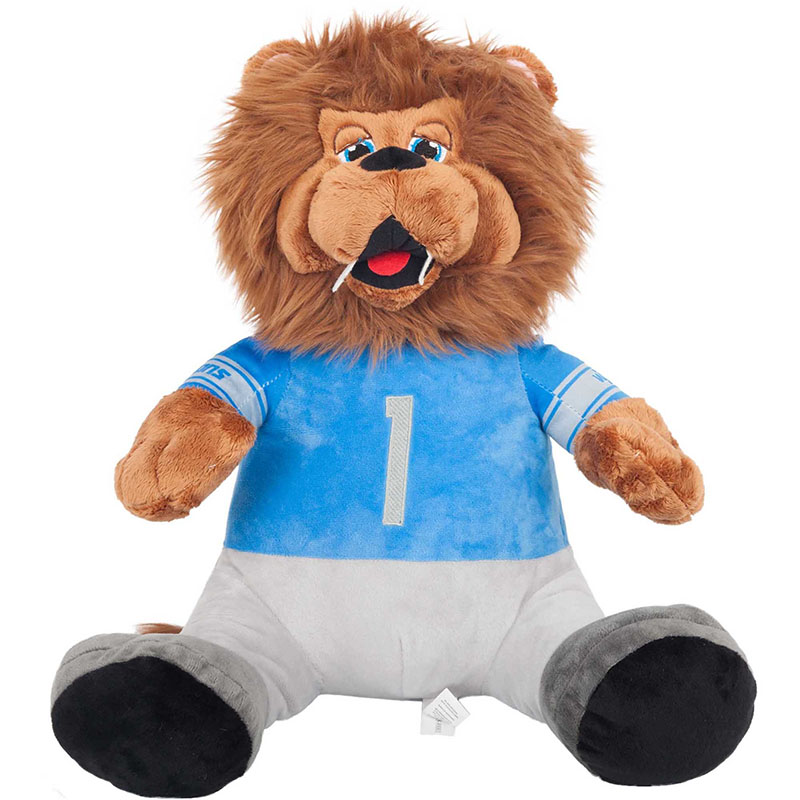
Standard Mascot Plush
Typical size: 25–40cm
Best application: Team stores, campus bookstores, general retail
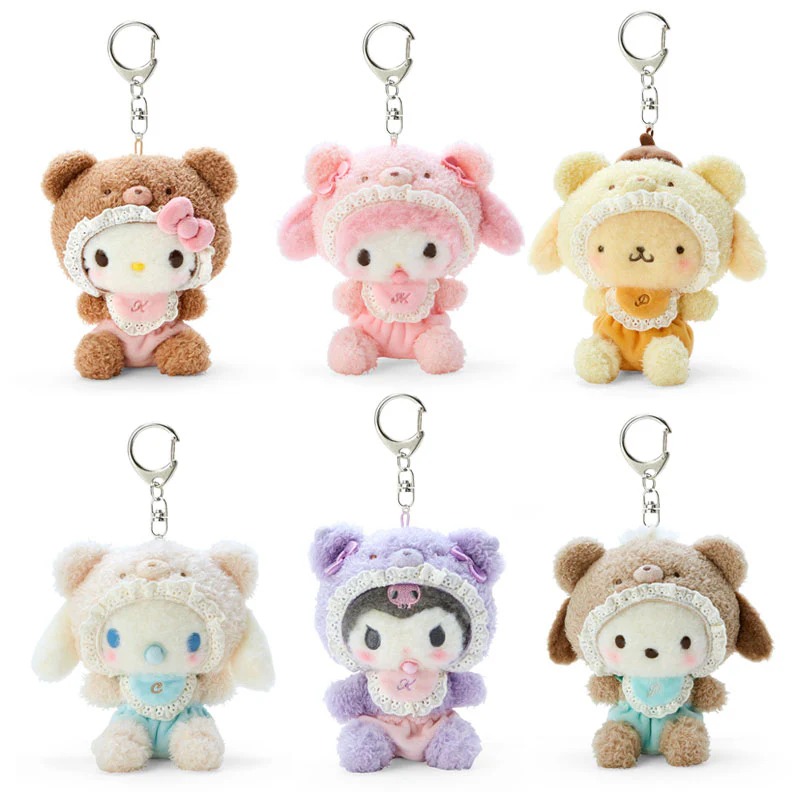
Mini Mascot / Keychain
Typical size: 10–15cm
Best application: Concession stands, gift-with-purchase, bulk giveaway nights
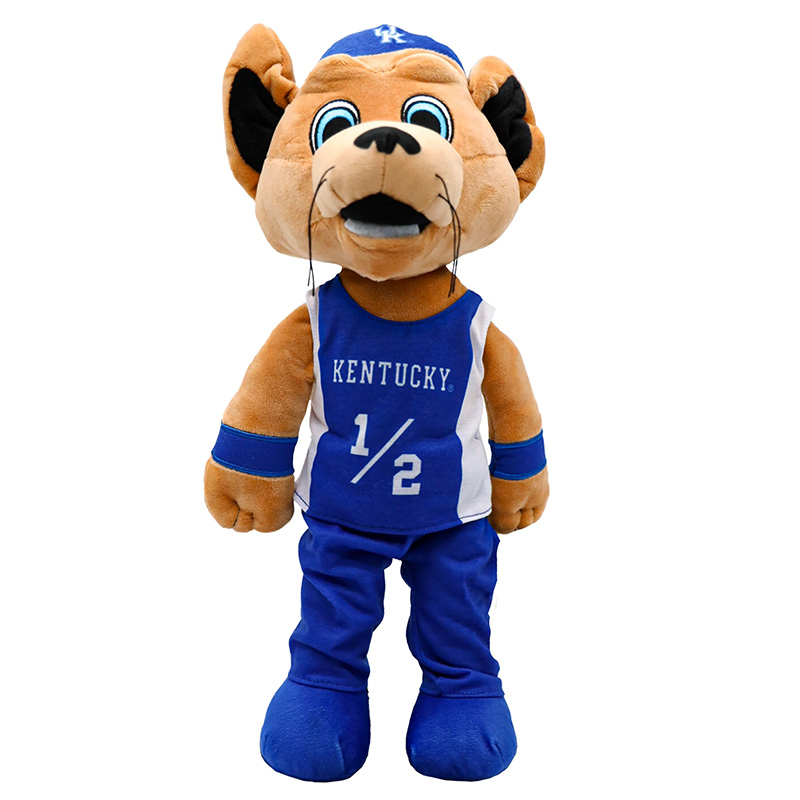
Plush with Jersey / Uniform Detail
Typical size: 25–40cm
Best application: Licensed sports retail, player-number customization programs
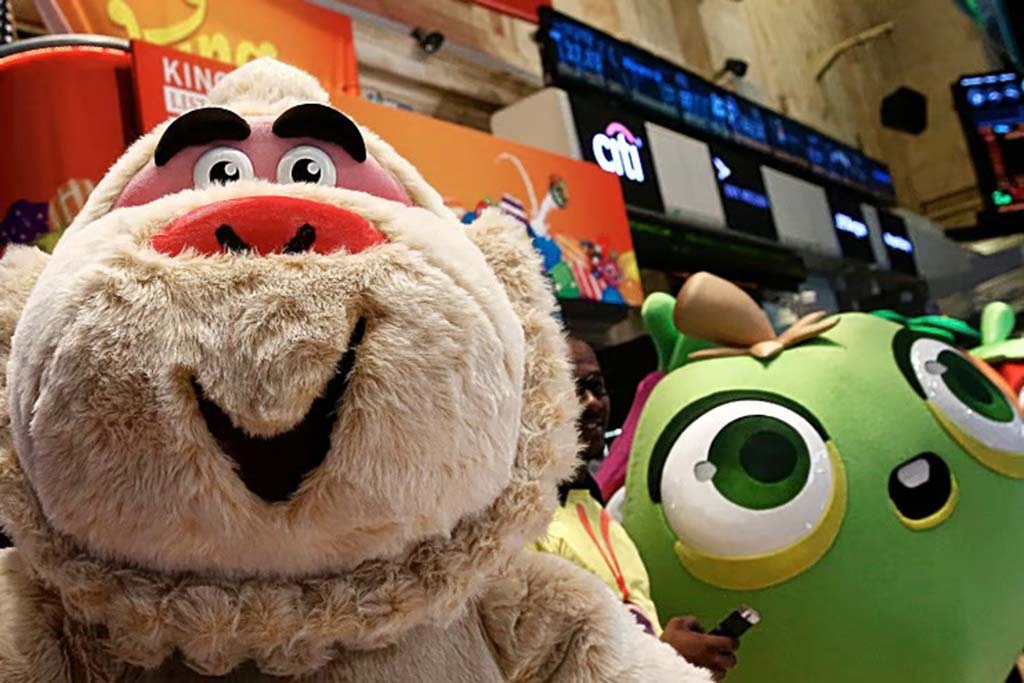
Oversized Display Mascot
Typical size: 80cm+
Best application: Team store window displays, booster club fundraising, ceremonial gifting
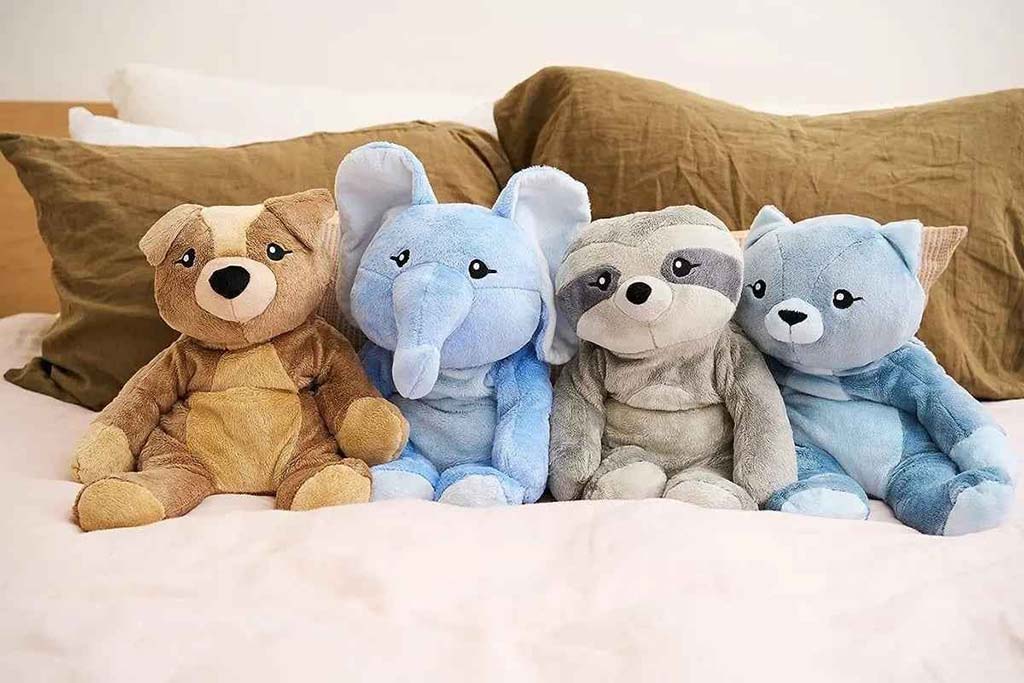
Weighted or Sound-Enabled Mascot
Typical size: 20–35cm
Best application: Premium fan gifting, alumni and donor programs
Applications Across Mascot Programs
5 Applications Across Mascot Programs
Professional and Minor League Sports
Team store retail, promotional giveaway nights, season ticket holder gifts, and youth fan club programs. Giveaway night programs typically involve large single-order volumes on tight promotional deadlines tied to a specific game date.
Colleges and Universities
Campus bookstore retail, orientation and welcome week gifting, alumni association merchandise, and athletic department fan gear. University programs frequently require licensing office approval and adherence to official brand color specifications.
Schools (K-12)
School spirit merchandise, fundraising programs, and graduation or reunion gifting. School mascot programs are typically smaller in scale but recur annually, making consistent color and proportion matching important for multi-year continuity.
Corporate and Brand Mascots
Employee gifting, trade show giveaways, brand launch campaigns, and customer loyalty programs built around an established corporate mascot character.
Esports and Gaming Organizations
Team merchandise stores and tournament event giveaways, often on compressed timelines tied to tournament or season schedules.
Mascot plush is frequently a recurring order across multiple seasons or years rather than a one-time product. KINWIN maintains a golden sample and full documentation of color codes, embroidery digitization files, and pattern specifications for every mascot program, so reorders — even years later — match the original approved product rather than drifting gradually with each production run.
Why Brands Choose KINWIN for Mascot Plush
Why Brands and Institutions Choose KINWIN for Mascot Plush
✓ 17+ years of plush manufacturing experience with dedicated character-accuracy design workflows
✓ 30+ in-house pattern makers experienced in translating existing character references into plush
✓ Golden sample archiving for multi-year mascot program consistency
✓ Design alignment documentation built for external approval processes (licensing offices, brand teams)
✓ CE, ASTM F963, and EN71 certified — full toy safety compliance for retail and giveaway distribution
✓ Experience working around fixed promotional dates such as giveaway nights and event deadlines
✓ 500-piece MOQ, suitable for school and smaller institutional programs as well as large league orders
✓ Embroidery and fabric color matching against official brand and team color codes
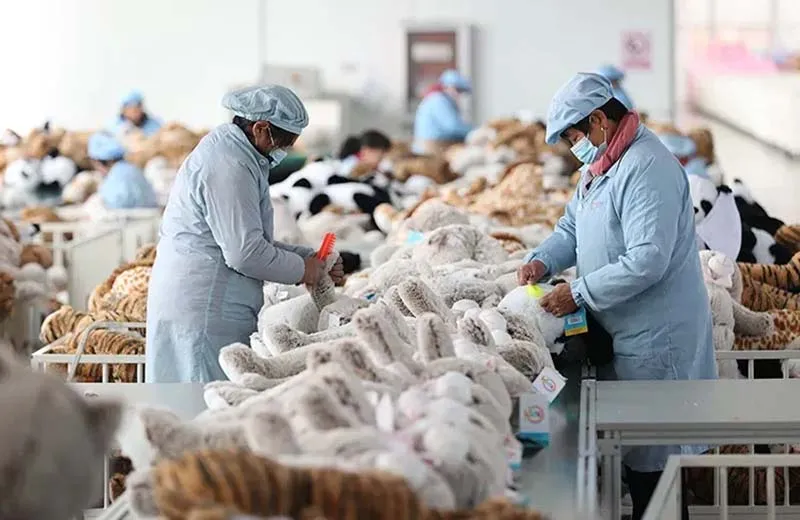
A mascot represents years of fan loyalty and institutional identity distilled into a single character. KINWIN manufactures the plush version of that character with the accuracy that responsibility requires.
Frequently Asked Questions — Custom Mascot Plush Toys
Frequently Asked Questions — Custom Mascot Plush Toys
Q1. Can you make a plush that matches our mascot costume exactly?
Very closely, though not a literal 1:1 copy — costume proportions are built for a human performer and do not translate directly into an appealing standalone plush object. KINWIN’s design process adapts your costume’s silhouette, colors, and key features into a form optimized for plush while remaining unmistakably recognizable as the same mascot. We share a design alignment document showing exactly what is being adapted before development proceeds, so there are no surprises at the sampling stage.
Q2. Our mascot's 2D logo art and costume do not quite match each other — which one do you follow?
This is common, since costumes and 2D branding are frequently designed separately. KINWIN flags any conflicts we identify between reference sources during the initial design consultation and asks you which one should take priority for the plush version, rather than making that judgment call ourselves.
Q3. We need mascot plush ready for a specific promotional giveaway date — can you work around that?
Yes, and we recommend sharing your target giveaway date at the very start of the project rather than after development begins. Standard development-to-delivery timelines run 12-16 weeks; compressed timelines are achievable with expedited sampling and reserved production capacity, but require early confirmation to protect the production slot.
Q4. Does our mascot plush need to go through a licensing or approval office?
Many collegiate, professional sports, and corporate brand programs require this. KINWIN builds your licensing office’s or brand team’s review step directly into the project timeline and provides the documentation — reference comparisons, color specifications, sample photography — typically requested for that approval process.
Q5. Can you reproduce our exact team or brand colors?
KINWIN matches to Pantone references using color-matched fabric and embroidery thread inventory. For most standard team and brand colors this achieves a very close match. For metallic, fluorescent, or highly specific proprietary colors without a direct fabric equivalent, we identify the closest achievable match and confirm it against a physical swatch before proceeding.
Q6. Can you produce a matched set — main mascot, rival mascots, and mini versions — as one coordinated program?
Yes. Multi-SKU mascot programs are common, particularly for collegiate athletics and professional sports team stores. KINWIN develops a shared design and construction framework across the full set so that scale, proportion style, and construction quality stay consistent across every character in the roster.
Q7. What happens if our brand or team colors change — for example after a rebrand?
A rebrand is treated as a new color-matching and design alignment cycle, similar to onboarding a new mascot program, though pattern and construction work already developed can often be reused if the mascot’s shape is not changing. The original golden sample and specification file remain on record for any legacy inventory or historical reference needs.
If You Can lmagine lt,We Will Create lt!
1.Tell Us What You Need
Tell us as specific as possible of your needs and share your idea.
2.Get Solution & Quote
We will work on the best solution according to yourrequirements,the specific quote will be provided within 24 hours.
3.Approve for Mass Production
We will start mass production after getting your approval.
