
Plush Toy Design and Manufacturing — From Creative Concept to Finished Product
Plush Toy Design and Manufacturing — From Creative Concept to Finished Product
Character Design · Pattern Making · Material Selection · Production · Safety · Branding · End-to-End Service
Plush toy design and manufacturing are two disciplines that must work together from the very beginning — not be handed off sequentially. A design created without manufacturing knowledge produces a product that is difficult or impossible to manufacture consistently. A manufacturer working without design integration produces a product that may be technically correct but commercially ineffective. The brands that launch successful plush toys understand that design and manufacturing are a single integrated process.
KINWIN provides end-to-end plush toy design and manufacturing — from the first design consultation through character development, tech pack preparation, prototype sampling, safety testing, mass production, and delivery. Our design support capability means brands do not need external design agencies or separate design-to-manufacturing handoffs.
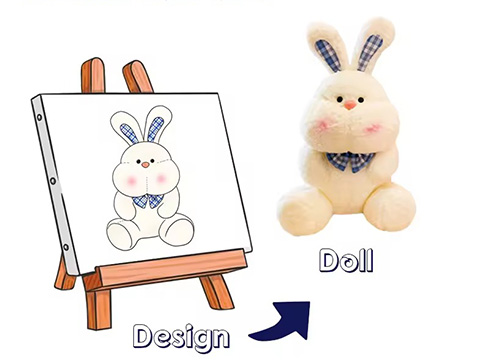
Where Design and Manufacturing Intersect
Where Design and Manufacturing Intersect — Key Decision Points
Most design problems in plush toys are actually manufacturing problems misidentified at the design stage. And most manufacturing quality problems are actually design problems that were never resolved before production began.
Very large head relative to body
Manufacturing impact: Pattern complexity increases; head stuffing requires careful management to maintain shape
KINWIN guidance: Confirm proportion in alignment doc; specify fill target by section
Very thin limbs
Manufacturing impact: Difficult to stuff evenly; seam stress concentrated
KINWIN guidance: Minimum limb width guidance for consistent production
Very long pile fabric
Manufacturing impact: Flammability risk; pile direction management in cutting
KINWIN guidance: Pre-screening before confirming; pile direction specification
Geometric eye shapes (star, heart)
Manufacturing impact: Must be interpreted in embroidery — cannot be geometrically precise
KINWIN guidance: Embroidery design consultation before sampling
Many small fabric color zones
Manufacturing impact: Each zone requires separate fabric panel; construction complexity increases
KINWIN guidance: Minimum panel size guidance; embroidery vs fabric alternatives
Very small finished size (under 12cm)
Manufacturing impact: Component miniaturization; embroidery detail limits
KINWIN guidance: Minimum feature size guidance for small formats
Complex accessories (clothing, bags)
Manufacturing impact: Each accessory is a separate production operation
KINWIN guidance: Accessory feasibility and cost assessment at brief stage
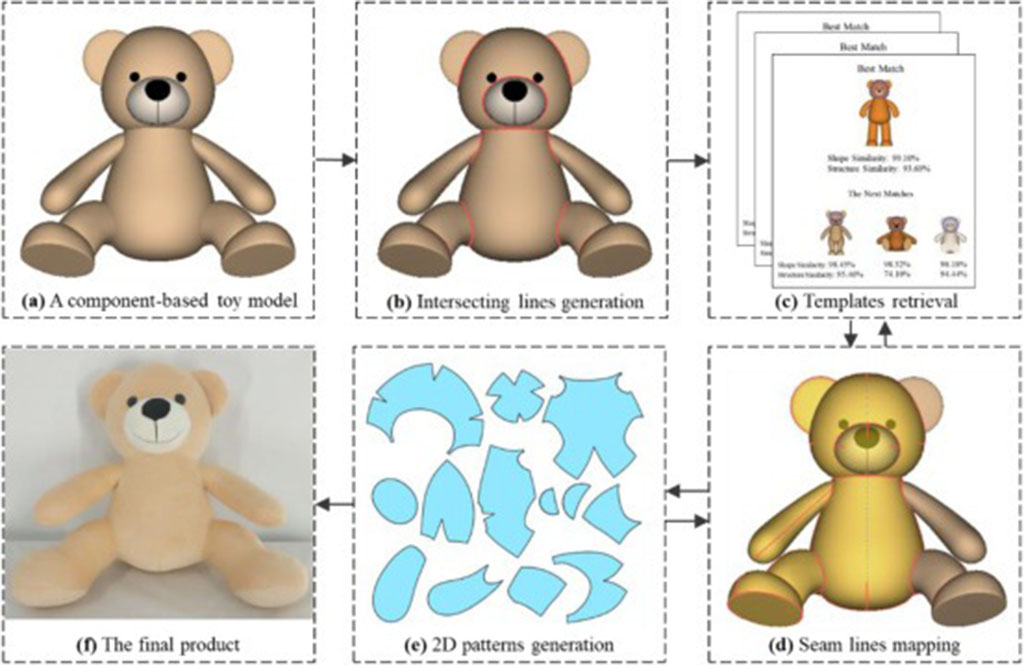
The Design Phase — How KINWIN’s Design Support Works
The Design Phase — How KINWIN's Design Support Works
KINWIN’s design support is not a separate service delivered by a separate team — it is integrated into the manufacturing process. Our senior pattern makers and production engineers are involved in design review from the beginning, flagging manufacturing constraints before they become production problems.
Character Concept Development
- Proportion analysis: establishing the head-to-body ratio, limb proportions, and overall silhouette that captures the character’s personality in three-dimensional plush form
- Facial feature design: eye shape, size, and placement; nose form and placement; mouth expression; highlight dots; cheek blush — each element designed for embroidery execution at production scale
- Color zone mapping: identifying which elements will be different fabric panels versus embroidery versus accessory components
- Accessory and detail design: clothing, hats, scarves, badges, and other character-defining elements designed for consistent production
- Material selection guidance: fabric type and pile height, filling specification, and any functional feature recommendations based on character design
Tech Pack Development
- Technical drawings: multi-view dimensioned drawings — front, back, sides, details
- Material specifications: fabric type, pile height, Pantone TPX color per panel
- Embroidery specifications: stitch type, thread color (Pantone), size, placement coordinates
- Filling specification: filling type, gram-weight target per body section
- Construction sequence: assembly steps in numbered sequence with part references
- QC checkpoints: key dimensions, tolerances, visual benchmarks
- Labeling requirements: all mandatory labels per target market
- Packaging specification: packaging type, dimensions, brand artwork reference
Pattern Making — The Most Critical Manufacturing Skill
Pattern Making — The Most Critical Manufacturing Skill
Pattern making is the craft of translating a three-dimensional character design into a set of two-dimensional fabric panels that, when sewn together and stuffed, recreate the three-dimensional form. It is simultaneously an engineering problem and an artistic problem — and getting it right is what separates a plush toy that captures a character’s personality from one that merely approximates it.
The head is the most technically demanding component in plush toy pattern making. The head must be round or character-specific in shape when stuffed — but the flat fabric panels used to construct it are inherently two-dimensional. The pattern maker designs each panel’s shape and seam placement to control how the stuffed head forms. A head constructed from a single front and back panel will be flat; a head constructed from six or more panels with carefully designed seam curves will be round. The skill is in designing the panels.
KINWIN's Pattern Making Capability
- 30+ senior pattern makers employed full-time — average 8+ years of plush toy pattern specialization
- Pattern making from any design input: professional digital art, hand sketches, 3D models, physical references
- All character types: animals, fantasy creatures, human characters, food characters, brand mascots, anime characters
- All size ranges: 10cm keychain characters to 160cm+ body pillows
- Digital pattern systems: patterns digitized for consistent, reproducible cutting across all production runs
- Pattern archive: all client patterns retained indefinitely — ensuring reorder consistency
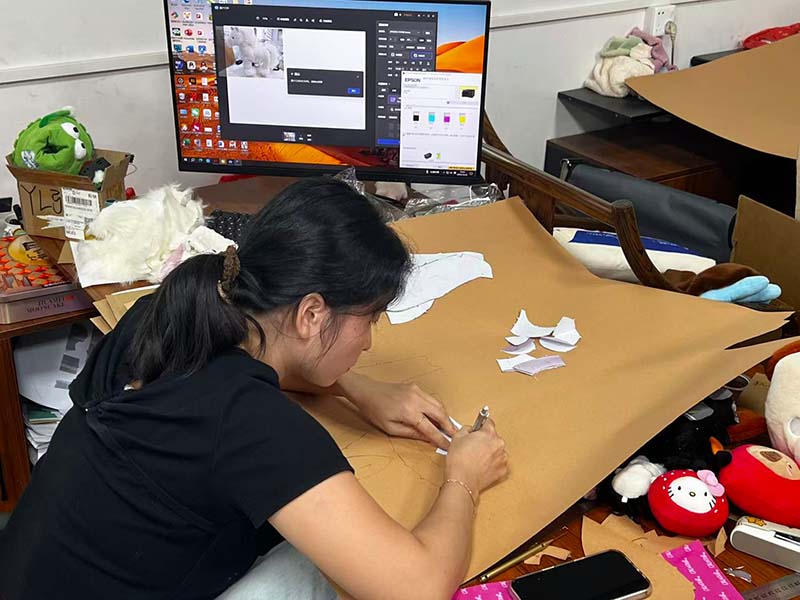
Material Design — Choosing the Right Fabric and Filling
Material Design — Choosing the Right Fabric and Filling
Material choices are design decisions — not procurement decisions. The fabric and filling you choose determine how your plush toy looks, feels, photographs, performs in safety testing, and appeals to your target customer.
Fabric and Aesthetic
Premium DTC Launch
Fabric: Minky / Crystal Super Soft (ultra-silky)
Photography: Luxurious, tactile appearance
Fluffy, Dreamy Aesthetic
Fabric: Long pile (20-30mm)
Photography: Impressive visual fullness
Classic Plush / Standard Retail
Fabric: Medium pile (10-15mm)
Photography: Clean, professional
Artisan / Handmade Aesthetic
Fabric: Crochet-knit or corduroy
Photography: Textured, craft-quality
Cozy / Seasonal Gifting
Fabric: Sherpa / Teddy fabric
Photography: Warm, inviting texture
Eco-Positioned Brand
Fabric: RPET recycled pile
Photography: Similar to standard plush
Baby-Safe / Infant Product
Fabric: OEKO-TEX Class I Minky or short pile
Photography: Smooth, clean surface
Filling and Character Personality
Filling density is a design parameter — it determines how your character feels when held, which directly affects the emotional experience of your product. Underfilled toys feel cheap; correctly filled toys feel substantial and high-quality; overfilled toys lose the soft squishiness that makes plush toys satisfying to hold.
- Soft and squishy character: medium-density PP cotton — compressible, returns to shape, satisfying to squeeze
- Firm and shape-holding display piece: high-density PP cotton — maintains upright posture, better for photography
- Calming weighted companion: glass beads — adds therapeutic weight, grounding sensation
- Structured pillow form: memory foam — slow rebound, premium feel, holds shape permanently
- Eco-positioned product: GRS certified recycled fiber — functionally similar to PP cotton
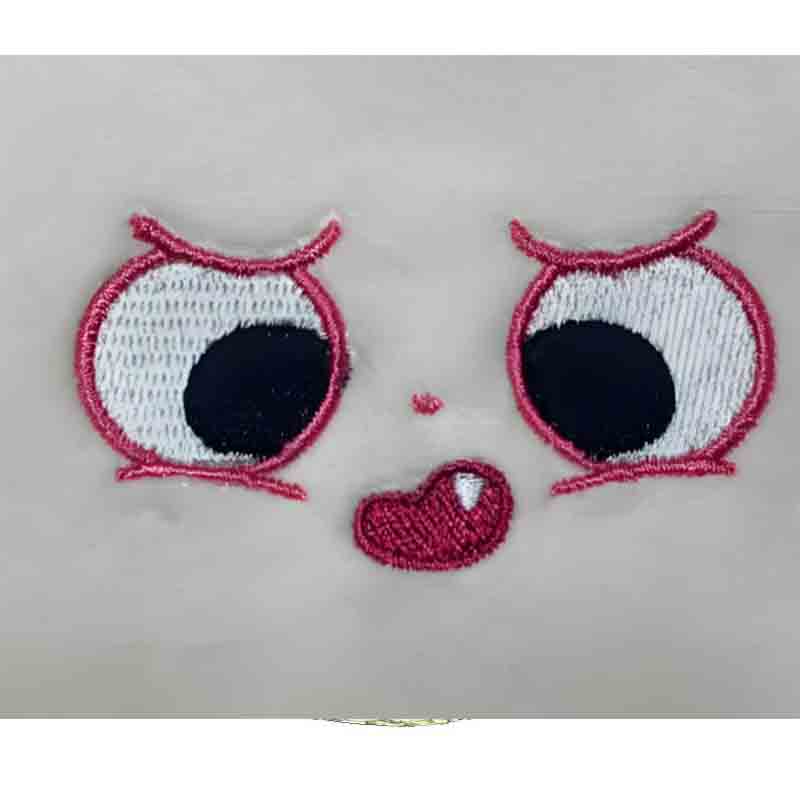
Face Design — The Most Commercially Critical Design Decision
Face Design — The Most Commercially Critical Design Decision
The face is the most important design element on any plush toy — more important than color, proportion, or material. A face that conveys the right personality and emotion creates the emotional connection that drives purchase decisions, generates social media sharing, and builds brand loyalty.
Design Principles for Commercially Successful Faces
- Eye size relative to face: larger eyes create more emotional connection — the classic ‘cute’ formula (large eyes, small nose, small mouth) triggers nurturing instincts universally
- Eye position: eyes positioned lower on the face (closer to the center) create a more infant-like, nurturing response; higher eye position creates a more mature character
- Expression specificity: a face with a clear, specific expression is more memorable and emotionally resonant than a neutral, ambiguous expression
- Highlight dots: small white highlight dots in the eyes add the illusion of light reflection — making the eyes appear alive and three-dimensional
- Symmetry: facial symmetry is emotionally read as ‘correct’ — even slight asymmetry reads as a flaw
Face Design for Manufacturing Constraints
- Embroidery minimum feature size: details smaller than 3mm × 3mm become indistinct in plush fabric embroidery
- High-contrast is better than complex: a simple high-contrast eye reads more clearly at distance than a detailed multi-color iris
- Geometric precision is not achievable in embroidery: star-shaped eyes, heart eyes, and other geometric forms are interpreted rather than precisely replicated
- Physical placement templates: KINWIN uses physical placement templates for all embroidery positioning — ensuring left-right symmetry within ±1.5mm across all units
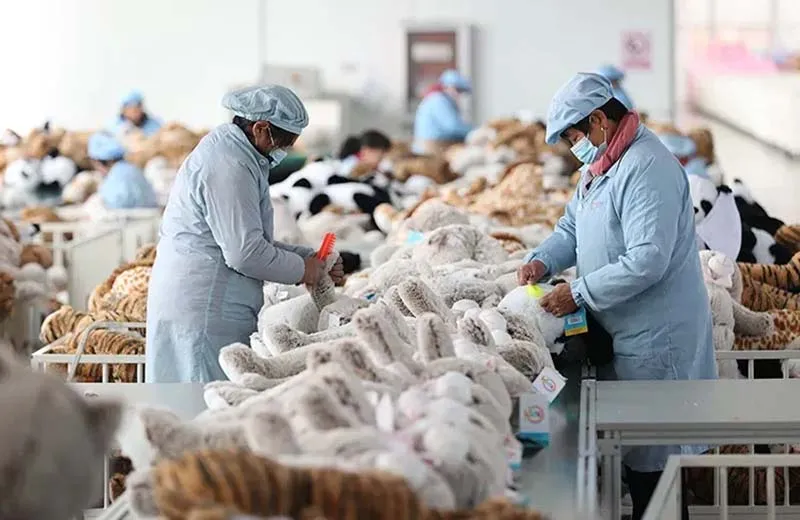
Manufacturing Phase — 15-Station Production System
Manufacturing Phase — How Design Specifications Become Physical Reality
The manufacturing phase is where the design investments made in previous stages are realized — or where inadequate design preparation reveals itself as production problems. Here is how the 15-station KINWIN production system converts a tech pack into a finished product.
Station 1. Material Inspection
Fabric color vs Pantone; OEKO-TEX verification
Design link: Color decisions from design phase confirmed
Station 2. Pattern Layout
Pile direction verified per panel spec
Design link: Pile direction spec from tech pack
Station 3. Cutting
Digital patterns cut with precision; clean edges
Design link: Pattern accuracy from pattern maker
Station 4. Embroidery Preparation
Thread colors verified vs Pantone; templates set
Design link: Thread colors and placement from tech pack
Station 5. Embroidery
Face embroidery with placement templates; 100% checked
Design link: Embroidery spec and symmetry requirement
Station 6. Sub-Assembly Sewing
Ears, limbs, tails prepared separately
Design link: Component patterns from pattern maker
Station 7. Body Sewing
Main body panels joined in sequence
Design link: Seam sequence from construction spec
Station 8. Turning
Sewn body turned right-side out
Design link: Construction allows turning access
Station 9. Component Attachment
Ears, limbs attached with bartack
Design link: Attachment point positions from tech pack
Station 10. Eye/Nose Attachment
Safety eyes/noses applied; 90N pull tested
Design link: Eye size and placement from design
Station 11. Stuffing
PP cotton added to gram-weight target by section
Design link: Fill targets from material specification
Station 12. Closing
Opening ladder-stitched; lock-off
Design link: Closing seam location from pattern
Station 13. Semi-Finished Inspection
Shape vs golden sample; fill vs spec
Design link: Golden sample from sampling phase
Station 14. Final Inspection
100% inspection vs golden sample
Design link: All design specs confirmed
Station 15. Packaging
Labels, hangtags, packaging applied
Design link: Packaging spec from tech pack
How Design Decisions Affect Commercial Outcomes
How Design Decisions Affect Commercial Outcomes
The design decisions made before manufacturing begins directly determine the commercial performance of the finished product — its retail price potential, customer satisfaction rate, return rate, and social media performance.
Photography Performance
Product photography is typically the primary selling tool for DTC and e-commerce plush toys. Design decisions that improve photography performance: long pile fabrics photograph with more visual drama than short pile; high-density filling produces a better posture for product photography; high-contrast face designs photograph more clearly; distinctive silhouettes are more recognizable in thumbnail-size product images; and bright, saturated colors photograph more vibrantly than muted tones.
Perceived Quality at Purchase
When a customer picks up a plush toy for the first time, three design parameters determine their immediate quality impression: filling density (too light = cheap, correct = premium), fabric texture (ultra-soft fabrics communicate luxury instantly), and face quality (a well-executed, symmetrical face communicates craft quality throughout the product). All three are design parameters, not manufacturing accidents.
Return Rate & Negative Review Prevention
The most common sources of negative reviews for plush toys are: ‘goes flat after a few weeks’ (filling density specification issue), ‘face doesn’t look like the picture’ (face design not optimized for 3D translation), ‘color is different from the website’ (photography without color calibration), and ‘feels cheap’ (filling density or fabric selection). All are design-phase decisions, not manufacturing failures.
Why KINWIN Is the Right Design and Manufacturing Partner
Why KINWIN Is the Right Design and Manufacturing Partner
✓ Integrated design and manufacturing — the same organization develops your design and manufactures your product
✓ Manufacturing-informed design — pattern makers involved in design review from the beginning
✓ Design alignment document — systematic confirmation of all design decisions before any fabric is cut
✓ 30+ senior pattern makers — the most critical skill for design-to-product accuracy
✓ 7-day standard sampling — fast design iteration at production quality
✓ Unlimited free revisions — iterate until the product matches your vision
✓ 100% production QC — design specifications enforced on every unit
✓ Golden sample retention — design locked in permanently for consistent reorders
✓ Full safety certification — design confirmed compliant before production commitment
✓ MOQ 500 pieces — design investment accessible for brands at launch stage
Great plush toys are not designed and then manufactured — they are designed through manufacturing. KINWIN is where design and manufacturing are one.
Frequently Asked Questions — Plush Toy Design and Manufacturing
Frequently Asked Questions — Plush Toy Design and Manufacturing
Q1. Do I need a professional designer before approaching KINWIN for manufacturing?
No. KINWIN provides integrated design support as part of our manufacturing service — you do not need to hire an external designer before approaching us. We work from whatever starting point you have: a rough sketch, a detailed character sheet, a verbal concept, a mood board, or a physical reference. Our design team bridges the gap between your creative concept and a manufacturing-ready specification, with our pattern makers providing manufacturing feasibility input at every stage. The advantage of working with KINWIN for both design and manufacturing — compared to using a separate design agency — is that the people designing your toy understand exactly how to design for production. This eliminates the most common source of first-sample rejection: design decisions that cannot be executed consistently in manufacturing.
Q2. How much input can I have in the design process if I work with KINWIN?
As much or as little as you want. KINWIN’s design support scales to your needs: if you have fully developed multi-view artwork with Pantone color references and detailed specifications, we take that as-is and go directly to pattern making — your design input is total. If you have a rough concept sketch or a verbal description, our design team develops the specification through structured consultation — your input is on the conceptual direction while we handle the technical translation. The design alignment document — which we prepare before sampling in all cases — gives you the opportunity to review and approve every design decision before any physical work begins. You can approve everything as proposed, adjust specific elements, or redirect substantially — there are no limits on your creative authority over your own product.
Q3. What is the difference between designing for 2D illustration and designing for 3D plush manufacturing?
2D illustration and 3D plush construction are different disciplines, and designs created purely for 2D representation often contain elements that need thoughtful adaptation for 3D plush manufacturing. Key differences: proportions in 2D are perceived differently than proportions in 3D — a head that looks perfectly proportioned in illustration may look differently proportioned in plush. Lines in 2D become volumes in 3D — sharp angular features, hard edges, and precise geometric shapes are all interpreted as softer rounded volumes in plush construction. The face in 2D can use unlimited detail and color complexity; in plush, face elements are executed in embroidery with practical size minimums and color limitations. Complex textures and gradients in 2D become simplified fabric panels and zone boundaries in 3D. KINWIN’s design alignment process specifically addresses these translation challenges — our pattern makers flag any 2D design elements that require 3D adaptation before sampling begins.
Q4. How do I ensure my plush toy design is protected before I share it with KINWIN?
KINWIN signs a Non-Disclosure Agreement before any design files, character references, or creative materials are shared. This is our standard practice for all clients — you do not need to request it. The NDA covers: non-disclosure of design specifics to any third party, non-use of your design for any purpose other than manufacturing your order, no sharing with competing brands or other clients, and IP ownership remaining entirely with you. Beyond the NDA, KINWIN’s operational IP protection includes: design file access restricted to personnel working directly on your project, project-to-project design isolation, Disney FAMA factory audit that includes IP security as a core assessment criterion, and documented procedures for destruction of overrun and rejected materials.
Q5. Can KINWIN help improve an existing plush toy design that has been getting negative reviews?
Yes. KINWIN’s design team can analyze your existing product and review feedback to identify the specific design and manufacturing factors causing negative reviews. The most common negative review sources — fills that go flat, faces that don’t match the product photography, fabric colors that differ from online presentation, products that feel cheaper than expected — all have specific design and specification solutions. The process: share your existing product (physical sample or HD photography), your current specification if available, and the specific feedback you are receiving; our team analyzes the issues and recommends specification changes that will address them; we then develop a revised tech pack, produce a new prototype, and confirm the improvements before production. Improvements to an existing design are typically faster and less expensive than developing a completely new design because the base character architecture is already established.
If You Can lmagine lt,We Will Create lt!
1.Tell Us What You Need
Tell us as specific as possible of your needs and share your idea.
2.Get Solution & Quote
We will work on the best solution according to yourrequirements,the specific quote will be provided within 24 hours.
3.Approve for Mass Production
We will start mass production after getting your approval.