 Skip to content
Customized Stuffed Animals — Every Element, Your Way
Customized Stuffed Animals — Every Element, Your Way
Character · Size · Fabric · Filling · Features · Branding · Packaging · OEM & ODM · MOQ 500 pcs
A customized stuffed animal is not a modification of someone else’s product — it is your product, made to your specifications, owned entirely by your brand. Every element that determines how the toy looks, how it feels, what it does, and how it is packaged can be specified, adjusted, and made exactly as you intend. That level of control is what separates a brand-defining product from a generic stuffed animal with a logo attached.
KINWIN manufactures fully customized stuffed animals for brands across every category — toy brands, DTC e-commerce, Amazon sellers, corporate gifting, IP licensing, retail chains, and promotional programs. Customization at KINWIN is not a premium add-on — it is the standard. Every order is custom. Every golden sample is unique. Every product is yours.
Complete Customization Options — What Can Be Specified
Complete Customization Options — What Can Be Specified
Every element of a KINWIN stuffed animal can be customized. Here is the complete specification universe — organized by category — that determines what your finished product becomes.
1. Character Design
1. Character Design
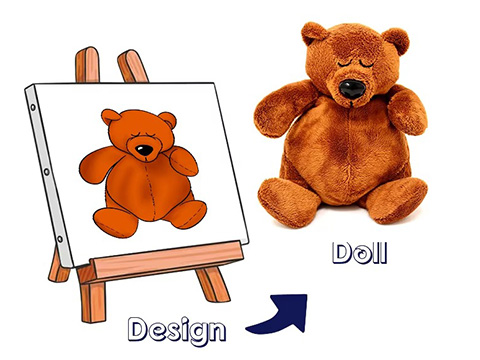
Every element of your character’s appearance — concept, proportions, facial features, expression, accessories, and size — is fully customizable.
- Character concept: any character — animal, fantasy, human, object, food, brand mascot — Input: artwork, sketch, description, or reference images
- Body proportions: head-to-body ratio, limb length, silhouette weight — Input: design reference or proportion specification
- Facial features: eye size, shape, placement; nose; mouth expression; brow; cheek blush — Input: reference artwork + design alignment doc
- Expression: happy, sleepy, surprised, cheeky, sad, neutral, anime-style — Input: reference or description
- Accessories: hats, scarves, clothing, bags, glasses, wings, tails, flowers — Input: design reference per accessory
- Size: 10cm to 160cm+ — Specify height (sitting or standing)
2. Fabric Selection
2. Fabric Selection
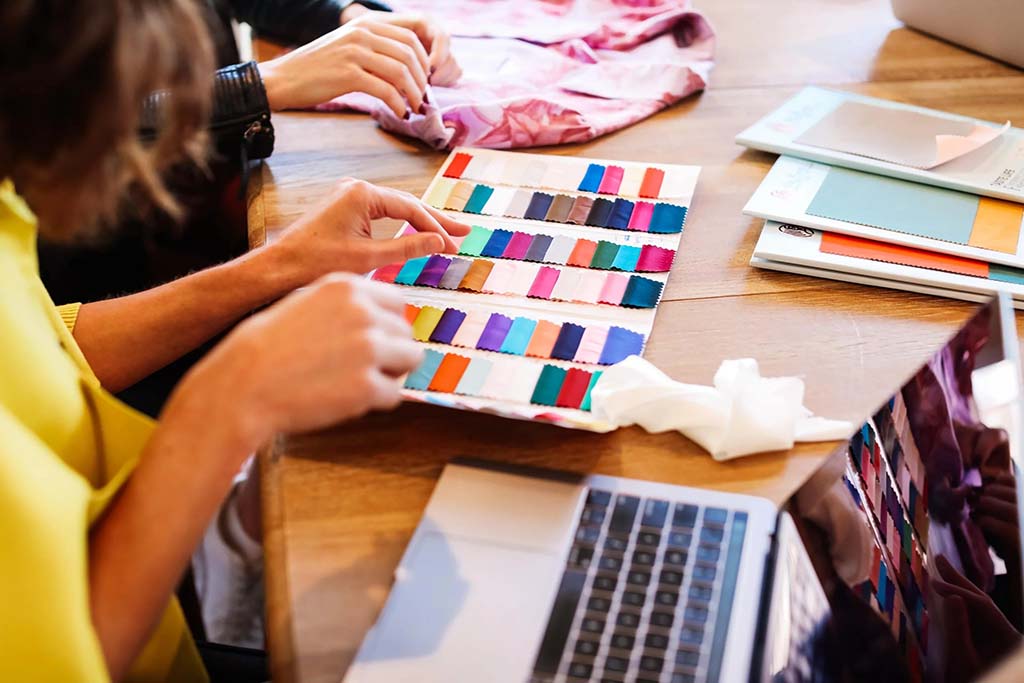
Eight fabric types are available, all with custom Pantone TPX color matching and OEKO-TEX Standard 100 Product Class I certification.
- Short pile plush (2–8mm): smooth, soft, velvet-like — Standard character toys, budget programs — Economy
- Medium pile plush (10–15mm): soft, fluffy, plush standard — Most retail characters — Standard
- Long pile plush (20–35mm): extremely fluffy, premium look — Premium DTC, adult collector — Premium
- Minky / Crystal Super Soft: ultra-silky, velvet luxury — Baby-safe, premium gifting — Premium
- Sherpa / Teddy: cozy, textured, warm aesthetic — Seasonal gifting, home décor — Standard-Premium
- Corduroy / Linen: structured, artisan texture — Adult lifestyle, home décor — Standard
- RPET Recycled: similar to standard plush — Eco-positioned brands — Standard
- Crochet-texture knit: open-loop craft aesthetic — Artisan, collector, DTC premium — Premium
3. Filling & Internal Structure
3. Filling & Internal Structure
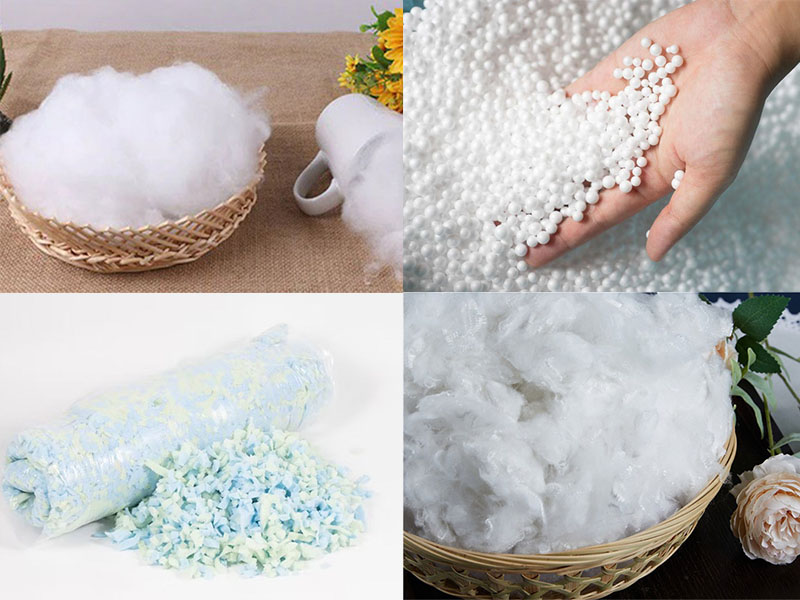
Seven filling types — from standard PP cotton to glass bead weighted, memory foam, and scent pouches. Filling density is specified as gram-weight targets per body section.
- Premium PP cotton: soft, squishy, shapeable — Standard character plush — Most common; hypoallergenic
- High-density PP cotton: firmer, shape-holding — Display pieces, retail premium — Better for photography
- Glass beads (weighted): heavy, calming pressure — Weighted therapeutic plush — Requires reinforced containment
- Eco recycled fiber: similar to PP cotton — Sustainability programs — GRS certified available
- Memory foam: slow rebound, structured — Cushions, pillows — CertiPUR-US certified
- Wire armature: poseable, display-oriented — Collector figures (14+ only) — Age grade 14+; not for children
- Scent pouches: subtle fragrance — Therapeutic, wellness plush — Lavender, vanilla, or custom
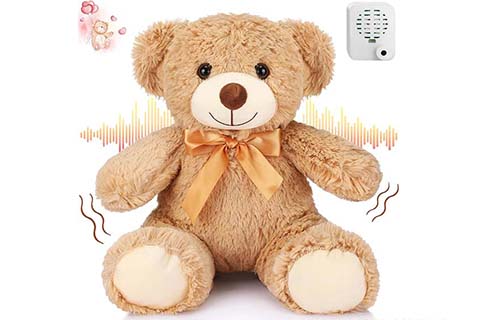
4. Functional Features
4. Functional Features
Functional modules transform a standard stuffed animal into an interactive product — adding emotional engagement, play value, or therapeutic function beyond what a standard plush delivers.
- Sound module: pre-recorded sounds activated by squeeze — IEC 62115 — No MOQ impact
- Music module: lullabies, songs, or custom audio — IEC 62115 — No MOQ impact
- Recording & playback: record a voice message; press to replay — IEC 62115 — No MOQ impact
- LED lighting: glow effects, color-change, star projection — IEC 62115 + LVD — No MOQ impact
- Vibration: gentle vibration for sensory stimulation — IEC 62115 — No MOQ impact
- Heat pad: microwavable heating element — Safety testing required — Higher MOQ
- AI conversation: speech recognition + contextual response — IEC 62115 + EMC — Higher MOQ
- App connectivity: Bluetooth companion app — IEC 62115 + RED — Program-specific
- Weighted filling: glass beads for therapeutic pressure — Standard toy safety — No MOQ impact
- Scent: lavender, vanilla or custom fragrance — Standard toy safety — No MOQ impact
5. Branding & Identity
5. Branding & Identity
Every touchpoint of brand identity — from embroidered logo to custom hangtag to woven label — is fully customizable.
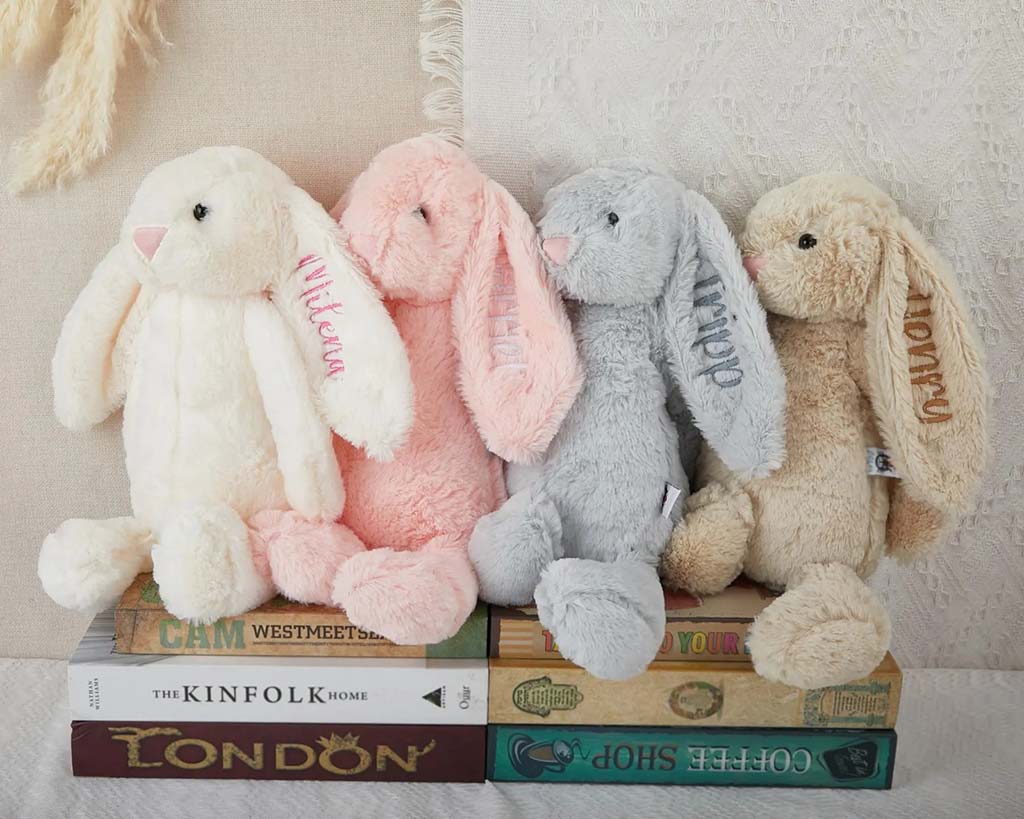
- Embroidered logo: foot pad, chest, ear, or back — Pantone thread color matched
- Woven brand label: brand name, care instructions, country of origin, copyright — sewn into seam
- Character name embroidery: individual character identity stitched on body or tag
- Safety and age labels: correct market-specific warnings — all required by law
- Hangtag: custom designed — brand story, character bio, QR code, barcode, sustainability statement
6. Packaging
6. Packaging
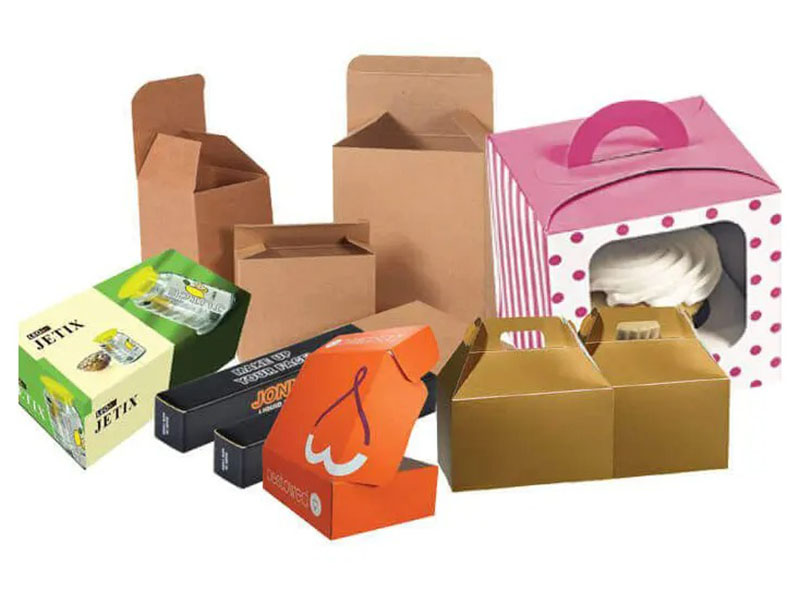
Seven packaging formats — from FBA poly bag to premium gift box to collector tube packaging. Every format is custom printed with your brand identity.
- Branded poly bag: DTC, Amazon FBA, budget retail — Logo print + safety warnings + FNSKU
- Branded gift box: premium gifting, DTC launch, collector — Full custom print, tissue, ribbon
- Window box: retail shelf display — Character visible; custom print
- Header card + poly: retail hanging display — Brand print on header card
- Drawstring bag: eco gifting programs — Brand print; cotton or RPET fabric
- Custom tube: novelty retail, collectible series — Full custom shape and print
- No packaging: B2B gift box inclusion — Label application only
OEM vs ODM — Choosing the Right Customization Path
OEM vs ODM — Choosing the Right Customization Path
The first decision in any customized stuffed animal program is whether to develop an original OEM design or to customize an existing ODM design. Both paths produce fully branded, professionally manufactured products — but they have different timelines, investment levels, and outcomes.
OEM — Fully Original
- Character origin: your original design
- IP ownership: 100% yours
- Exclusivity: complete — unique character no one else can sell
- Development investment: pattern making + design support
- Sampling timeline: 7–15 days
- First order timeline: 12–16 weeks
- MOQ: 500 pcs per design
- Brand differentiation: maximum
- Best for: brand-building programs, DTC, collectors
ODM — Branded Existing Design
- Character origin: KINWIN design library base
- IP ownership: base design shared; branding yours
- Exclusivity: partial — base shape not exclusive
- Development investment: minimal — branding only
- Sampling timeline: 3–5 days
- First order timeline: 8–10 weeks
- MOQ: 500 pcs per design
- Brand differentiation: moderate
- Best for: fast programs, promotions, test market
What Customization Looks Like at Every Stage of Production
What Customization Looks Like at Every Stage of Production
Customization is not a single decision made at the beginning — it is a series of decisions and confirmations that run through every stage of the production process.
Stage 1
Design Brief Capture
Your vision is translated into structured specifications through a design brief consultation. KINWIN’s brief template captures every customization decision systematically — character concept, proportions, colors (Pantone references), fabrics, filling, functional features, branding, and packaging. Gaps in the brief are identified and clarified before any production activity begins.
Stage 2
Design Alignment Document
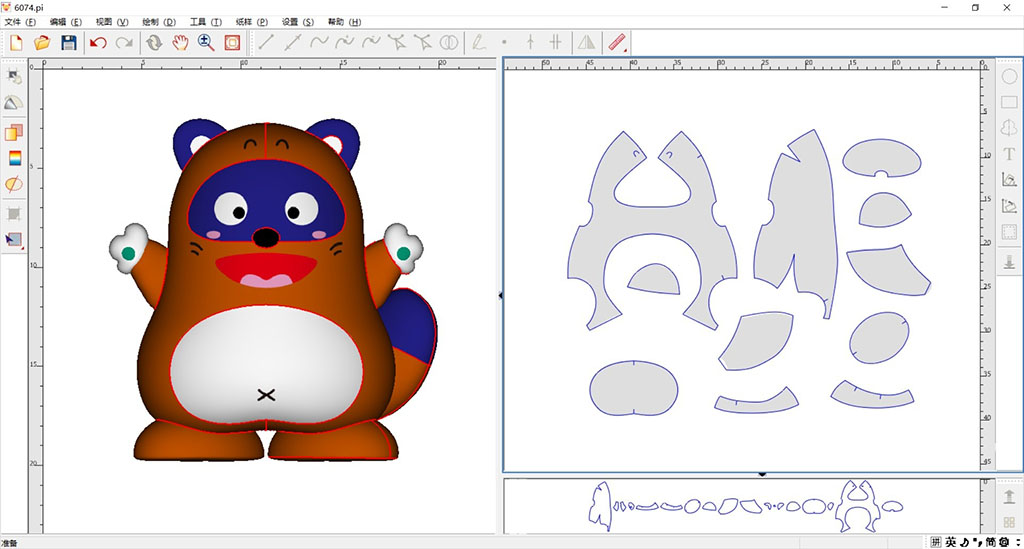
Before sampling begins, KINWIN produces a design alignment document that translates your brief into a complete visual and written specification of how every design element will be interpreted in 3D form. Every proportion decision, every color assignment, every facial feature placement, and every branding element is confirmed here. Your approval of it eliminates the most common source of first-sample rejection.
Stage 3
Material Confirmation
Physical fabric swatches in your specified colors are produced and submitted for your approval against your Pantone references before any fabric is cut. Embroidery thread color samples are submitted for your approval before any embroidery is executed. This physical confirmation step eliminates color surprises in the finished product.
Stage 4
Physical Prototype — Your Specifications Made Real
The first physical prototype is where your specifications become a tangible object. Evaluate every element against your brief: character shape and proportion from all angles, facial expression and symmetry, fabric color and texture, filling density and feel, embroidery placement and thread color, accessory construction, and branding application. This is the most important quality moment in the entire process — take the time to evaluate thoroughly.
Stage 5
Golden Sample Lock
The final approved prototype becomes the golden sample — the locked specification that every production unit is measured against. Every customization decision is locked: fabric, colors, proportions, face, filling density, embroidery, accessories, labels, and packaging. The golden sample is retained by KINWIN indefinitely and used as the quality benchmark for the current order and all future reorders.
Customization Priorities by Buyer Type
Customization Priorities by Buyer Type
Different buyers have different customization priorities. Here is how KINWIN approaches customization for the most common buyer profiles.
DTC Brand (first launch)
Priorities: Character originality, premium fabric, branded packaging, photography
Recommended path: OEM with Minky or long pile; gift box packaging
Amazon Seller
Priorities: Character differentiation, FBA compliance, cost-efficient fabric, safety certs
Recommended path: OEM or ODM; poly bag FBA-ready; ASTM + CPC
Corporate Gifting
Priorities: Mascot accuracy, embroidered logo, premium packaging, batch consistency
Recommended path: OEM mascot; gift box with tissue; woven label
IP Licensing Brand
Priorities: Character accuracy to IP bible, licensed markings, safety certs
Recommended path: OEM from IP files; full CE + ASTM; IP labels
Retail Chain Buyer
Priorities: Price architecture, safety compliance, retail packaging, delivery reliability
Recommended path: ODM or OEM; window box or header card; volume pricing
Promotional / Gifting Brand
Priorities: Speed to market, logo accuracy, cost control, bulk pricing
Recommended path: ODM with embroidery; poly bag or gift box; program pricing
Adult Collector Brand
Priorities: Character aesthetic, premium fabric, limited edition feel, collector packaging
Recommended path: OEM with long pile or Sherpa; collector gift box
Common Questions About the Customization Process
Common Questions About the Customization Process
'I Only Have a Rough Sketch — Is That Enough?'
Yes. KINWIN works from any starting point — a rough hand-drawn sketch, a written character description, a mood board, or even a verbal description. Our design support team builds on whatever reference you can provide, asks structured questions to fill in the details, and develops a production-ready reference set before sampling begins. The quality of the brief affects the speed of development, not whether development is possible.
'Can I Customize Just Part of the Product?'
Absolutely. Partial customization — applying your branding to an existing ODM design with no character changes, or changing only the fabric color of an existing approved character — is fully supported. The level of customization is entirely your decision. KINWIN’s service scales from minimal-change branding programs to completely original character development, with the same quality standards applied throughout.
'How Do I Know the Production Will Match My Approved Sample?'
Production is measured against the physical golden sample — not a photograph or digital file. The golden sample is present on the production floor throughout manufacturing. Every unit is compared against it during in-process inspection and 100% final inspection. KINWIN’s ISO 9001 quality management system documents and enforces these comparison standards for every order. For first-time clients, third-party pre-shipment inspection by SGS, Intertek, or Bureau Veritas provides independent verification before shipment.
Why Brands Choose KINWIN for Customized Stuffed Animals
Why Brands Choose KINWIN for Customized Stuffed Animals
✓ Full-spectrum customization: character, fabric, filling, features, branding, and packaging — all elements, all customizable
✓ Any starting point accepted: sketch, description, IP brief, 3D file, or physical reference
✓ Design alignment document: eliminates the most common cause of first-sample rejection
✓ 30+ senior pattern makers: the specialist craft that determines character accuracy
✓ 7-day standard sampling turnaround: industry-leading speed
✓ 95%+ character accuracy to approved reference
✓ Unlimited free revisions until golden sample approved
✓ All fabric types, all filling options, all functional modules — full manufacturing capability
✓ Complete safety certification: CE, EN71, ASTM F963, OEKO-TEX, IEC 62115
✓ MOQ 500 pieces — accessible for brand launches, test programs, and all scale
✓ NDA from first design exchange — your IP is protected
✓ Golden sample retention for all reorders — consistency guaranteed
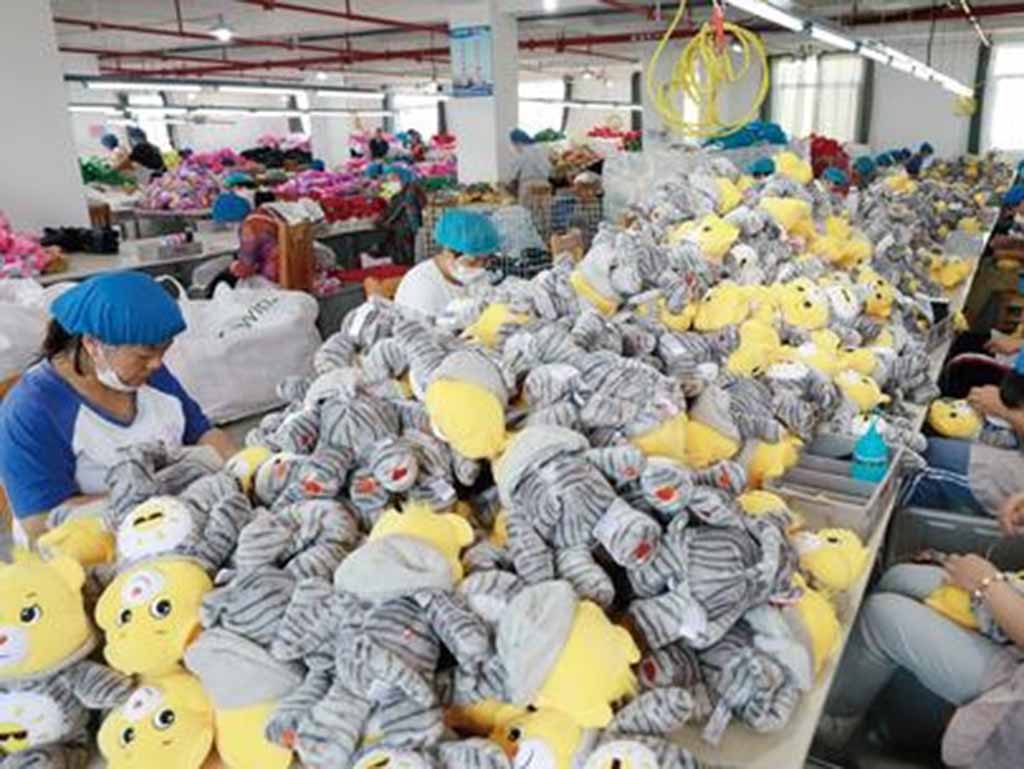
Customization is not a feature at KINWIN — it is the entire service. Your product. Your specifications. Your brand.
Frequently Asked Questions — Customized Stuffed Animals
Frequently Asked Questions — Customized Stuffed Animals
Q1. What file format should I provide for my character design?
KINWIN accepts any design format — the file type matters less than having a clear visual reference to work from. Ideal formats: vector artwork (Adobe Illustrator .AI, .EPS, or .SVG) or high-resolution digital art (Photoshop .PSD, or .PNG at 300dpi minimum). We also work from: JPEG reference images, hand-drawn sketches photographed against a white background, 3D model files (.OBJ, .STL, .FBX), physical samples you can mail to us, mood boards assembled from reference images, and written descriptions with reference image collections. Whatever you have — start with that. Our design team will ask specific questions to fill any gaps, and we will develop missing views (back, side, detail) if only a front view is available. The design alignment document we produce before sampling is what converts your reference into production specifications, regardless of how detailed or rough your starting material is.
Q2. Can I specify an exact Pantone color for the fabric?
Yes. KINWIN uses the Pantone TPX (textile) system for fabric color matching — provide your target color as a Pantone TPX reference and our material sourcing team will identify the closest available pile fabric color in that specification. Because pile fabric is dyed differently from printed media, an exact digital Pantone match is not always achievable — but KINWIN produces physical fabric color swatches and submits them for your approval before sampling begins, so you evaluate the actual fabric color (not a screen simulation) before any production commitment. For critical brand colors, we source and compare multiple supplier options to identify the closest achievable match. Color confirmation is done using physical swatches under D65 daylight illuminant — the same standard used in professional color evaluation.
Q3. How many customization rounds can I request before production?
There is no limit on revision rounds before production. KINWIN provides unlimited free revision rounds until the golden sample meets your approval — this is a firm commitment, not conditional on revision count. In practice, our internal data shows our average revision round count is 0.8 — meaning more than half of our samples are approved on the first prototype with no revision required. The design alignment document process is primarily responsible for this: by confirming every design decision before sampling begins, we eliminate the most common sources of first-sample rejection. For brands providing detailed multi-view artwork with Pantone color references, 0-1 revision rounds is typical. For brands with vague or single-view references, 1-2 rounds is more common. Each physical revision round adds approximately 7-10 days production time plus 3-7 days shipping time each way.
Q4. Can I customize the filling density — how full the toy feels?
Yes — filling density is one of the most important and most customizable quality parameters in stuffed animal manufacturing. KINWIN specifies filling density as gram-weight targets per body section (head, body, each limb) — giving precise, reproducible specifications rather than vague descriptors. During sampling, the golden sample is stuffed to your target density, physically evaluated, and then adjusted based on your feedback (more or less filling in specific areas). Once approved, that gram-weight specification is documented and applied consistently to every unit in production, with spot-weighing checks during manufacturing. For weighted plush toys, bead fill weight and distribution across body sections is similarly specified and controlled. Filling density is one of the most impactful quality dimensions that affects photography, perceived quality, and customer satisfaction.
Q5. What happens to my customized design if I want to reorder after a year or more?
KINWIN retains all production files and golden samples indefinitely — there is no expiry on your product specifications. When you reorder, your golden sample is retrieved from our archive and used as the production benchmark, exactly as it was used for your original order. Your tech pack (with all specifications, tolerances, material references, and embroidery files) is version-controlled and retrievable. Your Pantone fabric and thread color swatches are retained for material reconfirmation. The production team receives the same documented specifications as the first order — not a verbal handover. A reorder material confirmation check (verifying new fabric batch matches original specifications) is conducted before production begins.
If You Can lmagine lt,We Will Create lt!
1.Tell Us What You Need
Tell us as specific as possible of your needs and share your idea.
2.Get Solution & Quote
We will work on the best solution according to yourrequirements,the specific quote will be provided within 24 hours.
3.Approve for Mass Production
We will start mass production after getting your approval.
