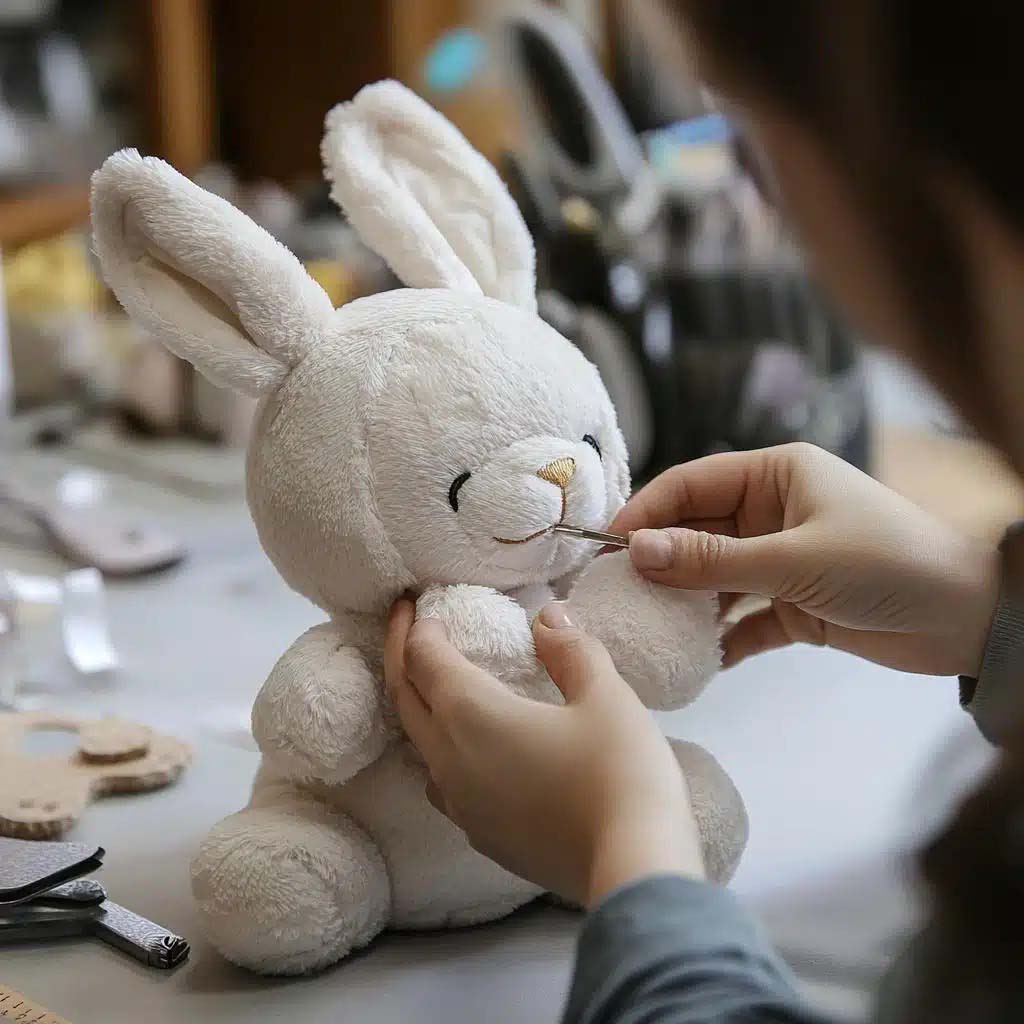
Every plush toy manufacturer says the same things. Competitive pricing. High quality. On-time delivery. Rich experience. If you have spent any time sourcing plush toys internationally, you have read these phrases hundreds of times — and you have learned, sometimes expensively, that what a factory says about itself and what it actually delivers are often very different things.
Global buyers who have been sourcing long enough stop evaluating factories on what they claim and start evaluating them on what they can demonstrate. Can they show quality control documentation from real production runs? Can they provide reference contacts from clients who have placed multiple orders? Can they describe their development process specifically enough to reveal whether they genuinely understand plush toy manufacturing or are simply running a plausible-sounding sales script?
This is the standard we hold ourselves to at Kinwin — and it is the standard this page is written to meet. Rather than repeating the generic claims that every factory makes, we want to explain specifically what we do, how we do it, and why the global buyers who choose us come back for their second, third, and fourth orders.
What Do Global Buyers Actually Look for When Choosing a Plush Toy Factory?
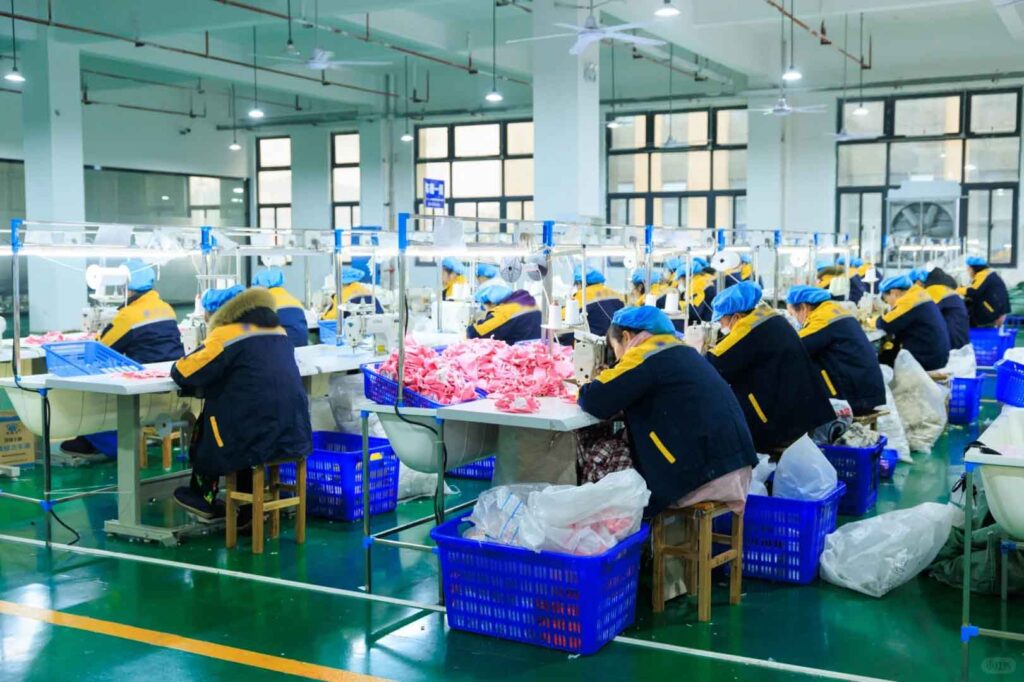
Before explaining what sets Kinwin apart, it is worth being clear about what serious global buyers are actually evaluating when they compare plush toy manufacturers. The criteria that drive factory selection decisions among experienced buyers are more specific, more operational, and more demanding than the general quality and service promises that dominate factory marketing materials.
Global buyers choosing a plush toy factory are evaluating a specific set of operational capabilities — not marketing claims. These include demonstrated production consistency across multiple orders, a documented and independently verifiable quality control system, clear compliance infrastructure for their target markets, genuine custom development capability, transparent communication throughout the production process, and a problem-handling culture that demonstrates accountability rather than defensiveness.
Here is what experienced global buyers are actually assessing when they evaluate plush toy factories:
| Evaluation Criteria | What Buyers Are Looking For | How They Verify It |
|---|---|---|
| Production consistency | Same quality on order three as on order one | Reference checks, reorder history |
| QC system depth | Three-stage documented system, independent team | Factory audit, documentation review |
| Compliance capability | Market-ready products for their specific geography | Test reports, certification documentation |
| Development accuracy | First samples that accurately reflect the brief | Portfolio samples, sampling history |
| Communication standard | Proactive, specific, and consistent throughout production | Pre-order communication assessment |
| Problem handling | Accountability and solution-focus when issues arise | Reference questions, direct assessment |
| IP protection | Genuine exclusivity commitment for custom designs | Contract terms, factory audit |
| Scalability | Can grow with the buyer’s business over time | Capacity assessment, client growth examples |
Why Claims Are Not Enough — And What Replaces Them
The most capable plush toy buyers — those who have built successful sourcing relationships over multiple years — have learned that every factory makes the same claims, and that claims are not a basis for manufacturing decisions. What replaces claims in serious buyer evaluation is verifiable evidence: physical samples that demonstrate production quality directly, QC documentation that shows the system in operation rather than just described, reference clients who can speak from direct production experience, and audit reports that provide independent assessment of factory capability.
At Kinwin, this shift from claims to evidence is one we actively support — because we know that buyers who verify our capability before ordering become the most confident long-term clients. We welcome factory audits, provide QC documentation from recent production runs, connect prospective clients with existing reference contacts, and structure our engagement process around giving buyers the specific evidence they need to make a well-grounded decision.
How Does Our Manufacturing Infrastructure Support Orders of Any Scale?
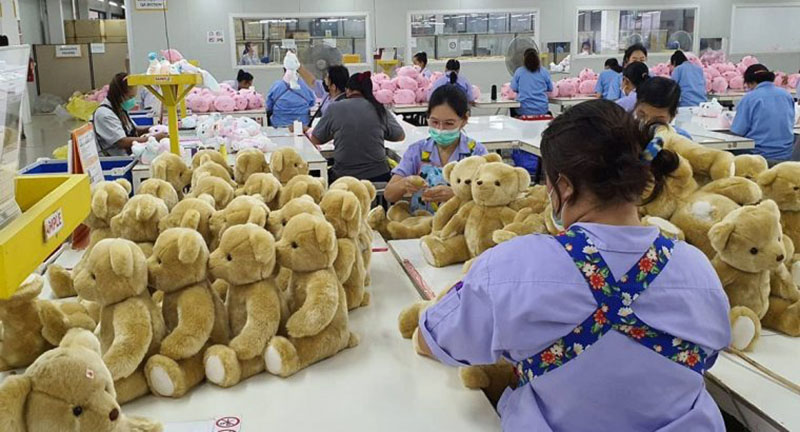
Manufacturing infrastructure is not just about facility size. It is about the combination of equipment, workforce organization, process documentation, and production management systems that determine whether a factory can deliver consistent quality across different order sizes, different product types, and varying production conditions. A large factory with poor process discipline can deliver inconsistent results at scale. A smaller factory with excellent process management can deliver consistent results well above what its size might suggest.
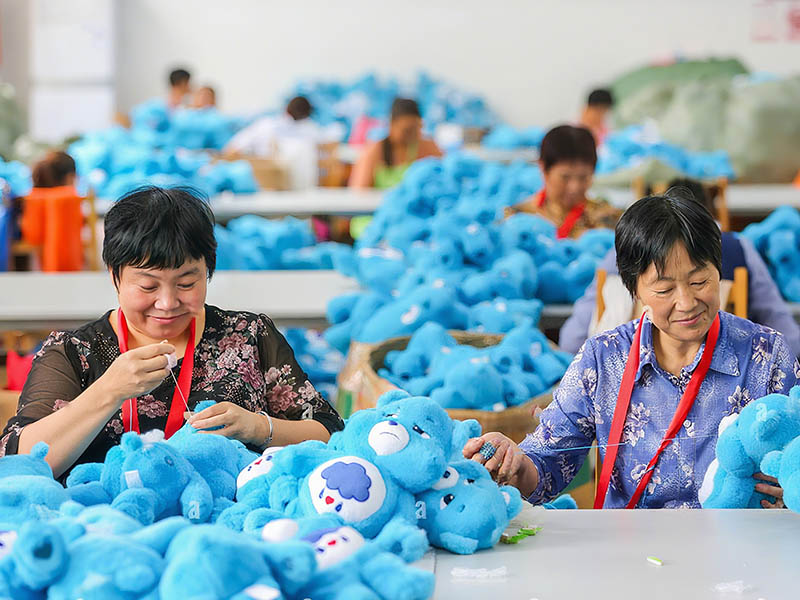
Kinwin’s manufacturing infrastructure is built to support consistent, high-quality plush toy production across a wide range of order sizes and product complexities. Our facility combines specialized production equipment with experienced workforce management, dedicated development infrastructure, organized material management systems, and structured production planning — all designed to maintain quality and reliability whether we are fulfilling a 500-unit test order for a new brand or a 50,000-unit seasonal production run for an established retailer.
Here is an overview of the core infrastructure elements that support our production capability:
| Infrastructure Element | What We Have | How It Supports Consistency |
|---|---|---|
| Production lines | Multiple specialized sewing lines | Dedicated lines for different product types |
| Embroidery systems | Multi-head embroidery with digital programming | Precise, repeatable embroidery positioning |
| Stuffing systems | Calibrated filling machines with density control | Consistent stuffing density across production run |
| Cutting systems | Structured cutting with pattern control | Dimensional accuracy across all panels |
| Sampling facility | Dedicated sampling area with specialist team | Development quality unaffected by production pressure |
| Material storage | Organized, batch-tracked material storage | Traceability and batch consistency management |
| QC infrastructure | Independent QC station with calibrated testing equipment | Objective, production-independent inspection |
| Production planning | Structured scheduling with milestone tracking | Timeline reliability across different order sizes |
Our Dedicated Sampling Infrastructure
One of the most important structural decisions we have made is maintaining a fully separate sampling facility — staffed by experienced pattern makers and prototype sewers who work exclusively on development projects, independent from the main production floor.
This separation has a direct and measurable impact on sampling quality. When sampling personnel are dedicated to development work — not pulled away to cover production line gaps or pressured by production targets — every prototype receives the full attention of our most skilled technical staff. The result is faster, more accurate first samples, fewer revision rounds, and a smoother transition from approved sample to consistent bulk production.
For buyers comparing factories, this structural separation — dedicated sampling team versus production workers handling sampling alongside their regular duties — is one of the clearest indicators of a factory’s genuine investment in development quality. We are always pleased to demonstrate our sampling infrastructure directly during factory video tours.
Scaling Production Without Scaling Problems
One of the practical challenges of growing with a factory is that the problems that emerge as order volumes increase often reveal capability gaps that were not visible at lower volumes. A factory that handles 500-unit orders reliably may struggle with 5,000-unit orders because its production management, material sourcing systems, and QC infrastructure are not built to scale.
At Kinwin, our production infrastructure is designed to maintain consistent performance as order volumes grow. Our material sourcing systems track batch consistency across larger material quantities. Our IPQC monitoring frequency scales with production volume. Our QC documentation systems maintain complete records regardless of batch size. And our production planning processes allocate capacity deliberately to ensure that no order is rushed at the expense of quality by production scheduling conflicts.
This scalability is one of the reasons that clients who start with smaller orders consistently increase their volume with us over time — because the experience of consistent quality at small scale gives them the confidence to commit to larger volumes without the quality uncertainty that often accompanies scaling with a factory whose systems are not built for it.
What Makes Our Quality Control System Stand Out from Other Plush Factories?
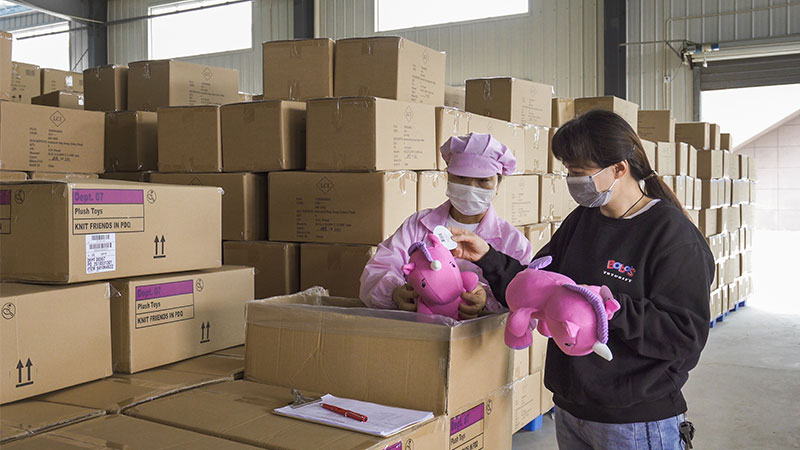
Quality control is the area where the difference between what factories claim and what they actually do is most significant — and most commercially consequential. Almost every plush toy factory has a quality control process of some kind. Very few have a quality control system that is genuinely independent, fully documented, consistently applied at every production stage, and capable of catching the types of problems that most commonly create quality failures in finished plush goods.
Kinwin’s quality control system stands out because it operates as a genuine three-stage quality management infrastructure — covering IQC, IPQC, and FQC — with a QC team that is structurally independent from our production team, calibrated testing equipment that provides objective measurement rather than subjective assessment, and complete documentation for every production run that gives buyers verifiable evidence of quality management rather than assurances.
Here is how our three-stage QC system operates in practice:
| QC Stage | What We Check | How We Check It | Documentation Produced |
|---|---|---|---|
| IQC — Incoming | All materials against specification — fabric, filling, accessories, thread, labels | Visual comparison under D65 lighting, physical measurement, pull testing, weight verification, compliance document review | Incoming inspection report per batch |
| Pre-production | Cut panel dimensions, color accuracy, pile direction | Physical measurement, visual comparison | Cut piece verification record |
| First-off inspection | Full finished product against approved sample | Complete multi-point inspection with photos | First-off report shared with client |
| IPQC — In-Process | Random units from active production line at defined intervals | AQL-based sampling against approved standard | In-process inspection log |
| Stuffing density | Unit weight and compression consistency | Weight measurement, compression testing | Density monitoring log |
| Embroidery position | Placement against coordinate standard | Coordinate measurement at defined intervals | Embroidery position log |
| Pre-packing | Appearance, accessories, finishing | Visual inspection per unit before packing | Pre-pack inspection record |
| FQC — Final | AQL-based inspection of completed, packed batch | Full multi-point inspection against all criteria | Final inspection report shared with client |
The Independence Principle
The structural independence of our QC team from our production team is the organizational foundation of our quality system’s effectiveness. Our QC personnel report directly to factory management — not to the production floor supervisor. This means that their quality decisions are never influenced by production output pressure, delivery timeline urgency, or the daily production targets that production supervisors are measured on.
In practical terms, this independence means that when our QC team identifies a batch of incoming fabric with a color deviation, they reject it — regardless of where the production schedule stands. When a first-off inspection identifies a stuffing density inconsistency, production is halted for recalibration before continuing. These decisions are made on quality grounds alone, and the organizational structure that allows them to be made this way is not an aspiration — it is how our QC team operates every day.
Documentation as a Quality Commitment
Every inspection conducted by our QC team produces a written record. These records are organized, maintained, and available to our clients. Buyers who ask to see QC documentation from our recent production runs receive it — not a curated selection created for the purpose, but the actual operational records our QC team produces as a routine output of their daily work.
This transparency around documentation is one of the clearest signals we can give that our quality system is genuinely operational rather than primarily presentational. A QC system that produces clean, consistent, accessible documentation has been built to manage quality. A QC system that cannot produce documentation readily, or that produces records that are inconsistent and incomplete, has been built primarily for display.
How Do We Manage Custom Development from Concept to Production-Ready Sample?
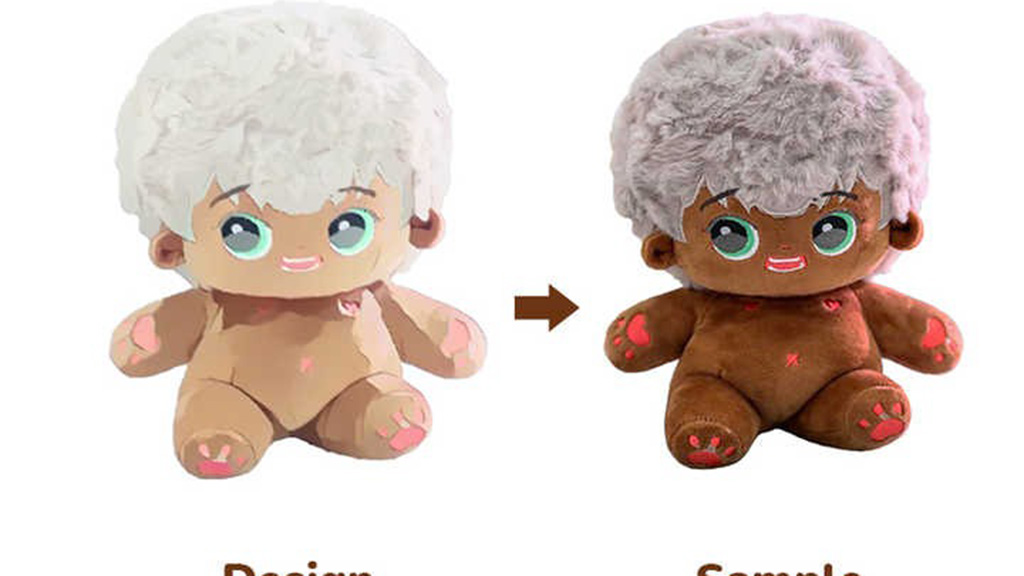
Custom development is where the quality of a plush toy manufacturing partner becomes most directly visible. The sampling process reveals pattern-making expertise, material sourcing accuracy, revision management discipline, and the technical depth of the development team — all in a condensed development cycle that mirrors the capabilities that will govern the entire production relationship.
At Kinwin, we manage custom development through a structured process designed to move from brief to production-ready sample in the minimum number of rounds, with clear communication and documented progress at every stage. Our development process is built around three core commitments: accurate brief interpretation that minimizes first-round deviation, efficient revision management that addresses all feedback comprehensively in each round, and counter sample confirmation that verifies production readiness before any bulk units are manufactured.
Here is how our custom development process works from brief to bulk:
| Development Stage | What Kinwin Does | Timeline | Client Involvement |
|---|---|---|---|
| Brief review and feasibility | Assess design, identify risks, confirm materials, flag ambiguities | 1–2 days | Respond to clarifying questions |
| Pattern making | Develop cutting templates from approved brief | 3–7 days | None — factory work |
| Material sourcing | Source and confirm all specified materials | 3–7 days (parallel) | Approve material swatches if required |
| First sample construction | Build prototype with dedicated sampling team | 7–14 days | None — factory work |
| Internal QC review | Check sample against brief before dispatch | 1 day | None — internal |
| Sample dispatch | Ship sample with deviation notes and photos | 1–3 days | Receive and evaluate |
| Revision management | Address all consolidated feedback in one round | 5–10 days | Submit structured feedback |
| Sample approval | Confirm final sample meets production standard | 1–2 days | Formal sign-off |
| Counter sample | Build pre-production sample with bulk materials | 5–7 days | Approve before bulk begins |
| Production planning | Schedule production and confirm timeline | 1–2 days | Confirm order details |
Our Design Feasibility Assessment
One of the most valuable services we provide early in the development process is a genuine design feasibility assessment — not a sales process designed to confirm that we can do whatever the client asks, but an honest technical review that identifies any elements of the design that would be difficult to execute consistently at scale, any materials specified that are unavailable or compliance-risky, and any construction approaches that would create quality problems in bulk production.
This assessment is valuable precisely because it sometimes involves telling clients things they do not immediately want to hear — that a specific design element is significantly more expensive than they expected, that a material they specified is not available in compliance-certified form, or that a construction approach will not be consistent across a large production run. Providing this feedback early, before sampling investment is made, saves time, money, and the frustration of discovering these issues through revision rounds or production failures.
Buyers who have worked with factories that simply agree to every requirement and then deliver poor results understand the value of a manufacturing partner who provides honest technical assessment upfront. This is the development relationship we work to establish from the first conversation.
Material Selection Support as a Development Differentiator
Material selection is one of the decisions that most significantly affects product quality, cost, and compliance — and one where buyers who are new to plush toy manufacturing most benefit from manufacturing partner expertise. At Kinwin, we present clients with physical material options during the development process rather than making selections unilaterally and presenting them as defaults.
This means sending clients fabric swatches, filling samples, and accessory alternatives with specific information about each option — the cost implications, the compliance status, the quality characteristics, and how each option performs in the specific product application. Clients who have chosen materials by comparing physical options and understanding the trade-offs between them are confident in their material selections in a way that clients whose materials were simply assigned by the factory are not — and that confidence is well-founded, because the selection was genuinely informed.
What Safety Certifications and Compliance Standards Do We Meet for Global Markets?
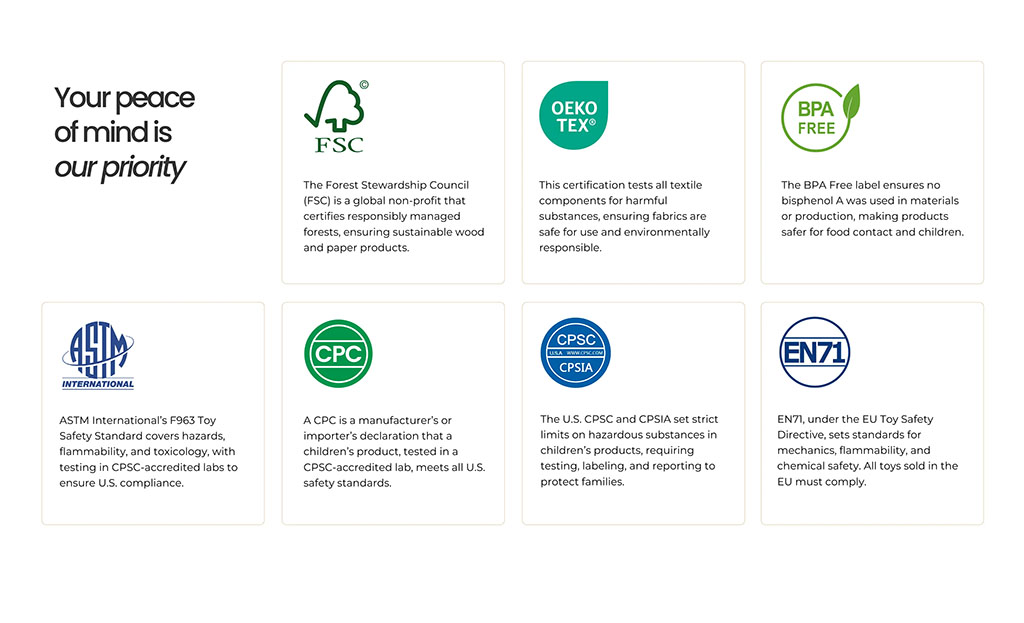
Compliance is not an afterthought at Kinwin — it is built into our production process from the material sourcing stage. We understand that for buyers selling in the US, Europe, and other regulated markets, a product that cannot demonstrate compliance is not a viable product regardless of how well it is designed or manufactured. Our approach to compliance is to make it a predictable, managed part of every client’s production experience rather than an uncertain variable they must navigate independently.
Kinwin’s products support compliance with the primary safety standards required for the US and European markets, and our production process is structured to ensure that compliance is addressed at the material sourcing stage — before it becomes a post-production testing problem. We work with certified material suppliers, maintain relationships with accredited testing laboratories, and guide our clients through the specific compliance requirements of their target markets as a standard part of our pre-development consultation.
Here is an overview of the compliance standards our products support:
| Standard | Market | What It Covers | How We Support It |
|---|---|---|---|
| ASTM F963 | USA | Toy safety — mechanical, physical, and chemical | Certified materials, structural compliance, accredited lab coordination |
| CPSIA | USA | Chemical safety, lead limits, tracking labels | Compliant materials, CPSIA tracking label application on all products |
| EN71 Parts 1–3 | Europe | Mechanical safety, flammability, chemical safety | Certified materials, seam strength standards, flammability-tested fabrics |
| REACH | Europe | Restricted chemical substances | Certified fabric and dye supplier documentation maintained |
| CE Marking | Europe | EU toy safety directive conformity | Documentation preparation and CE marking support |
| UKCA | United Kingdom | Post-Brexit UK toy safety requirements | Documentation support for UK market entry |
| OEKO-TEX Standard 100 | Global | Harmful substance testing in textiles | Available on request for certified fabric options |
Compliance-First Material Sourcing
Every material used in Kinwin production is sourced from suppliers who can provide current compliance documentation — test reports confirming the absence of restricted substances under REACH and CPSIA, chemical safety certificates for filling materials, and OEKO-TEX certification for fabric options where clients require it.
This compliance-first approach to material sourcing means that the chemical safety compliance of a product’s materials is established before sampling begins — not discovered as a problem after the finished product fails laboratory testing. Buyers who have experienced the cost and disruption of post-production compliance failures understand the value of a manufacturer whose material sourcing process makes this outcome structurally unlikely rather than simply unintended.
Supporting the Full Testing and Certification Process
For clients who require third-party product testing before market entry — which is a requirement for most US retail and major e-commerce platform access — we actively support the testing process from sample preparation through report receipt. We identify the applicable tests for the specific product, market, and age grade. We prepare and submit test samples to our accredited laboratory partners — including SGS and Intertek. We follow up on results and coordinate any required corrective action if issues are identified during the testing process.
This active compliance support is not a standard service from all plush toy manufacturers. Many factories leave compliance entirely to the buyer — providing no guidance on applicable standards, no support with laboratory coordination, and no input on how to address testing failures when they occur. Our involvement in this process reflects our understanding that a product that cannot enter its target market is not a successful product, regardless of how well it was manufactured.
How Do We Serve Buyers Across Different Industries and Product Categories?
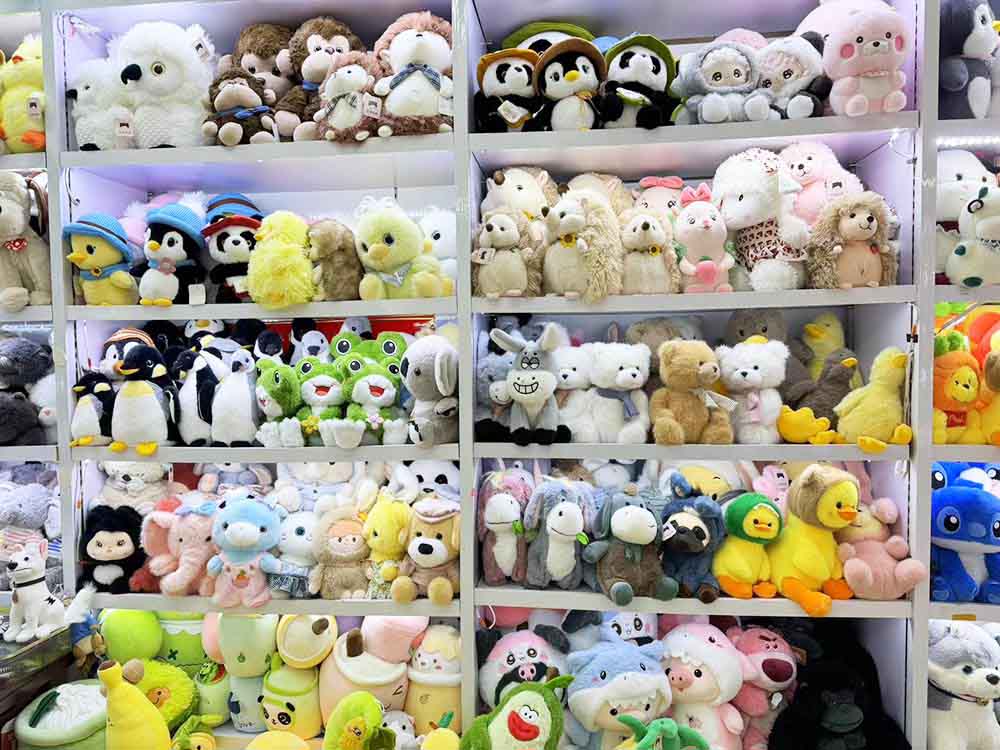
Plush toy buyers come from very different business contexts — toy brands, e-commerce sellers, retail chains, promotional product companies, gift businesses, theme parks, entertainment companies, and wellness brands among them. Each of these buyer types has different product requirements, different market contexts, and different compliance obligations. Serving them effectively requires both broad plush manufacturing capability and the flexibility to adapt development, production, and compliance approaches to each buyer’s specific situation.
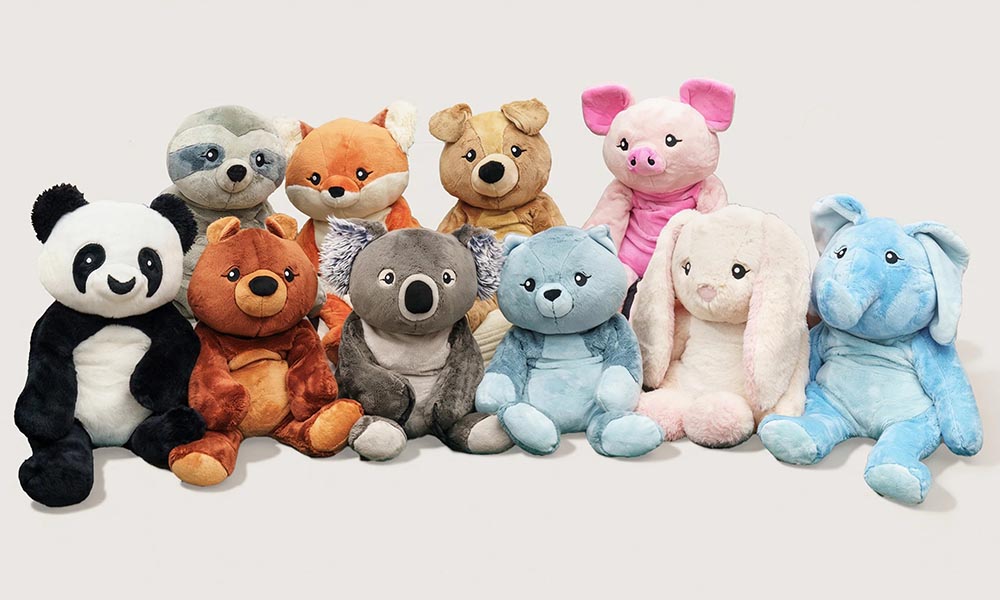
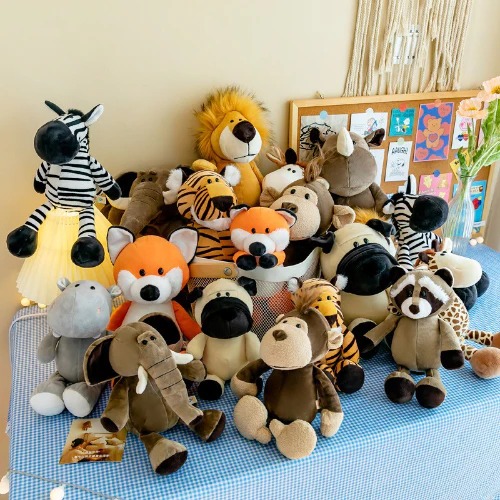
Kinwin serves buyers across a wide range of industries and product categories because our manufacturing capability spans the full spectrum of plush toy types — from simple promotional items to complex character designs, from standard stuffed animals to weighted therapeutic plush, from licensed character merchandise to original brand-developed designs. This breadth of capability means that buyers at different stages of their business, in different market categories, can find the manufacturing support they need within a single, stable supplier relationship.
Here is an overview of the buyer types and product categories we serve:
| Buyer Type | Typical Product Requirements | How We Serve Them | Key Value We Provide |
|---|---|---|---|
| Toy brands | Original character designs, compliance-critical | Full OEM development, sampling, compliance support | IP protection, quality consistency, compliance |
| E-commerce sellers | Custom designs, competitive cost, Amazon compliance | OEM development, efficient sampling, ASTM/EN71 support | Speed to market, quality reliability, compliance |
| Retail chains | Consistent quality at volume, compliance | High-volume OEM production, third-party inspection support | Production consistency, compliance documentation |
| Promotional product companies | Fast turnaround, brand application, competitive cost | ODM catalog with logo application, fast sampling | Speed, cost efficiency, brand application flexibility |
| Gift businesses | Design variety, seasonal responsiveness | ODM catalog plus custom development | Range breadth, seasonal capability |
| Theme parks and entertainment venues | Character accuracy, durability, volume | Complex custom OEM, licensed character production | Character accuracy, construction quality, scale |
| Wellness brands | Weighted plush, therapeutic design, adult market | Weighted plush expertise, premium materials, compliance | Weighted construction capability, premium quality |
| Children’s brands | Safety-first, age-appropriate design, compliance | Compliance-first production, ASTM/EN71 certified | Safety compliance, child-appropriate design capability |
Our Weighted Plush Capability
One product category that deserves specific mention is weighted plush toys — a category that requires specialized manufacturing knowledge that many general plush factories do not possess. Weighted plush products require precise weight calibration, compartmentalized inner bag construction to prevent filling migration, reinforced seam construction to handle the additional stress of weighted filling, and careful material selection to ensure that glass bead or plastic pellet filling is safely and durably contained.
At Kinwin, weighted plush production is a genuine capability — not a category we approach as a standard plush product with added weight. Our weighted product development process covers filling material selection and compliance documentation, inner compartment construction engineering, weight calibration and verification, and the specific safety testing requirements that weighted products must meet in US and European markets. Buyers developing weighted plush products — a category growing rapidly in the adult wellness and therapeutic gift segments — benefit from manufacturing experience that ensures both product performance and compliance readiness.
Serving Licensed and Character-Based Product Requirements
For buyers who develop licensed character merchandise or original character-based product lines, pattern-making accuracy and character fidelity are critical production requirements — not just general quality standards. A plush toy representing a licensed character must accurately reproduce the character’s proportions, colors, and defining features. An original brand character must be reproduced consistently across every unit in every production run, maintaining the character personality that defines the product’s commercial identity.
At Kinwin, our pattern-making team has extensive experience with character-based production — developing precise patterns from character style guides, managing the proportion engineering challenges of translating illustrated characters into three-dimensional plush form, and maintaining character consistency across production runs through detailed tech pack documentation and rigorous first-off inspection against character reference standards.
What Does the Experience of Working with Kinwin Actually Look Like?
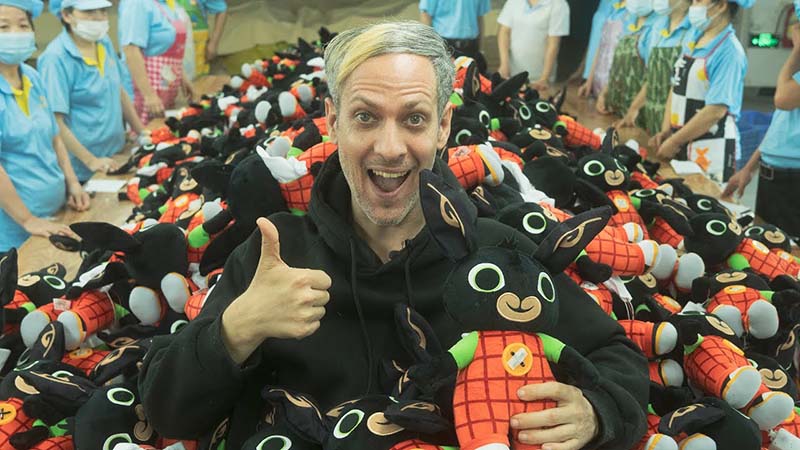
The most accurate picture of what working with Kinwin looks like does not come from our factory description or our capability claims — it comes from the actual experience our clients have across the stages of a production relationship. This section describes that experience honestly, across the touchpoints that matter most to buyers.
Working with Kinwin is experienced by our clients as a combination of technical capability, proactive communication, and genuine partnership orientation. Clients consistently describe three core experiences: products that match approved samples accurately in bulk production, communication that keeps them informed and in control throughout the production process, and a development partnership that helps them build better products than they would have arrived at independently. These experiences are the direct output of the systems, personnel, and culture we have built specifically to deliver them.
Here is what the Kinwin experience looks like across the key stages of a production relationship:
| Relationship Stage | What Clients Experience | What Produces This Experience |
|---|---|---|
| First inquiry | Detailed, knowledgeable response within 24 hours | Dedicated client-facing team with manufacturing expertise |
| Design brief review | Honest feasibility assessment, material recommendations | Development team assesses before sampling begins |
| First sample | High accuracy to brief, clear deviation documentation | Dedicated sampling team, internal QC review before dispatch |
| Revision rounds | Efficient, complete corrections | Revision action list confirmation before work begins |
| Production | Regular milestone updates, proactive problem communication | Structured communication protocol, accountability culture |
| FQC | Full inspection report shared before balance payment request | Independent QC team, complete documentation standard |
| Shipment | Tracking and shipping documents provided immediately | Logistics coordination as standard delivery stage |
| Reorders | Faster cycles, growing institutional knowledge | Maintained tech packs, production history, material records |
How We Handle Problems
The most revealing dimension of any manufacturing relationship is not how the factory performs when everything goes well — it is how they respond when something goes wrong. At Kinwin, our standard for problem communication is to notify the client as soon as a problem is identified — not after we have already managed it internally, and not after the client has independently discovered it. We communicate the problem specifically, explain what we believe caused it, present the solution options we have already identified, and ask for the client’s input on which resolution direction to pursue.
This approach is sometimes uncomfortable in the short term — no factory enjoys being the one to bring bad news. But our clients consistently tell us that this transparency is one of the qualities they value most about working with us. A manufacturing partner who tells you about a problem early, with a proposed solution already in development, is one you can plan around. A manufacturing partner who conceals problems until they are unavoidable is one who controls your production timeline rather than supporting it.
What Clients Tell Us After Multiple Orders
The feedback pattern we see most consistently from clients after several orders follows a specific arc. After the first order, the most common positive feedback is surprise — surprise that the bulk production matched the approved sample as closely as it did, and surprise at the quality and consistency of our communication throughout the process. After the third and fourth orders, the feedback shifts from positive surprise to confident expectation — clients who have experienced consistent delivery across multiple orders have developed the kind of manufacturing partnership confidence that allows them to plan their product launches, their inventory commitments, and their seasonal timing around the certainty of reliable production performance.
This progression — from positive surprise to confident expectation — is exactly the manufacturing relationship we are working to build with every client from the first conversation.
How Do Global Buyers Get Started with Kinwin?
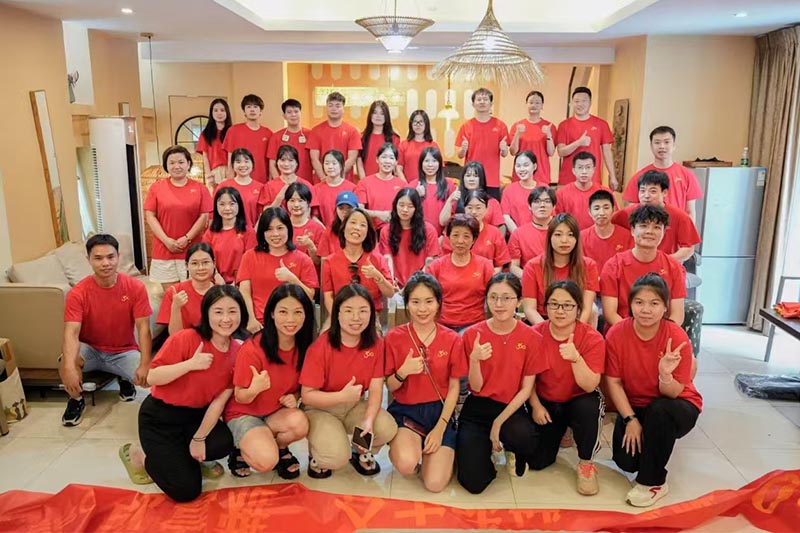
Starting a manufacturing partnership with Kinwin is designed to be straightforward, low-friction, and structured to give both parties the information needed to confirm that the relationship is a strong fit before any significant commitment is made.
Global buyers can begin a partnership with Kinwin by reaching out with their product concept, target market, approximate order requirements, and timeline. Our team provides a detailed response — covering development feasibility, indicative pricing, compliance requirements for the target market, and recommended next steps — within 24 hours of receiving a complete inquiry. This response gives buyers everything they need to make an informed decision about whether to proceed to sampling without requiring any financial commitment.
Here is what the Kinwin onboarding process looks like from first contact to first production order:
| Step | What Happens | Who Acts | Timeframe |
|---|---|---|---|
| Initial inquiry | Buyer shares product concept, market, volume, timeline | Buyer contacts us | Day 1 |
| Detailed response | Kinwin provides feasibility, pricing, compliance overview, next steps | Kinwin responds | Within 24 hours |
| Pre-development consultation | Product requirements refined, compliance confirmed, materials discussed | Both parties | 1–3 days |
| Brief submission | Buyer provides complete design brief | Buyer | As ready |
| Quotation confirmation | Kinwin confirms sampling and production pricing, itemized | Kinwin | 1–2 days after brief |
| Sampling begins | Pattern making and material sourcing start | Kinwin | After sampling fee confirmed |
| First sample delivery | Sample shipped with photos and deviation notes | Kinwin ships | 7–14 days from brief |
| Revision and approval | Efficient revision cycles to production-ready standard | Both parties | 1–3 rounds typical |
| Counter sample | Pre-production confirmation with bulk materials | Kinwin | 5–7 days after approval |
| Production order | Buyer confirms bulk order, production schedule confirmed | Both parties | After counter sample approval |
| Production and delivery | Full production run, QC documentation shared, shipment | Kinwin | Per agreed timeline |
What to Prepare Before Reaching Out
The more context provided in an initial inquiry, the more specific and actionable our first response will be. Useful information to include covers the product concept or category, the intended end user and market, the retail or e-commerce channel, the approximate target order quantity, the required delivery timeline, and any specific compliance or certification requirements.
Design references — even rough sketches, reference images, or examples of similar products — help us assess the development complexity and provide more accurate initial pricing. Physical material references — fabrics or products that represent the quality level targeted — can be sent to us for assessment as part of the pre-sampling process.
Buyers who are not yet ready to share detailed design information can begin with a general capability and compatibility conversation — to assess whether our production experience, market coverage, and service approach align with their sourcing requirements before committing to the information sharing that the next stage requires.
Our Commitment to Every Client Relationship
At Kinwin, we approach every new client relationship with the same commitment — to understand the buyer’s specific situation deeply enough to provide genuinely useful guidance, to deliver production quality that meets the standard the buyer needs rather than the standard that is easiest to achieve, and to communicate with the transparency and proactivity that makes the sourcing relationship a genuine commercial asset rather than a source of uncertainty.
We do not expect buyers to take this commitment on faith. We expect them to verify it — through the methods described throughout this page, and through the direct experience of a first order managed to the standard we describe. Our confidence in that verification process is the clearest signal we can offer that the commitment is genuine.
Reach out to our team at [email protected] or visit kinwintoys.com to begin the conversation. We would be glad to show you specifically why global buyers choose Kinwin — and why they come back.
Conclusion
Global buyers choose Kinwin because of what they find when they look closely — not what we tell them before they look. They find a manufacturing infrastructure built for consistent, scalable production. They find a quality control system that is documented, independent, and genuinely applied at every production stage. They find a development process that interprets briefs accurately, manages revisions efficiently, and translates approved samples reliably into consistent bulk production. They find compliance infrastructure that makes market entry predictable rather than uncertain. And they find a communication culture built around transparency and accountability rather than reassurance and avoidance.
These are not exceptional qualities that we deliver on good days. They are the operational standard we have built our entire manufacturing operation to deliver — consistently, for every client, on every order.
If you are evaluating plush toy manufacturers and looking for a partner who will meet your standards, protect your brand, comply with your market requirements, and grow reliably with your business, we would be glad to demonstrate exactly why global buyers choose Kinwin — starting with your first conversation with our team.
FAQ
Q1: What languages does the Kinwin team communicate in, and how does this affect the sourcing experience for international buyers?
Our primary client-facing communication is conducted in English, which is the working language for the majority of our international client relationships — including buyers from the US, Europe, Australia, and other major markets. Our client management team includes personnel with strong English language capability who are experienced in the specific terminology and communication requirements of international B2B plush toy sourcing. For buyers from non-English-speaking markets, we also support communication in other languages where our team has relevant capability. The practical effect of strong English communication capability is faster, more accurate information exchange throughout the development and production process — reducing the misinterpretations that sometimes occur when language barriers require excessive simplification of technical specifications or quality feedback.
Q2: What is Kinwin’s approach to protecting client designs and preventing them from appearing in other buyers’ orders?
Design protection at Kinwin is managed through both contractual commitment and operational practice. Contractually, every client relationship is covered by a non-disclosure agreement that prohibits the sharing of design files, patterns, and technical specifications with any third party. Operationally, client-specific design files, patterns, and tooling are stored separately from our general production resources and are accessible only to the personnel working on that specific client’s production. We do not incorporate client design elements into our general catalog or share production tooling across clients. For buyers who want additional legal protection beyond contractual NDA — particularly for original characters or proprietary designs with significant commercial value — we can discuss design registration options in relevant jurisdictions as part of our pre-development consultation.
Q3: How does Kinwin handle capacity allocation during peak production periods — particularly Q3 and Q4 when toy industry demand is highest?
Peak season capacity management is one of the most practically important aspects of production planning for buyers whose products have seasonal demand cycles. At Kinwin, we manage peak season capacity by maintaining a production planning system that allocates capacity to confirmed orders on a scheduled basis — giving priority to clients with ongoing relationships and advance order confirmation. Buyers who share their seasonal production requirements with us early in the year — even before specific designs are finalized — allow us to reserve appropriate production windows in our schedule, significantly reducing the risk of timeline delays during the busiest production periods. We communicate proactively with clients about capacity availability and recommend production scheduling that avoids peak-season compression wherever possible. For buyers whose seasonal timing is critical, this advance planning conversation is one of the most valuable early engagements in our annual production relationship.
Q4: Can Kinwin support buyers who need products delivered to multiple destinations — for example, directly to Amazon fulfillment centers or retail distribution centers in different countries?
Yes — managing multi-destination shipping is a logistics service we support for clients with complex distribution requirements. For e-commerce clients who need products prepared and delivered to Amazon FBA warehouses — with appropriate FNSKU labeling, carton marking, and shipment preparation — we work within Amazon’s preparation requirements to ensure that shipments arrive ready for intake without requiring additional handling by the buyer. For clients distributing to retail chains with specific labeling, packaging, and carton marking requirements, we prepare shipments to the retailer’s specifications. Multi-country distribution — where a single production run needs to be split and delivered to different markets with market-appropriate documentation and labeling — is also manageable with advance coordination. The most important factor in supporting multi-destination shipping effectively is receiving the specific requirements for each destination early in the production planning process, so that packaging, labeling, and documentation can be prepared correctly before shipment rather than requiring corrections after the goods are packed.
Q5: What is the best way for a buyer to assess whether Kinwin is the right long-term manufacturing partner before committing to a significant first order?
The most effective way to assess long-term fit before a significant first order is a structured evaluation process that combines several complementary methods. First, request a factory video tour — a guided video call through our production facility, sampling area, and QC station — to assess infrastructure and operational reality directly. Second, request physical samples of existing products from our portfolio — specifically products with comparable complexity to your intended product — to evaluate our standard production quality directly. Third, ask us to connect you with two or three existing clients in markets and product categories similar to yours for reference conversations. Fourth, engage us in a pre-development consultation for your specific product — our technical assessment, material recommendations, and pricing approach during this conversation will reveal more about our actual capability and communication standard than any presentation we could make about ourselves. Together, these steps provide the specific, verifiable evidence that long-term partnership decisions should be based on — and we welcome and support all of them as part of how we build new client relationships.