Skip to content
One of the first decisions every buyer faces when entering the plush toy market is whether to develop custom products or source from a manufacturer’s existing catalog. It sounds like a straightforward choice — custom means unique, ready-made means faster — but the real implications of this decision go much deeper than speed and design exclusivity.
The choice between custom plush and ready-made plush affects your total development investment, your time to market, your intellectual property position, your competitive differentiation, your compliance exposure, and the type of manufacturing relationship you need to build. Getting this decision right at the start — and understanding when to revisit it as your business evolves — is one of the most strategically important sourcing decisions a plush toy buyer makes.
This guide walks through every dimension of the custom versus ready-made comparison — honestly, in practical terms, and with the nuance that this decision actually requires. The goal is not to advocate for one model over the other but to give buyers the clarity to choose the right model for their specific situation right now and understand how that choice should evolve as their business grows.
What Is the Difference Between Custom Plush and Ready-Made Plush Toys?
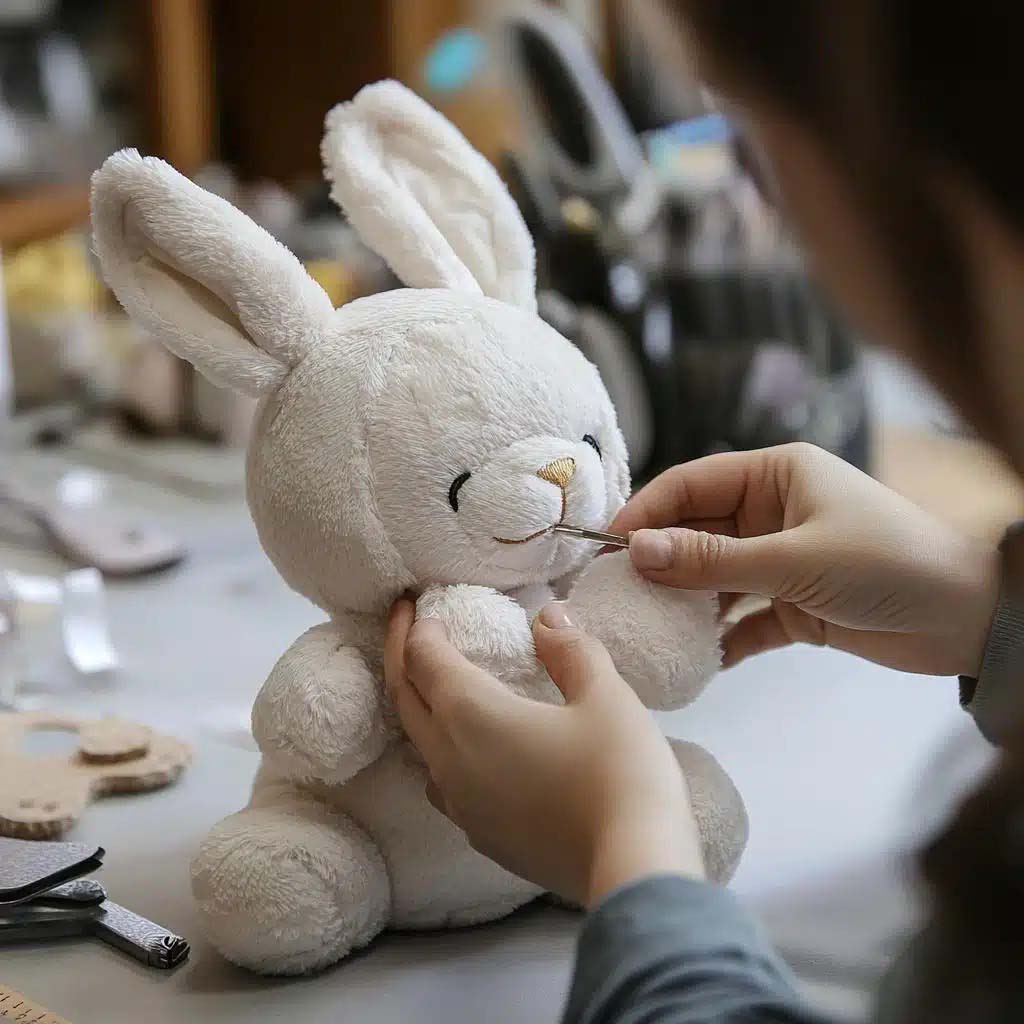
The distinction between custom and ready-made plush toys is more nuanced than it first appears. Both involve sourcing plush products from a manufacturer. Both result in products that carry the buyer’s brand. But the degree of design control, the investment required, the timeline involved, and the competitive position created are fundamentally different between the two approaches.
Custom plush toys are products designed specifically for the buyer — built from an original design brief, using buyer-specified materials, to buyer-defined quality standards, and produced exclusively for that buyer. Ready-made plush toys — sometimes called catalog or stock products — are designs that already exist in a manufacturer’s range, that can be sourced with minimal development investment, and that may be available to multiple buyers with different branding applied.
Here is a structured comparison of the defining characteristics of each model:
| Characteristic | Custom Plush | Ready-Made Plush |
|---|---|---|
| Design origin | Buyer’s original design or collaborative development | Manufacturer’s existing catalog design |
| Design exclusivity | Fully exclusive to the buyer | Shared design available to other buyers |
| Development requirement | Full design brief, sampling, revision rounds | Minimal — select, brand, and order |
| Minimum order quantity | Higher — typically 300–1,000+ per design | Lower — existing production efficiency |
| Time to market | Longer — development adds 4–12 weeks | Shorter — production only |
| Unit cost at equivalent volume | Comparable or lower at scale | May include design recovery premium |
| Intellectual property | Buyer owns the design | Manufacturer owns the base design |
| Competitive differentiation | Maximum — unique to your brand | Limited — design available to competitors |
| Compliance documentation | Buyer must arrange | May already exist for standard designs |
| Branding flexibility | Complete — every element buyer-controlled | Partial — branding on existing design |
The Spectrum Between Custom and Ready-Made
In practice, the boundary between custom and ready-made is not always a sharp line. Many manufacturers offer a middle path — catalog designs that can be modified in specific ways to create a degree of differentiation without the full investment of a completely original design. A standard bear design might be offered in a buyer’s specified colorway with a custom embroidered logo, or a catalog character might be modified in scale and material to create a version exclusive to one buyer.
Understanding this spectrum — and knowing where along it a specific sourcing arrangement sits — is important for buyers who want more differentiation than pure ready-made provides but who are not yet ready or willing to invest in fully custom development. The degree of modification possible within a ready-made framework, and the exclusivity terms available for modified catalog designs, vary significantly between manufacturers and should be clarified explicitly before any order is placed.
What Are the Real Advantages of Choosing Custom Plush Toys for Your Brand?
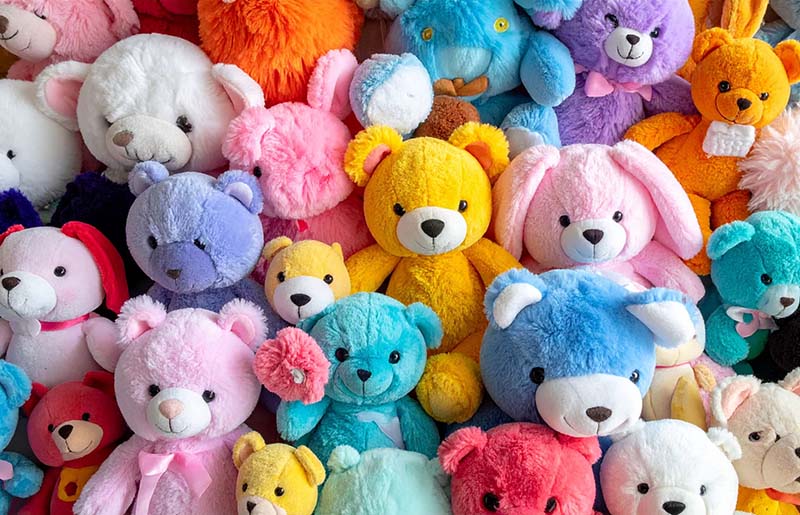
Custom plush toys offer advantages that extend well beyond the obvious benefit of design uniqueness. For brands that are building a product identity, developing character-based intellectual property, or targeting competitive markets where differentiation determines success, custom development is not a luxury — it is a strategic necessity.
Custom plush toys give brands complete control over every element of the product — design, materials, quality standards, construction approach, and compliance positioning — combined with full ownership of the resulting intellectual property. This control and ownership create competitive advantages that compound over time as the product becomes established in the market and the brand invests further in the design’s commercial development.
Here is an overview of the real advantages custom plush development provides:
| Advantage | What It Means in Practice | Commercial Impact |
|---|---|---|
| Complete design control | Every element matches the brand’s vision exactly | Higher customer satisfaction, stronger brand identity |
| Exclusive market position | Competitors cannot source the same product | Reduced price competition, better margin protection |
| IP ownership | Design is a brand asset that grows in value | Supports licensing, brand extensions, long-term value |
| Material specification | Materials chosen for quality, compliance, and positioning | Compliance confidence, quality consistency |
| Quality standard setting | QC criteria defined by the buyer | Consistent quality aligned with brand standards |
| Character development | Original characters create emotional brand connection | Higher customer loyalty, repeat purchase rate |
| Packaging integration | Product and packaging designed together | Stronger retail presentation, brand coherence |
Custom Development as Competitive Moat Building
For brands that develop original plush characters — whether based on original intellectual property, licensed properties, or unique character concepts — custom plush development is the mechanism through which a product becomes genuinely difficult for competitors to replicate. A competitor can find a similar ready-made product from the same manufacturer you use. They cannot easily replicate a custom design with unique proportions, specific material choices, and a character concept that has been refined across multiple development rounds.
This competitive moat effect compounds over time. Each season of reordering, each new character in the same design family, each extension of the product line builds a deeper brand investment in the custom design that increases the switching cost for customers and the replication cost for competitors. Brands that start with custom development early — even when the investment feels challenging relative to their initial scale — typically find that the differentiation advantage they build is one of the most durable competitive advantages in their business.
The Quality Standard Advantage
Custom development gives buyers something that ready-made sourcing cannot — the ability to specify their own quality standards rather than accepting the manufacturer’s default. For brands that compete on quality, this is commercially significant. The stuffing density, the fabric pile height, the seam strength standard, the embroidery precision — all of these can be defined by the buyer in a custom brief and enforced through a documented tech pack and quality approval process.
Ready-made products are produced to the manufacturer’s own quality standard, which is set to balance cost and quality for the broadest possible customer base — not specifically for the buyer’s market positioning. A brand that positions its products at a premium quality level will typically find that ready-made quality standards fall short of what their market requires, making custom development the only path to the quality consistency their brand promise demands.
Where Do Ready-Made Plush Toys Deliver Genuine Value for Buyers?

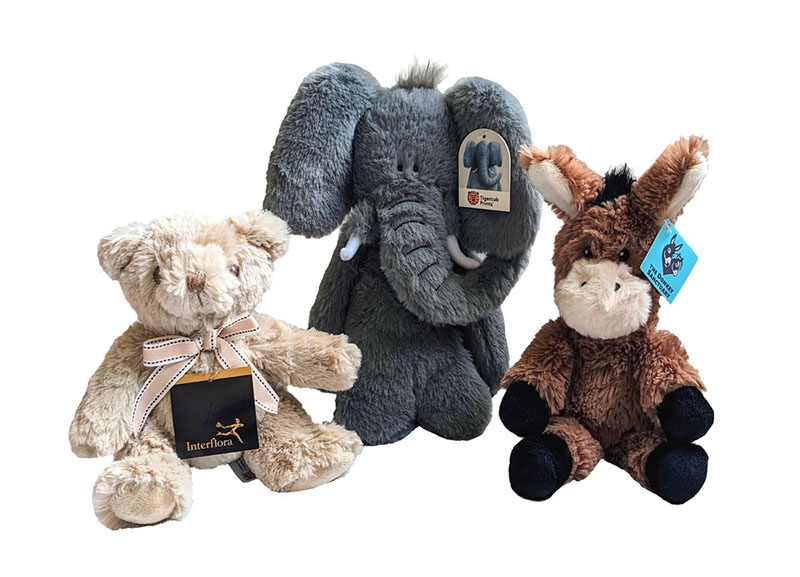
Ready-made plush toys are often dismissed as the option for buyers who cannot afford custom development — a compromise rather than a genuine strategic choice. This framing is wrong. For buyers in specific situations, ready-made sourcing is not a compromise but the genuinely optimal approach — faster, lower-risk, and in some cases better suited to the buyer’s commercial reality than custom development would be.
Ready-made plush toys deliver genuine value in situations where speed to market is critical, where the buyer needs to test demand before committing to design investment, where the purchase is brand-application driven rather than design-driven, or where the order volume is too small to make custom development economically sensible. In these situations, the advantages of ready-made sourcing are real and commercially significant — not second-best substitutes for custom development.
Here is a practical overview of where ready-made plush sourcing delivers genuine value:
| Situation | Why Ready-Made Is Genuinely Better | What Ready-Made Provides |
|---|---|---|
| Seasonal opportunity capture | Speed to market is critical | Production-only timeline, no development delay |
| Market testing before custom investment | Demand validation before design commitment | Low upfront cost, fast learning |
| Promotional product requirements | Brand visibility more important than design uniqueness | Fast, cost-effective branded merchandise |
| Small order quantities | Custom development not economical at low volume | Lower effective cost at small scale |
| Range expansion alongside core custom products | Cost-efficient way to broaden assortment | Quick addition without full design investment |
| Gift and souvenir markets | Standard designs have high acceptance in these channels | Design familiarity works commercially |
| New market entry validation | Test channel acceptance before investing in custom | Low-risk market entry |
The Market Testing Argument
For buyers entering the plush toy market for the first time — particularly e-commerce brands adding plush to an existing product range — ready-made sourcing provides an invaluable opportunity to test market response before committing to the investment of custom development. Selling a branded ready-made plush product reveals whether plush toys work in the buyer’s specific channel, at what price points customers respond, which product categories perform best, and what design characteristics their customers prefer.
This market intelligence is enormously valuable when the buyer does eventually invest in custom development — because it transforms the custom brief from a guess based on general market knowledge into a specification based on real customer response data from the buyer’s specific audience. Brands that use ready-made products strategically as market learning tools often develop custom products that perform significantly better than those developed without this foundation, because the custom design is built on validated market insight rather than assumptions.
Ready-Made in Promotional and Corporate Markets
In the promotional product market — corporate gifts, event merchandise, brand awareness campaigns — the primary requirement is not design exclusivity but brand visibility. A plush toy in a company’s colors, carrying a company logo, serves the brand communication purpose of promotional merchandise regardless of whether the underlying design is exclusive. In this context, ready-made sourcing is not a compromise but an efficient and appropriate approach — delivering branded product quickly and cost-effectively without the design investment that the commercial purpose does not require.
For promotional product buyers specifically, the key advantage of ready-made sourcing is its combination of speed and cost efficiency. A promotional campaign with a two-month lead time cannot accommodate a full custom development cycle. A ready-made product with logo application and custom packaging can be delivered within this window — making ready-made the only practical option regardless of the design uniqueness question.
How Do the Costs of Custom vs Ready-Made Plush Toys Compare Across the Full Project?
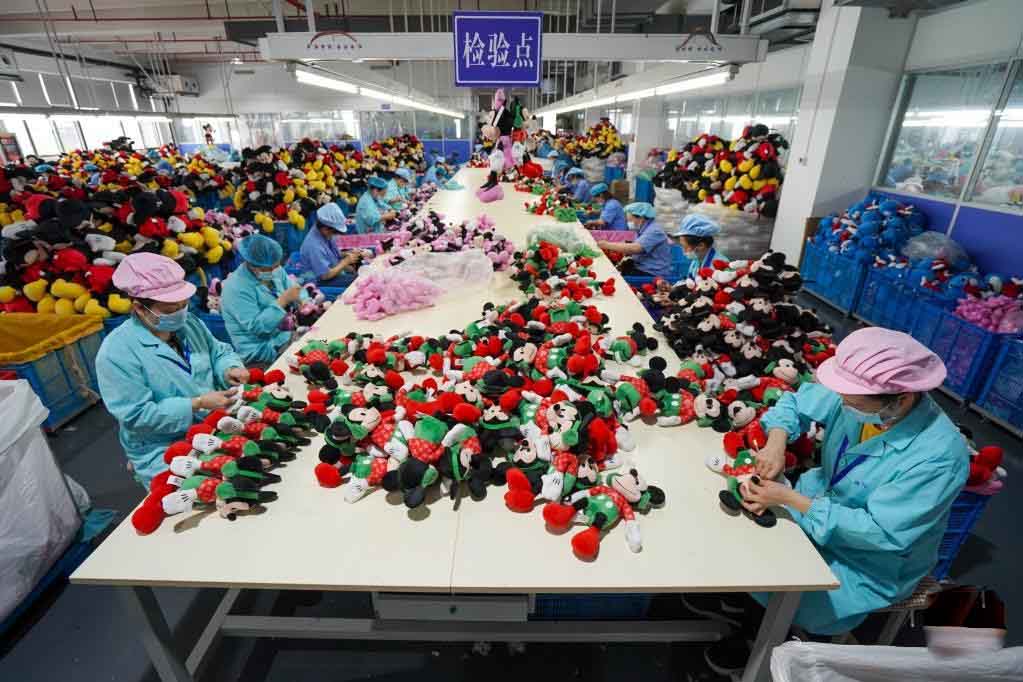
Cost comparison between custom and ready-made plush toys is frequently oversimplified. Buyers often compare unit prices and conclude that ready-made is cheaper — without accounting for the different cost structures across the full project lifecycle. A rigorous cost comparison must include development costs, sampling costs, minimum order requirements, unit production costs at different volumes, and the long-term cost trajectory as the buyer’s volume grows.
The full project cost comparison between custom and ready-made plush toys reveals a more nuanced picture than unit price comparison alone. Custom development involves higher upfront costs — sampling, pattern making, tooling — that do not recur on reorders, while ready-made involves lower or zero upfront development costs but may carry a higher unit price at equivalent volume due to the design premium embedded in ready-made pricing. At scale, custom production typically becomes more cost-efficient than ready-made as development costs are amortized across growing volumes.
Here is a structured cost comparison across the full project lifecycle:
| Cost Category | Custom Plush | Ready-Made Plush | Notes |
|---|---|---|---|
| Design development | Buyer’s cost — varies | Zero — factory’s cost | Custom design investment is one-time |
| Sampling fee | $100–$600+ per design | Minimal or zero | Complex custom designs at higher end |
| Pattern making | Included in sampling fee | Already exists | Custom pattern reused on reorders |
| Tooling and molds | Buyer’s cost if applicable | Already exists | One-time cost for custom accessories |
| Unit cost at 500 units | Moderate — development amortizing | Moderate — design premium included | Comparable at this scale |
| Unit cost at 3,000 units | Lower — development fully amortized | Moderate — design premium unchanged | Custom increasingly advantageous |
| Unit cost at 10,000 units | Lowest — optimized production | Moderate — limited optimization | Custom clearly more economical |
| Reorder cost | Production cost only | Same as initial — no amortization benefit | Custom reorders have no development cost |
The Amortization Advantage of Custom Development
One of the most important economic characteristics of custom plush development is that the upfront investment — sampling fees, pattern making, tooling — is a one-time cost that does not recur on subsequent orders of the same design. Every reorder of a custom design is essentially production cost only, with no development overhead.
Ready-made products do not offer this amortization benefit. Whether a buyer orders a ready-made design for the first time or the tenth time, the design premium embedded in the unit price is the same — the factory continues to recover its design investment on every order. This means that the longer a buyer continues to reorder the same custom design, the more economically advantageous custom development becomes relative to ready-made.
This amortization dynamic is one of the strongest economic arguments for investing in custom development early — even when the initial upfront cost feels challenging relative to the buyer’s current scale. Every reorder of the custom design produces incremental margin advantage over the ready-made alternative, compounding over time into a significant total cost advantage.
Hidden Costs in Ready-Made Sourcing
Ready-made sourcing has its own category of hidden costs that buyers sometimes overlook when comparing it favorably to custom development. If the ready-made product requires compliance testing for the buyer’s target market — which it typically does, since existing factory test reports may not cover all required standards for specific export markets — the buyer bears this cost directly. If the ready-made design needs modification to meet market requirements or brand standards, modification development carries its own sampling cost. And if the ready-made product is available to competitors — which catalog products typically are — the buyer eventually faces price competition from competitors selling the same underlying product, which creates downward margin pressure that custom exclusivity prevents.
How Do Development Timelines Differ Between Custom and Ready-Made Plush Sourcing?
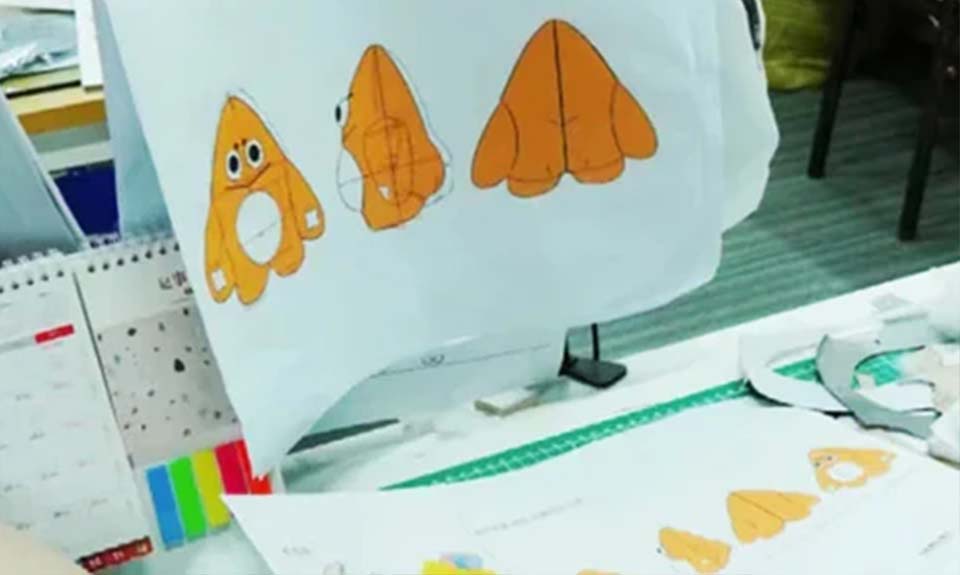
Timeline is one of the most immediately visible practical differences between custom and ready-made plush sourcing — and one of the most important decision factors for buyers with specific market entry windows, seasonal timing requirements, or competitive urgency.
Custom plush development requires a significantly longer total timeline than ready-made sourcing because it involves design brief preparation, pattern making, material sourcing, sampling, revision rounds, counter sample confirmation, and production scheduling — all before mass production begins. Ready-made sourcing eliminates these development stages, moving directly from design selection and branding confirmation to production scheduling.
Here is a realistic timeline comparison across the full sourcing process:
| Process Stage | Custom Plush Timeline | Ready-Made Plush Timeline | Time Saved by Ready-Made |
|---|---|---|---|
| Design development | 1–4 weeks (buyer’s work) | Minimal — catalog selection | 1–4 weeks |
| Brief preparation and factory review | 1–2 weeks | 1–3 days | ~1 week |
| Pattern making and material sourcing | 1–2 weeks | Already complete | ~1–2 weeks |
| First sample production | 1–2 weeks | 3–7 days (branding sample only) | ~1 week |
| Revision rounds | 2–6 weeks (1–3 rounds typical) | 1–2 weeks (branding confirmation) | 1–4 weeks |
| Counter sample confirmation | 1–2 weeks | Typically not required | 1–2 weeks |
| Mass production | 3–5 weeks | 3–5 weeks | No difference |
| Total typical timeline | 10–19 weeks | 5–9 weeks | 5–10 weeks |
When Timeline Difference Is the Deciding Factor
The timeline advantage of ready-made sourcing is most commercially significant in three specific scenarios. First, when a seasonal deadline cannot accommodate a full custom development cycle — a Christmas product that needs to reach retail in October cannot be developed and produced in September, but a ready-made product with custom branding can be ordered and delivered in five to seven weeks. Second, when a competitive or market opportunity has a defined window — a trend-driven product category that is peaking now cannot wait twelve weeks for custom development without missing the peak. Third, when a buyer needs to demonstrate market presence quickly — for a new brand launch or a new channel entry — without the investment of a full custom development cycle.
In these scenarios, the timeline advantage of ready-made is not just a convenience — it is a commercial necessity. The question is not whether ready-made or custom is better in principle but which model is compatible with the specific timeline the business situation demands.
Reducing Custom Development Timelines
For buyers who prefer custom development but face timeline pressure, several strategies can reduce the custom development timeline without compromising quality. Digital 3D mockups can resolve proportion and design questions before physical sampling begins, saving one to two weeks of revision round time. Staggering design development across multiple designs — starting each in sequence rather than simultaneously — reduces the management complexity that slows decision-making. And working with a manufacturer who has a dedicated, experienced sampling team — rather than a factory where sampling competes with production for personnel and attention — reliably produces faster first sample turnaround.
At Kinwin, our dedicated sampling infrastructure consistently achieves first sample delivery within 7 to 14 days of an approved brief — among the fastest development timelines available in the market without compromising on the accuracy and quality of the prototype.
How Does Intellectual Property Ownership Work Differently in Each Model?
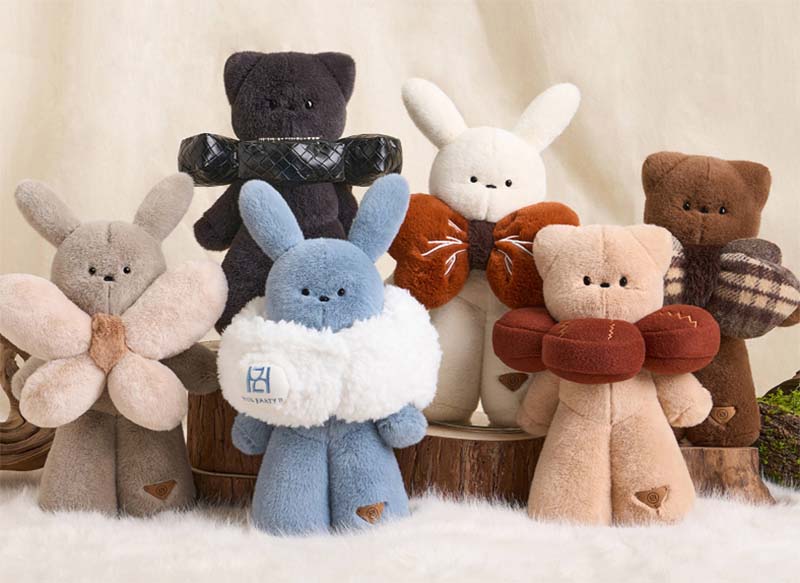
Intellectual property ownership is one of the most strategically significant differences between custom and ready-made plush sourcing — and one that many buyers underestimate until they face a situation where IP ownership matters commercially.
In custom plush development, the buyer owns the design — because the buyer created it, specified it in a design brief, and paid for its development. This ownership gives the buyer the right to produce the design exclusively, to prevent the manufacturer from producing it for other clients, and to use the design as a business asset — for licensing, for brand extensions, for territorial exclusivity arrangements, and for the competitive protection that comes from having a product that cannot be legally replicated without the owner’s permission.
In ready-made plush sourcing, the manufacturer owns the design. The buyer has the right to order products using that design — and to apply their branding to it — but they do not own the underlying product design itself. This means the manufacturer can offer the same design to other buyers, the buyer cannot prevent this, and any brand investment built on the ready-made design is at risk of being diluted by competing products using the same base design.
Here is a structured comparison of IP ownership implications across both models:
| IP Dimension | Custom Plush | Ready-Made Plush |
|---|---|---|
| Design ownership | Buyer fully owns the design | Manufacturer owns the design |
| Production exclusivity | Fully exclusive by default | Not exclusive without specific agreement |
| Competitor access to same design | Not possible — buyer owns design | Possible — manufacturer can sell to anyone |
| Design as brand asset | Yes — grows in value with brand | No — not a buyer asset |
| Licensing potential | Yes — buyer can license design | No — buyer cannot license what they do not own |
| Brand investment protection | Strong — unique to buyer | Weak — competitors can use same design |
| Contractual protection needed | IP clause and exclusivity in manufacturing agreement | Exclusivity clause if desired — may require premium |
Protecting Custom Design IP in Manufacturing Agreements
Owning a custom plush design in principle and protecting that ownership in practice require different actions. The design brief and the development investment establish the buyer’s claim to ownership — but without explicit contractual protection, the manufacturing relationship may not fully enforce that claim. A manufacturer who receives detailed design files, patterns, and tooling investments could theoretically use elements of a buyer’s design in their own catalog development — not through deliberate IP theft but through the gradual incorporation of design elements into their general pattern library.
Preventing this requires explicit contractual language covering: ownership of all design files, patterns, and tooling created for the buyer’s product; prohibition on the manufacturer producing the design or elements of it for any other party; confidentiality covering all design information shared with the factory; and the buyer’s right to retrieve design files, patterns, and tooling if the manufacturing relationship ends.
These protections should be established before design files are shared with any manufacturer — because once the information is shared without contractual protection, the leverage to establish those protections is significantly reduced.
Negotiating Exclusivity for Ready-Made Designs
For buyers who use ready-made sourcing but want some degree of competitive protection, exclusivity for specific ready-made designs is sometimes negotiable — particularly for buyers who are willing to commit to minimum purchase volumes or geographic exclusivity terms. A manufacturer may be willing to offer exclusivity on a specific catalog design in the buyer’s primary market for one or two seasons in exchange for a volume commitment that makes the exclusivity commercially worthwhile for both parties.
This negotiated exclusivity does not give the buyer IP ownership — the manufacturer still owns the design and can offer it in other markets or after the exclusivity period ends — but it provides practical competitive protection for the period that matters most commercially. Understanding that this option exists, and building it into ready-made sourcing negotiations when competitive protection is important, allows buyers to extract more strategic value from ready-made sourcing than they would by treating it purely as a commodity transaction.
Which Model Fits Your Business Stage — and When Should You Switch?
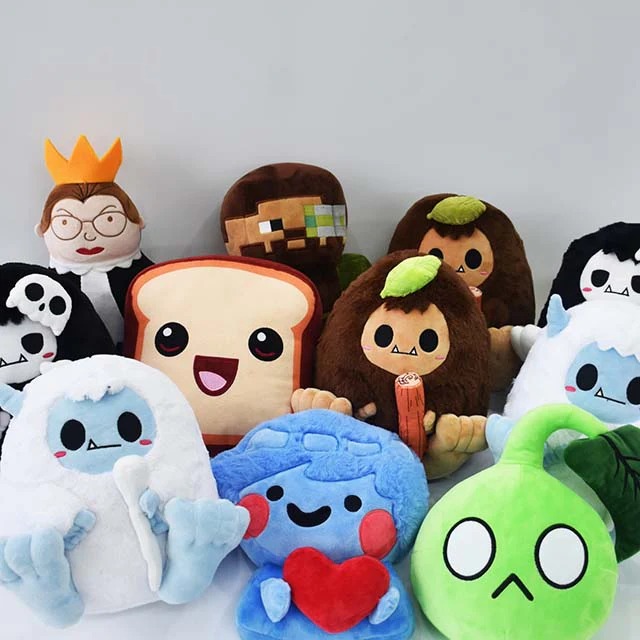
The right model at any point in a plush toy business’s development is the one that fits the buyer’s current capabilities, resources, competitive situation, and strategic objectives — not the one that is theoretically superior in the abstract. Both custom and ready-made sourcing have a role in the development of successful plush toy businesses, and the most strategically sophisticated brands use both — deliberately, at different stages and for different parts of their product range.
The choice between custom and ready-made should be driven by the buyer’s current business stage: available investment, order volume, design capability, competitive context, and market positioning goals. Ready-made is most appropriate at early stages when investment is limited and market validation is the priority. Custom development becomes increasingly appropriate as volume, market understanding, and brand differentiation needs grow.
Here is a practical guide to which model fits different business stages:
| Business Stage | Recommended Model | Reason | When to Transition |
|---|---|---|---|
| Market entry — first product | Ready-made with branding | Lowest risk, fastest learning | After first season market validation |
| Early growth — proven concept | Hybrid — ready-made core, custom hero | Balance cost and differentiation | When volume supports custom amortization |
| Established brand — competitive market | Primarily custom | Differentiation and IP building essential | Ongoing — expand custom range progressively |
| Scale — multiple SKUs | Custom for core, ready-made for extensions | Optimize investment across range | Continuously reassess per SKU |
| Licensing or character brand | Fully custom | IP ownership essential for licensing | From the beginning |
The Hybrid Strategy — Using Both Models Together
The most commercially sophisticated plush toy buyers do not make a binary choice between custom and ready-made — they use both strategically within the same product range. The typical structure of a successful hybrid strategy places original, fully custom-developed designs at the core of the product range — the hero products that define the brand, command premium pricing, and build long-term customer loyalty. Ready-made products, branded and curated, extend the range into adjacent categories, fill seasonal gaps, or serve channel segments where design exclusivity is less critical than speed and cost efficiency.
This hybrid approach maximizes the return on custom development investment by concentrating it where brand differentiation and competitive protection create the most commercial value — while using ready-made sourcing efficiently in contexts where those benefits are less critical. It also provides operational flexibility, allowing the brand to respond quickly to market opportunities through ready-made sourcing without waiting for custom development cycles.
The Signal That It Is Time to Invest in Custom Development
For buyers who have been sourcing ready-made products and are wondering whether the time has come to invest in custom development, several specific signals indicate that the transition is commercially justified. The most important signal is margin pressure from competition — when competitors are selling the same or similar designs at lower prices, eroding the buyer’s pricing power and profitability. This is the clearest indication that design exclusivity — achievable only through custom development — has become a commercial necessity rather than a luxury.
Other signals include a pattern of customer requests for specific designs that ready-made products cannot satisfy, growing brand equity that the buyer wants to protect through proprietary design, and volume levels that have reached the point where custom development costs can be amortized across order quantities large enough to make the per-unit development investment manageable.
How to Find the Right Manufacturing Partner for Both Custom and Ready-Made Plush?
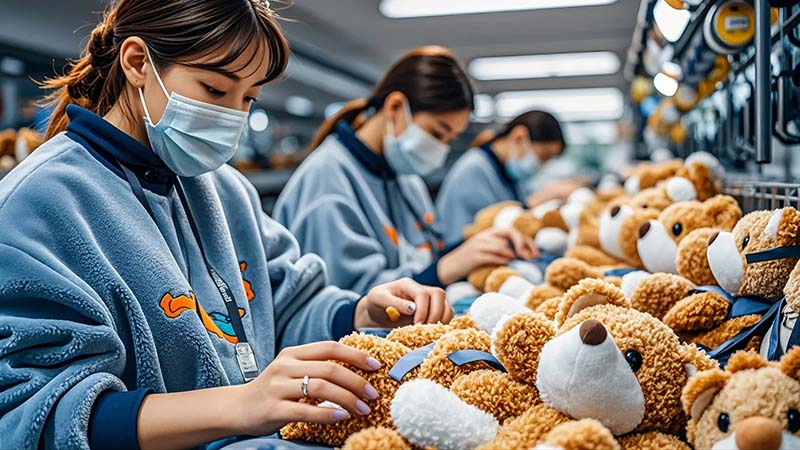
Whether a buyer is sourcing custom designs, ready-made catalog products, or a combination of both, the quality of the manufacturing partner is a primary determinant of whether the sourcing strategy delivers its intended commercial outcomes. The right manufacturing partner for both models is one with genuine capability in both — a factory with deep custom development experience and a well-curated catalog of ready-made designs that can serve buyers across the full spectrum of their sourcing needs.
Finding the right manufacturing partner for both custom and ready-made plush requires evaluating development capability, catalog quality and range, IP management practices, production consistency, compliance infrastructure, and communication standards. A partner who excels at only one model limits the buyer’s strategic flexibility — requiring them to maintain multiple factory relationships or compromise on either custom quality or ready-made selection.
Here is an evaluation framework for assessing a manufacturer’s capability across both models:
| Evaluation Area | Custom Capability Indicators | Ready-Made Capability Indicators |
|---|---|---|
| Design development | Experienced pattern makers, dedicated sampling team | Well-organized catalog with quality samples |
| IP management | Clear exclusivity commitment, documented IP protection | Transparent catalog policy, exclusivity options available |
| Material standards | Specified materials sourced accurately, certified options | Consistent quality across catalog designs |
| Sampling speed | 7–14 days for standard complexity custom designs | Branding samples available in 3–7 days |
| QC system | Three-stage documented QC for custom production | Consistent QC applied to catalog production |
| Compliance support | Material certification for custom specifications | Existing compliance documentation for catalog products |
| Communication | Proactive development updates, revision tracking | Fast quote response, clear catalog information |
| Exclusivity terms | Full exclusivity on custom designs | Negotiable exclusivity on catalog products |
Questions to Ask When Evaluating a Partner for Both Models
When evaluating a manufacturer’s capability to support both custom and ready-made sourcing effectively, specific questions reveal the depth of capability in each area more reliably than general capability claims.
For custom development, ask to see examples of complex custom designs the factory has executed — specifically requesting products with comparable construction complexity to your intended designs — and ask the factory to walk through their development process, revision management approach, and tech pack documentation system. A factory with genuine custom development capability will engage with these questions specifically and confidently.
For ready-made sourcing, ask to receive catalog samples for physical quality evaluation, confirm the factory’s policy on exclusivity for catalog designs, and verify what compliance documentation already exists for the catalog products you are considering. A factory with a well-managed ready-made offering will have organized catalog documentation, physical samples available, and clear commercial policies for exclusivity arrangements.
At Kinwin, we support both custom OEM development and ready-made ODM sourcing with equal commitment and depth of capability. Our custom development infrastructure — dedicated sampling team, experienced pattern makers, rigorous QC systems — serves buyers who are building proprietary product lines. Our curated ODM catalog provides buyers who need speed, lower upfront investment, or market testing capability with a high-quality, well-documented range of products that can be branded and delivered efficiently.
Whether you are starting with ready-made products to test the market, developing custom designs to build your brand’s competitive position, or managing a mixed range that uses both models strategically, we are equipped to support the full scope of your sourcing needs with consistent quality, transparent processes, and manufacturing expertise built across hundreds of plush toy projects.
Reach out to our team at [email protected] or visit kinwintoys.com to discuss which approach makes the most sense for your next project.
Conclusion
The choice between custom and ready-made plush toys is not a one-time decision made once and never revisited. It is a strategic choice that evolves with the buyer’s business — starting, for most brands, with the speed and lower risk of ready-made sourcing, and progressively shifting toward custom development as volume, market understanding, and competitive positioning make the investment in design exclusivity and IP ownership increasingly valuable.
Neither model is universally superior. Ready-made delivers genuine strategic value at the right business stage and in the right commercial context. Custom development delivers competitive advantages that compound over time into durable brand differentiation. The brands that use both intelligently — knowing when each model serves their needs best and building a manufacturing relationship capable of supporting both — are the ones that build the most resilient, most profitable plush toy product businesses.
The most important single factor in making either model work — beyond the strategic choice itself — is the quality of the manufacturing partner. A partner who can deliver accurately on custom briefs, maintain consistent quality on catalog products, protect IP appropriately, and communicate proactively throughout the production process is the foundation that makes either model successful.
At Kinwin, that is the standard we hold ourselves to — for every client, on every order, across every product type we produce.
FAQ
Q1: Can I start with a ready-made product and later develop a custom version of it without switching manufacturers?
Yes — and this is one of the most efficient product development paths available to growing plush toy brands. Starting with a ready-made product from a manufacturer’s catalog allows you to test market response, understand customer preferences, and validate demand before committing to custom development investment. When you are ready to develop a custom version, working with the same manufacturer has significant advantages: they already understand your quality standards, your communication style, and your market positioning, which accelerates the custom development process and reduces revision rounds. The transition from ready-made to custom development with the same manufacturer is typically faster and smoother than starting a custom development relationship with a new factory from scratch.
Q2: How do I protect my brand from competitors who might source the same ready-made design I am using?
Complete protection from competitor access to the same ready-made design requires either negotiating exclusivity with the manufacturer — which may be available for a volume commitment or a premium — or transitioning to a custom version of the product that gives you design ownership. In the absence of negotiated exclusivity, brand differentiation on ready-made products is achieved primarily through branding elements that are exclusive to your label: custom packaging, proprietary hang tags, exclusive colorways, and custom embroidery or embellishments applied to the base design. These elements create a market presentation that distinguishes your product from competitors using the same underlying design, though they do not prevent competitors from doing so. For buyers where brand differentiation is commercially critical, this limitation is the clearest signal that custom development has become the right strategic choice.
Q3: Are there ready-made plush designs that already have compliance test reports I can use for my market?
Some manufacturers maintain compliance test reports for their catalog products — particularly for major markets like the US and EU — that cover the standard tests applicable to that product type. Whether these reports are valid for your specific market entry depends on the specific standard version tested, the date of the report, the product configuration you are ordering, and whether any modifications you request change the product in ways that might affect the test results. Before relying on a manufacturer’s existing compliance documentation for a ready-made product, verify specifically which standards were tested, which laboratory conducted the testing, how current the report is, and whether your sourced product will be identical in all material respects to the tested product. When modifications are involved — even changes as seemingly minor as a different label or different colorway — assess whether those changes could affect the test results and whether retesting of the specific modified product is required.
Q4: What is the minimum order quantity I should expect for custom development versus ready-made sourcing?
Custom development MOQs at professional OEM factories typically start at 300 to 500 units per design for standard products, with higher minimums for products requiring custom tooling, specialized materials, or complex construction. Ready-made catalog products often carry lower MOQs — sometimes as low as 100 to 200 units — because the design, patterns, and production processes are already established, reducing the fixed cost burden that drives higher MOQ requirements in custom development. This MOQ difference is one of the genuine practical advantages of ready-made sourcing for buyers who are not yet operating at volumes that justify the MOQ commitment of custom development. As your volume grows and you approach the MOQ threshold for custom production, the economics of custom development become increasingly favorable and the transition becomes easier to justify.
Q5: If I develop a custom plush product but it does not sell as well as expected, can I convert it to a ready-made product in the manufacturer’s catalog?
This depends entirely on the terms of your manufacturing agreement. Most custom development agreements include provisions prohibiting the manufacturer from producing the buyer’s custom design for other parties — which prevents the manufacturer from adding it to their catalog without the buyer’s permission. If you want to recoup some of the development investment from a custom product that underperforms by allowing the manufacturer to sell it as a catalog product, this would require a negotiated agreement — typically involving either a royalty payment to the original buyer on each unit sold, or a buyout of the buyer’s IP rights at an agreed valuation. This type of arrangement is uncommon in standard manufacturing relationships but is not impossible to negotiate when both parties see commercial benefit. If there is any possibility you would want this option in the future, it is worth discussing it with the manufacturer before development begins and considering whether to include provisions for it in the original manufacturing agreement.