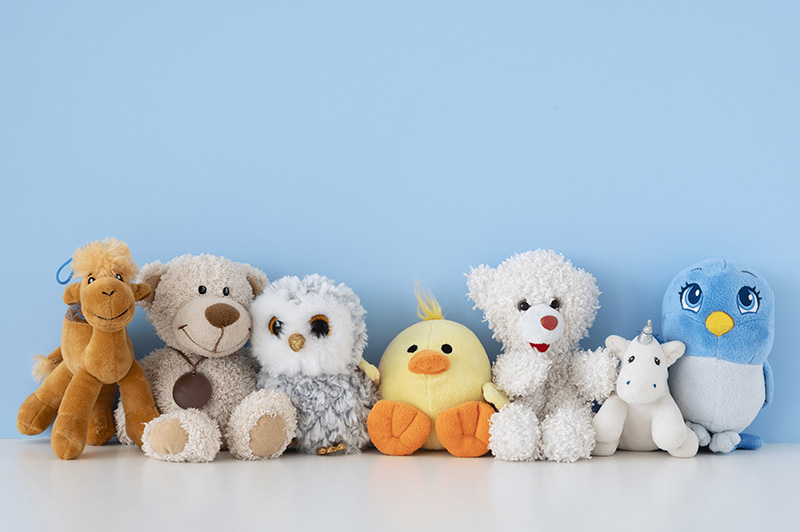
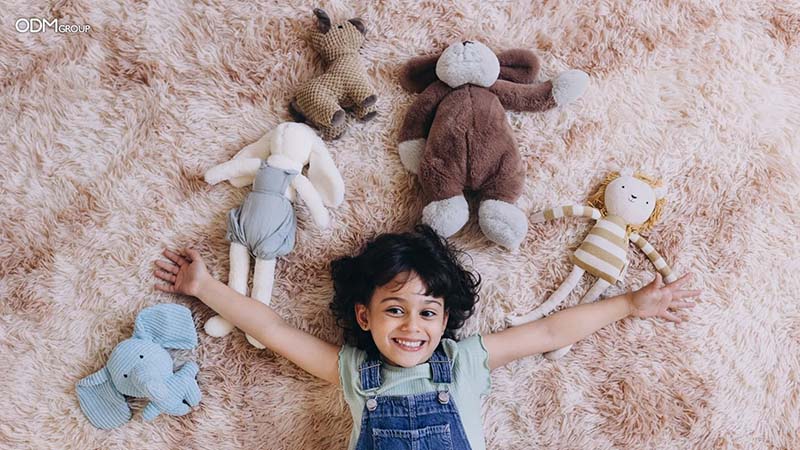
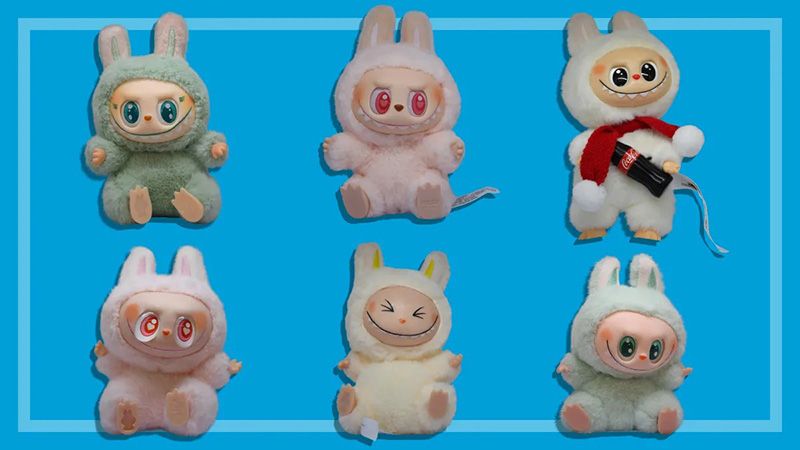
Many parents and buyers ask me a hard question: “When is it actually safe for a baby to sleep with a stuffed animal?” As a plush manufacturer, I design cute toys every day—but for babies, “cute” is never enough. Safe sleep rules are strict, and they must come first.
I’m Amanda from Kinwin, a plush toy factory in China. In this guide I’m not acting as a doctor or nurse, and this article is not medical advice. I’m sharing what major organisations say about safe sleep and soft toys, and how we, as a manufacturer, design plush for older babies and toddlers in a safer, more responsible way. Always follow your local guidelines and talk to your child’s healthcare provider about your own baby.
When do experts say babies can sleep with stuffed animals?
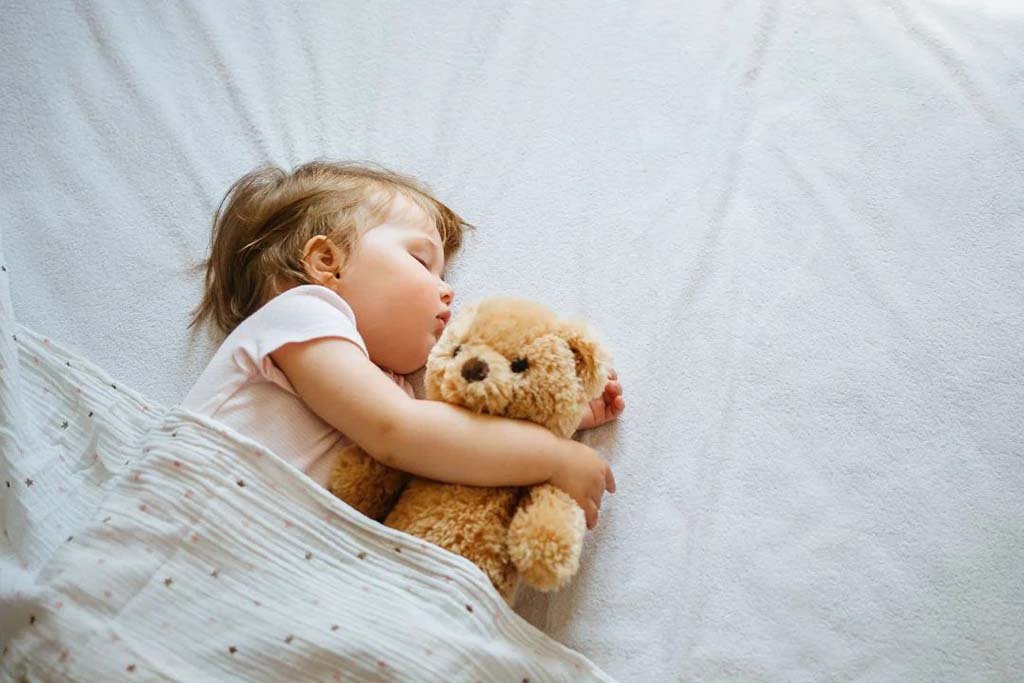
Most major health organisations agree on one key point:
Babies under 12 months should sleep in an empty crib, with no soft toys, pillows, or loose bedding.
The American Academy of Pediatrics (AAP), CDC, NIH Safe to Sleep program, Health Canada and many national programs advise keeping all soft objects—including stuffed animals—out of the sleep space for the first year of life.加拿大政府+4HealthyChildren.org+4aap.org+4
Some organisations, like Red Nose Australia, suggest keeping soft toys out of the sleep space at least until 7 months and ideally for the first 12 months, because this is the highest-risk period for sudden unexpected death in infancy.Red Nose Australia+1
After the first birthday, several expert and public-health sources say many healthy toddlers can safely have a small stuffed animal or comfort object in bed, as long as parents still think about size, weight, and how the child moves.health.state.mn.us+3huckleberrycare.com+3Slumberkins+3 Some guidance even suggests waiting closer to 18 months for extra caution.ADADA+1
Here is a simplified overview based on common expert guidance. This table is for general education, not a rule for your specific child:
| Age Range (Approx.) | What Many Expert Sources Recommend* | Main Reasoning | What Parents Often Do in Practice (Discuss with Doctor) |
|---|---|---|---|
| 0–6 months | No soft toys in the sleep space at all | Highest risk period for SIDS/SUDI; baby cannot move objects away疾病控制與預防中心+2safetosleep.nichd.nih.gov+2 | Use only firm mattress + fitted sheet; comfort comes from routine and closeness before sleep |
| 6–12 months | Still no soft toys recommended in crib/bed | Risk still present; soft items can cover face and overheat babyaap.org+2nhs.uk+2 | Some families start supervised lovey use when awake, but remove it for sleep |
| 12–18 months | Many sources say a small, safe plush can be considered for sleep | Most babies can roll, sit, and move objects; SIDS risk declineshealth.state.mn.us+4huckleberrycare.com+4Slumberkins+4 | Introduce a lightweight, breathable comfort toy after talking with pediatrician |
| 18–24+ months | For most healthy toddlers, one or two small plush toys are usually acceptable | Child has more motor control and can move objects away from faceRed Nose Australia+1 | Many toddlers sleep with a favourite stuffed animal or lovey |
*Always follow your local guidelines and your child’s own healthcare provider.
As a manufacturer, when we design “baby-friendly” plush for our clients, we always assume no stuffed animals in the crib for under-12-month sleep. Our role is to help you design toys that are safer when families and doctors decide a child is old enough.
How do safety risks affect the timing of plush use in sleep?
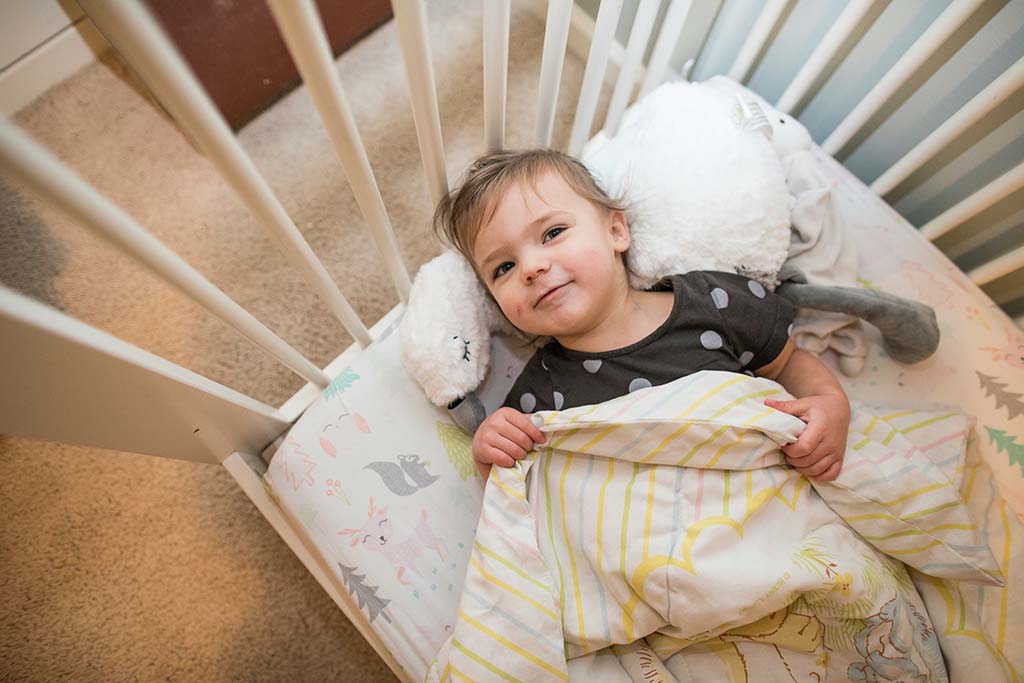
The timing question is really a risk question. Experts delay soft toys in the crib because of four main risks: suffocation, rebreathing, entrapment, and overheating.
Public-health organisations like the AAP, CDC, NIH, Lullaby Trust (UK), Red Nose (Australia), and others repeat the same message: a safe sleep space for young babies is firm, flat, and empty—just a fitted sheet, with no soft toys or loose bedding.safetosleep.nichd.nih.gov+6aap.org+6HealthyChildren.org+6
Stuffed animals increase risk because:
- A young baby cannot reliably move a toy away from their face.
- Soft toys can cover the nose and mouth, making breathing harder.加拿大政府+2Red Nose Australia+2
- Thick or fluffy toys can trap warm air around the face, raising the chance of overheating and rebreathing exhaled air.safetosleep.nichd.nih.gov+2nhs.uk+2
- Extra items in the sleep space make entrapment and strangulation more likely.HealthyChildren.org+2疾病控制與預防中心+2
These risks are greatest in the first months of life, when babies have limited head and neck control. That is why “no toys in the crib” is such a strong rule in safe sleep campaigns.health.state.mn.us+2維基百科+2
| Risk Type | How Soft Toys Contribute | When Risk Is Highest | What This Means for Plush Timing |
|---|---|---|---|
| Suffocation | Toy can cover baby’s nose/mouth; baby cannot move it away | Strongest from birth to around 6–7 monthsRed Nose Australia+1 | Keep crib completely clear in this period |
| Rebreathing | Baby breathes into soft toy then re-inhales exhaled air | Early months, especially if baby rolls into objectsafetosleep.nichd.nih.gov+1 | Extra soft items near head are not safe |
| Entrapment | Toys increase clutter; baby can get stuck between items | Higher when baby starts rolling but still lacks skillHealthyChildren.org+1 | Even mobile 6–11 month-olds need an empty sleep space |
| Overheating | Plush holds heat; blocks air circulation around face | Risk across the first year; linked with SIDSnhs.uk+1 | Extra fabric around the head is discouraged |
| Strangulation | Strings, ribbons, tags, or cords attached to toys | Any age if design is unsafe加拿大政府+1 | Avoid long strings and cords entirely for baby products |
From a product-development view, these risks shape how we design early-years plush:
- We clearly label items as not for use in unattended sleep for babies under a certain age.
- We keep designs lightweight, non-pillow-like, and small when a product might be used as a “lovey” later on.
- We advise clients to educate parents on keeping the crib clear in their packaging and marketing.
Which stuffed animals are safest for older babies and toddlers?
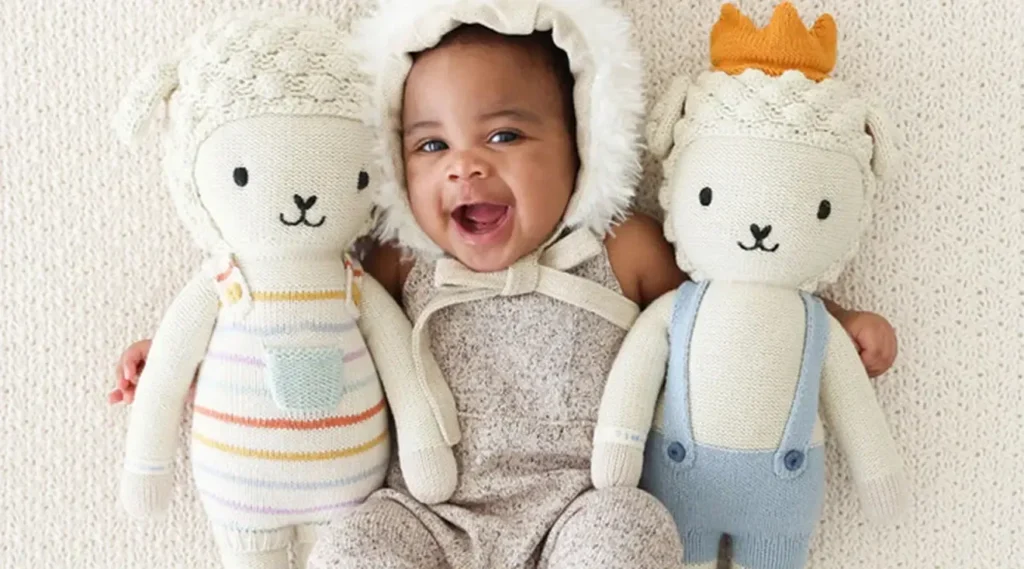
Once a child passes their first birthday—and your pediatrician agrees that a comfort object is okay—some stuffed animals are much safer choices than others. For older babies and toddlers, the goal is to:
- Stay small and light
- Avoid loose or hard parts
- Use short-pile, low-shedding fabric
- Keep designs simple and breathable
Good options often look like small loveys or flat comforters, not big plush pillows. Red Nose, for example, suggests that any comfort item used with older infants should be small, not pillow-like, and free from long fabric attachments that could bunch near the mouth.Red Nose Australia+2Sleepytot New Zealand+2
Here is how I summarise “safer” vs “riskier” features for sleep in older babies and toddlers:
| Feature | Safer Choice for Older Babies/Toddlers* | Features to Avoid in Sleep Space | Why It Matters |
|---|---|---|---|
| Size & shape | Small, flat lovey or mini plush, roughly hand-sized | Large plush, pillow-like toys, very bulky shapes | Big items can act like pillows and cover the face |
| Weight | Light, easy for child to move | Heavy, bean-bag style full of pellets | Heavy toys are harder to move away |
| Fabric pile | Short, dense pile (short plush, minky), low shedding | Very long fur, high-shedding fabrics | Loose fibers can get into mouth or nose |
| Fill type | Quality fiberfill; no loose pellets | Loose beads, poorly made pellet compartments | Loose pellets are a choking and inhalation hazard |
| Eyes and nose | Embroidered or securely attached safety parts | Buttons, glued parts, small plastic pieces | Small hard parts can detach and become choking hazards |
| Trims & accessories | Minimal; no long cords, necklaces, or dangling ribbons | Long ribbons, necklaces, hood strings, detachable charms | Strings and cords can tangle around neck or limbs |
| Construction quality | Strong seams, neat stitching, tested to toy standards | Weak seams, visible gaps, uneven stitching | Weak construction increases risk of stuffing leaks and parts loss |
| Washability | Machine-washable, dries thoroughly | Non-washable, retains moisture or odour | Cleanability matters for hygiene and respiratory comfort |
*Even after 12 months, different children have different needs. Always follow your healthcare provider’s advice.
In Kinwin’s factory, when we design soft toys that might become sleep companions for toddlers, we:
- Prefer embroidery instead of hard eyes for young age grades.
- Keep silhouettes simple and avoid pillow-like shapes for baby/toddler lines.
- Offer clear age grading and warnings on labels and packaging.
How should parents assess materials and design for safe sleep?
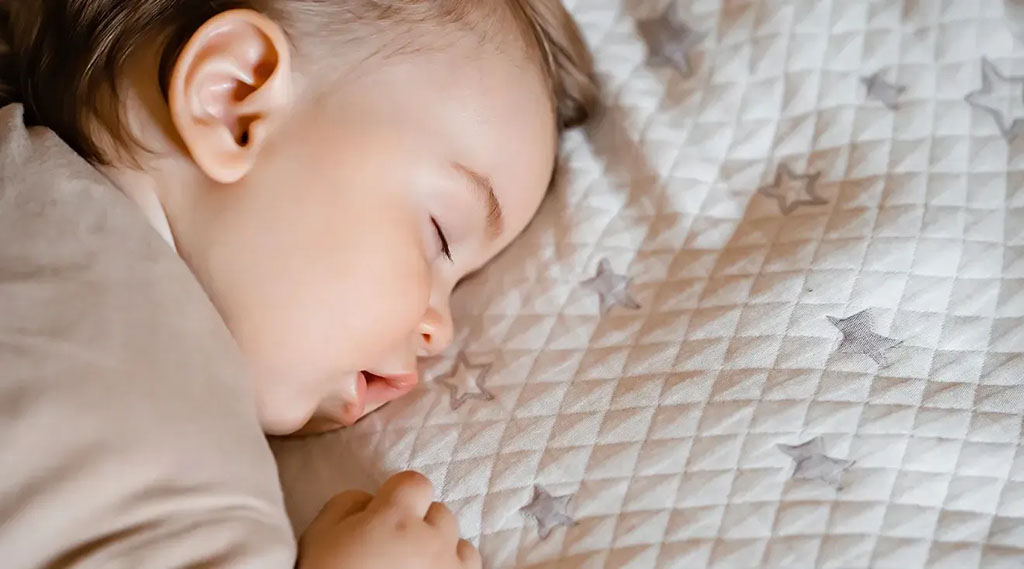
From a parent’s point of view, safe sleep with a plush toy is not just about age. It is about how the toy is made. Even for older toddlers, a poorly designed toy can still be a risk.
When you evaluate a stuffed animal for possible sleep use (after your pediatrician says it is okay), you can think in three layers:
- Label and compliance – Does the toy meet your region’s toy standards?
- Construction – Are seams, fillings, and attachments robust?
- Design features – Is the toy small, breathable, and simple?
| Checkpoint Category | What to Look For | Warning Signs to Avoid | Suggested Action |
|---|---|---|---|
| Age grading & labels | Clear age label (e.g. 0+, 3+), toy standard marks (EN71 / ASTM) | No age info, vague “for kids”, no compliance marks | Treat with caution; not a good choice for sleep use |
| Brand & origin | Reputable brand or manufacturer, traceable origin | No manufacturer info, no contact details | Prefer transparent brands with clear contact info |
| Eyes, nose, trims | Embroidered or safety-tested parts with strong attachment | Buttons, glued beads, sequins, small plastic accessories | Avoid for young children; higher choking risk |
| Seams & stitching | Neat, tight stitching; no gaps; no stuffing visible | Loose threads, open seams, stuffing already poking out | Do not use for sleep; may fail quickly |
| Fabric & pile | Soft, short-pile, low shedding; no chemical smell | Strong odour, dye rubs off, heavy fluff shedding | Avoid; may irritate skin or airways |
| Size & thickness | Small, thin profile; easy for child to move | Large pillow-like body; very thick head or limbs | Keep large toys out of the sleep space |
| Strings / loops | No long cords; tags and loops are short | Long ribbons, necklaces, loops big enough for a head/neck | Remove or cut off (if safe to do so) or don’t purchase |
| Washability | Machine-washable label; dries fully | “Surface clean only” on very plush toy used nightly | Better to reserve non-washable toys for daytime play |
As a factory, we support buyers by:
- Using third-party lab tests for EN71 / ASTM F963 / CPSIA on baby and toddler lines.
- Designing products that are easier to explain clearly on e-commerce pages (materials, age grade, safety points).
- Helping brands place clear warnings like “Do not leave in crib with infants under 12 months” on packaging when appropriate.
What comfort alternatives work before plush toys are allowed?
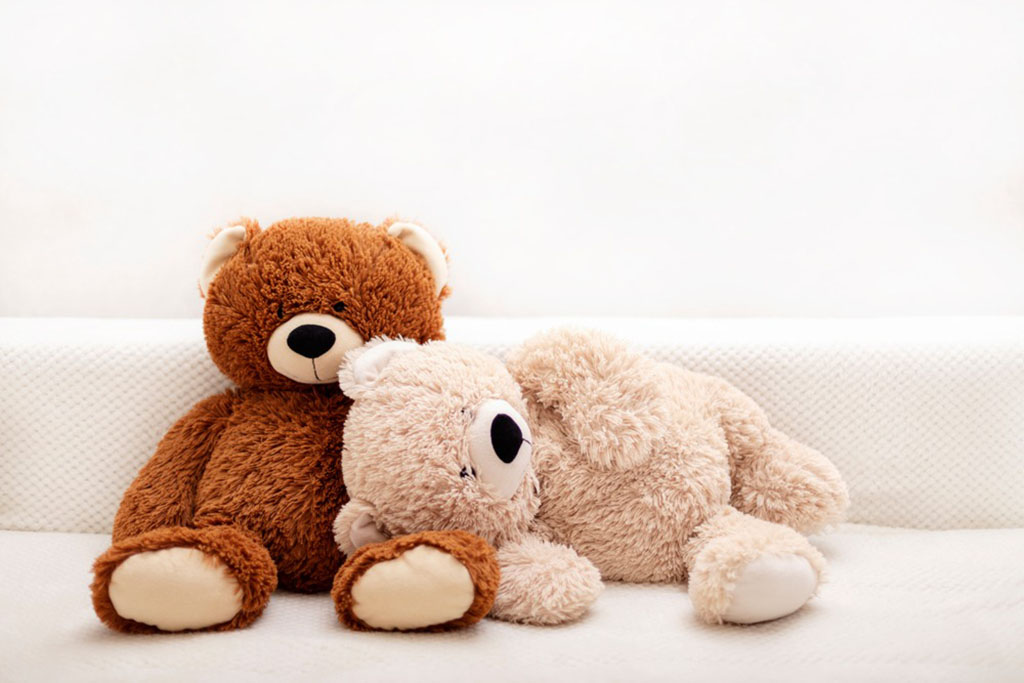
Before soft toys are recommended for sleep, babies still need comfort and security. The good news is that most safe-sleep campaigns agree: comfort can come from routine and environment, not from extra objects in the crib.疾病控制與預防中心+1
Common safe-sleep programs encourage:
- A firm, flat sleep surface (crib, bassinet) with a fitted sheet only.疾病控制與預防中心+2safetosleep.nichd.nih.gov+2
- Placing baby on their back for all sleeps.疾病控制與預防中心+1
- Babies sleeping in the same room as caregiver, but on a separate surface, especially for the first 6 months.疾病控制與預防中心+1
Instead of plush toys in the crib, parents often use other strategies for comfort (always following their local guidelines and doctor’s advice):
| Comfort Need | Safer Alternative (No Extra Toys in Crib) | Approx. Period (Typical) | Notes & Cautions |
|---|---|---|---|
| Warmth & security | Swaddle in early weeks (until rolling starts); later, use a sleep sack instead of loose blankets | Swaddle usually only until rolling begins; sleep sack can continue longernhs.uk+1 | Swaddling must stop as soon as baby shows signs of rolling; sleep sacks should not be weighted |
| Parent’s presence | Room-sharing (same room, separate crib) | Recommended for first 6 months or more疾病控制與預防中心+2NHS Inform+2 | Bed-sharing increases risk; follow local safe sleep advice |
| Soothing & calming | Rocking before putting baby down awake but drowsy, gentle voice, patting | Any age, adapted to baby’s responses | Once baby is in crib, keep environment clear |
| Smell & familiarity | Parent’s scent on caregiver’s clothing during cuddles pre-sleep | Any age | Avoid leaving adult clothing or cloths in crib |
| Night-time reassurance | Soft light in the room (not in crib), calm predictable routine | Any age | Strong light or screens before bed can overstimulate |
| Sensory regulation | White noise machine placed safely away from crib | From newborn, if parent chooses | Device must not be inside the crib or near baby’s ears |
You will sometimes see “loveys” marketed for young babies. From a safe-sleep view, the important distinction is how and when they are used: many sleep experts allow loveys only in the bed after 12 months, and may accept them earlier only for supervised soothing when baby is awake.huckleberrycare.com+1
As a manufacturer, we help brand owners by making very clear in product descriptions that any comfort toy is not a substitute for safe sleep routines and medical advice.
How do cultural practices influence when babies use plush toys?
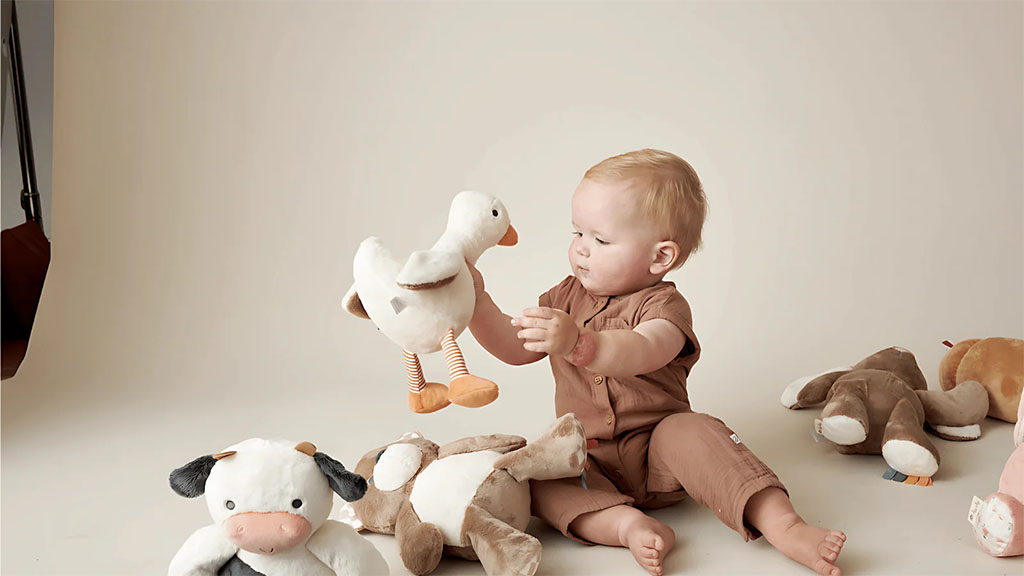
In real life, families do not all follow the exact same sleep style. Cultural norms influence:
- Whether babies sleep in a crib, a family bed, or on a floor mattress.
- How early comfort objects (blankets, dolls, plush toys) are introduced.
- How strongly people follow government or charity safe-sleep campaigns.
For example:
- In some countries, safe-sleep organisations such as Lullaby Trust (UK), Red Nose (Australia), and various national health services warn strongly against any soft toys in the baby’s sleep space for at least the first months, often the first year.Raising Children Network+3The Lullaby Trust+3加拿大政府+3
- In practice, some families still place a small comfort toy near older babies earlier than guidelines suggest, especially when dealing with separation anxiety, but this is usually not what official guidance recommends.Red Nose Australia+1
- In many Asian and European homes, grandparents may bring traditional views, like heavy blankets or pillows early in infancy, which conflict with newer safe-sleep messages about bare, firm sleep surfaces.加拿大政府+2nhs.uk+2
From a brand and factory perspective, this creates a responsibility: we must sell into different cultures while still respecting global safety science.
| Aspect | Example Cultural Practice | Typical Official Guidance | Implications for Plush Brands and Manufacturers |
|---|---|---|---|
| Sleep setting | Co-sleeping on family bed with toys nearby | Many campaigns discourage bed-sharing and clutter | Emphasise toys are not safe-sleep tools |
| Use of comfort objects | Early introduction of blankets or small soft dolls | “Bare crib” message for first year of life | Clear age grading and warnings on packaging |
| Advice source | Family traditions, online forums, influencers | National safe-sleep programmes, pediatricians | Provide evidence-based educational content |
| Plush in marketing | Plush pictured inside cribs in lifestyle photos | Safe-sleep bodies warn against toys in the cot | Use marketing photos that show play, not sleep, for under-1s |
| Regulation focus | Some countries audit childcare centres strictly; homes more flexible | Childcare settings must follow national frameworks | Design product documentation that supports childcare policy compliance |
As a Chinese OEM & ODM manufacturer, we work with clients from the USA, Europe, Japan, the Middle East, and more. Our approach is always:
- Design for the strictest relevant standards (EN71, ASTM, CPSIA, etc.).
- Help clients adapt their packaging and web copy to match safe-sleep campaigns in their main markets.
- Keep separating “plush for play” from “plush pictured at sleep time”, especially for babies under 12 months.
This way, your plush range can respect local customs but still stay aligned with global safety science and regulations.
Conclusion
In simple terms, most experts say babies should sleep in a bare, firm crib with no stuffed animals for at least the first 12 months. After that, many healthy toddlers can safely sleep with a small, well-designed stuffed animal, as long as parents choose lightweight, simple toys and follow their own pediatrician’s and local guidelines. For brands and buyers, the real opportunity is not to sell plush as “sleep aids” for very young babies, but to create safer, well-tested, clearly labelled companions for older babies and toddlers—plus honest education that supports parents, not pressures them.
At Kinwin, we help global buyers design soft toys that fit into this safe-sleep picture: baby lines that respect the “bare crib” rule, and older-child plush that is soft, durable, lab-tested, and engineered with safety in mind. If you are planning a new plush range for babies, toddlers, or families, you are welcome to contact me at [email protected] or visit kinwintoys.com so we can explore how our factory can support your next responsible and successful product line.