Parents often ask me two questions at the same time: “When is a stuffed animal safe in the crib?” and “How can I still comfort my baby before that?” These questions are very real, and they mix love, fear, and a lot of conflicting advice from the internet.
From a manufacturer’s point of view, I spend a lot of time reading pediatric safe-sleep guidelines. The message is very clear: for the first year, the crib should be as empty as possible. Only later, with your pediatrician’s guidance, do plush toys slowly enter the sleep story as comfort items—not as decorations for newborn photos. aap.org+2HealthyChildren.org+2
In this guide I’ll walk through what major health organizations say, how risks change with age, what types of plush are safer for older babies, and how you can support comfort before a stuffed friend is allowed in the crib. This is general information, not personal medical advice—your baby’s own doctor always has the final word.
When do pediatric safety guidelines allow stuffed animals in a baby’s crib?
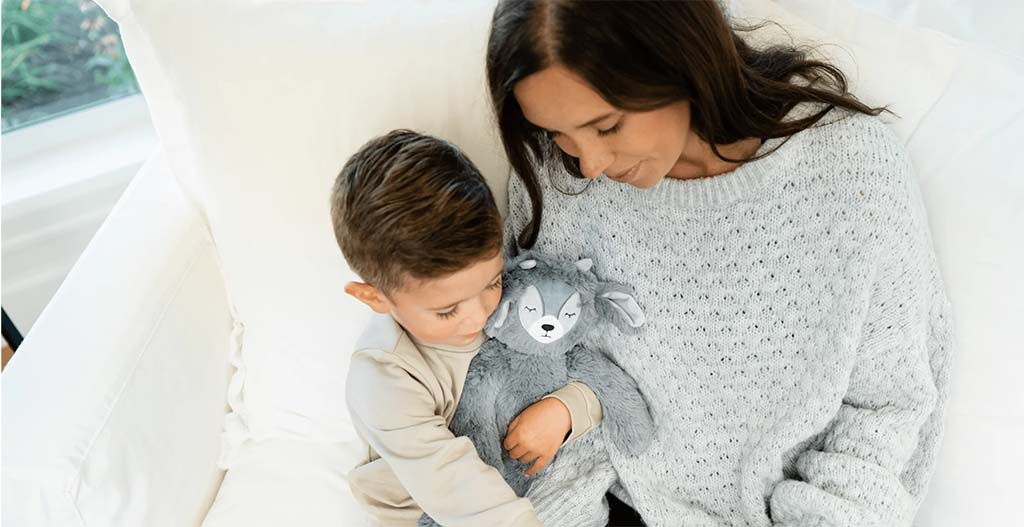
If we look at major pediatric and public-health sources, they all agree on one core rule: no soft toys in the sleep space during the first months of life.
- The American Academy of Pediatrics (AAP) and its parent site HealthyChildren say that babies should sleep on a firm, flat surface with no blankets, pillows, stuffed toys, or bumpers in the bed. aap.org+1
- The CDC repeats the same point: keep soft bedding out of the sleep area, including soft toys. 疾控中心
- The NHS and UK safe-sleep groups (like the Lullaby Trust) tell parents to keep the cot clear of soft toys, bumpers, pillows, and loose bedding, especially in the first year. lullabytrust.org.uk+3nhs.uk+3cambspborochildrenshealth.nhs.uk+3
- Some organizations, like Red Nose Australia, say no soft toys or comforters in the sleep space during the “critical period” from birth to about 7 months, and ideally for the first 12 months. Red Nose Australia
Many pediatric and public-health sources suggest that after 12 months, the risk of Sudden Infant Death Syndrome (SIDS) falls, and a small stuffed animal or lovey may be reasonable—if your child’s doctor agrees and if the toy itself is safe and age-appropriate. huckleberrycare.com+2health.state.mn.us+2
You can think of the timeline like this (always check with your own pediatrician):
| Baby’s Age (approx.) | What Most Guidelines Say About Soft Toys in Sleep Space* | Key Point for Parents |
|---|---|---|
| 0–6 months | No soft toys, pillows, bumpers, or loose blankets in crib/bassinet. lullabytrust.org.uk+3aap.org+3HealthyChildren.org+3 | Focus on a clear, firm, flat sleep surface. |
| 6–12 months | Risk of SIDS still present; guidelines still advise keeping crib clear of soft objects. aap.org+2nhs.uk+2 | Many parents still avoid plush in the crib at this stage. |
| After 12 months | SIDS risk drops; some pediatricians allow a small lovey or stuffed toy after individual assessment. huckleberrycare.com+2health.state.mn.us+2 | Talk with your pediatrician before adding anything. |
*This is a simplified summary; always follow your local health authority and your child’s doctor.
As a plush manufacturer, I see the crib as a “no plush zone” for the first year, even though I love soft toys. Plush can still be part of bedtime—but more as a cuddle friend before the baby goes into a clear, safe sleep space.
How do suffocation and entanglement risks influence crib-toy timing?
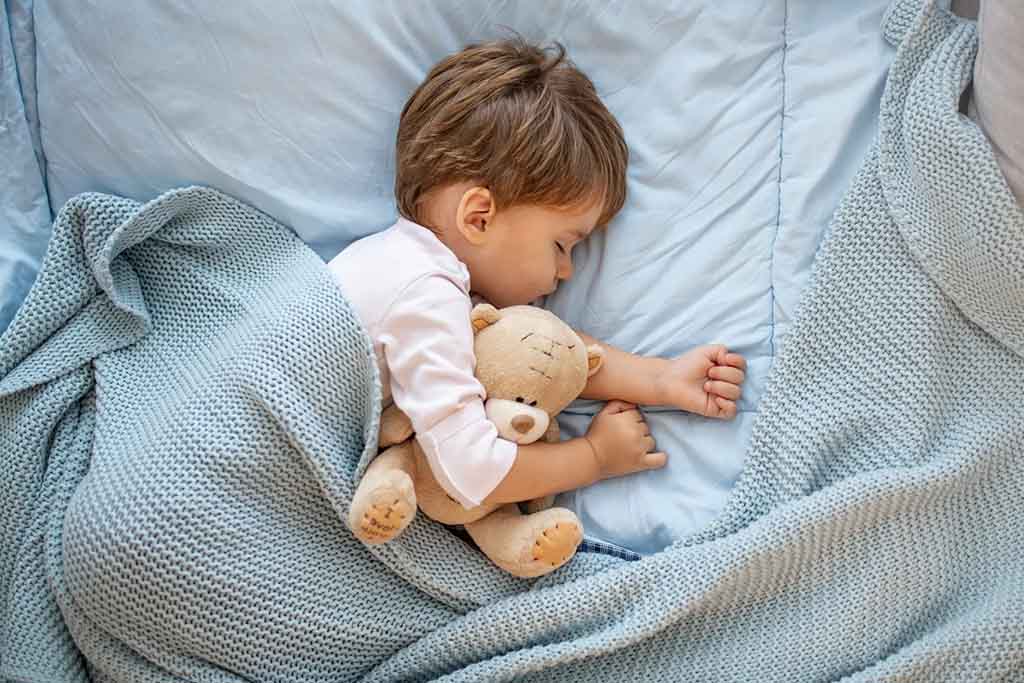
The timing is not random. Soft toys are kept out of the crib mainly because of suffocation, entrapment, and entanglement risk.
Newborns and young babies:
- Have very weak neck muscles.
- Cannot move away if something covers their nose or mouth.
- May re-breathe exhaled air if their face presses into soft surfaces.
The AAP, CDC, NHS, and other authorities warn that any extra soft items—plush toys, loose blankets, crib bumpers—can increase the risk of suffocation, SIDS, or other sleep-related deaths. NICHD+4aap.org+4HealthyChildren.org+4
Here is how different hazards relate to timing:
| Hazard Type | How Soft Toys Can Contribute | Why Timing Matters |
|---|---|---|
| Suffocation | Toy covers baby’s nose/mouth; baby can’t push it away. | Younger babies have less strength and motor control. |
| Re-breathing air | Face pressed into plush; baby re-breathes exhaled air. | Small babies regulate breathing less effectively. |
| Entanglement | Ribbons, cords, long limbs wrap around neck or limbs. | Babies cannot untangle themselves easily. |
| Overheating | Multiple plush toys trap heat around the face/body. | Overheating is a known SIDS risk factor. HealthyChildren.org |
| Climbing / falling | Older baby uses plush as a “step” to climb the crib sides and fall. | Becomes relevant when babies start to pull up. |
This is why most safe-sleep campaigns tell parents to remember the “ABCs”: baby sleeps Alone, on their Back, in a Crib with no soft objects. Parents+1
In my own work with Kinwin, we always design baby-age plush with this context in mind: they are great for supervised awake time, photo sessions, and stroller walks—but not as decorations inside a sleeping baby’s crib.
Which types of stuffed animals are safest for older babies and toddlers?
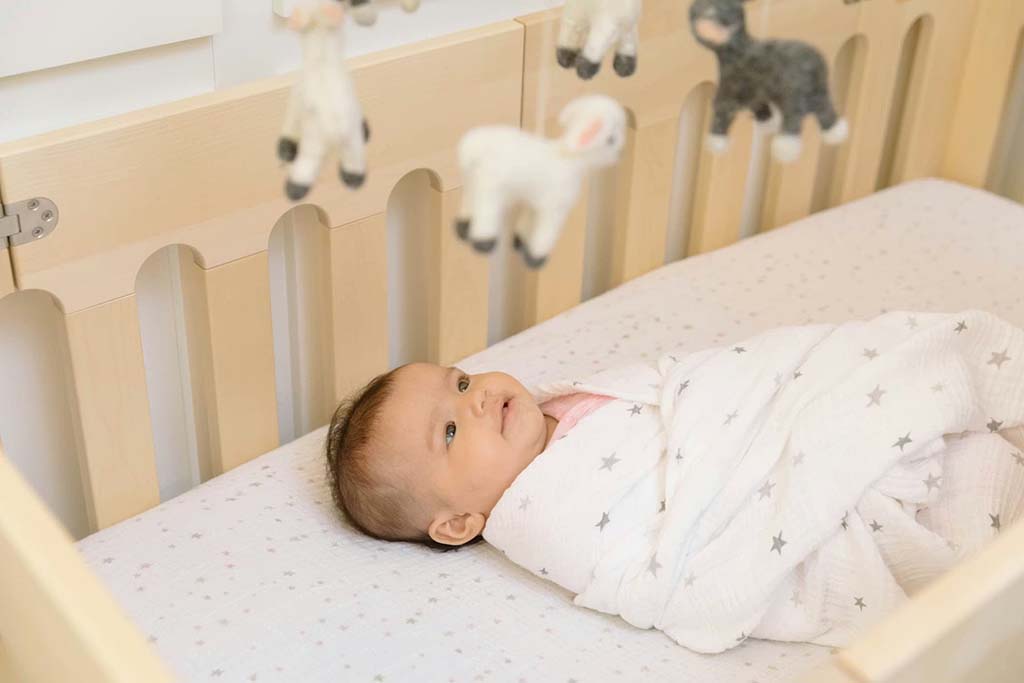
Once your child is past their first birthday—and your pediatrician agrees that a comfort object is okay—you still need to choose the right type of plush. Not all stuffed animals are equal when it comes to sleep safety.
Safer options for older babies and toddlers usually share these features:
- Small or flat profile (for example, a lovey blanket with a small head).
- Soft, breathable fabrics.
- No loose parts (buttons, glued eyes, plastic decorations).
- Embroidered eyes and noses instead of hard plastic for younger toddlers.
- No internal wires, batteries, or sound modules for sleep time.
- No weighted beads directly in the body (especially near the head). 霍普金斯醫學+1
You can use this comparison as a quick guide once your pediatrician says “yes” to a sleep lovey:
| Feature | Safer for Crib (Older Baby/Toddler) | Best Kept Out of Crib |
|---|---|---|
| Size & bulk | Small to medium; not larger than child’s torso | Giant plush, body-size pillows, plush cushions |
| Face details | Embroidered or securely stitched | Glued eyes, loose plastic noses, sequins |
| Filling | Standard fiberfill; no loose pellets near edges | Heavily weighted plush, crinkly foil inserts |
| Accessories | None, or soft sewn-on elements | Long ribbons, scarves, removable clothing parts |
| Surface texture | Soft, even plush; easy to clean | Very long fur that can shed or mat |
| Number of toys in crib | One small comfort object (if approved) | Many plush toys piled around the baby |
Even for toddlers, I still suggest keeping the crib fairly simple. One or two favorite friends are enough. When you add too many plush toys, the sleep space can again become crowded and harder to monitor.
As a manufacturer, when we develop plush for baby and toddler ranges, we design “sleep-friendly” lines with:
- Flat bodies or small heads.
- No sharp internal plastic parts.
- Sewn-in labels and clear safety information.
These features support both parents’ peace of mind and compliance with standards like EN71 and ASTM F963. Compliance Gate+1
How should parents evaluate size, materials, and construction for crib safety?
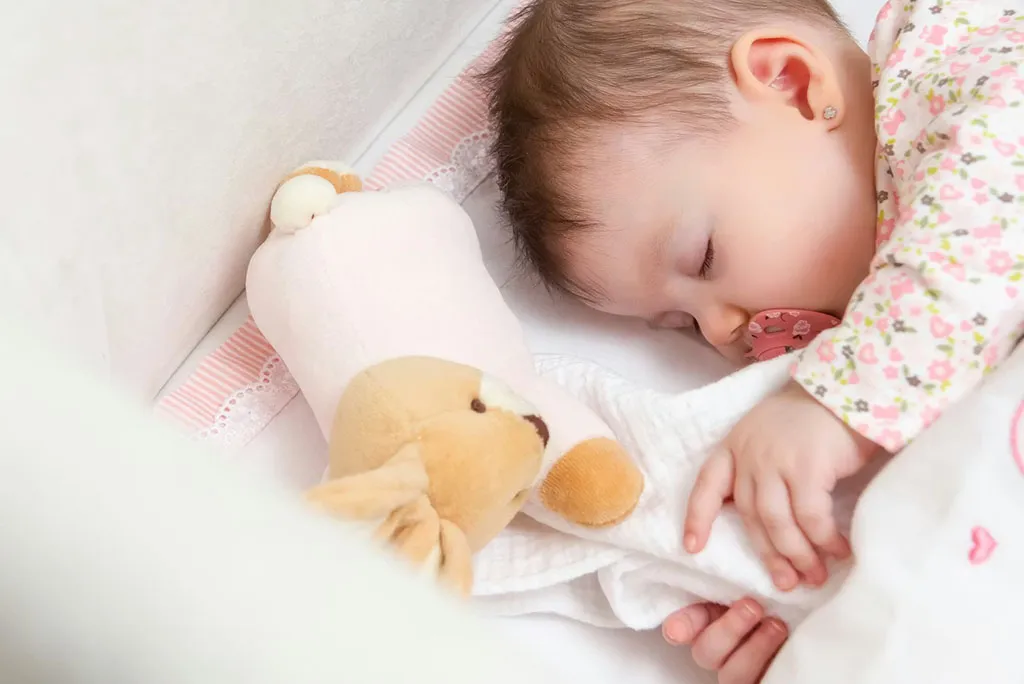
When you pick a stuffed animal for an older baby or toddler’s sleep, try to look at the toy the way a safety inspector would. You are not only asking “Is it cute?” but also “What could go wrong if this sleeps next to my child?”
Here is a simple checklist you can apply in the store or at home:
| Checkpoint | What to Look For | Questions to Ask Yourself |
|---|---|---|
| Size | Smaller than the child’s torso; not pillow-like | Could this act like a pillow and cover the face? |
| Weight | Light to moderate; no heavy sections | If the toy lands on the face, can my child move it? |
| Fabric | Soft, breathable, low-shedding plush or cotton | Does any fur easily come off when I tug it? |
| Construction | Tight seams, no gaps, no exposed stuffing | Does anything open if I tug an ear or leg? |
| Details | Embroidered features or firmly secured parts | Could any part be pulled off and become a choking hazard? |
| Labels & info | Clear age grading, safety marks (CE, etc.), care instructions | Does this toy meet standards for my region? |
A few additional points from the safe-sleep guidance that I keep in mind:
- Avoid weighted sleep products (blankets, sleep sacks, or plush) for babies. The AAP and pediatric hospitals warn that weights can interfere with a baby’s ability to move or rouse, which may increase SIDS risk. 霍普金斯醫學+3霍普金斯醫學+3HealthyChildren.org+3
- Avoid toys with cords or straps in the crib; they add strangulation risk. Red Nose Australia+1
- Always follow the age recommendation on the label, especially for under-3s, where small-parts rules are strict. Compliance Gate+1
In our own factory, when we develop baby plush for B2B clients, we test seams and attachments with strong pulls and keep internal constructions simple for younger age groups. These are the same details that help a parent feel more comfortable about a toddler bringing a toy into the crib—after that first birthday and with pediatric approval.
What comfort alternatives can be used before plush toys are considered safe?
The hard part for many parents is the first year, when guidelines say “no plush in the crib,” but your baby still needs comfort and help settling. The good news is that safe-sleep experts do suggest other comfort tools that do not involve soft toys in the sleep space.
Common, guideline-friendly alternatives include:
- Swaddling (for a limited time) – When done correctly and only while baby is not rolling, swaddling can help some newborns feel calm. The AAP and other groups stress that swaddled babies must always sleep on their backs, and swaddling should stop once rolling begins. HealthyChildren.org+2health.ucdavis.edu+2
- Wearable sleep sacks – Instead of loose blankets, wearable blankets or sleep sacks keep babies warm without extra fabric in the crib. They must not be weighted and must fit properly. HealthyChildren.org+2疾控中心+2
- Pacifiers – Several studies and the AAP mention that pacifier use at sleep times is linked to a reduced risk of SIDS, although the mechanism is not fully clear. unmhealth.org+4publications.aap.org+4AAFP+4
- Parent scent / voice – Some parents use a sleep sack or sheet that has a mild parent scent (from daytime contact) or soft white noise and gentle voice routines. These do not add physical hazards the way plush toys can.
- Room sharing (not bed-sharing) – Many guidelines recommend that baby sleeps in the same room as parents, in a separate crib or bassinet, for at least the first 6 months. This supports bonding while keeping the sleep surface clear. Parents+3aap.org+3rch.org.au+3
You can compare these comfort tools at a glance:
| Comfort Option | Age Window (approx.) | Key Safety Notes |
|---|---|---|
| Swaddling | Newborn until rolling (often 3–4 months) | Only on back; stop once baby shows signs of rolling. HealthyChildren.org+2health.ucdavis.edu+2 |
| Wearable sleep sack | After swaddling phase into toddler years | Use correct size; no weighted fillings. HealthyChildren.org+2Taking Cara Babies+2 |
| Pacifier | After breastfeeding is established, through infancy | Do not attach to stuffed toys or cords. AAFP+1 |
| Parent scent / voice | All ages | Keep cloth safely fitted; avoid loose fabric in crib. |
| Room sharing (no co-sleeping) | Birth to at least 6 months | Baby in own cot/crib in parents’ room. aap.org+2疾控中心+2 |
Plush can still be part of these routines—just outside the crib in the early months. For example, a baby can cuddle a soft toy with a parent’s help during a bedtime story, then the plush is removed when baby is placed into the empty crib.
As a manufacturer, I see this as a healthy balance: plush toys support emotional comfort and bonding, while parents still follow safe-sleep rules inside the actual sleep space.
How do cultural norms and parenting practices influence crib plush use?
Safe-sleep campaigns have reduced SIDS rates in many countries, but real life is still messy. Different cultures and families have different habits:
- In some cultures, co-sleeping or bed-sharing is more common.
- In others, babies sleep early in their own room, sometimes with lots of decorative plush.
- Some parents introduce comfort cloths or loveys earlier than guidelines suggest, guided by older relatives or local customs.
Research and reviews on sleep practices show that risk rises when babies share soft adult beds or sleep surfaces full of pillows and plush, especially with smoking, alcohol use, or very soft mattresses. 維基百科+1 Many national organizations now frame safe sleep as something that must be adapted within each family’s culture, but without ignoring known risk factors.
Groups like the Lullaby Trust (UK) and Red Nose Australia talk directly about this: they encourage clear cots and delayed use of soft toys, while also acknowledging that families may want comfort objects and may need help finding safer ways to use them. Facebook+2Red Nose Australia+2
You will see differences like:
| Practice Area | Common Cultural Variations | What Evidence-Based Guidance Emphasizes |
|---|---|---|
| Where baby sleeps | Co-sleeping with parents vs. separate crib/room | Firm, flat surface; baby on back; avoid soft items and gaps. 維基百科+3aap.org+3疾控中心+3 |
| Bedding & décor | Decorative pillows, quilts, plush “guardians” | Clear cot: only firm mattress and light bedding if needed. nhs.uk+2nhs.uk+2 |
| Comfort items timing | Soft toys or cloths introduced very early vs. later | Wait until at least 7–12 months; keep crib clear for infants. Red Nose Australia+2health.state.mn.us+2 |
| Extended family advice | “We always did it this way and it was fine” | Today’s guidance is based on large studies and updated evidence. 維基百科+1 |
As Amanda, I’m not here to judge any culture or family. My role is to say: the safest crib is a clear crib in the first year, and plush toys should enter the sleep space only later, in simple, small forms, after a talk with your child’s doctor.
When we design baby plush at Kinwin for global buyers, we always assume that:
- The toy will be used mainly in supervised awake time for babies under 1.
- Any marketing or packaging should not suggest putting plush into a newborn’s crib.
- Our B2B clients need to align their product photos and lifestyle images with safe-sleep messages for their markets.
This way, plush toys remain part of a loving routine, but not in conflict with the best available safety science.
Conclusion
For the first year of life, the safest crib is a clear crib—firm mattress, fitted sheet, and no stuffed animals at all. Later, when SIDS risk has fallen and your pediatrician agrees, a small, well-constructed plush friend can become part of your child’s bedtime comfort, as long as you still respect age, size, and safety details.
At Kinwin, we design and manufacture plush toys with these safety principles in mind: soft fabrics, strong seams, and baby-appropriate details that can support healthy routines once your child is old enough. If you’re a brand or retailer planning a baby or toddler plush range and want to align product design with global safety expectations, you’re welcome to contact me at [email protected] or visit kinwintoys.com so we can plan safe, compliant plush collections together.