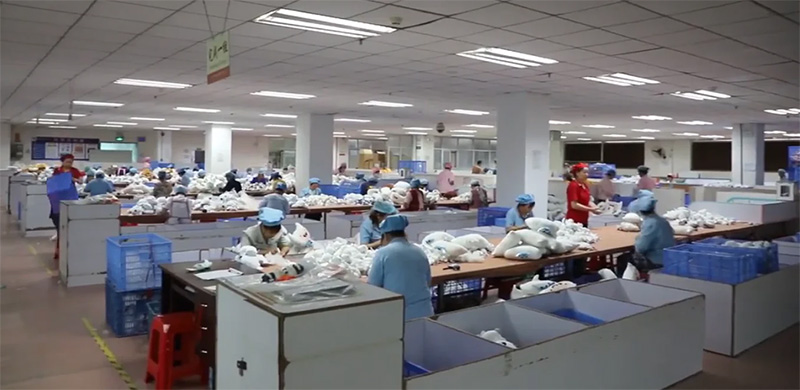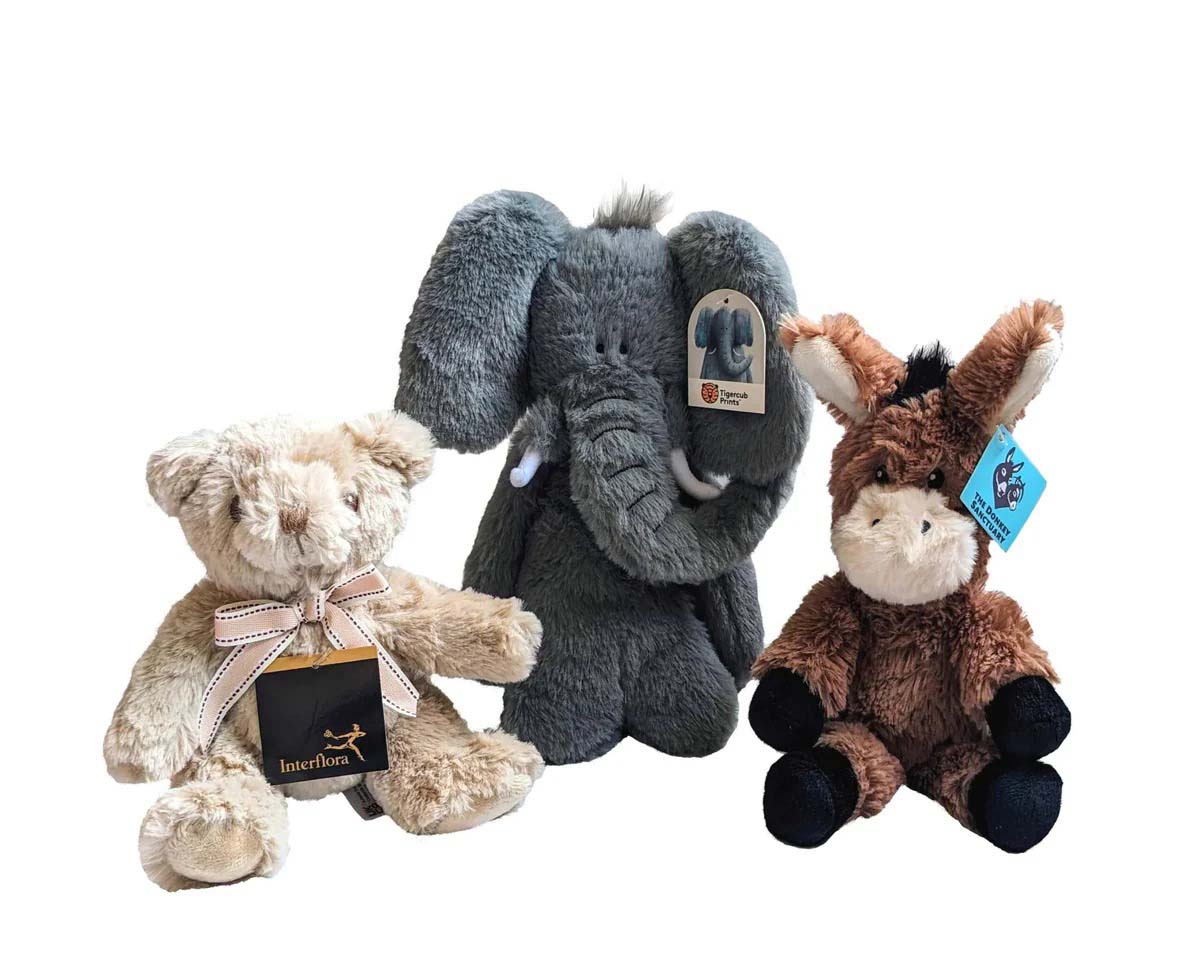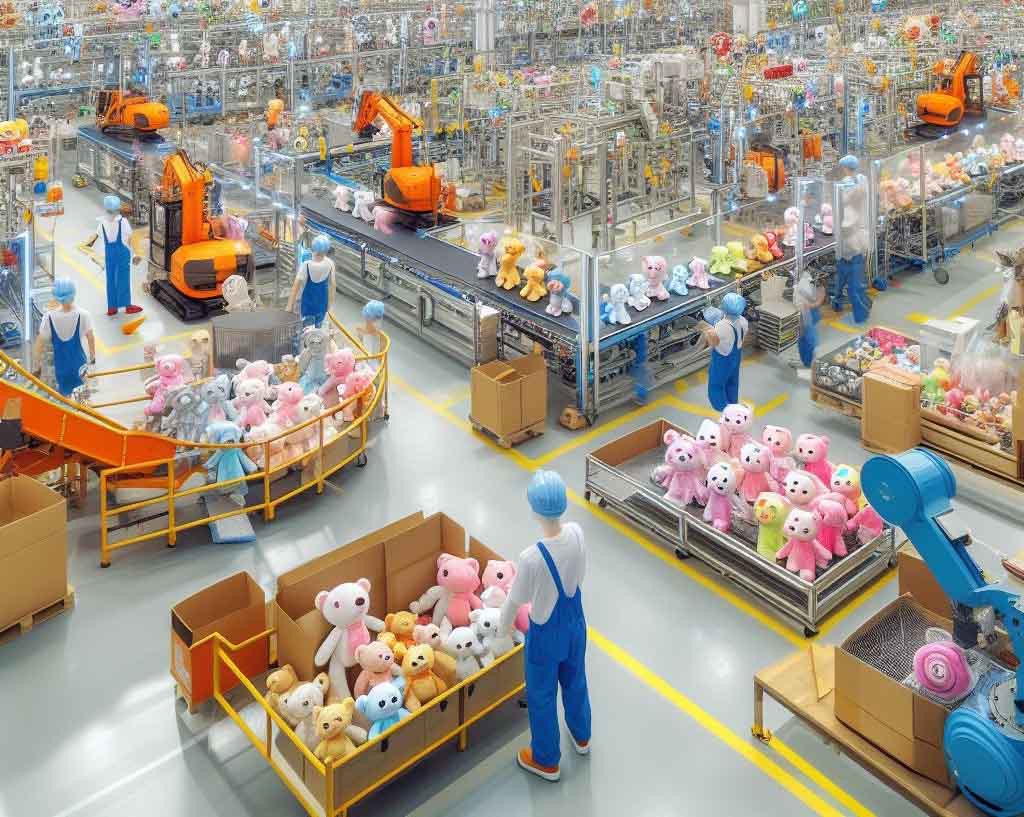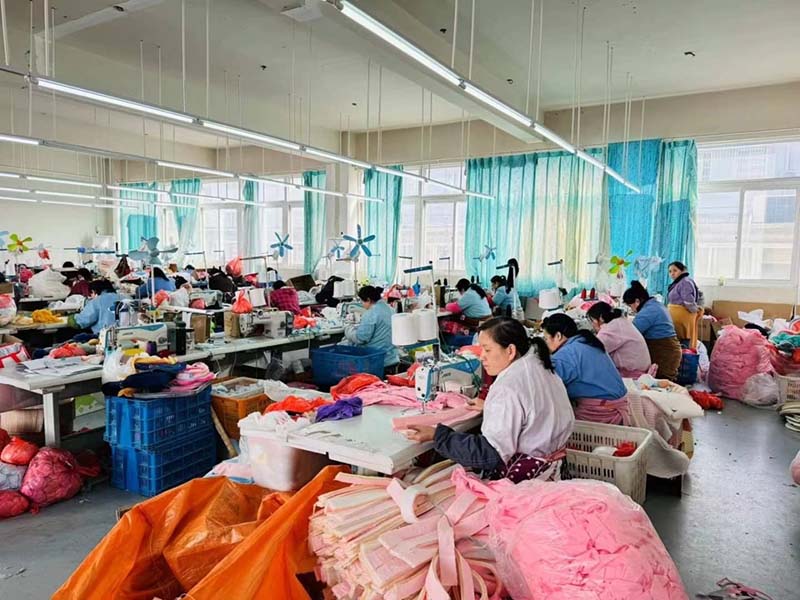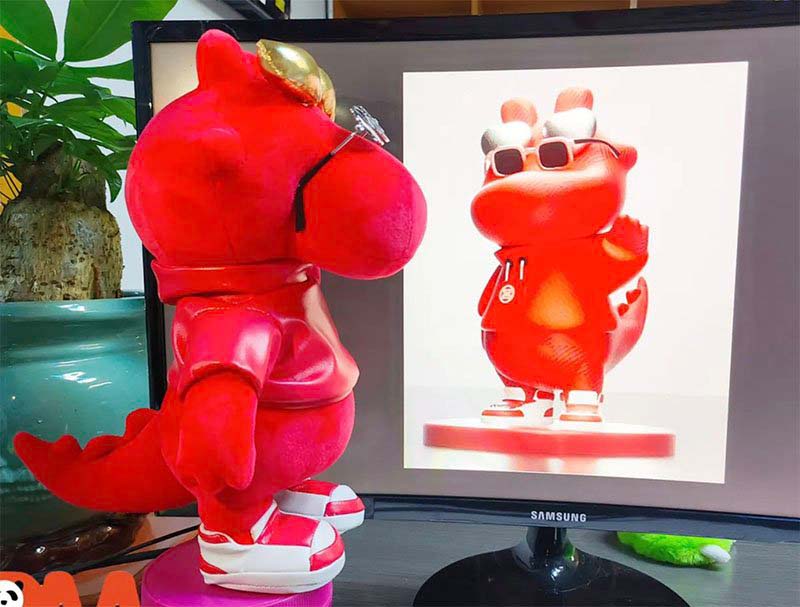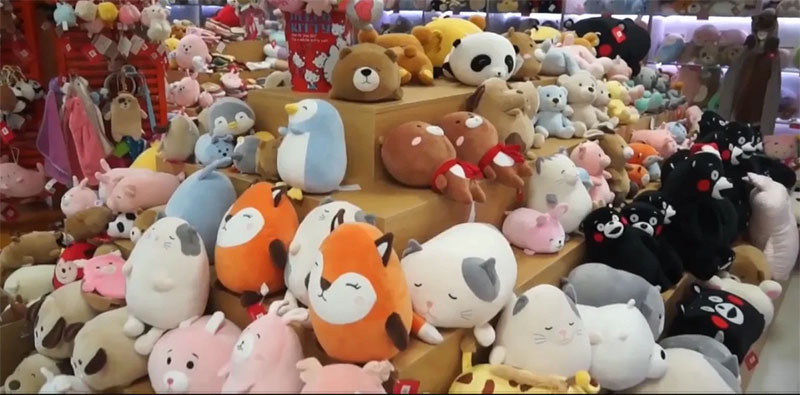
I’m Amanda from Kinwin, a plush toy manufacturer in China. Selecting the right stuffing is one of the most critical steps in stuffed animal production. It determines softness, resilience, shape retention, safety, and overall product appeal. The stuffing not only affects how a plush toy feels to the touch but also how it performs in daily use, washing, and long-term play. In this guide, I explain the common types of stuffing, how different materials influence plush performance, safety considerations, density optimization, sourcing and cost factors, and how sustainability trends are reshaping stuffing choices. This detailed information helps global buyers make informed decisions when developing stuffed animals for different markets.
What types of stuffing are commonly used in stuffed animals?
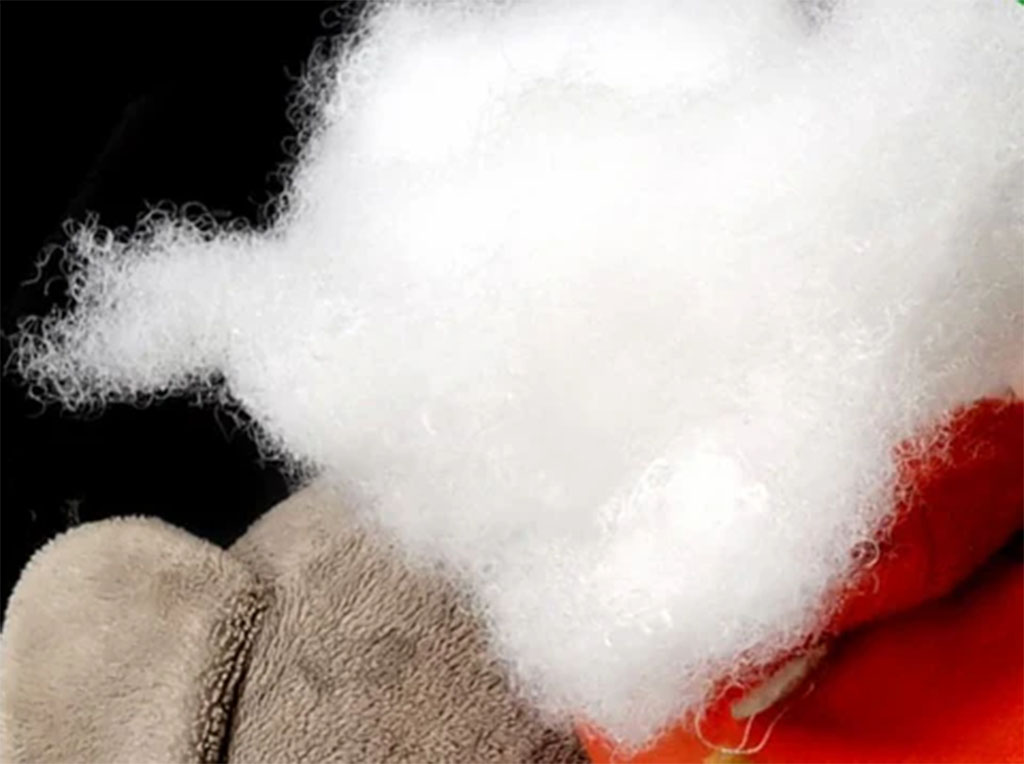
Stuffing is the core of any plush toy. It provides shape, firmness, and tactile comfort. Manufacturers select stuffing based on softness, durability, hypoallergenic requirements, and cost. The most widely used stuffing types include:
| Stuffing Type | Description | Common Uses | Pros | Cons |
|---|---|---|---|---|
| Polyester Fiberfill | Fine synthetic polyester fibers, often hollow and crimped | Mass-market toys, baby plush, decorative plush | Soft, lightweight, resilient, affordable, hypoallergenic | Can flatten over time if low-quality; prone to static |
| Cotton | Natural fiber, soft and breathable | Eco-friendly toys, boutique plush | Natural, breathable, biodegradable, safe for babies | Can clump; absorbs moisture; heavier than polyester |
| Wool | Natural animal fiber with springy texture | Premium or artisanal plush | Resilient, eco-friendly, holds shape | Can be itchy; may require fire retardant; higher cost |
| Kapok | Light, natural seed fiber | Eco-friendly or organic toys | Fluffy, soft, hypoallergenic, biodegradable | Compresses easily; may need blending for resilience |
| Foam | Polyurethane foam pieces or chips | Character plush, larger stuffed animals | Provides shape retention; firm feel | Less cuddly; non-breathable; heavier; higher cost |
| Beads / Pellets | Plastic or glass beads for weight | Weighted plush, sensory toys | Adds weight, creates tactile experience | Can leak if not sewn securely; requires small quantities for safety |
| Blended Fillings | Combinations of fiberfill and beads/foam | Specialty plush designs | Balance softness, shape, and weight | Complex to source and fill; requires precise measurement |
Polyester fiberfill remains the most commonly used stuffing due to its versatility, affordability, and hypoallergenic nature. Natural fillings like cotton, wool, or kapok are niche but growing in popularity for eco-conscious consumers. Specialty materials like beads, pellets, or foam are used strategically for weighted or interactive plush toys.
How do different stuffing materials affect softness and durability?
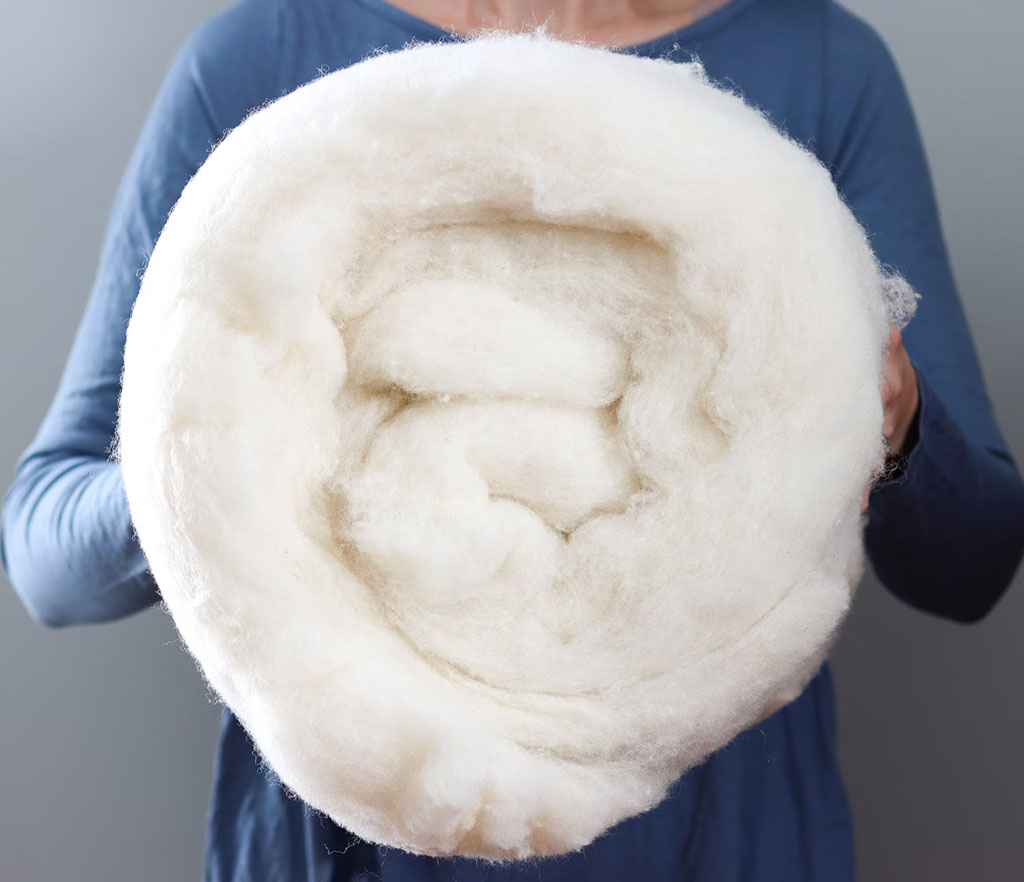
The choice of stuffing dramatically impacts both the initial feel of the toy and its long-term performance. Key considerations include:
- Polyester fiberfill offers a soft, cloud-like feel and is resilient enough to return to shape after repeated compression. High-quality fiberfill with low denier and micro-loft construction provides premium softness and a luxurious hand-feel.
- Cotton provides a firmer feel and is breathable but tends to compress and clump over time, particularly in high-use toys. It’s ideal for boutique plush lines where eco and natural branding is important.
- Wool and Kapok provide excellent loft and springiness but may require blending with polyester to maintain shape in larger toys. Wool retains warmth and creates a premium tactile experience.
- Foam and beads are less about softness and more about structure or weight. Foam inserts can create consistent shape in large plush toys, while beads or pellets enhance tactile and sensory appeal, particularly in weighted or educational plush designs.
Durability is not only material-dependent but also affected by how the stuffing is sewn into the toy. Overstuffed sections can create strain on seams, while under-stuffed areas can flatten quickly.
Table: softness and durability comparison
| Stuffing Type | Softness | Resilience | Shape Retention | Longevity |
|---|---|---|---|---|
| Polyester Fiberfill | High | High | High | 3–5 years under normal use |
| Cotton | Medium | Medium | Moderate | 2–3 years; may clump |
| Wool | Medium-High | High | High | 3–6 years; premium lines |
| Kapok | Medium | Medium | Moderate | 2–4 years; compresses easily |
| Foam | Low-Medium | Medium | High | 3–5 years; firm shape |
| Beads / Pellets | Low | Low | Adds localized weight | Depends on enclosure quality |
| Blended | Medium-High | High | High | 3–5 years; balances softness & structure |
Which stuffing options ensure safety and hypoallergenic standards?
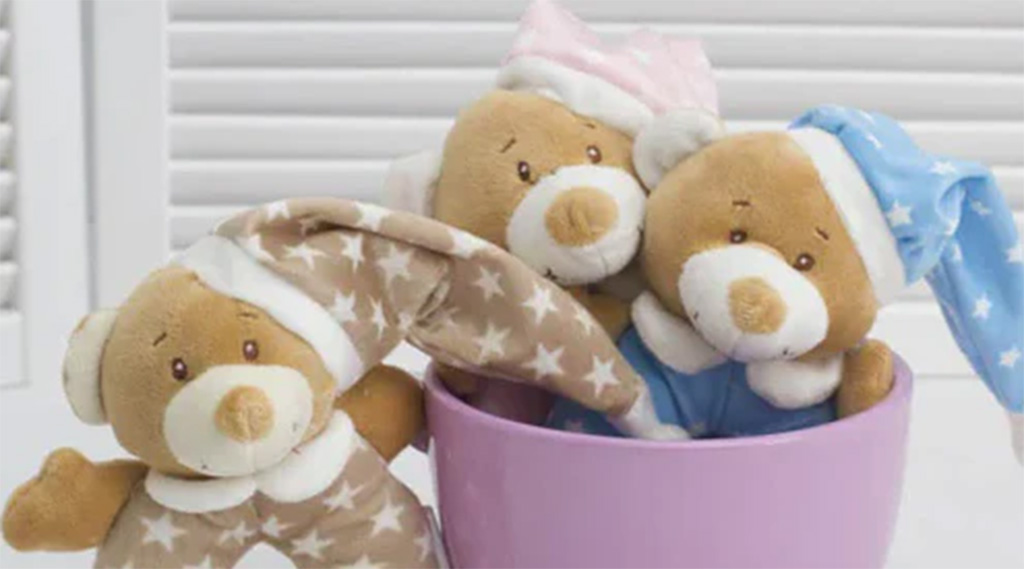
Safety is paramount, particularly for baby and toddler plush. Different countries have strict regulations governing materials in contact with children.
- Polyester fiberfill is hypoallergenic, non-toxic, flame-retardant if treated, and meets global standards like EN71, ASTM F963, and CPSIA.
- Cotton and Kapok must be free from pesticides, dyes, and chemicals, and often require certification such as GOTS or OEKO-TEX Standard 100.
- Wool must be processed without harmful dyes or treatments that could irritate sensitive skin.
- Beads / pellets must be securely encased in a double-seamed pouch to prevent choking hazards.
- Foam inserts should be non-toxic and flame-retardant; compliance with ASTM D1692 or local regulations is mandatory.
Table: safety considerations by stuffing type
| Stuffing Type | Hypoallergenic | Flame Retardant | Choking Risk | Certifications |
|---|---|---|---|---|
| Polyester Fiberfill | Yes | Often | Low | EN71, ASTM, CPSIA |
| Cotton | Yes (organic preferred) | Optional | Low | GOTS, OEKO-TEX |
| Wool | Moderate | Optional | Low | OEKO-TEX, local safety |
| Kapok | Yes | Optional | Low | OEKO-TEX, GOTS |
| Beads / Pellets | No (but encased) | N/A | High if unsecured | EN71-1, ASTM F963 |
| Foam | N/A | Required in some markets | Low | ASTM D1692, EN71 |
How is stuffing density optimized for various plush designs?
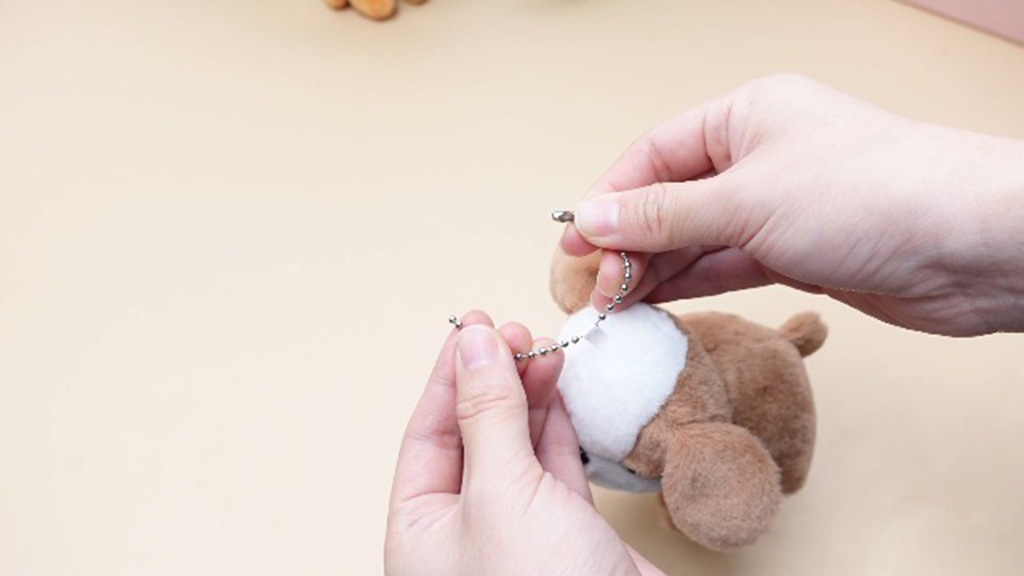
Stuffing density affects softness, shape, and overall user experience. Optimal density varies by toy size, type, and target market.
- Baby plush: Slightly lower density for extra softness and huggability. Overstuffing can make toys rigid and unsafe.
- Medium-sized plush: Balanced density ensures even form and a satisfying hand-feel. Pattern design often dictates stuffing zones.
- Large plush / novelty characters: Higher density or foam inserts may be used in combination with fiberfill to maintain structural integrity.
Techniques to optimize density:
- Pre-weigh fiberfill per section of toy for uniform distribution.
- Use differential stuffing: firmer core, softer extremities.
- Test golden samples: compress and release multiple times to ensure resilience.
Table: stuffing density guide
| Plush Size | Recommended Fill Density | Notes |
|---|---|---|
| Baby (0–3 yrs) | Low (20–30 g per 10 cm³) | Soft, safe, cuddly |
| Small (10–20 cm) | Medium (25–35 g per 10 cm³) | Maintain shape, light |
| Medium (20–40 cm) | Medium-High (30–45 g per 10 cm³) | Balanced softness and durability |
| Large (40+ cm) | High (40–60 g per 10 cm³) | May combine fiberfill + foam for structure |
What are the cost and sourcing considerations for quality stuffing?
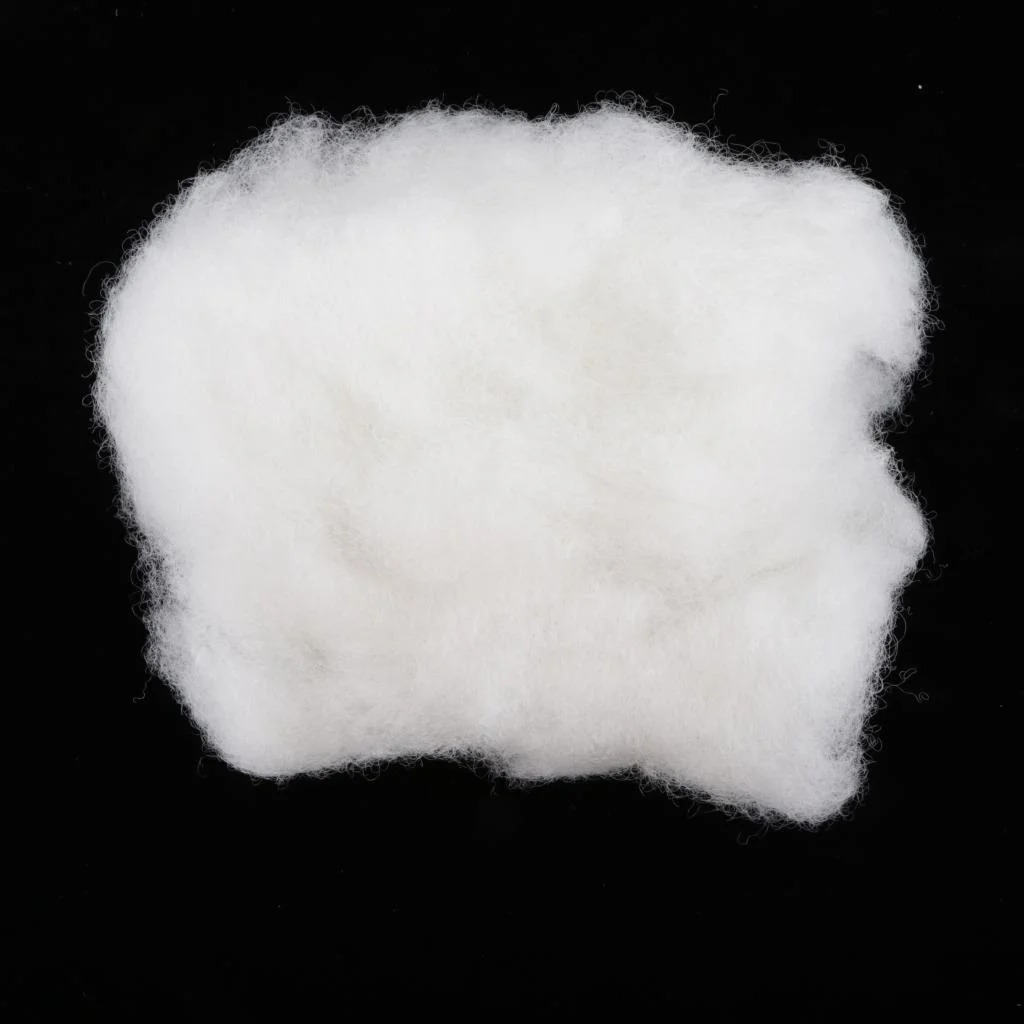
- Polyester fiberfill: Widely available, stable pricing, easy to source globally. Bulk purchasing lowers cost. Premium microdenier options cost more.
- Natural fibers: Organic cotton, wool, or kapok cost significantly more due to farming, processing, and certification. Availability may vary seasonally.
- Beads / pellets: Plastic beads are cheap; glass or specialty weighted beads cost more and require extra handling.
- Foam: PU foam sheets or chips are mid-to-high cost, depending on density and quality.
Other factors: shipping volume, roll size, blending requirements, and lead times. Reliable suppliers with consistent quality, certifications, and traceability are crucial to prevent production delays.
Table: cost & sourcing overview
| Stuffing Type | Relative Cost | Lead Time | Notes |
|---|---|---|---|
| Polyester Fiberfill | Low-Medium | Fast | Widely available; easy to test |
| Cotton | Medium-High | Medium | Organic options more expensive |
| Wool | High | Medium | Premium product lines; requires sourcing audits |
| Kapok | Medium-High | Medium | Variable; niche suppliers |
| Foam | Medium-High | Medium | May require custom cutting for large toys |
| Beads / Pellets | Low-Medium | Fast | Must ensure double-seamed containment |
How do sustainability trends influence stuffing material choices?
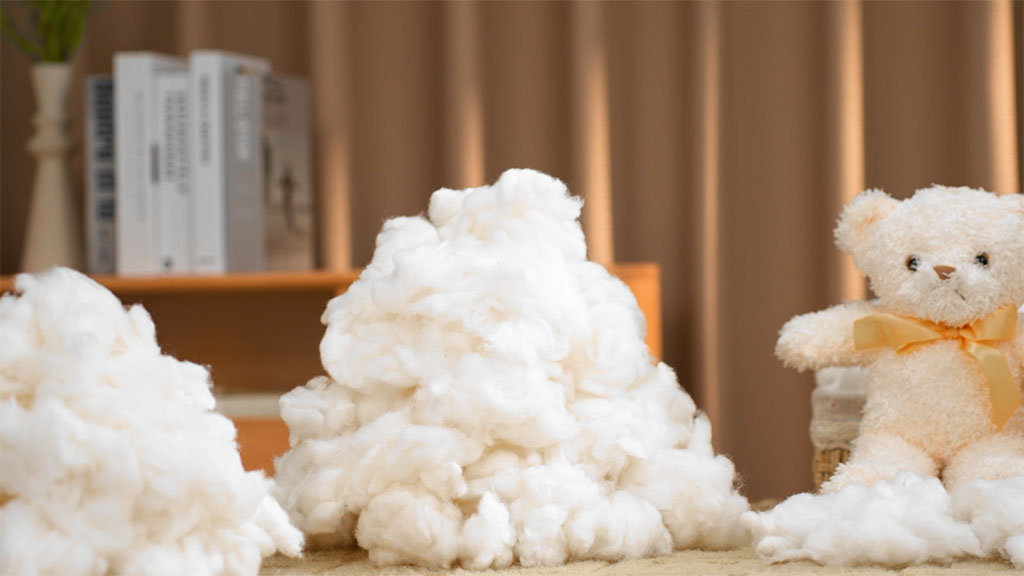
Environmental awareness is reshaping stuffing selection:
- Recycled polyester (rPET): Made from plastic bottles; eco-friendly alternative to virgin polyester. Retains softness, durability, and safety standards.
- Organic cotton / Kapok: Niche, biodegradable options with strong marketing appeal. Must test for washability and fiber consistency.
- Blended fibers: Using rPET blends with natural fibers can reduce environmental impact while maintaining performance.
Table: sustainability options
| Material | Sustainability Impact | Practical Considerations |
|---|---|---|
| rPET fiberfill | Reduces virgin plastic; certified | May require odor testing; ensure consistent loft |
| Organic cotton | Biodegradable, eco-friendly | Higher cost; less resilient than polyester |
| Kapok | Natural, biodegradable | Light; compresses easily; niche market |
| Fiber blends | Balanced impact | Mix of recycled and natural fibers; monitor quality |
Sustainability can be implemented gradually: start with rPET fiberfill in small SKUs, then expand across collections once lab tests and sewn samples confirm performance.
Conclusion
The best stuffing for stuffed animals balances softness, shape, safety, durability, and sustainability. Polyester fiberfill dominates the market for its hypoallergenic properties, resilience, and affordability, while natural and specialty fillings provide differentiation for premium or eco-conscious products. At Kinwin, we help global buyers select the right stuffing, create golden samples, perform lab testing, and ensure compliance with international safety standards. Contact us at [email protected] or visit kinwintoys.com to explore your next plush project and discover how our factory can support both quality and creativity.