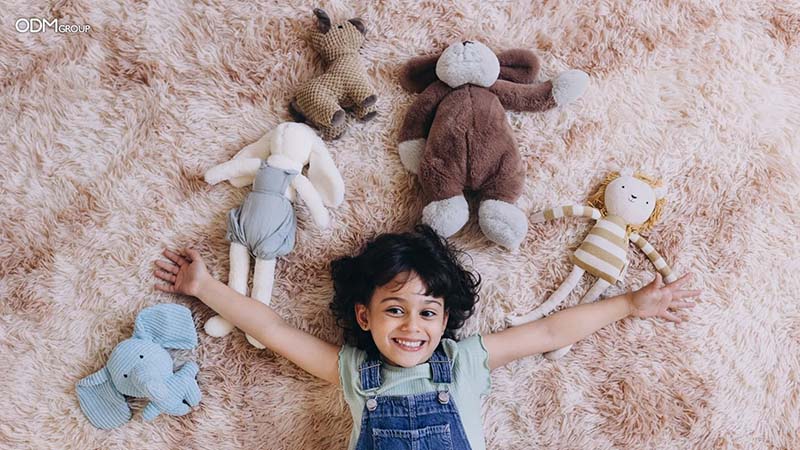
If you sell plush toys today, you have almost certainly heard the name Jellycat. This London-based brand has gone from a small soft toy label to a global phenomenon, loved by babies, children, “kidults”, and serious collectors in more than 70–80 countries.eu.jellycat.com+1
As a Chinese plush toy manufacturer, I get many questions like:
“What exactly is a Jellycat stuffed animal? Why are they so soft and so popular? And what can other brands learn from them?”
In this guide, I’ll explain what defines a Jellycat toy, how the brand builds softness, safety, and style, and what lessons buyers and brand owners can take away when developing their own plush ranges.
What defines a Jellycat stuffed animal in today’s toy market?
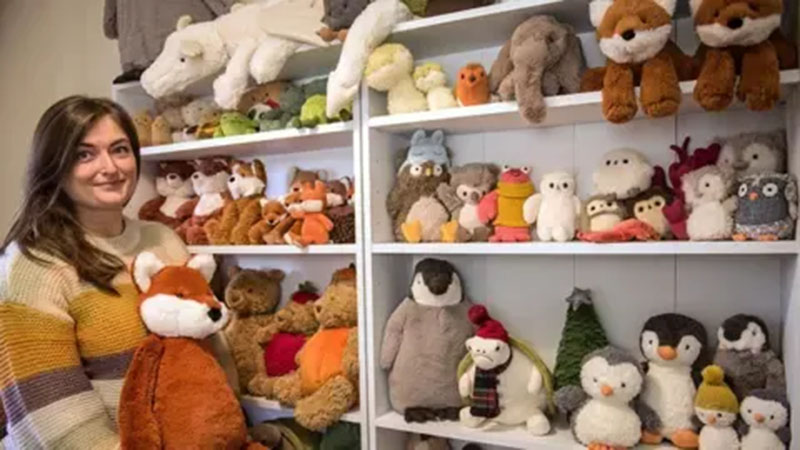
A Jellycat stuffed animal is more than “just a soft toy”. In today’s market, it has become a clear category on its own. The brand is known for very soft textures, relaxed and slightly quirky designs, and a huge range of themes—from classic bunnies and bears to smiling vegetables, flowers, books, and even breakfast foods.eu.jellycat.com+1
Jellycat was founded in London in 1999 and now sells across more than 70–80 countries through its own website, department stores, gift shops, lifestyle stores, and baby boutiques.eu.jellycat.com+1 The company positions itself as “the home of the softest stuffed toys” and focuses on joy, gentle humour, and unexpected characters.eu.jellycat.com
In practice, that means:
- Every design has a distinct personality (often a little silly or calm, not hyperactive).
- Colours are often soft, dusty, or pastel, with some bright accents.
- Shapes are simple and rounded, with floppy limbs and relaxed poses.
- The range is very wide, so buyers can always discover “the next Jellycat friend”.eu.jellycat.com+1
In the modern toy market, a Jellycat stuffed animal is seen as:
- A comfort object for babies and children
- A lifestyle accessory for teens and adults
- A collectible for fans and “kidults” who buy multiple pieces each year時報+1
From a B2B point of view, Jellycat defines a benchmark for “premium soft toy” positioning: high perceived value, strong emotional appeal, and global brand consistency.
| Aspect | How Jellycat Handles It | What It Means in the Market |
|---|---|---|
| Brand origin | Founded in London in 1999 | Seen as a long-established, design-led UK brandeu.jellycat.com |
| Core promise | “Home of the softest stuffed toys” | Customers expect top-level softness and comforteu.jellycat.com |
| Product range | Animals, food, plants, objects, books, baby gifts | Serves babies, kids, teens, adults, gift buyerseu.jellycat.com+1 |
| Design style | Quirky, gentle humour, simple faces, floppy bodies | Instantly recognisable, very “shareable” on social mediaKathryn Read+1 |
| Global presence | Sold in 70–80+ countries, in top department and lifestyle stores | Perceived as international, premium, and gift-worthyeu.jellycat.com+1 |
For other brands and buyers, understanding this positioning is important. You are not just competing with “another plush toy”. In many markets, you are competing with the Jellycat experience.
How do Jellycat’s materials and construction create its signature softness?
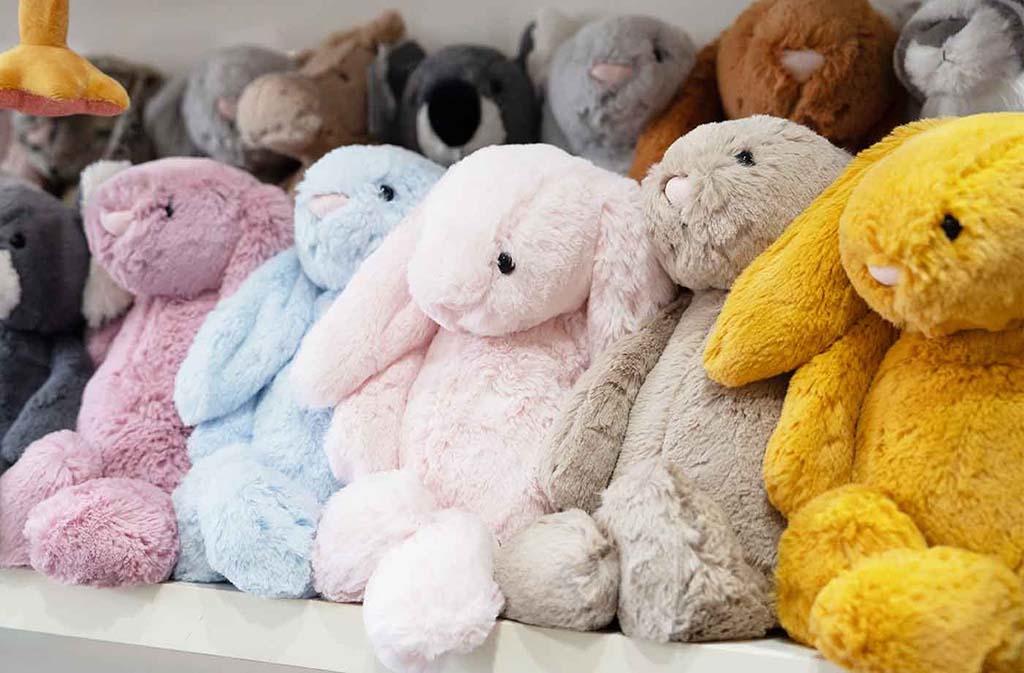
If you have ever held a Jellycat plush, the first thing you notice is the softness. This is not accidental; it is a result of material choice, fabric finishing, and stuffing decisions. Jellycat uses very soft pile fabrics (short and medium pile) and mainly polyester stuffing to create a “squidgy”, huggable feel.Jarrolds+1
From the outside, most Jellycat toys use:
- High-quality plush fabrics with dense, fine fibres
- Calming colour palettes that visually reinforce softnessKathryn Read
- Seam placements that avoid sharp corners or stiff edges
On the inside, polyester fibre filling is used to make toys “cuddly and squishy”.Jarrolds Many designs also use carefully balanced stuffing: not too hard, not too flat. Some parts (like tummies or limbs) may be stuffed differently to create weight and drape, giving that relaxed Jellycat posture.
Construction also plays a big role. Clean patterning, rounded shapes, and gentle tapering in limbs help the toy fall naturally into a cute, “slouchy” pose. This is very different from older, firm-style toys that sit rigidly.
| Element | Typical Jellycat Approach | Effect on Softness & Feel |
|---|---|---|
| Outer fabric | Fine, dense plush; often microfibre-based | Very soft handfeel, smooth surface, visually “cloudy” texturesKathryn Read+1 |
| Stuffing | Mainly polyester fibre | Squishy, huggable, regains shape after huggingJarrolds |
| Stuffing density | Medium density with localized variation | Balanced structure; toy keeps shape while staying floppy |
| Pattern & silhouette | Rounded heads, simple bodies, minimal sharp corners | No hard edges, very comfortable to hold |
| Seams & construction | Hidden seams where possible, good seam allowances | Fewer scratchy edges, better long-term durability |
| Size & proportions | Compact bodies with longer limbs or ears in many ranges | Limbs drape naturally, adding to the “relaxed” vibe |
As a manufacturer, I can say clearly: Jellycat’s softness is not magic. It is the result of consistent material sourcing, thoughtful pattern design, and high production standards. But the overall effect feels magical to customers, and that is what matters.
What design features make Jellycat toys appealing across age groups?
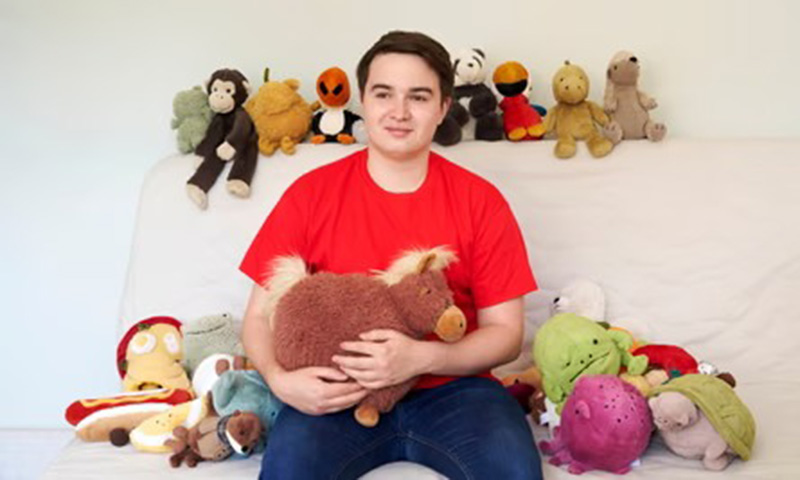
One reason Jellycat has become so strong is that its toys appeal to babies, children, teens, and adults at the same time. This is very difficult to achieve. The brand manages this by combining child-safe simplicity with sophisticated colour choices and gentle humour.
Design features that support cross-age appeal include:
- Simple, friendly faces – Eyes and mouths are usually very small and neutral, not over-detailed or aggressive. This allows different ages to project their own feelings onto the toy.eu.jellycat.com+1
- Soft, muted colours – Many collections use dusty pinks, sage greens, creams, and soft browns instead of loud neons. These look good in nurseries, living rooms, and adult bedrooms.eu.jellycat.com+1
- Unexpected characters – From avocados and croissants to tulips and mushrooms, Jellycat chooses everyday items and turns them into characters. This feels fresh and funny, especially to older buyers.衛報+1
- Relaxed body language – Floppy limbs, slouchy bodies, and gentle poses make toys look calm and lovable.
- Scalable sizing – The same character may come in tiny keychain, small, medium, large, or huge sizes, so different customers can choose the version that fits their life.eu.jellycat.com
Together, these design choices make Jellycat toys feel like “friends” rather than just children’s products.
| Design Feature | How It Looks in Jellycat Toys | Why Kids Like It | Why Teens & Adults Like It |
|---|---|---|---|
| Simple, neutral faces | Tiny eyes, small stitched mouths, no sharp expressions | Easy to love, not scary or complicated | Feels calm, minimalist, fits many moods |
| Soft colour palettes | Pastels, muted earth tones, gentle contrasts | Looks cozy and friendly | Matches home decor, photo-friendly |
| Playful theme choices | Food, plants, books, rainbows, objects | Fun and imaginative | Feels witty and “aesthetic”, great for social media |
| Relaxed silhouettes | Floppy limbs, slouchy bodies | Easy to cuddle and carry | Reads as “chill”, comforting to hold while working |
| Size variety | From tiny bag charms to giant floor-sized plush | Something for every age and space | Collectible, displayable, good gift flexibility |
| Collection building | Coordinated ranges (Amuseables, bunnies, etc.) | Encourages pretend worlds and stories | Supports collecting and themed displays |
For other brands, this is an important lesson: to target multiple age groups, your plush design must look good not only in a toy box, but also on a sofa, a work desk, and a social media feed.
How does Jellycat maintain safety, compliance, and global quality standards?
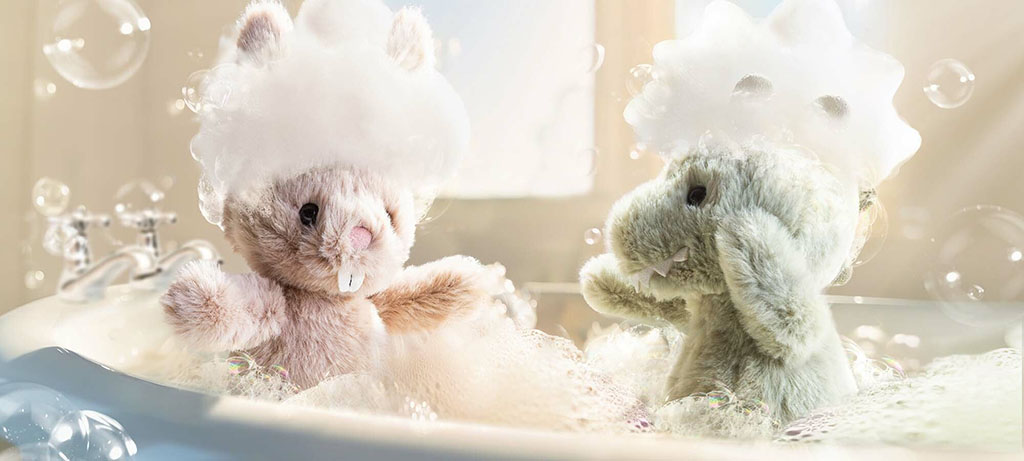
Jellycat’s softness and design would mean very little if the toys were not safe. Here, the brand is very clear. On its official site, Jellycat states that every product is rigorously tested to British, American, European, Australian, and Chinese standards, including EN71, ASTM F-963, ISO 8124, and GB 6675.eu.jellycat.com+1
Their toys carry the CE mark and UKCA mark where applicable and fall under UK Toy Safety Regulations, the EU Toy Safety Directive, US CPSIA, and Health Canada’s toy rules.eu.jellycat.com+2Paper Tiger+2 Independent accredited labs test products annually, and Jellycat claims to set internal construction, safety, and performance requirements higher than minimum legal standards.eu.jellycat.com
Age recommendations vary: many Jellycat toys are safe from birth, while some with longer pile, beans, or other features are labelled with higher age grades. Retail partners often highlight this, especially for baby gifts.Misty Daydream+1
From a manufacturing viewpoint, this level of compliance means:
- Strong control of fabrics, fillings, trims, and dyes
- Stable patterning and seam strength
- Clear documentation and traceability
- Ongoing relationships with third-party labs
| Safety / Compliance Area | What Jellycat States or Demonstrates | Why It Matters for Buyers & Parents |
|---|---|---|
| Toy safety standards | Tested to EN71, ASTM F-963, ISO 8124, GB 6675 | Meets major global toy rules across EU, US, and other marketseu.jellycat.com+2Paper Tiger+2 |
| Regulatory frameworks | UK Toy Safety Regulations, EU Toy Safety Directive, CPSIA, Health Canada | Legal basis for selling toys in key regions |
| Markings | CE and UKCA marks where required | Visual proof of testing and conformity |
| Age suitability | Many toys suitable from birth; age guidance for long pile / special items | Helps parents choose safe options for babies and toddlersMisty Daydream+1 |
| Testing process | Annual 3rd-party lab testing and high internal standards | Reduces risk of recalls, injuries, and brand damage |
| Brand protection & authorised stockists | Emphasis that only authorised retailers can guarantee genuine quality | Encourages buying from trusted channels; fights counterfeitseu.jellycat.com |
For other plush brands and factories (including mine), Jellycat sets a clear benchmark: safety is not a marketing slogan; it is a documented, testable system that must be renewed year after year.
What factors drive Jellycat’s brand loyalty and collector culture?
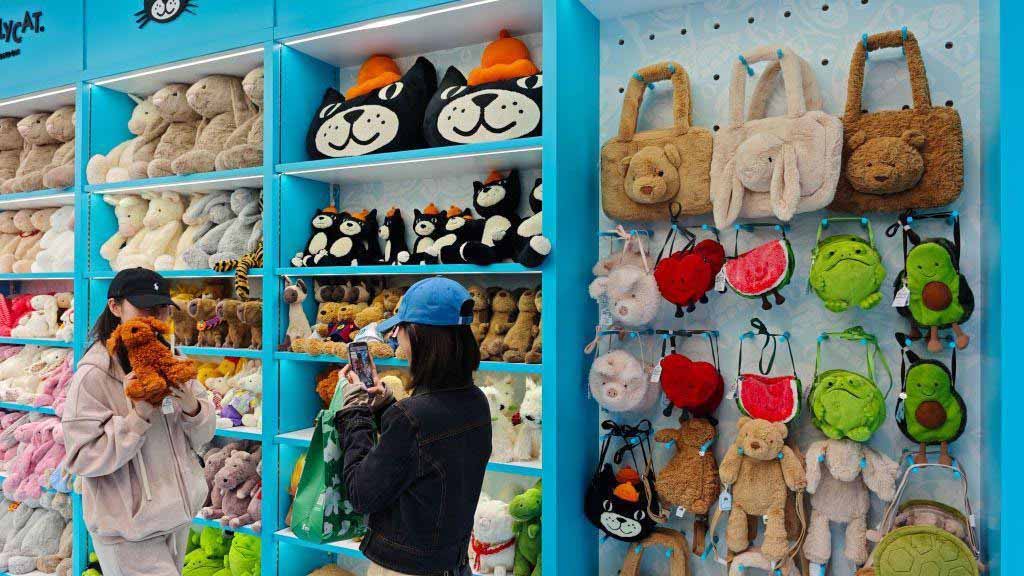
Jellycat is not just a soft toy brand now; it is an obsession for many fans. Articles and news reports describe Jellycat as one of the fastest-selling toy brands in major UK department stores, with sales growth above 50% in recent years.衛報+2衛報+2 Adult collectors and Gen Z “kidults” buy multiple pieces, sometimes spending hundreds or thousands of dollars on rare items.紐約郵報+1
Several factors drive this loyalty and collector behaviour:
- Emotional comfort – During and after the pandemic, plush toys became comfort items for teens and young adults facing stress and uncertainty. Jellycat’s soft designs fit this need perfectly.時報+1
- Social media visibility – Hashtags like #Jellycat have generated huge volumes of content. Collectors show off “hauls”, themed shelves, and outfit matches with their plushies.Instagram+2時報+2
- Limited releases and retirements – As designs are retired and new ones added, a “hunt” begins for rare or discontinued pieces. Resale markets see significant mark-ups for these items.衛報+1
- Wide character universe – Fans can collect by theme (bunnies, food, flowers, sea creatures, etc.), by colour, or by size. This encourages repeat purchases.eu.jellycat.com+1
- Giftability – Jellycats are seen as safe, high-quality gifts. Once someone receives one and likes it, they often buy more for others.eu.jellycat.com+1
There is even a “dark side” to this popularity: shoplifting, counterfeit products, and online scams targeting Jellycat fans, which shows how desirable the brand has become.衛報+2太陽報+2
| Loyalty / Collector Factor | How It Shows Up for Jellycat Fans | What It Means for the Brand | Lesson for Other Brands |
|---|---|---|---|
| Emotional comfort | Fans sleep, study, and travel with Jellycats | Deep emotional bond; toys become “companions” | Design for comfort, not just looks |
| Social media culture | Large Instagram and TikTok communities sharing collections | Free publicity; organic “hype” engine | Make designs and packaging that look great on camera |
| Limited designs & retirements | Rare pieces resell for high prices | Strong collector market and FOMO | Plan retirements carefully to support, not exploit, fans |
| Wide, coherent universe | Fans collect by themes, colours, or series | Long-term repeat purchasing | Build character families, not isolated designs |
| Giftability & word-of-mouth | Many purchases are for birthdays, holidays, celebrations | Continuous new customers introduced by existing fans | Invest in premium feel and packaging for gifting |
For a B2B buyer, understanding Jellycat’s fan culture is important. It explains why customers may pay a premium price and why merchandising and stock planning must consider collectors, not only parents buying one toy.
How do retailers and brands position Jellycat products in global markets?
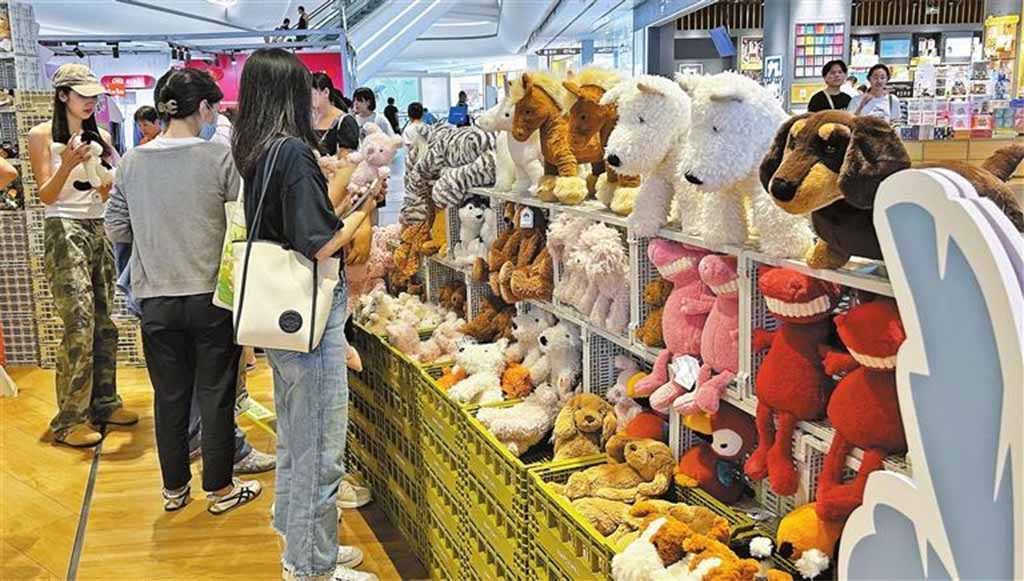
Retailers and distributors treat Jellycat as a premium, design-led brand rather than a basic toy. In the UK, department stores like Selfridges and John Lewis, lifestyle stores like The White Company, and many gift shops highlight Jellycat in key visual spots. Selfridges has even reported Jellycat as its fastest-selling toy brand, with sales up 189% year-on-year.衛報+1
Beyond the UK, Jellycat is present in at least 70–80 countries, in baby boutiques, concept stores, online shops, and large retailers.eu.jellycat.com+1 In Singapore, for example, Jellycat appears on baby gift and lifestyle sites with options to personalise (e.g., embroidered names on bunny ears).Misty Daydream+1
Retailers usually position Jellycat as:
- A higher-priced but high-value gift option
- A lifestyle and decor item, not only a toy
- Part of a broader “cozy”, “self-care” or “kidult” trendAxios+2時報+2
Many stores merchandise Jellycats with:
- Front-of-store tables or eye-level shelves
- Coordinated colour stories (e.g., all sage green items together)
- Seasonal or thematic displays (e.g., Easter, Christmas, back-to-school, food themes)
Some also manage stock tightly due to high theft risk and resale value, using locked cabinets, CCTV, or limits on purchase quantities.衛報+1
| Retail / Market Positioning | Typical Channel or Store Type | How Jellycat is Positioned | Key Takeaways for Other Brands |
|---|---|---|---|
| Premium gift item | Department stores, lifestyle chains | High-quality, “treat yourself” or gift plush | Strong packaging, clear price justification |
| Baby & nursery essential | Baby boutiques, online baby gift sites | Safe, soft, stylish baby gift | Highlight safety, wash care, and softness |
| Lifestyle & decor piece | Concept stores, home and lifestyle shops | Cute, cozy accessory for home or desk | Design plush that fits interior decor trends |
| Collectible & fandom item | Specialty toy stores, online collectors | Must-have character brand, limited releases | Consider limited editions and clear series info |
| Tourism & destination gift | Airports, tourist shops, garden centres | Memorable, photo-friendly souvenir | Use local themes, display for impulse purchase |
For retailers, Jellycat proves that plush toys can be more than a children’s shelf item. With the right brand and presentation, they can sit comfortably next to candles, books, fashion accessories, and premium gifts.
Conclusion
A successful plush brand like Jellycat shows how softness, smart design, and strong safety systems can turn a simple stuffed animal into a global lifestyle product and collector favourite. At Kinwin, we help global buyers create their own plush ranges that follow the same core principles: safe, soft, durable, visually distinctive, and ready for international markets. If you want to develop Jellycat-inspired (but truly original) plush toys for your brand, you are welcome to contact me at [email protected] or visit kinwintoys.com so we can explore how our factory can support your next project.