When developing a custom plush toy, the sample stage is where ideas become real products.
Buyers often expect the first sample to perfectly match the design artwork. But in reality, plush toy development involves many physical and technical factors that can influence how accurately the sample reflects the original concept.
From artwork preparation to pattern engineering, fabric behavior, and stuffing balance, several elements interact during the sampling process.
Understanding these factors helps buyers set realistic expectations and collaborate more effectively with manufacturers during product development.
What Role Does the Original Design Artwork Play in Sample Accuracy?
The original artwork is the foundation of the entire plush toy development process.
Every pattern, fabric panel, and embroidery placement is based on the design provided by the client. If the artwork is unclear or incomplete, pattern makers must interpret certain details, which can introduce differences in the sample.
Does the Artwork Clearly Define Shapes and Proportions?
For a plush toy to match the design accurately, the artwork should clearly show:
- the shape of the head and body
- the relative size of limbs
- the position of facial features
- accessory placement
Designs that contain overlapping elements, stylized proportions, or unclear outlines can make pattern translation more difficult.
Professional plush manufacturers—such as Kinwin—often review artwork before sampling to confirm that shapes and proportions can be translated effectively into a plush structure.
Are Multiple Design Angles Provided?
A single front-view illustration is rarely enough for accurate plush development.
Providing additional views helps pattern makers understand the full structure of the toy.
Helpful references include:
- front view
- side view
- back view
- facial close-ups
When multiple angles are available, the manufacturer can build patterns that better match the intended character design.
Artwork Preparation Impact Table
| Artwork Element | Effect on Sample Accuracy |
|---|---|
| Clear outlines | Easier pattern translation |
| Consistent proportions | More accurate plush structure |
| Multiple design views | Reduces interpretation errors |
| Facial detail references | Improves embroidery placement |
| Accessory positioning | Helps determine seam layout |
How Does Converting 2D Designs into 3D Plush Structures Affect Proportions?
Most plush toy projects begin with a flat illustration. But a plush toy is not flat—it is a three-dimensional object made from sewn fabric panels and filled with stuffing.
When pattern makers translate a design into a plush structure, they must adapt the artwork to real materials and sewing methods. This transformation can slightly change proportions.
Do Curved Surfaces Change Facial Layout?
In a digital illustration, the face appears on a flat surface. But when the head is sewn and stuffed, the surface becomes curved.
This curvature can cause visual changes such as:
- eyes appearing slightly further apart
- mouths appearing lower or wider
- cheeks becoming rounder
These changes happen because the design elements are spread across a curved surface instead of a flat canvas.
Manufacturers experienced in plush engineering—such as Kinwin—often adjust embroidery placement during development to compensate for these effects.
Do Structural Adjustments Affect Body Proportions?
Some artwork proportions look appealing in illustration but are not structurally stable when turned into plush toys.
For example:
- extremely thin necks may not support large heads
- very narrow limbs may collapse after stuffing
- oversized accessories may affect balance
During pattern development, technicians may slightly adjust proportions to ensure the toy maintains its intended pose and durability.
2D vs 3D Proportion Conversion Table
| Design Element | 2D Illustration | Plush Toy Reality |
|---|---|---|
| Face layout | Flat placement | Spread over curved surface |
| Head shape | Perfect circle | Slightly expanded after stuffing |
| Facial spacing | Exact in artwork | May visually shift |
| Body proportions | Stylized | Adjusted for structure |
| Limb thickness | Flexible | Must support stuffing |
Do Fabric Types and Pile Length Influence the Final Appearance?
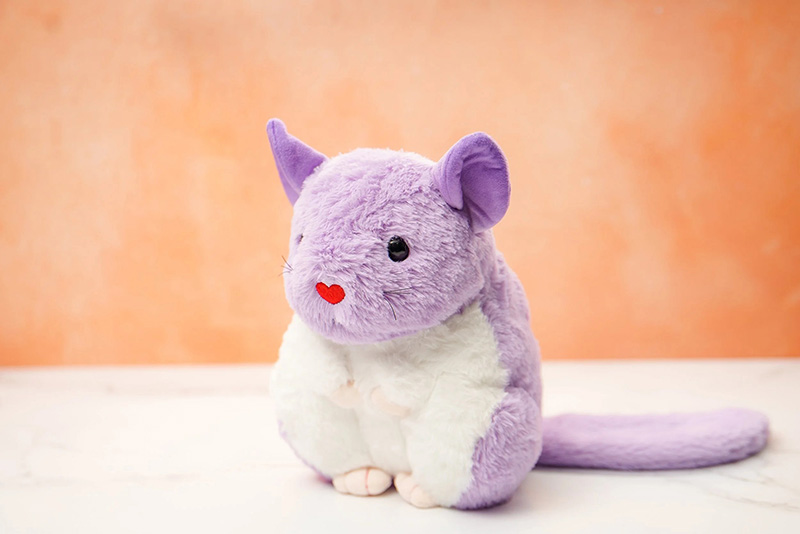
Yes—fabric selection can dramatically influence how a plush toy sample looks.
While design artwork may appear precise on screen, plush fabrics have physical properties that can soften, distort, or emphasize certain details.
For this reason, fabric choice should always be considered early in the sampling process.
Does Pile Length Affect Detail Visibility?
Plush fabrics are covered with soft fibers known as pile.
The length of these fibers changes how details appear on the finished toy.
For example:
- short pile fabrics allow embroidery and printed lines to appear sharp and clear
- long pile fabrics create a fluffy look but may soften or partially hide small details
If a design includes very fine lines or small facial features, shorter pile fabrics are often recommended.
Experienced plush manufacturers—such as Kinwin—usually recommend fabric types based on the level of detail required in the design.
Do Different Fabrics Change Shape and Structure?
Different plush materials also behave differently during sewing and stuffing.
Some fabrics stretch slightly, while others hold their shape more firmly.
For example:
- minky fabric may stretch slightly, affecting proportions
- velboa is thinner and holds shape well
- crystal super soft plush provides a fuller, softer appearance
Because fabric behavior affects how the toy expands during stuffing, material choice can influence the final proportions of the sample.
Fabric Influence Evaluation Table
| Fabric Factor | Impact on Sample Appearance |
|---|---|
| Short pile plush | Clearer facial details |
| Long pile plush | Softer, fluffier appearance |
| Stretch fabrics | Slight shape expansion |
| Thick fabrics | Fuller body shape |
| Smooth fabrics | Better printing clarity |
How Do Pattern-Making and Cutting Precision Impact Accuracy?
Pattern-making is the engineering stage of plush toy development.
Before any fabric is sewn, the design must be translated into a set of precise fabric panels. These panels determine the toy’s shape, proportions, and balance.
If the pattern is inaccurate or the cutting process lacks precision, even a well-designed plush toy may look different from the original concept.
Does Pattern Layout Determine the Toy’s Final Shape?
Every plush toy is built from multiple fabric pieces.
Typical components include:
- head panels
- side panels
- body panels
- arm and leg pieces
The layout of these panels determines how the toy expands when stuffed.
For example:
- curved head panels create round shapes
- additional seams may define cheeks or facial contours
- body panels control torso balance
Experienced plush engineers—such as those at Kinwin—often refine patterns during the sampling stage to improve symmetry and proportion accuracy.
Does Cutting Precision Affect Assembly Accuracy?
Once patterns are finalized, fabric pieces must be cut accurately before sewing.
If cutting tolerances vary, problems may appear during assembly, such as:
- uneven seams
- mismatched panels
- distorted shapes
Precise cutting ensures that all fabric pieces fit together correctly, helping the final sample maintain the intended proportions.
Pattern and Cutting Accuracy Table
| Production Factor | Influence on Sample Accuracy |
|---|---|
| Pattern design | Defines the toy’s structure |
| Panel dimensions | Control proportions |
| Seam allowance | Ensures proper assembly |
| Cutting precision | Maintains symmetry |
| Pattern refinement | Improves resemblance to artwork |
How Does Stuffing Density Affect Shape and Symmetry?
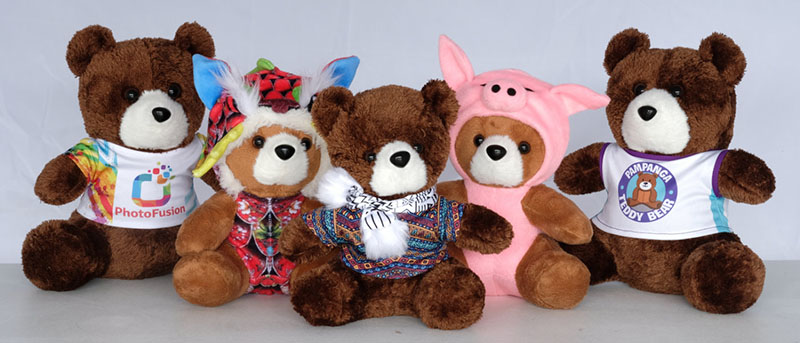
Stuffing is one of the most important factors influencing plush toy appearance.
Even when the design, pattern, and fabric are correct, differences in stuffing density can significantly change how the toy looks.
Because plush toys rely on filling to create their three-dimensional form, the way the toy is stuffed directly affects proportions, facial expression, and symmetry.
Can Overstuffing or Understuffing Change the Toy’s Shape?
Yes, stuffing density controls how the plush expands.
For example:
- overstuffed toys may appear wider or more rigid
- understuffed toys may look flat or lose their intended structure
- uneven stuffing may create distorted shapes
The head area is particularly sensitive. Small changes in stuffing pressure can slightly alter how facial features appear.
Manufacturers experienced in plush production—such as Kinwin—usually determine stuffing standards during the sampling stage to ensure consistent results.
Does Stuffing Distribution Affect Symmetry?
Symmetry is another factor influenced by stuffing.
If stuffing is not evenly distributed:
- one side of the toy may appear larger
- limbs may look uneven
- facial features may appear slightly off-center
During sample development, technicians often adjust stuffing techniques to balance softness and shape stability.
Stuffing Density Impact Table
| Stuffing Condition | Resulting Effect |
|---|---|
| Overstuffed | Rounder but tighter shape |
| Understuffed | Softer but less defined structure |
| Balanced stuffing | Stable proportions |
| Uneven stuffing | Asymmetrical appearance |
| Controlled density | Consistent production results |
Are Embroidery and Printing Techniques Limiting Certain Design Details?
In many plush toys, facial features and decorative patterns are created using embroidery or printing techniques.
While these methods are effective and widely used, they still have technical limitations. Extremely fine details that look perfect in digital artwork may need slight adjustments when applied to fabric.
Understanding these limitations helps ensure the final plush toy sample remains visually accurate while still being practical for mass production.
Do Embroidery Machines Have Minimum Line Thickness?
Embroidery is commonly used for plush toy eyes, mouths, eyebrows, and small decorations.
However, embroidery machines require a minimum stitch width for the design to remain clear and durable.
This means:
- extremely thin lines may not stitch properly
- very small shapes may merge together
- tiny text may become unreadable
During the sampling process, technicians may slightly enlarge or simplify certain embroidery elements to maintain clarity.
Experienced manufacturers—such as Kinwin—often adjust embroidery files so that details remain recognizable while still meeting production standards.
Does Printing Change How Colors and Details Appear?
Printing works well for complex color areas and gradients, but fabric texture can influence how printed details appear.
Because plush fabrics have a soft surface:
- printed lines may look softer than on digital artwork
- color gradients may appear slightly diffused
- alignment across seams may require adjustment
For this reason, printing layouts are often refined during sampling to ensure the design appears balanced after sewing and stuffing.
Embroidery and Printing Limitation Table
| Technique Factor | Impact on Sample Accuracy |
|---|---|
| Embroidery line thickness | Limits very fine details |
| Stitch density | Influences clarity of features |
| Printing on plush fabric | May soften edges |
| Color gradients | May appear less sharp |
| Panel seam alignment | Requires design adjustment |
Conclusion
Plush toy sample accuracy is influenced by many interconnected factors.
While the original artwork provides the creative vision, the final sample depends on how that design is translated into a real three-dimensional product.
Key elements that affect sample accuracy include:
- the clarity of the original artwork
- the conversion from 2D design to 3D plush structure
- fabric type and pile length
- pattern-making and cutting precision
- stuffing density and distribution
- embroidery and printing limitations
Understanding these factors helps buyers collaborate more effectively with manufacturers during the sampling stage.
Professional plush manufacturers—such as Kinwin—typically guide clients through each step of the development process, refining patterns, materials, and details until the plush toy accurately reflects the original concept.
With clear communication and structured sampling, it becomes much easier to create plush toys that match the design while remaining practical for large-scale production.