For many buyers, visiting a plush toy factory in China is a critical step before placing bulk orders or committing to a long-term partnership. Online profiles, emails, and sample photos can only show part of the picture. A factory visit allows you to verify real production capability, operational discipline, and management mindset in ways that documents alone cannot.
Understanding what you are likely to see—and what each area reveals about the factory—helps you ask better questions and make more confident sourcing decisions. The first and most important part of any visit is the production floor itself.
What Production Areas and Manufacturing Processes Will You Typically Tour?
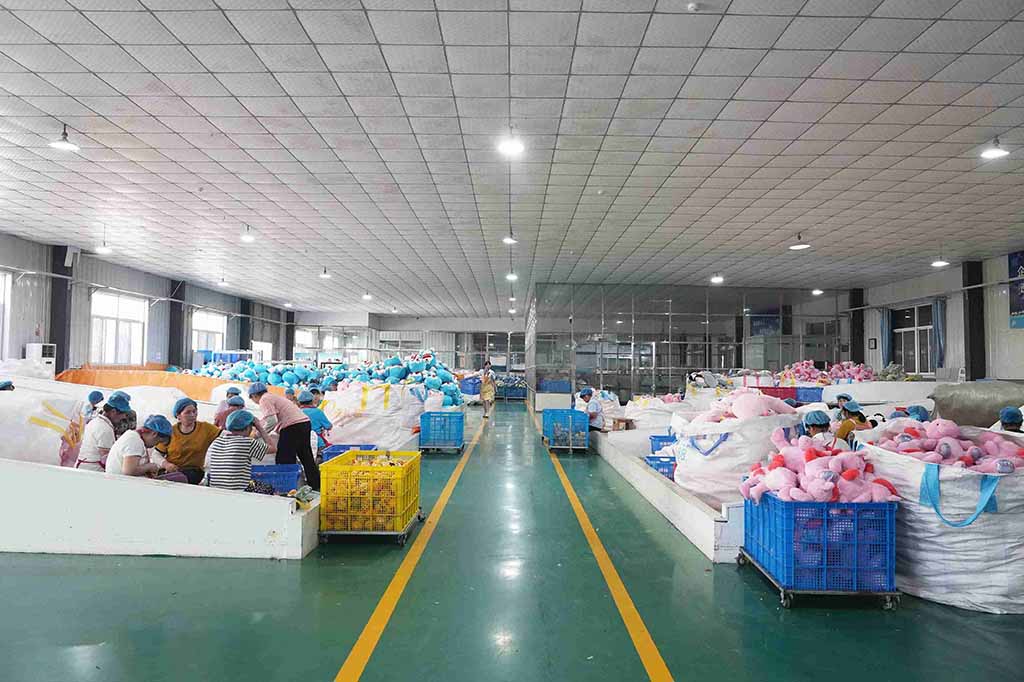
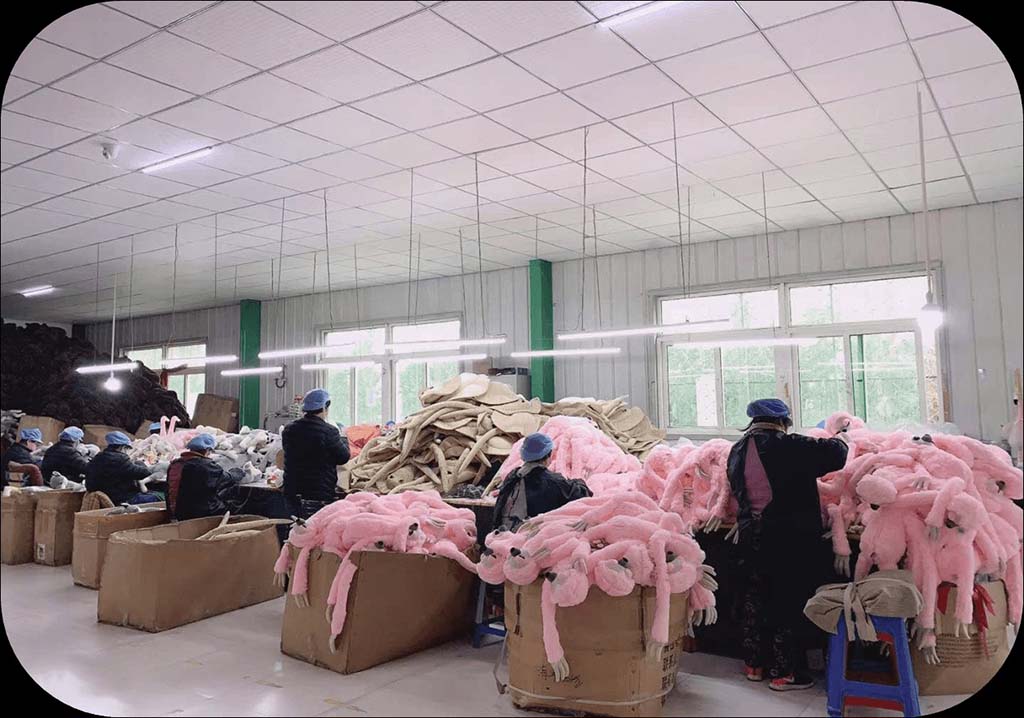
During a plush toy factory visit, buyers are usually guided through the core production areas in logical sequence, reflecting how plush toys move from raw materials to finished products. This tour is not just a formality—it provides direct insight into the factory’s organization, capacity, and production maturity.
Most visits begin in the fabric and material storage area, where you can observe how fabrics, fillings, and accessories are stored and labeled. Clean, well-organized storage suggests good material control and traceability. From there, factories typically show the cutting section, where patterns are laid, fabrics are cut manually or by machine, and pile direction is controlled. Precision here directly affects consistency later.
Next comes the sewing and assembly lines, often the largest part of the factory. Here you can assess worker skill levels, line balance, and whether operations are standardized or chaotic. After sewing, you may visit the stuffing area, where filling density, shaping, and internal structure are handled. This stage is crucial for comfort, appearance, and durability.
Most tours also include finishing processes such as trimming, shaping, cleaning, and accessory attachment, followed by quality inspection stations and packaging areas. The flow between these areas reveals whether production is smooth or constantly interrupted.
| Production Area | What You’ll See | What It Tells You |
|---|---|---|
| Material storage | Fabric rolls, filling, accessories | Material control & cleanliness |
| Cutting section | Manual or machine cutting | Accuracy & efficiency |
| Sewing lines | Operators, line layout | Skill level & scalability |
| Stuffing area | Filling machines or manual work | Shape consistency |
| Finishing | Trimming, shaping | Attention to detail |
| Packaging | Packing, labeling | Export readiness |
A well-structured tour where each area flows naturally into the next usually indicates experience with export orders and stable production planning. Disorganized layouts, excessive work-in-progress, or unclear process separation can signal hidden risks that may not appear in samples alone.
How Can Factory Equipment, Workflow, and Automation Levels Be Evaluated On-Site?
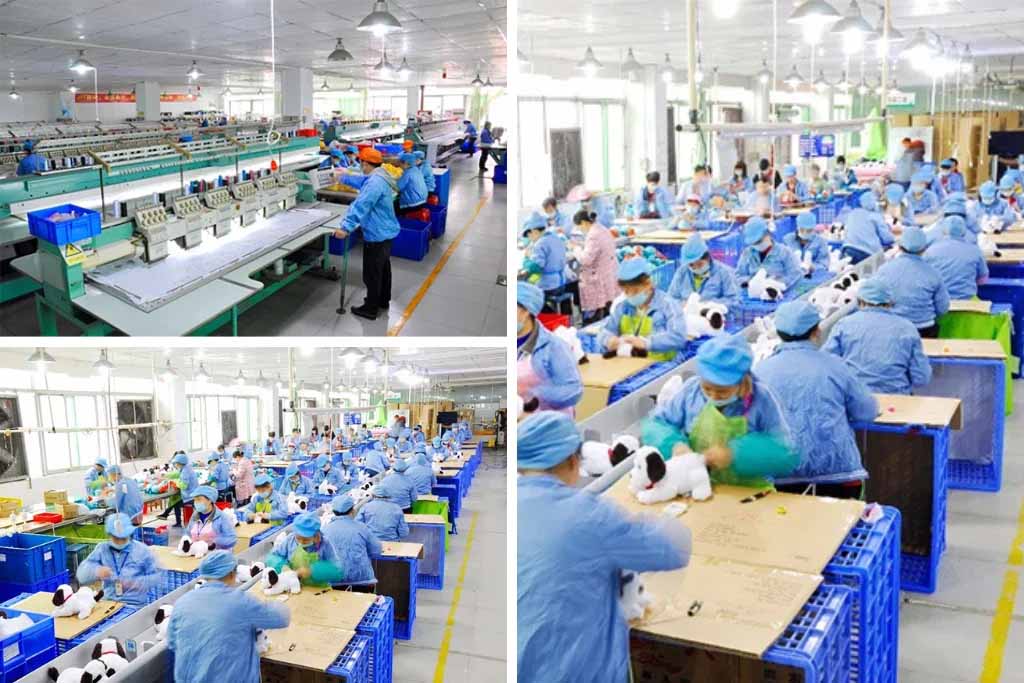
When visiting a plush toy factory, evaluating equipment, workflow, and automation is less about spotting the “most advanced machines” and more about understanding whether the factory’s setup matches your product type, order volume, and quality expectations. A factory with modest equipment but smooth workflow can outperform a highly automated factory with poor coordination.
Start by observing equipment condition and suitability. Sewing machines, cutting tools, embroidery machines, and stuffing equipment should be well-maintained, clean, and actively used. Frequent breakdowns, oil stains on fabric, or improvised repairs may indicate weak maintenance systems. Ask whether machines are standardized across lines or mixed randomly—standardization usually supports consistent output.
Next, focus on workflow organization. Watch how semi-finished products move between processes. A mature factory will have clear production lines, defined workstations, and minimal backtracking. Excessive piles of unfinished goods, workers waiting for previous steps, or frequent line stoppages suggest poor production planning rather than capacity shortage.
Automation should be evaluated in context. For plush toys, full automation is rare and not always necessary. What matters is whether automation is applied where it adds value—such as fabric cutting, embroidery, stuffing consistency, or packaging—while skilled manual work is retained for shaping and detailing. Over-automation can even reduce flexibility for custom designs.
Finally, observe how supervisors interact with the floor. Active line leaders adjusting workload and quality signals a controlled operation. Silent or absent supervision often points to reactive management.
| Evaluation Area | What to Observe On-Site | What It Indicates |
|---|---|---|
| Equipment condition | Clean, functional machines | Maintenance discipline |
| Machine consistency | Similar models across lines | Output consistency |
| Workflow flow | Smooth, linear movement | Production planning strength |
| Automation usage | Cutting, embroidery, stuffing | Efficiency where it matters |
| Supervision | Active line management | Process control |
A factory visit allows you to judge whether the operation is designed for repeatable export production or only short-term order handling. Equipment and automation should support stability and scalability—not just look impressive during a tour.
What Should You Look for in Sample Rooms, Pattern Making, and R&D Capabilities?
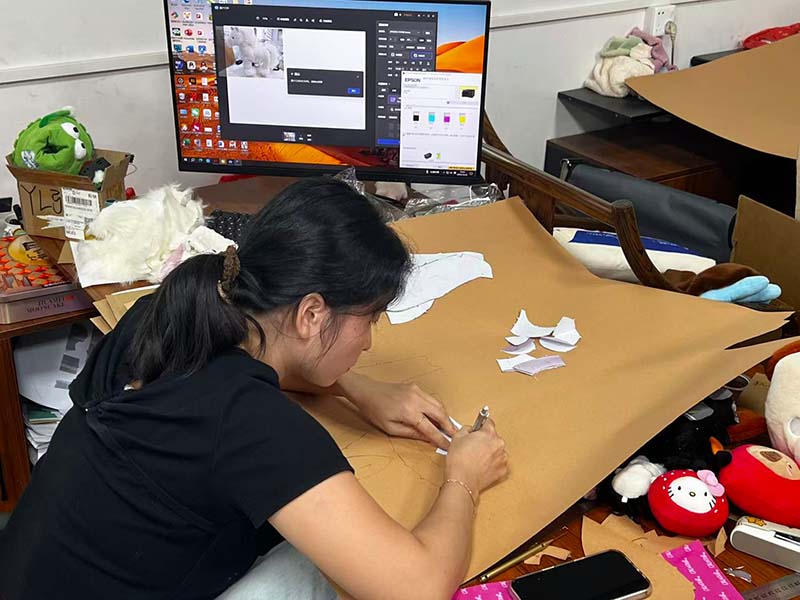
A factory’s sample room and pattern-making area often reveal more about its real capability than the production floor itself. While production shows how well a factory executes, sampling and R&D show how well it understands, interprets, and develops your product ideas. During a factory visit, this area deserves focused attention.
Start with the sample room environment. A professional sample room is usually clean, organized, and separate from mass production. You should see multiple samples in different development stages—first samples, revised samples, and approved references. This indicates an active development pipeline rather than one-off sampling. Ask how many samples the team produces weekly and how revisions are tracked; structured workflows suggest predictable timelines.
Next, evaluate pattern-making capability. Skilled pattern makers are critical for plush toys, especially for complex shapes, realistic animals, or character-based designs. Look for physical paper patterns, digital pattern systems, or both. Experienced factories can explain why seams are placed in certain positions and how pattern changes affect shape, cost, or durability. If explanations are vague, it may indicate limited technical depth.
R&D capability goes beyond copying. Strong factories proactively suggest construction improvements, material alternatives, or cost-saving adjustments without compromising design intent. This shows long-term partnership potential rather than transactional production. You should also observe whether designers, pattern makers, and sample sewers communicate closely—silos often slow development and increase errors.
| Area to Review | What to Look For | What It Tells You |
|---|---|---|
| Sample room setup | Organized, multi-stage samples | Active development process |
| Sample volume | Ongoing projects visible | Capacity for parallel orders |
| Pattern tools | Paper &/or digital systems | Technical proficiency |
| Pattern explanation | Clear, logical reasoning | Problem-solving ability |
| R&D input | Design & cost suggestions | Partnership mindset |
A factory with strong sampling and R&D capabilities is far more likely to deliver accurate samples, reduce revision cycles, and scale designs smoothly into mass production. This capability is especially important for custom, seasonal, or IP-driven plush projects where speed and precision matter.
How Do Quality Control Systems and In-House Testing Appear During a Factory Visit?
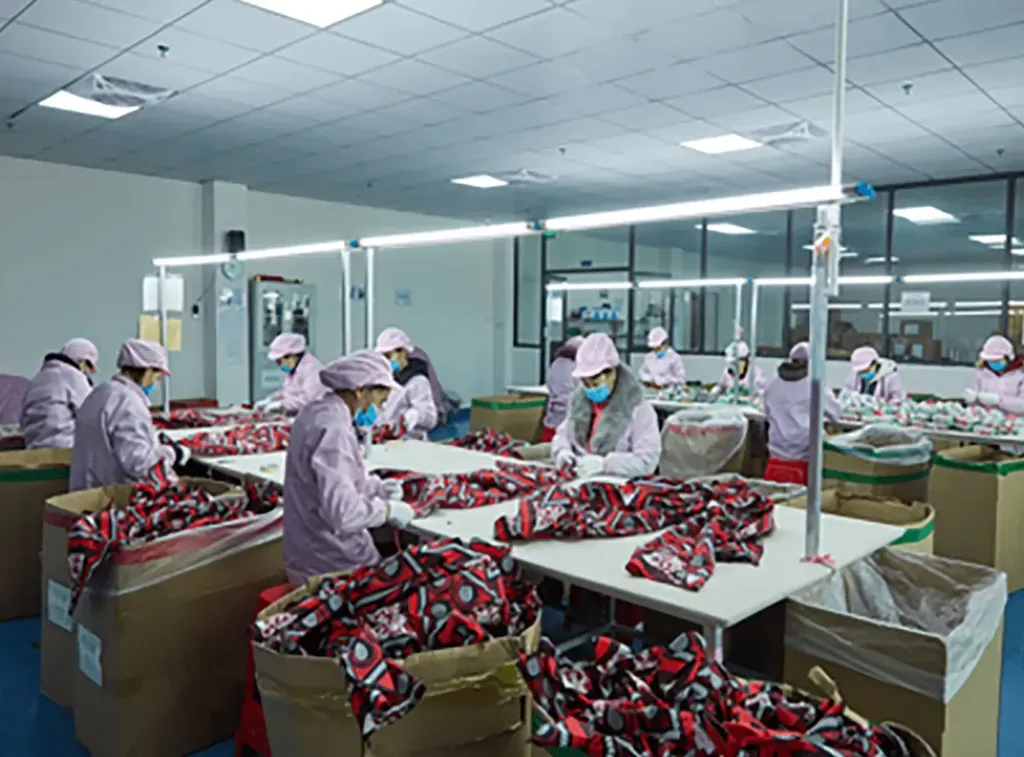
Quality control is one of the most critical aspects to observe during a plush toy factory visit, because it shows whether a factory can maintain consistency, manage risk, and protect your brand at scale. Unlike sales presentations, QC systems are visible through daily routines, records, and on-site discipline.
Start by identifying whether the factory has a clearly defined QC structure. Professional factories usually divide quality control into stages such as IQC (incoming materials), IPQC (in-process inspection), and FQC/OQC (final and outgoing inspection). During your visit, ask to see inspection checkpoints on the production line. If inspectors are actively checking stitching, stuffing firmness, seam strength, or component attachment, it indicates real execution rather than paper procedures.
Next, review inspection records and traceability. A reliable factory keeps documented inspection logs linked to production batches, dates, and inspectors. These records help identify root causes when issues arise. If QC data exists only verbally or cannot be shown, it raises concerns about consistency and accountability.
In-house testing capability is another strong signal. While third-party labs handle certification testing, good factories perform basic internal tests such as seam pull tests, drop tests, needle detection, and visual defect checks. These tests help catch problems early, before goods reach external labs or shipment stages.
Also observe how defects are handled. Ask what happens when an issue is found mid-production. Factories with mature systems can explain rework procedures, isolation of defective goods, and corrective actions. This reflects process control rather than reactive firefighting.
| QC Area | What You Should Observe | What It Indicates |
|---|---|---|
| QC structure | IQC, IPQC, FQC clearly defined | Systematic quality control |
| On-line inspection | Active checks during sewing & stuffing | Real-time defect prevention |
| Inspection records | Dated, batch-linked documentation | Traceability & accountability |
| In-house testing | Pull tests, needle detection, drop tests | Early risk control |
| Defect handling | Clear rework & isolation process | Stable mass production |
A factory visit that reveals visible QC discipline and practical testing routines gives buyers confidence that quality is not dependent on luck or individual workers, but supported by repeatable systems. This is essential for long-term cooperation, especially for retail and licensed plush programs.
What Management, Communication, and Project Coordination Practices Can You Observe?
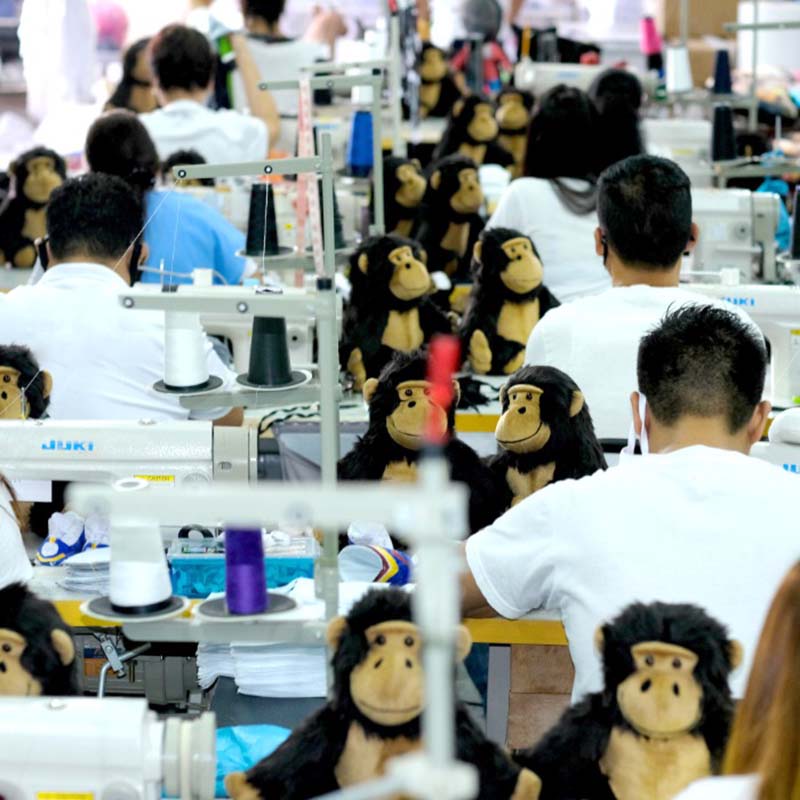
A factory visit offers a rare opportunity to evaluate not just machines and products, but the people and systems that will manage your project day to day. Management structure, communication flow, and coordination practices directly affect timelines, accuracy, and how problems are resolved when they inevitably arise.
Begin by observing organizational clarity. Well-managed plush toy factories typically have clear roles across sales, project management, engineering, production, and quality. During your visit, notice whether questions are answered by the right people—or whether staff constantly defer responsibility. Clear ownership indicates a factory that can handle complex OEM or licensed projects without confusion.
Communication style is equally important. Professional factories communicate fact-based updates, using production schedules, sample revision logs, and QC records rather than vague assurances. Ask how design changes, material substitutions, or timeline adjustments are communicated internally. Factories with mature systems can explain approval chains and escalation paths clearly.
Project coordination becomes especially visible when you ask about sample revisions or urgent orders. Strong factories use standardized revision tracking, version control for patterns and artwork, and internal deadlines aligned with customer milestones. This prevents errors such as outdated patterns being used in mass production.
Also observe language capability and cultural alignment. Smooth collaboration requires not just English proficiency, but the ability to understand brand expectations, compliance language, and design intent. Factories experienced with international buyers often demonstrate structured meeting notes, follow-up summaries, and confirmation emails.
| Coordination Aspect | What to Look For On-Site | Why It Matters |
|---|---|---|
| Role clarity | Defined PM, QC, engineering roles | Reduces miscommunication |
| Internal communication | Clear approval & escalation flow | Faster issue resolution |
| Project tracking | Sample revision & timeline records | Prevents costly errors |
| Change management | Version control for designs | Protects design accuracy |
| Buyer communication | Structured updates & summaries | Builds long-term trust |
A factory with strong management and coordination practices functions as an extension of your team, not just a supplier. This capability becomes increasingly critical as product complexity, order volume, and compliance requirements grow.
How Can a Factory Visit Help Validate Capacity, Compliance, and Long-Term Partnership Potential?
A physical factory visit is ultimately about answering one critical question: Can this manufacturer support your brand not just today, but over the long term? While documents and online profiles can suggest capability, only an on-site visit allows buyers to validate capacity, compliance execution, and partnership reliability in a real-world context.
Capacity validation goes beyond asking about monthly output numbers. During a visit, you can assess how many production lines are active, how labor is allocated during peak seasons, and whether equipment appears underutilized or overstretched. A factory that claims high capacity but operates with crowded lines, excessive overtime, or frequent outsourcing may struggle to scale without quality risks. Observing production rhythm and buffer planning gives insight into whether the factory can absorb future growth or seasonal spikes.
Compliance credibility is also far clearer on-site. Certifications such as BSCI, SMETA, ISO, or Disney FAMA matter, but how they are implemented matters more. During a visit, buyers can see whether safety signage is current, whether chemical storage and waste handling are controlled, and whether QC and needle detection are part of daily workflow rather than audit-only practices. Consistency between documentation and actual operations is a strong indicator of compliance maturity.
Long-term partnership potential becomes visible through investment behavior. Factories committed to sustainable partnerships invest in training, upgraded machinery, sampling teams, and internal testing capabilities. Ask about recent investments and future plans—factories that think long term are more likely to support evolving brand needs, new product categories, and higher compliance expectations.
Equally important is cultural alignment. A factory visit reveals whether management is open to collaboration, transparent about limitations, and proactive in problem-solving. These qualities determine how the partnership performs when challenges arise, such as material shortages, regulatory changes, or sudden demand shifts.
| Validation Area | What a Factory Visit Confirms | Long-Term Impact |
|---|---|---|
| Production capacity | Real line count & workload balance | Scalable growth support |
| Compliance execution | Daily safety & QC discipline | Lower regulatory risk |
| Investment mindset | Equipment & team upgrades | Future-ready partnership |
| Transparency | Honest discussion of limits | Fewer surprises |
| Cultural fit | Collaboration & accountability | Stable long-term cooperation |
In many cases, buyers leave factory visits with greater confidence not because everything looks perfect, but because risks are visible, explained, and managed openly. That transparency is often the strongest signal that a factory is capable of becoming a reliable, long-term manufacturing partner rather than a short-term supplier.
Conclusion
Visiting plush toy factories in China gives buyers real visibility into production strength, quality discipline, and partnership reliability—far beyond what documents or online profiles can show.
Visiting plush toy factories in China is one of the most effective steps a buyer can take to reduce sourcing risk and build long-term manufacturing partnerships. A well-planned factory visit allows you to move beyond surface-level claims and verify how a factory actually operates—from raw material handling and production flow to quality control discipline and management structure.
By observing production areas, equipment condition, automation level, and workflow organization, buyers can assess whether a factory is truly capable of handling their required volumes and complexity. Reviewing sample rooms, pattern-making capabilities, and R&D processes reveals how well the factory can translate design concepts into consistent, scalable products. Equally important, seeing quality control systems and in-house testing in action helps confirm whether safety and compliance standards are applied daily, not just documented for audits.
Perhaps most critically, a factory visit highlights how the team communicates, coordinates projects, and solves problems. Clear role ownership, structured project management, and transparent communication are strong indicators of a factory that can support ongoing OEM or custom plush programs as your brand grows.
In short, a factory visit transforms supplier selection from a leap of faith into an informed business decision—laying the foundation for reliable production, consistent quality, and a stable long-term partnership.
📧 Contact: [email protected]
🌐 Visit: https://kinwintoys.com