Toy safety compliance in the U.S. and EU is not just a legal formality—it is a market entry requirement. From my experience working with global brands and importers, many delays, recalls, and rejected shipments happen because safety rules were misunderstood or handled too late in the process.
The U.S. and EU share similar safety goals, but they differ significantly in regulatory structure, testing logic, and documentation responsibility. If manufacturers and buyers treat them as the same system, compliance risks increase quickly.
Before comparing differences or testing methods, it is essential to understand the core toy safety regulations that govern the U.S. market, because they define how products are evaluated, documented, and enforced from the start.
What Are the Core Toy Safety Regulations Governing the U.S. Market?
The U.S. toy safety system is built around federal regulations with strong enforcement authority. From my experience, compliance in the U.S. market focuses heavily on mandatory testing, traceability, and importer responsibility.
At the center of U.S. toy safety is the Consumer Product Safety Improvement Act (CPSIA). CPSIA establishes requirements for lead content, phthalates, testing frequency, tracking labels, and certification obligations. Any plush toy intended for children under 12 must comply with CPSIA rules.
Another critical standard is ASTM F963, the mandatory toy safety standard in the U.S. It covers mechanical and physical properties, flammability, chemical migration, sound-producing toys, and labeling requirements. Even though ASTM F963 originated as a voluntary standard, it is legally mandatory when referenced under CPSIA.
Testing in the U.S. must be conducted by CPSC-accepted third-party laboratories. Test reports are not optional. Importers must issue a Children’s Product Certificate (CPC) based on these test results before products enter the market.
Responsibility in the U.S. system is very clear. Importers and brand owners are legally responsible for compliance, even if manufacturing happens overseas. This is why U.S. buyers are extremely sensitive to testing accuracy, documentation completeness, and traceability.
| U.S. Regulation Element | What It Covers | Who Is Responsible | Why It Matters |
|---|---|---|---|
| CPSIA | Lead, phthalates, testing rules | Importer / Brand | Legal market access |
| ASTM F963 | Physical, chemical, labeling safety | Manufacturer & Importer | Mandatory toy standard |
| Third-party testing | Lab-verified compliance | CPSC-accepted labs | Test validity |
| CPC document | Certification of compliance | Importer | Customs & enforcement |
| Tracking labels | Product traceability | Manufacturer | Recall management |
For buyers entering or operating in the U.S. market, toy safety compliance is not flexible. Manufacturers that understand CPSIA and ASTM F963 requirements—and support proper testing and documentation—help brands avoid enforcement actions, shipment holds, and long-term compliance risk.
What EU Toy Safety Directives and Harmonized Standards Must Manufacturers Follow?
Toy safety compliance in the EU follows a framework-based regulatory model, which is different from the U.S. system. From my experience, many non-EU manufacturers underestimate EU requirements because enforcement feels less centralized. In reality, EU compliance places greater responsibility on manufacturers and importers to self-assess, document, and declare conformity.
At the core is the EU Toy Safety Directive (2009/48/EC). This directive defines essential safety requirements covering mechanical, physical, chemical, electrical, flammability, and hygiene aspects. Any toy sold in the EU must meet these essential requirements before it can legally carry the CE mark.
To demonstrate conformity, manufacturers usually rely on harmonized European standards, most commonly the EN 71 series for toys. EN 71-1 covers mechanical and physical properties, EN 71-2 addresses flammability, and EN 71-3 focuses on migration of certain elements. For plush toys, these three parts are especially critical.
Unlike the U.S., the EU system emphasizes technical documentation and self-declaration. Manufacturers must prepare a Technical File that explains how the product meets the directive. Based on this file, the responsible party issues an EU Declaration of Conformity (DoC) and applies the CE mark.
Another important difference is chemical regulation overlap. Plush toys in the EU are also affected by REACH regulations, which control restricted substances beyond toy-specific rules. This makes material selection and supplier control especially important.
| EU Compliance Element | What It Covers | Who Is Responsible | Practical Impact |
|---|---|---|---|
| Toy Safety Directive | Essential safety requirements | Manufacturer / Importer | Legal market entry |
| EN 71 standards | Test methods & benchmarks | Manufacturer | Proof of conformity |
| Technical File | Design, test, risk analysis | Manufacturer | Audit readiness |
| EU Declaration (DoC) | Legal conformity statement | Responsible EU entity | CE marking |
| REACH | Chemical substance control | Supply chain | Material compliance |
For buyers targeting the EU market, compliance success depends on documentation discipline and system understanding, not just passing tests. Manufacturers that understand how the Toy Safety Directive, EN 71 standards, and REACH interact help brands apply CE marking correctly and avoid costly market surveillance actions.
How Do U.S. and EU Safety Requirements Differ in Testing, Documentation, and Enforcement?
Although the U.S. and EU aim for the same goal—protecting children—their toy safety systems operate very differently. From my experience, many compliance problems happen when brands assume that passing one market automatically covers the other. In reality, testing logic, documentation structure, and enforcement methods are not the same.
In the U.S., compliance is test-driven and enforcement-led. Products must be tested by CPSC-accepted laboratories, and importers must issue a Children’s Product Certificate (CPC). Enforcement actions are centralized, and penalties, recalls, or customs holds can happen quickly if documents are missing or incorrect.
In the EU, compliance is system-driven and documentation-led. Manufacturers are responsible for assessing conformity, compiling a Technical File, and issuing an EU Declaration of Conformity. Market surveillance authorities review documentation and products after market entry, often triggered by complaints or inspections.
Another key difference is flexibility versus formality. The EU allows manufacturers to demonstrate conformity through harmonized standards or equivalent methods, while the U.S. relies more strictly on referenced standards and third-party testing. This means EU compliance requires stronger internal compliance management, while U.S. compliance requires stricter external testing coordination.
Understanding these differences helps brands plan testing timelines, assign responsibility correctly, and avoid duplicated or missing compliance steps.
| Compliance Area | U.S. Market Approach | EU Market Approach | Practical Impact |
|---|---|---|---|
| Regulatory model | Enforcement-led | Self-declaration framework | Different risk points |
| Testing requirement | Mandatory third-party labs | Harmonized standards testing | Planning differences |
| Certification document | CPC | EU Declaration of Conformity | Different paperwork |
| Documentation depth | Certificate-focused | Technical File-focused | Internal workload |
| Enforcement style | Centralized & proactive | Decentralized & reactive | Ongoing vigilance |
For brands selling in both regions, dual compliance is not optional—it must be planned intentionally. Manufacturers who understand both systems help buyers reduce delays, avoid re-testing, and maintain consistent safety positioning across markets.
What Material, Mechanical, and Chemical Safety Tests Are Required for Plush Toys?

For plush toys, safety compliance is not based on one single test. From my experience, regulators in both the U.S. and EU focus on three core risk areas: material safety, mechanical integrity, and chemical exposure. Plush toys may look soft and harmless, but they are subject to some of the most detailed testing requirements in the toy industry.
Material safety tests focus on whether fabrics, fillings, threads, and decorative components are safe for prolonged skin contact. These tests evaluate flammability, color fastness, and the migration of restricted substances. For plush toys intended for young children, requirements are especially strict.
Mechanical and physical tests assess how a plush toy behaves under stress. This includes seam strength, attachment strength for eyes or accessories, torque and tension tests, drop tests, and stuffing containment. The goal is to ensure that no small parts or sharp components can be released during normal or foreseeable use.
Chemical safety testing is another critical layer. In the U.S., CPSIA limits lead and phthalates, while in the EU, EN 71-3 and REACH regulate a wider range of elements and chemicals. Plush toys often require testing of multiple components, not just the finished product.
An important point many buyers miss is that test scope depends on design details. Adding embroidery, plastic accessories, sound modules, or coatings can trigger additional test requirements. Professional manufacturers plan test scope during design, not after sampling.
| Test Category | What Is Evaluated | Typical Standard | Why It Matters |
|---|---|---|---|
| Flammability | Fabric ignition & burn rate | ASTM F963 / EN 71-2 | Fire safety |
| Mechanical strength | Seams, attachments, stuffing | ASTM F963 / EN 71-1 | Choking prevention |
| Chemical migration | Heavy metals & elements | CPSIA / EN 71-3 | Toxic exposure |
| Phthalates | Plasticized components | CPSIA | Child health |
| Component integrity | Mixed-material parts | Market-specific rules | Design compliance |
For buyers, understanding required tests early helps control timelines and cost. Manufacturers that can clearly explain which tests apply, why they apply, and when to conduct them reduce rework, prevent shipment delays, and support smoother market entry.
How Should Manufacturers and Importers Prepare Compliance Documents and Declarations?
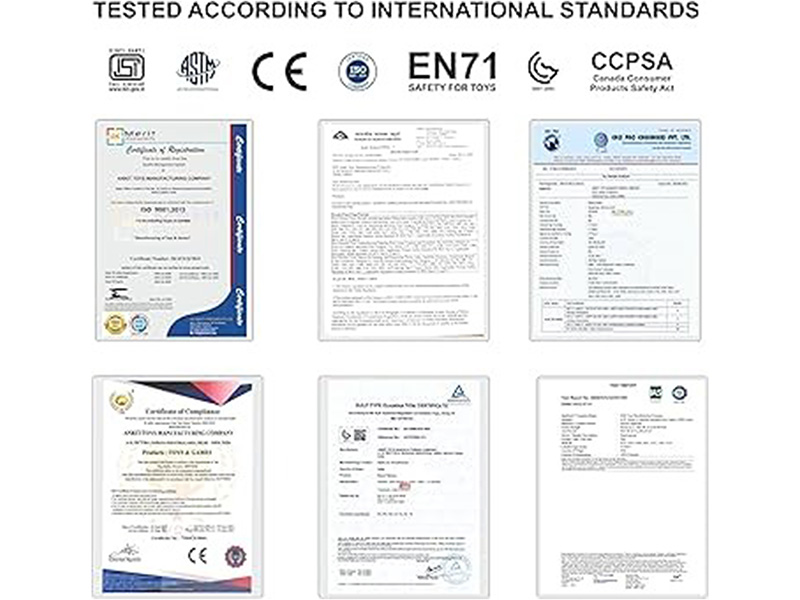
Passing safety tests is only part of compliance. From my experience, many products that technically meet safety requirements still face delays or enforcement issues because documentation is incomplete, incorrect, or poorly organized. In both the U.S. and EU, paperwork is not a formality—it is legal proof of compliance.
In the U.S. market, the key document is the Children’s Product Certificate (CPC). This certificate must list the applicable regulations, testing laboratories, test dates, and responsible importer information. The CPC must be supported by valid third-party test reports and be available to authorities upon request.
In the EU market, documentation requirements are broader. Manufacturers or their authorized EU representatives must prepare a Technical File. This file typically includes product descriptions, design drawings, risk assessments, material specifications, test reports, and production control procedures. Based on this file, an EU Declaration of Conformity (DoC) is issued, allowing the product to carry the CE mark.
Another critical aspect is traceability. Batch numbers, production dates, and supplier records must align with test reports and certificates. If a recall or inspection occurs, authorities expect manufacturers and importers to trace affected products quickly.
Professional manufacturers help buyers by standardizing document templates, tracking certificate validity, and aligning production batches with compliance records. This reduces administrative burden and lowers the risk of errors during audits or customs checks.
| Document Type | U.S. Requirement | EU Requirement | Common Risk |
|---|---|---|---|
| Test reports | Mandatory third-party labs | Harmonized standards tests | Outdated reports |
| Certification | CPC | EU Declaration of Conformity | Missing signatures |
| Technical documentation | Limited | Full Technical File | Incomplete records |
| Traceability | Tracking labels | Batch & supplier records | Poor batch linkage |
| Record retention | Required | Required | Lost documentation |
For buyers and importers, strong documentation discipline is as important as product safety itself. Manufacturers that actively support document preparation help brands respond confidently to inspections, audits, and regulatory inquiries.
How Can Brands Maintain Ongoing Compliance as Regulations and Standards Evolve?
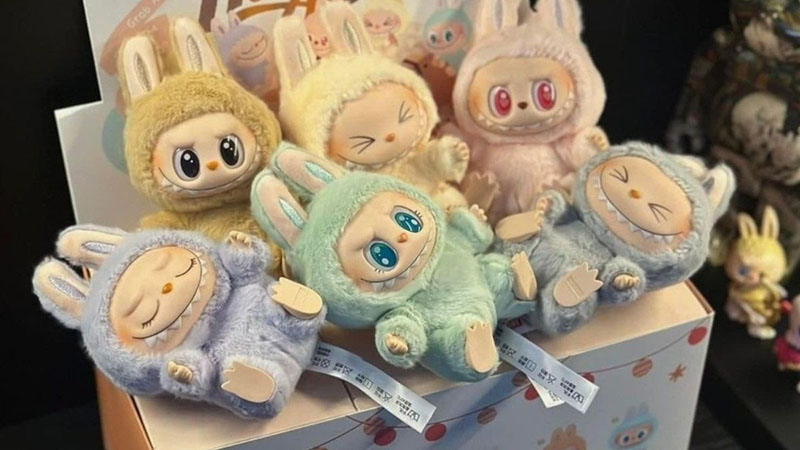
Toy safety compliance is not a one-time task. From my experience, many brands pass initial testing successfully but later face risk because regulations, standards, and interpretations continue to change. Maintaining compliance over time requires systems, not just certificates.
The first step is regulatory monitoring. Standards such as ASTM F963 and EN 71 are updated regularly. Chemical limits under CPSIA and REACH also change as new substances are restricted. Brands and manufacturers that rely on old test reports without tracking updates expose themselves to compliance gaps.
Material and supplier control is another critical area. Even small changes—such as switching fabric mills, dye lots, or accessory suppliers—can invalidate previous test results. Professional manufacturers manage this risk through approved supplier lists, material change controls, and re-testing triggers.
Ongoing compliance also depends on batch-level discipline. Production records, traceability labels, and document updates must align with each shipment. When products are sold across multiple regions, version control becomes essential to prevent mixing U.S.-compliant and EU-compliant variants incorrectly.
Internal training and communication matter as well. Compliance knowledge should not sit with one person only. Sales, sourcing, production, and QC teams must all understand basic safety requirements so that non-compliant decisions are not made unintentionally.
Finally, working with experienced manufacturers and testing partners helps brands stay ahead. Factories that actively inform buyers about regulatory changes and testing implications become valuable compliance partners, not just suppliers.
| Ongoing Compliance Area | Common Risk | Best Practice | Long-Term Benefit |
|---|---|---|---|
| Regulation updates | Outdated standards | Active monitoring | Continuous market access |
| Material changes | Unreported substitutions | Change control & re-testing | Compliance stability |
| Supplier management | Inconsistent inputs | Approved supplier lists | Lower risk |
| Batch traceability | Poor record alignment | Shipment-level documentation | Faster issue response |
| Team awareness | Compliance knowledge gaps | Cross-team training | Fewer mistakes |
For global brands, ongoing compliance is a process of vigilance. Manufacturers that support monitoring, documentation updates, and controlled production changes help brands stay compliant—even as regulations evolve.
Conclusion
Toy safety compliance in the U.S. and EU requires understanding different regulatory systems, rigorous testing, disciplined documentation, and ongoing monitoring. When manufacturers and brands plan compliance proactively, safety becomes a foundation for stable market access and long-term brand trust.
📧 Contact: [email protected]
🌐 Visit: https://kinwintoys.com