Building a reliable partnership with stuffed toy suppliers is not about finding the lowest price—it is about creating a stable, transparent, and scalable working relationship that supports your brand over time. In global sourcing, most long-term problems come from weak partner selection, unclear expectations, or misaligned growth goals rather than from technical limitations.
From my experience working with international buyers and factories, successful partnerships are built through structured evaluation, disciplined communication, and continuous collaboration. This article explains how buyers can approach supplier partnerships strategically, starting with the most critical foundation: supplier selection criteria for long-term cooperation.
What Criteria Should Be Used to Select Stuffed Toy Suppliers for Long-Term Cooperation?
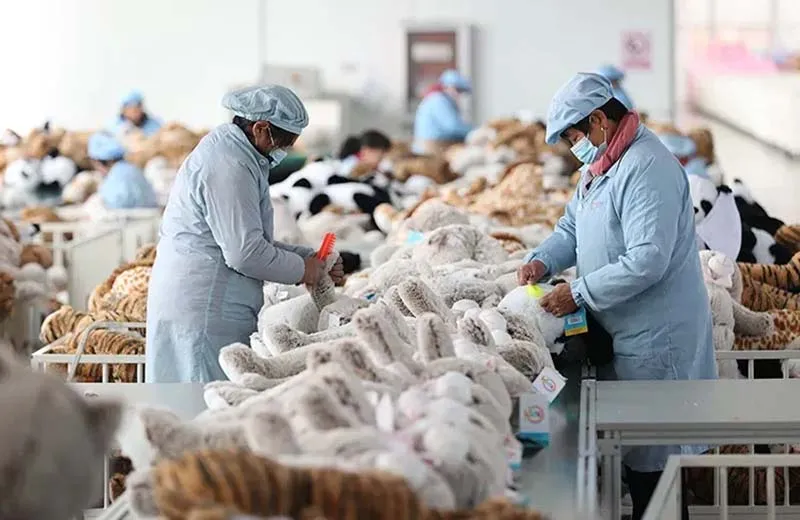
Selecting a stuffed toy supplier for long-term cooperation requires a different mindset than sourcing for a one-off order. Buyers should evaluate suppliers not only on current capability, but on their ability to grow, adapt, and remain consistent over time.
The first criterion is product focus and category experience. A supplier that specializes in stuffed toys—and ideally in your specific product type, such as plush animals, dolls, or licensed characters—will have deeper pattern-making knowledge, safer construction habits, and fewer learning-curve mistakes. General factories often struggle to maintain consistency as complexity increases.
Next is system maturity, not factory size. Reliable long-term partners operate with defined quality systems, sampling procedures, compliance workflows, and internal accountability. Ask how orders are tracked, how issues are escalated, and how changes are documented. Factories with structured systems are more resilient under pressure.
Stability and mindset also matter. Evaluate management continuity, workforce turnover, and the factory’s willingness to invest in improvement. A supplier that understands partnership value will talk about process optimization, long-term planning, and shared growth—not just immediate orders.
Finally, assess cultural and communication fit. Long-term cooperation requires aligned working styles, realistic timelines, and mutual respect. A supplier that communicates clearly, documents decisions, and follows through consistently is far more valuable than one that simply says “yes” quickly.
| Selection Criterion | What Buyers Should Evaluate | Long-Term Impact |
|---|---|---|
| Product specialization | Plush & stuffed toy focus | Higher consistency |
| System maturity | QC, sampling, compliance processes | Scalable reliability |
| Management stability | Team continuity & mindset | Lower disruption risk |
| Improvement attitude | Willingness to invest & adapt | Sustainable growth |
| Communication fit | Clarity, documentation, follow-up | Fewer misunderstandings |
When suppliers are selected using these criteria, partnerships are built on capability and trust, not price alone—creating a foundation for stable production, predictable quality, and long-term success.
How Can Clear Communication and Expectation Alignment Prevent Costly Misunderstandings?

Clear communication is the most underestimated factor in stuffed toy sourcing—and one of the most expensive when it fails. From my experience, many disputes about quality, cost, or delivery do not come from technical incapability, but from unclear expectations that were never fully aligned at the beginning.
Effective communication starts with explicit definition of requirements. Buyers should clearly document product specifications, quality standards, safety expectations, target markets, and approval processes. Vague descriptions such as “good quality” or “same as sample” leave too much room for interpretation. Professional suppliers respond best to measurable criteria—stitch density, seam tolerance, filling weight ranges, acceptable color deviation, and packaging standards.
Expectation alignment also means clarifying roles and decision authority. Buyers should define who approves samples, who can request changes, and how revisions are confirmed. On the supplier side, it should be clear who manages the project, who controls quality decisions, and who communicates schedule changes. When roles are unclear, delays and rework become common.
Communication cadence is another key element. Reliable partnerships use structured updates rather than reactive messaging. Regular checkpoints—during sampling, pre-production, and bulk manufacturing—allow issues to surface early. Written summaries after meetings help prevent misunderstandings caused by language or cultural differences.
Finally, alignment includes risk discussion, not just success planning. Professional suppliers are willing to discuss potential challenges such as material lead times, seasonal capacity limits, or compliance risks. Buyers who encourage transparency reduce the chance of last-minute surprises.
| Communication Area | What Buyers Should Align | Risk If Ignored |
|---|---|---|
| Product specs | Measurable quality criteria | Inconsistent output |
| Approval authority | Clear decision roles | Delays & rework |
| Update rhythm | Scheduled checkpoints | Late issue discovery |
| Documentation | Written confirmations | Disputes over intent |
| Risk transparency | Open discussion of limits | Shipment surprises |
When communication and expectations are aligned early and reinforced consistently, both buyers and suppliers operate with shared understanding, reducing friction and protecting long-term cooperation.
How Do Sampling, Quality Benchmarks, and Feedback Loops Build Mutual Trust?
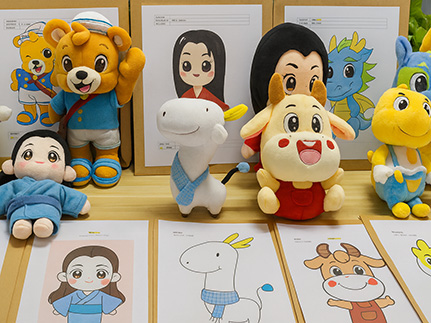
Sampling is more than a visual checkpoint—it is the contract of quality between buyers and stuffed toy suppliers. When sampling, benchmarks, and feedback loops are structured and respected, trust grows because expectations become measurable and repeatable.
Trust starts with a disciplined sampling process. Professional suppliers treat samples as engineering outputs, not handcrafted exceptions. Each sample should be built using documented patterns, confirmed materials, defined filling weights, and standard construction methods. Buyers should ask whether sampling data—such as pattern versions, stitch density, and material batch references—is recorded and reused. This discipline signals whether bulk production can truly match the approved sample.
Next comes quality benchmarking. Buyers and suppliers should jointly define what “acceptable quality” means in practical terms. This includes visual tolerances (shape symmetry, color deviation), functional requirements (seam strength, attachment security), and safety thresholds. Using reference samples and agreed benchmarks reduces subjective debates later and creates a common language for quality discussions.
Feedback loops are where trust is either strengthened or broken. Strong partnerships use closed-loop feedback: issues are identified, root causes analyzed, corrective actions implemented, and results verified. Feedback should be specific and actionable—e.g., “increase seam allowance by 2 mm” rather than “sewing not good.” Suppliers that respond with documented adjustments demonstrate accountability.
Over time, consistent sampling accuracy and responsive feedback handling create confidence. Buyers trust that expectations will be met even as volumes increase, while suppliers trust that evaluations are fair and consistent.
| Trust-Building Element | Best Practice | Partnership Benefit |
|---|---|---|
| Sampling discipline | Documented patterns & materials | Repeatable quality |
| Quality benchmarks | Defined tolerances & references | Fewer disputes |
| Feedback clarity | Specific, measurable comments | Faster corrections |
| Closed-loop actions | Root cause & verification | Continuous improvement |
| Consistency over time | Sample-to-bulk alignment | Long-term confidence |
When sampling, benchmarks, and feedback are managed systematically, trust is no longer personal—it becomes process-driven, allowing partnerships to scale with far less risk.
What Role Do Compliance, Certifications, and Transparency Play in Supplier Reliability?

Compliance, certifications, and transparency are not just formal requirements—they are signals of how a supplier manages risk, responsibility, and accountability. In long-term stuffed toy partnerships, these elements determine whether a supplier can support your brand consistently as regulations, markets, and volumes change.
Start with regulatory compliance by target market. Reliable suppliers understand that compliance is market-specific, not universal. They should clearly explain how they meet ASTM F963 and CPSIA for the U.S., EN71 and REACH for the EU, or other regional standards where applicable. More importantly, they should show how these requirements are integrated into design rules, material selection, and production controls—not treated as last-minute testing tasks.
Certifications provide additional confidence when they are current, relevant, and correctly scoped. Quality certifications such as ISO 9001 reflect system discipline, while social compliance audits (BSCI, SMETA, Sedex) indicate ethical operations and workforce stability. Material-level certifications like OEKO-TEX or GRS help reduce chemical and sourcing risks early. Buyers should always verify audit dates, scope, and corrective action status rather than accepting certificates at face value.
Transparency is what connects compliance to trust. Reliable suppliers are open about test results, non-conformities, corrective actions, and limitations. They proactively notify buyers of material changes, supplier substitutions, or process adjustments that could affect compliance. This openness prevents surprises and allows buyers to make informed decisions before risks escalate.
Suppliers that resist sharing documents, avoid detailed explanations, or minimize compliance discussions often create hidden risks—even if short-term orders appear smooth.
| Reliability Factor | What Buyers Should Look For | Partnership Impact |
|---|---|---|
| Market-specific compliance | Clear standards knowledge | Stable market access |
| Certification validity | Current audits & correct scope | Reduced legal risk |
| Material transparency | Approved lists & test data | Chemical safety control |
| Change disclosure | Early notification & approval | Compliance continuity |
| Openness in issues | Honest discussion & CAPA | Long-term trust |
When compliance and transparency are treated as shared responsibilities rather than obligations, supplier reliability becomes predictable and scalable, supporting sustainable long-term cooperation.
How Can Buyers Support Suppliers to Improve Consistency, Efficiency, and Scalability?
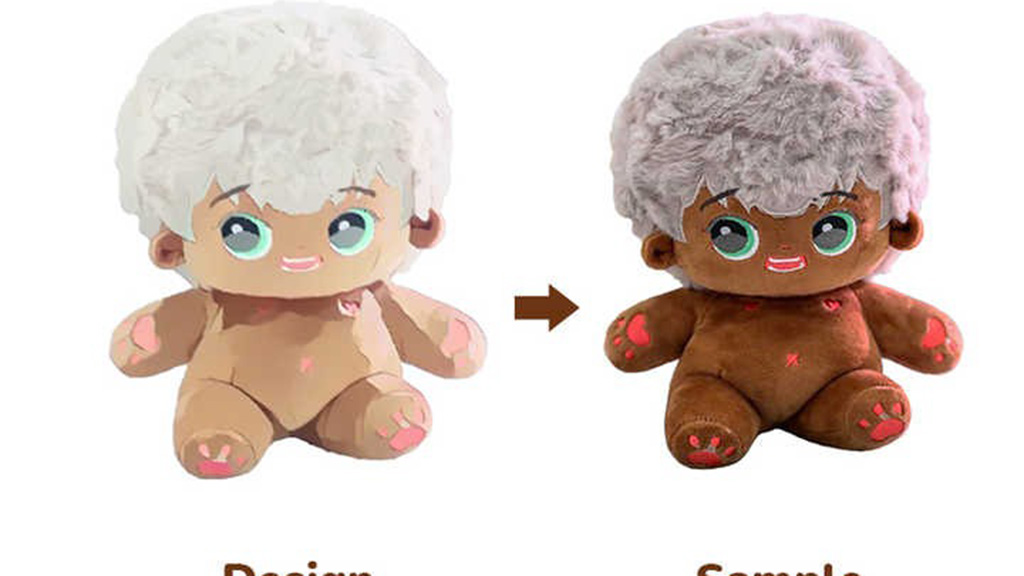
Reliable partnerships are built both ways. While suppliers are responsible for execution, buyers who actively support supplier improvement often achieve better consistency, faster lead times, and stronger scalability over time. From my experience, the most stable stuffed toy programs come from collaborative relationships rather than transactional ones.
One of the most effective ways buyers can help is by standardizing requirements. Clear, repeatable specifications—covering materials, construction methods, QC benchmarks, and packaging—reduce variability and rework. When suppliers can reuse proven standards across multiple orders, efficiency improves and error rates fall.
Buyers can also support suppliers by sharing demand visibility. Forecasts, seasonal planning, and early volume indications allow factories to plan capacity, labor, and material sourcing more effectively. Even non-binding forecasts help suppliers allocate resources and avoid last-minute overtime or rushed production, which often leads to quality issues.
Another critical area is process improvement alignment. Buyers who encourage suppliers to invest in better tooling, training, or QC systems—and who are willing to adjust pricing or timelines accordingly—often see long-term gains in quality and reliability. Supporting pilot runs, automation trials, or packaging optimization projects can significantly enhance scalability.
Finally, constructive feedback matters. Buyers should provide data-based feedback, not emotional reactions. Sharing defect trends, inspection data, and customer feedback helps suppliers identify root causes and implement targeted improvements. Recognizing improvements is just as important as highlighting issues—it reinforces positive behavior.
| Buyer Support Area | Practical Action | Supplier Benefit |
|---|---|---|
| Requirement standardization | Unified specs & benchmarks | Reduced variation |
| Demand visibility | Forecasts & launch planning | Better capacity planning |
| Process investment | Support upgrades & training | Improved efficiency |
| Data-driven feedback | Share inspection & defect data | Faster improvement cycles |
| Partnership mindset | Long-term collaboration focus | Scalable growth |
When buyers actively support supplier development, suppliers become more capable, consistent, and responsive—turning short-term transactions into long-term competitive advantages.
How Do Long-Term Partnerships Reduce Risk, Control Costs, and Improve Product Outcomes?

Long-term partnerships with stuffed toy suppliers create value that short-term sourcing cannot replicate. Over time, shared knowledge, aligned processes, and mutual investment reduce uncertainty across quality, cost, and delivery—turning manufacturing into a predictable system rather than a recurring risk.
Risk reduction comes first. With an established partner, product specifications, materials, compliance rules, and QC benchmarks are already validated. This lowers the chance of sampling errors, compliance failures, or last-minute changes that can delay shipments. Suppliers familiar with your brand standards anticipate issues earlier and resolve them faster.
Cost control improves through learning curves and standardization. As patterns, materials, and processes are reused, waste decreases, yields improve, and efficiency rises. Long-term partners can also negotiate better upstream pricing and plan capacity more effectively, reducing hidden costs such as rush fees, rework, and expedited shipping.
Product outcomes improve because suppliers understand why certain details matter—not just what to produce. They can proactively suggest construction improvements, material alternatives, or packaging optimizations that enhance durability, safety, and customer experience. This collaborative problem-solving leads to better products with fewer iterations.
Most importantly, long-term partnerships create strategic flexibility. When demand spikes, regulations change, or new designs are introduced, trusted suppliers are more willing and able to adapt—because success is shared.
| Partnership Benefit | Long-Term Effect | Business Outcome |
|---|---|---|
| Reduced uncertainty | Familiar specs & standards | Lower operational risk |
| Cost efficiency | Learning curves & reuse | Stable margins |
| Product improvement | Proactive suggestions | Higher customer satisfaction |
| Faster response | Priority capacity & trust | Better time-to-market |
| Strategic alignment | Shared growth mindset | Sustainable scaling |
Conclusion
Building reliable partnerships with stuffed toy suppliers requires more than negotiation—it requires structure, communication, and collaboration over time. By selecting suppliers carefully, aligning expectations, establishing disciplined sampling and compliance systems, and supporting continuous improvement, buyers create partnerships that reduce risk, control cost, and consistently deliver better products. Long-term supplier relationships are not just operational assets—they are strategic advantages.
📧 Contact: [email protected]
🌐 Visit: https://kinwintoys.com