Finding reliable stuffed animal manufacturers in China is not simply a matter of searching online or comparing prices. From my experience working with buyers in the USA, Europe, and other regulated markets, most sourcing failures happen because buyers misunderstand who is actually making their products and how much control that supplier truly has.
China has a very complete plush toy supply chain, but it is also highly layered. Factories operate at different levels of specialization, control, and responsibility. Before discussing samples, pricing, or MOQs, buyers must first understand what types of stuffed animal manufacturers exist and which ones are suitable for long-term cooperation.
This initial classification step often determines whether a sourcing project will be stable—or full of hidden risks.
What Types of Stuffed Animal Manufacturers Operate in China’s Supply Chain?
Not all stuffed animal manufacturers in China play the same role, even if they all present themselves as “factories.” One of the most common mistakes buyers make is assuming that any supplier offering plush toys can support OEM cooperation, compliance requirements, and long-term repeat orders.
In reality, China’s stuffed animal supply chain is made up of different manufacturer types, each with very different capabilities and risk levels. Understanding these differences helps buyers quickly filter out unsuitable partners before investing time and money into sampling or negotiations.
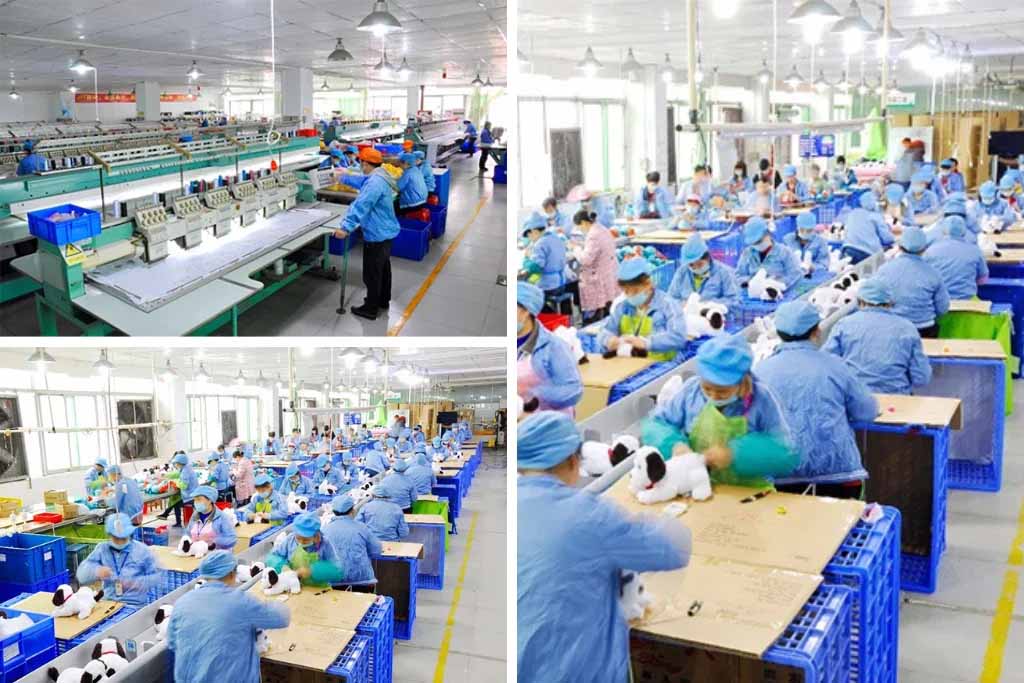
The most reliable partners for overseas buyers are usually integrated plush toy factories. These factories manage key processes in-house, such as pattern making, cutting, sewing, stuffing, finishing, and quality control. Because they control the full production flow, they are better positioned to ensure consistency, manage compliance, and handle volume scaling.
Other suppliers, such as specialized factories or small workshops, may perform well in limited roles but often lack the structure needed for full OEM responsibility. Trading companies can be useful in some cases, but they reduce transparency and direct control over production.
For buyers targeting regulated markets or planning repeat programs, choosing the right manufacturer type is the foundation of a reliable sourcing strategy.
| Manufacturer Type | Core Characteristics | Control Over Production | Risk Level for Overseas Buyers |
|---|---|---|---|
| Integrated plush factory | In-house pattern, sewing, stuffing, QC | High | Low |
| Specialized factory | Focused on one process (e.g. embroidery) | Medium | Medium |
| Small workshop | Manual production, limited QC systems | Low | High |
| Trading company | No direct production, uses multiple factories | Low | Medium–High |
From a buyer’s perspective, the closer a supplier is to direct production control, the more predictable the outcome will be. Integrated plush factories reduce communication layers, respond faster to problems, and provide stronger support for long-term OEM cooperation.
How Can Buyers Verify Factory Credibility Beyond Online Platforms?
Online platforms and search engines are useful starting points, but they should never be treated as proof of factory credibility. From my experience, many sourcing problems begin when buyers rely too heavily on supplier profiles, reviews, or platform badges, without verifying what happens behind the screen.
A strong online presence often reflects marketing ability, not manufacturing strength. In China’s plush toy industry, it is entirely possible for a supplier to look professional online while having limited production control, weak quality systems, or unstable subcontracting arrangements. This gap is especially risky for overseas buyers who cannot visit factories frequently.
To verify credibility, buyers need to focus on evidence that is difficult to fake and behaviors that reveal how a factory actually operates.
One of the first signals is business transparency. A credible factory can clearly provide its registered company name, physical factory address, business license, and export background. Factories with real export experience usually know their main destination markets and can explain common compliance requirements without hesitation.
Another critical area is certification understanding, not just possession. Reliable manufacturers can explain which product categories their test reports cover, which materials were tested, and how often testing is updated. Vague answers such as “we can pass CE” or “we always do ASTM” are warning signs.
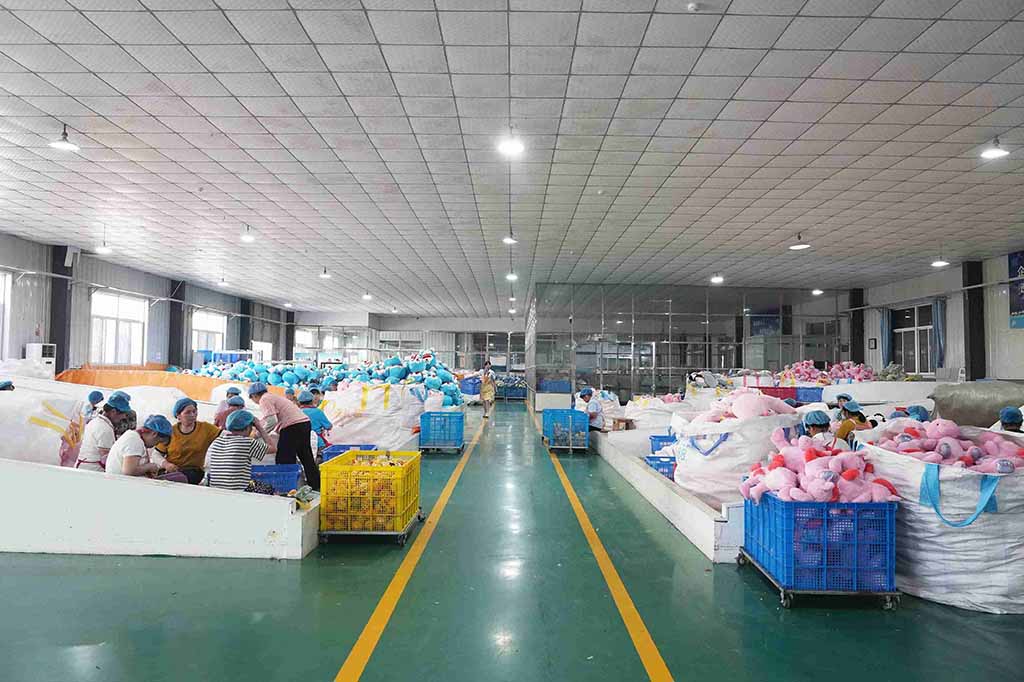
Factory-level transparency also matters. Trustworthy suppliers are willing to share real production photos or videos showing sewing lines, stuffing areas, QC stations, and needle detection processes. These visuals should look consistent and specific, not generic or reused across different suppliers.
Finally, buyers should pay close attention to how factories answer technical questions. Clear, structured answers usually indicate internal process knowledge. Evasive or overly simple replies often suggest that information is being passed through sales layers rather than coming from the production team.
| Verification Area | What Buyers Should Check | What It Reveals |
|---|---|---|
| Business transparency | License, factory address, export history | Legitimacy and stability |
| Certification clarity | Scope, materials, report validity | Compliance awareness |
| Factory visuals | Real production photos or videos | Actual manufacturing control |
| Technical responses | Process-based explanations | Internal expertise |
| Communication logic | Consistent, structured answers | Reliability under pressure |
For overseas buyers, credibility verification is not about one document or one call. It is about identifying consistent patterns across documents, communication, and transparency. Factories that are confident in their operations rarely avoid detailed questions—and those details are often the clearest signal of long-term reliability.
What Production Capabilities and Specializations Indicate Long-Term Reliability?
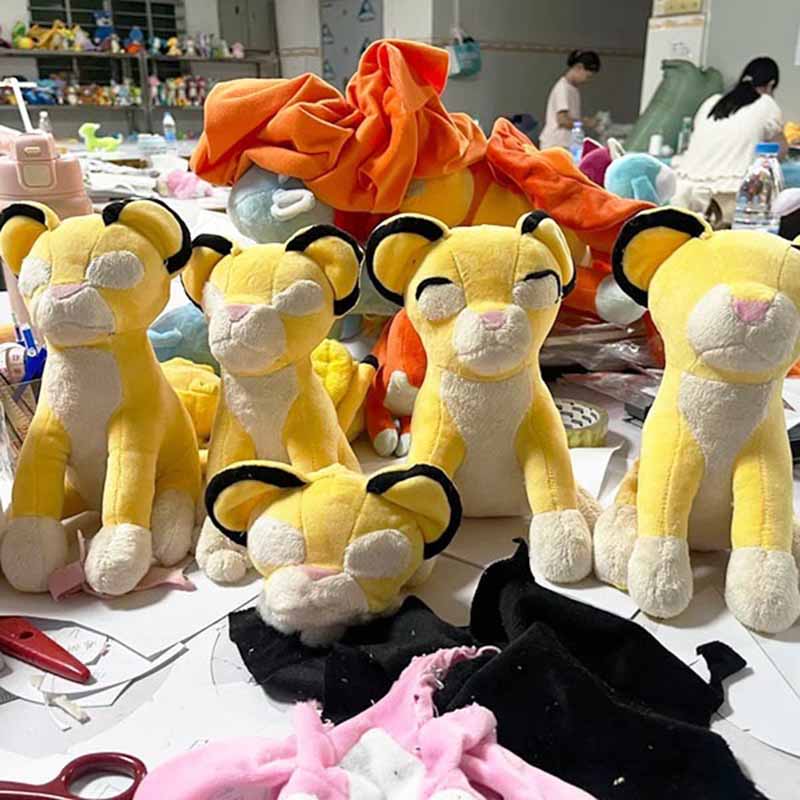
When evaluating stuffed animal manufacturers in China, production capability should never be judged by factory size alone. From my experience, long-term reliability comes from how well a factory’s capabilities match your product type, order structure, and growth plan, not from how many machines appear in a showroom.
Many factories can complete a simple plush order. Far fewer can deliver consistent quality across multiple SKUs, repeat seasons, and increasing volumes. This difference usually comes down to specialization, internal coordination, and process maturity rather than price or speed.
One of the strongest indicators of reliability is pattern making capability. Experienced pattern makers understand how a flat design changes once sewn and stuffed. They account for fabric stretch, pile direction, seam allowance, and internal balance. Weak pattern engineering often leads to distorted shapes, uneven faces, or samples that look acceptable only from one angle.
Another key factor is material familiarity and sourcing control. Reliable factories do not treat fabric and filling as interchangeable commodities. They understand how different plush fabrics behave during cutting and sewing, how filling density affects hand-feel, and how material choices impact compliance testing. This knowledge reduces quality variation between batches.
Scalability is also critical. A factory that performs well on a 300-unit order but struggles at 3,000 units introduces risk as your business grows. Long-term partners have structured production lines, trained supervisors, and documented work standards that allow them to scale without sacrificing consistency.
Finally, factories with balanced OEM and ODM experience tend to be more stable partners. OEM experience proves execution discipline. ODM experience shows design understanding and problem-solving ability. Together, they allow the factory to support brands at different stages of development.
| Capability Area | Weak Manufacturer | Reliable Manufacturer | Buyer Impact |
|---|---|---|---|
| Pattern making | Outsourced or basic | In-house experienced team | Shape accuracy |
| Material control | Buyer decides everything | Technical material guidance | Consistent quality |
| Production scale | Manual, unstable output | Structured production lines | Stable lead time |
| OEM experience | One-off orders | Repeat OEM programs | Predictability |
| ODM support | Limited design input | Proactive optimization | Faster development |
For buyers, production capability is a predictor of future performance. Factories that understand your product category, control their materials, and plan for scale are far more likely to support long-term cooperation without quality drifting over time.
How Do Quality Control Systems and Compliance Standards Reflect Manufacturer Strength?
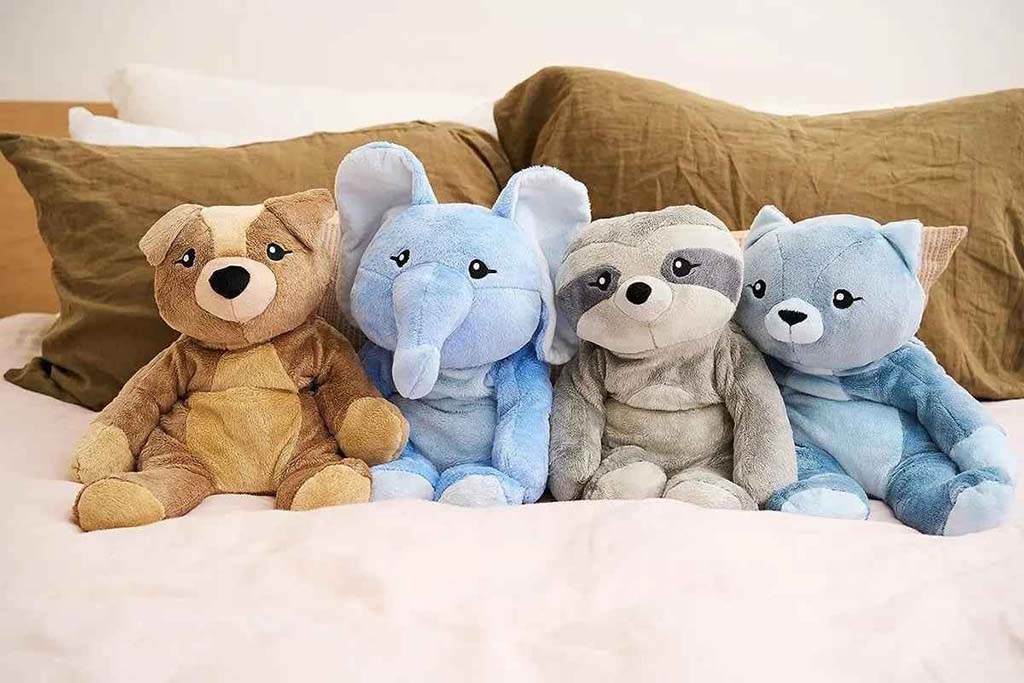
In stuffed animal manufacturing, quality is not something that can be inspected only at the end of production. From my experience, stable and reliable output comes from structured quality control systems that operate throughout the entire manufacturing process, not from last-minute checks before shipment.
Many quality issues seen by overseas buyers—such as loose stitching, uneven stuffing, or hidden defects—are not random. They usually result from missing checkpoints, unclear standards, or inconsistent execution across production stages. This is why mature QC systems are one of the clearest signals of a strong manufacturer.
Reliable factories typically operate a layered quality control framework. This starts with incoming quality control (IQC), where fabrics, fillings, threads, and accessories are inspected before production begins. Problems caught at this stage prevent defects from spreading through the entire order.
During production, in-process quality control (IPQC) plays a critical role. Supervisors check stitching quality, seam strength, and stuffing density while items are still on the line. Early correction reduces rework and keeps output consistent across batches.
Final quality control (FQC) ensures that finished products meet agreed standards before packing and shipment. Professional factories follow AQL-based inspection methods and rely on locked reference samples rather than subjective judgment.
Compliance standards further reflect manufacturer strength. Factories that regularly export to the USA or Europe understand how CE, ASTM, and EN71 requirements affect material choice, accessory design, and testing scope. They build compliance considerations into production planning instead of treating testing as an afterthought.
| QC & Compliance Area | Strong Manufacturer Practice | Buyer Benefit |
|---|---|---|
| Incoming QC (IQC) | Material inspection before use | Fewer hidden defects |
| In-process QC (IPQC) | Line checks during sewing & stuffing | Stable appearance |
| Final QC (FQC) | AQL-based inspection | Shipment reliability |
| Reference standards | Locked golden samples & specs | Consistent batches |
| Compliance integration | CE / ASTM built into process | Lower regulatory risk |
For buyers, strong quality control systems reduce surprises. A factory that can clearly explain where quality is checked, how issues are corrected, and how recurrence is prevented is far more likely to deliver predictable results across repeat orders.
What Role Do Sampling, Communication, and Response Speed Play in Supplier Selection?
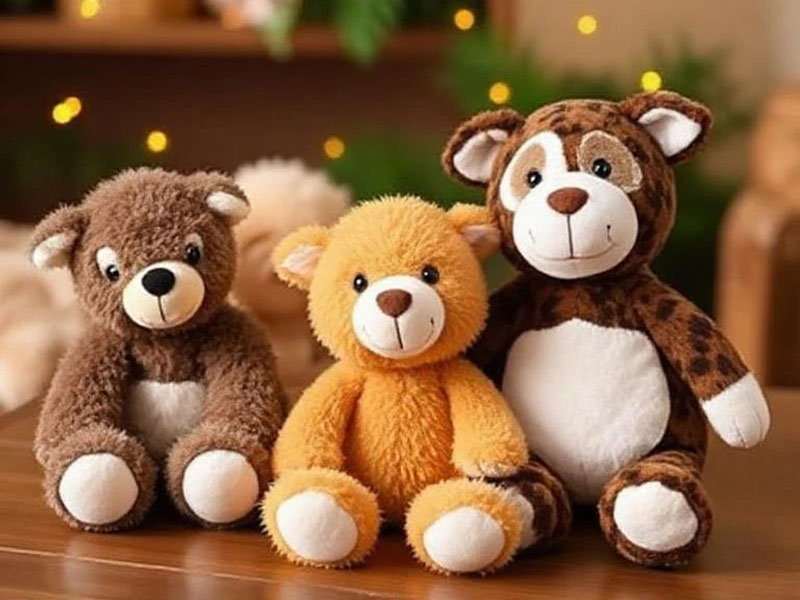
In my experience, sampling and communication are often the earliest indicators of how a factory will perform in long-term cooperation. Even before mass production begins, the way a manufacturer handles samples, feedback, and daily communication already reveals its internal coordination level.
Sampling is not just about making a product that “looks similar.” For overseas buyers, especially brand owners and retailers, sampling is a risk control process. A professional factory treats sampling as a technical task, not a sales gesture. They focus on structure, proportion, material behavior, and repeatability—not just appearance.
Reliable manufacturers usually ask detailed questions before sampling. They clarify size tolerances, fabric preferences, target markets, and safety requirements. This upfront communication reduces unnecessary revisions later. Factories that rush into sampling without confirming details often create samples that look acceptable but fail in consistency or compliance.
Communication quality is equally important. Clear, structured communication helps buyers manage internal approvals and timelines. Strong suppliers summarize changes, confirm decisions in writing, and explain trade-offs clearly when adjustments affect cost or lead time. This reduces misunderstandings and prevents disputes during production.
Response speed also matters, but speed alone is not enough. What buyers should look for is predictable responsiveness. Factories that acknowledge messages quickly and provide clear next steps help buyers plan better, even if final answers require internal confirmation.
| Evaluation Area | Weak Supplier Behavior | Strong Manufacturer Behavior | Buyer Impact |
|---|---|---|---|
| Sampling approach | Visual-only focus | Structure & repeatability focus | Fewer revisions |
| Pre-sample clarification | Minimal questions | Detailed requirement review | Accurate samples |
| Communication style | Fragmented, informal | Clear, documented updates | Fewer misunderstandings |
| Response speed | Inconsistent | Predictable timeframes | Better planning |
| Problem handling | Delayed or defensive | Transparent solutions | Lower project risk |
For buyers, sampling and communication are not minor details. They are early warning systems. Factories that handle samples carefully and communicate clearly are far more likely to manage production challenges responsibly when order volumes increase.
How Can Factory Audits and Trial Orders Reduce Risk Before Full Cooperation?
For overseas buyers, especially those sourcing from China for the first time or switching suppliers, factory audits and trial orders are among the most effective ways to reduce sourcing risk. In my experience, many costly problems could have been avoided if buyers had taken these two steps before committing to full-scale production.
A factory audit is not about finding perfection. It is about verifying reality. Audits help buyers confirm whether what a supplier claims online actually matches on-site operations. Even a basic audit can reveal important details, such as workforce stability, production flow, quality checkpoints, material storage conditions, and compliance awareness. These elements are difficult to assess through emails or video calls alone.
For buyers who cannot visit China in person, third-party audits are a practical option. Professional audit reports provide structured insights into factory management, equipment condition, QC systems, and social compliance. More importantly, they offer an independent view that supports objective decision-making.
Trial orders serve a different but equally important purpose. While samples test design and craftsmanship, trial orders test execution under real conditions. A small production run reveals how the factory handles scheduling, material preparation, in-process quality control, packing standards, and shipping coordination. It also shows how issues are communicated and resolved when timelines are tight.
Factories that perform well during trial orders usually demonstrate consistent internal coordination. They follow agreed specifications, respect delivery timelines, and document issues transparently. This behavior is a strong predictor of how they will perform when order volumes increase.
| Risk Control Tool | What It Verifies | Risk Reduced for Buyers |
|---|---|---|
| Factory audit | Real production & QC systems | Supplier misrepresentation |
| Workforce review | Labor stability & skills | Quality fluctuation |
| Process inspection | SOPs & production discipline | Inconsistent output |
| Trial order | Execution under real conditions | Delivery & quality risk |
| Issue handling | Problem response & transparency | Long-term cooperation risk |
For buyers, audits and trial orders are not extra costs—they are investments in certainty. They turn assumptions into evidence and allow sourcing decisions to be made with confidence rather than hope.
Conclusion
Finding reliable stuffed animal manufacturers in China requires more than comparing prices or reviewing online profiles. It calls for a structured evaluation of factory type, production capability, quality control systems, compliance awareness, communication efficiency, and long-term cooperation readiness. When these elements align, sourcing becomes predictable, scalable, and strategically secure—allowing brands to grow with confidence in product quality, regulatory compliance, and delivery performance.
📧 Contact: [email protected]
🌐 Visit: https://kinwintoys.com