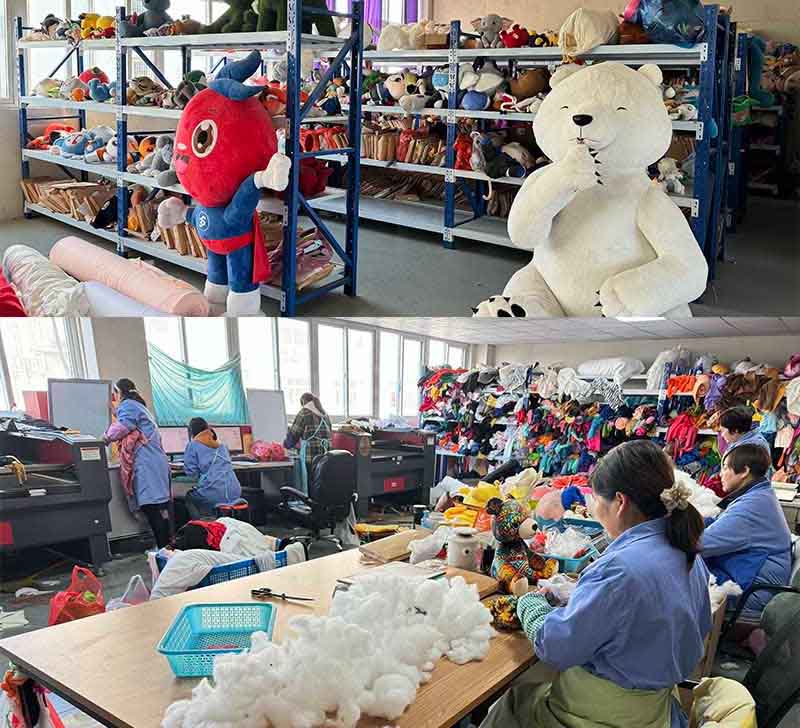
Choosing a plush toy factory isn’t just about comparing prices or lead times.
The real difference between a smooth project and a painful one often comes down to what you ask before committing—and how clearly the factory answers.
The questions in this guide are designed to help you evaluate a plush toy factory from a practical, production-focused buyer’s perspective. They’re not trick questions, but they quickly reveal experience, transparency, and reliability.
What Plush Toy Products Do You Specialize In?
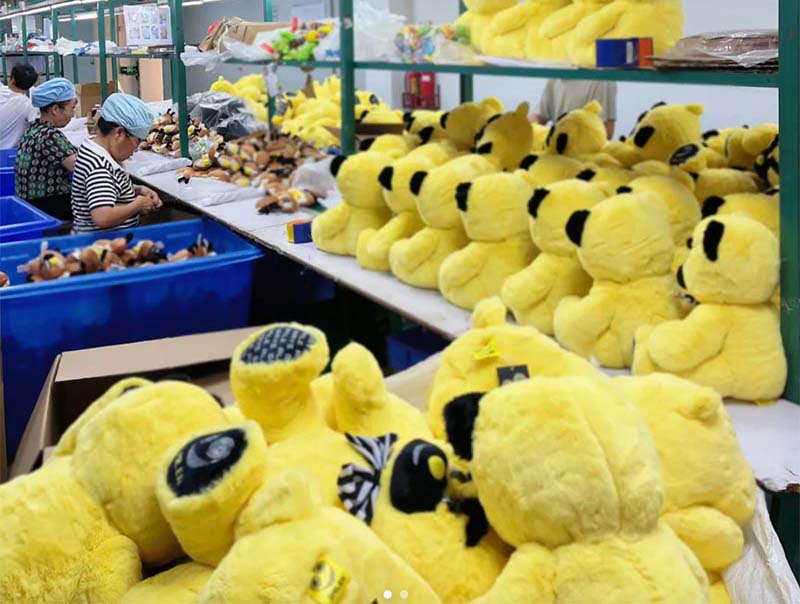
This should always be one of the first questions you ask.
Not every factory that “can make plush toys” actually specializes in them. A factory’s true product focus directly affects design feasibility, quality consistency, and how well your project is managed.
Are Plush Toys Their Core Business or Just One of Many Products?
Some suppliers list plush toys alongside many unrelated items. While this isn’t automatically a deal-breaker, it increases risk—especially for custom projects.
When you ask this question, pay attention to:
- How confidently they explain plush construction details
- Whether they mention stitching, filling, and fabric behavior naturally
- If they discuss limitations as well as possibilities
Factories that truly specialize in plush toys usually speak in specifics, not sales language. Their answers feel practical, not generic.
Manufacturers like Kinwin, whose core focus is plush and soft products, tend to provide clearer guidance because plush toys are not a side category for them.
Have You Produced Similar Plush Products Before?
Specialization alone isn’t enough—relevant experience matters just as much.
A strong follow-up question is:
- “Have you made products similar to mine in size, complexity, or use?”
This helps you understand whether the factory has experience with:
- Character or IP-based plush toys
- Promotional or marketing plush items
- Plush keychains, bag charms, or small-format toys
- Children’s toys versus decorative or collector plush
Factories with relevant experience are more likely to anticipate risks early and suggest workable solutions instead of reacting late.
Buyer Evaluation Table: Product Specialization
| What to Ask | What a Strong Answer Sounds Like | What a Weak Answer Signals |
|---|---|---|
| Core product focus | Plush toys clearly described as main category | Plush is “one of many products” |
| Technical explanation | Mentions stitching, filling, fabrics | Generic sales language |
| Similar projects | Gives concrete examples | Avoids specifics |
| Limitations discussed | Explains what works and what doesn’t | Says “everything is possible” |
| Guidance quality | Offers suggestions proactively | Only waits for instructions |
Which Markets Do You Regularly Export To?

This question may sound simple, but it’s extremely revealing.
A factory’s export markets shape how they understand quality expectations, compliance rules, communication style, and even risk tolerance. Factories that truly serve international buyers tend to think very differently from those focused mainly on domestic orders.
Do They Have Real Experience With Your Target Market?
Instead of asking “Can you ship to my country?”, a better question is:
- “Which markets do you regularly export to?”
Listen for specific answers, such as:
- United States, EU, UK, Japan, Australia
- Amazon sellers, retail chains, licensed brands
Factories with real export experience usually understand:
- Market-specific quality expectations
- Common documentation requirements
- How buyers in those regions communicate and make decisions
Vague answers like “we export everywhere” or “many countries” often indicate limited hands-on experience with international standards.
Do They Understand Market-Specific Expectations and Pain Points?
Different markets care about different things.
For example:
- US buyers often focus on safety testing and labeling accuracy
- EU buyers pay close attention to EN71 and REACH compliance
- Amazon sellers care about documentation consistency and packaging details
A reliable factory doesn’t just name markets—they explain how requirements differ and what that means for your product.
Factories like Kinwin, which regularly work with international B2B clients, tend to proactively flag these differences instead of waiting for problems to appear.
Buyer Evaluation Table: Export Market Experience
| What to Ask | Strong Factory Response | Potential Red Flag |
|---|---|---|
| Export destinations | Lists specific countries/regions | Says “global” without detail |
| Market familiarity | Explains different requirements | Treats all markets the same |
| Buyer type experience | Mentions brands, Amazon, retailers | Only mentions traders |
| Documentation awareness | Talks about labels & reports | Says “not a big issue” |
| Communication style | Clear, structured answers | Vague or evasive replies |
What Safety Standards and Certifications Can You Support?
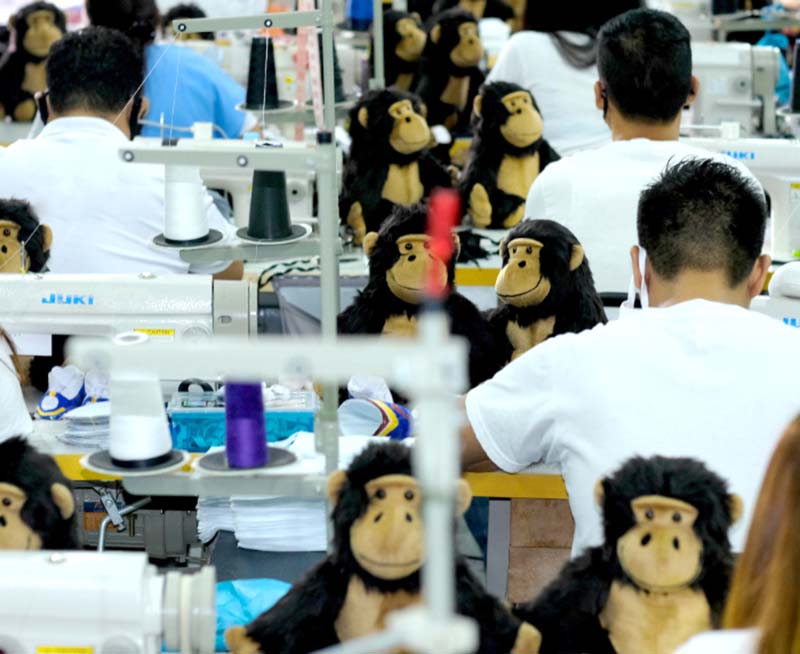
Safety and compliance are not optional in plush toy manufacturing—especially if your products are sold in regulated markets or on major platforms.
Asking this question early helps you determine whether a factory understands your market’s rules or is simply hoping problems won’t arise.
Do They Clearly Explain Which Standards Apply to Your Market?
A reliable factory doesn’t just list certificates—they explain relevance.
Strong answers usually include:
- Which standards apply to your target market (US, EU, UK, etc.)
- Whether your product is classified as a toy, decorative item, or promotional plush
- When testing should be done (sample stage vs. pre-shipment)
Be cautious if a supplier:
- Says “we can do all certificates” without clarification
- Treats all markets as having the same requirements
- Suggests dealing with compliance only after production
Factories with real international experience—such as Kinwin—tend to guide buyers through compliance early, reducing the risk of re-testing or shipment delays.
Can They Support Testing, Reports, and Correct Labeling?
Passing a test is only part of compliance. Documentation and labeling are just as critical.
A capable factory should be able to:
- Coordinate with recognized third-party testing labs
- Ensure test reports match final production materials
- Advise on age grading, warning labels, and care labels
- Understand how design or material changes affect certificates
Suppliers who lack this awareness often discover compliance problems after production is finished—when fixes are costly or impossible.
Buyer Evaluation Table: Safety & Compliance
| What to Ask | Strong Factory Response | Warning Sign |
|---|---|---|
| Market standards | Explains US/EU/UK differences | Says all markets are the same |
| Testing timing | Advises when & why tests are needed | Says “do it later” |
| Lab coordination | Has experience with third-party labs | No clear testing process |
| Labeling guidance | Discusses age & warning labels | Ignores labeling |
| Change awareness | Explains impact of design changes | Treats certificates as reusable |
How Do You Handle Sampling, Revisions, and Approvals?
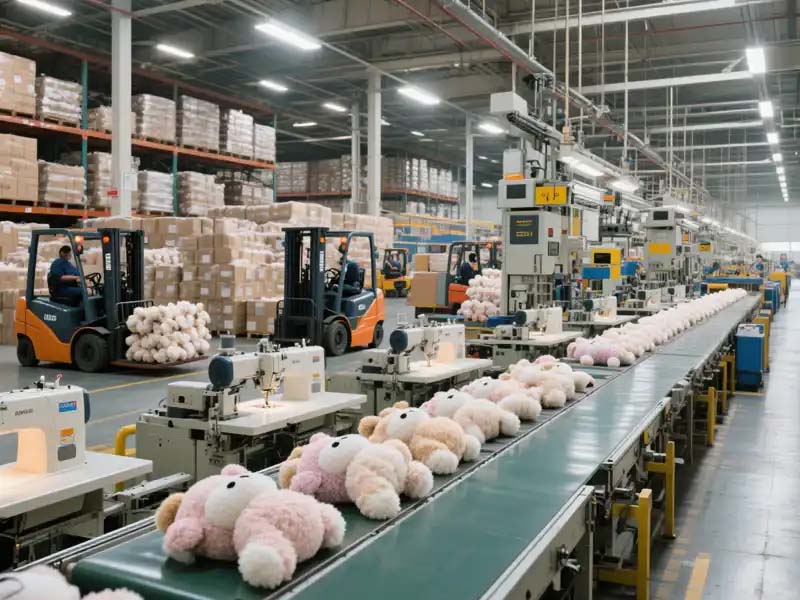
Sampling is not just about seeing what your plush toy looks like.
It’s about confirming whether the factory can repeat that result consistently in mass production.
How a factory manages sampling, revisions, and approvals often tells you more than the sample itself.
Are Samples Made Using Real Production Methods?
A critical question to ask is how the sample is made.
Reliable factories usually:
- Use the same materials planned for bulk production
- Follow realistic stitching and assembly methods
- Involve production teams, not just a separate sample room
Be cautious if a supplier:
- Treats samples as “show pieces”
- Uses extra manual work that won’t be applied later
- Can’t clearly explain how the sample connects to bulk production
Factories with structured processes—such as Kinwin—develop samples with manufacturability in mind, not just appearance.
How Clearly Are Revisions and Final Approvals Documented?
Revisions are normal. What matters is how they are managed.
A professional factory should:
- Track revision points clearly
- Explain how changes affect cost, lead time, or compliance
- Lock final specifications in writing before production
If approvals are vague or only verbal, the sample becomes a weak reference point—and disputes become more likely.
Buyer Evaluation Table: Sampling & Approvals
| What to Ask | Strong Factory Practice | Warning Sign |
|---|---|---|
| Sample method | Matches real production | “Special” sample handling |
| Team involvement | Same team for sample & bulk | Separate, disconnected teams |
| Revision tracking | Clear records & explanations | Informal or verbal changes |
| Approval process | Written sample confirmation | No formal approval step |
| Sample-to-bulk control | Specs locked before production | “We’ll adjust in bulk” |
What Materials and Craftsmanship Options Do You Recommend for My Project?
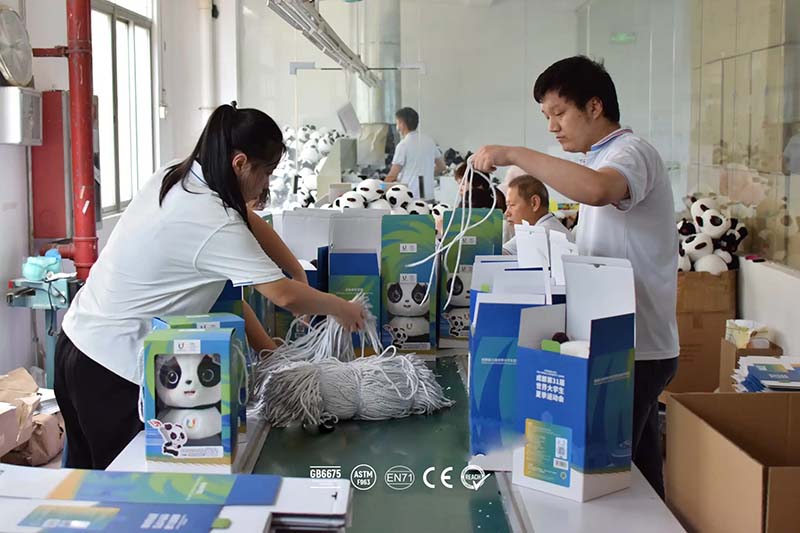
This question shifts the conversation from selling to problem-solving.
A reliable plush toy factory doesn’t wait for you to specify every detail. Instead, they evaluate your design goals, target market, and budget—and then recommend options with clear reasoning.
Do Their Recommendations Match Your Product Goals and Market?
Strong factories tailor their suggestions to your situation, such as:
- Target age group and usage (children, collectors, promotions)
- Price positioning and sales channel
- Durability and safety expectations
For example, they may explain:
- Why a certain fabric holds embroidery better
- When printing is more cost-effective than embroidery
- How pile length affects shape stability
Be cautious if recommendations feel generic or disconnected from your product’s purpose. That often indicates limited hands-on experience or a “yes-to-everything” mindset.
Manufacturers like Kinwin typically explain why an option is suitable—not just that it’s available—so buyers can make informed decisions.
Are Trade-Offs Between Cost, Quality, and Feasibility Explained?
Every plush toy involves trade-offs. What matters is whether the factory is willing to explain them clearly.
A professional factory should be able to discuss:
- Cost vs. durability
- Visual detail vs. production efficiency
- Premium feel vs. mass-market pricing
When suppliers openly explain these trade-offs, it signals confidence and technical depth. When they avoid the discussion, buyers often end up paying for it later—through defects, delays, or redesigns.
Buyer Evaluation Table: Materials & Craftsmanship Guidance
| What to Ask | Strong Factory Response | Warning Sign |
|---|---|---|
| Material recommendation | Based on use & market | Generic suggestions |
| Craft technique choice | Explains pros & cons | Says “all are fine” |
| Cost implications | Transparent trade-offs | Avoids cost discussion |
| Feasibility advice | Flags risks early | No risk awareness |
| Customization depth | Offers alternatives | One-option approach |
What Are Your MOQ, Pricing Structure, and Cost Drivers?
This question ties everything together.
MOQ and pricing are not just commercial terms—they reflect how a factory is structured, how transparent it is, and whether it’s prepared to support your project beyond the first order.
Is the MOQ Explained With Production Logic, Not Just a Number?
A reliable plush toy factory doesn’t treat MOQ as a fixed rule with no explanation.
Strong factories usually explain:
- Why a certain MOQ exists (material sourcing, cutting efficiency, labor setup)
- Whether there is flexibility for new projects or trial orders
- How MOQ may change based on size, design complexity, or materials
Be cautious if a supplier:
- Gives an MOQ without context
- Changes MOQ frequently during discussion
- Pushes you to order more without explaining production benefits
Factories that plan capacity carefully—like Kinwin—tend to align MOQ with realistic production efficiency, not sales pressure.
Can They Clearly Explain Pricing Structure and Key Cost Drivers?
Pricing clarity is often the final trust test.
A professional factory should be able to explain:
- Major cost drivers (fabric, embroidery, labor, accessories)
- Why one option costs more than another
- How design changes affect unit price
When factories explain pricing logic openly, buyers can make informed decisions instead of guessing—or discovering surprises later.
If pricing feels vague or defensive, it often indicates weak internal control or intentional flexibility at the buyer’s expense.
Buyer Evaluation Table: MOQ & Pricing Transparency
| What to Ask | Strong Factory Response | Warning Sign |
|---|---|---|
| MOQ reasoning | Explains production logic | “That’s our rule” |
| MOQ flexibility | Offers trial or phased options | No discussion allowed |
| Cost drivers | Breaks down key components | Only gives total price |
| Price stability | Tied to confirmed specs | Changes without reason |
| Trade-off clarity | Explains cost vs. value | Avoids explanation |
Conclusion
Choosing a plush toy factory isn’t about finding the quickest quote—it’s about finding a partner who can answer the right questions with clarity, experience, and honesty.
By asking about product specialization, export markets, safety standards, sampling processes, material recommendations, and pricing logic, buyers gain insight into how a factory actually operates—not just how it sells.
Factories that respond with structure, transparency, and practical guidance are far more likely to deliver consistent quality, stable timelines, and smooth long-term cooperation.
If you’re evaluating plush toy factories and want clear, experience-based answers tailored to your project, Kinwin welcomes open discussions to help you assess feasibility, cost, and production readiness before any commitment is made.