One of the biggest concerns for plush toy buyers is this:
“Why does the bulk production not match the approved sample?”
You may approve a perfect sample—great shape, soft fabric, clean embroidery—only to find that the mass-produced products feel slightly different. Maybe the shape is less defined, the fabric looks off, or the details are not as sharp.
This is what we call a sample-to-production gap.
The truth is, these gaps don’t happen randomly. They usually come from missing controls between the sampling stage and mass production. The good news is: with the right systems in place, these gaps can be minimized or even completely avoided.
In this guide, we’ll break down the real causes—and more importantly—how to prevent them.
What causes gaps between approved samples and mass production?

Sample-to-production gaps usually happen when the transition from development to production is not properly controlled. While the sample is made carefully—often by senior technicians—mass production involves multiple workers, machines, and processes.
If standards are not clearly defined, small variations can quickly accumulate and result in noticeable differences.
Differences Between Sampling and Production Conditions
During sampling, the product is often made by experienced technicians who focus on precision. In contrast, mass production is designed for efficiency and scale.
This creates natural differences:
- Sampling: handcrafted, slow, detail-focused
- Production: batch-based, speed-focused
Without clear standards, these differences can lead to inconsistencies.
Lack of Clear Production Standards
Another major cause is missing or incomplete documentation. If the approved sample is not translated into detailed production instructions, each team may interpret the design differently.
This can affect:
- Material selection
- Sewing methods
- Stuffing levels
- Embroidery placement
Without standardized instructions, consistency becomes difficult to maintain.
Common Causes of Sample-to-Production Gaps
| Cause | Description | Result |
|---|---|---|
| Different Working Methods | Sample vs. production processes differ | Inconsistent results |
| Lack of Documentation | Missing technical details | Misinterpretation |
| Material Variations | Fabric differences between batches | Visual inconsistency |
| Inconsistent Training | Workers follow different methods | Quality variation |
| No Quality Control System | No checkpoints during production | Errors accumulate |
How can a “golden sample” reduce sample-to-production differences?
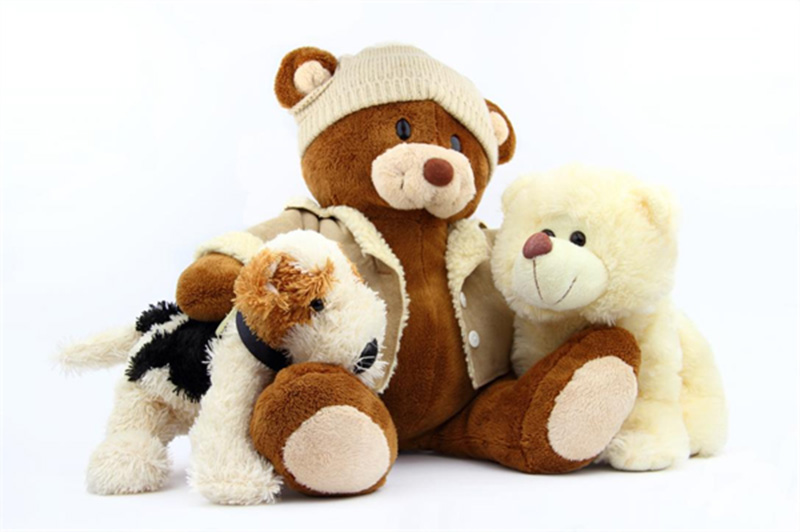
A golden sample is one of the most effective tools to prevent production gaps. It serves as a physical and visual benchmark that all teams must follow during manufacturing.
Instead of relying only on written instructions, production teams can refer directly to the approved sample to understand the expected result.
Golden Sample as a Physical Reference Standard
The golden sample provides a clear, tangible reference for:
- Shape and proportions
- Fabric texture and color
- Embroidery details
- Construction quality
Workers and inspectors can compare production units directly with the golden sample to ensure alignment.
Ensures Consistency Across All Teams
Because multiple teams are involved in production, the golden sample helps unify their understanding of the product.
For example:
- Pattern makers match dimensions
- Sewing teams follow construction details
- Quality inspectors compare finished products
This shared reference reduces variation between production batches.
Benefits of Using a Golden Sample
| Function | How It Helps | Result |
|---|---|---|
| Visual Reference | Shows exact product standard | Clear expectations |
| Material Benchmark | Confirms fabric and color | Consistent sourcing |
| Construction Guide | Defines structure and stitching | Uniform quality |
| QC Standard | Used for inspection comparison | Reduced defects |
| Team Alignment | Shared reference across departments | Stable production |
Why should materials and fabric suppliers be locked before production?
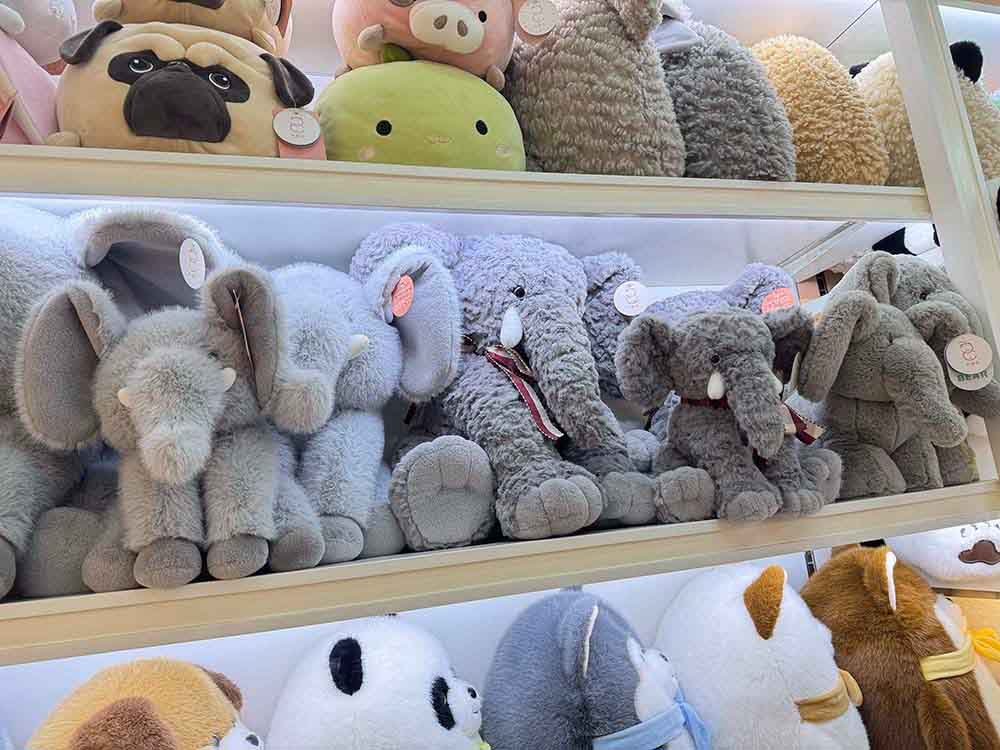
Material inconsistency is one of the most common reasons for sample-to-production gaps. Even small differences in fabric texture, color, or quality can affect the final product significantly.
That’s why materials and suppliers must be locked before production begins.
Fabric Variations Can Change Product Appearance
Different batches of fabric—even from similar suppliers—can vary in:
- Color tone
- Texture
- Thickness
- Softness
These differences may seem minor, but they can noticeably change how the plush toy looks and feels.
Locking Suppliers Ensures Stable Quality
To prevent variation, buyers should ensure that:
- The same fabric supplier is used
- Approved material samples are referenced
- Substitutions require confirmation
This creates a controlled material supply chain, which is essential for consistent production.
Material Control Checklist
| Element | What to Lock | Purpose |
|---|---|---|
| Fabric Type | Exact material specification | Consistent texture |
| Color Standard | Pantone or sample reference | Accurate color |
| Supplier | Approved vendor | Stable sourcing |
| Material Sample | Physical reference | Quality comparison |
| Substitution Rule | Approval required | Prevent variation |
How can pattern files and technical sheets standardize production?

One of the most effective ways to prevent sample-to-production gaps is to convert the approved sample into clear, standardized technical instructions. This is where pattern files and technical sheets play a critical role.
A physical sample alone cannot guarantee consistency. Without documented standards, each production team may interpret the design differently. Pattern files and technical sheets ensure that every step of production follows the same blueprint.
Pattern Files Define the Exact Structure
Pattern files are the foundation of plush toy production. They determine how fabric panels are cut and assembled to create the final shape.
After sampling, the pattern must be finalized based on the approved version. This includes:
- Panel shapes and dimensions
- Seam allowances
- Alignment of components
Using standardized pattern files ensures that every unit starts from the same structural base.
Technical Sheets Provide Clear Production Instructions
Technical development sheets translate the sample into step-by-step instructions for production teams.
They typically include:
- Product size and proportions
- Material specifications
- Embroidery and printing details
- Construction methods
These documents help eliminate guesswork and ensure consistent execution across different workers and production batches.
Standardization Through Documentation
| Tool | Function | Result |
|---|---|---|
| Pattern Files | Define structure and shape | Consistent form |
| Technical Sheets | Provide production instructions | Clear execution |
| BOM (Materials List) | Standardize materials | Uniform sourcing |
| Artwork Files | Define visual details | Accurate replication |
| Reference Sample | Physical benchmark | Quality alignment |
What tolerance ranges should be defined for size and shape consistency?
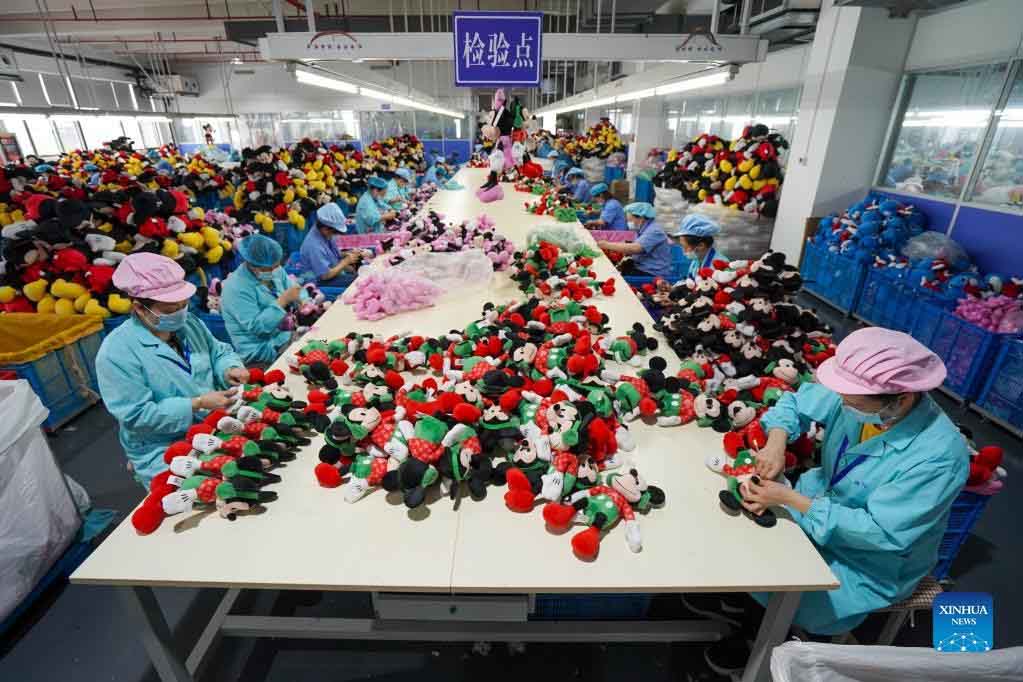
In plush toy manufacturing, achieving 100% identical products is not realistic due to the nature of soft materials. Instead, factories define tolerance ranges to control acceptable variation.
Without defined tolerances, it becomes difficult to determine whether a product meets quality standards.
Define Acceptable Size Variations
Size is one of the most noticeable differences in production. Buyers should define acceptable variation ranges for key dimensions.
Typical examples include:
- Overall size: ±0.5–1 cm
- Limb length: ±0.5 cm
- Head width: ±0.5 cm
These tolerances ensure consistency while allowing for practical manufacturing variation.
Control Shape and Proportion Consistency
Beyond size, shape consistency is equally important. Plush toys rely on stuffing and sewing, which can affect how the final product looks.
Factories should define standards for:
- Head-to-body proportion
- Symmetry of limbs
- Overall silhouette
These standards help maintain the intended design across all units.
Tolerance Definition Checklist
| Factor | What to Define | Purpose |
|---|---|---|
| Size Tolerance | Acceptable measurement range | Consistent dimensions |
| Proportion Control | Ratio between parts | Maintain design |
| Shape Consistency | Silhouette standards | Visual accuracy |
| Embroidery Position | Placement tolerance | Detail consistency |
| Filling Variation | Acceptable softness range | Uniform feel |
How do inline quality checks prevent deviations during production?
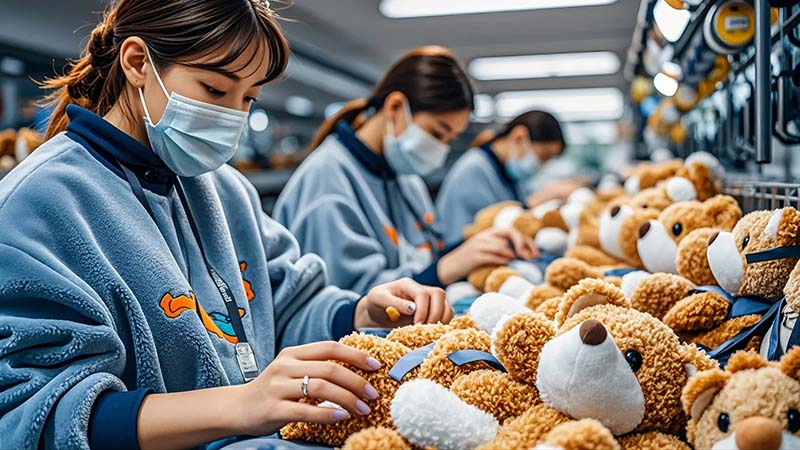
Even with perfect specifications, production can still drift if there is no active quality control during manufacturing. That’s why inline quality checks are essential.
Instead of waiting until the end, inline inspections monitor production at different stages, allowing issues to be detected and corrected early.
Multi-Stage Inspection Prevents Accumulated Errors
Quality control should be implemented at multiple stages, including:
- Incoming material inspection
- In-line production checks
- Mid-production sampling
- Final inspection
By checking quality throughout the process, factories can identify deviations before they affect large quantities.
Compare Products Against the Golden Sample
During inline inspections, production units should be compared directly with the golden sample.
Inspectors check:
- Shape and proportions
- Fabric and color consistency
- Embroidery and details
- Construction quality
This ensures that production stays aligned with the approved standard.
Inline Quality Control Checklist
| Inspection Stage | What to Check | Benefit |
|---|---|---|
| Incoming Materials | Fabric and components | Prevent material issues |
| In-Line Checks | Sewing and assembly | Early problem detection |
| Mid-Production | Batch consistency | Maintain uniformity |
| Final Inspection | Finished product quality | Approve shipment |
| Golden Sample Comparison | Overall accuracy | Ensure alignment |
Conclusion
Sample-to-production gaps are one of the biggest risks in plush toy manufacturing—but they are completely preventable with the right systems in place.
By using a golden sample as a reference, locking materials and suppliers, standardizing pattern files and technical documents, defining tolerance ranges, and implementing inline quality control, buyers can ensure consistent production results.
The key is not just creating a good sample—but building a complete system that protects that sample during mass production.
At KINWIN, we specialize in helping clients bridge the gap between sampling and production. Through structured workflows, detailed technical documentation, and strict quality control systems, we ensure that your approved sample is accurately replicated at scale.
If you want to avoid production inconsistencies and ensure reliable results, our team is ready to support your project from sampling to final delivery.