When buyers ask me about plush toys, one question comes up again and again:
“What sizes should we make, and how will those sizes affect cost, testing, and sales?”
I’m Amanda from Kinwin in China. My factory makes plush toys and dolls for brands, retailers, e-commerce sellers, and promotional projects in the USA, Europe, Japan, South Korea, and the Middle East.
In this guide, I’ll walk you through how we think about plush toy sizes in real manufacturing—from size categories and design impact to pricing, packaging, and safety. My goal is to help you choose sizes that feel good for your customers and make sense for your business.
What are the standard size categories for plush toys?
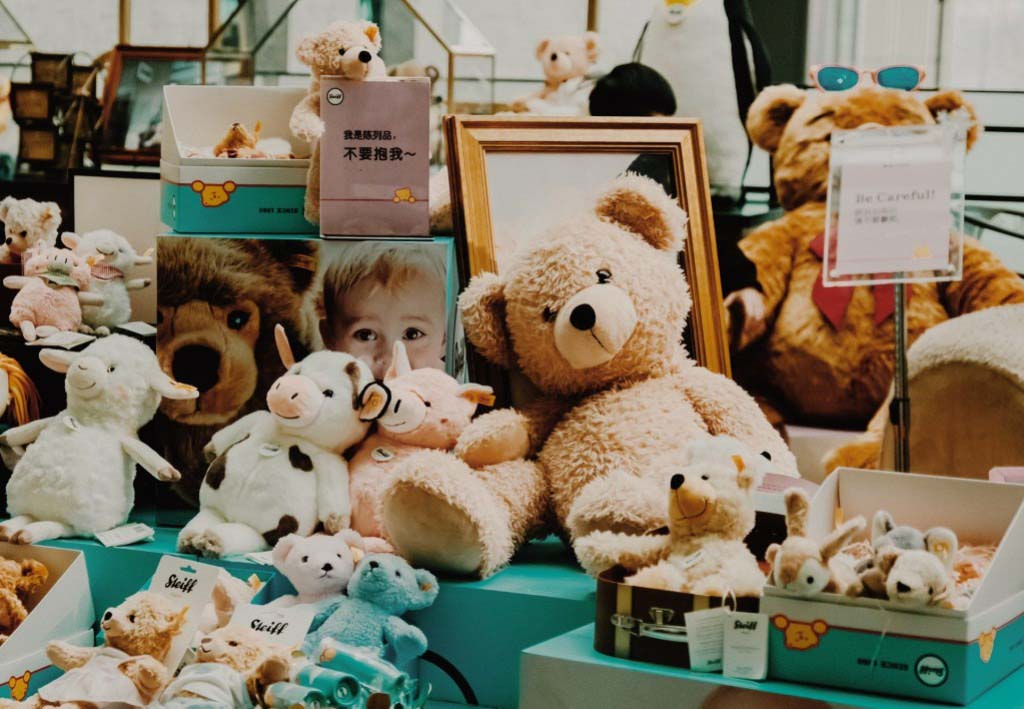
Every brand and factory has slightly different names, but in practice, most plush toys fall into a few common size bands. We usually measure from the top of the head to the bottom of the feet (standing or sitting height, defined clearly in specs).
Here is a simple way to think about it:
| Size band | Approx. height (cm) | Approx. height (inch) | Typical use |
|---|---|---|---|
| Mini / keychain | 8–12 cm | 3–5″ | Keychains, bag charms, blind boxes, event giveaways |
| Small | 15–20 cm | 6–8″ | Kids’ small gifts, low-price retail, bundle items |
| Medium | 25–35 cm | 10–14″ | Main retail size, core characters, best-seller range |
| Large | 40–60 cm | 16–24″ | Premium gifts, room decor, hero SKUs |
| Jumbo / XL | 70–120+ cm | 28–48″+ | Statement pieces, photo props, store displays |
| Cushion / pillow | Size varies (30–60 cm width) | Varies | Bed, sofa, room decor, lifestyle items |
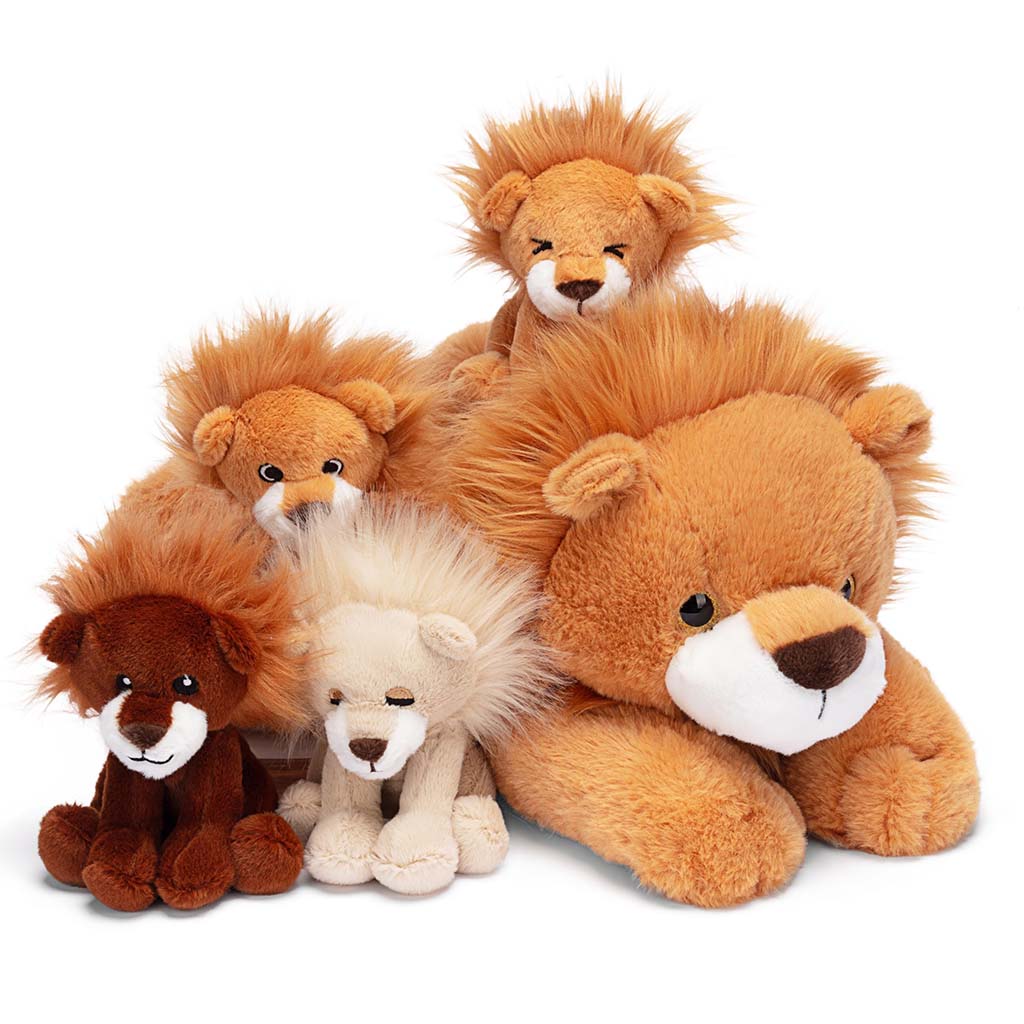
Most lines use one or two core sizes (often small + medium or medium + large). This keeps patterns, molds, and logistics simpler while still giving customers choice.
How do manufacturing constraints influence plush sizing options?
On paper, any size is possible. In production, we must balance design, sewing, stuffing, and cost.
1. Pattern and sewing limits
- Very small plush (under ~10 cm)
- Tiny seam allowances are harder to control.
- Details (eyes, mouth) must be simplified or printed.
- Sewing error tolerance is very low.
- Very large plush (over ~80 cm)
- Large pattern pieces need more fabric and larger cutting tables.
- Sewing and handling are slower and heavier.
- Inner structure sometimes needs reinforcement or foam.
2. Fabric behavior
- Plush fabric stretches slightly. On very large models, small stretch differences can change final measurements more.
- For small plush, thick fabric can make corners bulky and hard to turn.
3. Stuffing and structure
- Very small plush: hard to insert stuffing evenly into tiny limbs.
- Very big plush: need stronger seams and sometimes inner chambers to keep stuffing from moving too much.
4. Production efficiency
Factories often aim for efficient size steps, so that:
- Patterns can be graded (small → medium → large) without redesigning everything.
- Fabric consumption per piece stays predictable.
- Operators can work in a steady rhythm.
Manufacturing realities behind size choices
| Size range | Main manufacturing challenge | Result in real projects |
|---|---|---|
| Mini (3–5″) | Very small seams, small details | Fewer details, more stylized faces |
| Small (6–8″) | Balance between detail and simple shapes | Good for volume, controlled cost |
| Medium (10–14″) | Most flexible; easiest to sew and stuff | Core focus size for many brands |
| Large (16–24″) | More fabric, heavier stuffing, stronger seams | Higher cost, more “wow” value |
| Jumbo | Handling, structure, shipping volume | Used as hero products or limited SKUs |
When we propose sizes to buyers, we don’t think only “looks nice.” We also think “sews well” and “ships well.”
How do size and proportion affect design aesthetics and usability?
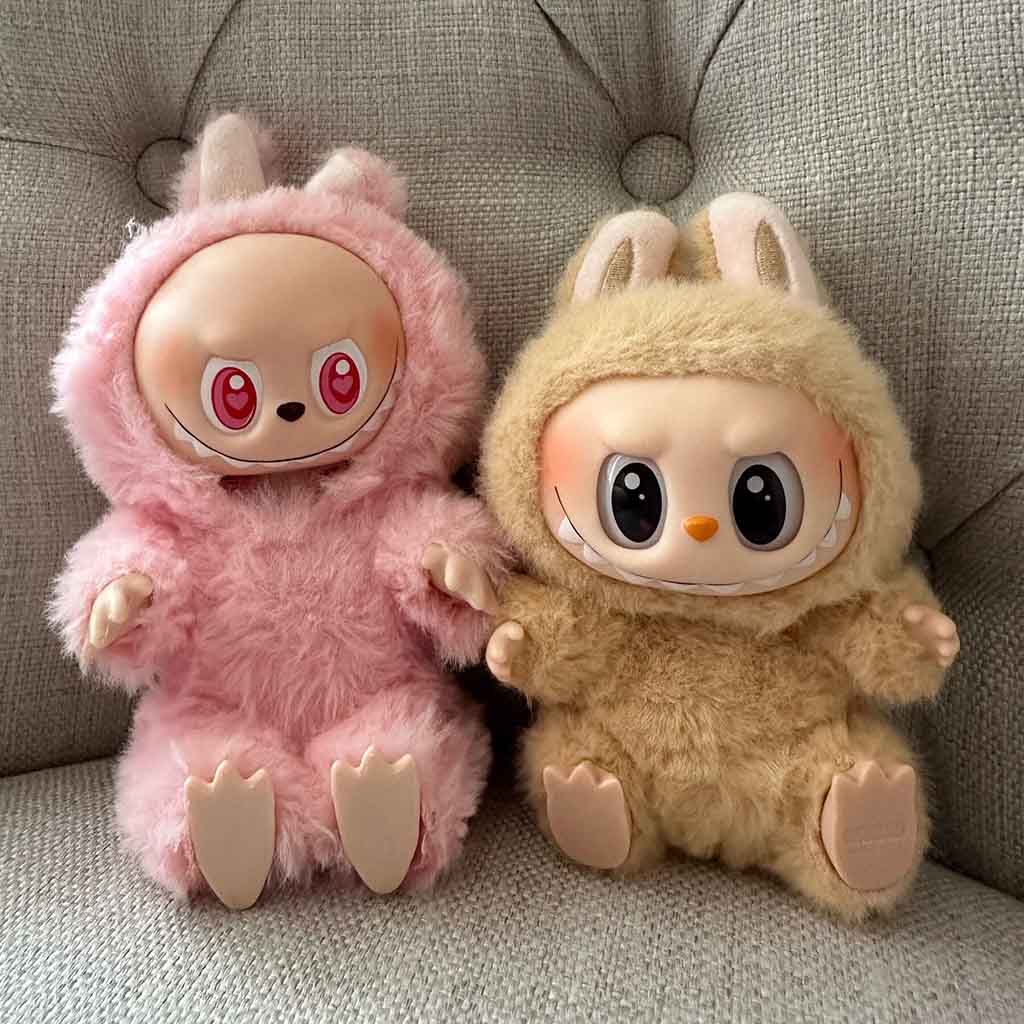
Size is not just height. Proportion—head, body, and limb ratios—matters just as much.
Aesthetic impact
- Big head, small body (chibi style)
- Feels cute and childlike.
- Works well in mini, small, and medium sizes.
- Balanced proportions (more realistic)
- Better for classic animals and higher age ranges.
- Works in most sizes but needs more pattern detail.
- Long limbs or long body
- Good for hugging or wrapping around pillows.
- Slightly harder to sew straight in small sizes.
For mini plush, we often exaggerate features (big head, simple face) so the character is still readable at a small size. For medium and large plush, we can add more body shape and clothing detail.
Usability and comfort
- Mini and small
- Easy to carry, clip to bags, or collect in sets.
- Good for travel and as second or third toy.
- Medium
- Easy for children to hug and sleep with.
- Not too heavy; fits well on beds and shelves.
- Large and jumbo
- Strong visual impact and emotional value.
- Can be used as room decor, floor cushions, or reading buddies.
How size & proportion change user experience
| Size band | Best proportion styles | How users typically use it |
|---|---|---|
| Mini | Very big head, simple limbs | Keychains, collections, desk mascots |
| Small | Slightly big head, simple details | Travel buddy, small gifts, kids’ play |
| Medium | Balanced or cute-proportioned | Main hug toy, bedtime plush |
| Large | Balanced, sometimes elongated body | Room decor, floor play, display |
| Jumbo | Oversized, simplified details | Hero piece, reading companion, photo prop |
When you define a size, also define the character style you want: super-cute, classic, or realistic. The pattern should follow that vision.
What role does size play in pricing, packaging, and logistics?
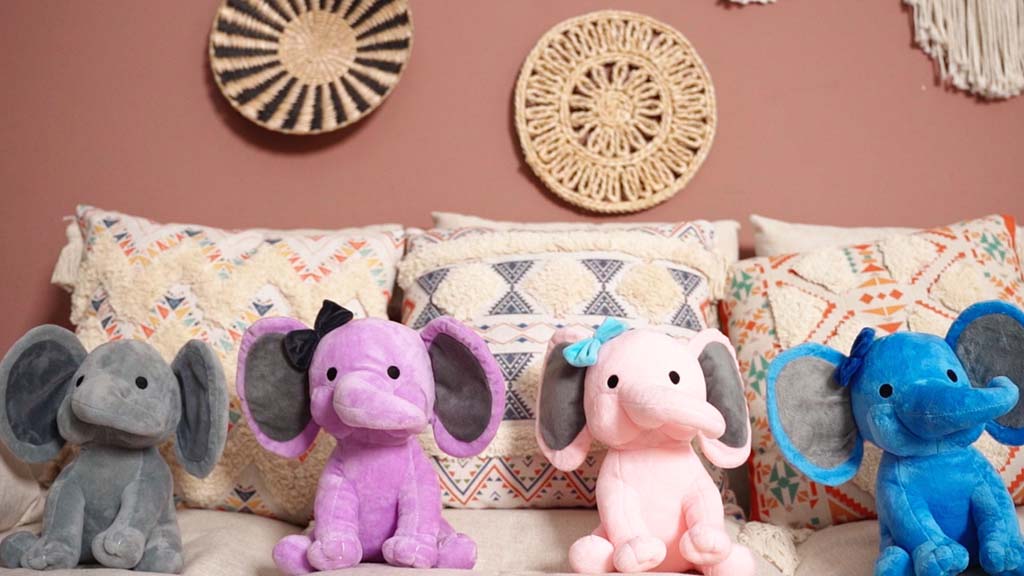
Size is one of the biggest drivers of cost and logistics. Even when materials are the same, a taller plush changes almost every line in your cost sheet.
1. Material and labor
- Larger plush = more fabric, more stuffing, more sewing time.
- Larger pieces are slower to handle and close.
- Mini plush use less fabric but may need more precise labor, especially if the design is complex.
2. Packaging
- Small plush:
- Can use poly bags, small boxes, or hangtags.
- More units per carton, lower shipping cost per unit.
- Medium plush:
- Often need individual polybags + branded swing tags or small boxes.
- Large / jumbo plush:
- Need bigger boxes or vacuum packing.
- Often sold as single units per retail box.
3. Shipping and storage
Carton volume matters a lot:
- Double the plush height does not only double the space. Often, carton volume and shipping cost per piece grow much faster.
- For large and jumbo plush, ocean freight is usually preferred; air shipping becomes expensive.
4. Retail and e-commerce display
- Online: product photos must show scale clearly (for example, plush next to a person or common object).
- Offline: shelves and hooks have limited depth and height. Medium sizes are easiest to display in large numbers.
Size effect on pricing and logistics
| Factor | Mini / Small | Medium | Large / Jumbo |
|---|---|---|---|
| Material cost | Low–medium | Medium | High (more fabric + stuffing) |
| Labor per piece | Medium (precision) | Efficient | Higher (handling large parts) |
| Packaging | Very compact | Moderate | Large boxes or vacuum packing |
| Shipping | Low volume per unit | Balanced | High volume; strong impact on freight cost |
| Retail display | Easy to mass-display | Ideal for most shelves | Needs special racks, floor or end-cap displays |
When we work with clients, we often design a price ladder: for example, mini at entry price, medium as core, large as premium or seasonal upsell.
How do brands determine ideal plush sizes for different markets?
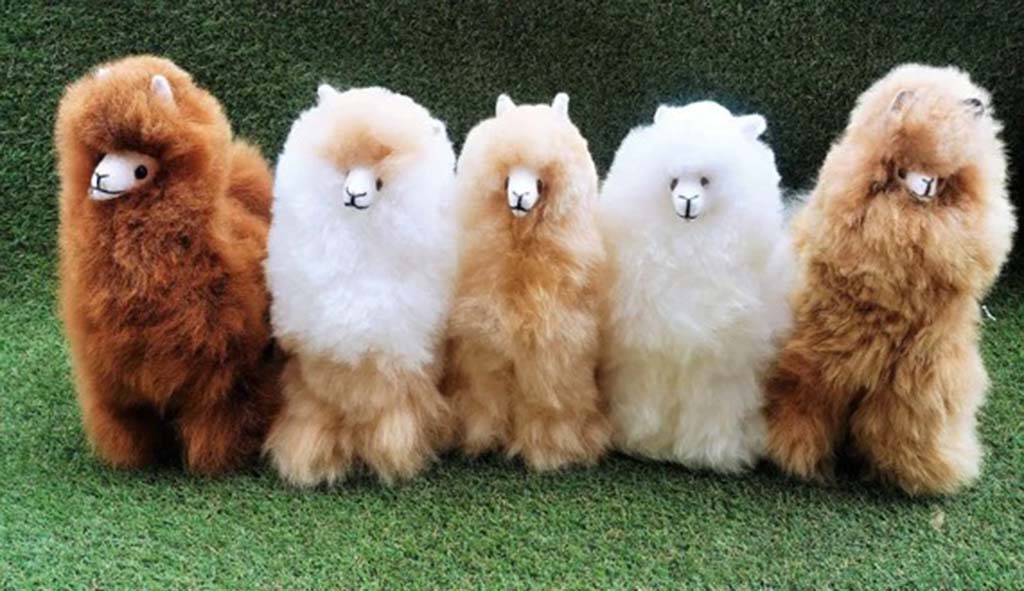
Different markets and channels prefer different sizes. When I help buyers, we look at user habits, price expectations, and sales channels.
By channel
- E-commerce (Amazon, Shopify, etc.)
- Medium sizes (25–35 cm / 10–14″) sell well.
- Small plush sets (2–3 pieces) also work for gifting and bundles.
- Supermarkets and chain stores
- Small and medium plush with clear price points.
- Sometimes floor displays with a few large pieces for attention.
- Gift and flower shops
- Medium and large sizes linked to holidays (Valentine’s, Mother’s Day).
- Theme parks and attractions
- Wide size range: mini keychains to jumbo “prize” plush.
By user and culture
- In some markets, parents prefer compact plush that are easy to wash and store.
- In others, teens and young adults love large or body-pillow-style plush as decor and comfort items.
- For collectibles, minis and small sizes are popular because they are easy to display and collect in sets.
Testing through sampling
Smart brands often:
- Start with 2–3 sizes of the same character.
- Track which sell-through is best.
- Then double down on the winning sizes in the next production run.
How brands align size with market needs
| Factor | Questions brands ask | Typical outcome |
|---|---|---|
| Target user | Is this for babies, kids, teens, or adults? | Smaller for young kids, medium+ for teens/adults |
| Price band | What is our target retail price range? | Size chosen to fit that price ladder |
| Channel | Online, offline, or both? | Medium dominates online; variety in offline |
| Region & culture | Do local homes favor more decor or minimalism? | Bigger plush for decor cultures, compact plush for space-limited homes |
| Collection strategy | Single hero size or family of sizes? | Mixed line: mini + medium + a few large |
You don’t have to guess blindly. Start with hypotheses, test them with your first order, and then adjust.
How does plush size impact safety testing and compliance labeling?
Size also crosses into regulations and labeling, especially for children’s markets.
Age grading
- Very small plush or plush with small parts can fall into choking hazard areas and may be labeled “Not for children under 3 years”.
- Larger plush that avoid small detachable parts are easier to grade for younger ages, as long as fabrics, seams, and components are safe.
Physical and mechanical tests
- Larger plush may face stronger pull forces in tests because there is more surface to grab and stress.
- Very small plush with long appendages (like thin limbs or cords) must be checked for entanglement or strangulation risks.
Flammability and filling control
- All plush sizes must meet flammability requirements in their target markets.
- For large plush, stuffing distribution and seam strength become more important in tension and seam tests.
- For all sizes, if pellets or weighted materials are used, they must be fully enclosed and age grading must be very clear.
Warning labels and info
Size can affect:
- Where labels are sewn and how big they can be.
- Whether there is room for printed warnings and care instructions on hangtags.
- How clearly the age grade appears on pack and product.
Size and safety / labeling considerations
| Size band | Typical safety focus | Labeling implications |
|---|---|---|
| Mini | Small parts, choking risk, long attachments | Often 3+ or 14+ with clear warnings |
| Small | Strong seams, safe trims, no loose parts | Age grade depends on design, clear care label |
| Medium | Standard toy tests, stuffing and seam strength | Easy to place sewn-in and swing tags |
| Large/Jumbo | Seam strength, stuffing control, flammability | Larger labels possible; clear safety info |
When you brief a factory like us, always tell us your target age grade and region. We then design the plush, choose trims, and place labels in a way that supports compliance from day one.
Conclusion
Plush toy sizes are not just numbers on a spec sheet. They touch design, comfort, cost, packing, shipping, safety, and sales.
- Mini and small sizes help you reach entry price points and collectors.
- Medium sizes become your core, everyday sellers.
- Large and jumbo sizes create emotional “wow” moments and strong brand memory.
If you choose sizes with clear goals—who will use the plush, how they will use it, and how you plan to sell—you give your project a much higher chance of success.
At Kinwin, my team and I help global buyers build plush size plans that work in the sewing room and in the market—from mini keychain plush to jumbo floor companions. If you’d like to discuss sizes for your next range or adjust existing SKUs, you’re welcome to contact me at [email protected] or visit kinwintoys.com. We can design a size ladder that supports both your brand story and your profit.