Skip to content
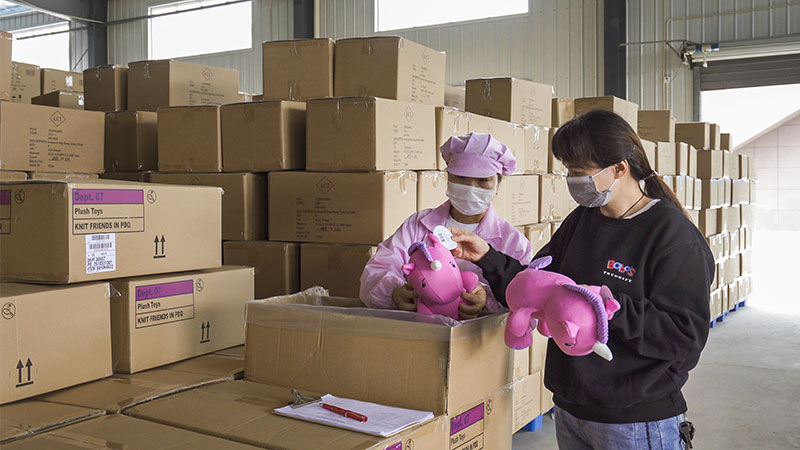
Visiting a plush toy factory is one of the most powerful ways to evaluate a supplier.
Photos and video calls are helpful.
But walking the production floor, seeing workers in action, and checking material storage in person gives you a completely different level of confidence.
However, many buyers visit factories without knowing what to look for.
This checklist will help you focus on the details that truly matter—so you can make a smart, informed decision.
What Documents Should You Review Before the Factory Visit?
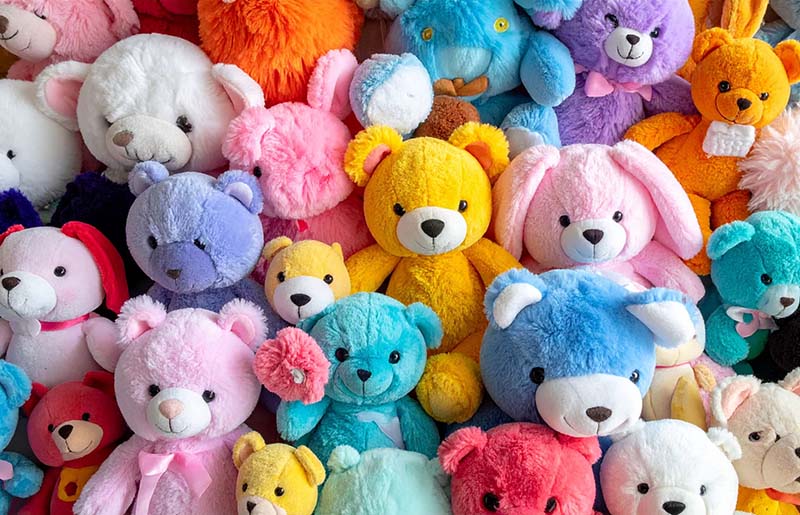
A factory visit should never begin without preparation.
Before you arrive, request essential documentation so you can compare what you see on-site with what was promised.
Do Business Licenses and Certifications Match the Company Name?
Start with basic identity verification:
- Business license
- Company registration name
- Factory address
- Export license (if applicable)
Confirm that:
- The factory name on invoices matches official documents
- The registered address matches the production location
- Certifications correspond to the actual company
Inconsistency at this stage is a major warning sign.
Are Safety and Compliance Certificates Valid and Current?
Ask to review:
- EN71 or ASTM test reports (if applicable)
- CPSIA-related documentation
- ST certification (for Japan-bound products)
- Material compliance declarations
Professional manufacturers—such as Kinwin—usually provide documentation transparently and can explain testing scope clearly.
Pre-Visit Document Review Checklist
| What to Check | Healthy Sign | Risk Signal |
|---|---|---|
| Business license | Matches company | Different name |
| Factory address | Verified | Unclear |
| Test reports | Recent & relevant | Expired or generic |
| Certification clarity | Specific | Vague |
| Documentation consistency | Organized | Contradictory |
Is the Factory Location and Scale Consistent With Prior Information?
A factory visit is the moment of truth.
What you see on-site should match what was described in emails, calls, brochures, or on the website.
If the scale feels significantly smaller—or larger but unrelated to plush production—that’s something you need to question.
Does the Facility Match the Claimed Production Capacity?
Before your visit, the factory may have told you:
- Monthly output capacity
- Number of workers
- Number of production lines
- Factory size in square meters
During your visit, observe:
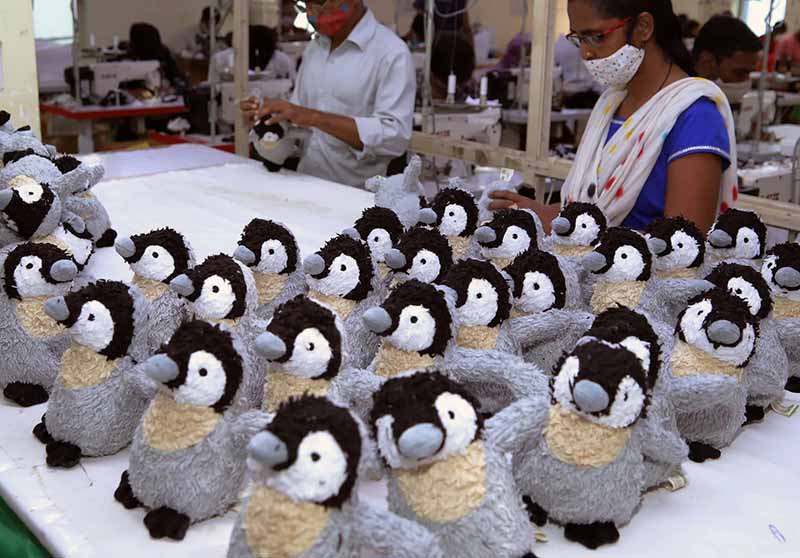
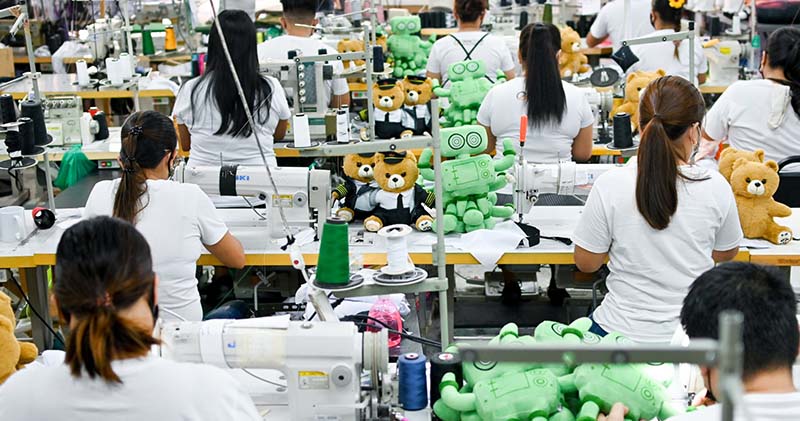
- How many sewing machines are actually running
- Whether production lines are active
- Whether workers are engaged in plush-related processes
- Whether there are real cutting, sewing, stuffing, and packing zones
If the operation looks inactive or partially staged, be cautious.
Is the Plush Production Area Clearly Defined?
A professional plush factory should have:
- Separate cutting areas
- Sewing lines
- Stuffing and shaping areas
- Inspection tables
- Packaging zones
Factories that truly specialize in plush toys—such as Kinwin—usually have clearly organized production layouts.
If plush production appears to be a temporary corner inside a multi-industry warehouse, specialization may be limited.
Factory Scale Verification Checklist
| What to Observe | Strong Indicator | Risk Signal |
|---|---|---|
| Production activity | Active lines | Idle or staged |
| Worker count | Matches claim | Much lower |
| Production zones | Clearly divided | Mixed or unclear |
| Equipment usage | In operation | Decorative |
| Capacity realism | Reasonable | Exaggerated |
How Is the Sample Room Organized and Managed?
If production is the heart of a plush factory, the sample room is the brain.
This is where designs are translated into real products.
This is where feasibility is tested.
This is where your brand vision either becomes precise—or distorted.
A well-managed sample room usually reflects the factory’s true technical level.
Is There a Dedicated In-House Sample Room?
During your visit, check whether:
- The sample room is separate from mass production
- Pattern makers are working on real projects
- Development samples are clearly labeled
- Fabric swatches and trims are organized
A professional plush factory should not outsource all sample development.
Factories that control sampling in-house—such as Kinwin—can respond faster and manage design accuracy more effectively.
Are Technical Development Documents Used?
Strong sample rooms often maintain:
- Technical development sheets
- Fabric confirmation records
- Embroidery layout references
- Revision tracking notes
If samples are made without documentation or tracking, consistency may suffer during mass production.
Sample Room Evaluation Checklist
| What to Observe | Strong Indicator | Risk Signal |
|---|---|---|
| Dedicated space | Clearly separated | Mixed with production |
| Pattern-making activity | Active | Minimal |
| Fabric organization | Systematic | Random |
| Documentation use | Structured | None |
| Revision tracking | Recorded | Verbal only |
What Production Processes Are Done In-House?
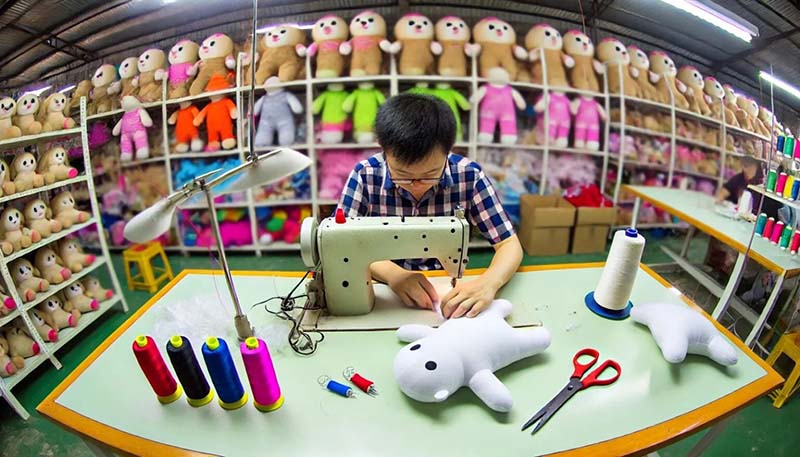
Not all factories operate the same way.
Some complete most processes internally.
Others outsource critical stages such as embroidery, printing, or stuffing.
Understanding what is done in-house helps you evaluate quality control stability and production reliability.
Are Core Plush Processes Managed Internally?
Key in-house processes to look for:
- Fabric cutting
- Sewing and assembly
- Stuffing and shaping
- Embroidery
- Quality inspection
- Packaging
If essential steps like embroidery or stuffing are fully outsourced, consistency may become harder to control.
Factories with strong internal systems—such as Kinwin—typically maintain greater control over production accuracy and timelines.
How Do They Manage Outsourced Processes (If Any)?
Outsourcing is not automatically negative.
But the factory should clearly explain:
- Which processes are outsourced
- How quality is inspected upon return
- How timelines are managed
- How confidentiality is protected
If the factory is vague about subcontracting arrangements, that is a risk factor.
In-House Production Evaluation Checklist
| What to Evaluate | Strong Internal Control | Risk Signal |
|---|---|---|
| Cutting & sewing | In-house | Outsourced |
| Embroidery control | Managed internally | External only |
| QC checkpoints | Structured | Minimal |
| Outsourcing transparency | Explained | Avoided |
| Timeline control | Direct | Dependent on third parties |
How Many Workers and Production Lines Are Dedicated to Plush Toys?
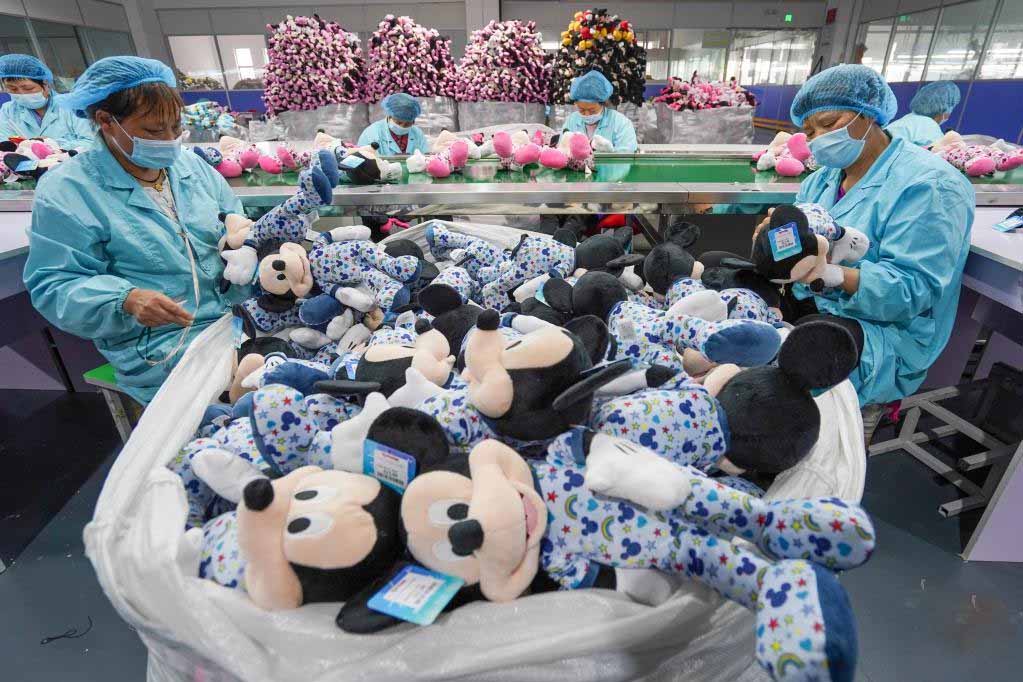
Production capacity is not just about factory size.
It’s about how many people and lines are actually dedicated to plush toy manufacturing—not shared with unrelated products.
When you visit a factory, look beyond square meters. Look at specialization and workforce structure.
Are There Dedicated Plush Production Lines?
Ask directly:
- How many sewing lines are dedicated to plush?
- Are these lines permanent or temporary?
- Are supervisors specialized in plush production?
Dedicated plush lines typically indicate:
- Process stability
- Worker familiarity with plush construction
- Better stitching consistency
- More predictable lead times
If production lines switch frequently between unrelated products, efficiency may be reduced.
How Experienced Are the Plush Workers?
Look for:
- Workers familiar with 3D shaping
- Skilled stuffing technicians
- Embroidery machine operators
- Quality inspectors focused on plush
Factories specialized in plush—such as Kinwin—usually maintain teams experienced specifically in plush construction.
Workforce & Line Evaluation Checklist
| What to Evaluate | Strong Indicator | Risk Signal |
|---|---|---|
| Dedicated plush lines | Permanent | Temporary |
| Worker specialization | Plush-focused | Multi-product generalists |
| Line supervision | Experienced | Rotational |
| Production flow | Smooth | Interrupted |
| Capacity explanation | Realistic | Overstated |
How Are Fabrics, Stuffing, and Accessories Stored and Controlled?
Material management tells you more about a factory’s discipline than any presentation ever could.
Even if machines look modern and workers are skilled, poor material control can destroy product consistency and compliance.
During your visit, pay close attention to how materials are stored and tracked.
Are Fabrics and Stuffing Stored in Clean, Controlled Conditions?
Check whether:
- Fabrics are stacked neatly and protected from dust
- Different fabric lots are separated and labeled
- Stuffing materials are sealed and dry
- Moisture exposure is minimized
Poor storage can lead to:
- Color inconsistency
- Fabric contamination
- Odor issues
- Compliance risks
Professional plush manufacturers—such as Kinwin—usually maintain organized, labeled, and batch-controlled storage systems.
Is There a Clear Material Tracking System?
Ask about:
- Batch labeling procedures
- Material approval records
- First-in-first-out (FIFO) systems
- Accessory inventory control
A structured system reduces:
- Material mix-ups
- Unapproved substitutions
- Quality variation across production batches
Material Storage & Control Checklist
| What to Evaluate | Strong Indicator | Risk Signal |
|---|---|---|
| Fabric storage | Organized & labeled | Mixed randomly |
| Stuffing condition | Clean & sealed | Exposed |
| Batch separation | Clear | None |
| Inventory tracking | Documented | Manual only |
| Substitution control | Controlled | Unmanaged |
Conclusion
A factory visit is not about being impressed.
It’s about verifying consistency between what was promised and what is real.
During your visit, focus on:
- Documentation accuracy
- Facility scale consistency
- Sample room organization
- In-house production control
- Dedicated plush production lines
- Material storage discipline
Choosing the right plush factory requires observation, questions, and structured evaluation.
If you are planning to visit or audit a plush manufacturer and want a factory prepared for transparent inspection, consider scheduling a structured visit with Kinwin.
A confident factory welcomes evaluation.