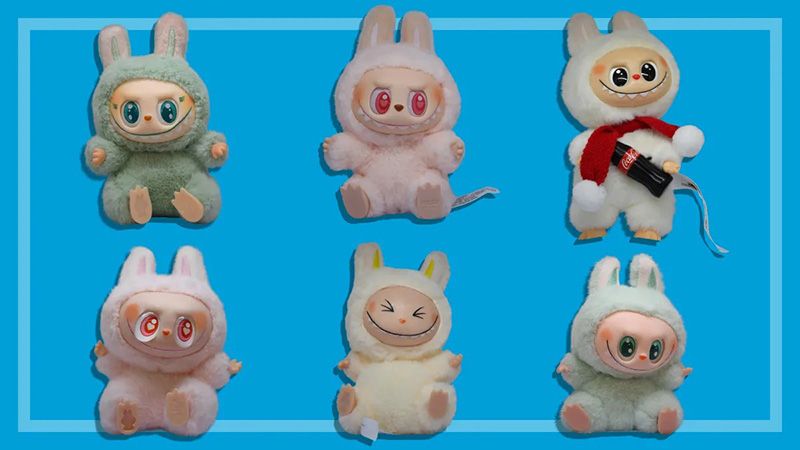
Teddy bear production may look simple on the surface, but behind every well-made bear is a carefully selected combination of materials, tools, and processes. From fabric choice to cutting accuracy and sewing precision, each element directly affects softness, durability, safety, and the overall emotional appeal of the finished product.
For brands and manufacturers, understanding what materials and tools are required is not only a technical matter—it is a foundation for cost control, quality consistency, and scalable production. This guide breaks down the key components involved in professional teddy bear manufacturing, starting from the outer fabric that defines the bear’s look and feel.
What Fabric Types Are Commonly Used for Teddy Bear Outer Shells?
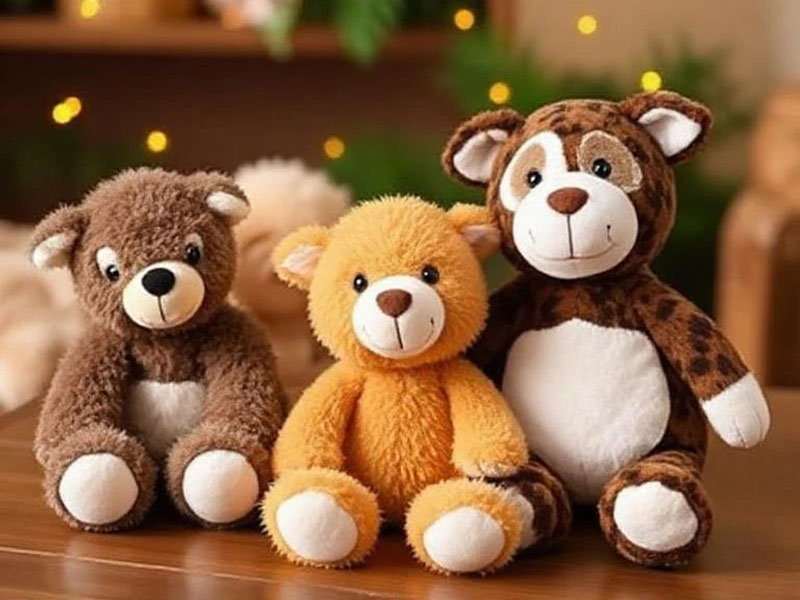
The outer fabric is the most visually and tactilely important material in teddy bear production. It defines how the bear feels when hugged, how it looks on a shelf, and how well it holds up over time. Choosing the right fabric is therefore a balance between softness, durability, appearance, and production practicality.
One of the most commonly used fabrics is short-pile plush, valued for its smooth surface, easy cutting, and consistent appearance. It is widely used for classic teddy bears because it allows facial features and seams to remain clear and well-defined. Short-pile plush is also easier to control during sewing, making it suitable for large-scale production.
Long-pile or faux fur fabrics are often selected for premium or decorative teddy bears. These fabrics create a fluffy, luxurious look and enhance emotional appeal, but they require more skill in cutting and sewing. Pile direction must be controlled carefully, and extra trimming is often needed around seams and facial areas to maintain a clean finish.
Velboa and microfleece fabrics are also popular choices, especially for modern or minimalist teddy bear designs. They offer a soft touch with a lower pile, good color stability, and strong resistance to shedding. These fabrics are commonly used in children’s products where durability and easy maintenance are important.
For all fabric types, weight (GSM), fiber composition, colorfastness, and safety compliance must be considered early, especially for bears intended for children or international markets.
| Fabric Type | Key Characteristics | Common Use Case | Production Considerations |
|---|---|---|---|
| Short-pile plush | Smooth, even surface | Classic teddy bears | Easy cutting & sewing |
| Long-pile / faux fur | Fluffy, premium look | Luxury or decor bears | Pile direction control |
| Velboa | Soft, low pile | Modern teddy designs | Clean seam definition |
| Microfleece | Lightweight, soft | Baby & kid bears | Strong durability |
| Cotton blends | Natural feel | Eco or niche bears | Shrinkage control |
The right outer fabric not only shapes the teddy bear’s appearance but also determines how efficiently it can be produced and how consistently it will perform across different batches.
What Filling Materials Determine Softness, Shape, and Durability in Teddy Bears?

Filling material plays a decisive role in how a teddy bear feels in the hand, how well it maintains its shape, and how it performs over long-term use. Even when the outer fabric is premium, poor filling choice or inconsistent stuffing can quickly reduce perceived quality. For manufacturers and brands, filling selection is both a comfort decision and a structural engineering choice.
The most widely used filling in teddy bear production is polyester fiberfill (PP cotton). It is lightweight, resilient, and easy to control during stuffing. High-quality fiberfill offers good rebound after compression, allowing the bear to keep a full, rounded appearance even after repeated hugging or washing. Fiber length and density matter—short, low-quality fibers tend to clump over time, while longer fibers distribute more evenly.
Recycled polyester fiber (rPET) has become increasingly popular as brands pursue sustainability goals. When properly processed, rPET performs similarly to virgin polyester while supporting eco-friendly positioning. However, it requires stricter quality control to ensure cleanliness, odor control, and consistent fiber length.
For specialty designs, some manufacturers use weighted fillings, such as plastic pellets or glass beads, usually enclosed in internal pouches. These are applied selectively—often in the base or limbs—to add stability or calming weight. In such cases, internal construction must prevent shifting and meet safety standards.
Natural fillings like cotton fiber or kapok are occasionally used for niche or premium products, but they require careful moisture control and are less elastic than synthetic options, making them less suitable for mass production.
| Filling Material | Key Properties | Common Application | Production Considerations |
|---|---|---|---|
| Polyester fiberfill | Soft, elastic, lightweight | Standard teddy bears | Fiber quality consistency |
| Recycled polyester (rPET) | Sustainable, resilient | Eco-positioned bears | Cleanliness & odor control |
| Weighted pellets/beads | Adds weight & stability | Base or limbs | Secure inner pouch |
| Cotton fiber | Natural, firm feel | Premium or niche bears | Moisture & compression risk |
| Kapok | Light, plant-based | Small decorative bears | Limited durability |
Selecting the right filling material ensures that a teddy bear not only feels comforting on day one, but also retains its shape and appeal throughout its lifespan. For scalable production, consistency in filling quality and stuffing technique is just as important as the material itself.
What Pattern Making and Cutting Tools Are Essential for Accurate Bear Shapes?
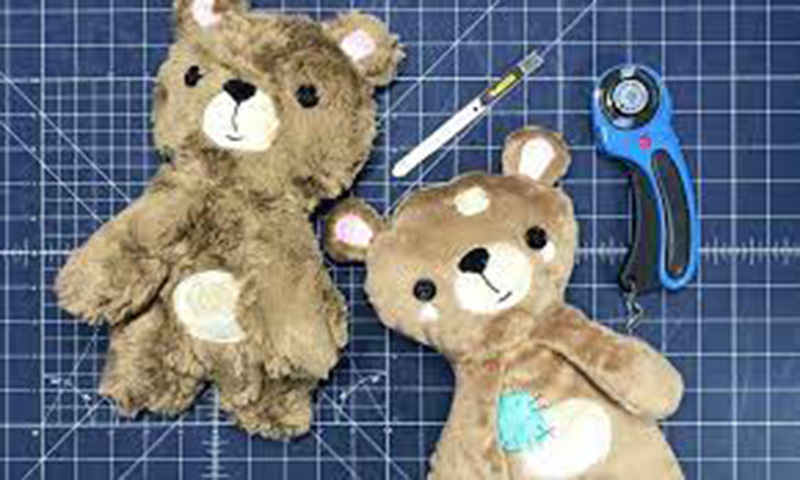
Pattern making and cutting are the foundation of accurate teddy bear shapes. Even with premium fabric and skilled sewing, poorly developed patterns or imprecise cutting will result in uneven proportions, distorted faces, or inconsistent sizing across batches. For professional teddy bear production, these tools determine whether designs can be reproduced reliably at scale.
Pattern making tools are used first to translate design concepts into workable two-dimensional templates. Traditional paper patterns are still widely used for initial development and adjustments, especially when fine-tuning curves around the head, muzzle, and limbs. For larger operations, digital pattern software allows patterns to be stored, graded, and revised with greater precision. Accurate seam allowance marking is critical, as plush materials compress differently from woven fabrics.
Once patterns are finalized, cutting tools directly affect consistency. Manual cutting with sharp fabric shears is common for sampling and small batches, where flexibility and visual control are important. In mass production, electric straight knives or band knives are often used to improve speed and uniformity. For high-volume or complex shapes, laser or CNC cutting systems can deliver exceptional accuracy, especially when pile direction and fabric waste optimization matter.
Cutting accuracy also depends on fabric layering control. Plush fabrics can shift easily, so layers must be aligned carefully to prevent size variation. Proper cutting tables, weights, and alignment guides help ensure each piece matches the approved pattern exactly.
| Tool Category | Common Tools Used | Purpose in Production | Quality Risk if Weak |
|---|---|---|---|
| Pattern tools | Paper patterns, CAD software | Shape definition | Inconsistent proportions |
| Marking tools | Chalk, notches, guides | Seam accuracy | Assembly mismatch |
| Manual cutting | Fabric shears | Sampling & small runs | Human variation |
| Machine cutting | Band knife, straight knife | Mass production | Edge distortion |
| Advanced cutting | Laser / CNC | High precision & yield | High setup cost |
Accurate pattern making and controlled cutting ensure that every teddy bear starts from the same structural foundation. This consistency is what allows brands to maintain recognizable shapes, predictable sizing, and stable quality as production volumes increase.
What Embroidery, Printing, and Facial Detailing Tools Are Used in Teddy Bear Design?
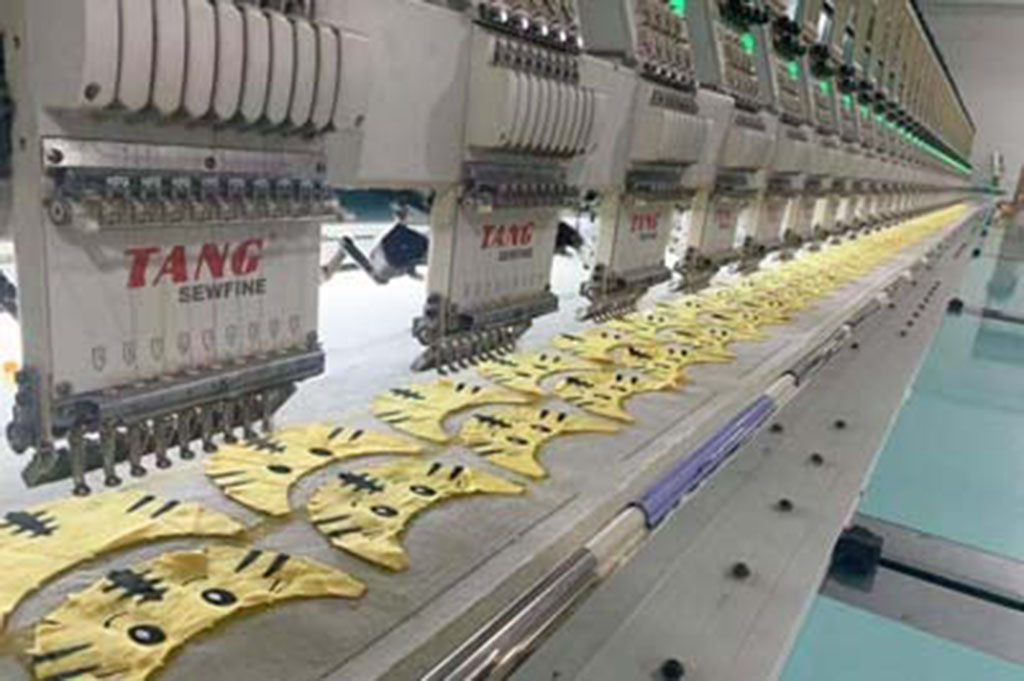
Facial detailing is where a teddy bear truly comes to life. While fabric and filling determine comfort and structure, embroidery, printing, and facial detailing tools define expression, personality, and emotional appeal. For brands, this stage has a direct impact on consumer perception, as even small inconsistencies in facial features can change how a teddy bear is received.
Embroidery tools are the most widely used method for creating eyes, noses, mouths, and decorative elements. Computerized embroidery machines allow precise control over stitch density, direction, and placement, which is especially important for maintaining consistent expressions across large production runs. High-quality embroidery reduces the risk of fading, peeling, or detachment compared to printed or glued elements, making it a preferred choice for children’s products.
Printing tools are used when designs require gradients, fine lines, or color transitions that embroidery cannot easily achieve. Heat transfer printing and digital textile printing are common techniques for facial features or decorative patterns. These methods must be carefully tested for wash durability, colorfastness, and safety compliance, particularly when used on plush fabrics with pile texture.
For three-dimensional facial features, molding and attachment tools may be used to install safety eyes or noses. These components must be applied using specialized presses or locking systems to ensure secure attachment. In teddy bear production, safety-certified parts are essential for products intended for children, and attachment strength must meet regulatory pull-test requirements.
Precision in facial detailing also relies on alignment and positioning tools. Templates, jigs, or positioning guides help operators place facial elements consistently, preventing skewed expressions or uneven spacing. Without these controls, visual variation can increase significantly within the same batch.
| Tool Type | Common Equipment Used | Purpose in Teddy Bear Design | Key Control Requirement |
|---|---|---|---|
| Embroidery tools | Computerized embroidery machines | Eyes, nose, mouth details | Stitch density & placement |
| Printing tools | Heat transfer, digital printers | Fine graphics & shading | Wash & color durability |
| Molding tools | Eye/nose presses | 3D facial features | Secure locking strength |
| Positioning aids | Jigs, templates | Facial alignment | Consistent expression |
| QC inspection | Visual & pull tests | Appearance & safety | Compliance verification |
Well-controlled embroidery, printing, and facial detailing tools ensure that each teddy bear conveys the intended expression and brand character. In professional production, this stage is as much about emotional consistency as it is about technical execution.
What Quality Control and Finishing Tools Ensure Consistent Teddy Bear Production?
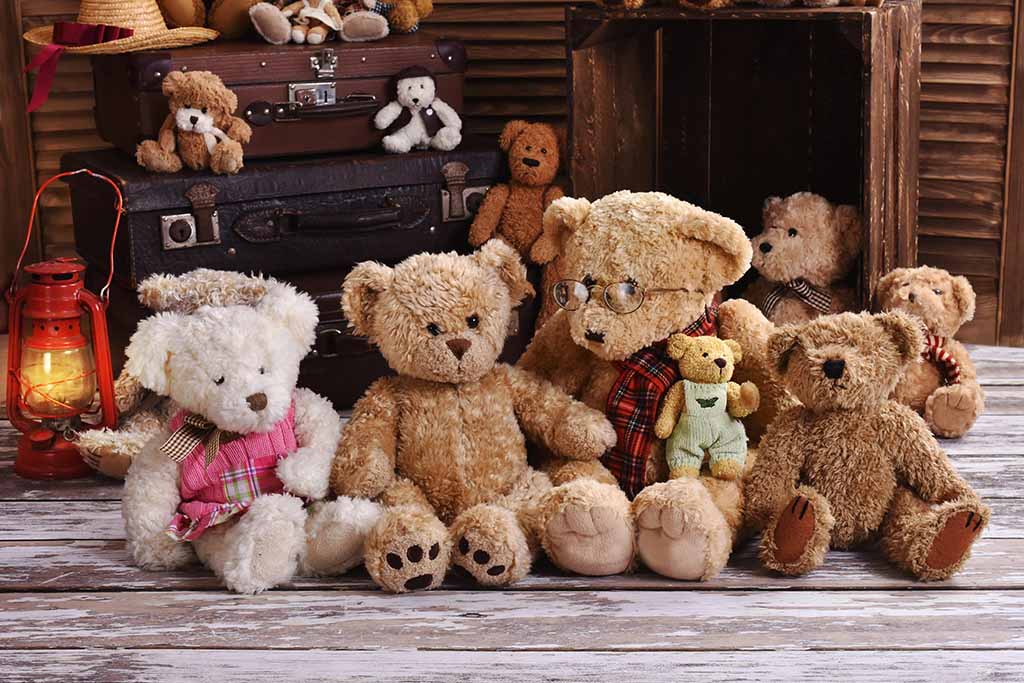
Quality control and finishing tools play a decisive role in transforming a sewn teddy bear into a retail-ready product. Even when materials, patterns, and assembly processes are well managed, the absence of systematic finishing and inspection tools can lead to inconsistencies that affect appearance, safety, and brand perception. For professional teddy bear production, quality assurance is an ongoing process rather than a final checkpoint.
Visual inspection tools are the first layer of quality control. Standardized inspection tables with controlled lighting allow inspectors to identify stitching defects, fabric inconsistencies, color variation, and facial alignment issues. Many factories use reference samples and visual checklists to ensure that each teddy bear matches approved standards for expression, proportion, and finishing detail. This step is especially important for character-based or branded teddy bears, where minor deviations can dilute brand identity.
Needle detection and metal detection equipment are critical safety tools in plush production. After sewing and embroidery, teddy bears pass through needle detectors to ensure no broken needle fragments remain inside the product. This process is mandatory for export markets such as the EU, the U.S., and Japan, and is often audited as part of factory compliance systems. Reliable detection tools significantly reduce recall risk and safety claims.
Trimming and surface finishing tools are used to refine the final appearance. These include electric fabric trimmers, pile brushing machines, and air blowers that remove loose fibers and shape the plush surface evenly. Proper finishing improves tactile quality and ensures the teddy bear looks clean, full, and visually consistent across batches.
For durability assurance, pull-test and seam-strength testing tools are used during in-house quality checks. These tools simulate stress on seams, limbs, and attached components such as eyes or accessories. Regular testing helps identify weak construction points before products reach third-party testing or mass shipment.
Finally, packaging and pre-shipment inspection tools help preserve quality after production. Measurement tools verify final dimensions, while carton drop-test procedures ensure packaging protects the product during transportation. Clear labeling and batch tracking systems also support traceability in case post-market issues arise.
| Tool Category | Common Equipment | Purpose | Risk Controlled |
|---|---|---|---|
| Visual inspection | Light tables, checklists | Appearance consistency | Brand deviation |
| Safety detection | Needle & metal detectors | Internal safety | Injury & recall risk |
| Surface finishing | Trimmers, brushes | Clean plush appearance | Perceived quality loss |
| Strength testing | Pull-test devices | Seam & attachment durability | Breakage claims |
| Packaging QC | Measurement tools, drop tests | Transit protection | Damage during shipping |
Consistent teddy bear production depends on integrating these quality control and finishing tools into daily operations rather than treating them as optional steps. When applied systematically, they protect product safety, reinforce brand standards, and ensure that every teddy bear reaching the market reflects the intended level of craftsmanship.
Conclusion
Successful teddy bear production is built on the right combination of materials, tools, and process control. From selecting suitable fabrics and fillings to using precise pattern-making, sewing, detailing, and finishing tools, every step influences product safety, comfort, durability, and visual consistency. By understanding these requirements and working with experienced manufacturers who apply disciplined quality control, brands can turn teddy bear concepts into reliable, market-ready products that scale smoothly across retail, gifting, and licensing programs.
📧 Contact: [email protected]
🌐 Visit: https://kinwintoys.com