Large-scale stuffed animal production is not simply about producing “more pieces.” From my experience working with brands, retailers, and promotional buyers, true large-scale capability is about whether a factory can increase volume without losing control—control over quality, timelines, costs, and compliance.
Many factories can handle small or medium orders. Far fewer can reliably support high-volume programs with thousands or tens of thousands of units across multiple SKUs. The difference usually lies in capacity structure, equipment readiness, and how production resources are organized, not just factory size.
Before discussing delivery schedules or pricing for bulk orders, buyers need to understand what production capacity really means in a plush toy factory context—and how to evaluate it correctly.
What Production Capacity and Equipment Are Required for High-Volume Stuffed Animal Orders?
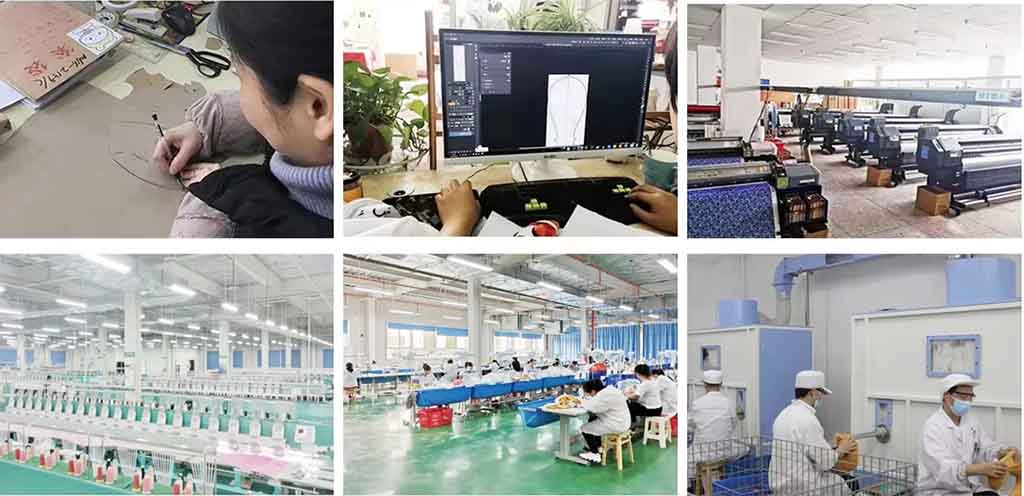
When buyers ask whether a factory can handle large-scale production, the answer should never be a simple “yes.” In my experience, real production capacity is defined by how equipment, layout, and process flow work together, not by the total number of machines listed in a factory profile.
High-volume stuffed animal orders require balanced capacity across multiple stages, including cutting, sewing, stuffing, finishing, and packing. If one stage becomes a bottleneck, overall output will suffer—no matter how strong the other stages appear.
Cutting capacity is often overlooked. For large orders, factories need efficient fabric spreading tables, accurate cutting methods, and clear material utilization planning. Inconsistent cutting leads to size deviation and fabric waste, which become more visible at scale.
Sewing capacity is another critical factor. Large-scale production depends on multiple parallel sewing lines, each with defined roles and supervision. Factories relying on flexible but unstructured sewing setups often struggle to maintain output consistency when volumes increase.
Stuffing and finishing capacity must also match sewing output. Automated or semi-automated stuffing machines, standardized weight control, and defined finishing stations help maintain uniform hand-feel and appearance across large batches.
Packing and packing-line organization are equally important. For bulk orders, packing speed, carton planning, and labeling accuracy directly affect shipment timelines and logistics efficiency.
| Capacity Area | Weak Large-Scale Setup | Strong Large-Scale Setup | Buyer Impact |
|---|---|---|---|
| Cutting equipment | Manual, low-speed cutting | Structured cutting tables & planning | Size consistency |
| Sewing capacity | Flexible but unbalanced | Multiple organized sewing lines | Stable output |
| Stuffing process | Manual, inconsistent weight | Controlled stuffing systems | Uniform hand-feel |
| Finishing & packing | Ad-hoc packing | Dedicated packing lines | On-time shipment |
| Capacity balance | Bottlenecks between stages | Aligned process flow | Predictable delivery |
For buyers, evaluating production capacity means looking beyond machine counts. A factory capable of large-scale production can clearly explain where its capacity limits are, how bottlenecks are managed, and how output is stabilized as order volumes increase.
How Do Standardized Processes and Production Lines Enable Consistent Scale-Up?
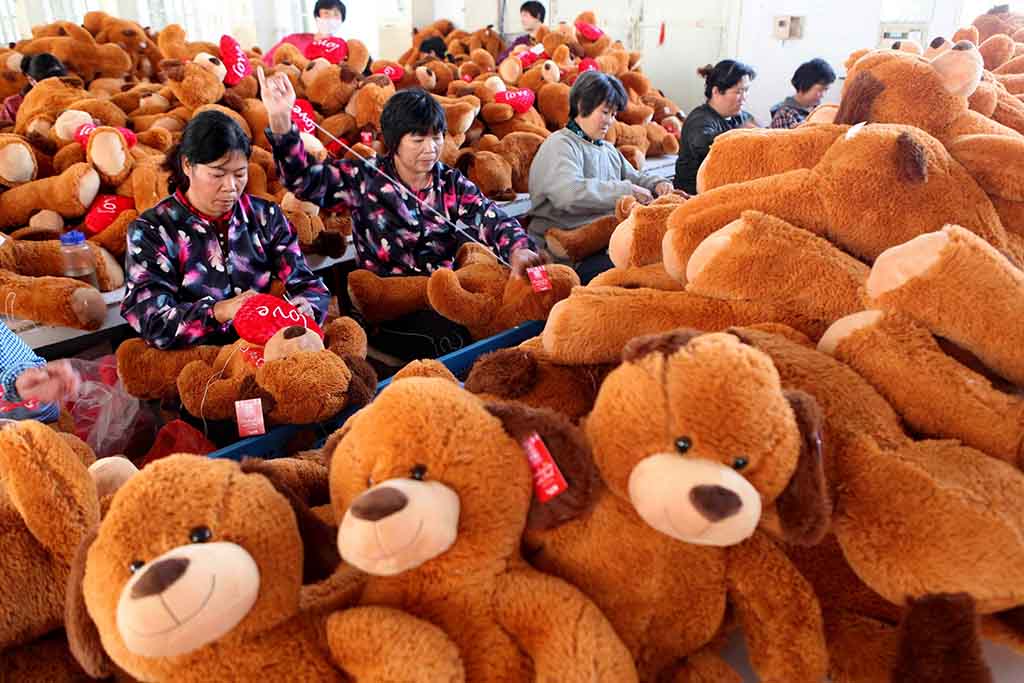
When order volume increases, inconsistency is the biggest risk. From my experience, factories that rely on individual skill rather than standardized processes almost always struggle when scaling up. Large-scale production only becomes stable when output depends on systems, not people improvising on the line.
Standardized processes allow a factory to reproduce the same result across different operators, shifts, and production lines. This is especially important for stuffed animals, where small variations in stitching tension, seam allowance, or stuffing density can quickly become visible across thousands of units.
Production line design plays a key role. Factories capable of scale-up do not mix processes randomly. Instead, they separate cutting, sewing, stuffing, finishing, and packing into clearly defined stages, each with its own work instructions and quality checkpoints. This structure reduces confusion and keeps output consistent as volume increases.
Another important factor is line balancing. In large-scale production, each process must move at a similar pace. If sewing runs faster than stuffing, or stuffing outpaces finishing, delays and rework follow. Reliable factories regularly adjust manpower and task allocation to keep production flow stable.
Documentation also matters. Clear SOPs, visual guides, and approved reference samples ensure that new workers or additional lines can be added without changing the final product outcome. This is what allows factories to scale quickly during peak seasons without losing control.
| Process Area | Non-Standardized Factory | Standardized Factory | Impact at Scale |
|---|---|---|---|
| Work instructions | Verbal, experience-based | Written SOPs & visuals | Consistent execution |
| Line structure | Mixed, flexible setup | Defined production stages | Stable flow |
| Line balancing | Reactive adjustments | Planned capacity alignment | Fewer delays |
| Operator dependency | Skill-driven output | System-driven output | Lower variation |
| Scale-up speed | Slow, high error risk | Fast, controlled expansion | Reliable delivery |
For buyers planning large-volume programs, standardized processes are not optional. They are the foundation that allows factories to increase output while maintaining the same quality level, delivery reliability, and cost predictability across every batch.
What Role Do Skilled Labor Teams and Workforce Management Play in Mass Production?
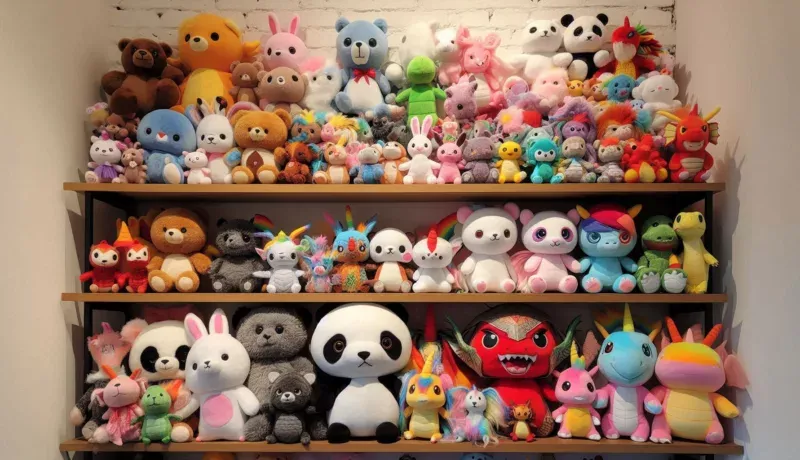
In large-scale stuffed animal production, equipment and processes only work as well as the people operating them. From my experience, factories that scale successfully are not those with the lowest labor cost, but those with stable, well-managed, and properly trained labor teams.
Mass production exposes weaknesses in workforce structure very quickly. High worker turnover, unclear role assignments, or uneven skill levels often lead to inconsistent stitching, variable stuffing weight, and frequent rework. These issues multiply as order volumes increase.
Skilled labor teams are especially important in plush toy production because many key steps—such as facial alignment, embroidery placement, seam control, and finishing—still rely on human precision. Factories capable of large-scale output invest in role specialization, assigning workers to consistent tasks rather than rotating randomly across processes.
Workforce management is equally critical. Reliable factories plan staffing levels in advance, taking into account order peaks, SKU complexity, and delivery deadlines. Supervisors monitor output quality in real time and adjust manpower before problems escalate. Training systems, including on-the-line guidance and skill standardization, help new workers reach acceptable quality levels faster.
Another often-overlooked factor is team stability. Factories with long-tenured workers usually show better consistency and lower defect rates. Stable teams understand internal standards and respond faster when production adjustments are required.
| Labor Factor | Weak Workforce Management | Strong Workforce Management | Impact on Large Orders |
|---|---|---|---|
| Skill structure | General labor, frequent rotation | Task-specialized operators | Consistent quality |
| Training system | Informal, inconsistent | Standardized training & guidance | Faster scale-up |
| Supervision | Reactive problem fixing | Proactive line management | Lower defect rate |
| Workforce stability | High turnover | Stable, experienced teams | Predictable output |
| Capacity planning | Short-term hiring | Planned staffing allocation | On-time delivery |
For buyers evaluating large-scale production capability, workforce quality is a key indicator. Factories that invest in skilled teams and structured workforce management are far more likely to maintain consistency, efficiency, and reliability as order volumes grow.
How Do Quality Control Systems Maintain Consistency Across Large Batch Runs?
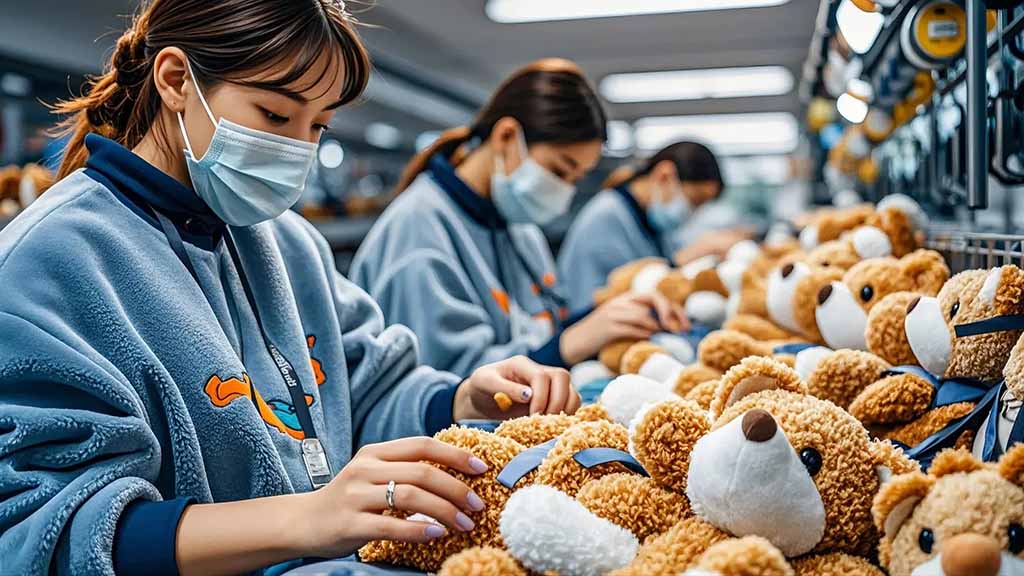
When production volume increases, quality variation becomes one of the biggest hidden risks. From my experience, many factories can deliver acceptable quality in small batches, but only a few can maintain the same standard across thousands or tens of thousands of units. The difference lies in how quality control systems are designed and executed at scale.
In large batch production, relying on final inspection alone is not enough. By the time defects are found at the end, the cost of rework, delay, or rejection is already high. Factories capable of large-scale production build quality control into every stage of the process, so problems are identified and corrected early.
Incoming Quality Control (IQC) is the first layer. Fabrics, fillings, threads, and accessories are inspected before they enter production. For large orders, material inconsistency is a common cause of quality fluctuation, so reliable factories enforce clear acceptance standards at this stage.
In-Process Quality Control (IPQC) is where consistency is protected. Line inspectors and supervisors check stitching quality, seam strength, stuffing weight, and alignment while production is running. This prevents defects from repeating across an entire batch.
Final Quality Control (FQC) confirms that finished products meet agreed standards before packing. In large-scale production, strong factories rely on AQL-based inspection methods and locked reference samples, not subjective judgment.
Equally important is how factories handle quality data. Recording defect types, frequencies, and corrective actions allows managers to spot trends and adjust processes before issues spread.
| QC Element | Weak Large-Scale Control | Strong Large-Scale Control | Buyer Benefit |
|---|---|---|---|
| Quality timing | End-of-line only | Multi-stage QC system | Fewer mass defects |
| Material inspection | Minimal checks | Strict IQC standards | Stable inputs |
| In-process checks | Occasional sampling | Continuous IPQC | Consistent output |
| Inspection method | Subjective judgment | AQL & reference samples | Predictable quality |
| Data tracking | No records | Defect analysis & feedback | Continuous improvement |
For buyers placing large orders, quality consistency is more important than perfect samples. Factories with structured QC systems can explain where quality is controlled, how issues are corrected, and how recurrence is prevented—which is exactly what protects brand reputation at scale.
How Do Material Sourcing, Inventory Control, and Supplier Networks Support Scale?
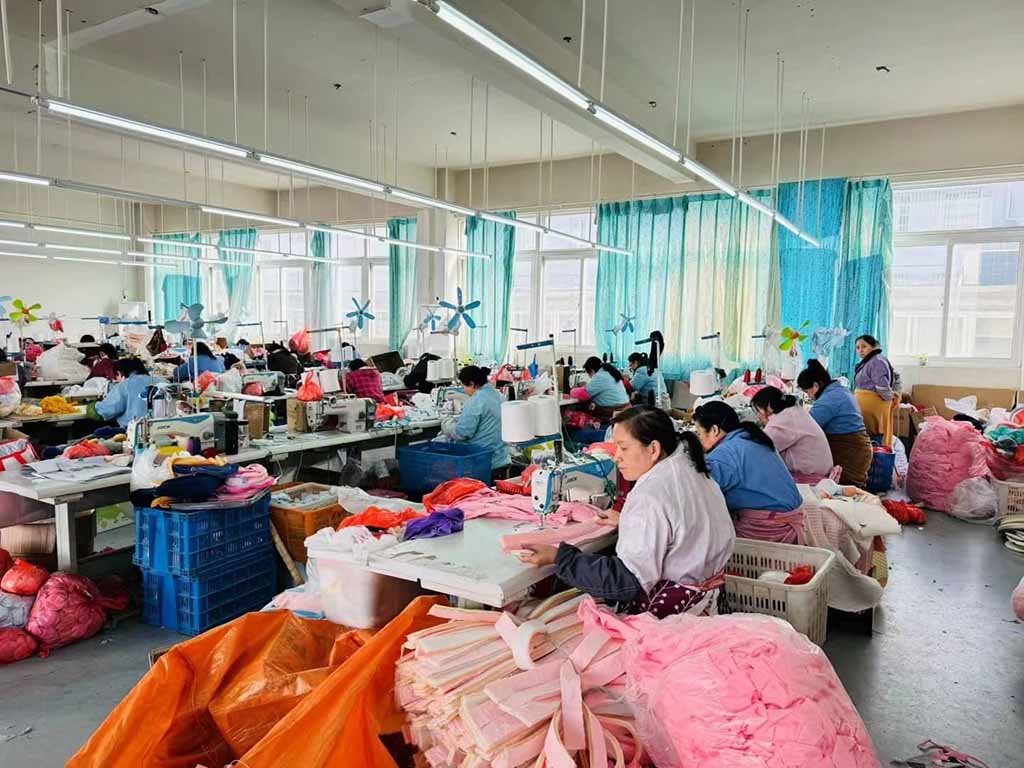
In large-scale stuffed animal production, materials are not just inputs—they are risk factors. From my experience, many production delays and quality issues during bulk orders are not caused by sewing or labor, but by unstable material supply and weak inventory control.
Factories capable of large-scale production treat material sourcing as a system, not a one-time purchase. They work with qualified, repeat suppliers for fabrics, fillings, threads, and accessories, rather than switching sources frequently based on price alone. This consistency reduces variation in color, texture, pile length, and compliance performance across batches.
Inventory control is equally important. Large orders require accurate forecasting and clear material allocation. Reliable factories plan material usage based on confirmed orders, approved samples, and buffer calculations. This prevents shortages in the middle of production and avoids mixing different material batches, which can lead to visible inconsistencies.
Supplier networks also play a critical role in scale support. Strong factories maintain relationships with multiple vetted suppliers for key materials. This allows them to respond quickly when a material becomes unavailable, lead times change, or prices fluctuate. Weak factories, by contrast, often rely on a single source and are forced to delay production when disruptions occur.
Material traceability is another indicator of maturity. Factories that record material batch numbers and usage flows can quickly identify the source of issues if defects appear. This level of control becomes essential when production volume increases and multiple batches are running simultaneously.
| Material System Area | Weak Scale Support | Strong Scale Support | Impact on Large Orders |
|---|---|---|---|
| Fabric sourcing | Price-driven, unstable | Qualified repeat suppliers | Consistent appearance |
| Inventory planning | Reactive purchasing | Forecast-based allocation | Fewer delays |
| Batch control | Mixed material lots | Clear batch separation | Uniform quality |
| Supplier network | Single-source reliance | Multi-supplier backup | Supply stability |
| Traceability | No material records | Batch-level tracking | Faster issue resolution |
For buyers, material systems are often invisible until something goes wrong. Factories with strong sourcing discipline and inventory control provide quiet reliability—orders move forward smoothly, even when volumes are high or market conditions change.
How Do Planning, Lead Time Management, and Logistics Ensure On-Time Large-Scale Delivery?
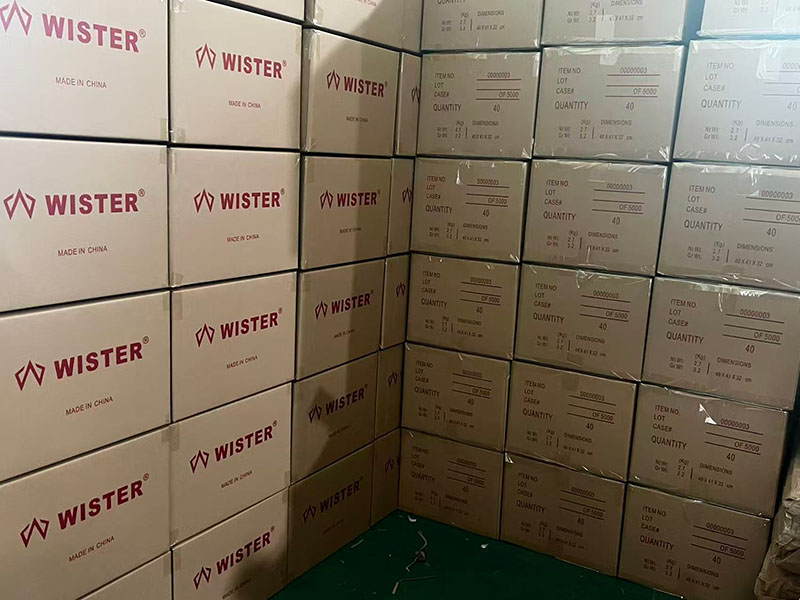
In large-scale stuffed animal production, delivery performance is not decided at the shipping stage—it is decided much earlier, during planning. From my experience, factories that consistently deliver large orders on time are those that treat planning and lead time management as core production capabilities, not administrative tasks.
Effective planning starts with realistic production scheduling. Reliable factories break down large orders into manageable production phases, considering SKU complexity, material readiness, line capacity, and peak season constraints. Instead of promising aggressive timelines, they build schedules that include buffer time for sampling approval, material delays, and quality adjustments.
Lead time management is closely tied to internal coordination. Strong factories align cutting, sewing, stuffing, QC, and packing timelines from the start. Each department understands when its task begins and ends. This reduces waiting time between processes and prevents last-minute overtime that often leads to quality issues.
Logistics capability becomes increasingly important as order volume grows. Large-scale delivery requires accurate carton planning, labeling control, and shipment consolidation. Factories experienced in bulk exports understand how packing methods, palletization, and container loading affect both shipping cost and delivery reliability.
Communication also plays a role. Reliable manufacturers provide regular production updates, flag potential delays early, and propose solutions instead of waiting until deadlines are missed. This allows buyers to adjust launch plans, inventory allocation, or shipping methods proactively.
| Delivery Management Area | Weak Large-Scale Control | Strong Large-Scale Control | Buyer Benefit |
|---|---|---|---|
| Production planning | Overpromised timelines | Realistic phased schedules | On-time delivery |
| Lead time control | Department silos | Cross-process alignment | Fewer delays |
| Buffer management | No contingency planning | Built-in buffer time | Risk reduction |
| Logistics handling | Ad-hoc shipping prep | Structured packing & loading | Cost & time efficiency |
| Communication | Last-minute updates | Proactive progress reporting | Better launch planning |
For buyers managing large programs, on-time delivery is not luck. It is the result of disciplined planning, controlled lead times, and logistics experience built specifically for high-volume production.
Conclusion
Building large-scale stuffed animal production capability requires more than increasing output numbers. It demands structured capacity planning, standardized processes, skilled teams, disciplined quality systems, stable material supply, and reliable delivery management. When these elements work together, large-volume production becomes predictable and scalable—allowing brands to grow with confidence in quality, timelines, and overall supply chain stability.
📧 Contact: [email protected]
🌐 Visit: https://kinwintoys.com