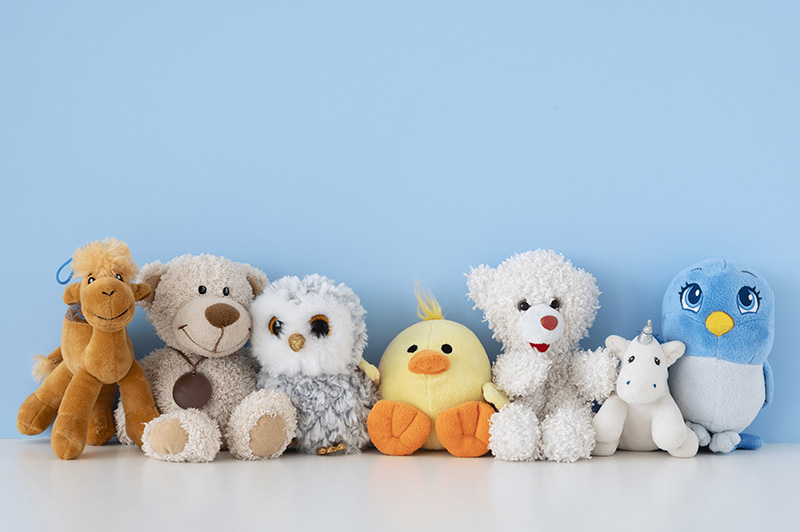
Japanese kawaii plush toys represent a design system rather than a single visual style. They prioritize emotional comfort, simplified forms, and gentle expressions that feel approachable across age groups. In both domestic Japanese markets and global export channels, kawaii plush toys are widely used in gifting, lifestyle retail, character licensing, and collectible product lines.
For brands and buyers, understanding why certain kawaii plush designs succeed helps avoid superficial imitation and supports long-term product planning. The following styles reflect the most commercially proven kawaii plush directions.
Kawaii Bear Plush with Round Face and Pastel Colors
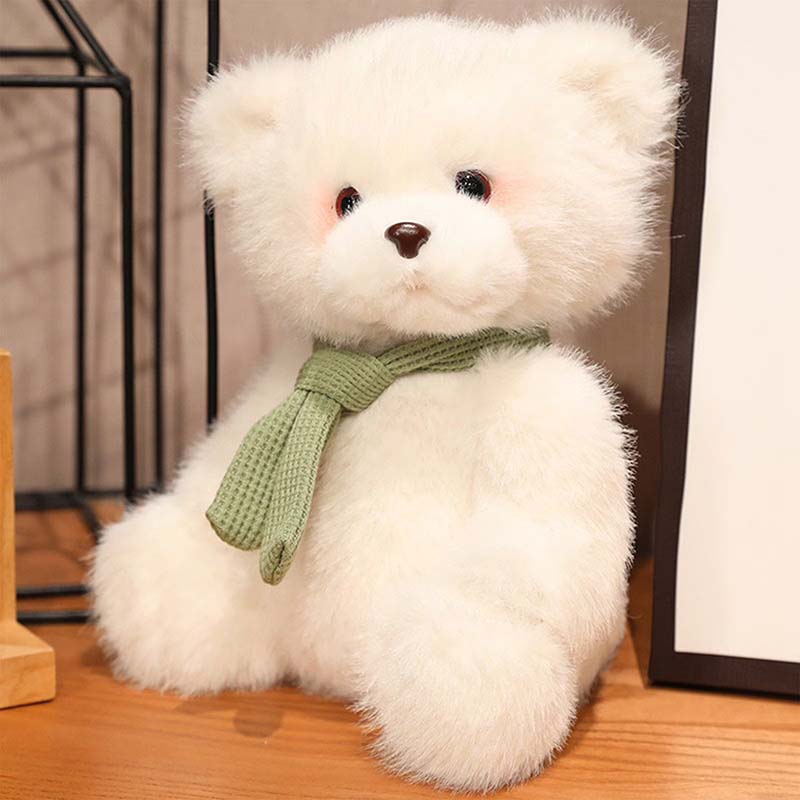
Kawaii bear plush toys are built around facial balance and emotional softness, not realism. The defining feature is an oversized, circular head paired with a compact body, creating a baby-like proportion that triggers comfort and affection. Facial features are intentionally minimal—small embroidered eyes, a tiny nose, and subtle mouth details—allowing the plush to feel calm rather than expressive.
Pastel colors play a critical role. Soft beige, cream, blush pink, or light brown tones reduce visual stimulation and increase perceived gentleness. From a manufacturing perspective, short-pile plush or velboa fabrics are commonly used to maintain clean outlines while preserving softness.
Commercially, kawaii bear plush toys perform well as evergreen SKUs. They are suitable for children, teens, and adults, making them ideal for gift shops, lifestyle retailers, and long-term character development programs.
| Design Element | Kawaii Bear Approach | Commercial Benefit |
|---|---|---|
| Head proportion | Oversized & round | Strong emotional appeal |
| Facial detail | Minimal embroidery | Broad age acceptance |
| Color palette | Pastel / neutral | Calming, gift-friendly |
| Fabric choice | Short-pile plush | Clean silhouette |
| Market use | All-age gifting | Stable long-term demand |
Kawaii Bunny Plush with Blush Cheeks and Soft Ears
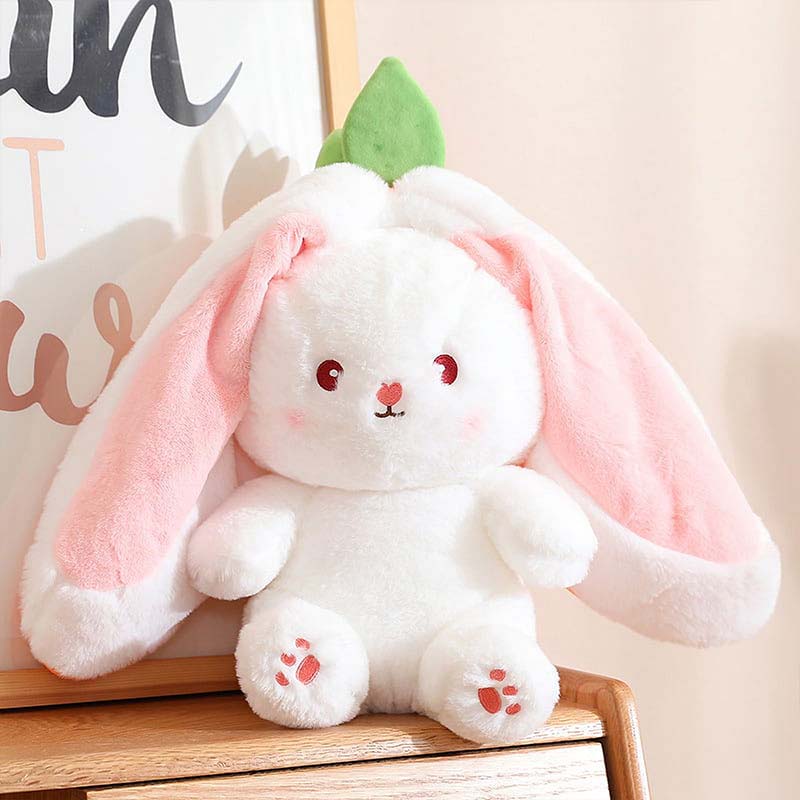
Kawaii bunny plush toys emphasize gentleness and approachability through soft silhouettes and relaxed posture. Long ears are rounded and slightly weighted, allowing them to drape naturally rather than stand upright. This relaxed structure reinforces a calm, comforting visual language.
Blush cheeks are a signature kawaii element. Typically embroidered or softly shaded, they add warmth without introducing complexity. Facial expressions remain extremely simple, often with dot eyes and a tiny mouth, which helps maintain a neutral, emotionally safe appearance.
From a product strategy standpoint, kawaii bunny plush toys perform strongly in seasonal gifting, especially spring collections and romantic-themed assortments. They are also popular as bedtime companions due to their soft ear texture and lightweight construction.
| Feature Area | Kawaii Bunny Design | Buyer Advantage |
|---|---|---|
| Ear structure | Long, rounded, soft | Enhanced tactile comfort |
| Facial styling | Blush cheeks + minimal lines | Friendly, non-overstimulating |
| Fabric | Ultra-soft plush / velour | Bedtime suitability |
| Emotional tone | Gentle & shy | Strong gift appeal |
| Sales channels | Seasonal & lifestyle | High repeat purchase rate |
Kawaii Cat Plush Inspired by Japanese Character Style
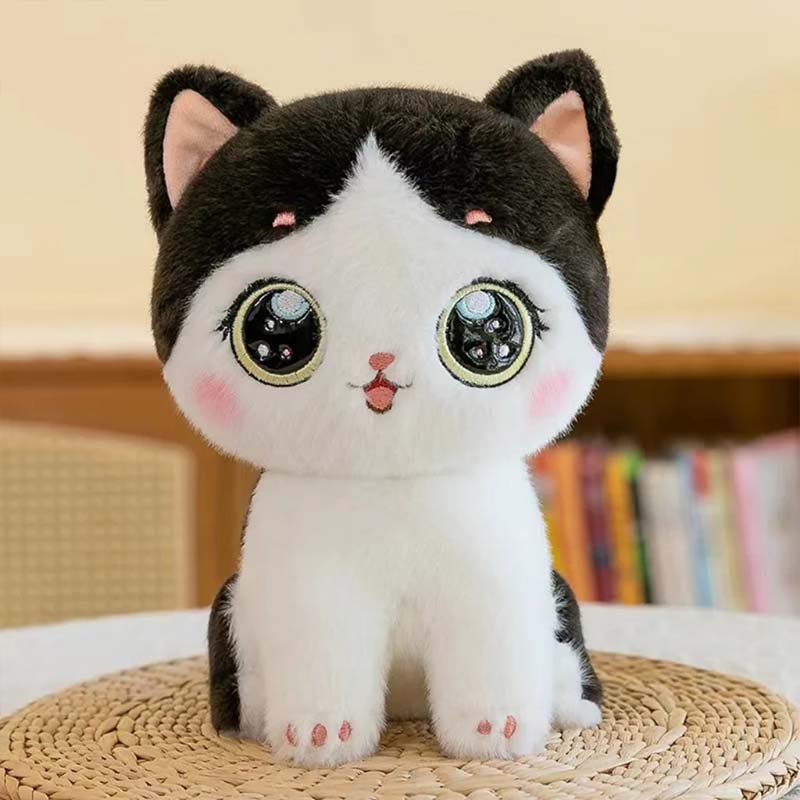
Kawaii cat plush toys are rooted in character abstraction rather than animal realism. Bodies are short and rounded, heads are large, and tails are often simplified or reduced to avoid visual distraction. This keeps attention focused on the face, which is the emotional core of the design.
Expressions are understated—straight-line mouths, dot eyes, or mildly curious looks—which aligns with Japanese design preferences for subtle emotion. This restraint allows the plush to feel calm and collectible rather than overly playful.
From a business perspective, kawaii cat plush toys are ideal for series-based development. Small variations in color, outfit, or accessories can generate multiple SKUs without changing the base pattern, improving cost efficiency and consistency.
| Aspect | Kawaii Cat Strategy | Production Value |
|---|---|---|
| Body proportion | Short & rounded | Easy pattern consistency |
| Facial expression | Minimal & calm | Collectible appeal |
| Tail design | Simplified or hidden | Clean silhouette |
| Customization | Outfit / color variants | SKU expansion |
| Market fit | Character collections | Long product lifecycle |
Kawaii Shiba Inu Plush with Chubby Body Proportions
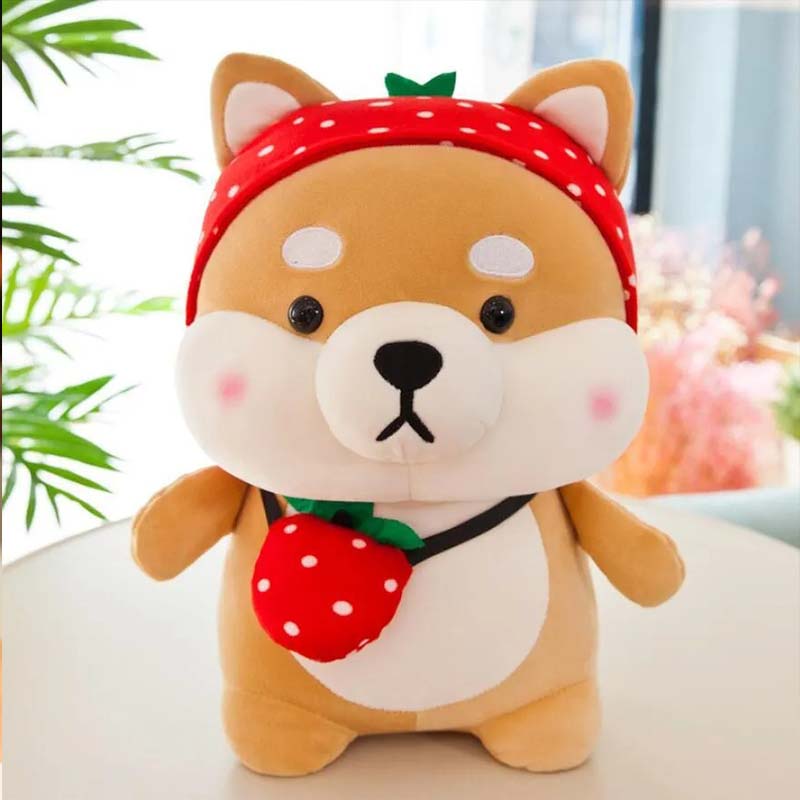
Kawaii Shiba Inu plush toys succeed because they combine two strong drivers: breed recognition and kawaii exaggeration. The Shiba Inu is already a globally recognizable dog shape, but the Japanese kawaii version makes it even more “approachable” by shortening the legs, rounding the body, and enlarging the head. This creates a chubby silhouette that looks stable, friendly, and easy to hug.
The key design detail is the face. Shiba Inu plush often uses simplified embroidered eyes, a small triangular nose, and a gentle mouth line that hints at a smile without becoming cartoonish. Cheek blush or soft shading is often added to emphasize warmth. Ears are typically smaller and more rounded than realistic Shiba ears, because sharp ear points can look “aggressive” in kawaii aesthetics.
From a manufacturing standpoint, Shiba plush benefits from fabrics that hold shape while staying soft. Short-pile plush and velboa are common, and internal stitching must control facial symmetry. Because consumers strongly recognize Shiba features, small alignment errors (eye distance, nose position, ear placement) can quickly reduce perceived quality. Brands planning multiple SKUs often build Shiba lines using a shared base pattern, then differentiate through accessories (bandanas, seasonal costumes, or themed hoodies) to extend lifecycle.
| Key Factor | Kawaii Shiba Approach | Why It Works Commercially |
|---|---|---|
| Silhouette | Chubby body + short limbs | Strong “hug appeal” |
| Face style | Simplified, friendly expression | Wide age acceptance |
| Ears | Rounded, smaller scale | Softer emotional tone |
| Fabric choice | Short-pile plush / velboa | Shape stability + softness |
| SKU strategy | Same base, different outfits | Low-cost series expansion |
Kawaii Axolotl Plush Popular in Japanese Cute Culture
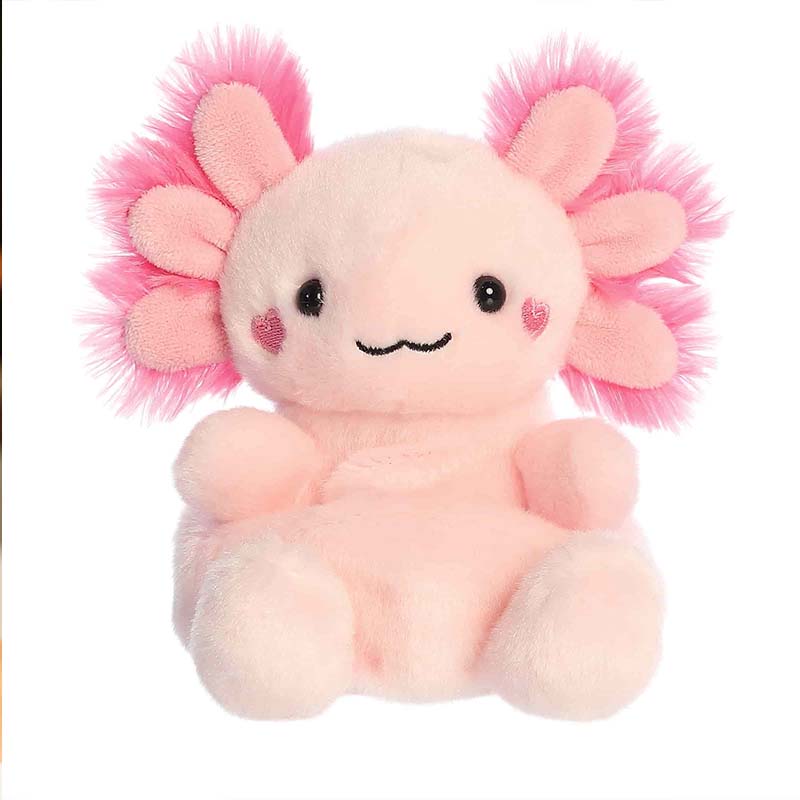
The kawaii axolotl plush is a perfect example of how Japanese cute culture turns niche animals into mainstream plush categories. Axolotl designs work because they offer a distinctive, instantly recognizable shape—rounded head, small body, and external gills—while still being easy to simplify into clean plush forms.
In kawaii styling, axolotl plush toys usually prioritize smooth lines and soft pastel colors such as light pink, lavender, mint, or cream. The gill frills are often made using short-pile fabric layers, felt-like fabric, or stitched plush fins that sit securely without fraying. The face is usually extremely minimal, often just embroidered dot eyes and a tiny mouth, which makes the product feel calm and collectible.
For buyers, axolotl plush toys perform well in youth-driven markets and gift categories because they feel “different” from traditional animals without being scary. They also fit well into collectible programs: brands can release color variants, themed seasonal versions, or mini sizes that drive repeat purchase. From a production view, the main risk is gill durability. If gills are too thin, they deform or fray; if too thick, they look bulky and reduce the kawaii effect. Proper reinforcement stitching and material selection are essential.
| Design / Production Point | Kawaii Axolotl Best Practice | Risk to Control |
|---|---|---|
| Color palette | Pastel, low saturation | Color mismatch across batches |
| Gills construction | Reinforced layered pieces | Fraying or deformation |
| Face detailing | Minimal embroidery | Misalignment becomes obvious |
| Body proportion | Rounded, compact shape | Stuffing unevenness |
| Product strategy | Color variants + mini sizes | SKU confusion without planning |
Kawaii Frog Plush with Simple Expression and Soft Shape
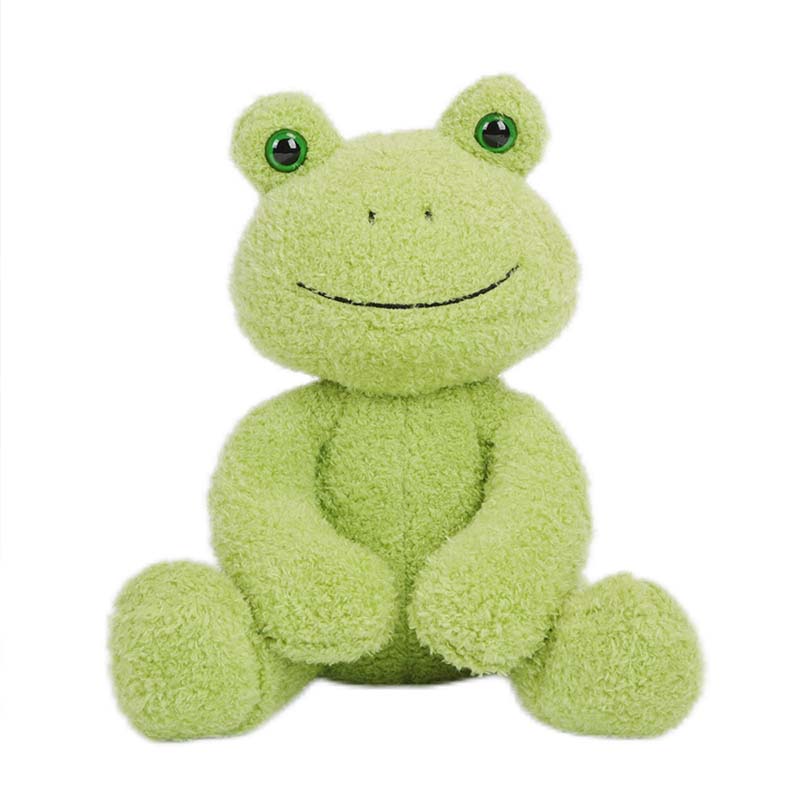
Kawaii frog plush toys win because they deliver maximum emotional comfort with minimal complexity. The frog is naturally suited to kawaii design: it already has a rounded head shape, large eyes, and a simple body structure. Japanese kawaii frogs typically remove realistic anatomy and focus on a smooth, “blob-like” form that feels friendly and soothing.
The expression is the core. Most kawaii frog plush toys use very simple embroidery—large rounded eyes (sometimes with a small highlight stitch) and a small mouth line. Many designs add blush cheeks to avoid a blank face. The body is often made as a single rounded form with small arms and legs that feel attached but not detailed, which makes the plush more cuddle-friendly and reduces sewing complexity.
From a B2B perspective, kawaii frog plush toys are highly scalable. They can be produced in many sizes—from palm-size keychains to large pillow plush—and the same pattern can be adapted with minor changes. They are also strong for themed collections: rain-themed, forest friends, school gift assortments, or wellness plush lines. The main quality challenge is maintaining consistent face placement and eye symmetry, because the simplified design gives little room to hide errors.
| Advantage Area | Kawaii Frog Design Choice | Brand / Buyer Benefit |
|---|---|---|
| Shape | Soft, rounded “blob” body | High cuddle appeal |
| Expression | Minimal face + blush | Calm, gift-friendly |
| Scalability | Easy to resize pattern | Multi-size product lines |
| Production efficiency | Low complexity sewing | Cost control at volume |
| Quality control | Face symmetry checks | Prevents visual defects |
Kawaii Hamster Plush with Pocket-Size Cuteness
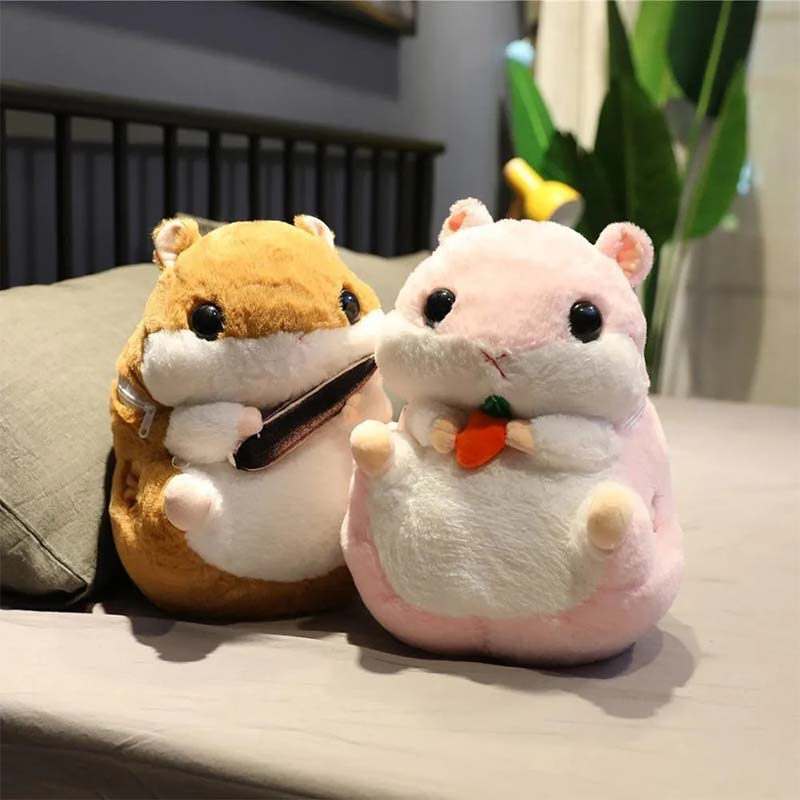
Kawaii hamster plush toys are designed to maximize small-scale cuteness. The defining feature is a compact, rounded body that feels palm-sized and lightweight. Heads are typically large relative to the body, with cheeks emphasized to enhance the hamster’s naturally chubby appearance. This proportion immediately signals “cute” and makes the plush ideal for handheld use.
Facial expressions are simple and friendly. Small embroidered eyes, tiny noses, and soft mouth lines keep the plush calm and approachable. Many designs use neutral or warm pastel tones—cream, light brown, soft gray—to avoid visual overload. Because these plush toys are often small, fabric choice is critical. Short-pile plush or velboa is preferred to prevent fuzziness from obscuring facial details.
Commercially, kawaii hamster plush toys perform exceptionally well as impulse-buy items. They are common in capsule collections, desk companions, gift add-ons, and bundled plush sets. From a manufacturing standpoint, precision is key. At smaller sizes, even slight misalignment in embroidery or uneven stuffing is immediately noticeable, so tight quality control is essential.
| Key Area | Kawaii Hamster Design | Business Impact |
|---|---|---|
| Size | Small, palm-sized | Strong impulse appeal |
| Proportion | Large head, chubby body | Instant cuteness |
| Fabric | Short-pile plush | Clear facial detail |
| Usage | Desk, gifts, bundles | High turnover items |
| QC risk | Embroidery alignment | Visibility of defects |
Kawaii Unicorn Plush with Pastel Rainbow Details
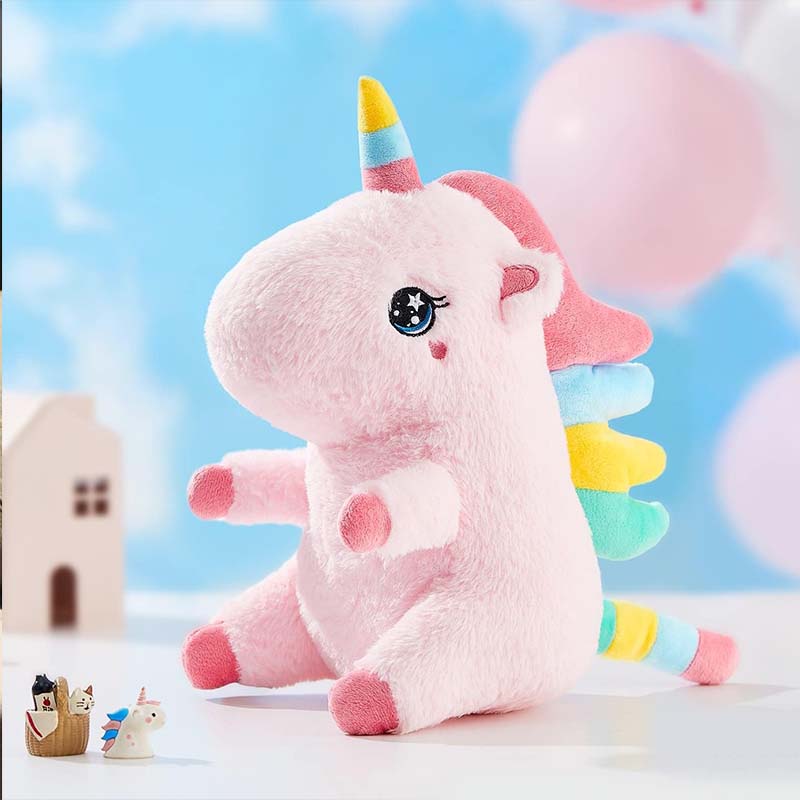
Kawaii unicorn plush toys combine fantasy elements with soft emotional design, making them one of the most commercially durable kawaii categories. Unlike Western unicorn plush that often emphasize dramatic horns or bold colors, Japanese kawaii unicorns are intentionally gentle. Horns are short and rounded, manes are simplified, and rainbow elements are muted into pastel tones.
The face remains central to the kawaii effect. Eyes are typically embroidered with soft curves or dots, and expressions are calm rather than excited. Body shapes are rounded and slightly oversized in the head area, maintaining a baby-like proportion. Metallic fabrics are sometimes used for horns or accents, but always sparingly to avoid breaking the soft aesthetic.
From a product strategy perspective, kawaii unicorn plush toys are ideal for long-term collections. Color variations, seasonal themes, and size differences allow brands to refresh assortments without redesigning the core pattern. Production-wise, controlling color consistency across pastel fabrics and keeping horn attachments secure are key quality challenges.
| Design Element | Kawaii Unicorn Style | Production Consideration |
|---|---|---|
| Color palette | Pastel rainbow tones | Color batch consistency |
| Horn design | Short, rounded | Secure attachment |
| Mane & tail | Simplified shapes | Sewing efficiency |
| Market role | Fantasy evergreen | Long product lifecycle |
| QC focus | Color + horn stability | Prevent returns |
Kawaii Cloud Plush with Smiling Face Design
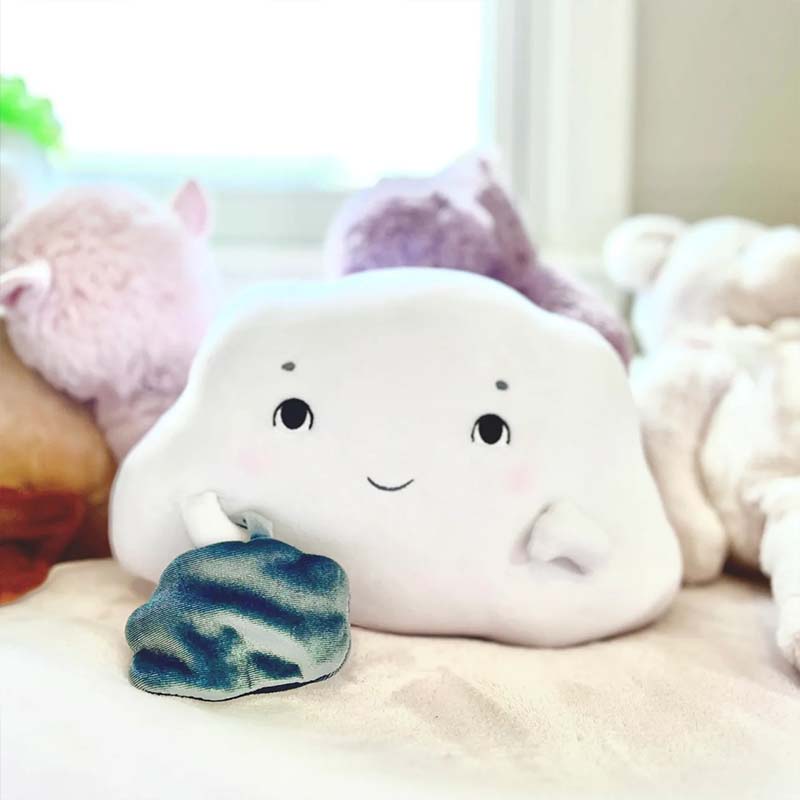
Kawaii cloud plush toys are designed to deliver emotional softness and visual calm rather than character-driven storytelling. Their appeal comes from abstract simplicity. Instead of detailed anatomy, the cloud plush relies on a rounded, uneven outline that feels organic and light, combined with a gentle smiling face that immediately signals comfort.
The facial design is extremely restrained. Most kawaii cloud plush toys use small embroidered eyes and a curved smile placed low on the face, which creates a relaxed, reassuring expression. Some designs include blush cheeks to add warmth, but excessive detail is avoided. Color choice is critical—white, cream, or very light pastel blue are most common, reinforcing a clean and peaceful aesthetic.
From a commercial perspective, kawaii cloud plush toys work especially well in home décor, wellness, and lifestyle retail. They are frequently used as bed companions, sofa accents, or emotional comfort items rather than play-focused toys. For manufacturers, the main challenge is maintaining smooth stuffing distribution. Uneven filling can distort the cloud silhouette and break the soft visual balance that defines the product.
| Design Focus | Kawaii Cloud Approach | Commercial Advantage |
|---|---|---|
| Shape | Soft, organic outline | Visual calm & comfort |
| Facial style | Small smile, low placement | Emotional reassurance |
| Color palette | White / pale pastels | Home décor compatibility |
| Usage context | Bedroom & lounge | Broader age appeal |
| QC priority | Even stuffing | Maintains silhouette |
Kawaii Star Plush with Soft, Rounded Points
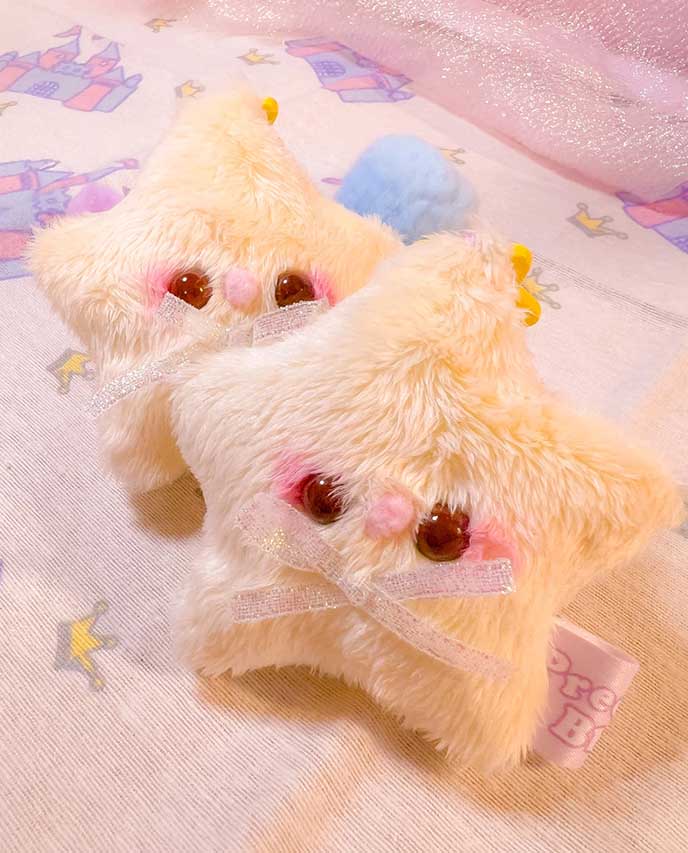
Kawaii star plush toys transform a geometric shape into something emotionally friendly. Instead of sharp points, the star’s edges are rounded and padded, creating a smooth outline that feels safe and huggable. This rounded geometry is essential—sharp-looking angles break the kawaii aesthetic and reduce perceived softness.
Facial features are typically centered, with small embroidered eyes and a neutral or slightly smiling mouth. Because the star shape itself is visually strong, facial expressions are kept minimal to avoid visual overload. Color palettes often include soft yellow, cream, pastel pink, or light lavender, sometimes combined with subtle gradient effects.
In retail, kawaii star plush toys are popular as decorative plush, night companions, or themed gifts. They are frequently used in nursery décor, bedtime product lines, and seasonal collections. From a production standpoint, consistent seam curvature and symmetrical point shaping are essential. Any unevenness becomes obvious due to the repetitive geometry of the shape.
| Key Aspect | Kawaii Star Design | Manufacturing Note |
|---|---|---|
| Point structure | Rounded, padded edges | Requires precise pattern |
| Face placement | Centered, minimal | Symmetry critical |
| Color choice | Soft, warm tones | Visual harmony |
| Market use | Nursery & décor | Strong gifting role |
| QC challenge | Shape consistency | Visible defects if uneven |
Kawaii Mochi-Style Animal Plush with Squishy Look
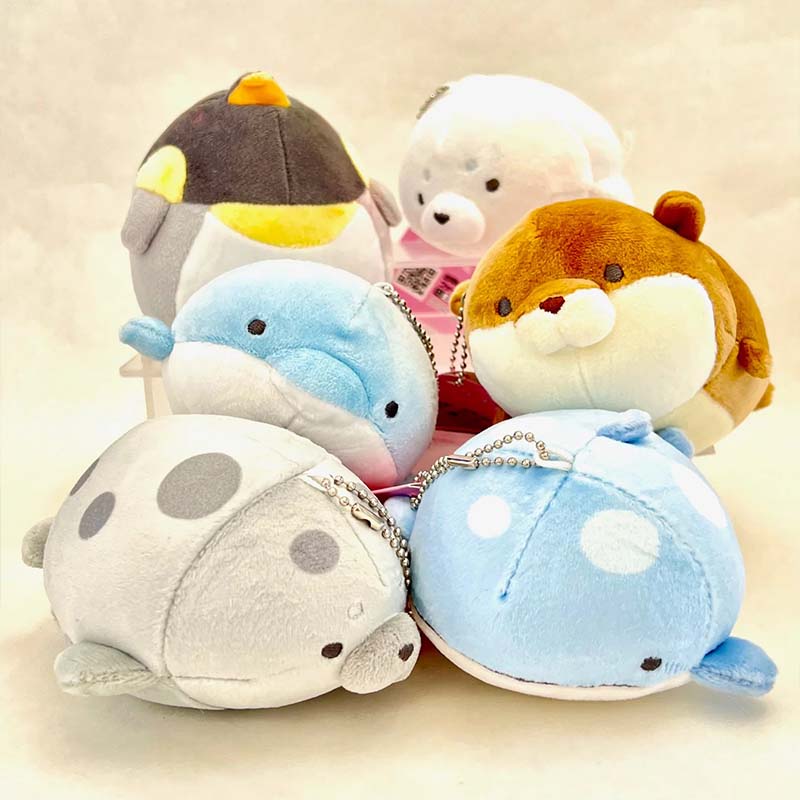
Kawaii mochi-style animal plush toys are inspired by the texture and form of traditional Japanese mochi sweets. Their defining characteristic is a low-profile, squishy body that feels soft, dense, and slightly elastic when squeezed. Unlike traditional plush that emphasize volume, mochi plush prioritize tactile feedback.
Animal features are reduced to the bare minimum. Faces often consist of tiny embroidered eyes and a dot or short line mouth. Limbs, ears, or tails are either extremely small or omitted entirely, allowing the plush to maintain a smooth, rounded form. Fabrics are typically ultra-short-pile plush or spandex-blend materials that enhance the squishy hand feel.
From a product strategy standpoint, mochi-style plush toys are highly effective in collectible series and impulse-buy programs. They encourage squeezing, stacking, and collecting multiple variants. However, production requires careful control of filling density. Too little filling causes collapse; too much removes the squishy effect. Stitch tension and seam reinforcement are also critical due to frequent handling.
| Feature Area | Mochi Plush Design | Production Risk |
|---|---|---|
| Body form | Low-profile, rounded | Shape collapse |
| Texture | Squishy, elastic feel | Filling imbalance |
| Facial detail | Ultra-minimal | Alignment visibility |
| Consumer behavior | Squeeze & collect | Seam durability |
| QC focus | Filling density | Loss of tactile appeal |
Kawaii Penguin Plush with Tiny Beak and Fluffy Body
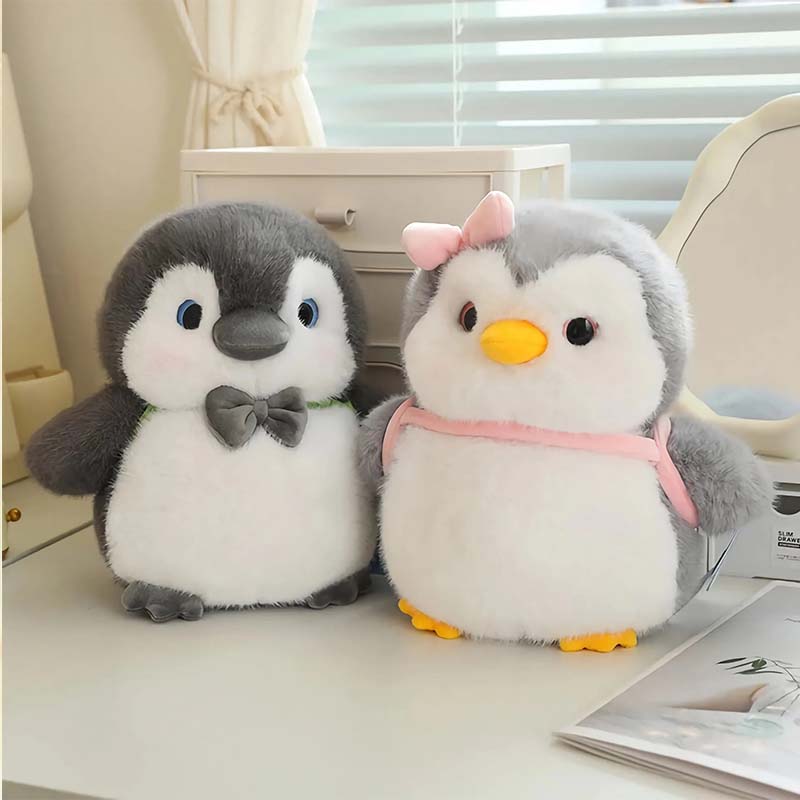
Kawaii penguin plush toys succeed because they naturally combine roundness, softness, and emotional neutrality, which are core elements of Japanese cute design. The kawaii interpretation avoids sharp contrasts or realistic detailing. Instead, the body is shaped into a smooth oval, with a slightly oversized head and very small flippers that feel decorative rather than functional.
The beak is intentionally tiny and often embroidered instead of constructed as a separate fabric piece. This reduces visual sharpness and improves safety perception, especially for younger users. Eyes are spaced widely to enhance a gentle, innocent look. Color palettes typically use soft black-and-white contrasts, sometimes softened further with gray or cream tones to avoid harsh visual edges.
From a commercial perspective, kawaii penguin plush toys are strong performers in winter gifting, seasonal collections, and all-age lifestyle retail. They feel festive without being tied to a specific holiday, which gives them longer shelf life. In production, maintaining fluffiness without excessive fiber shedding is a key quality control point.
| Design Aspect | Kawaii Penguin Approach | Commercial Value |
|---|---|---|
| Body shape | Rounded, fluffy oval | Strong cuddle appeal |
| Beak design | Tiny, embroidered | Safe & soft appearance |
| Color balance | Soft black / white | Seasonal but flexible |
| Market fit | Winter & lifestyle | Extended selling window |
| QC focus | Fiber shedding control | Reduces returns |
Kawaii Doll Plush with Japanese Outfit Styling
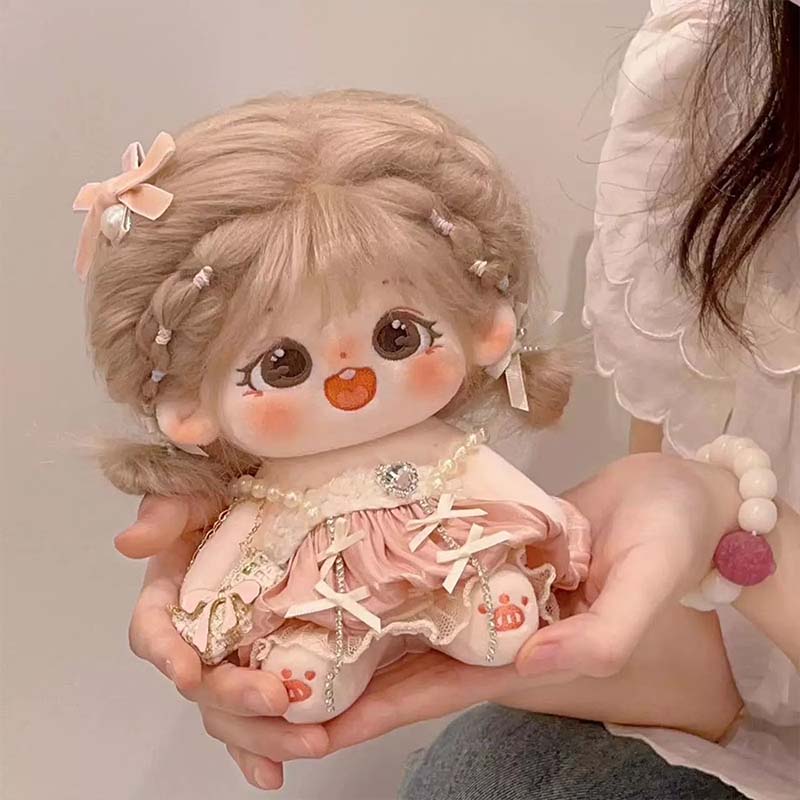
Kawaii doll plush toys with Japanese outfit styling add cultural storytelling to the kawaii aesthetic. These designs often feature simplified human-like forms dressed in kimono-inspired outfits, school uniforms, or festival clothing. The doll body itself remains minimal, with rounded limbs and a large head that supports expressive but gentle facial embroidery.
Outfits are a critical design element. Rather than complex tailoring, kawaii dolls use simplified garment layers, often stitched directly onto the body to avoid loose parts. Patterns, bows, or obi-style belts are suggested through color blocking and embroidery rather than actual accessories, which helps control cost and improves durability.
For brands, these plush dolls are especially suitable for souvenir markets, licensed collaborations, and gift programs tied to Japanese culture. They also work well as collectible series, where outfit variations create new SKUs without changing the core body pattern. From a manufacturing perspective, managing fabric color consistency and embroidery placement across outfits is essential.
| Feature Area | Kawaii Doll Strategy | Business Benefit |
|---|---|---|
| Body structure | Simplified, rounded | Stable base pattern |
| Outfit execution | Stitched-on garments | Durability & safety |
| Cultural element | Japanese styling | Storytelling value |
| SKU expansion | Outfit variations | Low development cost |
| QC priority | Embroidery alignment | Visual consistency |
Kawaii Food Plush (Rice Ball or Taiyaki Style)
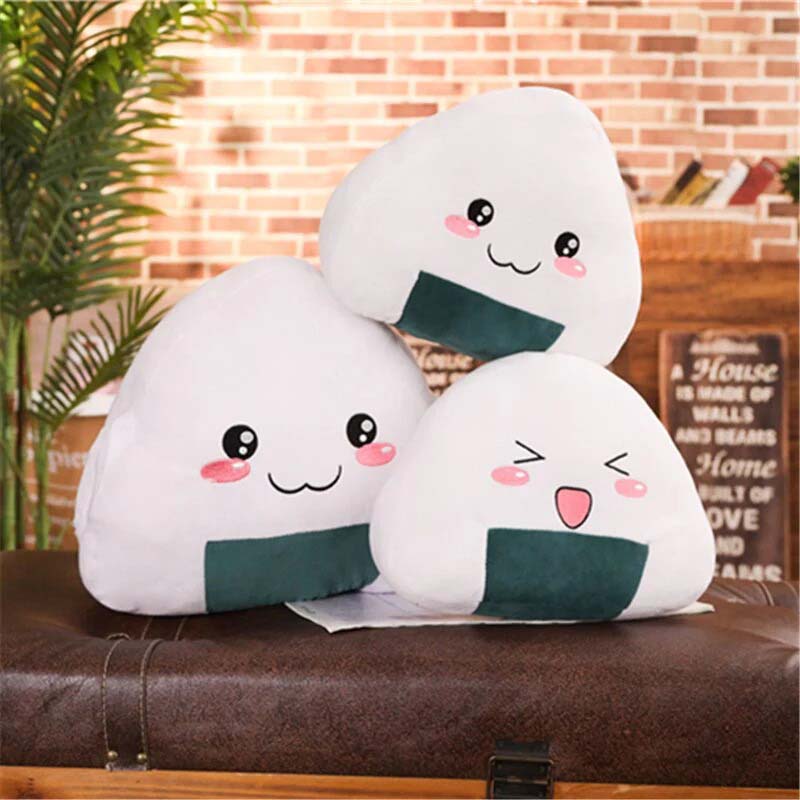
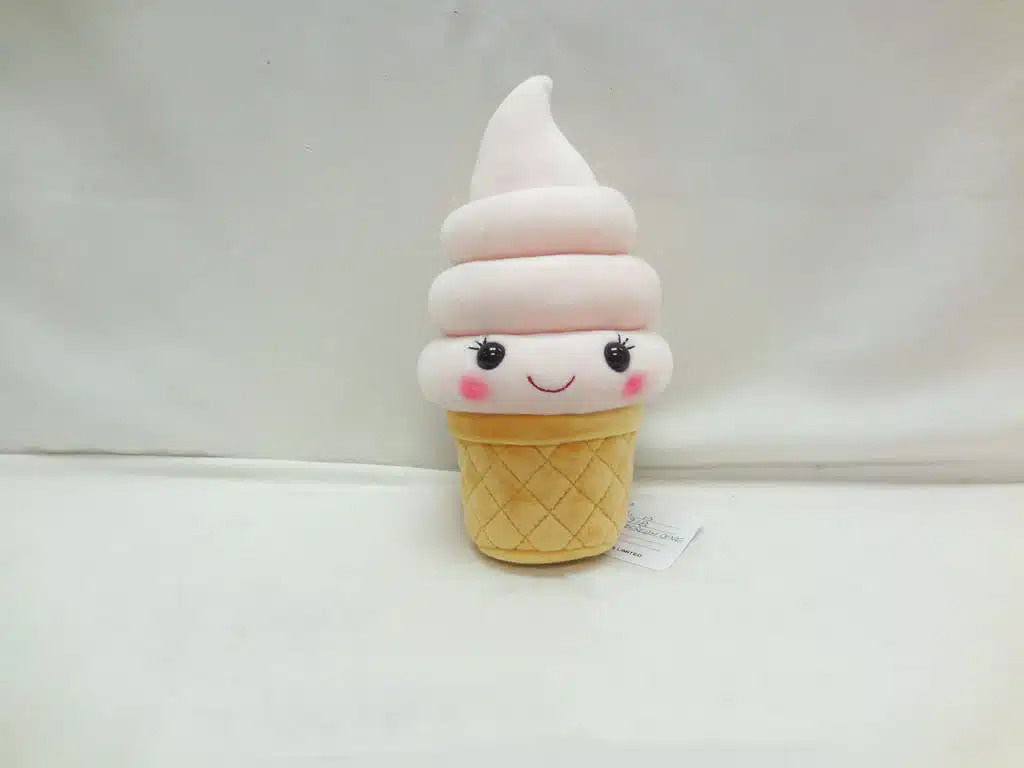
Kawaii food plush toys are a defining category within Japanese cute culture, turning everyday foods into emotional comfort objects. Rice balls (onigiri) and taiyaki-shaped plush are among the most recognizable. Their success comes from familiar shapes combined with soft character faces, creating an immediate sense of warmth and nostalgia.
Designs are intentionally simple. The food shape is preserved, but edges are rounded and softened. Facial expressions are minimal—often just two small eyes and a tiny mouth—placed low on the body to avoid clutter. Fabric choices usually favor smooth short-pile plush or velboa to keep the shape clean and recognizable.
Commercially, kawaii food plush toys perform exceptionally well as impulse gifts, souvenir items, and bundled plush sets. They are easy to display, easy to explain to consumers, and highly shareable on social media. Production challenges include maintaining shape integrity and preventing distortion during stuffing, especially for triangular or curved food forms.
| Design Element | Kawaii Food Plush Style | Sales Advantage |
|---|---|---|
| Shape | Simplified food silhouette | Instant recognition |
| Face detail | Minimal, low placement | Cute without clutter |
| Fabric | Smooth short-pile | Clean outline |
| Use case | Souvenir & impulse | High turnover |
| QC challenge | Shape distortion | Affects perceived quality |
Conclusion
Japanese kawaii plush toys succeed because they are built on a disciplined design philosophy, not just surface-level cuteness. By prioritizing rounded forms, minimal expressions, soft color palettes, and emotional comfort, kawaii plush designs create products that resonate across ages and markets. For brands and buyers, understanding these structural and commercial principles allows kawaii plush toys to be developed as scalable, long-term product lines rather than short-lived trends.
📧 Contact: [email protected]
🌐 Visit: https://kinwintoys.com