Over time, even the most loved stuffed animal can feel rough, stiff, or “not as nice as before.” The good news: in many cases you can bring back a lot of softness with the right methods.
When customers visit my factory or email me, they often ask how to keep plush samples and retail toys looking and feeling soft—especially when children are very attached to them. In this guide, I’ll explain, in simple and practical steps, what causes plush to get stiff, how to clean and brush it correctly, how to use gentle heat safely, how to refresh stuffing, and what daily habits protect softness over the long term.
By the end, you’ll know how to rescue favorite toys at home and also how to design or source softer plush products for your own brand.
What factors cause stuffed animals to become stiff or less soft over time?

Before you fix softness, you need to understand why it changed. Most stuffed animals become stiff because of a combination of dirt, moisture, compression, low-quality materials, and aging. The surface fibers and inner stuffing both play a role.
From a manufacturer’s view, I always look at two levels:
- The outer plush (fabric pile and finish)
- The inner core (stuffing and internal structure)
Both can lose resilience and softness if they face the wrong conditions for too long.
Main reasons plush toys lose softness
| Cause Category | What Happens in Real Life | Effect on Softness |
|---|---|---|
| Dirt & skin oils | Natural oils, sweat, dust, food residue | Fibers stick together, feel rough and heavy |
| Moisture & humidity | Drool, spills, damp storage, slow drying after washing | Pile mats, stuffing clumps, toy feels “stale” |
| Compression & pressure | Sleeping on toy, stacking, tight storage | Fabrics flatten, stuffing compacts |
| Harsh washing | Hot water, strong detergent, long agitation, high spin | Fibers roughen, pile tangles, stuffing shifts |
| High heat | Hot dryer, radiators, direct strong sun | Synthetic fibers can harden or slightly melt |
| Low-quality materials | Cheap fabric or hollow fiber that collapses quickly | Softness disappears fast with normal use |
| Aging & UV exposure | Long-term light and wear | Surface becomes dull, less flexible |
If the fibers are melted or burned, the damage is permanent. But if the problem is mostly dirt, matting, or compression, you can usually improve softness with safe cleaning, brushing, and stuffing care.
How do proper cleaning methods restore plush softness safely?
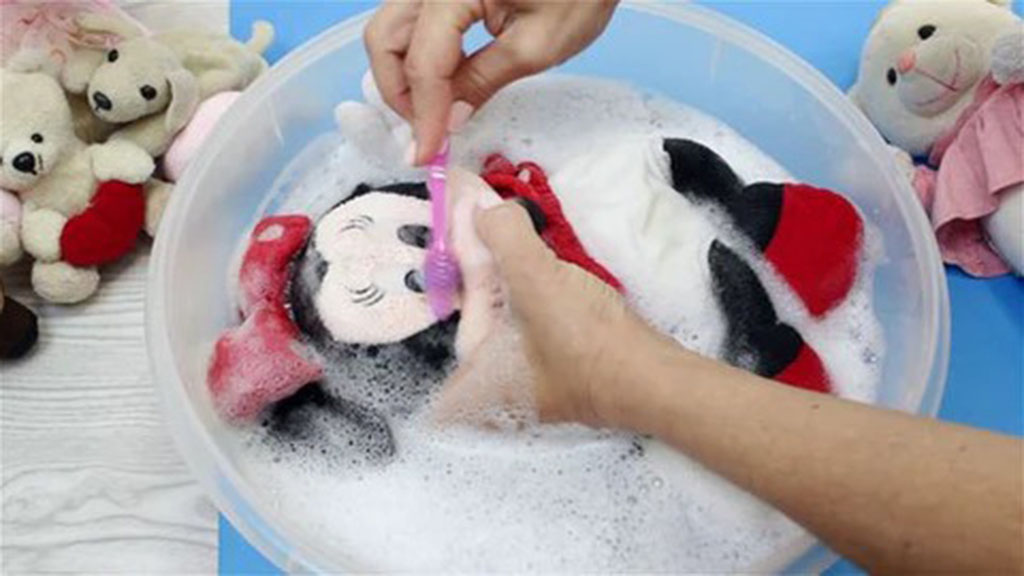
Many people wash stuffed animals in the same way as towels or jeans—and then wonder why the toy becomes rough or stiff. Good cleaning is about removing dirt and oils without attacking the fibers or stuffing.
I always recommend you start with the care label. If there is no label, treat the toy as a delicate synthetic and avoid hot water, bleach, or harsh chemicals.
Choosing the right cleaning approach
Key idea:
- Lightly soiled toys → surface clean
- Moderately soiled → hand wash or gentle machine wash
- Heavily soiled → careful deep clean plus extra time for drying
Use a mild detergent, ideally one formulated for delicate fabrics or baby clothes. Avoid fabric softener directly on plush—it can sometimes leave a film and make fibers sticky.
Cleaning methods and when to use them
| Toy Condition | Recommended Cleaning Method | Notes for Softness |
|---|---|---|
| Light dust, no stains | Vacuum with soft brush, then air out | Often enough to keep softness and freshness |
| Slight dirt or marks | Spot clean with mild soap and damp cloth | Avoid soaking stuffing; dab, don’t scrub harshly |
| Overall mildly dirty, washable label | Machine wash cold, gentle cycle, in laundry bag | Use mild detergent, low spin, no bleach |
| Very delicate or unknown care label | Hand wash in cool water with gentle detergent | Press water through, do not twist or wring |
| Has electronics or sound module | Surface clean only, no soaking | Keep internal components fully dry |
Simple washing process to support softness
- Pre-check
- Look for loose seams, broken parts, or sensitive areas.
- Secure or fix weak seams before washing to prevent damage.
- Pre-treat stains
- Apply a small amount of diluted detergent to spots.
- Gently work with fingers or a soft cloth.
- Gentle wash
- For machine: use a mesh laundry bag, cold water, and “delicate” mode.
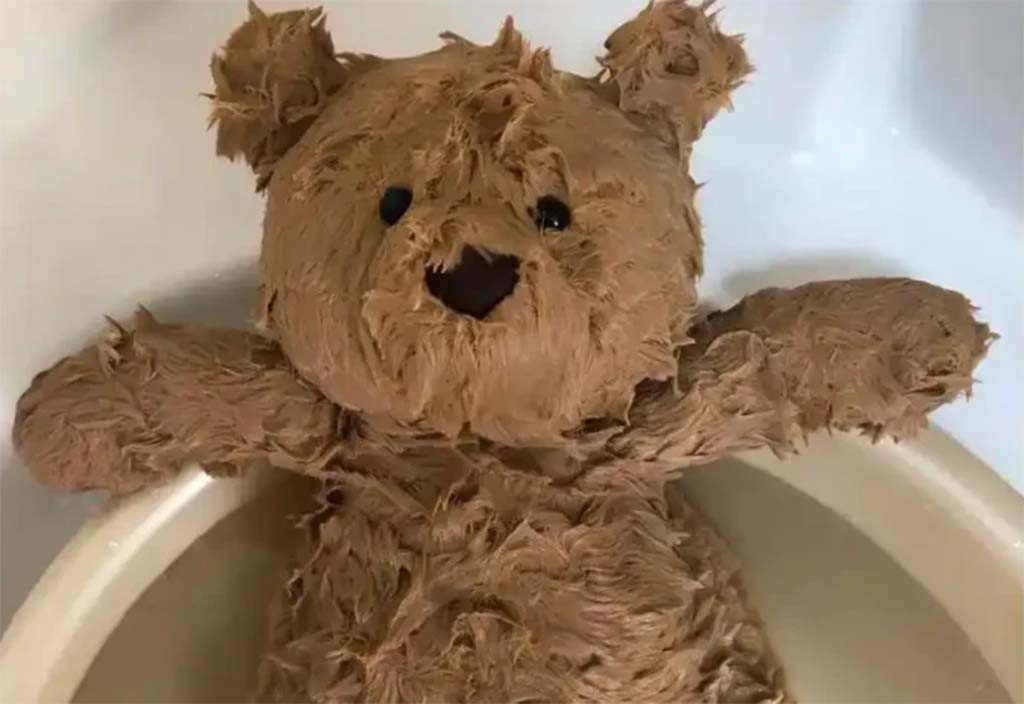
- For hand wash: submerge and gently press water through, avoiding harsh rubbing.
- Rinse thoroughly
- Ensure all detergent is removed. Soap left in fibers can cause stiffness.
- Dry carefully
- Press out water with a towel; do not twist.
- Air-dry flat or hanging in a shaded, well-ventilated area.
Once the toy is clean and dry (or almost dry), you can focus on brushing and fluffing to recover surface softness.
How can brushing and fiber-care techniques revive surface texture?
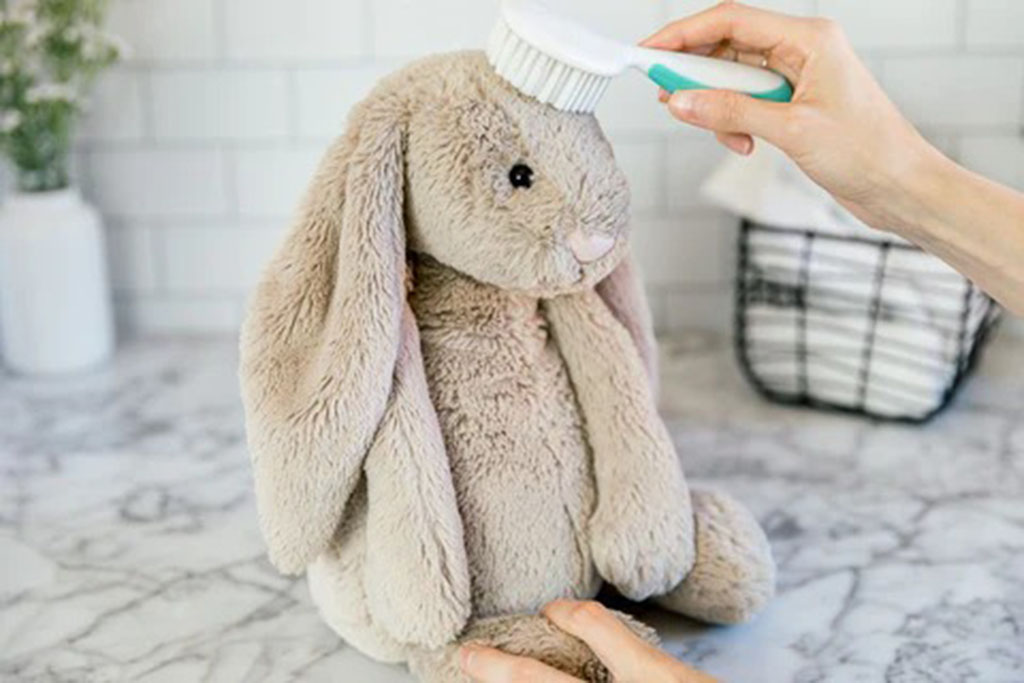
Cleaning removes dirt, but brushing restores texture. When plush pile lies flat or tangles, the toy feels rough and looks tired. Controlled brushing brings the fibers back up and makes the surface feel softer to the hand.
For longer-pile plush, brushing is almost as important as washing. For short-pile plush, even a quick fiber-lift can make the toy feel fresher.
Tools for gentle fiber care
- Soft clothes brush or baby hairbrush
- Pet slicker brush (used very gently, only on durable fabrics)
- Wide-tooth comb for longer faux fur sections
- Microfiber cloth to loosen light surface matting
Brushing method
- Start with dry or almost-dry plush
- Slightly damp is okay, but never soak-wet under a brush.
- Brush with the pile direction first
- This untangles fibers and removes small debris.
- Lift the fibers
- On stronger fabrics, you can brush gently against the pile to add volume.
- Use short, light strokes; avoid pulling.
- Detail work
- Use the tip of the brush or a comb on ears, tail, or small areas.
- Smooth final pass
- Finish by brushing lightly in the final desired direction so the surface looks neat and soft.
Fiber-care tools and their best uses
| Tool / Method | Best For | Softness Benefit |
|---|---|---|
| Soft clothes / baby brush | Short or medium pile plush | Lifts fibers without damage, gentle daily care |
| Pet slicker brush | Heavily matted, long-pile faux fur on strong fabric | Restores volume and separates clumps |
| Wide-tooth comb | Long manes, tails, fringes | Detangles without over-pulling |
| Microfiber cloth | Light surface flattening on short-pile plush | Quick refresh, especially for display pieces |
| Finger combing | Very delicate plush, old toys | Safe way to slowly loosen fibers |
Regular light brushing can delay the need for deep cleaning and keep stuffed animals soft for much longer.
How do steam or heat treatments help soften matted plush fibers?
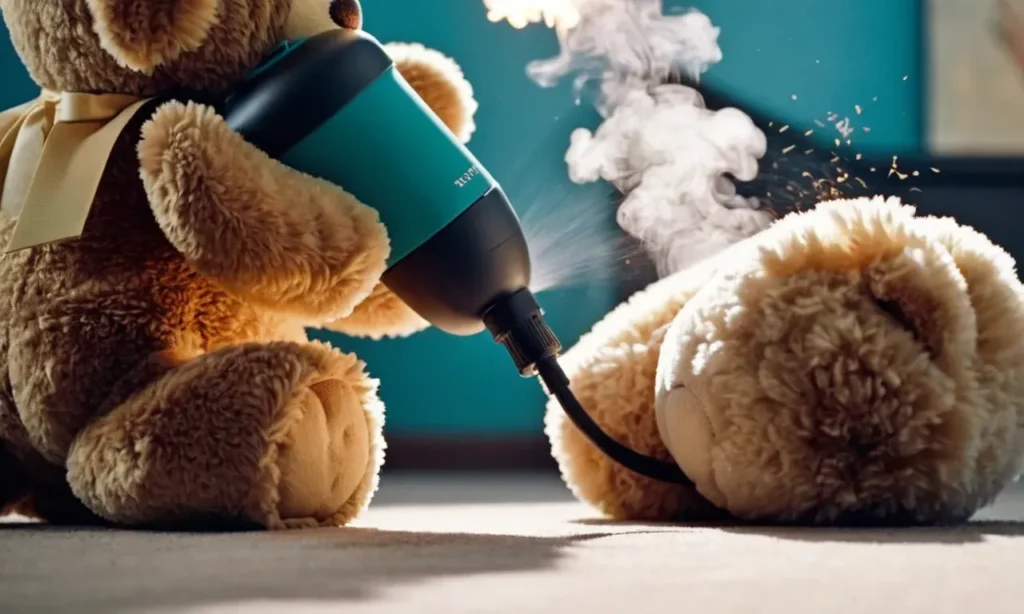
When plush fibers are bent and compressed for a long time, they become stiff and “remember” the flat position. Gentle steam or low heat can relax synthetic fibers so they respond better to brushing and regain some softness.
However, too much heat is dangerous. High temperature can melt, shrink, or harden polyester and other synthetic fibers. So we always use controlled, indirect heat.
Safe ways to use steam and heat
- Warm (not hot) hairdryer
- Use low heat and low airflow.
- Keep at least 20–30 cm away from the toy and keep moving.
- Bathroom steam
- Hang the toy in the bathroom while you take a warm shower.
- Do not place it directly in water; let gentle steam soften fibers.
- Garment steamer (indirect)
- Test on a small hidden patch first.
- Keep the steamer head at a distance, without soaking the plush.
- Dryer with “air-only” setting
- Put the toy in a laundry bag with 1–2 clean dryer balls or tennis balls.
- Use no heat; the movement helps separate fibers and loosen stuffing slightly.
Simple steam-softening process
- Test area
- Choose a hidden spot and apply a little steam or warm air.
- Check if fibers respond well without any shine or damage.
- Apply gentle steam/warm air overall
- Work in sections, never leaving the heat source on one spot.
- Brush while slightly warm
- As fibers relax, brush gently to lift and separate them.
- Let the toy cool and dry fully
- Place in a cool, dry area until everything is completely dry.
Heat & steam options and safety notes
| Method | Softening Effect | Safety Notes |
|---|---|---|
| Warm hairdryer | Loosens light matting when combined with brushing | Always use low heat and keep moving |
| Bathroom steam | Gentle, low-risk softening | Avoid adding extra moisture to stuffing |
| Garment steamer (indirect) | Stronger softening for tough matting | Test first, keep distance, do not over-wet |
| Air-only dryer with balls | Helps fluff fibers and redistribute stuffing | Only if care label allows tumbling |
| Low-heat dryer | Can freshen plush, but higher risk | Use only when label clearly confirms low-heat OK |
If you are not sure about heat safety, choose steam from a distance plus brushing, and skip the dryer completely.
How do you refresh or replace stuffing to improve softness inside the toy?
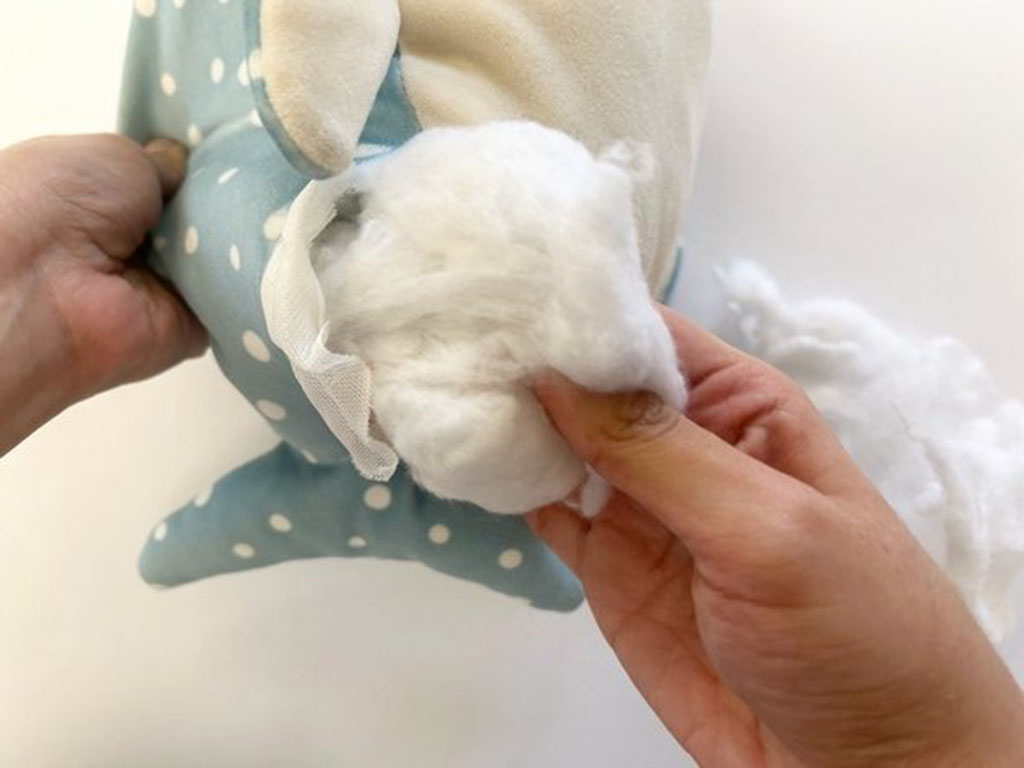
Even if the outer fabric feels okay, a stuffed animal may still feel “hard” or “empty” in your arms if the stuffing inside is clumped, flattened, or missing in some zones. In our factory, we control stuffing by weight and zones, but at home you can still do a lot with simple tools and fresh fiberfill.
Signs the stuffing needs attention
- The toy feels hard in some spots and flat in others.
- The head or body collapses and cannot sit or stand properly.
- After washing, the inside feels lumpy or uneven.
Quick fixes without opening seams
- Hold the toy with both hands and massage lumpy areas to break clumps.
- Push stuffing gently from over-filled areas into empty ones.
- Roll the toy between your hands to loosen compacted fiber.
These methods can help, but for bigger problems you may need to open a seam carefully.
Refreshing stuffing with light sewing
- Choose access point
- Find a hidden seam (often at the back or bottom).
- Open a few centimeters with a seam ripper or small scissors.
- Remove bad stuffing
- Take out hard, wet, or badly clumped fibers.
- Add fresh polyester fiberfill
- Use small pieces, layering them so the shape is smooth.
- Focus on key areas: cheeks, belly, head, and limbs.
- Check softness and shape
- Squeeze and hug the toy to test feel.
- Adjust as needed before closing.
- Close seam with ladder stitch
- Use strong thread and small, even stitches.
- Ladder stitch (invisible stitch) keeps the repair discreet.
Stuffing issues and solutions
| Problem Inside Toy | What It Feels Like | Suggested Fix |
|---|---|---|
| Hard, compact body | Toy feels stiff and uncomfortable to hug | Remove hard clumps, add fresh fiberfill |
| Flat head or belly | Toy looks tired, cannot hold shape | Add more stuffing to focal areas |
| Uneven weight | Toy leans or twists to one side | Redistribute stuffing, add small amounts to balance |
| Hollow limbs | Arms/legs feel like soft empty tubes | Add a little stuffing through limb seam |
| Overstuffed sections | Very hard zones with too much fill | Remove some stuffing, massage remaining fiber |
A well-restuffed toy often feels softer and more stable than before—and with a brushed surface, it can look close to new.
What maintenance habits keep stuffed animals soft in the long run?
Making a stuffed animal soft again is good. Keeping it soft for years is even better. Long-term softness maintenance is about gentle use, smart cleaning, and good storage. Small habits can dramatically extend the life of a favorite plush.
Think about three main routines: daily handling, periodic care, and storage.
Daily handling habits
- Avoid using plush toys as real pillows for adults’ heads or as seat cushions.
- Encourage children to hug and play, but not sit or stand on toys regularly.
- Keep plush away from food, heavy makeup, and strong perfumes.
Periodic care
- Lightly brush high-use toys every few weeks to keep fibers lifted.
- Air toys out in a shaded area to remove mild odors.
- Clean gently at the first sign of serious dirt, not after months of buildup.
Storage and display
- Store clean, dry toys in a cool, dry place.
- Avoid long-term storage in airtight plastic bags (moisture risk).
- Do not stack heavy items on top of plush toys.
Long-term softness habits at a glance
| Maintenance Area | Practical Habit | Benefit for Softness and Life Span |
|---|---|---|
| Daily use | No sitting/standing on toys | Less compression, better fiber resilience |
| Light brushing | Brush frequently used toys every 2–4 weeks | Prevents matting before it becomes severe |
| Smart washing | Use gentle wash cycles and mild detergent | Keeps fibers smoother and stuffing stable |
| Drying & heat | Prefer air-drying; avoid high heat | Protects synthetic fibers from melting/hardening |
| Storage | Store toys clean, dry, and uncompressed | Reduces risk of mold, odor, and permanent flattening |
| Rotation | Rotate a child’s “favorites” if possible | Each toy gets rest time to recover shape |
If you are a brand or retailer, you can even include simple care tips on hangtags or packaging. This not only protects the product but also shows customers you care about long-term quality.
Conclusion
Stuffed animals usually become less soft because of dirt, moisture, compression, and time—but in many cases, you can restore a lot of their original feel. With gentle cleaning, careful brushing, smart use of steam or low heat, and refreshed stuffing, a “tired” plush can become soft and huggable again. And with the right habits, your toys will stay that way much longer.
At Kinwin, my team and I design and manufacture plush toys with softness, durability, and safety in mind for global buyers. If you’re planning a new plush line—or you want products that stay soft from warehouse to customer home—you’re very welcome to contact me at [email protected] or visit kinwintoys.com to explore how our factory can support your next project.