When people reach for a dog plush, they are looking for comfort, personality, and a little bit of loyalty in fabric form. Behind that feeling, there is a very practical process: materials, patterns, sewing, stuffing, and final checks.
To make a stuffed animal dog, you need soft but durable plush fabric, safe polyester stuffing, a clear pattern that captures canine proportions, strong sewing, secure facial details, and careful finishing. When each step is planned well, your dog plush feels soft in the arms, looks expressive on the shelf, and holds up to real hugging and play.
In this guide, I’ll walk you through the process the way we think in our factory at Kinwin—just explained in simple language so you can use it in your studio, small workshop, or growing brand.
What materials and tools are required to make a stuffed animal dog?
Good materials make your work easier and your dog plush more lovable. Poor materials create rough textures, weak seams, and toys that lose shape too fast. So your first job is to build a solid material “foundation.”
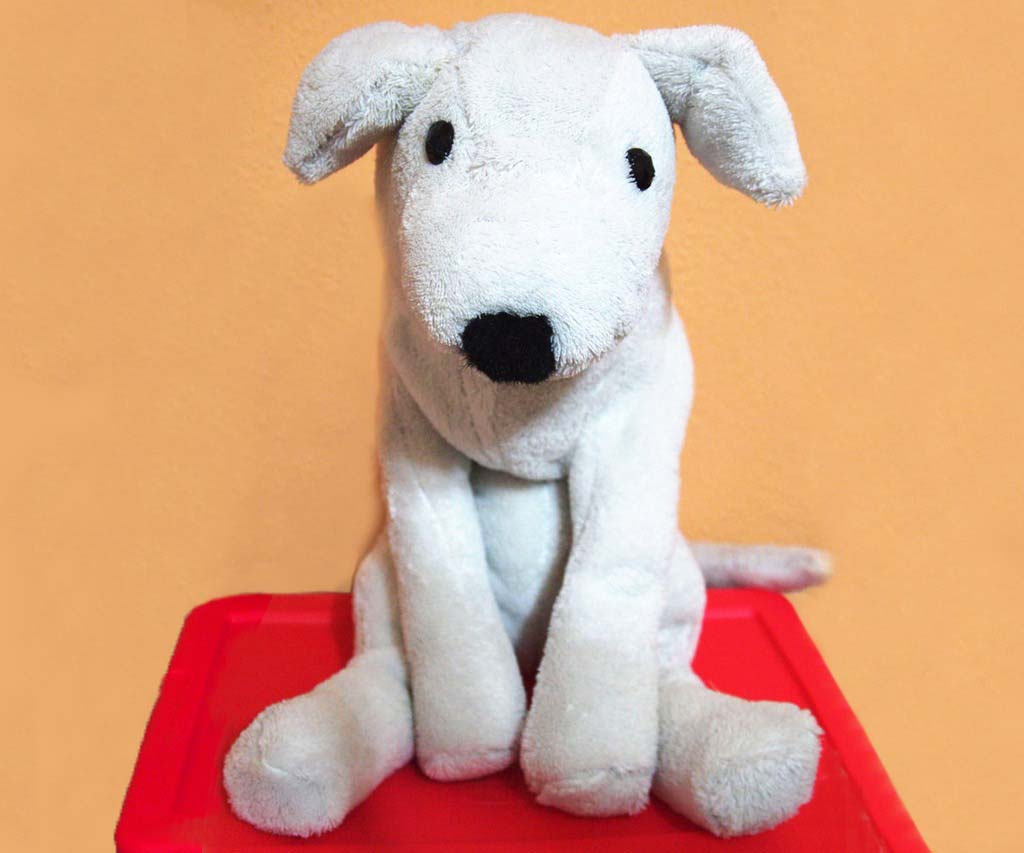
For most stuffed dogs, we use polyester plush (minky, short-pile, or fleece) for the outer shell and polyester fiberfill for the stuffing. These are stable, washable, and widely used in toys that must pass global safety tests. You can combine different fabrics to create realistic markings or clothing.
In practice, you need soft outer fabrics in your chosen colors, polyester fiberfill, strong polyester thread, and basic sewing tools. For details, you add felt or embroidery thread for eyes, nose, and markings. A stuffing stick, pattern paper, and good scissors help you keep shapes clean and balanced.
Suggested materials and tools
| Category | Recommended Items | Why They Matter |
|---|---|---|
| Outer fabric | Minky, short-pile plush, fleece (polyester) | Controls softness, look, and sewing difficulty |
| Contrast fabrics | Felt, cotton, or plush in other colors | For muzzles, belly patches, ears, markings |
| Stuffing | Polyester fiberfill | Light, washable, good rebound |
| Thread | Polyester sewing thread, color-matched | Strong, low-stretch, blends into fabric |
| Facial details | Embroidery thread, small felt pieces | Safe eyes, nose, mouth, and markings |
| Marking tools | Fabric chalk, water-erasable pen | For pattern outlines and face guidelines |
| Cutting tools | Fabric scissors, small snips | Clean cuts and precise trimming |
| Sewing tools | Hand needles, pins/clips, sewing machine (optional) | For neat seams and efficient assembly |
| Shaping tools | Stuffing stick, ruler, pattern paper | For accurate shapes and even stuffing |
Once you have this basic kit, you can focus on design and construction instead of fighting with the materials.
How do you design patterns that capture accurate canine proportions?
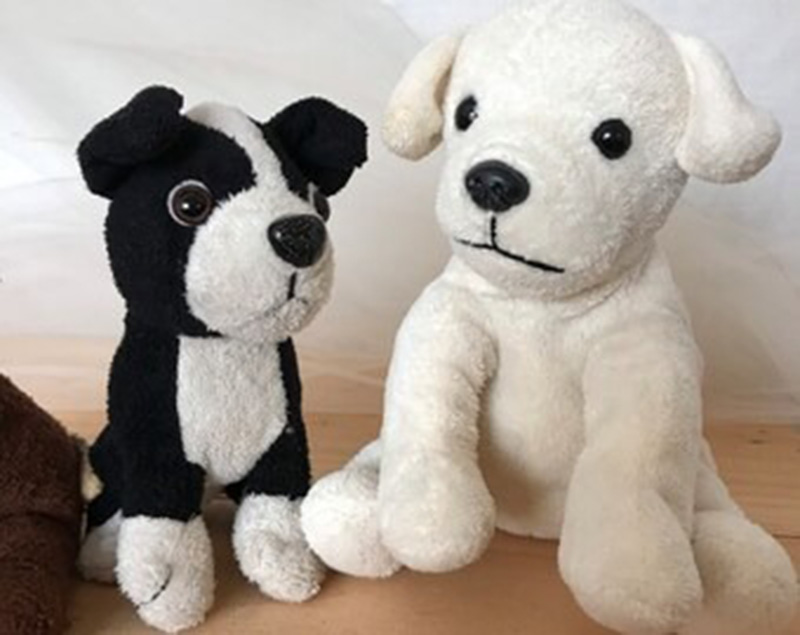
A stuffed dog looks “right” when the silhouette feels dog-like at first glance: head size, muzzle, body, legs, and tail all work together. Even if you choose a very cute or stylized style, the basic proportions still matter.
First, decide what kind of dog you are building:
- A simple generic dog (easiest for beginners).
- A puppy style, with big head and paws.
- A more realistic breed-inspired dog (needs more pattern work).
Then choose a pose: sitting, standing, or lying. For a first project, a sitting or standing dog is simpler than a lying pose.
To design good patterns, sketch the dog from the front and side at your target size, break the body into basic shapes (head, muzzle, body, legs, tail), and then turn those shapes into flat pattern pieces with seam allowance. Sew a quick test dog in scrap fabric, adjust proportions, and only then cut your final plush fabric.
Pattern planning overview
| Step | What You Do | Result |
|---|---|---|
| Decide size | Choose height (for example 20–30 cm) | Clear target for pattern scale |
| Sketch views | Draw front and side with simple shapes | Visual guide to head, body, legs, and tail |
| Separate sections | Head, muzzle, ears, body, front legs, back legs, tail | List of needed pattern pieces |
| Draft patterns | Add seam allowance (5–7 mm) around shapes | Ready-to-cut paper templates |
| Test prototype | Sew with cheap fabric and light stuffing | Find and fix shape issues early |
Proportion tips
- Head: For a puppy look, make the head clearly larger than the body width.
- Muzzle: Keep it shorter and softer for cute styles; longer for more realistic types.
- Body: For a sitting pose, body can be rounder and shorter. For a standing pose, use a longer body.
- Legs: Avoid legs that are too thin; you need enough width for seams and stuffing.
- Tail: Slightly thicker and shorter than you think will usually look better in fabric.
Once your prototype looks balanced and stable, you can move on confidently.
What sewing and assembly methods form the dog’s body, head, limbs, and tail?
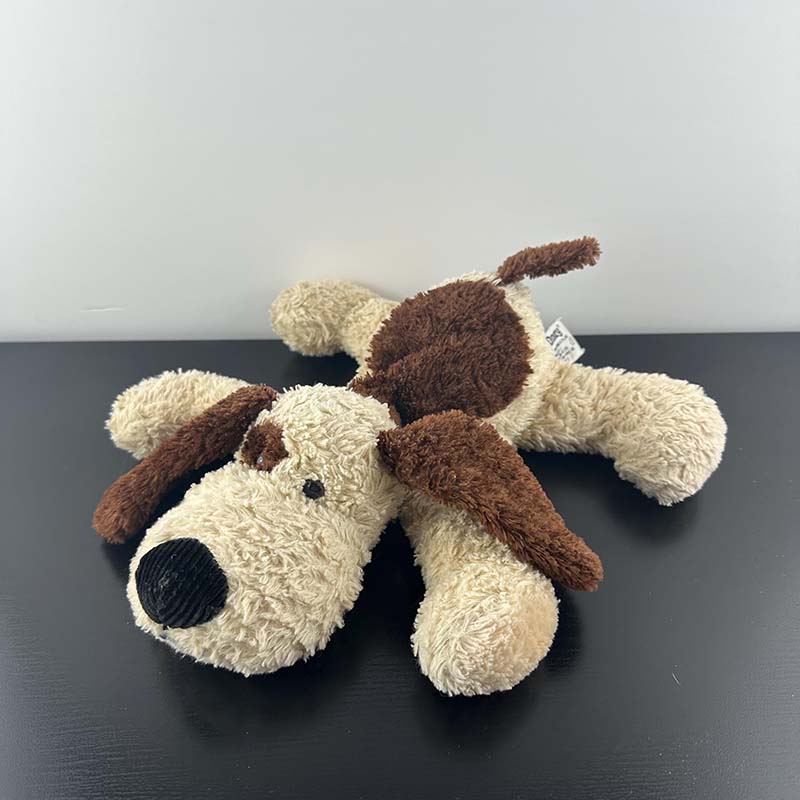
Patterns give you the plan; sewing and assembly turn it into a real 3D dog. A clear assembly order makes your work smoother and more repeatable, especially if you want to make many pieces or move toward small-batch production.
It is easiest to sew small parts first (ears, muzzle, tail, legs), then the head, then the body, and finally combine everything. You can sew long seams with a machine and use hand stitches for detailed or tight areas.
For a clean structure, sew ears, muzzle, legs, and tail as separate parts, then assemble and stuff the head, sew the body panels, attach head and body at the neck with strong double stitching, and finally add legs and tail. Use straight stitches with a short length, backstitch at stress points, and clip curves to get smooth outlines.
Example assembly order
- Ears
- Sew outer and inner ear pieces right sides together.
- Leave the base open, turn right side out, press or finger-shape.
- Muzzle
- Sew muzzle pieces together if 3D, leave an opening.
- Or cut a flat muzzle patch to appliqué on the head front.
- Legs and tail
- Sew leg pieces right sides together, leave top openings.
- Sew tail pieces, leave base open.
- Turn everything right side out; stuff later.
- Head
- Attach muzzle base and face patches on the flat head front.
- Insert ears into the head seam if you want seam-set ears.
- Sew head front and back (and any gusset) together, leaving an opening at the neck or base.
- Body
- Attach any chest or belly patches to the front panel.
- Sew body front and back together, leaving an opening for stuffing.
- Join head and body
- Align neck lines, right sides together.
- Sew around the neck with double stitching.
- Turn right side out through the body opening.
- Attach legs and tail
- Legs can be sewn into body seams or hand-sewn onto the body.
- Tail can be inserted into the back seam or ladder-stitched on later.
Helpful stitching methods
| Technique | Where to Use It | Benefit |
|---|---|---|
| Straight machine stitch | Head, body, leg, and tail seams | Strong, neat, and efficient |
| Backstitch (hand) | Neck join, leg bases, tail base | Extra strength in curved or high-stress areas |
| Ladder (invisible) stitch | Closing stuffing openings | Clean, almost invisible seams |
| Double stitching | Neck seam and main body joints | Reduces risk of seam break during play |
| Clipping curves | Around cheeks, back curve, hip area | Helps outer fabric lie smooth without bulk |
This order is easy to repeat and adapt if you later change size, breed, or style.
How do you add facial details, ears, and markings with precision and safety?
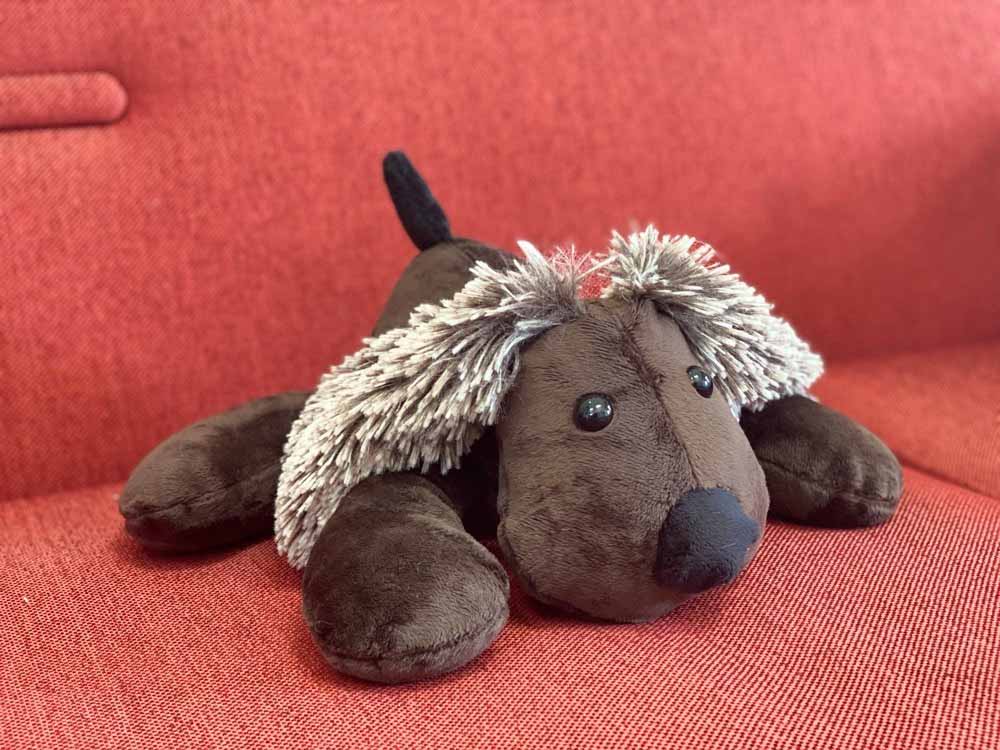
Face, ears, and markings are where your stuffed dog feels alive and unique. At the same time, they are high-risk areas for safety if you use the wrong materials or weak stitching. For children’s products, it is always better to think “safe first, style second.”
For most markets, embroidered or felt facial features are the safest and most durable solution. Safety eyes and noses can work for older children and adults, but they must be chosen and installed carefully and tested properly for your region.
To add precise, safe details, mark the face center lines, place eyes and nose symmetrically, use embroidery or fully stitched felt for features, and attach ears and patches on flat panels before assembly whenever possible. This keeps your dog’s expression balanced and your details secure under real use.
Planning the face
- Lightly draw a vertical center line on the head front.
- Draw a horizontal eye line where you want the eyes to sit.
- Test eye and nose positions using paper or felt circles.
- Adjust spacing and angle until the dog looks friendly and balanced.
Safe facial detail methods
| Feature | Recommended Method | Notes |
|---|---|---|
| Eyes | Embroidery or felt appliqué | Best for baby and young children’s plush |
| Nose | Embroidered or felt triangle/oval | No sharp plastic, smooth to the touch |
| Mouth | Simple stitched line (“Y” or smile curve) | Use strong thread, small stitches |
| Markings | Felt or plush patches sewn all around edges | Avoid glue-only; full stitching prevents lifting |
Ears and markings
- Ears:
- Floppy ears create a soft, friendly look.
- Upright ears give a more alert, energetic feel.
- Inner ear color can be felt or lighter plush sewn inside.
- Markings:
- Add patches, spots, or saddles on the head and body panels before sewing them together.
- Keep shapes simple—large areas read better than tiny pieces on plush.
A good test is to hold the finished head at arm’s length. If the dog’s expression still feels pleasant and balanced from that distance, your detail placement is working.
How is stuffing applied to achieve balanced softness and realistic structure?
Stuffing is where your dog plush gains life. It affects weight, softness, pose, and even facial expression. Many homemade toys fail here: either too hard and overstuffed, or too flat and floppy. The goal is controlled, zone-based stuffing.
For a typical dog plush, you want:
- A medium-firm head, to protect the face shape.
- A medium body, soft enough to hug but strong enough to stand or sit.
- Legs that are slightly softer but still hold basic shape.
- A tail that is firm enough to keep its curve without feeling stiff.
Start stuffing from smaller parts like legs and tail, then fill the head with extra care around the face, and finally layer stuffing into the body while checking balance. Use small tufts of fiberfill, not big clumps, so the dog looks smooth from every angle and stands or sits without tipping.
Stuffing zone guide
| Area | Suggested Firmness | Purpose |
|---|---|---|
| Head | Medium-firm | Keeps face smooth, supports ears and muzzle |
| Body | Medium | Good cuddle feel with stable silhouette |
| Front legs | Light to medium | Natural drape, still enough structure |
| Back legs | Medium | Support for sitting or standing pose |
| Tail | Light to medium | Maintains curve, not too rigid |
Step-by-step stuffing process
- Legs and tail
- Use small stuffing tufts; push gently into paws and tips.
- Keep paws slightly firmer for a clean shape.
- Head
- Start behind the muzzle and around cheeks.
- Fill behind the eye and nose area to prevent dents.
- Add more stuffing until the head feels stable but still squeezable.
- Body
- Add stuffing in layers from bottom to top.
- Shape chest and back so they look full, not angular or hollow.
- Check the dog in a sitting or standing pose as you go.
- Balance test
- Place the dog on a flat surface.
- If it leans forward, increase stuffing in the back or tail base.
- If it leans backward, adjust stuffing in chest and front legs.
When you’re satisfied, close the openings using ladder stitch, keeping the seam tight but not puckered.
What finishing and quality checks ensure a durable, professional dog plush?
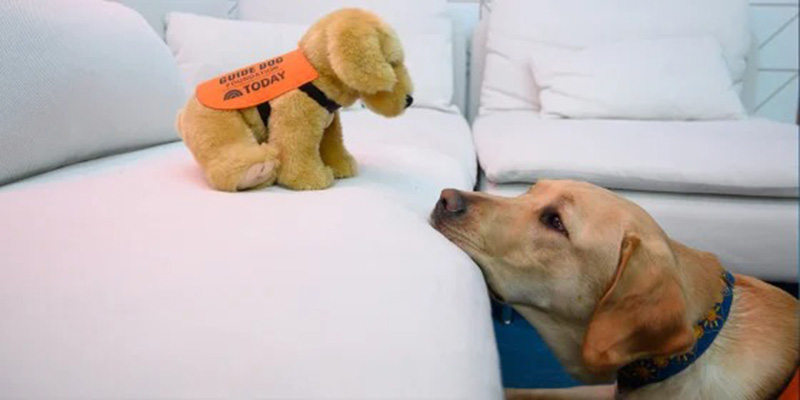
Finishing is the difference between “cute home project” and professional-grade plush. This is where you check safety, neatness, and consistency—the same way we do in a factory before shipment.
You want the dog plush to feel reliable in the hands: no loose parts, no weak seams, no big differences from one piece to another if you are making a small batch.
For a professional finish, close all openings with invisible ladder stitch, reinforce high-stress areas, trim all thread tails, groom the surface, and run a short quality checklist for seams, stuffing, symmetry, and stability. Only when your dog passes these checks should you consider it ready for gifting or selling.
Finishing checklist
| Check Area | What to Look For | How to Fix It |
|---|---|---|
| Seams | No gaps, popped stitches, or fraying | Reseam or reinforce with backstitch |
| Neck & joints | Head and limbs feel firmly attached | Add extra stitches inside seam allowance |
| Stuffing | No hard lumps, hollow spots, or sharp corners | Adjust stuffing and massage to smooth |
| Face & details | Eyes, nose, markings firmly sewn, no loose edges | Add more stitching or change attachment method |
| Symmetry | Ears, eyes, legs, and tail balanced left-right | Adjust stuffing or refine pattern next round |
| Stability | Dog sits or stands as designed | Re-balance stuffing in legs and body |
| Surface | No pen marks, glue spots, or long fibers | Clean gently and trim any problem areas |
If you plan to build a brand, keep one sample as your “golden sample”—the reference for all future production, whether you sew it yourself or later hand it to a factory.
Conclusion
A great stuffed animal dog is soft, safe, and expressive—but also well engineered. When you choose proper materials, design clear patterns, sew and assemble with structure in mind, add secure facial details, stuff with intention, and finish with a careful eye, your dog plush will feel ready for real life, not just a photo.
At Kinwin, we use this same process when we develop OEM and ODM dog plush projects for global buyers—from baby-safe puppies to character dogs and décor pieces. If you want to turn your dog plush ideas into stable, test-ready products, you’re very welcome to contact me at [email protected] or visit kinwintoys.com to explore how our factory can support your next launch.