Plush bouquets turn cute stuffed toys into emotional, high-value gifts. They work well for birthdays, Valentine’s Day, graduation, baby showers, and brand campaigns. Compared with fresh flowers, they last longer, travel better, and can be easily customized for different themes and markets.
When you understand the structure behind a plush bouquet, it stops being a “craft project” and becomes a repeatable product line. In this guide, I will walk you through the materials, structure, decoration, and finishing process, so your plush bouquets look stable, premium, and ready for B2B sales.
What materials and tools are required to make a plush bouquet?
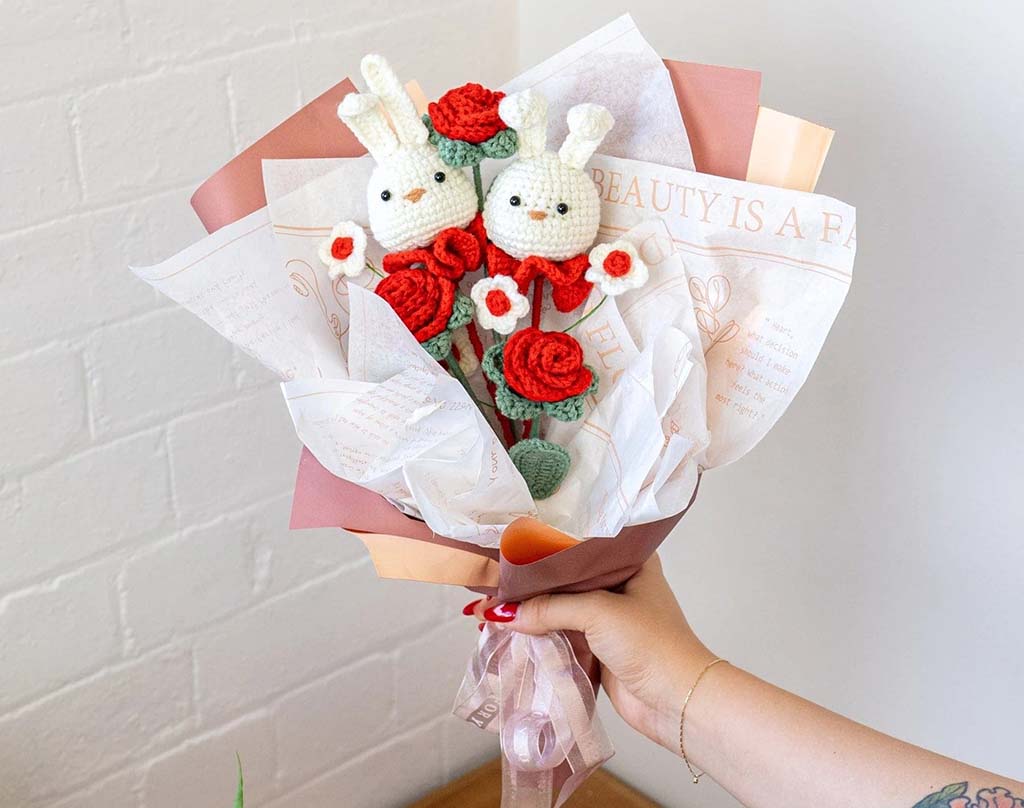
Plush bouquets look soft and romantic, but inside they rely on very practical materials. The right base, stems, tapes, and wrapping papers decide how stable, safe, and efficient your production will be. Good choices also reduce damage during transport and handling.
For most plush bouquets, you need small or mini plush toys, stems or supports (such as wooden sticks or floral wire), tapes, wrapping papers, ribbons, and basic tools like scissors, cutters, and sometimes a low-temperature glue gun. When you plan to scale, it also helps to standardize sizes and materials so your team can assemble bouquets quickly with consistent results.
Here is a simple material and tool overview:
| Category | Examples | Main Function | Notes for bouquet production |
|---|---|---|---|
| Plush toys | Mini bears, animals, characters (8–20 cm) | Bouquet “flowers” / focal items | Choose similar size and style for each bouquet |
| Stems / supports | Wooden sticks, bamboo skewers, floral wire | Support and height for each plush | Use smooth, strong materials, avoid splinters |
| Fixing materials | Floral tape, paper tape, cable ties, rubber bands | Attach plush to stems and group stems | Floral tape blends well with wrapping |
| Wrapping papers | Kraft, colored art paper, tissue, non-woven | Create bouquet shape and visual style | Weight and stiffness affect structure |
| Ribbons | Satin, grosgrain, organza | Tie bouquet and add decorative finish | Wider ribbons give a more premium look |
| Base / holder | Foam block, cardboard cone, bouquet holder | Support for stems, maintain shape | Especially useful for bigger bouquets |
| Tools | Scissors, cutters, pliers, low-temp glue gun | Cutting, shaping, securing materials | Keep glue gun safe and avoid visible glue marks |
When you source materials, think about your target market. For romantic gifts, soft color palettes and satin ribbons work well. For brand or event gifts, stronger colors and printed papers that match brand identity may be better.
How do you select and prepare plush toys for bouquet assembly?
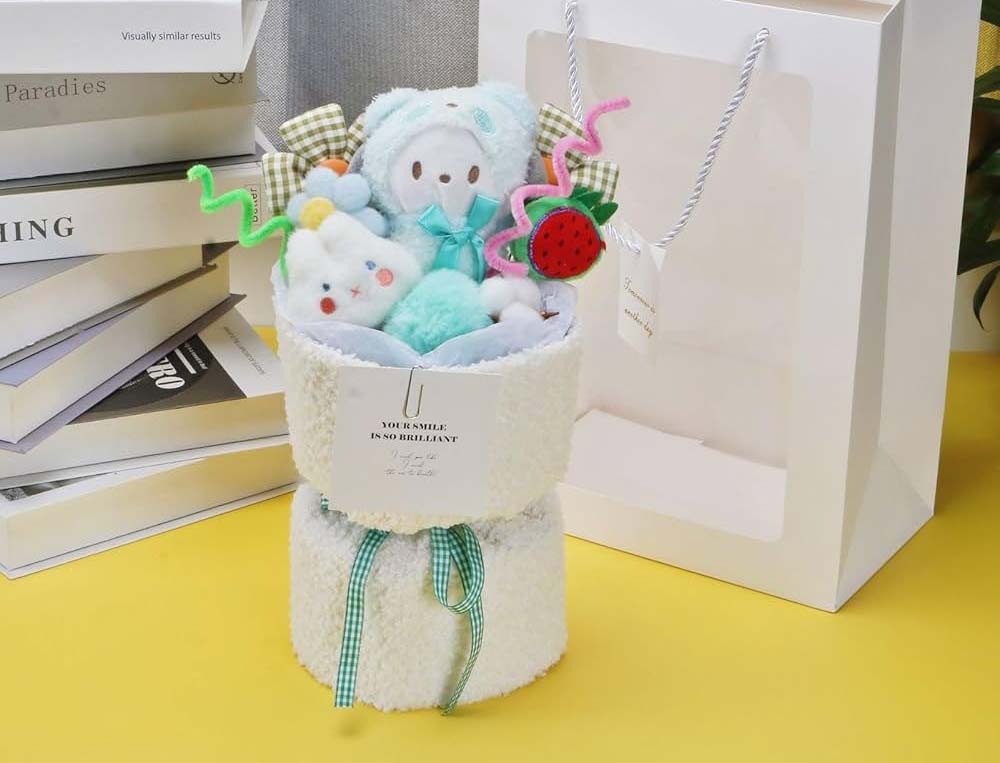
Not every plush toy works well inside a bouquet. You need toys that are light, compact, and visually cohesive. If sizes or styles vary too much, the bouquet can look messy or feel unstable. Preparation before assembly also saves a lot of time during production.
To select plush toys, you look at size, theme, color, and weight. Ideally, the toys in one bouquet should share a clear concept: same character set, same color family, or same style. Before assembly, you check each plush for defects, remove excess tags, and get them ready for safe attachment to stems or holders.
You can use this checklist when planning your plush selection:
| Selection Factor | What to Check | Why It Matters |
|---|---|---|
| Size | Similar height and width across the bouquet | Keeps the top line neat and balanced |
| Weight | Light enough for stems and wrapping | Prevents sagging or tilting |
| Theme / style | Matching characters, animals, or expressions | Creates a clear story for the gift |
| Color palette | Harmonious colors (or planned contrast) | Improves visual appeal and premium feel |
| Safety details | No loose parts, secure eyes, clean stitching | Reduces risk for kids and gift recipients |
| Cleanliness | No dust, stains, or strong smells | Essential for a “new gift” feeling |
Choosing plush sizes and quantities
For most standard bouquets:
- Mini plush (8–12 cm) works well for multi-piece bouquets
- Small plush (15–20 cm) work better as focal pieces with fewer units
A common structure is 3, 5, 7, or 9 plush toys per bouquet, depending on your price point and wrapping style.
Preparing plush before assembly
Before you start wrapping:
- Check seams, faces, and labels
- Tuck or trim large swing tags (or relocate them to a less visible spot)
- If needed, sew or attach a small fabric loop to the back of each plush to make stem attachment easier and cleaner
At Kinwin, when we design plush items for bouquet use, we often add a hidden loop or secure point during manufacturing. This saves time later and keeps the final product looking neat.
What wrapping and stem techniques create a stable bouquet structure?
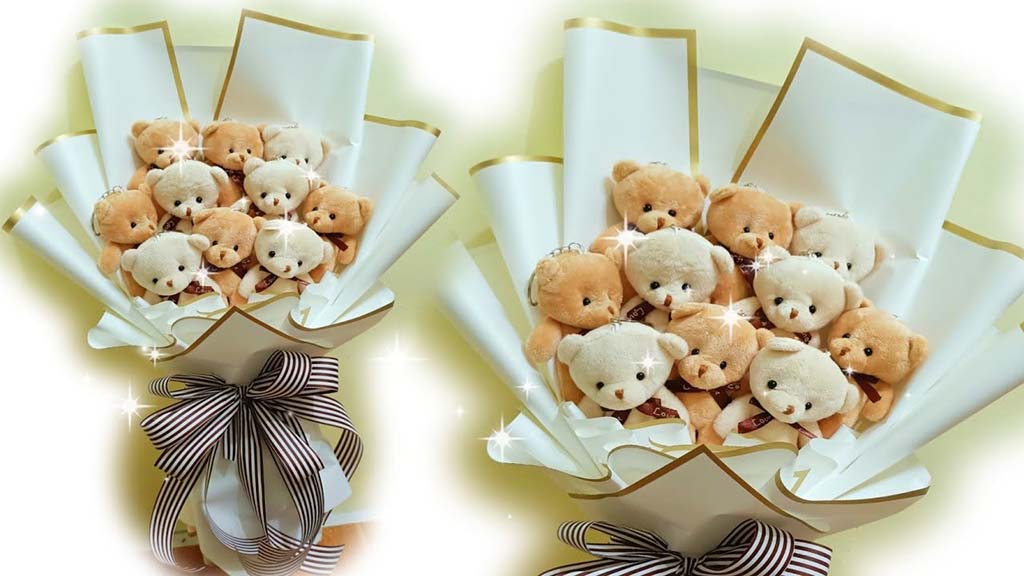
The inner structure of a plush bouquet is like a small engineering project. Without a clear stem plan and wrapping method, the bouquet may twist, spread, or collapse during shipping or display. A good structure keeps the toys upright and the wrapping in a solid, attractive shape.
The most common bouquet structures are cone-style (classic bouquet shape), round fan-style (wide front, flatter back), and box or base-style (plush rising from a box or container). Each structure needs a different approach to stems and wrapping.
Here is a comparison of popular bouquet structures:
| Structure Type | Description | Stem Approach | Best Use Cases |
|---|---|---|---|
| Cone-style | Tapered bottom, full top | Stems gathered into a tight base | Romantic, classic gift look |
| Round fan-style | Wide front, shallow depth | Stems arranged in a fan shape | Display, photo-friendly, shop windows |
| Box/base-style | Plush coming out of a box or basket | Stems or rods anchored in foam inside base | Premium gifts, easier transport |
| Single-row wrap | Plush in a line with light wrapping | Few stems, simple band wrapping | Budget gifts, promotional giveaways |
Building stems and core
For stemmed bouquets:
- Attach each plush to a wooden stick or strong floral wire.
- Cover the stem with floral tape to smooth it and match color.
- Arrange stems in your desired shape (triangle or circular pattern often works best).
- Use additional tape or cable ties to bind stems together at two or three points.
For box-style bouquets:
- Use a foam block or dense sponge inside the box or base.
- Insert sticks with plush into the foam at planned angles.
- Adjust height levels to create dimension (front lower, back higher).
Wrapping for form and strength
Wrappings often use multiple layers:
- Inner layer: plainer paper to hide stems and foam
- Middle layer: main colored wrapping that defines shape
- Outer layer: accent or decorative sheet for style and contrast
Fold papers into fan or cone shapes and secure them with tape before tying ribbon. Stable wrapping is as much about tight, clean folds as it is about the paper itself.
How do you secure plush toys to stems or holders safely and cleanly?
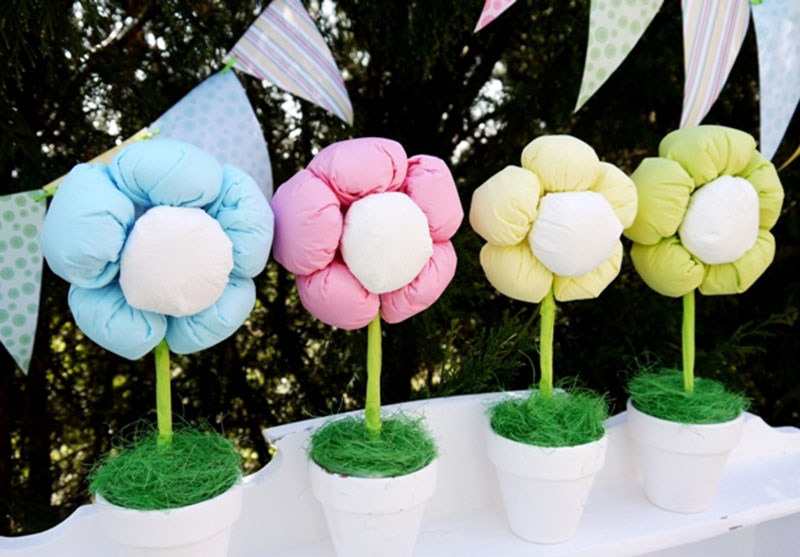
Securing the plush toys is one of the most sensitive parts of the process. If you attach them poorly, they may rotate, droop, or even fall off. If you use messy methods, like heavy visible glue or rough wire, the bouquet will look cheap and may not be safe.
To secure plush toys, you can use elastic bands, cable ties, sewing loops, or careful spot gluing, depending on the toy design and your target age group. For gifts aimed at children, it is better to use methods that do not leave sharp or hard elements exposed.
Here is a simple comparison of common attachment methods:
| Method | How It Works | Advantages | When to Use |
|---|---|---|---|
| Elastic bands | Wrap around body/neck and stem | Fast, adjustable, removable | Light plush, simple structures |
| Cable ties | Loop through hidden area and around stem | Very strong, low cost | Adult gifts, firmly hidden under wrapping |
| Sewing loop | Stitch a fabric or thread loop to plush | Clean look, good control | Higher-end bouquets, planned in advance |
| Low-temp hot glue | Glue stem to base of plush (back or bottom) | Fast for production, works on fabric | For older users; avoid visible glue |
| Foam insertion | Insert plush directly into foam base | No visible stems, stable positioning | Box-style bouquets |
Choosing safe and neat attachment points
Best attachment points are:
- Back of the head or upper back
- Bottom of the body (if plush sits on top of wrapping)
- Hidden areas under clothing or accessories
Avoid attaching stems around the neck in a way that visually “strangles” the plush. It’s more pleasant to secure them from behind or under the arms, then hide the connection with wrapping or ribbons.
Minimizing damage and keeping reusability
Some customers want to remove plush toys from the bouquet and keep them as regular stuffed animals. For this reason, many brands prefer:
- Elastic bands or ribbons that can be cut without harming the plush
- Minimal or no glue directly on the plush surface
If you expect your bouquets to be taken apart and plush reused, share this with your manufacturer so they can design small loops or attachment points for you directly in the plush.
What decorative elements—ribbons, papers, fillers—enhance bouquet presentation?
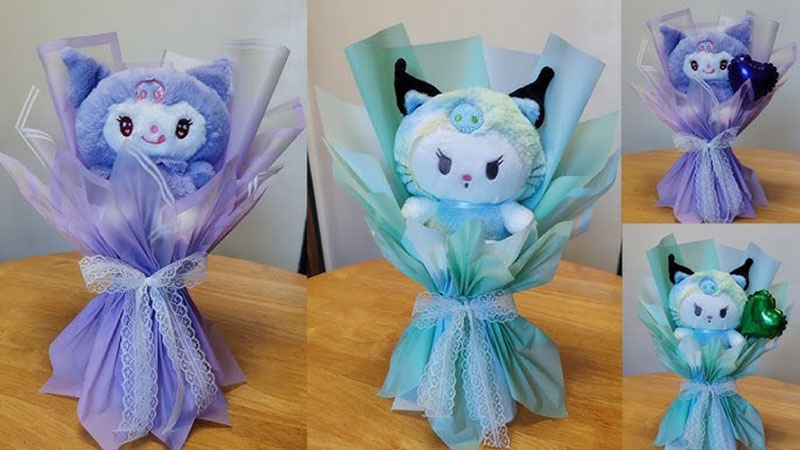
Decoration is what transforms a basic structure into a gift that looks “wow” in photos and in real life. Ribbons, wrapping papers, fillers, and small accessories complete the emotional message and support your brand image.
To enhance presentation, you can combine different paper textures, use coordinated ribbons, add tissue or artificial flowers as fillers, and include extra elements such as LED string lights or printed tags with messages. The key is to keep a clear color story and not overload the bouquet with too many competing details.
Here is a list of common decorative elements and their effects:
| Element Type | Examples | Visual Effect | Tips for Use |
|---|---|---|---|
| Wrapping papers | Kraft, matte color, metallic, mesh | Defines style (romantic, modern, cute) | Mix 2–3 layers with related tones |
| Ribbons and bows | Satin, grosgrain, organza | Adds focus and premium finish | Wider ribbons look more luxurious |
| Fillers | Tissue paper, artificial flowers, greenery | Fills gaps, adds depth and softness | Keep fillers lighter than plush focal |
| Small accessories | Heart picks, mini cards, charms | Adds theme (love, graduation, birthday) | Use sparingly to avoid clutter |
| Lighting (optional) | LED string lights with safe battery pack | Creates romantic or festive effect | Secure pack safely, avoid loose wiring |
Color coordination and brand identity
You can design plush bouquets in color “families”:
- Soft neutrals and pastels for romantic or baby themes
- Bright, bold colors for celebrations and brand campaigns
- Brand-specific palettes for corporate gifts or collaborations
When we work with buyers at Kinwin, we often create mood boards that pair plush colors with wrapping paper and ribbon options, so the whole bouquet range feels consistent and easy to recognize.
Using fillers to control volume and cost
Fillers (like tissue, foam roses, or simple paper curls) help increase visual volume without adding many extra plush toys. This can:
- Support different price tiers
- Make smaller plush look more impressive
- Help secure stems inside the wrapping structure
The aim is to highlight the plush, not hide it. Place fillers lower or between toys so they frame, not compete with, your main characters.
How do you finish, package, and maintain a professional plush bouquet?
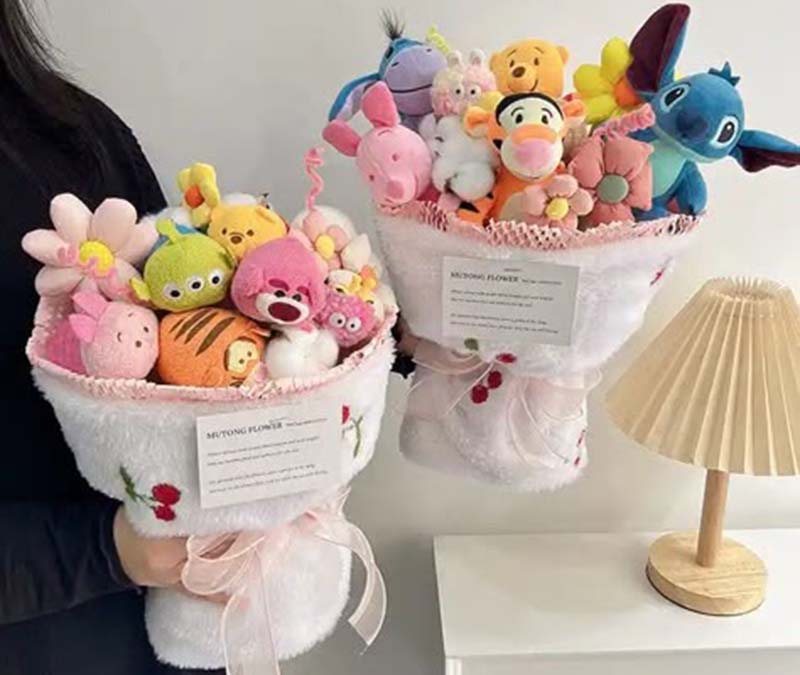
The final finish is what separates a casual, handmade bouquet from a product that looks ready for retail or online orders. Clean edges, tight ribbon ties, neat back views, and protective packaging all contribute to a professional look.
After you finish shaping the bouquet and adding decorations, you should check balance, tighten any loose wraps, trim threads and excess tape, and make sure all plush faces are visible and aligned. For shipping or display, protective outer packaging—like clear bags or boxes—helps keep dust, moisture, and handling damage away.
Here is a practical finishing and QC checklist:
| Checkpoint | How to Check | Pass Criteria |
|---|---|---|
| Overall shape | View from front, side, and top | Symmetrical, visually balanced, not leaning |
| Plush visibility | Look at each plush from the front | Faces visible, not buried in wrapping |
| Stem and joint stability | Gently shake and tilt bouquet | No wobbling plush, stems stay in position |
| Ribbon and knots | Check main bow and binding points | Secure, centered, no loose ends |
| Cleanliness | Inspect papers, plush, and ribbons | No stains, glue strings, or torn edges |
| Packaging fit | Place in bag or box | Fits without crushing front view |
Packaging solutions for B2B and e-commerce
Depending on your sales channel, you might use:
- Clear OPP bags with air holes for simple protection
- Semi-rigid boxes with windows for higher-end lines
- Custom-printed sleeves or stickers with your logo and care tips
Packaging needs to protect the shape but still show enough of the bouquet to feel attractive. For e-commerce, photos on the packaging or a QR code linking to images can help show the full effect even when the bouquet is partly covered.
Storage and short-term maintenance
Plush bouquets should be stored:
- Upright or with good support so stems do not bend
- In dry, clean spaces away from direct sunlight
- In protective covers to avoid dust
If bouquets will be displayed in a shop for some time, staff should know how to gently fluff papers and plush, and how to retie ribbons if needed. Simple internal guidelines can keep your displays looking fresh and premium.
At Kinwin, when we develop plush designed for bouquets, we always think about the full lifecycle: from assembly, to shipping, to shop display, to final customer unboxing. When your plush and bouquet structure are designed together, your team spends less time fixing issues and more time selling.
Conclusion
A professional plush bouquet combines thoughtful plush selection, stable structure, secure attachment methods, and coordinated decoration into one gift-ready product. When every step—from materials and stems to wrapping, finishing, and packaging—is controlled, your bouquets look premium, travel safely, and create a strong emotional impact for recipients. At Kinwin, my team helps global buyers develop plush ranges that work perfectly in bouquet form, and we support OEM/ODM projects that align with CE and ASTM safety expectations.
If you are planning to add plush bouquets to your catalog or upgrade your current designs for better stability and presentation, we are ready to help you refine structure, select suitable plush, and standardize processes for scale. You are welcome to contact me at [email protected] or visit kinwintoys.com to explore how our factory can support your next plush bouquet project.