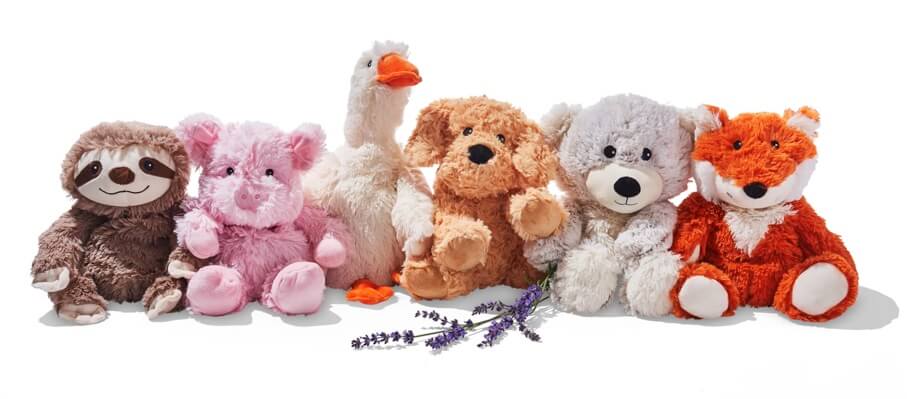
Choosing the right plush toy manufacturer can determine the success of your entire project. A reliable factory doesn’t just produce toys—it ensures quality, safety, timely delivery, and long-term partnership value.
This guide explains how to evaluate a plush toy manufacturer before starting your project, including key qualifications, certifications, production capabilities, communication quality, and post-sales support.
What Key Qualifications Define a Reliable Plush Toy Manufacturer?
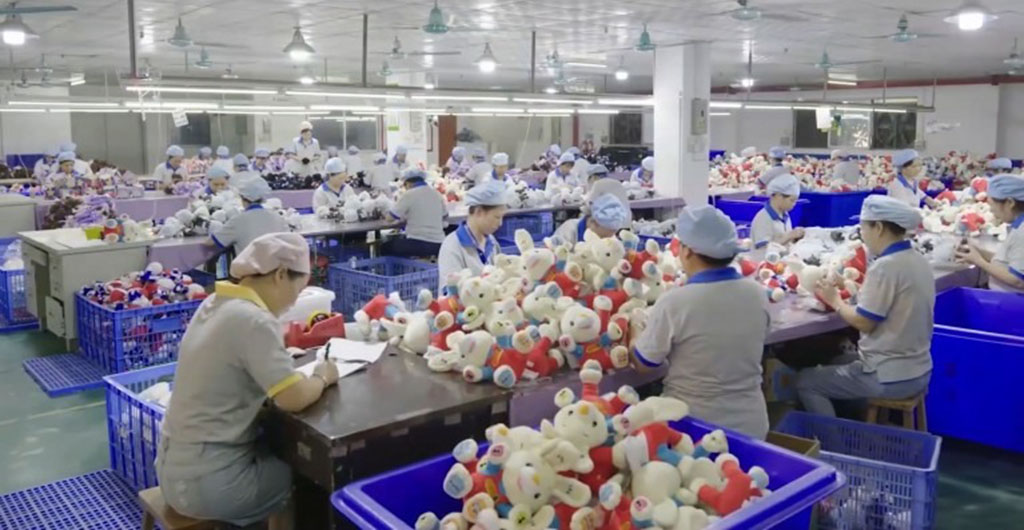
A reliable plush toy manufacturer combines technical expertise, compliance, and consistency. When evaluating potential partners, buyers should focus on these core qualifications:
- Experience – Years in operation and export history show the manufacturer’s maturity.
- Compliance – Proven understanding of international safety and certification standards.
- Production Scale – Sufficient capacity and equipment to handle both samples and mass orders.
- Design Support – Ability to assist with character development, prototyping, and OEM/ODM customization.
- Quality Management System – Documented procedures for inspection, testing, and process control.
Factories that demonstrate these strengths are more likely to deliver consistent quality and support complex, custom projects.
Key Factory Qualifications
| Qualification | Why It Matters | Buyer Tip |
|---|---|---|
| Years of Experience | Reflects industry expertise | Prefer 10+ years in plush manufacturing |
| Compliance Knowledge | Ensures global market access | Check EN71/ASTM understanding |
| OEM/ODM Capability | Supports design-to-production flexibility | Ask for previous customization cases |
| Quality Control System | Reduces defect risks | Request SOP or QC manual |
| Export Experience | Simplifies logistics and documentation | Verify export markets and client list |
How Do Certifications (CE, ASTM, ISO) Reflect a Factory’s Credibility?
Certifications serve as proof that a manufacturer’s operations, materials, and products meet international safety and management standards. They protect both buyers and end consumers.
- CE (Europe) – Confirms compliance with EN71 toy safety standards, including chemical and flammability tests.
- ASTM F963 (USA) – Ensures toys are safe for children, free of hazardous materials, and properly labeled.
- CPSIA (USA) – Focuses on lead-free and phthalate-free compliance for children under 12.
- ISO 9001 – Demonstrates quality management consistency.
- BSCI / SMETA – Indicates ethical manufacturing and social responsibility.
Reliable factories willingly share valid certification copies. If a manufacturer avoids this topic or provides outdated reports, it’s a warning sign.
Common Certifications and What They Mean
| Certification | Purpose / Coverage | Region | Buyer Benefit |
|---|---|---|---|
| CE (EN71) | Flammability, chemical, physical safety | Europe | Legal entry into EU market |
| ASTM F963 | Toxicity, labeling, physical tests | USA | Accepted by North American buyers |
| CPSIA | Lead-free, child-safe materials | USA | Ensures child compliance |
| ISO 9001 | Quality management system | Global | Ensures production consistency |
| BSCI/SMETA | Ethical and social compliance | Global | Improves brand reputation |
What Production Capabilities Should You Evaluate During Supplier Screening?
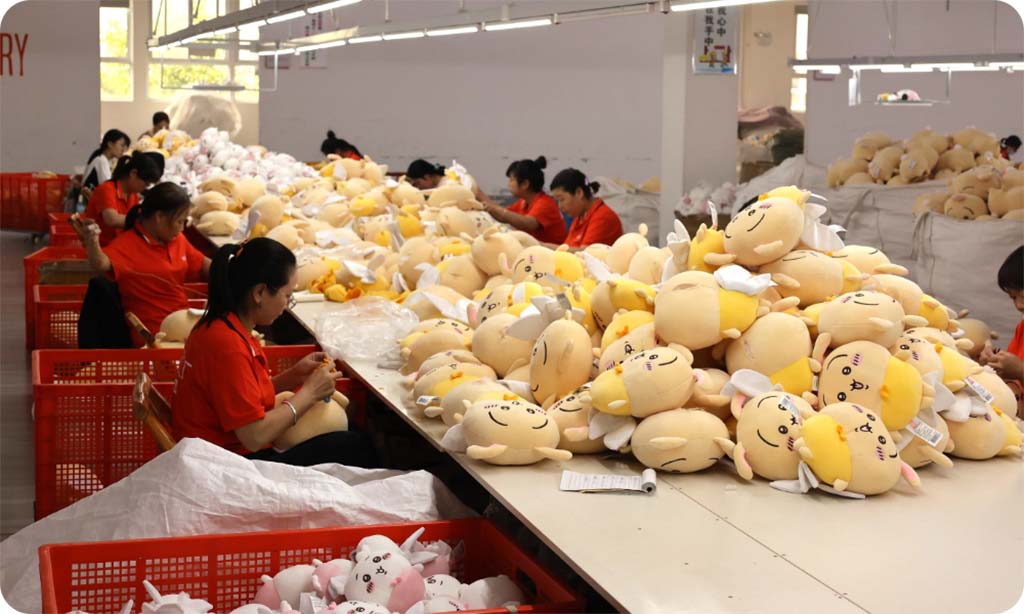
A capable factory ensures your designs can be realized efficiently without compromising quality. Buyers should review infrastructure, technology, and process flow.
Key areas include:
- Sample Department – Skilled pattern makers, embroidery and printing teams.
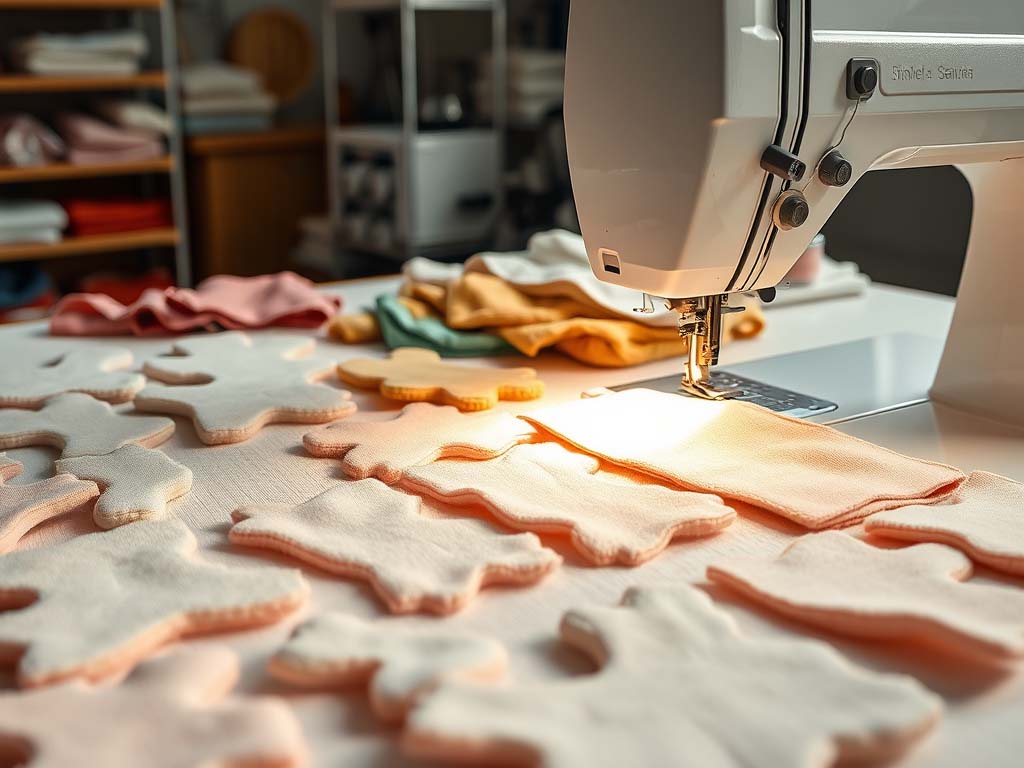
- Cutting & Sewing – Advanced cutting machines and stitching consistency.
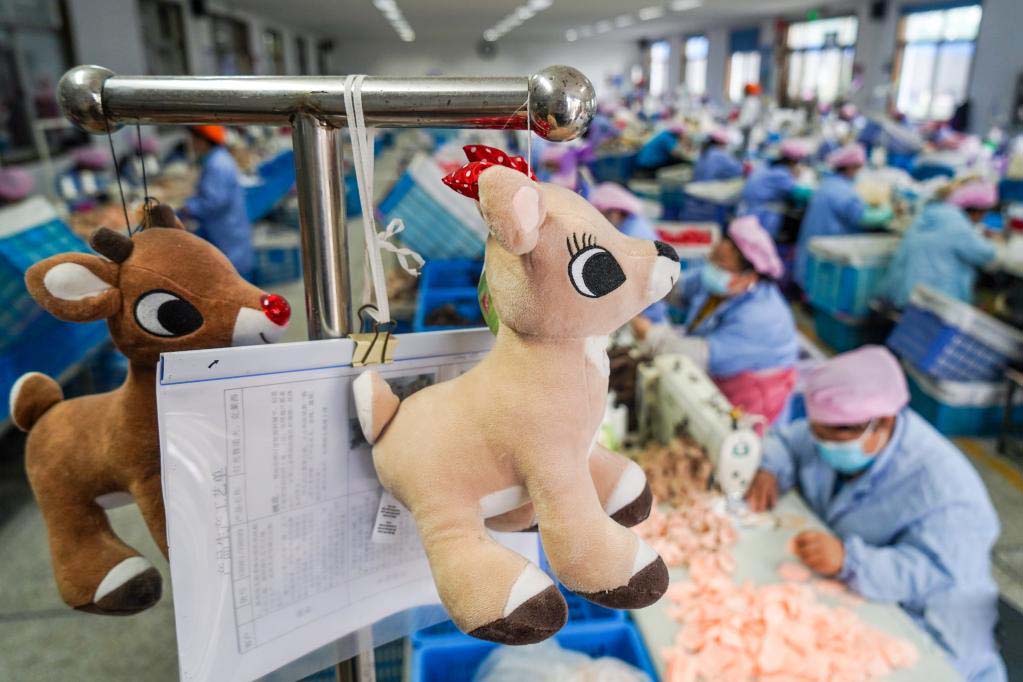
- Stuffing & Assembly Lines – Stable production capacity, clean environments.
- Quality Control Stations – Real-time inspections during production.
- Packaging & Logistics – Professional packing for export and brand labeling.
Buyers can request a factory tour (on-site or virtual) to confirm that these systems are in place. Photos and video calls are helpful when visiting isn’t possible.
Key Production Capabilities
| Department | What to Check | Why It Matters |
|---|---|---|
| Sampling Room | Skill level, equipment quality | Determines prototype accuracy |
| Cutting Department | Automatic vs. manual cutting | Impacts efficiency and consistency |
| Sewing Line | Stitch quality, operator ratio | Affects product durability |
| Stuffing & Assembly | Filling machines, cleanliness | Controls softness and safety |
| QC & Packaging | Checkpoints, export packaging | Ensures shipment quality and branding |
How Can You Assess Material Quality, Safety Standards, and Sample Accuracy?
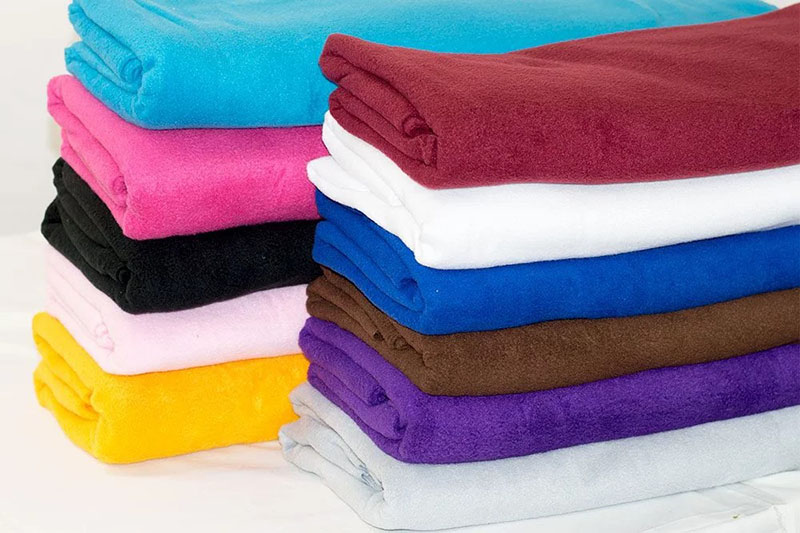
Materials are the foundation of plush quality and safety. Reliable manufacturers maintain strict control over fabric, filling, and accessory sourcing.
- Fabric Quality: Should be soft, colorfast, and free from harmful dyes. Common safe fabrics include velboa, minky, and organic cotton.
- Stuffing Materials: Polyester fiberfill or RPET (recycled fiber) must be hypoallergenic and flame-resistant.
- Accessories: Eyes, zippers, and tags must pass pull and chemical tests.
- Sample Accuracy: Compare the prototype to your design drawings, checking dimensions, softness, color, and stitching.
Professional suppliers use approved vendors for raw materials and provide Material Safety Data Sheets (MSDS) or test reports before mass production.
Material & Sample Evaluation Criteria
| Material/Process | What to Inspect | Buyer Evaluation Tip |
|---|---|---|
| Fabric | Color, softness, dye stability | Request lab test results (EN71 Part 3) |
| Stuffing | Cleanliness, rebound quality | Confirm fiberfill certifications |
| Accessories | Secure attachment, toxicity | Ask for pull-test and CPSIA results |
| Samples | Shape, stitching, finishing | Compare against approved artwork |
What Communication and Project Management Practices Indicate Professionalism?
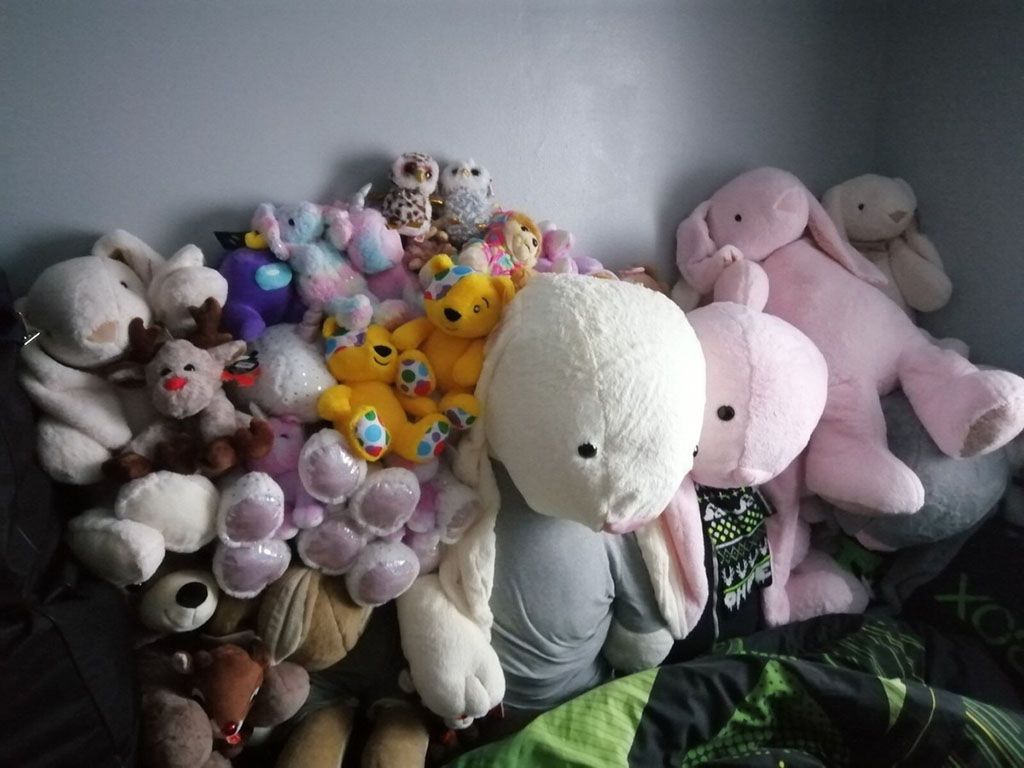
Good factories communicate clearly and respond promptly. They understand that effective communication prevents delays and misunderstandings.
Signs of professionalism include:
- Dedicated project manager or merchandiser for your order.
- Regular progress updates during sampling and production.
- Detailed quotations and timelines before confirming.
- Problem-solving attitude rather than avoidance.
- Fluent English or multilingual support for smooth coordination.
Professional communication also reflects internal organization. If emails go unanswered or details change frequently, the supplier may struggle with project control.
Communication & Project Management Indicators
| Practice | What It Shows | Buyer Takeaway |
|---|---|---|
| Fast, clear replies | Strong internal coordination | Factory values client relationships |
| Dedicated account manager | Organized project tracking | Easier problem resolution |
| Detailed documentation | Transparency and reliability | Better production control |
| Proactive updates | Accountability | Reduced risk of miscommunication |
| Multilingual communication | International experience | Suitable for export partnerships |
How Do Pricing Transparency and After-Sales Support Reveal Manufacturer Reliability?

Price alone does not define quality—but transparency does. Reliable manufacturers provide clear cost breakdowns and do not hide extra fees. Their quotations should include fabric type, stuffing, packaging, MOQ, lead time, and delivery terms.
Avoid factories that give unusually low quotes without material details. Such pricing often leads to poor quality or hidden surcharges later.
After-sales support also shows responsibility. Reputable factories assist with replacement, rework, or refund policies if issues arise. They also value long-term relationships over one-time transactions.
At Kinwin, for example, we maintain transparent communication throughout production and handle client feedback with immediate action.
Reliability Indicators in Pricing & After-Sales
| Indicator | What to Look For | Why It Matters |
|---|---|---|
| Clear Quotation | Itemized materials, packing, MOQ | Prevents hidden costs |
| Fair Pricing | Balanced between cost & quality | Reflects honesty and consistency |
| Payment Terms | Flexible yet professional | Builds mutual trust |
| After-Sales Policy | Defined process for issues | Shows accountability |
| Customer Feedback | Willingness to improve | Ensures long-term partnership |
Conclusion
Identifying a reliable plush toy manufacturer requires a combination of qualification checks, certification validation, production review, and communication assessment. The right partner saves time, reduces risk, and ensures your brand delivers safe, high-quality products.
At Kinwin, we provide global buyers with OEM & ODM plush manufacturing solutions, certified under CE, ASTM, CPSIA, ISO, and BSCI standards. With over 17 years of experience, we combine expert craftsmanship, transparent communication, and reliable after-sales service to help your projects succeed from concept to shipment.
📧 Contact us at [email protected]
🌐 Visit kinwintoys.com
Let’s build safe, creative, and market-ready plush toys together—with confidence and professionalism.