Skip to content
I’m Amanda from Kinwin. I help brands, retailers, and distributors source safe, high-quality toys with predictable lead times and clear paperwork. In this guide, I explain how to judge supplier reliability, where to find trustworthy partners, which certifications matter, how to test samples and capacity, the red flags to avoid, and how to lock long-term stability with the right contracts and payment terms.
What criteria define a reliable wholesale toy supplier in today’s global market?
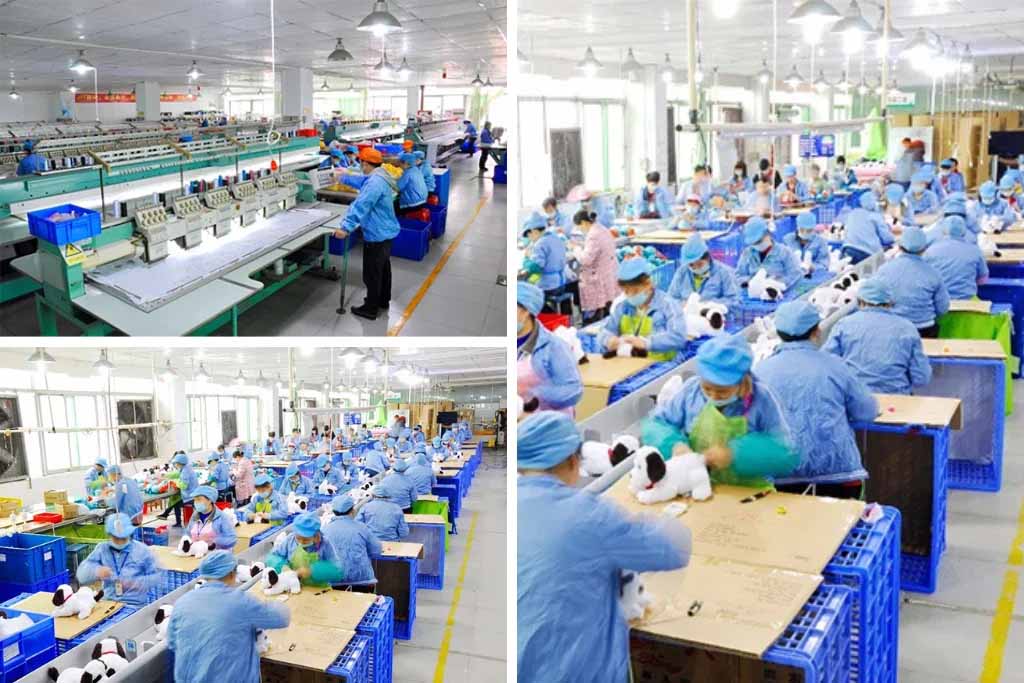
A reliable supplier is more than a good price. Reliability combines safety, quality, capacity, communication, and documentation. You should be able to verify each point with evidence before you place an order.
Core criteria
- Compliance: Current third-party lab reports tied to your materials and SKUs (EN71 / ASTM F963 / CPSIA).
- Quality system: AQL plan, in-line checks, Final Random Inspection (FRI), and traceability for lots.
- Capacity & lead time: Clear monthly output, realistic calendars, peak-season plan.
- Material control: Certificates of Analysis (COA) for fabrics, fills, dyes, trims.
- Communication: Fast, precise responses, complete Proforma Invoices, version-controlled tech packs.
- After-sales: Willingness to rework, structured CAPA (Corrective Action & Preventive Action).
Table 1 — Reliability Criteria Matrix
| Criterion | What “good” looks like | How you verify |
|---|---|---|
| Compliance | EN71/ASTM/CPSIA reports per lot/SKU | Ask for recent reports + lab names |
| AQL & QC | Written plan, General II, Major 2.5/Minor 4.0 | See past FRI reports & defect log |
| Traceability | Golden sample + lot IDs for fabric/fill | Request lot mapping sheet |
| Capacity | Weekly output plan, peak strategy | Production calendar with line allocation |
| Communication | 24–48h response, complete docs | Score email clarity and on-time replies |
| After-sales | CAPA template, rework policy | Ask for a sample CAPA they used |
How do sourcing channels like Alibaba, trade shows, and Google searches compare in supplier reliability?
Each channel has strengths. Use two or more channels to cross-check the same factory.
- Alibaba / B2B marketplaces: Fast discovery, filters for certifications, sample request tools. Risk: mixed quality; verify off-platform.
- Trade shows (Canton Fair, CTE China Toy Expo, Spielwarenmesse): Touch products, meet teams, confirm capacity. Risk: some traders pose as factories—ask for workshop photos and address.
- Google & LinkedIn: Company websites, case studies, and staff profiles. Risk: marketing can hide weak QC—request raw documents.
- Referrals / industry peers: High hit rate when vetted. Risk: capacity may be limited.
- Sourcing agents: Local language, factory network, field audits. Risk: fee stack—define scope and transparency.
Table 2 — Channel Comparison
| Channel | Speed | Verification Depth | Typical Use |
|---|---|---|---|
| Alibaba/B2B | Fast | Medium (needs offline checks) | Shortlist many suppliers |
| Trade shows | Medium | High (touch samples) | Meet core vendors, negotiate |
| Google/LinkedIn | Medium | Medium | Research and background checks |
| Referrals | Slow–Medium | High | Niche categories, quality focus |
| Sourcing agents | Medium | High (on-site) | Turnkey vetting and follow-up |
Tip: After shortlisting, send the same RFQ pack (drawings, dimensions, materials, target tests, order size) to all vendors. Compare apples to apples.
Which certifications and audit systems verify a supplier’s compliance and production capabilities?
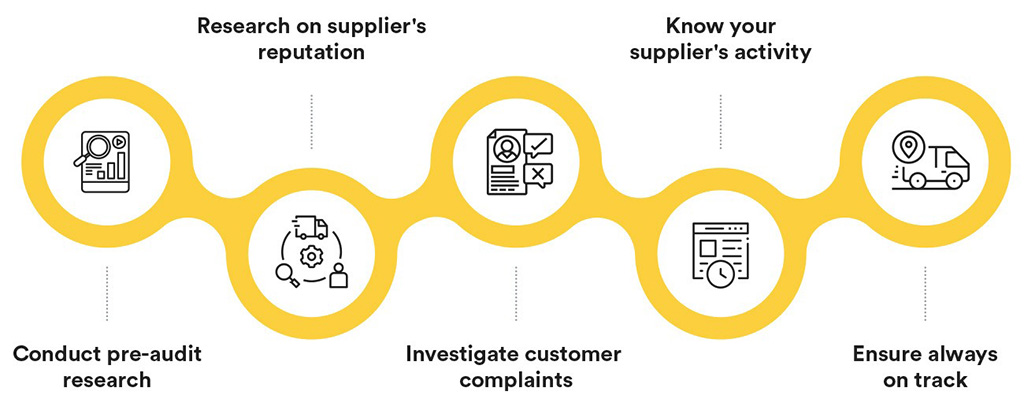
Ask for third-party documents, not self-statements. Tie reports to your exact materials and lots when possible.
- Product safety: EN71 (EU), ASTM F963 (US), CPSIA (US; includes lead/phthalates + CPC tracking).
- CE Declaration of Conformity (EU): The supplier’s legal statement referencing standards.
- Factory social & ethical: BSCI or SEDEX/SMETA.
- Chemical & fabric safety (when relevant): OEKO-TEX, REACH SVHC screening.
- System maturity: ISO 9001 (quality), ISO 14001 (environment) — helpful, not mandatory.
Table 3 — Compliance Documents You Should Keep
| Framework | Covers | You should hold | Renewal trigger |
|---|---|---|---|
| EN71 | Mechanical, flammability, chemicals | 3P lab report + CE DoC | Material/process change |
| ASTM F963 | Mechanical/physical | 3P lab report | Design or material change |
| CPSIA | Lead, phthalates, tracking | 3P report + CPC | Each children’s lot/SKU |
| BSCI/SMETA | Social/ethical audit | Valid audit summary | Per audit cycle |
| OEKO-TEX/REACH | Chemical safety | Certificates per fabric lot | New dye lots/suppliers |
Good signal: lab names like SGS/Intertek/Bureau Veritas/TÜV show standard practice.
How can buyers assess sample quality, production capacity, and communication efficiency before partnering?
Run a mini-due-diligence with structured tests and a timed trial.
Sample quality
- Evaluate hand-feel, seams, embroidery, symmetry, fill distribution, color match.
- Run simple tests: 3 wash cycles, seam pull tests, color rubs.
- Check labels, warnings, and age grading.
Capacity
- Ask for a production Gantt with line allocation for your order.
- Confirm peak-season plan and backup suppliers for trims.
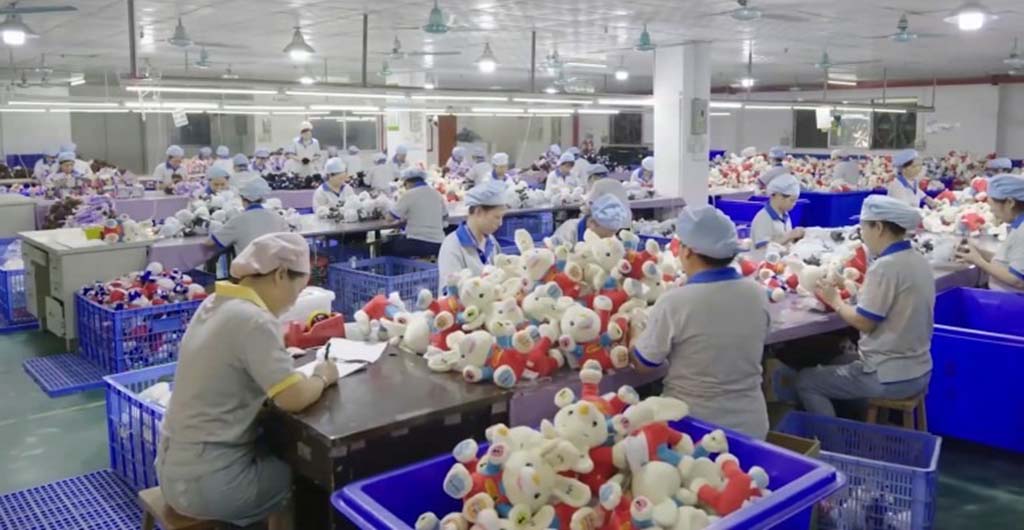
- Verify cutting/embroidery/stuffing station counts and daily output.
Communication
- Time the supplier: request answers to 8–10 specific questions within 48 hours.
- Look for complete answers, drawings marked up, risks flagged early.
Table 4 — Pre-Partnership Scorecard (100 points)
| Area | Criteria | Points |
|---|---|---|
| Sample quality | Seams, symmetry, wash test, colorfastness | 30 |
| Compliance docs | Valid 3P reports + DoC + CPC draft | 20 |
| Capacity proof | Gantt + line count + peak plan | 20 |
| Communication | 24–48h replies, complete answers | 20 |
| Pricing clarity | Incoterm, inclusions, hidden fees | 10 |
Score ≥80 before placing any PO.
What are the common red flags and risks to avoid when dealing with overseas toy suppliers?
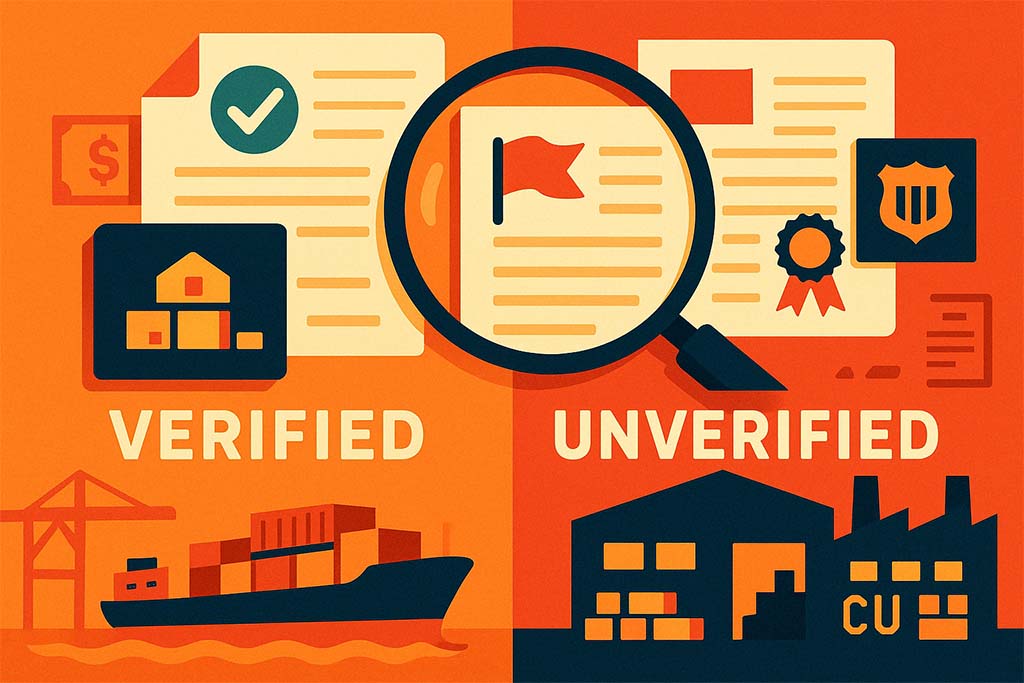
Avoid preventable trouble. Spot these early:
- Vague compliance: “We have CE” without reports tied to your SKUs.
- Shifting specs: Factory changes materials after the PP sample without a change order.
- Unrealistic lead times: “We can ship in 10 days” for complex SKUs.
- Poor documentation: No tech pack versioning, no golden sample, no AQL plan.
- Payment pressure: Large deposits before sampling; refusal to accept staged terms.
- Subcontracting without disclosure: Quality and IP risk.
Table 5 — High-Risk Red Flags and Buyer Actions
| Red flag | Why it’s risky | Your action |
|---|---|---|
| No recent lab reports | Possible non-compliance | Require 3P tests before PO |
| Verbal approvals only | Spec drift | Use signed PP sample + change orders |
| Extreme low price | Hidden materials or shortcuts | Ask BOM detail; compare peers |
| No in-line QC | Late surprises | Add in-line + FRI with AQL |
| Refusal of audits | Hiding capacity issues | Use third-party or switch vendor |
How do long-term partnerships, contracts, and payment terms ensure consistent supply and quality control?

Set rules that reward good behavior and prevent drift.
Contracts & IP
- Use NNN (Non-use, Non-disclosure, Non-circumvention) under local jurisdiction.
- Define ownership of patterns, embroidery files, molds, and artwork.
- Limit subcontracting without written consent.
Quality commitments
- Lock AQL levels, inspection windows, and rework timelines.
- Tie payments to milestones: deposit → PP approval → in-line pass → FRI pass → shipment.
Payment structures
- Common: 30/70 (deposit/balance). For new suppliers, consider 30/40/30 with mid-term tied to in-line pass.
- Use LC for large orders if needed; or escrow for small pilots (where available).
- Clarify Incoterms (FOB/CIF/DDP) and what each price includes (duties, delivery, surcharges).
Forecasting & stability
- Share quarterly forecasts, lock raw material for key colors.
- Set rolling call-offs to keep lead times steady and prices predictable.
Action plan you can use this week
- Build a single RFQ pack (drawings, materials, tests, order size, Incoterm).
- Shortlist via two channels (e.g., Alibaba + trade show lists).
- Score vendors with the 100-point table; keep top 3.
- Order pilot samples; run wash, seam, and color rub tests.
- Verify compliance with third-party labs tied to your SKU/lot.
- Sign NNN + PO with AQL terms and inspection schedule.
- Use milestone payments tied to PP, in-line, and FRI pass.
Follow this path and your supplier base becomes safer, clearer, and easier to scale.
Conclusion
Reliable toy supply starts with measurable standards, verified documents, and disciplined QC. At Kinwin, we help global buyers source, test, and ship toys that meet EN71/ASTM/CPSIA requirements—on time and on budget. Email [email protected] or visit kinwintoys.com to discuss your next line and see how our factory can support your success.