Skip to content
Choosing the wrong plush toy factory is one of the most expensive mistakes a buyer can make — and it happens far more often than most people expect.
The signs usually appear after the order is placed. The bulk shipment arrives and the products look noticeably different from the approved sample. Quality is inconsistent from one unit to the next. Delivery is weeks late with no clear explanation. Or worse, the products fail safety testing and cannot be sold in your target market at all.
What makes this frustrating is that most of these outcomes were predictable. The warning signs were there before the order was placed — they just were not recognized, or they were overlooked in favor of a competitive price or a confident sales pitch.
This guide is designed to help buyers avoid that outcome. It walks through the real reasons buyers end up with the wrong factory, the warning signs to watch for, the questions to ask, and the verification steps that separate reliable manufacturers from ones that will cost you far more than you saved.
Why Do Buyers End Up Choosing the Wrong Plush Toy Factory in the First Place?
Understanding why buyers make poor factory selections is the first step toward making better ones. In most cases, the problem is not a lack of options — there are thousands of plush toy factories available through platforms like Alibaba, trade shows, and Google searches. The problem is the criteria buyers use to evaluate those options.
Buyers most commonly end up with the wrong plush toy factory because they prioritize price over capability, rely on unverified supplier information, skip structured evaluation steps, or move too quickly from first contact to confirmed order without adequate due diligence. These shortcuts feel efficient in the short term but create significantly larger costs and delays once production problems emerge.
Here is a breakdown of the most common reasons buyers choose the wrong factory:
| Root Cause | How It Happens | Consequence |
|---|---|---|
| Price-first selection | Choosing the lowest quote without assessing capability | Poor quality, high defect rate |
| Overreliance on platform ratings | Assuming Alibaba Gold Supplier status equals quality | Ratings reflect activity, not production standard |
| Skipping factory verification | No audit, no video tour, no reference check | Undisclosed capability gaps discovered in production |
| Rushing the decision | Moving from inquiry to order without proper evaluation | Misaligned expectations, poor outcomes |
| Ignoring red flags | Dismissing warning signs to meet a timeline | Preventable problems become costly crises |
| Confusing trading companies with factories | Sourcing through intermediaries without knowing it | Less control, higher cost, slower problem resolution |
One of the most persistent patterns is the price-first trap. When a buyer receives three quotes and one is significantly lower than the others, the natural instinct is to ask why — but the question is often answered with reassurance rather than substance. A dramatically lower price usually reflects a trade-off somewhere: cheaper materials, less experienced labor, weaker quality control, or a trading company markup replaced by a direct factory with lower overheads but also lower capability. The only way to know which is true is to look deeper than the number.
Another common issue is the confusion between trading companies and actual factories. Many suppliers presenting themselves as manufacturers on Alibaba and similar platforms are in fact intermediaries who subcontract production to factories they may have limited control over. This adds cost, reduces transparency, and makes quality control significantly more difficult. Identifying whether you are dealing with a factory or a trading company — and understanding the implications of each — is a fundamental step in supplier evaluation that many buyers skip.
What Are the Most Common Red Flags When Evaluating a Plush Toy Supplier?
Every experienced sourcing professional has a mental list of warning signs that indicate a supplier is not what they claim to be. Building your own version of that list — and taking it seriously when red flags appear — is one of the most practical ways to avoid costly factory mistakes.
The most common red flags when evaluating a plush toy supplier include an inability to provide verifiable factory information, vague or inconsistent answers to technical questions, unusually low pricing without clear justification, reluctance to share certifications or audit reports, slow or unclear communication, and pressure to place orders quickly before evaluation is complete.
Here is a structured overview of key red flags and what they typically indicate:
| Red Flag | What It Usually Means | How Serious |
|---|---|---|
| Cannot provide factory photos or video | May be a trading company or have something to hide | High |
| Vague answers to technical questions | Lacks genuine manufacturing knowledge | High |
| Price significantly below market rate | Material or process shortcuts likely | High |
| Refuses or delays sharing certifications | Compliance gaps or documentation issues | High |
| No sample portfolio or previous work examples | Limited relevant experience | Medium-High |
| Slow response times during evaluation | Communication will be worse during production | Medium |
| Pressure to skip sampling and place order directly | Avoids capability being tested | High |
| Changes payment terms unexpectedly | Potential trust or financial stability issue | High |
| Inconsistent information across communications | Disorganized or deliberately misleading | Medium-High |
| Cannot name specific certifications relevant to your market | Compliance knowledge is weak | Medium |
When Price Feels Too Good to Be True
A price that is 30 to 40 percent below other quotes deserves serious scrutiny rather than immediate enthusiasm. Plush toy manufacturing has real cost floors — fabric, filling, labor, accessories, and overhead all have minimum prices that reputable factories cannot operate below without compromising somewhere.
When a quote comes in dramatically low, the right response is not to accept it but to ask specifically what materials are being used, what quality control steps are included, and what the factory’s lead time and capacity situation currently looks like. The answers to these questions will usually reveal where the savings are coming from.
When Communication Patterns Are Inconsistent
How a factory communicates during the evaluation stage is one of the most reliable predictors of how they will communicate during production. A supplier who takes three days to respond to an inquiry email, provides vague answers to specific technical questions, or cannot maintain consistency across multiple conversations is showing you exactly what managing a production order with them will feel like.
Strong manufacturing partners respond promptly, answer technical questions with specific and detailed responses, and proactively share information that helps you make informed decisions. This behavior during the sales process reflects the underlying culture of the organization — and that culture does not change once the order is confirmed.
How Do You Verify Whether a Plush Toy Factory Is Legitimate and Experienced?
Verification is the stage where most buyers either protect themselves from a poor factory choice or leave themselves exposed to one. It requires more effort than reviewing a supplier profile, but it is the only way to move from surface-level impressions to grounded confidence in a factory’s actual capability.
Buyers can verify whether a plush toy factory is legitimate and experienced through a combination of documentation review, direct communication, factory audits or video tours, sample evaluation, and reference checks from existing clients. Using multiple verification methods together provides a significantly more reliable assessment than relying on any single source of information.
Here is a practical verification framework organized by method:
| Verification Method | What It Reveals | Accessible Remotely? | Reliability |
|---|---|---|---|
| Business license review | Legal registration status | Yes — request document | High |
| Factory video tour | Physical facility, scale, equipment | Yes — via video call | Medium-High |
| Third-party audit report | Independent capability assessment | Yes — request report | High |
| Product sample evaluation | Actual production quality | Yes — sample shipped | Very High |
| Reference checks | Real client experience | Yes — email or call | High |
| Certification document review | Compliance and quality system status | Yes — request documents | High |
| Social media and trade show presence | Brand visibility and industry engagement | Yes — online research | Medium |
Reviewing Business Documentation
A legitimate factory should be able to provide its business license, export license, and any relevant factory certifications without hesitation. These documents confirm legal registration, the right to conduct export trade, and any quality or social compliance certifications the factory holds.
Pay attention to the details when reviewing these documents. Check that the company name on the documents matches the name on your correspondence, that the documents are current and not expired, and that the business scope listed on the license covers manufacturing activity — not just trading.
Conducting a Factory Video Tour
For buyers who cannot visit in person, a structured video call tour is the most effective remote verification tool available. During the tour, ask to see the main production floor, the sampling and pattern-making area, the quality control inspection station, incoming material storage, and finished goods holding area.
Observe how organized the facility is, whether QC documentation is visibly in use on the production floor, and how confidently and specifically the factory representative answers your questions during the tour. A factory with genuine capability will welcome this scrutiny. One with something to hide will find reasons to avoid it.
Checking References from Existing Clients
Asking a potential factory for references from current clients — ideally buyers in markets similar to yours — is one of the most underused verification steps available. Speaking directly with someone who has placed orders with the factory and received their products gives you access to real-world performance data that no presentation or brochure can replicate.
When speaking with references, ask specifically about quality consistency between samples and bulk production, communication during the production process, how the factory handled problems when they arose, and whether they would recommend the factory for products similar to yours.
What Questions Should You Ask a Plush Toy Factory Before Placing an Order?
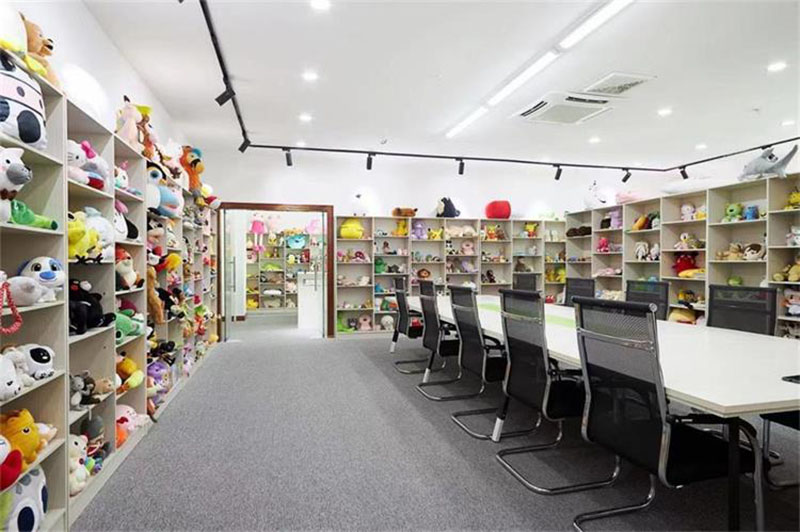
The questions you ask a potential factory — and the quality of the answers you receive — are one of the most efficient tools for separating capable manufacturers from ones that will disappoint. Good questions go beyond logistics and pricing to probe technical capability, quality systems, compliance knowledge, and business reliability.
Buyers should ask plush toy factories targeted questions covering production experience, quality control processes, material sourcing and certification, compliance support, sampling timelines, and communication protocols before placing any order. The specificity and confidence of the answers reveals far more about a factory’s true capability than their marketing materials or platform profile ever will.
Here is a structured question guide organized by evaluation area:
| Evaluation Area | Key Questions to Ask | What a Strong Answer Looks Like |
|---|---|---|
| Production experience | What types of plush products do you specialize in? | Specific product categories with examples |
| Capacity and lead time | What is your current monthly capacity and lead time for my order size? | Specific numbers with current utilization context |
| Quality control | Describe your IQC, IPQC, and FQC processes | Detailed, stage-by-stage explanation |
| Material sourcing | Where do you source your fabrics and fillings? | Named suppliers with certification documentation |
| Compliance | What certifications do your products hold for US and EU markets? | Specific standards named with reports available |
| Sampling | How long does sampling take and how many revision rounds are included? | Specific timeline with revision cost policy |
| Problem resolution | How do you handle quality issues found after shipment? | Clear process with examples |
| Communication | Who will be my main contact and what is your response time commitment? | Named contact with realistic response standard |
Questions That Reveal Technical Depth
Some of the most revealing questions are those that require genuine technical knowledge to answer well. For example, asking a factory how they ensure consistent stuffing density across a bulk production run — or how they prevent color variation between fabric batches — will quickly separate factories with real production knowledge from those giving rehearsed sales answers.
A factory with genuine technical capability will answer these questions specifically and confidently, often with references to their actual processes and equipment. A factory without that depth will give vague, general answers that could apply to any manufacturer.
Questions About Problem Handling
How a factory responds to problems is arguably more important than how it performs when everything goes smoothly. Asking directly — “Tell me about a quality problem you had with a client and how you resolved it” — gives you insight into the factory’s problem-solving culture, their transparency when things go wrong, and their capacity to take responsibility and make things right.
A factory that cannot recall any quality issues has either not produced enough to encounter them or is not being honest. A factory that describes a specific problem and walks through how it was identified, communicated, and resolved is demonstrating exactly the kind of operational maturity that makes for a reliable long-term partner.
How Does Sampling Quality Reveal the True Capability of a Plush Toy Manufacturer?
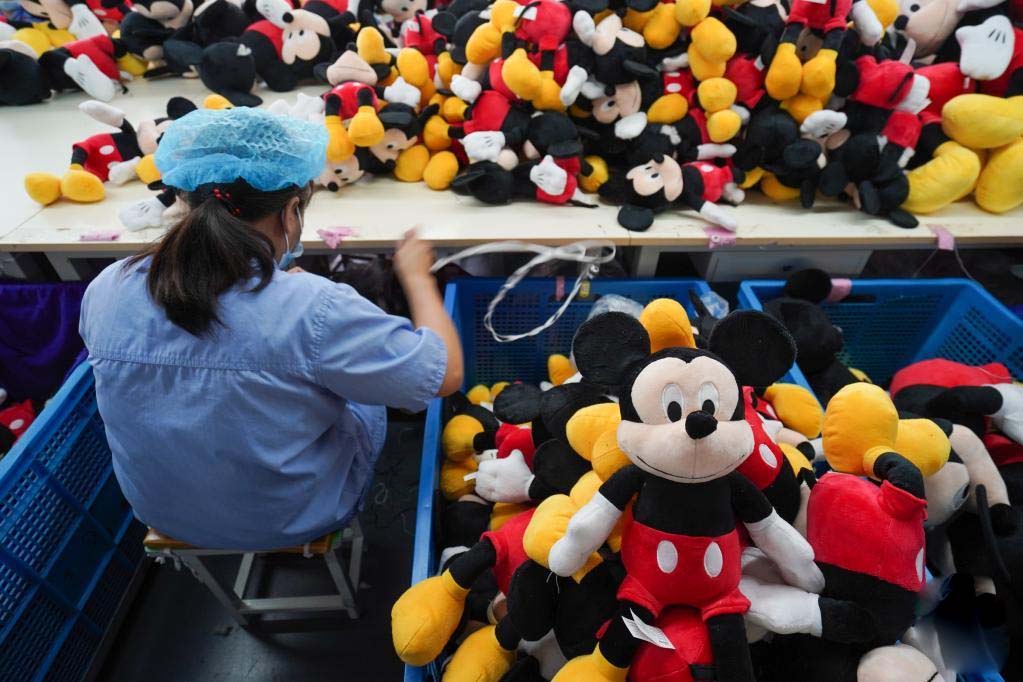
Sampling is the clearest window buyers have into a factory’s actual production capability. A factory can make many claims about its quality, experience, and capability — but a physical sample cannot lie. What arrives in the box tells you exactly what the factory is capable of, at the level of skill and attention they are willing to invest before a confirmed order is in hand.
Sampling quality reveals a plush toy manufacturer’s true capability by demonstrating how accurately they interpret a design brief, how precisely they execute patterns and construction, what material quality they default to, and how efficiently they incorporate feedback between revision rounds. A factory that produces an accurate, well-constructed first sample with minimal revision required is demonstrating the same capability that will determine the consistency of your bulk production.
Here is a systematic framework for evaluating sample quality:
| Evaluation Area | What to Check | Strong Result | Weak Result |
|---|---|---|---|
| Dimensional accuracy | Measure against specified dimensions | Within ±5% of spec | Significant deviation without explanation |
| Shape and proportion | Compare to design reference | Closely matches intended silhouette | Proportions noticeably off |
| Fabric quality | Feel, pile density, surface consistency | Matches brief specification | Lower quality than specified |
| Color accuracy | Compare to Pantone reference or swatch | Close match under standard lighting | Visible deviation from reference |
| Stitching quality | Inspect seams under tension | Clean, consistent, strong | Loose, uneven, or fraying |
| Stuffing density | Compress and release, check shape retention | Firm, even, recovers shape | Soft patches, uneven distribution |
| Accessory attachment | Pull test eyes, buttons, and trims | Secure, no detachment | Loose or inconsistent attachment |
| Finishing standard | Check for loose threads, marks, surface defects | Clean, professional finish | Loose threads, marks, rough edges |
Reading Between the Lines of a First Sample
Beyond the physical quality of the sample itself, how the factory manages the sampling process tells you a great deal. A factory that delivers a first sample with a detailed explanation of any deviations from the brief — and proactively suggests how those deviations will be addressed — is demonstrating both technical maturity and client-focused communication.
A factory that delivers a sample without any accompanying notes, cannot explain why certain elements differ from the brief, or is defensive when revision feedback is provided is showing you how they will handle problems during bulk production. The patterns established during sampling almost always carry through to production.
The Importance of Requesting a Portfolio Sample
Before committing to a new design sample, requesting an existing product from the factory’s current portfolio is a valuable preliminary step. Asking for a sample of a product the factory already produces gives you a baseline assessment of their standard quality output without the investment of a custom sampling fee. If the portfolio sample does not meet your quality expectations, there is no reason to believe a custom sample will perform better.
What Contract and Payment Terms Help Protect Buyers from Unreliable Factories?
Beyond evaluating capability and quality, protecting yourself contractually is an essential part of working with any new factory. A well-structured agreement and appropriate payment terms do not guarantee a perfect outcome, but they create the legal framework and financial incentives that make serious problems significantly less likely — and easier to resolve when they do occur.
Buyers can protect themselves from unreliable plush toy factories through clear purchase agreements that specify product standards, quality acceptance criteria, delivery timelines, and consequences for non-conformance, combined with payment terms that retain financial leverage until quality and delivery commitments are met. These protections should be established before production begins, not after a problem has already occurred.
Here is an overview of key contractual and payment protections for plush toy buyers:
| Protection Area | What to Include | Why It Matters |
|---|---|---|
| Product specifications | Detailed spec sheet referenced in contract | Defines the quality standard legally |
| Quality acceptance criteria | AQL level, defect definitions, inspection rights | Sets measurable pass/fail standard |
| Delivery timeline | Confirmed ship date with penalty clause | Creates accountability for delays |
| Sample approval clause | Bulk production must match approved sample | Legal basis for rejecting non-conforming goods |
| Payment structure | Deposit plus balance on inspection | Retains leverage until quality is confirmed |
| Inspection rights | Right to third-party inspection before shipment | Independent quality verification |
| Intellectual property | Design ownership and confidentiality | Protects custom designs and branding |
| Dispute resolution | Agreed process for handling disagreements | Reduces escalation cost if issues arise |
Structuring Payment Terms That Protect You
The standard payment structure in international plush toy manufacturing is a 30% deposit on order confirmation with the 70% balance paid before shipment. This structure gives the factory sufficient capital to begin material procurement while retaining the majority of the payment as leverage until production is complete and quality has been verified.
For first orders with a new factory, some buyers negotiate a slightly lower deposit — typically 20 to 25% — with the balance paid only after a satisfactory third-party inspection report is received. This structure provides additional protection when working with an unproven supplier and sends a clear signal that quality verification is a non-negotiable step in your process.
What a Product Specification Agreement Should Cover
A purchase order alone is not sufficient legal protection. A product specification agreement — or a detailed technical addendum to your purchase order — should reference the approved sample by name or photo, specify all materials, dimensions, and construction standards, define the AQL level that will be applied during final inspection, and state clearly what constitutes grounds for rejection of the shipment.
Having these standards agreed in writing before production begins transforms quality disputes from subjective disagreements into objective assessments against predefined criteria — which is far easier to resolve fairly and quickly.
How Do Quality Control Systems Separate Reliable Factories from Risky Ones?
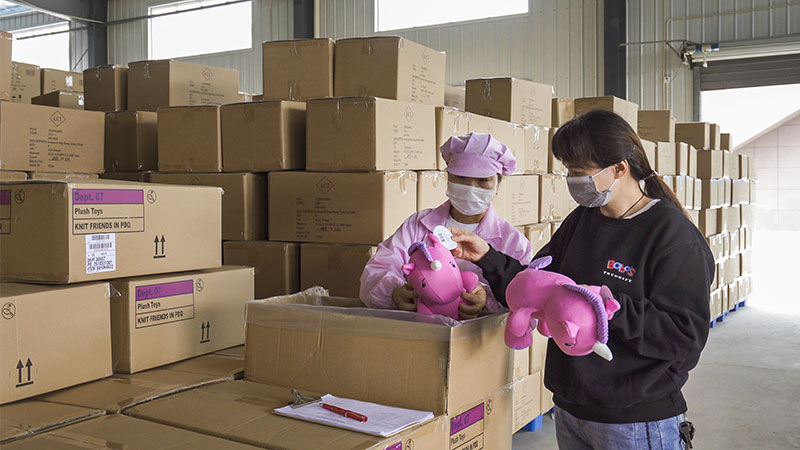
A factory’s quality control infrastructure is one of the clearest structural indicators of how reliably it will perform across multiple production runs. Quality is not an accident — it is the product of systematic processes applied consistently at every stage of manufacturing. Factories that have built and maintained these systems deliver predictable results. Those that have not will always introduce uncertainty into your supply chain.
A reliable plush toy factory operates a three-stage quality control system covering incoming materials, in-process production monitoring, and final goods inspection. Each stage serves a distinct purpose in preventing, detecting, and correcting quality issues before they reach the buyer. The presence, depth, and documentation quality of these systems is what separates consistently reliable factories from those whose quality is unpredictable.
Here is a comparison of quality control maturity levels across different factory types:
| QC Element | Mature QC System | Developing QC System | Minimal QC System |
|---|---|---|---|
| IQC | Documented criteria, dedicated personnel, full records | Some incoming checks, partial documentation | Visual check only, no records |
| IPQC | Regular in-line checks at defined intervals, corrective action process | Occasional checks, informal process | End-of-day check only |
| FQC | AQL sampling, full documentation, independent QC team | Final inspection, limited documentation | Spot check before packing |
| Non-conformance | Formal process with root cause analysis | Informal case-by-case response | No formal process |
| Records | Complete, organized, accessible | Partial, inconsistently maintained | Minimal or unavailable |
Why Independent QC Teams Matter
One of the most important structural quality indicators is whether the factory’s quality control team operates independently from the production team. In factories where QC is performed by production supervisors — who are measured on output volume — there is a structural conflict of interest that consistently produces compromised quality decisions.
An independent QC department, reporting to management separately from production, is free to make objective quality calls without pressure to prioritize throughput over standards. This independence is a prerequisite for consistent quality across high-volume production runs, and its presence or absence is usually revealed quickly when you ask the factory to describe their QC organizational structure.
Documentation as a Quality Indicator
The quality of a factory’s QC documentation is itself an indicator of the seriousness with which they approach quality management. A factory with mature QC processes will have organized, accessible records for every production batch — covering incoming material inspection results, in-process defect rates, and final inspection reports. Being able to produce these records for past production runs — with client information appropriately redacted — demonstrates both that the records exist and that the factory is willing to be transparent about its performance history.
How Can Buyers Build a Long-Term Sourcing Relationship with the Right Plush Toy Factory?

Finding the right factory is only the beginning. The real value of a good manufacturing partner is realized over time, as the relationship deepens, mutual understanding grows, and the factory’s knowledge of your products and standards reduces friction, cost, and risk on every subsequent order.
Building a long-term sourcing relationship with a plush toy factory requires consistent communication, clear and evolving product standards, fair and reliable payment behavior, and a collaborative approach to problem-solving that treats the factory as a genuine partner rather than a transactional vendor. Factories that feel valued and well-understood by their clients consistently deliver better performance than those who experience their clients as demanding and unpredictable.
Here is a framework for developing a productive long-term factory relationship:
| Relationship Element | What It Looks Like in Practice | Benefit to Buyer |
|---|---|---|
| Consistent communication | Regular updates, prompt responses, clear briefs | Fewer misunderstandings, faster resolution |
| Transparent planning | Share seasonal forecasts and development pipeline | Factory allocates capacity for your orders |
| Fair payment behavior | Pay on agreed terms, no unreasonable delays | Factory prioritizes your orders |
| Collaborative problem-solving | Work through issues jointly rather than assigning blame | Faster resolution, stronger trust |
| Feedback culture | Provide specific, constructive quality feedback | Factory improves performance over time |
| Growing order commitment | Increase volume as trust and performance are established | Better pricing, higher priority status |
The Commercial Value of a Stable Supplier Relationship
A long-term factory relationship has direct commercial value that is easy to underestimate. A factory that knows your products deeply — your material standards, your quality expectations, your market requirements, your seasonal timing — requires significantly less management overhead than a new factory that needs to learn everything from scratch. The time saved in briefing, sampling, and quality negotiation on repeat orders translates directly into lower sourcing costs and faster time to market.
Factories that view a buyer as a long-term partner also tend to offer tangible commercial benefits over time: priority production scheduling during peak periods, more flexible payment terms, willingness to accommodate smaller test orders for new designs, and proactive communication about material availability or production challenges that might affect the buyer’s timeline.
How to Signal Long-Term Intent Early
Signaling long-term partnership intent early in the relationship — even before the first order — creates a different dynamic than approaching a factory as a one-time transaction. Sharing your business context, your growth plans, and your product development pipeline during the initial conversations shows the factory that you are a serious buyer with ongoing needs, which motivates them to invest more care and attention in your initial orders.
At Kinwin, we approach every client relationship as a long-term partnership from the very first conversation. We invest in understanding your product goals, your market requirements, and your business context — because we know that the more we understand your business, the better we can serve it. Whether you are placing your first order or looking to build a stable, scalable supply chain for an established product line, we are committed to being the kind of manufacturing partner that helps your business grow with confidence.
Conclusion
Choosing the wrong plush toy factory is rarely the result of bad luck. In most cases it is the result of moving too quickly, asking too few questions, or prioritizing price over capability at the decision-making stage. The warning signs are almost always present — they just require the right evaluation framework to identify them before they become expensive production problems.
The buyers who consistently source well are not necessarily the most experienced or the best-funded. They are the ones who approach factory selection with discipline — verifying claims rather than accepting them, evaluating systems rather than just samples, and building relationships rather than just placing orders.
Every step in this guide exists because a buyer somewhere learned it the hard way. Applying these steps before you commit to a factory means you are benefiting from that experience without having to repeat it yourself.
At Kinwin, we welcome the kind of thorough evaluation process described in this guide. We are confident in our production capability, our quality systems, and our track record with clients in the US and European markets — and we are happy to demonstrate all of it before you place your first order. If you are currently evaluating plush toy manufacturers and want a partner who can meet a high standard of scrutiny, we would be glad to start that conversation.
FAQ
Q1: Is it better to source plush toys from a factory directly or through a sourcing agent?
Sourcing directly from a factory generally gives you better pricing, more control over production quality, and clearer communication when problems arise. A sourcing agent can add value if you are new to the market, managing multiple suppliers simultaneously, or sourcing from a country where language barriers make direct communication difficult. The trade-off is an additional fee — typically 5 to 10 percent of order value — and a layer of intermediation that can slow down decision-making. For buyers with established product requirements and the time to manage supplier relationships directly, going factory-direct is usually the stronger long-term strategy.
Q2: How much should I budget for supplier evaluation before placing my first order?
A realistic budget for thorough supplier evaluation before a first order includes sampling fees — typically $100 to $400 per design depending on complexity — shipping costs for samples to your location, and potentially a third-party factory audit if the order value justifies it. Audit costs from firms like SGS or Intertek typically range from $300 to $600 for a standard factory assessment. For orders above $20,000, this level of upfront investment in evaluation is almost always justified by the risk it mitigates.
Q3: Can I work with multiple plush toy factories at the same time?
Yes, and for some buyers this is a deliberate risk management strategy — particularly when producing across very different product types or when seasonal demand creates capacity constraints at a single factory. However, splitting volume across multiple factories also means splitting your leverage as a buyer, which can result in less competitive pricing and lower priority status at each factory individually. Most experienced buyers find that consolidating the majority of their volume with one or two well-chosen factories delivers better overall outcomes than spreading orders across many suppliers.
Q4: What is the minimum order quantity I should expect when working with a reputable plush toy factory?
Minimum order quantities at established plush toy factories typically range from 300 to 1,000 units per design for standard products, and may be higher for products requiring custom tooling, specialized materials, or complex construction. Some factories offer lower MOQs for clients who are developing a new product and want to test the market before scaling, particularly when there is a clear intent to grow the relationship. It is always worth discussing your volume expectations openly with a factory early in the conversation — a factory interested in a long-term relationship will often show more flexibility on initial order minimums than their standard terms suggest.
Q5: How do I handle a situation where the bulk order does not match the approved sample?
If the bulk production does not match the approved sample, the first step is to document the discrepancies specifically and thoroughly — with photos, measurements, and a clear description of each deviation — and present this to the factory in writing. Refer to the approved sample and any contractual specifications that define the acceptance standard. A reliable factory will take this seriously and work with you toward a resolution, which may include rework of affected units, a replacement production run, or a financial concession depending on the severity of the issue. This is why having a signed-off sample with documented specifications, a clear contract, and a payment structure that retains balance leverage until after inspection is so important — it gives you both the evidence and the commercial leverage to resolve the situation effectively.