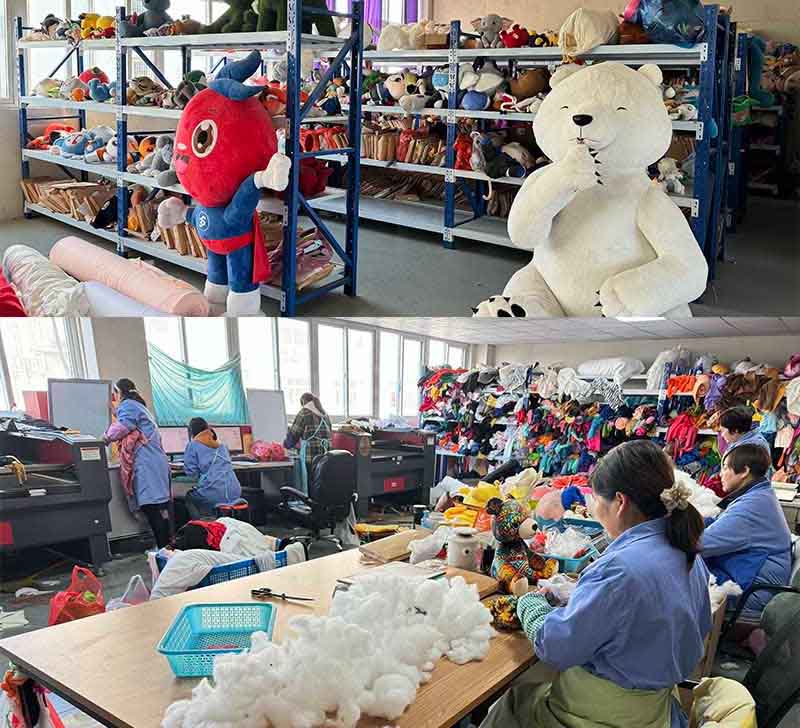
Finding a good plush supplier in China can feel confusing at first—because online, everyone looks “professional,” everyone says “we are a factory,” and everyone promises the best quality. The trick is to stop judging by photos and start judging by proof, process, and consistency.
Let’s go step by step. First, we’ll define what “trustworthy” actually means (in a way you can verify), then we’ll move into sourcing channels and verification methods.
What makes a plush toy factory in China trustworthy?
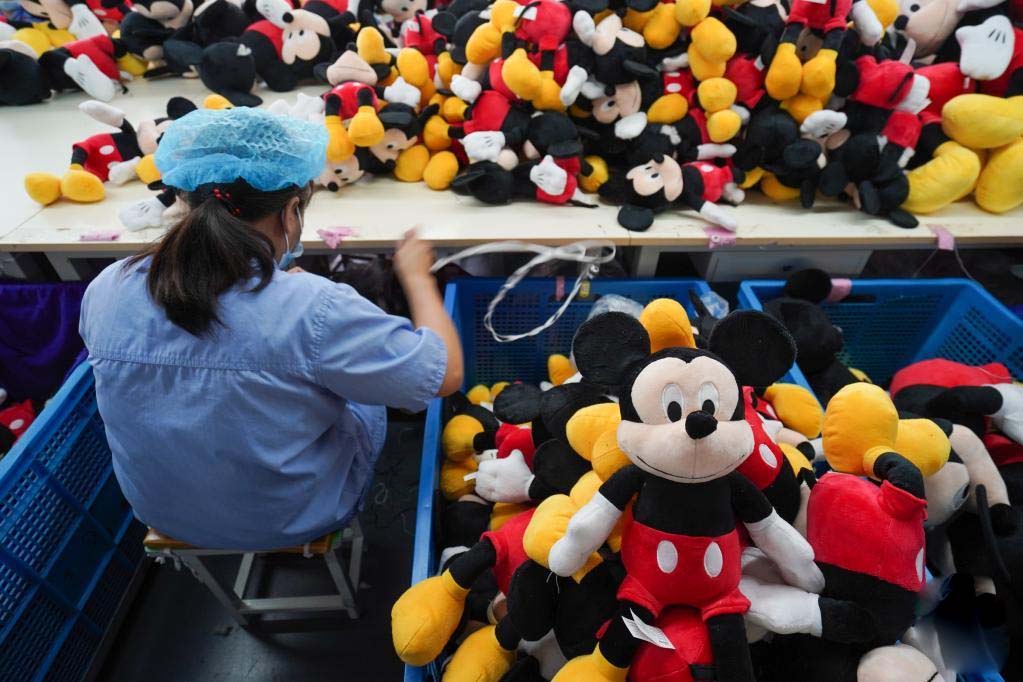
A trustworthy plush factory is one that can consistently deliver the same quality you approved in the sample, meet your target market’s safety expectations, and run business in a way that feels transparent and organized—not mysterious.
What proof and behaviors show the factory is genuinely trustworthy?
Here are the strongest “green flags” buyers can verify early—before you pay a deposit:
- They provide a real Chinese company identity you can check
Legit companies in China have an 18-digit Unified Social Credit Code on their business license, and buyers can use it (or the Chinese company name) to cross-check registration details. - They can show factory reality, not just showroom photos
Ask for a short walkthrough video showing cutting → sewing → stuffing → finishing → packing. A real factory can show real production zones and explain what each step does. - They talk in “process language,” not “promise language”
Trustworthy factories naturally explain:- how they control fabric color batches
- how they keep face embroidery placement consistent
- what their QC checkpoints are (incoming / in-line / final)
- what the sample approval process looks like
- They are comfortable with documentation
For export-ready suppliers, “paperwork” isn’t scary—it’s normal. They can provide basic business documents and explain how export shipments are handled. - Their payment details match their legal company name
This is a simple but powerful safety move: the company name on the contract/invoice should match the bank beneficiary. If it doesn’t, you pause and verify.
How do you separate a “good factory” from a risky supplier quickly?
Most buyer problems come from the same pattern: low price + vague answers + weak control.
Here’s a practical way to judge risk in 10 minutes:
- If they push price before understanding your product, risk goes up.
A good factory asks questions first (size, market, materials, accessories, age grade). - If they say “we can do anything” with no details, risk goes up.
Real factories explain tradeoffs (e.g., embroidery vs printing, long fur vs shedding, accessory attachment methods). - If they avoid showing production areas, risk goes up.
You might be dealing with a trading layer (which isn’t always “bad,” but you need to know who controls production). - If they can’t explain how they prevent repeat defects, risk goes up.
Plush quality issues are usually predictable: crooked faces, uneven stuffing, weak seams, accessories falling off. A trustworthy factory has a system for these.
Quick Evaluation Table: “Trustworthy Factory” vs “High-Risk Supplier”
| What you check | Trustworthy factory signs | High-risk supplier signs | What you should do next |
|---|---|---|---|
| Company identity | Provides business license + Unified Social Credit Code you can verify | Avoids sharing license / gives unclear company name | Ask for license + code + matching bank name |
| Factory proof | Real walkthrough: cutting, sewing, stuffing, packing | Only product photos / showroom | Request a 1–2 minute workshop video |
| Communication style | Confirms specs back to you in writing | Vague “yes, no problem” replies | Test them with a detailed checklist |
| Quality control | Explains checkpoints and defect rules | “We do QC” but no method | Ask for QC photos/checklist examples |
| Pricing logic | Quote matches materials & complexity | Extremely low price with no breakdown | Ask for a cost breakdown and material list |
If you want, you can send Kinwin your plush reference (photo/artwork), size, target market (US/EU/UK), and estimated quantity. We’ll give you a factory-style feasibility review—what’s easy, what’s risky, and how to build it so bulk production stays consistent.
Which sourcing channels help you find real factories?
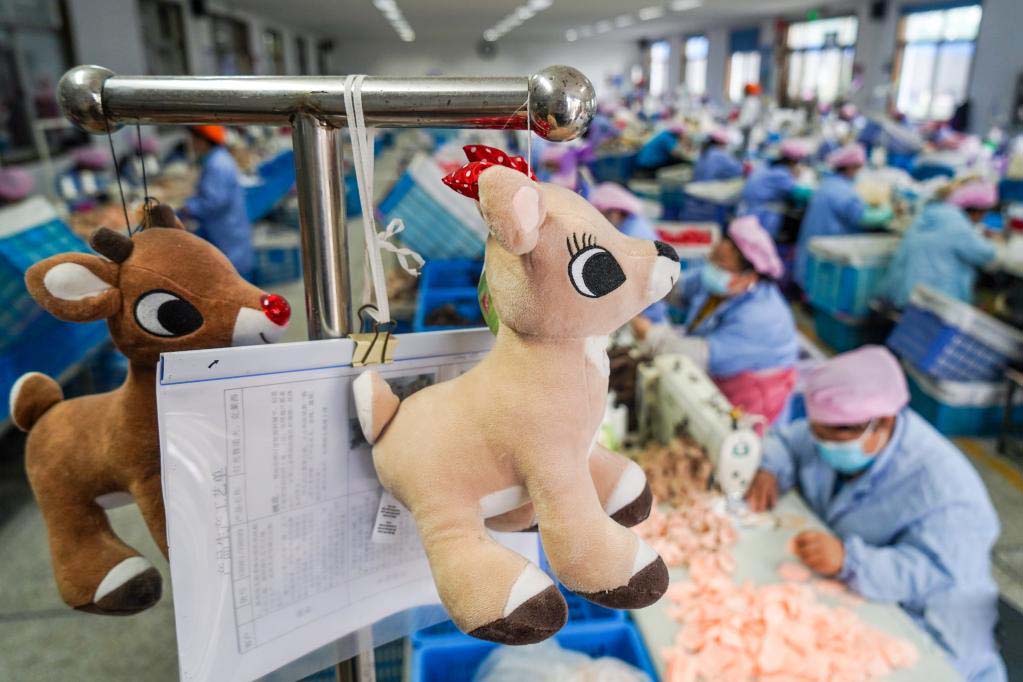
If you search “plush toy factory China” online, you’ll get thousands of results—many are real, many are trading companies, and some are just good at marketing. The smartest buyers don’t rely on one channel. They use 2–3 sourcing channels and look for repeat signals (same factory name, same address, consistent workshop proof, consistent product focus).
Which online platforms are best for finding verified suppliers?
Online B2B platforms can be a good starting point—if you use their verification filters and still do your own checks.
Here are the most practical ways buyers use them:
- Alibaba-style “Verified Supplier” / escrow-type protection (when available)
Many platforms highlight suppliers that have undergone third-party verification or audits. For example, Alibaba’s “Verified Supplier” guides describe independent assessments that can include onsite inspections by third-party agencies (e.g., SGS/Bureau Veritas/TÜV), and they recommend checking licenses, audit info, and performance indicators—not just photos. - Global Sources “Verified Supplier”
Global Sources explains that “Verified Suppliers” undergo evaluation to help buyers reduce sourcing risk (the key is still asking for proof: factory video, audit reports, product focus, and export experience). - Made-in-China “Audited Supplier” + downloadable audit reports
Made-in-China states that its “Audited Supplier” program uses third-party inspection companies (SGS, Bureau Veritas, TÜV Rheinland, CTI) and provides audit reports online—this can be a useful shortcut to filter out weaker suppliers early.
Real-world tip: treat “verified/audited” as a starting filter, not a final decision. You still need to confirm the factory’s plush specialization, sample ability, and QC consistency.
Which offline and “direct” channels give you higher confidence?
If you want higher certainty, offline channels help because you can see people, products, and professionalism more clearly.
- Trade shows (best for face-to-face screening)
Many sourcing guides recommend trade fairs like the Canton Fair because you can meet suppliers directly, compare multiple options fast, and follow up after the event with documentation checks. - Factory audits / verification visits (best for risk reduction)
If your order value is meaningful (or you’re building a long-term supplier relationship), a factory audit—onsite or remote—helps verify the facility, production flow, and basic management systems. - Referrals from industry contacts (surprisingly effective)
If you know brand owners, Amazon sellers, distributors, or promotional product buyers, referrals often lead to more stable suppliers—because the factory already understands international buyer expectations.
Quick comparison table: sourcing channels that work best
| Sourcing channel | Best for | Why buyers like it | Main risk | How to reduce that risk |
|---|---|---|---|---|
| B2B platforms (verified/audited suppliers) | Fast shortlisting | Easy to compare many suppliers, some offer verification programs | Mixed supplier types (factory vs trader) | Ask for workshop video + license + audit report |
| Trade shows (e.g., Canton Fair) | High-confidence first screening | Face-to-face evaluation + product comparison | Time/travel cost | Prepare a checklist and verify documents after |
| Factory audit / verification | High-value orders | Confirms real operations and capability | Extra cost | Use audit only for your final 1–2 options |
| Referrals | Long-term partners | Real buyer feedback | Limited options | Still do sampling + QC proof checks |
If you want to move faster, you can shortlist 5–8 suppliers from one platform, then narrow to 2–3 using video proof + sample evaluation, and only audit the final choice.
How do you verify a factory’s license, location, and export history?
This step is where you stop guessing and start confirming facts. A trustworthy plush factory in China won’t mind these checks—because serious buyers do them every day. Your goal is simple: make sure the supplier is a real legal entity, a real operating facility, and actually ships goods internationally (not just “says they do”).
How do you verify the business license and company identity correctly?
Start with two items you should always request:
- A clear copy of the Chinese business license
- The 18-digit Unified Social Credit Code (USCC)
The USCC is basically the company’s unique ID in mainland China, and it’s commonly used to search and verify registration details in official/public records.
What to check on the license (practical buyer checklist):
- Company name in Chinese (English names can be inconsistent—Chinese name is what matters)
- USCC (18 digits)
- Registered address
- Legal representative
- Business scope (should match manufacturing/trading activities)
- Company status (active/normal is what you want)
Important safety move:
Make sure the bank beneficiary name matches the legal company name on the license/contract. If they ask you to pay to a totally different company name, pause and verify before sending money.
How do you confirm the factory’s real location and export history?
A supplier can be legally registered and still not be a real plush-producing factory. So you also want “reality proof” and “shipping proof.”
A) Confirm the facility is real (location + operations):
- Ask for a short factory walkthrough video showing: cutting → sewing → stuffing → packing
- Request a live video call and ask them to show:
- factory entrance/sign
- sewing lines running
- finished goods packing area
- Ask for a few recent production photos that include real work-in-progress, not studio shots
If they avoid showing production areas (or only show a showroom), you may be dealing with a middle layer.
B) Confirm export history (they actually ship):
You have two buyer-friendly options:
- Ask for redacted shipping proof (most common)
Request 1–2 examples of:
- packing list format
- carton markings photos
- a bill of lading screenshot with sensitive details blurred
This confirms they know export processes and have shipped before.
- Use trade/shipping data providers for transaction signals
Many services aggregate bill of lading / customs-style shipment records and position them as a way to confirm real transactions and exporter activity.
(You don’t need perfect data—just enough to confirm the supplier name appears as an exporter and has consistent shipments.)
Extra shortcut (not a replacement):
If the supplier is on a platform with an audit/verification report, read the report scope and date. For example, Made-in-China’s “Audited Supplier” program states it uses third-party inspection companies and provides audit reports online.
Treat this as a filtering tool—not final proof.
Quick Verification Table: License + Location + Export History
| What you’re verifying | Best proof to request | What “good” looks like | Red flags |
|---|---|---|---|
| Legal identity | Business license + USCC | USCC matches records; company status is normal | Won’t share license/USCC |
| Real factory location | Walkthrough video + live call | Shows real sewing/packing areas | Only showroom or product photos |
| Export readiness | Redacted packing list/BOL + carton photos | Can show real export workflow | “We export a lot” but no proof |
| Consistency of names | Contract + invoice + bank beneficiary | Names match cleanly | Payment to unrelated company name |
| Platform audit (optional) | Third-party audit report | Clear scope + recent audit date | Badge only, no report details |
If you want a low-risk way to do this, you can apply the same checklist to every shortlisted supplier. And if you’re evaluating Kinwin, we can provide the standard verification package (license details, factory proof, and export-ready documentation) and walk you through our sampling + production workflow so you can confirm everything before you place a deposit.
What certifications and safety compliance should you check?
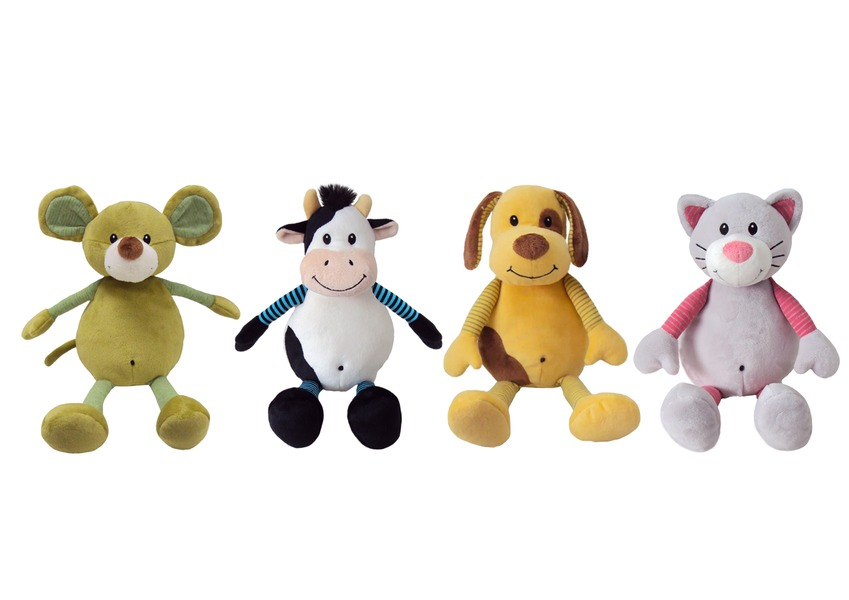
When you’re sourcing plush toys in China, “certification” can mean two different things:
- Legal toy safety compliance for your selling market (US/EU/UK, etc.)
- Factory/material credibility certifications (helpful for trust, but not always legally required)
A trustworthy factory should guide you toward the right compliance path based on where you sell + age grading, and help you avoid the classic mistake: paying for the wrong “certificate” that doesn’t actually protect your brand.
Which market safety standards should your plush meet?
Start from the market you sell in—not from what the factory claims they “have.”
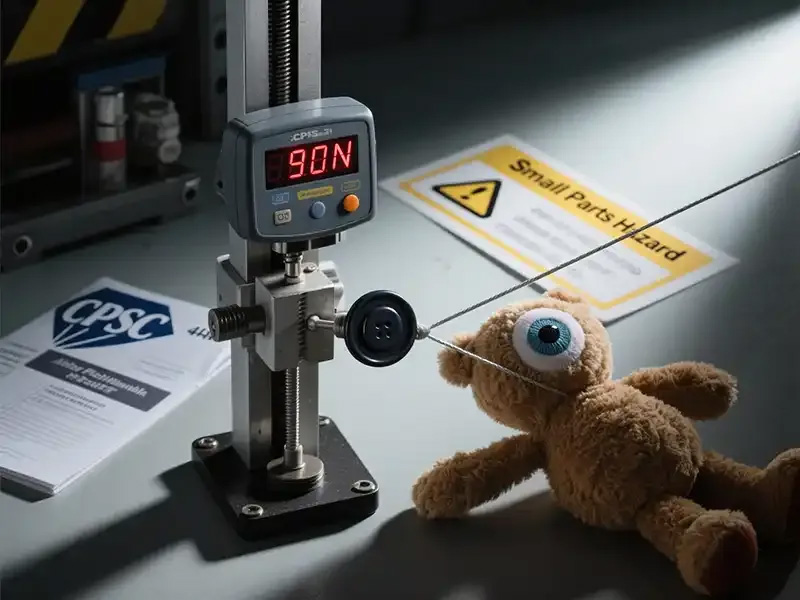
- United States: Plush toys sold as children’s toys commonly need to align with ASTM F963, and the CPSC even provides guidance on which ASTM F963 sections may apply and notes which require third-party testing by CPSC-accepted labs.
- European Union: Toys must meet EU toy safety requirements under EU legislation (Toy Safety Directive), with safety expectations that cover broad risks including chemicals.
- Great Britain (UK): The UK has its own toy safety rules (Toys (Safety) Regulations 2011) and guidance on conformity marking and documentation obligations.
Buyer-friendly way to ask a factory:
Instead of “Do you have EN71/ASTM?”, ask:
“We sell in the US/EU/UK and our age grade is __. Can you support the correct lab testing + paperwork for this exact SKU?”
That question forces the supplier to respond with process—not marketing.
Which “trust signals” in materials and factory systems are worth checking?
Not all certifications are mandatory, but some are great trust signals, especially when you care about fabric safety claims or consistent management.
- Material safety labels (textile-focused):
If you want extra reassurance for fabrics and linings, OEKO-TEX® STANDARD 100 is a widely recognized label for textiles tested for harmful substances.
(This doesn’t replace toy safety testing, but it’s a strong material-level confidence booster for many buyers.) - Factory management systems (process-focused):
Many buyers also look for stable process habits (document control, QC records, traceability). Even if you don’t request a specific management certificate, you should expect the factory to run like an organized manufacturer: spec sheets, version control, and QC checkpoints that can be shown—not just promised.
Quick Checklist Table: What to Check vs What It Proves
| What you check | What it helps prove | When it matters most | What to request |
|---|---|---|---|
| ASTM F963 support (US) | US toy safety pathway + lab testing awareness | US kids/toy sales | Applicable test scope + lab workflow |
| EU toy safety compliance | EU market safety readiness | EU retail or distributors | Testing plan + documentation readiness |
| UK Toys (Safety) Regulations | GB market compliance readiness | UK sales | UK documentation + marking guidance alignment |
| OEKO-TEX Standard 100 (optional) | Fabric tested for harmful substances | Brand with “safer materials” positioning | Fabric certificates from suppliers |
| Documentation discipline | Real ability to repeat quality + reduce disputes | All projects | Spec sheet + golden sample + QC records |
If you tell Kinwin your target market (US/EU/UK) and age grading (0+/3+/etc.), we can recommend the safest construction choices (eyes, seams, accessories), suggest the right testing path, and prepare the documentation flow—so you don’t find compliance problems after bulk production.
How do you evaluate samples, QC systems, and production capacity?
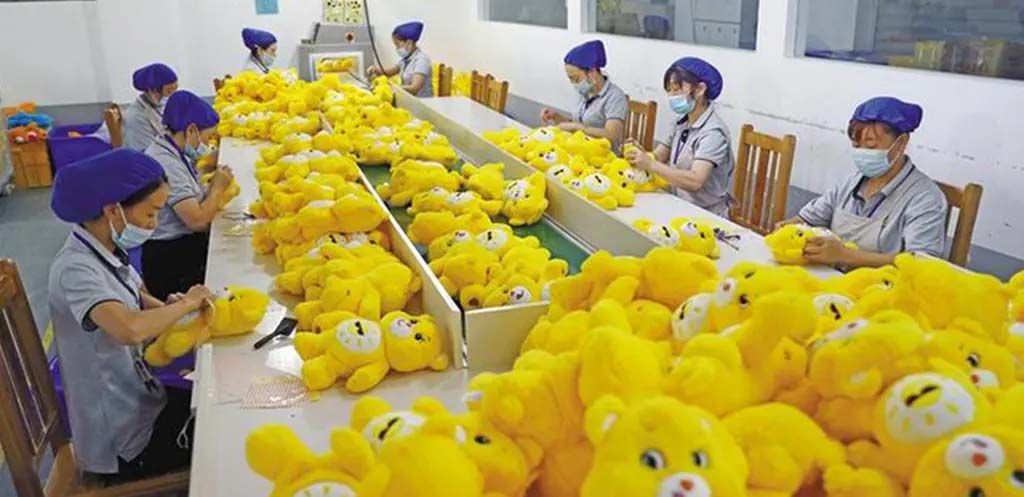
This is the “reality check” stage—because a factory can look perfect online and still fail when it’s time to make 2,000 pieces that all match your approved sample.
To judge a China plush factory fairly, you want to answer three questions:
- Can they make your sample accurately?
- Can they control quality during mass production (not only at the end)?
- Do they have enough capacity to hit your timeline—especially in peak season?
How can you evaluate samples so they reflect real mass production?
A beautiful sample isn’t enough—you need a mass-producible sample.
Here’s what to check (simple but powerful):
- Ask for a clear sampling workflow: prototype → revisions → pre-production sample (PPS)
The PPS is important because it should be made with “real” materials and the same methods used in bulk. - Look for “repeatability risk” in the sample:
- face alignment (eyes, mouth, embroidery position)
- symmetry (ears/arms even, shapes consistent)
- stuffing firmness (lumpy or overstuffed areas)
- stress points (hanging loops, seams, accessories)
- Test it like a customer would:
Gently pull ears/arms, rub printed areas, check seams, squeeze and release. If it feels fragile in your hands, bulk will be worse. - Confirm “golden sample” control:
A reliable factory keeps an approved golden sample and uses it as the QC reference during production.
Practical buyer move: ask the factory to send front + side + back photos of the sample with a ruler/measurement points. This quickly shows whether they control shape and size.
How do you judge QC systems and production capacity without visiting China?
You can still verify a lot remotely if you ask for proof in the right format.
QC proof requests that work:
- A simple QC checklist (what they check at incoming materials, in-line sewing, final inspection)
- In-production photos/videos showing:
- cutting tables
- sewing lines
- stuffing/closing
- packaging
- A clear explanation of defect rules:
- critical defects (safety)
- major defects (unsellable)
- minor defects (cosmetic)
Capacity questions that expose the truth fast:
- “How many pieces per day/week can you produce for a similar plush?”
- “How do you schedule production during peak season?”
- “How many lines do you run, and what products are currently on the lines?”
- “What is your current lead time for sampling and bulk?”
You’re not trying to “catch them.” You’re checking whether they have a real production plan or are guessing.
Quick Evaluation Table: Samples + QC + Capacity
| What you’re checking | What “good” looks like | What to ask for | Red flags |
|---|---|---|---|
| Sample repeatability | PPS made like bulk, not hand-perfect | “Do you provide a PPS (pre-production sample)?” | Only one sample stage |
| Golden sample control | Approved sample stored + used in QC | “Do you keep a golden sample for production?” | No reference standard |
| QC checkpoints | Incoming + in-line + final QC | “Do you inspect during sewing or only at the end?” | Only final inspection |
| Defect rules | Clear critical/major/minor definitions | “How do you classify defects?” | “Depends” / no rules |
| Capacity reality | Clear output ability + scheduling | “What’s weekly capacity for similar items?” | Vague capacity claims |
| Lead-time transparency | Milestones + realistic timing | “Sampling / materials / production / QC timeline?” | One vague total number |
If you want, you can send Kinwin your reference design and expected quantity. We’ll tell you what parts of your plush are easy vs high-risk for consistency, and how we’d control them in sampling + QC—so you can feel confident before mass production.
What contract terms reduce risk before mass production?
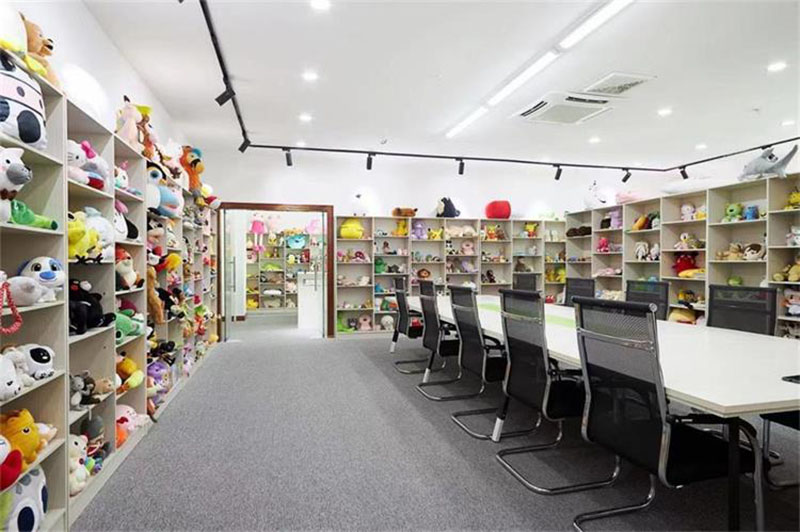
This is the part that protects you when things get busy or complicated—because even good factories can make mistakes, especially when there are revisions, tight timelines, or multiple materials involved.
A “safe” plush contract doesn’t need to be long or legal-sounding. It just needs to make the important points clear, written, and measurable—so you’re not arguing later about what was “agreed.”
Which contract clauses matter most for quality, timeline, and revisions?
These are the clauses that prevent the most common disputes:
- Approved sample (PPS) is the production standard
Write it clearly: mass production must match the approved PPS/golden sample + spec sheet.
This stops “close enough” production. - Spec sheet attachment (materials + construction details)
The contract should reference a spec sheet that includes:- fabric type + color reference
- embroidery/print files (version/date)
- accessory type + attachment method
- size/measurement points + tolerance
- stuffing firmness/weight target
- packaging details (bag/tag/carton marks)
- Revision / change-control rule
Any change after sample approval must confirm new cost + new lead time in writing.
This prevents surprise charges and “silent changes.” - QC standard + defect definition
Even a simple standard helps:- Critical defects (safety) = not acceptable
- Major defects (unsellable) = limited/controlled
- Minor defects (cosmetic) = allowed within a reasonable range
This is your “quality language” when you inspect goods.
- Pre-shipment inspection option
If you plan a third-party inspection, mention it. If not, at least require:- QC photos
- packing photos
- carton count confirmation
before final payment.
What MOQ, lead time, and payment terms keep buyers safest?
These terms are where buyers either feel secure—or feel trapped.
- MOQ locked to the exact design and materials
Make sure MOQ applies to your fabric/colors/accessories, not a vague “similar product.”
Otherwise MOQ can “change” later. - Lead time broken into milestones
A trustworthy factory can commit to a schedule like:- sampling time
- material purchasing time
- production time
- QC + packing time
- ship date
This makes delays visible early, not at the last minute.
- Payment structure that matches risk
A common safe pattern is:- deposit to start bulk
- balance after QC approval / pre-shipment inspection
This protects you from paying 100% before you see proof the order meets the standard.
- Delay and remedy language (keep it simple)
You don’t need to “fight” in a contract. Just add practical remedies, such as:- priority production to catch up
- partial shipment plan if needed
- clear communication rule: factory must warn you early if risk appears
Quick Contract Table: The “Must-Have” Terms
| Risk area | Term to include | Why it matters | Common mistake |
|---|---|---|---|
| Quality drift | PPS/golden sample is binding | Prevents “close enough” bulk | No written standard |
| Wrong materials | Spec sheet listed in contract | Stops substitutions | “Similar fabric OK” |
| Revision confusion | Change-control rule | Prevents surprise costs/time | Changes done verbally |
| QC disputes | Defect definitions | Gives shared quality language | “We do QC” only |
| Delivery delays | Milestone schedule | Makes problems visible early | One vague lead time |
| Payment risk | Balance after QC/inspection | Protects your cash | Full payment upfront |
If you’d like, you can use this contract checklist to compare 2–3 factories side-by-side. And if you’re considering Kinwin, we can provide a clean, buyer-friendly workflow: documented sampling (PPS), spec sheets, QC checkpoints, and transparent timelines—so you can move into mass production with confidence.
Conclusion
Finding a trustworthy plush toy factory in China becomes much easier when you stop relying on “marketing signals” and start checking proof and process. The most reliable factories are transparent about who they are, how they control quality, how they support safety compliance, and how they protect you with clear documents before mass production.
If you follow the steps in this guide—define what “trustworthy” means, use the right sourcing channels, verify the license and real location, confirm export history, check safety compliance, evaluate samples and QC systems, and lock in protective contract terms—you’ll avoid the most common sourcing risks and build a long-term manufacturing partner you can scale with.
If you want a factory that’s experienced with global buyers and can support custom plush from design → sampling → mass production with stable quality, you can contact Kinwin. Share your artwork/reference images, target size, selling market (US/EU/UK), and expected quantity—we’ll reply with honest feasibility feedback, material recommendations, a transparent quote, and a clear production timeline.