The United States has one of the most strictly enforced toy safety systems in the world.
If your plush toys are entering the U.S. market, compliance is not optional—it is legally mandatory. Failing to meet U.S. requirements can result in shipment rejection, product recalls, fines, or long-term brand damage.
Choosing a plush toy factory that truly understands U.S. regulations is essential for smooth entry into American retail and e-commerce platforms.
This guide will help you evaluate whether a plush manufacturer is genuinely prepared for the U.S. market.
What U.S. Toy Safety Regulations Must the Factory Understand?
Before discussing sampling or pricing, the factory should clearly understand the regulatory framework governing children’s products in the United States.
U.S. toy compliance is structured and strictly monitored.
Do They Understand the Consumer Product Safety Improvement Act (CPSIA)?
CPSIA is the foundation of U.S. toy safety compliance.
A factory supplying the U.S. market should understand that CPSIA requires:
- Lead content limits
- Phthalate restrictions
- Mandatory third-party testing
- Tracking label requirements
If a supplier is unfamiliar with CPSIA terminology, that is a major warning sign.
Are They Familiar With ASTM F963 Standards?
ASTM F963 is the primary toy safety standard referenced by U.S. law.
For plush toys, relevant areas include:
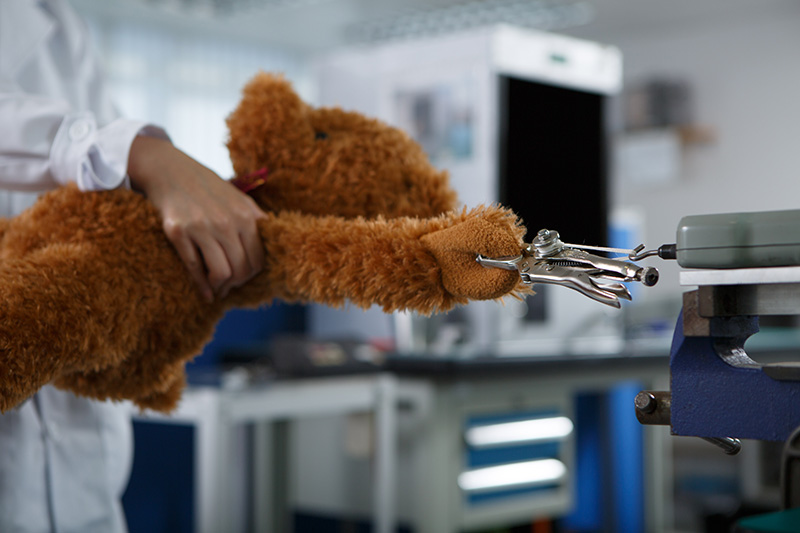
- Mechanical and physical testing
- Flammability requirements
- Chemical substance limits
- Small parts testing
Experienced U.S.-oriented manufacturers—such as Kinwin—typically integrate ASTM F963 awareness into design and production planning early.
U.S. Regulatory Knowledge Evaluation Table
| What to Evaluate | Strong U.S. Compliance Knowledge | Risk Signal |
|---|---|---|
| CPSIA awareness | Clearly explained | Unfamiliar |
| ASTM F963 knowledge | Specific | Generic |
| Compliance integration | Early planning | After production |
| Risk understanding | Proactive | Reactive |
| Terminology familiarity | Confident | Hesitant |
Can They Support ASTM F963 and CPSIA Compliance?
Knowing U.S. regulations is one thing.
Executing them properly is another.
A factory truly prepared for the U.S. market should have structured systems to support ASTM F963 testing and CPSIA compliance—not just verbal assurance.
Do They Work With CPSC-Accepted Testing Laboratories?
Under CPSIA, children’s products must be tested by CPSC-accepted third-party laboratories.
Reliable manufacturers typically:
- Cooperate with recognized labs
- Understand required sample preparation
- Plan testing timelines before shipment
- Review product risk points prior to submission
If a supplier cannot identify CPSC-accepted labs or testing workflow, export risk increases significantly.
Do They Understand Children’s Product Certification (CPC) Requirements?
For U.S. compliance, importers must issue a Children’s Product Certificate (CPC) based on valid lab testing.
A knowledgeable factory should:
- Provide test data to support CPC issuance
- Understand product-specific testing scope
- Maintain documentation for traceability
Export-experienced manufacturers—such as Kinwin—usually integrate testing coordination into production planning rather than treating it as an afterthought.
ASTM & CPSIA Capability Evaluation Table
| What to Evaluate | Strong Execution Capability | Risk Signal |
|---|---|---|
| CPSC lab cooperation | Established | Unclear |
| Test planning | Structured | Last-minute |
| CPC awareness | Understood | Unfamiliar |
| Product-specific testing | Discussed | Generic |
| Compliance workflow | Integrated | Fragmented |
Do They Understand CPSC Requirements for Children’s Products?
In the U.S., toy safety enforcement is overseen by the Consumer Product Safety Commission (CPSC).
Understanding ASTM testing is important—but understanding how CPSC enforces regulations is equally critical.
A manufacturer supplying the U.S. market should be familiar with how children’s products are monitored and regulated.
Do They Understand Age Grading and Product Classification?
Under U.S. law, toys are categorized based on intended age group.
For plush toys, this affects:
- Small parts evaluation
- Labeling requirements
- Mechanical safety thresholds
- Marketing positioning
A knowledgeable factory should ask:
- Is this product for children under 3?
- Does it contain detachable components?
- Is it considered a “children’s product” under CPSIA?
If age grading is not discussed early, compliance risks increase.
Are They Familiar With CPSC Recall and Reporting Expectations?
The CPSC has strict rules regarding:
- Hazard reporting
- Recall procedures
- Incident documentation
- Traceability and corrective action
Factories experienced in U.S. export—such as Kinwin—typically maintain documentation systems that support traceability and post-market compliance.
CPSC Awareness Evaluation Table
| What to Evaluate | Strong CPSC Awareness | Risk Signal |
|---|---|---|
| Age grading knowledge | Clear | Overlooked |
| Product classification | Discussed | Assumed |
| Recall understanding | Structured | Unfamiliar |
| Reporting awareness | Documented | Not considered |
| Traceability system | Organized | Informal |
How Do They Control Lead Content and Phthalate Risks?
Under CPSIA, strict limits apply to:
- Lead content in substrates and surface coatings
- Phthalates in plastics and certain materials
For plush toys entering the U.S. market, chemical compliance is not optional—and violations can result in serious legal consequences.
Do They Understand Where Lead Risks May Appear?
Lead risks may exist in:
- Printed decorations
- Dyed fabrics
- Painted plastic eyes or noses
- Metallic accessories
- Zippers or decorative trims
A reliable factory should understand that lead testing is required for accessible parts and coatings, not just for the main fabric.
If lead compliance is treated casually, your product is exposed to significant regulatory risk.
Are Phthalate Risks Managed in Plastic Components?
Phthalates are often found in:
- PVC accessories
- Soft plastic trims
- Flexible decorative parts
Under CPSIA, specific phthalates are restricted for children’s products.
Professional U.S.-focused manufacturers—such as Kinwin—typically avoid high-risk materials and confirm compliance before production.
Chemical Risk Control Evaluation Table
| What to Evaluate | Strong Chemical Control | Risk Signal |
|---|---|---|
| Lead awareness | Specific | General |
| Surface coating review | Checked | Ignored |
| Phthalate knowledge | Understood | Unfamiliar |
| Plastic component review | Evaluated | Overlooked |
| Pre-production screening | Conducted | After testing |
Are Tracking Labels and Product Traceability Properly Managed?
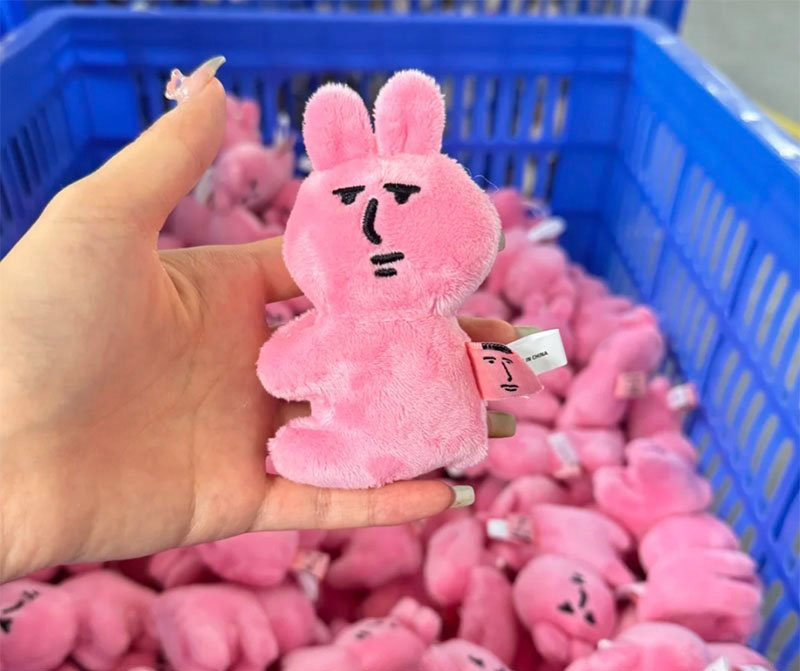
Under CPSIA, children’s products sold in the U.S. must include tracking label information.
This is not optional—it is a legal requirement.
Tracking labels help identify when and where a product was made in case of recalls or safety investigations.
Do They Understand CPSIA Tracking Label Requirements?
Tracking labels must typically include:
- Manufacturer or private labeler name
- Production date
- Batch or lot number
- Location of production
- Other identifying marks for traceability
A reliable factory should understand how to:
- Integrate tracking information into sewn labels
- Print batch codes on packaging
- Maintain internal production records
If tracking labels are treated as a last-minute addition, compliance risk increases.
Is There a Structured Batch Record System?
Traceability requires:
- Batch-level production records
- Material sourcing documentation
- Shipment lot tracking
- Testing documentation storage
Factories experienced in U.S. export—such as Kinwin—typically maintain organized documentation systems to support recall or inspection scenarios.
Tracking & Traceability Evaluation Table
| What to Evaluate | Strong Traceability System | Risk Signal |
|---|---|---|
| Tracking label knowledge | Clear | Uncertain |
| Batch coding system | Structured | Informal |
| Production record storage | Organized | Fragmented |
| Material traceability | Documented | Unclear |
| Recall preparedness | Considered | Ignored |
Can They Provide Valid U.S.-Compliant Lab Test Reports?
In the U.S. market, compliance is documentation-driven.
Saying “we passed before” is not enough.
Each product configuration requires valid, product-specific testing conducted by a CPSC-accepted laboratory.
Are the Test Reports Recent and Product-Specific?
A strong U.S.-ready factory should be able to provide:
- ASTM F963 testing reports
- CPSIA lead and phthalate testing results
- Testing performed by CPSC-accepted labs
- Reports issued within a reasonable timeframe
Generic or outdated reports do not guarantee compliance for your product.
A reliable supplier will clarify that final testing must be conducted on the actual production sample—not rely solely on past reports.
Do They Understand That Testing Depends on Product Configuration?
U.S. compliance is configuration-based.
Changes that may require re-testing include:
- Adding magnets
- Changing fabric dyes
- Modifying plastic components
- Introducing detachable accessories
Export-experienced manufacturers—such as Kinwin—typically discuss configuration-specific testing requirements before finalizing mass production.
U.S. Lab Test Report Evaluation Table
| What to Evaluate | Strong U.S. Compliance Proof | Risk Signal |
|---|---|---|
| CPSC-accepted lab | Confirmed | Unknown |
| Report relevance | Plush-specific | Generic |
| Report date | Recent | Outdated |
| Configuration awareness | Detailed | Assumed |
| Testing workflow | Planned | Reactive |
Conclusion
Entering the U.S. market with plush toys requires more than production capability.
It requires:
- Understanding CPSIA regulations
- Supporting ASTM F963 compliance
- Managing chemical risks (lead and phthalates)
- Implementing tracking labels
- Maintaining batch traceability
- Providing valid, product-specific lab reports
Choosing a factory without structured U.S. compliance systems can lead to shipment rejection, regulatory penalties, or costly redesign.
If you are planning to export plush toys into the United States and want a compliance-focused manufacturing partner, consider working with an experienced U.S.-oriented factory such as Kinwin.
In the U.S. market, documentation is protection.