Skip to content
Designing plush toys is not only about creativity—it is also about protecting children, meeting strict international regulations, and ensuring your brand’s long-term credibility. Safety must be built into the design from the very first sketch. Every detail—fabric choice, eye style, seam strength, stuffing type, and accessory attachment—must follow compliance requirements for the markets where the toy will be sold.
This guide walks you through the key safety considerations for plush toy design so your products can pass testing, avoid costly redesigns, and enter global markets smoothly.
What Safety Regulations Apply to Plush Toys in Major Global Markets?
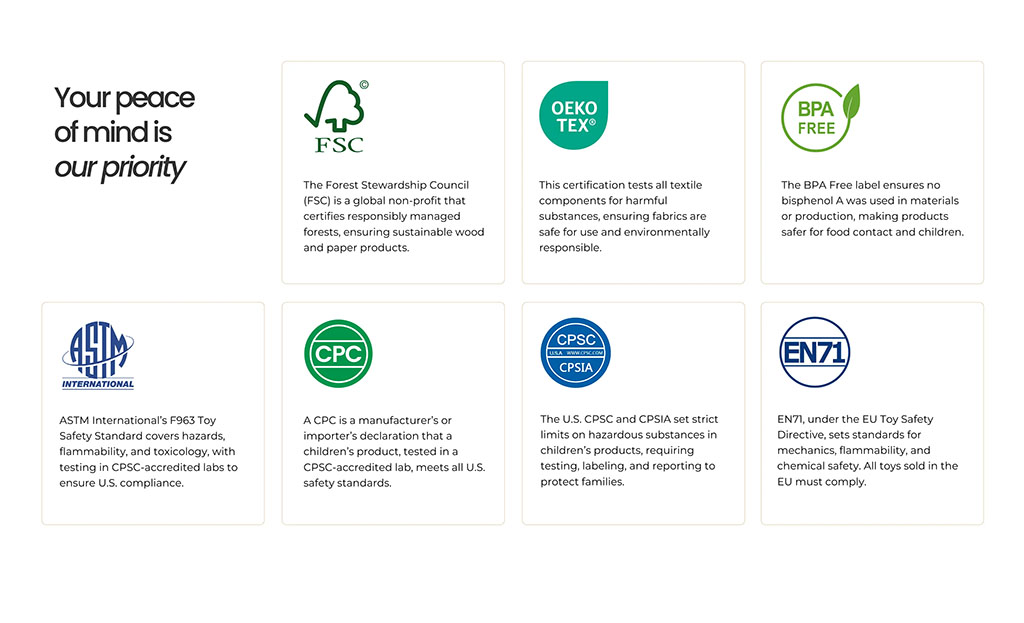
Every country has specific regulations that dictate how plush toys should be designed, constructed, and labeled. Understanding these regulations early helps prevent compliance failures later in the development process.
In the United States, toys must meet ASTM F963 and CPSIA requirements. These standards regulate mechanical hazards, small parts, heavy metals, flammability, chemical content, and labeling. Plush toys sold in Europe must comply with EN71 Parts 1–3, which cover physical and mechanical properties, flammability, and chemical composition. The UK requires UKCA marking, while Japan uses the ST Standard, known for strict material and dye requirements. Australia and many Southeast Asian markets rely on ISO 8124.
Ignoring safety regulations increases the risk of failed testing, shipment delays, and expensive redevelopment. Designing with regulatory compliance in mind ensures a smoother path to certification.
| Region | Applicable Standard | Key Requirements |
|---|---|---|
| United States | ASTM F963, CPSIA | Mechanical safety, lead content, small parts |
| European Union | EN71 (Parts 1–3) | Strength, flammability, chemicals |
| United Kingdom | UKCA | Similar to EN71 + local labeling rules |
| Japan | ST Standard | High dye safety, material stability |
| Australia | ISO 8124 | Mechanical durability & chemical limits |
How Should Designers Address Material Selection to Meet Compliance Requirements?
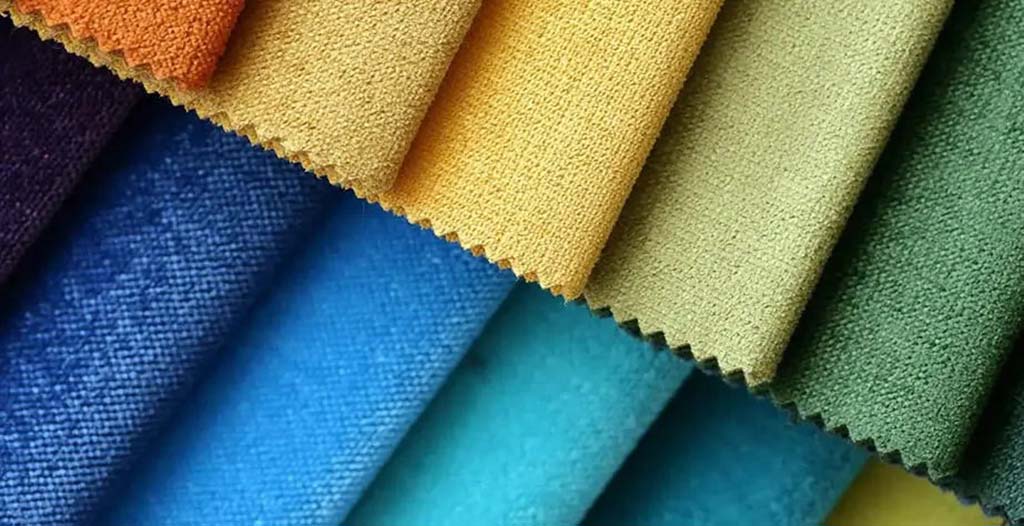
Material selection plays a major role in ensuring plush toy safety. Designers must choose fabrics, stuffing, trims, and threads that meet chemical, flammability, and durability standards. Every material must pass tests for heavy metals, azo dyes, phthalates, and formaldehyde. Earth-tone fabrics and eco-materials must also comply with international chemical regulations.
Designers must prioritize soft, durable, non-shedding fabrics such as velboa, minky, or fleece. For stuffing, PP cotton or recycled polyester fiberfill is commonly used because it holds shape well and passes flammability requirements. Fabrics must withstand tension and wear without releasing fibers, especially for infant or toddler toys.
Material mapping is essential. If different fabric types are used across the plush body, each material must meet safety standards. Even thread types—such as embroidery thread or seam stitching threads—must be strong enough to prevent tearing and resist child pulling.
| Material Type | Safety Consideration | Why It Matters |
|---|---|---|
| Fabrics | Chemical & flammability compliance | Prevents skin irritation |
| Filling | Clean, hypoallergenic stuffing | Keeps toy structure safe |
| Threads | High-strength stitching | Avoids seam bursts |
| Trims | No sharp edges; non-toxic | Ensures safe handling |
| Dyes | Must be safe for saliva & sweat | Important for infant toys |
What Structural and Construction Features Prevent Choking, Tearing, or Hazard Risks?
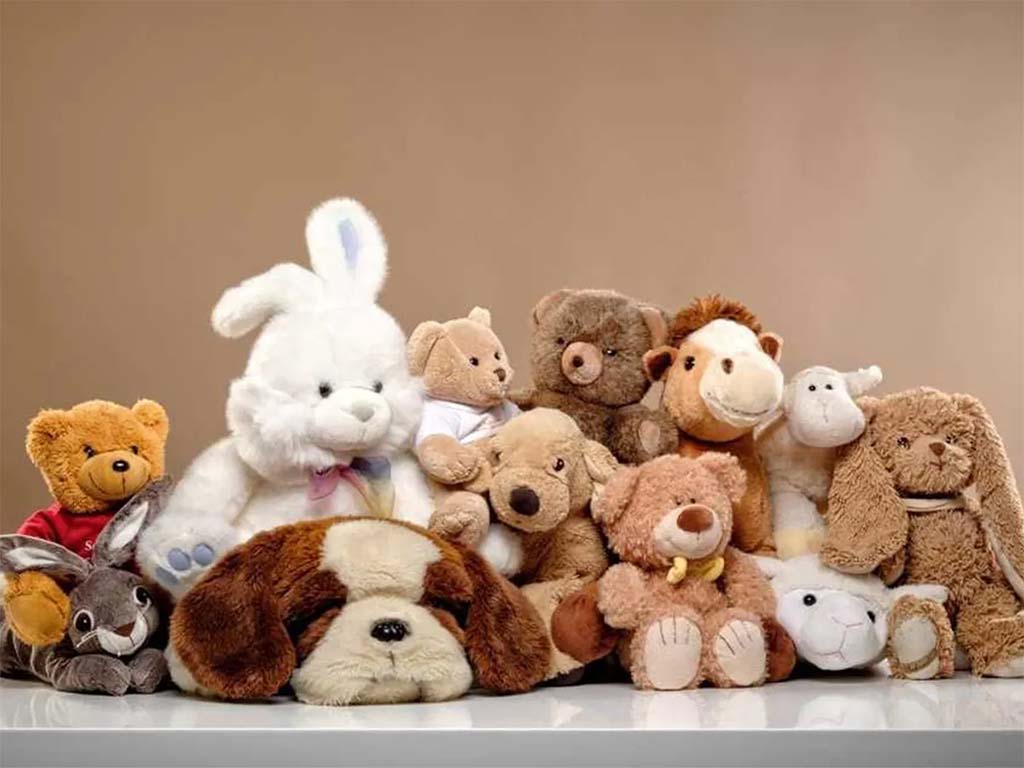
Structural design determines whether a plush toy remains safe during real-world use. Weak seams, long appendages, detachable parts, or poorly engineered shapes can present choking, suffocation, or entanglement risks. Designers must ensure all structural elements comply with pull-force requirements mandated by ASTM, EN71, and ISO standards.
Seam strength is critical. Toys must withstand tension, twisting, and rough handling. Weak seams can lead to stuffing leakage, exposing children to choking hazards. Designers should avoid overly thin limbs or tiny parts that may tear easily. Reinforcing stress points—such as arm joints, neck areas, or accessory attachments—improves durability and safety.
For infants, ventilation openings, breathable materials, and soft shapes help reduce suffocation risks. If the toy is large, it must still compress easily without trapping the child’s face or nose.
| Structural Feature | Safety Risk | Design Solution |
|---|---|---|
| Weak seams | Stuffing leakage | Reinforced stitching |
| Small appendages | Choking hazard | Increase thickness |
| Long strings or ribbons | Strangulation hazard | Shorten or eliminate |
| Hard internal components | Impact injury | Use soft alternatives |
| Large plush | Suffocation risk | Use soft, compressible fill |
How Do Embroidery, Eyes, Accessories, and Trims Influence Safety Outcomes?
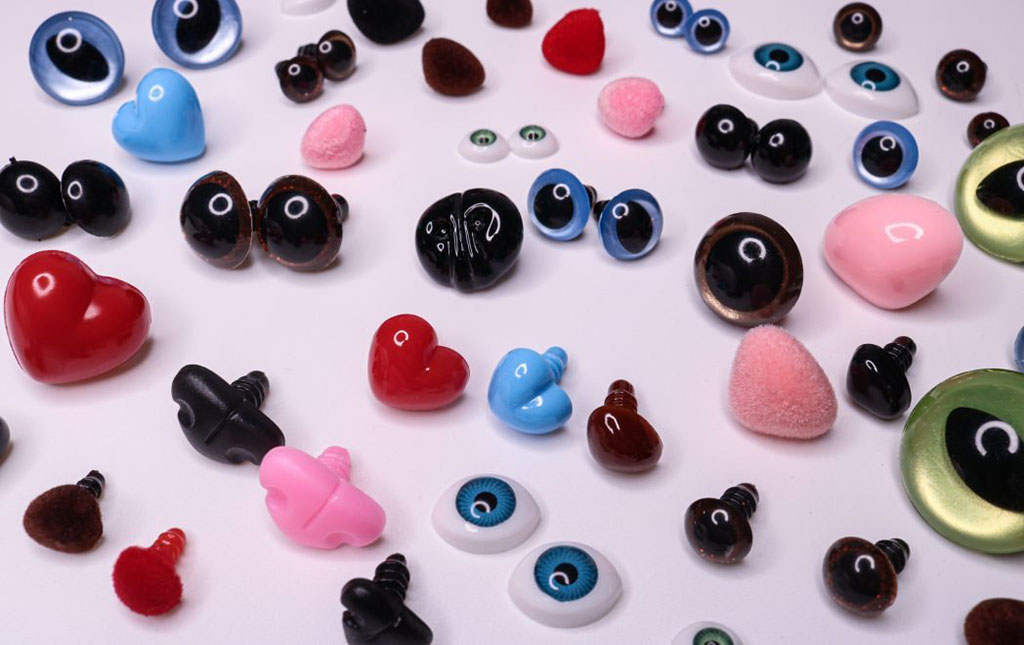
Facial features and accessories significantly impact plush toy safety. Designers must choose attachment methods that pass pull tests and eliminate risks of detachment. Plastic eyes or noses must be safety-locked, not glued or loosely attached. For infant and toddler toys, embroidery is preferred because it removes risk of small parts altogether.
Accessories such as buttons, hats, clothing, wings, or props must also pass strict tensile strength tests. Removable outfits must avoid small fasteners such as snaps, metal buttons, or detachable pieces that could pose choking hazards. Ribbons must not exceed length limits to prevent entanglement.
Trims like sequins, glitter, or metallic foils often fail compliance testing and should be avoided unless validated by a testing house. The safest approach is to design softness-focused plush with embroidery, printed elements, and securely stitched accessories.
| Design Element | Preferred Method | Reason |
|---|---|---|
| Eyes & nose | Safety-locked or embroidered | Prevent choking |
| Facial features | Embroidery | Most secure & durable |
| Accessories | Sewn-in securely | Avoid detachment |
| Ribbons & trims | Short length; reinforced | Prevent entanglement |
| Clothing | No small parts | Improves compliance |
What Testing Protocols Must Be Considered During the Design Stage?
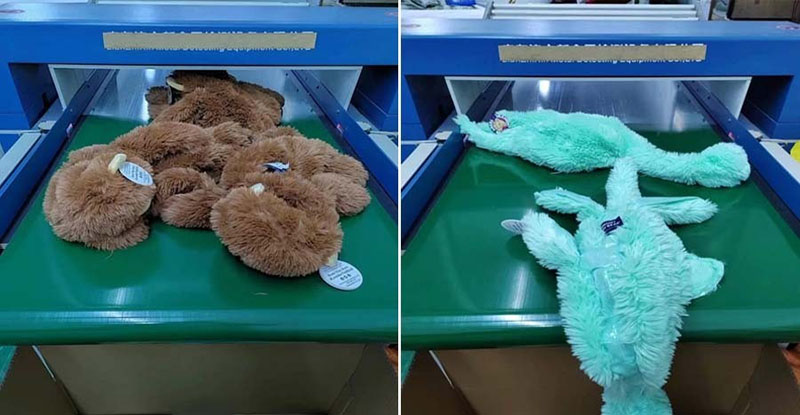
Every plush toy must pass mandatory safety tests before entering major markets. Designers must understand these protocols early so the toy’s construction, materials, and accessories meet testing thresholds.
Mechanical and physical tests include seam strength, tensile force, bite tests, impact tests, and small-part evaluation. Chemical tests check for lead, phthalates, heavy metals, azo dyes, and other harmful substances. Flammability tests ensure the toy does not ignite easily. For infant toys, saliva and sweat resistance tests may be required.
During design, it is crucial to plan for these compliance tests. Choosing compliant materials, minimizing detachable components, reinforcing structural areas, and ensuring proper labeling all help prevent failure during laboratory testing.
| Test Type | Purpose | Design Influence |
|---|---|---|
| Mechanical | Prevent detachment & breakage | Strong seams; secure parts |
| Chemical | Ensure material safety | Certified fabrics & dyes |
| Flammability | Reduce ignition risk | Approved plush materials |
| Toxicology | Protect infants & toddlers | No harmful chemicals |
| Small parts test | Prevent choking | Avoid detachable pieces |
How Can Documentation, Labeling, and Traceability Ensure Full Regulatory Compliance?
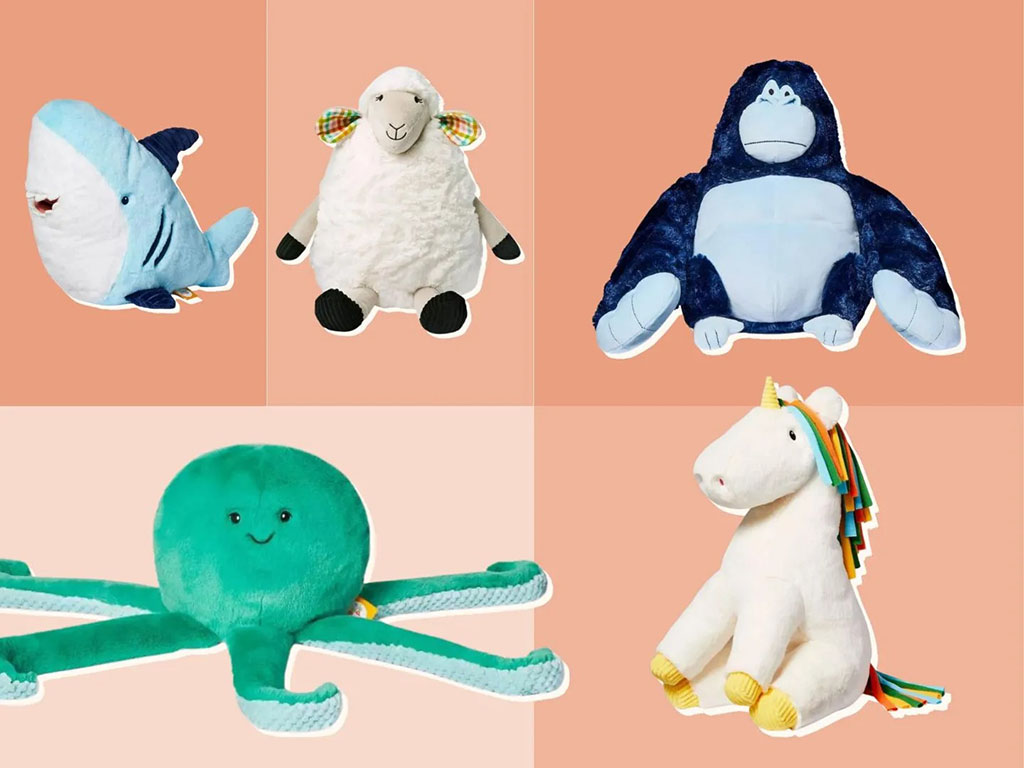
A safe plush toy is only compliant when supported by proper documentation, tracking, and labeling. Buyers and designers must prepare a full compliance package that includes material certifications, test reports, traceability codes, and manufacturing records.
Labeling must follow market-specific rules. Toys sold in the U.S. require a CPSIA tracking label with batch numbers, manufacturing dates, and factory information. EU markets require CE marking, while the UK requires UKCA labeling. Labels must also include fiber content, country of origin, age grading, and warning statements.
Traceability ensures that every material used in the toy—fabric, thread, filling, accessories—can be traced back to a certified supplier. This protects brands in the event of recalls or regulatory reviews and demonstrates responsible sourcing practices.
| Compliance Component | Purpose | Outcome |
|---|---|---|
| Labels | Legally required warnings & info | Market access |
| Tracking codes | Identifies production batch | Recall readiness |
| Material records | Ensures safety of each component | Supplier verification |
| Test reports | Proves compliance | Required for customs |
| Certificates | CE, UKCA, ASTM, CPSIA | Regulatory approval |
Conclusion
Designing plush toys that meet global safety standards requires early planning and an understanding of compliance, materials, construction, and testing protocols. By building safety into the design from the beginning, brands can reduce risk, avoid costly redesigns, and ensure smooth market entry. Factories like Kinwin work closely with global buyers to apply safe design principles, source compliant materials, and prepare toys that meet strict regulatory requirements.
📧 Contact: [email protected]
🌐 Visit: https://kinwintoys.com