If you’re sourcing custom plush toys, one question shows up almost immediately: Should I buy directly from a plush toy factory, or work with a trading company? Online, many suppliers claim they’re “a factory,” but in reality they may be a middle company coordinating production.
Here’s the truth: neither option is automatically better. The best choice depends on your goals—price, speed, risk control, communication, and how complex your plush design is. In this guide, we’ll break it down in a practical, buyer-friendly way so you can choose with confidence.
What is the difference between a plush toy factory and a trading company?
The simplest way to understand it is this:
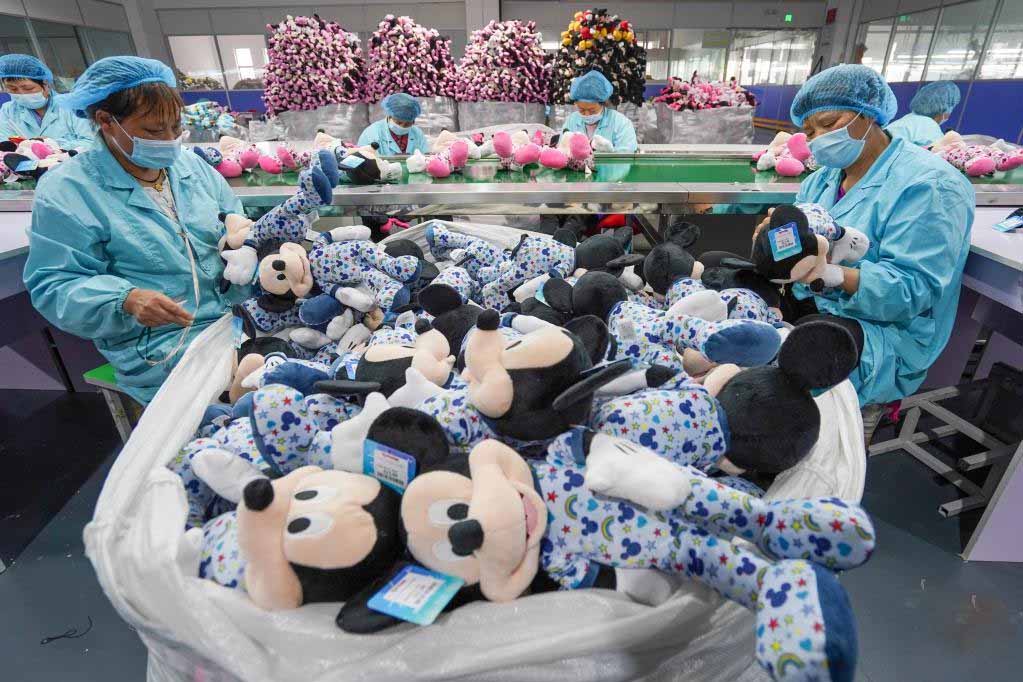
- A plush toy factory mainly makes the product (patterning, cutting, sewing, stuffing, finishing, packing).
- A trading company mainly manages the supply chain (finding factories, coordinating sampling and production, handling communication and export paperwork).
Both can be reliable—or risky. The difference is who controls production and how many layers are between you and the workshop floor.
How does each supplier type work in a real custom plush project?
If you work with a factory directly:
- You communicate closer to the production team (or their merchandiser).
- Sampling feedback can be more precise, because the people making the changes are closer to the decisions.
- You often get better visibility into materials, workmanship, and QC systems.
If you work with a trading company:
- You usually communicate with a project manager who coordinates one or multiple factories.
- They can source different factories for different needs (plush body, clothing, printing, packaging).
- They may simplify communication if you’re new to importing.
The real difference shows up when something changes—like adjusting face embroidery placement or replacing an accessory. Factories can change faster when the feedback is direct. Traders can be helpful when your order involves multiple vendors or you need a “one-stop” coordinator.
How do responsibilities and costs differ between factory and trading company?
Here’s the buyer reality:
- Factory direct = fewer layers
Usually better for:- technical detail control
- stable reorders
- complex plush construction
- more transparent cost structure
- Trading company = added service layer
Usually better for:- sourcing multiple categories (plush + packaging + other products)
- small buyers who want a coordinator
- buyers who need someone to manage time zones, paperwork, and supplier comparison
But trading companies add cost (their margin), and sometimes reduce transparency if you’re not sure which factory is actually producing your plush.
Quick Comparison Table: Factory vs Trading Company (Core Differences)
| Topic | Plush Toy Factory | Trading Company |
|---|---|---|
| Main role | Produces plush toys | Coordinates sourcing and production |
| Production control | Direct | Indirect (through partner factories) |
| Transparency | Higher (if factory is real) | Varies (depends on their honesty) |
| Pricing | Often lower (fewer middle margins) | Often higher (service margin included) |
| Best for | Complex custom plush + reorders | Multi-product sourcing or hands-off buyers |
If your goal is stable quality and long-term reorders, working with a real factory is often easier to control. If you want a “one-stop” coordinator for multiple categories, a strong trading company can be helpful.
Which option gives you better price, control, and transparency?
Most buyers choose between factory vs trading company based on three things: price, control, and visibility. But the “best” option depends on what you’re optimizing for.
If you want the lowest unit cost, direct factory often wins. If you want the simplest workflow and don’t have time to manage details, a trading company can feel easier. The key is knowing what you trade away in each case.
Which option usually gives you better pricing—and why?
Factory direct pricing is often lower because there’s one less margin layer. You’re paying the manufacturer for materials + labor + overhead + profit, without an extra service markup on top.
That said, “lower price” only helps if the factory can actually deliver consistent bulk quality. A cheap quote becomes expensive if you get:
- defects that require rework or refunds
- delayed delivery that misses your sales window
- inconsistent reorders that damage your product reviews
Trading company pricing is typically higher because they’re paid for coordination: communication, factory sourcing, production tracking, export support, and sometimes quality follow-up. For some buyers, that service is worth it—especially if they’re new to importing or managing multiple suppliers.
Buyer tip: ask both types for a quote breakdown. If the supplier refuses to explain what affects the price, it’s a warning sign regardless of type.
Which option gives you more control and transparency for custom plush?
For custom plush, control matters more than most people expect. Tiny changes (eye placement, stitch density, stuffing firmness) can completely change how the plush “feels” as a brand product.
In most cases:
- Direct factory = better control
Because your feedback goes closer to the production team. That usually means:- clearer sampling revisions
- fewer misunderstandings on materials and construction
- easier “golden sample” control for bulk consistency
- Trading company = control depends on their process
A strong trading company can be excellent if they:- use trusted partner factories
- provide clear documentation (spec sheets, version control)
- share real production updates and QC evidence
A weak trading company can be risky if they: - hide the factory identity
- avoid workshop proof
- change factories without telling you
So the real question isn’t “factory or trader?” It’s: Can I see proof of who is producing, and can I control the standard that bulk must match?
Quick Comparison Table: Price, Control, and Transparency
| Goal | Factory direct is usually better when… | Trading company is usually better when… |
|---|---|---|
| Better price | You have clear specs and stable reorders | You value service coordination more than lowest cost |
| Better control | Your plush is complex, detail-sensitive | The trader provides strong spec/QC management |
| Better transparency | Factory shows real workshop proof and QC process | Trader is fully transparent about partner factories |
| Lower risk for beginners | You can evaluate factories carefully | You want one project manager to simplify everything |
How do you verify if you’re dealing with a real factory?
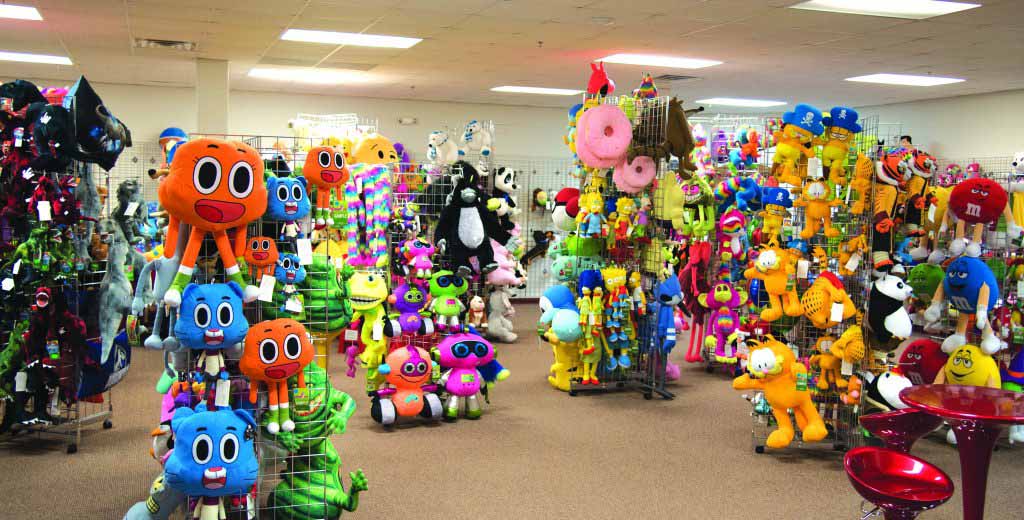
This is the part where many buyers get tricked—not because anyone is “evil,” but because the word factory is used very loosely online. Some trading companies list themselves as factories. Some factories use a trading company name for export. And some suppliers show beautiful photos that don’t prove anything.
So instead of asking, “Are you a factory?” (everyone says yes), you want to ask for proof that’s hard to fake.
What proof can you request that reliably shows real production?
Here are the most effective proof requests—simple, buyer-friendly, and very revealing:
- A short workshop walkthrough video (1–2 minutes)
Ask them to show:- fabric warehouse or cutting tables
- sewing lines (workers actively sewing plush)
- stuffing and closing area
- finishing/packing area
A real factory can do this easily.
- A live video call
During the call, ask them to show:- the factory entrance/sign
- production floor in real time
- cartons/packing zone
If they keep switching the camera away or refuse live viewing, it’s a red flag.
- Work-in-progress (WIP) photos with timestamps
Request photos of:- cut fabric bundles
- embroidery panels
- half-finished plush bodies
- QC checking
WIP photos are harder to “borrow” than finished catalog images.
- Production documents
Even one or two examples (with sensitive details blurred) can help:- internal production order sheets
- QC checklists
- carton marking photos
These show operational reality.
Which “indirect signals” help you confirm the truth?
Sometimes you can also spot factory vs trading company through how they answer technical questions:
- Ask about sewing and reinforcement methods
Example: “How do you reinforce the hanging loop and ear seams for pull strength?”
A real factory usually answers with details (extra stitching, bartack, reinforcement fabric, seam allowance control). - Ask who manages sampling and who manages bulk
Real factories can tell you their internal roles:- merchandiser/project manager
- sampling team
- QC lead
If one person says “I do everything,” it may be a small trader or agent.
- Ask what machines and processes they use
Factories can describe their embroidery, printing, cutting, sewing flow naturally. Trading companies may answer vaguely or shift the topic.
Quick Verification Table: “Real Factory” Proof
| What you ask for | What a real factory can provide | What a risky supplier might do |
|---|---|---|
| Workshop walkthrough video | Shows real cutting/sewing/stuffing/packing | Only shows showroom or product photos |
| Live video call | Can walk the floor in real time | Avoids live viewing |
| WIP photos | Cut pieces, sewing lines, stuffing steps | Only finished catalog photos |
| QC checklist/sample | Clear inspection points | “We do QC” with no proof |
| Technical questions | Detailed construction answers | Vague “no problem” replies |
What risks are higher with trading companies for custom plush orders?
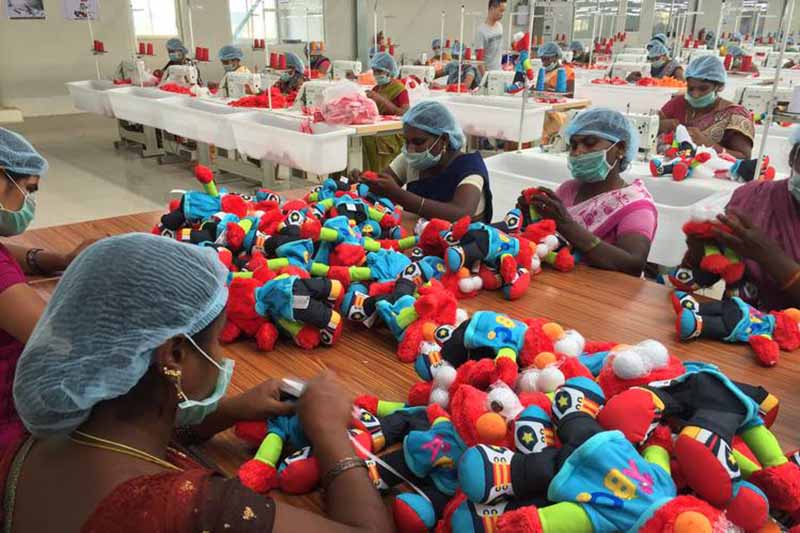
Trading companies can be helpful, but for custom plush, certain risks tend to be higher—mainly because there’s an extra layer between you and the workshop. That extra layer can reduce visibility and slow down decision-making when details get picky (and plush details always get picky).
Here are the most common risk areas buyers should understand before choosing a trading company.
Why can custom plush quality drift more with trading companies?
Custom plush is detail-sensitive. Small differences in:
- face embroidery placement
- stitch density
- stuffing firmness
- seam allowance
- fabric batch shade
…can make the plush look like a different product.
With a trading company, quality drift becomes more likely when:
- Your feedback gets “translated” into simpler instructions
You might say: “Move eyes 3mm closer, make the mouth curve softer, reduce cheek embroidery density.”
The trader might pass: “Adjust face a little.”
That gap is where mistakes happen. - They change partner factories without telling you
Some traders source from multiple factories depending on price and capacity. If your second order goes to a different workshop, you may see:- different sewing style
- different stuffing feel
- slightly different fabric sources
Without strong documentation, you won’t notice until goods arrive.
- Golden sample control is weaker
Factories usually keep a golden sample on-site and use it during QC.
If a trading company is managing multiple factories, the golden sample must be physically managed and referenced correctly—or consistency becomes difficult.
What transparency and timeline risks should you watch for?
Trading companies add convenience, but the tradeoff can be lower transparency if they don’t run a clean process.
Higher risks include:
- Slower problem-solving
When an issue happens, the trader has to contact the factory, wait for answers, then update you. That extra cycle can slow down sample revisions and urgent decisions. - Less direct proof of production
Some traders only send finished photos. If you can’t see WIP (work-in-progress) proof—cutting, sewing, stuffing, QC—you’re basically trusting without verification. - Pricing opacity
Traders can hide factory cost and add margin. That’s not “wrong”—they deserve to earn for service—but you should know what you’re paying for. If the quote isn’t explained, it’s hard to judge value. - Confusing responsibility
If quality problems happen, you may hear:- “Factory mistake”
- “We’ll talk to them”
- “Not our fault”
A good trader takes responsibility as the supplier. A weak one acts like a messenger.
Quick Risk Table: Trading Company vs Factory (Custom Plush)
| Risk area | Why it can be higher with traders | How to reduce it |
|---|---|---|
| Quality drift | Feedback gets filtered; factory may change | Demand spec sheet + PPS + golden sample control |
| Factory switching | Different workshops produce different results | Ask “Will you use the same factory for reorders?” |
| Slower revisions | Extra communication layer | Require revision notes + timeline milestones |
| Low transparency | Limited WIP proof | Request production videos/photos at key stages |
| Pricing opacity | Hidden margin | Ask for quote breakdown and service scope |
| Responsibility gaps | “Not our fault” attitude | Contract: trader responsible for final quality |
When is a trading company actually the better choice?
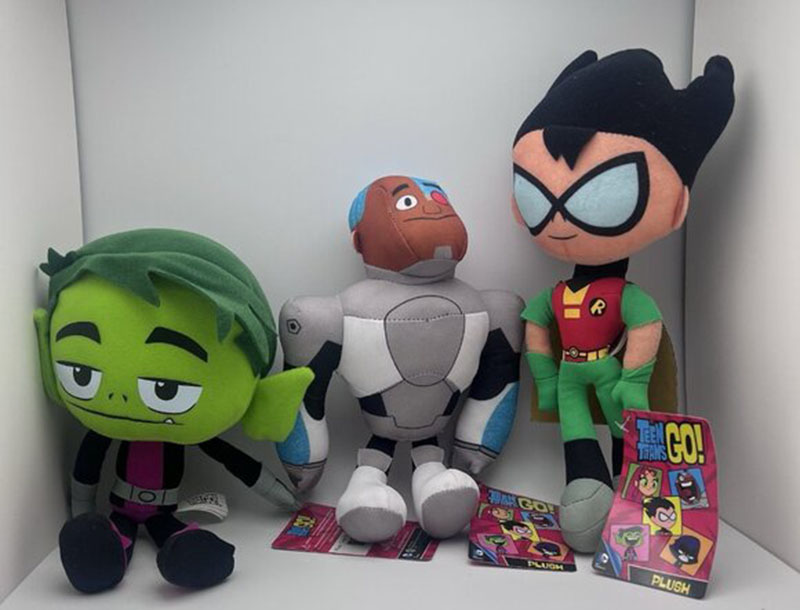
Even though direct factories often give better control for custom plush, trading companies are not “bad.” In the right situation, a good trading company can be the smarter move—especially if you want convenience, speed across multiple suppliers, or you don’t have the team bandwidth to manage details.
The key is choosing a good trading company (transparent, organized, accountable)—not just any middle layer.
When does a trading company save you time and reduce complexity?
A trading company can be a strong choice when your project involves multiple moving parts that would be annoying to coordinate yourself, for example:
- You’re sourcing multiple product categories
If you need plush + packaging + other promotional items (pins, tote bags, keychains, stationery), a trading company can manage everything in one workflow instead of you chasing 3–5 factories. - You need a single project manager
If you’re new to importing or you don’t have a sourcing person internally, having one coordinator who handles factory communication, sampling, and shipping paperwork can be a real advantage. - You want flexible supplier matching
For example:- one factory is better at plush bodies
- another is better at clothing/accessories
- another has stronger printing capability
A good trading company can build the best combination.
- Your order quantity is small and factories don’t prioritize you
Some big factories focus on large MOQs. A strong trading company may have relationships that help smaller buyers get better attention.
What kind of trading company is “safe” to work with?
If you choose a trading company, these are the qualities that make it worth it:
- They are transparent about which factory produces your plush
They don’t hide the workshop identity or avoid production proof. - They provide real documentation
Spec sheet, file version control, PPS approval records, QC checklist, and photo/video updates. - They take responsibility
If something goes wrong, they don’t blame the factory. They solve it, because you’re paying them to manage the supply chain. - They can guarantee consistency on reorders
They confirm in writing that reorders will be produced at the same factory (or if a change is needed, they explain it before production).
Quick Table: When a Trading Company is the Better Choice
| Your situation | Why a trading company can help | What to require to stay safe |
|---|---|---|
| Multi-product sourcing | One coordinator for many suppliers | Clear supplier list + responsibilities |
| No sourcing team | Simplifies communication | Weekly updates + milestone schedule |
| Small order sizes | Better access to factories | Transparent factory identity |
| Complex supply chain | Matches specialist factories | Spec sheet + PPS + golden sample control |
| Tight admin capacity | Handles export paperwork | Contract: trader responsible for quality |
What questions help you choose the right supplier type?
When you’re deciding “factory vs trading company,” the fastest way to get clarity is to ask questions that reveal control, transparency, and accountability. The answers matter more than the label.
Below are buyer-tested questions you can copy-paste. They’re designed to quickly show whether you’re working with a real factory, a transparent trading company, or a risky supplier who wants you to stop asking.
What questions reveal who really controls production?
Ask these early—before samples:
- “Are you the direct manufacturer for this plush, or a trading company?”
(Then follow up with proof requests.) - “Can you share a short workshop walkthrough video showing cutting, sewing, stuffing, and packing?”
A real factory can. A good trading company can obtain it from their partner factory. - “Who will make the sample, and who will manage mass production?”
You want clear roles and a clear workflow, not vague answers. - “Will reorders be made in the same factory? Can you confirm this in writing?”
This is critical for long-term consistency. - “What is your QC process—do you inspect during production or only final inspection?”
Good suppliers explain IQC + in-line QC + final QC.
What questions protect you on quality, timeline, and payment?
These are the questions that reduce “surprises”:
- “Do you provide a pre-production sample (PPS) and keep a golden sample for QC?”
This is the backbone of repeatability. - “Can you confirm all specs in one message: size, materials, logo method, accessories, packaging, and target market?”
If they can’t summarize clearly, production will be messy. - “Can you break lead time into milestones: sampling, materials, production, QC, packing, shipping?”
Vague timelines create late deliveries. - “How do you classify defects: critical, major, minor—and what is the remedy if defects exceed the standard?”
This avoids arguments after delivery. - “What payment terms do you accept? Can final payment be after QC approval or pre-shipment inspection?”
Safe suppliers are usually open to reasonable inspection-based payment structure.
Quick Decision Table: Choose Factory or Trading Company
| Your priority | Factory is usually better when… | Trading company is usually better when… |
|---|---|---|
| Lowest unit cost | You have clear specs and stable reorders | You value service more than lowest cost |
| Highest control | Your plush is complex and detail-sensitive | Trader has strong documentation and QC control |
| Best transparency | Factory provides direct proof and updates | Trader is fully transparent about partner factory |
| Simplest workflow | You can manage one supplier directly | You want one coordinator for multiple suppliers |
| Long-term consistency | Same factory + golden sample control | Trader can guarantee same factory for reorders |
If you’re still unsure, here’s the simplest buyer rule:
- If your plush is highly custom and brand-sensitive (retail quality, consistent face, reorders), you’ll usually prefer a real factory or a very transparent trading company with strong process control.
- If your project is multi-category (plush + packaging + other items) and you want one point of contact, a strong trading company can save time—if they give you real proof and take responsibility.
If you’d like, you can send Kinwin your plush reference and target market. We can quickly tell you whether your project is better suited to direct-factory production, or whether a coordinated supplier model makes more sense—and we’ll support you with a clear sampling + QC plan either way.
Conclusion
Plush toy factory vs trading company isn’t a “right vs wrong” choice—it’s a choice of how you want to manage risk.
- A direct factory often gives better price, control, and repeatability—especially for custom plush and reorders.
- A trading company can be the better choice when you need a one-stop coordinator, are sourcing multiple product categories, or want a single project manager to handle the supply chain.
No matter which route you choose, the safest approach is the same: ask for proof, demand clear documentation (PPS, spec sheet, QC standards), and lock key terms in writing.
If you want a manufacturer-style workflow with stable quality and clear communication for custom plush, you can contact Kinwin to discuss your design, sampling plan, and production timeline.