Choosing between a small or large plush toy factory is one of the most common—and most misunderstood—decisions in custom plush sourcing.
Many buyers assume that large factories are safer, while small factories are more flexible. In reality, both assumptions can be true or false, depending on how the factory operates and what your project actually needs.
This guide helps you compare small and large plush factories in a practical, buyer-focused way, so you can choose a partner that fits your project stage, budget, and long-term goals—rather than relying on size alone.
What Defines a Small Versus a Large Plush Toy Factory?
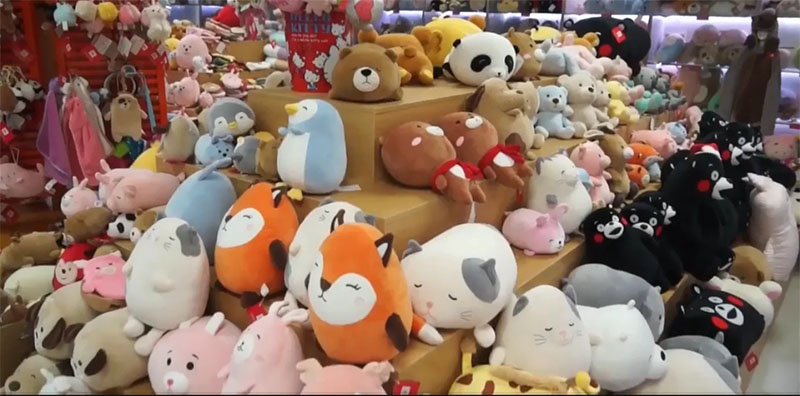
Before comparing performance, it’s important to clarify what “small” and “large” really mean in plush toy manufacturing. These labels are often used loosely—and can be misleading.
Is Factory Size Measured by Headcount, Output, or Order Type?
In practice, factory size is defined by how the operation is structured, not just how many people are employed.
Key indicators include:
- Number of production workers and sewing lines
- Monthly or peak-season output capacity
- Ability to handle simultaneous projects
- Level of process standardization
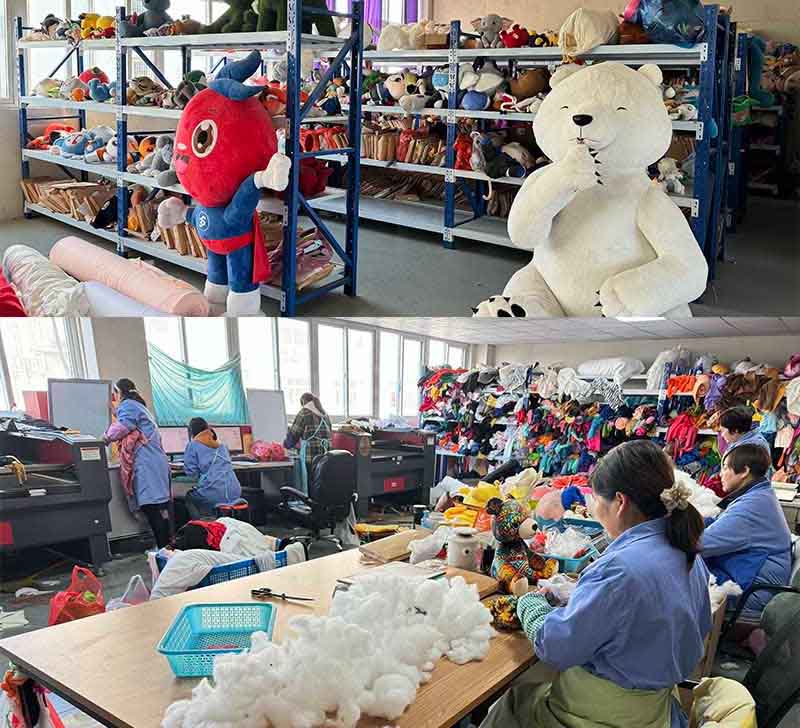
For example, a factory with 80–100 workers focused on custom plush development may function very differently from a 300+ worker factory optimized for mass production of standard designs.
That’s why buyers should look beyond surface numbers and ask:
- What type of orders does this factory handle most often?
- How are teams organized around custom projects?
Why Size Labels Alone Don’t Tell You If a Factory Is “Better”
A common mistake is equating size with capability.
- A small factory can be highly capable if it has experienced pattern makers and a focused development team.
- A large factory can be inefficient for custom work if its systems are built for volume, not flexibility.
What matters is alignment:
Does the factory’s operating model match your project’s complexity, quantity, and timeline?
Manufacturers with balanced scale and clear positioning—such as Kinwin—tend to define their role clearly, helping buyers understand whether they’re a good fit from the start.
Small vs. Large Factory Definition Table
| Aspect | Small Plush Factory | Large Plush Factory |
|---|---|---|
| Typical workforce | Dozens to ~100 | Hundreds or more |
| Main focus | Custom & low-MOQ | High-volume orders |
| Project variety | Fewer, more hands-on | Many, more standardized |
| Process style | Flexible, person-driven | System-driven |
| Best use case | Development & pilots | Scaled production |
How Do Small Plush Factories Perform in Custom Development?
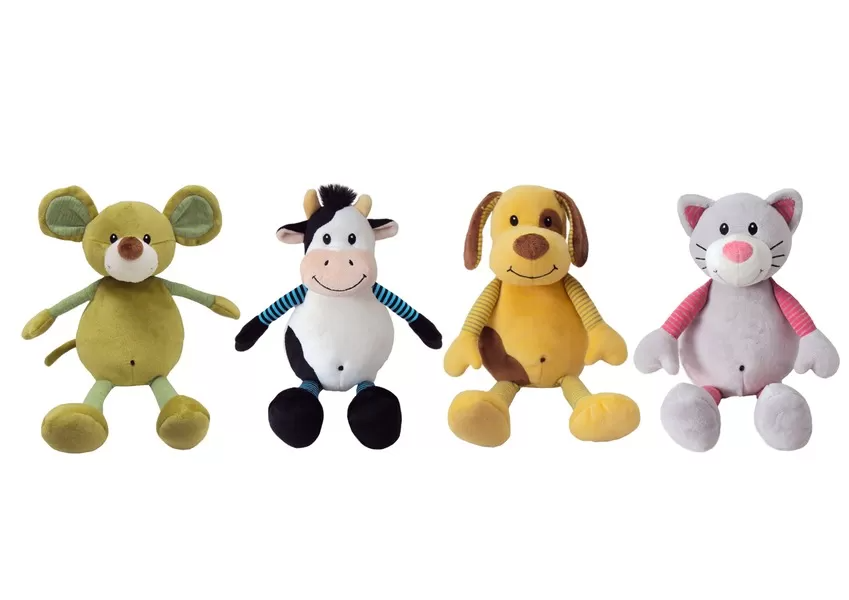
Small plush factories are often the first stop for custom projects—but their performance can vary widely.
The key is distinguishing between focused development capability and limited operational depth.
Where Do Small Factories Excel in Custom Plush Projects?
When well-managed, small factories can be very effective at the development stage.
Common strengths include:
- Faster feedback loops during sampling
- Closer collaboration with pattern makers
- Greater willingness to adjust details
- More attention per project
These advantages are most noticeable when:
- Designs are still evolving
- Multiple sample rounds are expected
- Quantities are low or uncertain
- Speed of iteration matters more than scale
For early-stage IPs, prototypes, or pilot launches, this hands-on approach can significantly reduce development friction.
What Are the Limitations Buyers Should Watch For?
However, small factories also come with structural risks.
Potential limitations include:
- Limited capacity to scale quickly
- Quality consistency challenges when volume increases
- Dependence on a few key individuals
- Less formal QC and compliance systems
If your project is likely to grow—or requires strict compliance—these gaps can become costly later.
That’s why many buyers transition from very small workshops to more structured partners as projects mature. Balanced manufacturers—such as Kinwin—often bridge this gap by combining development flexibility with scalable systems.
Small Factory Custom Development Evaluation Table
| Evaluation Area | Strength | Potential Risk |
|---|---|---|
| Sampling speed | Fast iterations | Resource bottlenecks |
| Design flexibility | High | Limited documentation |
| Attention level | Very hands-on | Person-dependent |
| Quality control | Visual & manual | Lack of formal QC |
| Scalability | Good for pilots | Weak for growth |
What Advantages Do Large Plush Factories Offer?
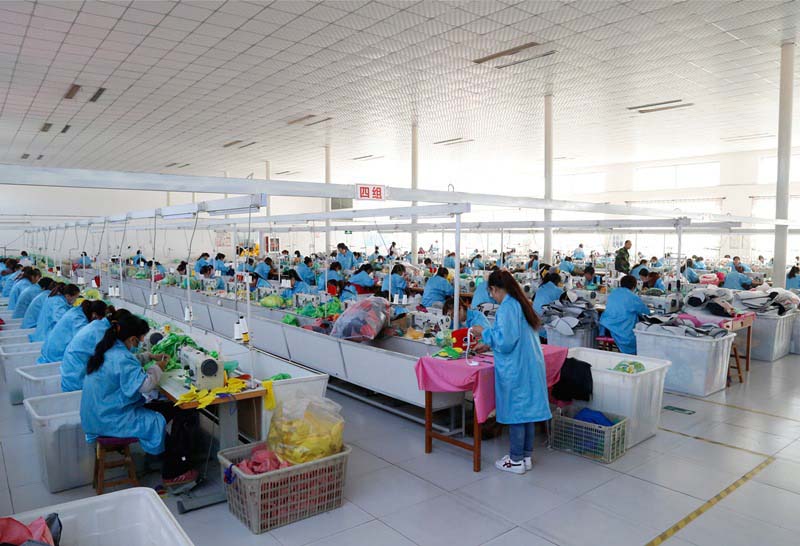
Large plush factories are built for scale, stability, and repetition. While they’re not always ideal for early-stage custom projects, they do offer clear advantages once a design is mature and demand is predictable.
Where Do Large Factories Excel Operationally?
Large factories typically outperform in areas tied to volume and standardization:
- Strong purchasing power for fabrics and accessories
- Streamlined production lines for repeat designs
- More automated or semi-automated processes
- Greater resilience during peak seasons
These strengths matter most when:
- Designs are finalized with minimal changes
- Orders are large and recurring
- Unit cost optimization is a priority
At this stage, large factories can deliver consistent output with fewer surprises.
How Do Large Factories Reduce Risk at Scale?
Another advantage of large factories is risk distribution.
They often have:
- Redundant machines and backup lines
- Larger labor pools to absorb fluctuations
- Established SOPs for mass production
This reduces the chance that one issue (a worker absence, a machine failure) disrupts an entire order. For brands planning nationwide or multi-market launches, this operational depth can be a deciding factor.
However, buyers should confirm that these systems are actually applied to their order—not just to the factory’s biggest clients. Manufacturers that clearly define project tiers—such as Kinwin—help buyers understand when scale benefits will truly apply.
Large Factory Advantage Evaluation Table
| Advantage Area | Why It Matters | Best-Fit Scenario |
|---|---|---|
| Purchasing power | Lower material costs | Large, repeat orders |
| Production lines | Stable output | Standardized designs |
| Automation | Efficiency & consistency | Minimal design changes |
| Workforce depth | Fewer disruptions | Peak-season demand |
| SOP maturity | Predictable execution | Long-term programs |
How Does Factory Size Affect MOQ and Pricing?
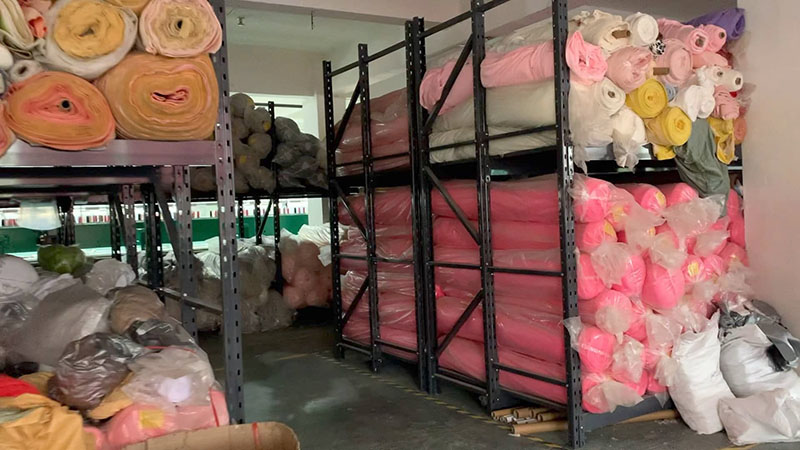
MOQ and pricing are not arbitrary numbers—they are a direct result of how a factory is structured and how its costs are distributed.
Understanding this relationship helps buyers negotiate realistically and avoid choosing a factory that’s mismatched to their order size.
Why Do Small Factories Usually Offer Lower MOQs?
Small plush factories tend to have:
- Lower setup and line-switching costs
- More manual processes
- Fewer internal approval layers
This allows them to accept:
- Lower MOQs
- Trial orders
- One-off custom projects
However, the trade-off is often higher unit pricing, because material purchasing power and production efficiency are limited. Small factories make money by flexibility, not scale.
Why Do Large Factories Push Higher MOQs but Lower Unit Prices?
Large factories operate on a different cost logic:
- Production lines are optimized for long runs
- Setup costs are spread across large quantities
- Material pricing improves significantly at scale
As a result:
- MOQs are higher
- Small orders may be priced unattractively
- Unit cost drops sharply once MOQ thresholds are met
This is why a large factory may quote a low price—but only at quantities that don’t match early-stage or custom projects.
Manufacturers that operate in a balanced range—such as Kinwin—often design tiered pricing that supports both pilot runs and future scale, helping buyers grow without switching suppliers too early.
MOQ & Pricing Comparison Table
| Factory Size | Typical MOQ | Unit Pricing Pattern | Buyer Impact |
|---|---|---|---|
| Small | Very low | Higher per unit | Good for testing |
| Mid-sized | Low–medium | Balanced | Best flexibility |
| Large | High | Lowest at scale | Best for mature SKUs |
| Mismatch | Forced MOQ | Hidden costs | Budget risk |
| Right fit | Aligned to demand | Transparent | Sustainable growth |
Which Factory Size Offers Better Flexibility and Speed?
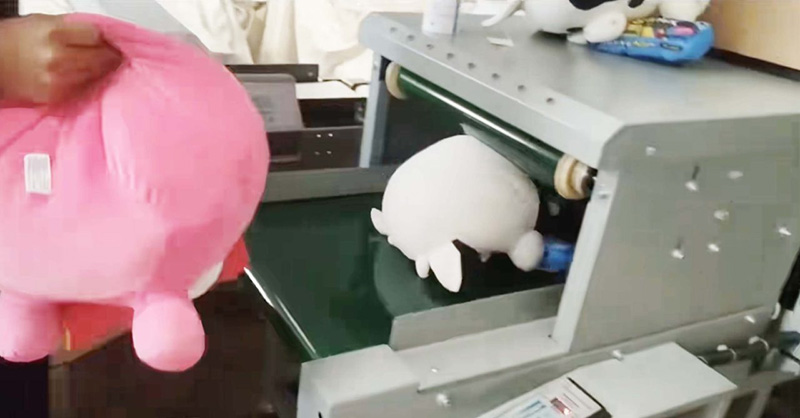
In custom plush projects, flexibility and speed often matter more than theoretical capacity.
Designs change, samples need adjustment, and timelines shift—so how a factory reacts under change is critical.
Why Are Small Factories Usually Faster at Making Changes?
Small plush factories often move faster because:
- Fewer decision layers are involved
- Pattern makers and managers work closely
- Changes can be approved and executed quickly
This makes them well-suited for:
- Early-stage development
- Multiple sample revisions
- Last-minute design tweaks
However, speed can drop sharply if:
- Too many projects arrive at once
- Key staff are unavailable
- The project suddenly scales beyond capacity
Fast reactions don’t always mean sustainable speed.
How Do Large Factories Handle Speed and Flexibility Differently?
Large factories prioritize schedule stability over flexibility.
They are efficient when:
- Designs are fixed
- Production plans are locked
- Orders follow standard workflows
But they tend to be slower when:
- Changes are requested mid-process
- Custom details require re-approval
- Small orders interrupt larger production runs
This doesn’t mean large factories are “slow”—they are simply optimized for predictable speed, not rapid change.
Manufacturers that balance scale and responsiveness—such as Kinwin—often offer the most practical mix of flexibility and reliable timing for custom projects.
Flexibility & Speed Comparison Table
| Factory Size | Flexibility Level | Speed Pattern |
|---|---|---|
| Small | Very high | Fast for small changes |
| Mid-sized | High & structured | Consistently responsive |
| Large | Low for changes | Fast only when fixed |
| Overloaded | Very limited | Unpredictable delays |
| Right fit | Adaptable | Reliable timelines |
How Does Communication Differ Between Small and Large Factories?
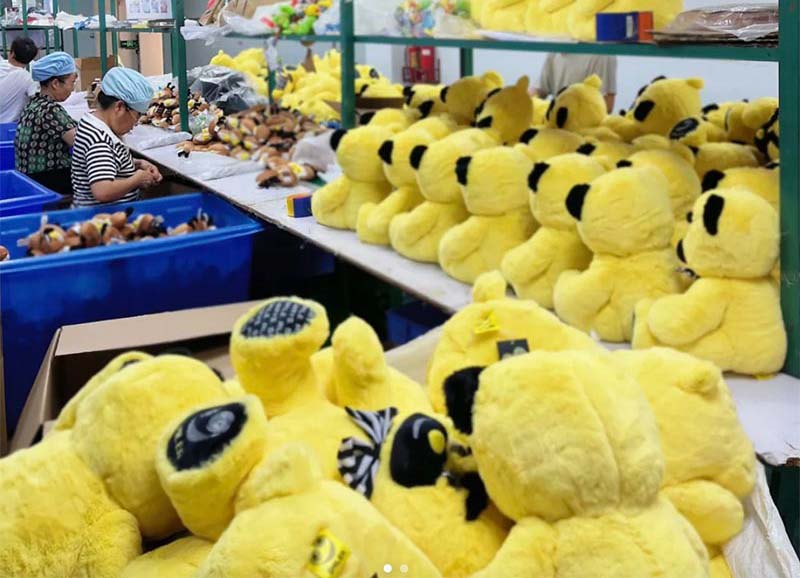
Communication style is often the most noticeable difference when working with small versus large plush factories—and it directly affects daily cooperation, problem-solving, and trust.
Is Communication More Direct in Small Factories?
Small factories usually offer:
- Direct contact with decision-makers
- Shorter internal communication paths
- Faster clarification of design or sample questions
This can feel very efficient, especially during development and sampling.
However, the downside is that communication may be:
- Highly dependent on one or two key people
- Less documented
- More vulnerable if staff change or workloads increase
If communication relies too much on individuals instead of systems, consistency can suffer as projects grow.
How Do Large Factories Communicate Differently?
Large factories tend to use layered, process-driven communication.
Typical characteristics include:
- Sales teams acting as intermediaries
- Structured handovers between departments
- More written confirmations and SOPs
This can improve consistency for large-scale orders, but it may also:
- Slow down feedback loops
- Make small changes harder to explain
- Create gaps between sales promises and production reality
Manufacturers that balance structure with clarity—such as Kinwin—often provide a better communication experience by combining clear ownership with documented processes.
Communication Style Comparison Table
| Aspect | Small Factory | Large Factory |
|---|---|---|
| Contact person | Direct decision-maker | Multiple layers |
| Response speed | Fast, informal | Slower, structured |
| Documentation | Limited | More formal |
| Consistency | Person-dependent | System-dependent |
| Best fit | Development stage | Scaled production |
Conclusion
Choosing between a small and a large plush factory is not about which one is “better,” but which one is more suitable for your specific project stage and goals.
Small plush factories often excel in early-stage custom development, offering flexibility, faster sample iterations, and closer collaboration—but they may struggle as volume and complexity increase. Large plush factories bring scale, stability, and cost efficiency for mature, high-volume orders, yet they can be less responsive and less accommodating to custom or low-MOQ needs.
By understanding how factory size affects development capability, MOQ, pricing, flexibility, speed, and communication style, buyers can avoid common sourcing mismatches and choose partners more strategically.
If you’re deciding between small and large plush factories and want an experienced perspective on what will work best for your project—not just in theory, but in execution—Kinwin welcomes open discussions to help you evaluate options clearly and move forward with confidence.