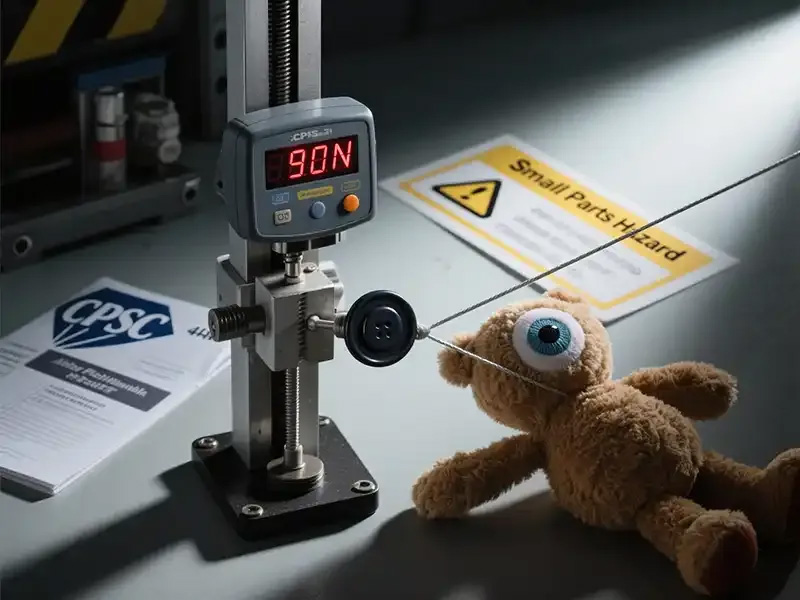
When sourcing custom plush toys, many buyers instinctively believe that “bigger factories are safer.”
In reality, factory size is not about prestige—it’s about fit.
A factory that is too small may struggle with quality consistency, while a factory that is too large may lack flexibility or interest in custom, low-to-mid volume projects. Understanding what “factory size” really means in plush toy manufacturing helps buyers choose a partner that matches their project stage, budget, and expectations.
What Does “Factory Size” Mean in Plush Toy Manufacturing?
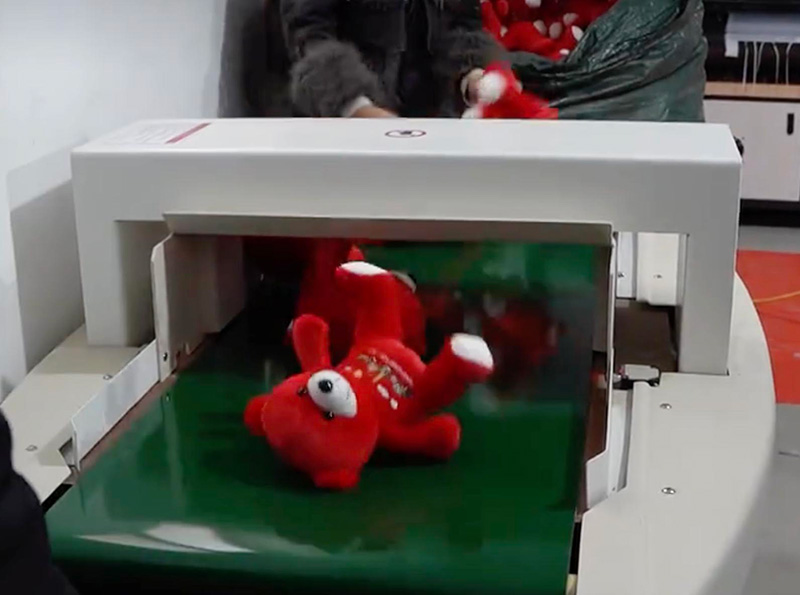
Factory size is often misunderstood. It’s not just about how big the building is or how many workers are on payroll—it’s about operational structure and project suitability.
Is Factory Size About Headcount, Output, or System Capability?
In plush toy manufacturing, factory size usually reflects a combination of:
- Number of production workers
- Monthly or peak-season output capacity
- Number of production lines
- Internal systems for sampling, QC, and project management
A factory with 300 workers but no sampling team may actually be less suitable for custom projects than a 100-person factory with a dedicated development team.
So instead of asking “How big is the factory?”, buyers should ask:
- How is the factory structured?
- Which teams handle custom development?
- How much attention will my project receive?
Why “Bigger” Doesn’t Automatically Mean “Better” for Custom Plush
Large factories are often optimized for:
- High-volume repeat orders
- Standardized products
- Long production runs
Custom plush projects, especially at early stages, require:
- Frequent communication
- Design interpretation and adjustment
- Multiple sample rounds
- Flexible scheduling
If your project is small-batch, IP-driven, or still evolving, an oversized factory may prioritize larger clients and treat your order as low priority.
Manufacturers with balanced scale and structured teams—such as Kinwin—are often better positioned to support custom projects because size and flexibility are aligned.
Factory Size Understanding Table
| Aspect | What It Really Means | Common Misconception |
|---|---|---|
| Worker count | Production capacity range | More workers = better |
| Factory area | Workflow layout | Bigger space = higher quality |
| Output volume | Scale suitability | High volume fits all projects |
| Team structure | Ability to handle custom work | Sales alone is enough |
| System maturity | Repeatable execution | Size replaces systems |
Is a Small Factory Suitable for Custom Plush Development?
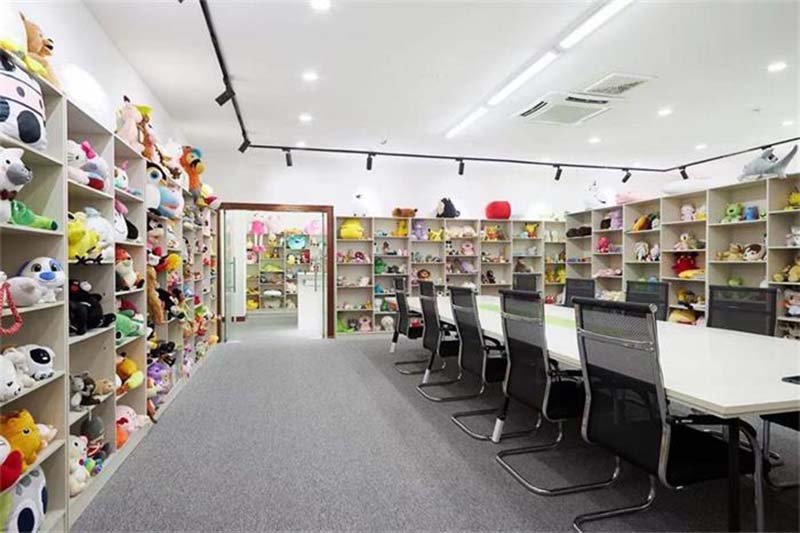
Small factories can be a good fit for certain custom plush projects—but they’re not automatically the right choice.
The key is understanding what type of “small” factory you’re dealing with and how that matches your project needs.
When Can a Small Factory Be an Advantage?
A well-run small factory can offer real benefits, especially for early-stage or highly customized projects:
- Faster internal communication and decision-making
- Greater willingness to take on low MOQs
- More attention per project during sampling
- Flexibility to adjust designs quickly
These strengths are most valuable when:
- You’re developing a new character or IP
- Your order quantity is limited
- You expect multiple sample revisions
- Speed and responsiveness matter more than scale
In these scenarios, a small factory with an experienced development team can move faster than a large, layered organization.
What Are the Risks of Working With a Small Factory?
However, “small” can also mean limited capacity and weak systems.
Common risks include:
- Inconsistent quality when orders increase
- Heavy reliance on a few key workers
- Limited QC and compliance knowledge
- Difficulty handling peak seasons
If your project may scale, or if compliance and consistency are critical, a small factory without structured processes can become a bottleneck.
Balanced manufacturers—such as Kinwin—often combine the responsiveness of smaller teams with systems that support growth, which helps avoid these pitfalls.
Small Factory Suitability Table
| Project Factor | Small Factory Advantage | Potential Risk |
|---|---|---|
| MOQ flexibility | Often very flexible | Limited scalability |
| Sampling speed | Fast iterations | Resource constraints |
| Communication | Direct & quick | Person-dependent |
| Quality control | Hands-on oversight | Lack of formal systems |
| Growth readiness | Good for pilots | Weak for scale-up |
When Is a Mid-Sized Factory the Best Choice for Custom Projects?
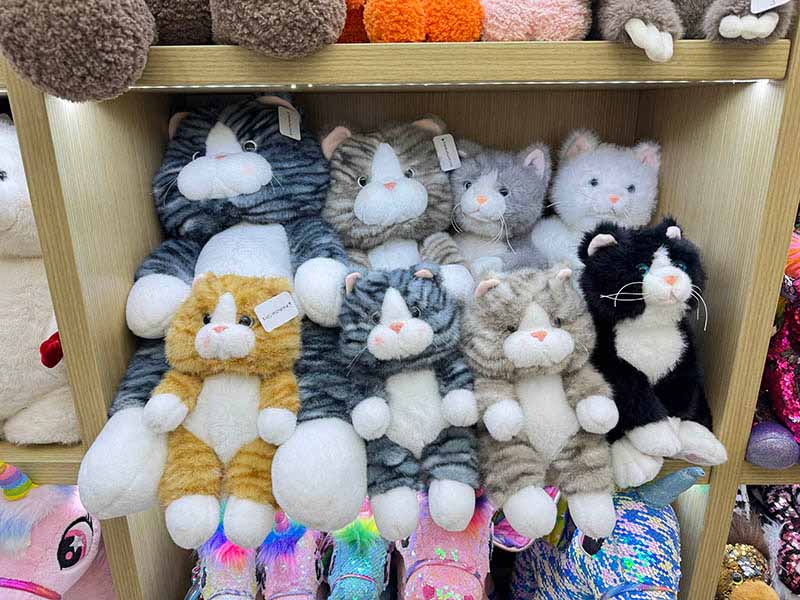
For many custom plush projects, a mid-sized factory offers the best balance between flexibility and reliability.
This is often where buyers find the highest overall “fit,” especially when projects move beyond the idea stage.
How Do Mid-Sized Factories Balance Flexibility and Systems?
Mid-sized factories typically have:
- Dedicated sampling and development teams
- Multiple production lines with adjustable capacity
- Basic but effective QC and project management systems
- Experience handling both custom and repeat orders
This structure allows them to:
- Support multiple sample rounds without chaos
- Adapt to design changes without major delays
- Maintain quality consistency as orders scale
Compared to very small factories, mid-sized operations are less dependent on individual workers. Compared to very large factories, they’re usually more willing to engage deeply with custom details.
Why Are Mid-Sized Factories Often Ideal for Growing Brands?
If your project is:
- A custom IP or brand character
- Expected to scale from hundreds to thousands of units
- Targeting international markets with compliance needs
…a mid-sized factory is often the safest choice.
Manufacturers like Kinwin operate in this “sweet spot,” where structured systems exist, but communication remains direct and responsive—making them well-suited for brands, licensors, and growing e-commerce sellers.
Mid-Sized Factory Suitability Table
| Project Need | Why Mid-Sized Works Well | Limitation to Note |
|---|---|---|
| Custom development | Dedicated dev teams | Not ultra-fast like tiny shops |
| Scaling potential | Can grow with demand | Capacity still has limits |
| Quality consistency | Basic QC systems | Less automation than mega-factories |
| Communication | Direct but structured | Slightly more layered |
| Compliance support | Export experience | May need planning for rare standards |
Are Large Factories a Good Fit for Custom or Low-MOQ Plush Orders?
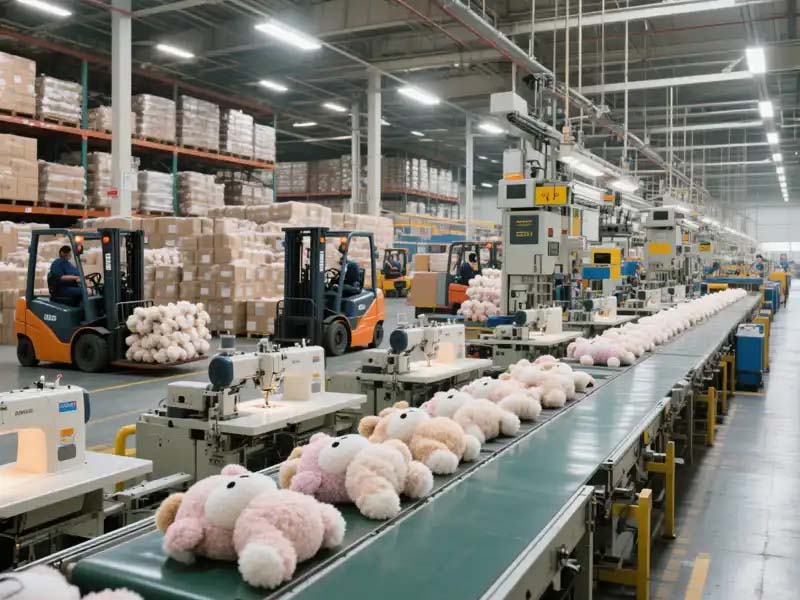
Large factories often look impressive on paper—but they’re not always the best match for custom or low-volume plush projects.
Understanding how large operations work helps buyers avoid mismatched expectations.
When Do Large Factories Make Sense?
Large plush toy factories are typically optimized for:
- High-volume, repeat orders
- Standardized designs with minimal variation
- Long production runs and stable forecasts
They can be a good fit when:
- Your design is already finalized
- Your order volume is large and predictable
- You prioritize unit cost efficiency over flexibility
In these cases, automation, scale purchasing, and streamlined lines can deliver strong cost performance.
Why Do Custom or Low-MOQ Projects Struggle in Large Factories?
For early-stage custom projects, large factories may present challenges:
- Higher MOQs and stricter order thresholds
- Less patience for multiple sample revisions
- Slower internal coordination for small changes
- Lower priority compared to major clients
Communication may also be more layered, with sales, merchandisers, and production separated—making it harder to resolve details quickly.
This is why many buyers with custom needs prefer factories that balance scale with responsiveness. Mid-sized manufacturers—such as Kinwin—often provide a better fit for bespoke development while still supporting growth.
Large Factory Fit Evaluation Table
| Project Factor | Large Factory Strength | Potential Drawback |
|---|---|---|
| Order volume | Excellent for bulk | High MOQs |
| Unit pricing | Competitive at scale | Less flexible pricing |
| Custom revisions | Limited tolerance | Slower adjustments |
| Communication | Process-driven | More layers |
| Priority level | Strong for big clients | Small orders deprioritized |
Are Large Factories a Good Fit for Custom or Low-MOQ Plush Orders?
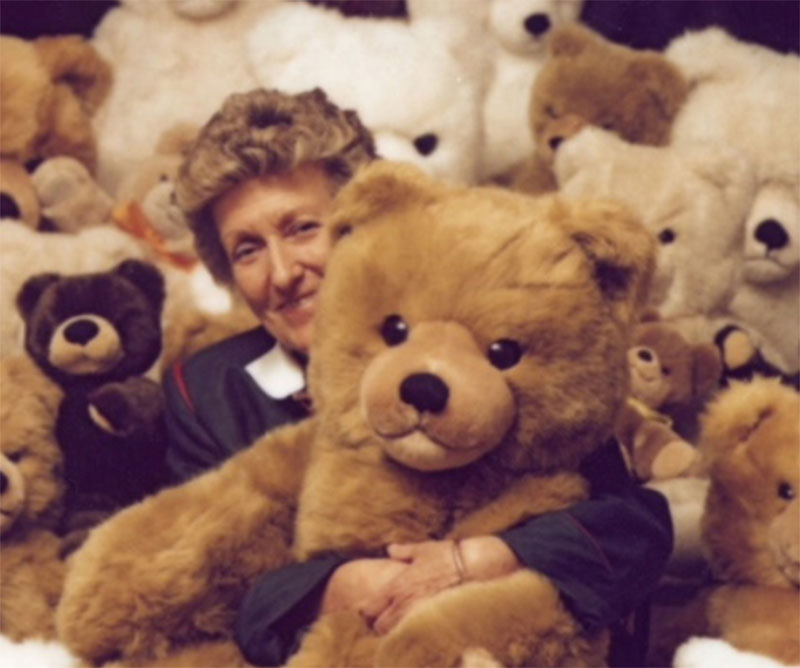
Large factories are often seen as the “safest” option—but for custom plush projects, size can be a double-edged sword.
The key question is not whether a factory is big, but whether its operating model matches your project type.
When Do Large Factories Make Sense for Plush Projects?
Large factories are usually optimized for:
- High-volume, repeat orders
- Standardized designs with minimal variation
- Long-term programs with stable forecasts
They can be a good fit if:
- Your design is already finalized
- Your MOQ is high and repeatable
- Price optimization through scale is a priority
In these cases, large factories benefit from automation, bulk purchasing power, and stable workflows.
Why Are Large Factories Often a Poor Fit for Custom or Early-Stage Projects?
For custom or low-MOQ plush projects, large factories may struggle with:
- Limited interest in small orders
- Slower internal coordination due to layered management
- Rigid processes that resist design changes
- Reduced attention during sampling
Buyers may experience:
- Long sampling lead times
- Communication gaps between sales and production
- Pressure to increase MOQ prematurely
This is why many brands find that large factories feel “professional” on paper, but frustrating in execution for custom work.
Balanced manufacturers—such as Kinwin—often succeed by combining structured systems with project-level flexibility, something very large factories may lack for smaller clients.
Large Factory Fit Evaluation Table
| Project Factor | Large Factory Strength | Common Limitation |
|---|---|---|
| Order volume | Excellent for high MOQ | Weak for low MOQ |
| Unit cost | Lower at scale | High setup cost |
| Process stability | Highly standardized | Low flexibility |
| Custom revisions | Limited tolerance | Slow approvals |
| Client priority | Big clients first | Small orders sidelined |
How Does Factory Size Affect Flexibility and Communication?
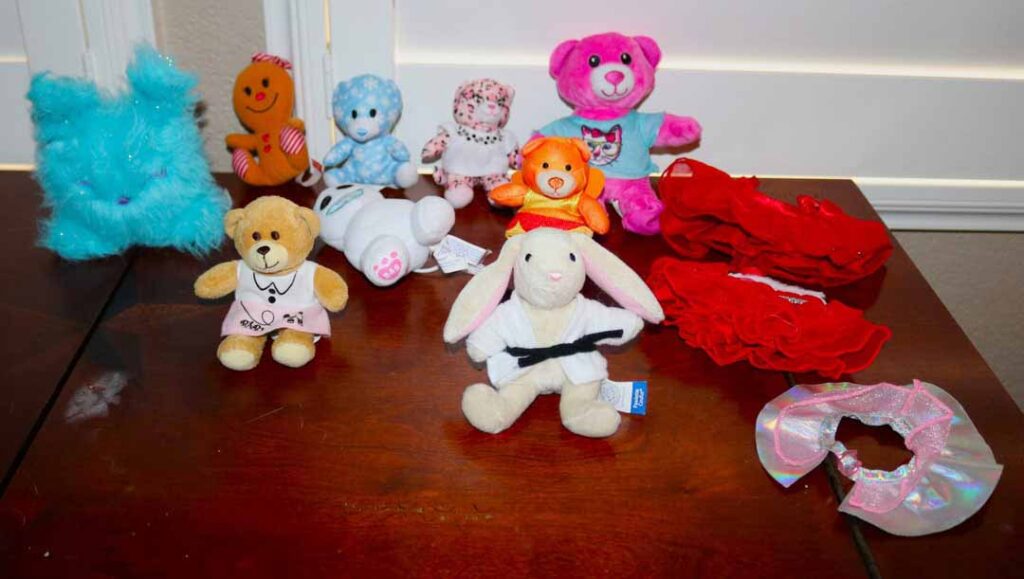
Factory size has a direct impact on how quickly decisions are made, how clearly information flows, and how flexible a supplier can be when things change—which they almost always do in custom plush projects.
Does Factory Size Influence Decision Speed and Responsiveness?
In general:
- Smaller factories tend to make decisions faster, with fewer layers of approval
- Mid-sized factories balance speed with structure
- Large factories often require multiple internal approvals
For custom projects, fast feedback loops matter:
- Design tweaks
- Sample adjustments
- Cost-impact discussions
If every small change requires internal escalation, timelines stretch and frustration builds. That’s why many buyers feel communication “slows down” as factory size increases.
How Does Internal Structure Affect External Communication?
Communication quality is often a reflection of internal alignment.
Watch for:
- Whether one person truly owns your project
- How clearly messages move from sales to production
- Whether previous decisions are remembered and referenced
Factories with too many handoffs may:
- Repeat questions already answered
- Misinterpret earlier agreements
- Lose context between sampling and production
Manufacturers with balanced scale—such as Kinwin—typically maintain clearer ownership and shorter communication paths, which helps keep custom projects on track.
Flexibility & Communication Impact Table
| Factory Size | Flexibility Level | Communication Pattern |
|---|---|---|
| Small | High for changes | Direct, person-driven |
| Mid-sized | Balanced & structured | Clear ownership |
| Large | Low for small changes | Layered, slower |
| Overloaded | Very limited | Inconsistent |
| Right-sized | Adaptable | Stable & predictable |
How Does Factory Size Influence Pricing, MOQ, and Lead Time?
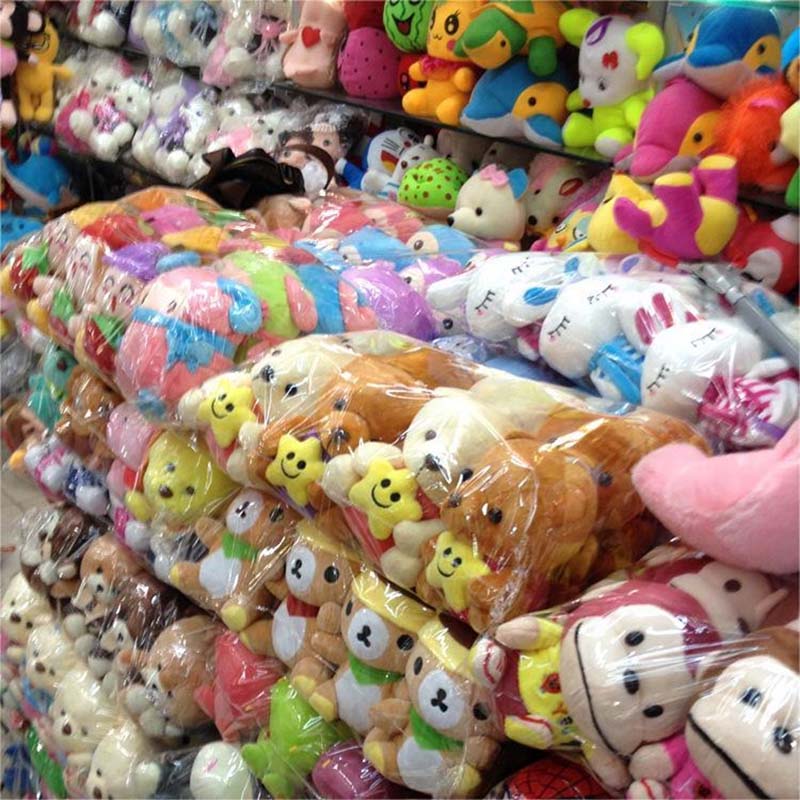
Factory size directly shapes the commercial terms you’ll be offered.
Understanding this relationship helps buyers avoid unrealistic expectations—and choose a factory that matches both budget and timeline.
How Does Factory Size Affect Pricing and MOQ?
Different factory sizes are optimized for different cost structures:
- Small factories often accept low MOQs but may have higher unit prices due to limited purchasing power and manual processes.
- Mid-sized factories usually offer the best balance—reasonable MOQs with stable pricing, especially for custom projects.
- Large factories tend to require higher MOQs to justify setup and line allocation, but offer lower unit prices at scale.
If a factory pushes for a high MOQ early, it’s often a reflection of their internal cost model—not necessarily your project’s needs.
Factories like Kinwin typically design pricing tiers that support both pilot runs and scalable growth, helping buyers test the market without overcommitting.
How Does Factory Size Impact Lead Time and Scheduling?
Lead time is not just about speed—it’s about predictability.
- Small factories may start quickly but struggle during peak seasons.
- Large factories can deliver efficiently at scale, but small orders may wait behind major clients.
- Mid-sized factories often provide the most reliable timelines for custom work, balancing capacity with flexibility.
Ask not just “How fast?” but:
- How do you prioritize orders like mine?
- What happens during peak season?
Clear answers here signal mature planning.
Pricing, MOQ & Lead Time Comparison Table
| Factory Size | MOQ Range | Pricing Behavior | Lead Time Pattern |
|---|---|---|---|
| Small | Very low | Higher unit cost | Fast start, less stable |
| Mid-sized | Low to medium | Balanced & scalable | Predictable |
| Large | High | Lowest at scale | Stable for big orders |
| Mismatch | Forced MOQ | Hidden costs | Delays likely |
| Right fit | Aligned with project | Transparent pricing | Reliable delivery |
Conclusion
When it comes to custom plush projects, factory size is not a ranking—it’s a matching exercise.
Small factories can be ideal for early-stage development and low MOQs, but may struggle to scale. Large factories excel at high-volume, standardized production, yet often lack the flexibility needed for custom or evolving designs. For many brands, IP owners, and growing sellers, mid-sized factories offer the best balance of flexibility, structure, communication, and scalability.
By understanding what factory size really means—and how it affects development support, communication, pricing, MOQ, and lead time—buyers can avoid mismatches that lead to delays, frustration, or unnecessary cost.
If you’re unsure which factory size best fits your custom plush project, Kinwin welcomes open discussions to help you evaluate your needs realistically and choose a manufacturing approach that supports both short-term development and long-term growth.