Choosing the right plush manufacturer is one of the most important decisions a brand will make during product development. The factory you work with does not only determine cost and lead time—it directly influences product quality, brand consistency, compliance risk, and your ability to scale successfully.
For many brands, problems with plush products are not caused by design ideas or market demand, but by misalignment with the manufacturer. Understanding what truly matters when evaluating a plush factory helps brands avoid costly mistakes and build long-term partnerships that support growth, reliability, and brand reputation.
What Manufacturing Experience and Product Specialization Matter Most for Your Brand?
When identifying the best plush manufacturer for your brand, manufacturing experience is not just about how many years a factory has existed. What matters more is relevant experience aligned with your specific product type, market, and business model. A factory that has produced plush toys for decades may still be a poor fit if its core output does not match your brand’s needs.
The first factor to evaluate is product specialization. Plush manufacturers often focus on different categories: character plush, baby-safe toys, promotional items, plush dolls, or decorative plush. A factory that regularly produces the type of plush you plan to sell will already have optimized processes, trained workers, and internal quality standards suited to that category. This reduces learning curves, errors, and inconsistent outcomes.
The second factor is export and market experience. Manufacturers serving the same target markets as your brand—such as the U.S., Europe, or Japan—are more familiar with compliance expectations, testing workflows, packaging standards, and buyer communication styles. This experience directly affects efficiency and risk control, especially during scaling.
Finally, brands should look at project depth, not just order volume. Factories that can discuss past projects in detail—design challenges, revisions, production issues, and how they were solved—demonstrate real operational maturity. Vague answers or purely sales-driven language often signal limited hands-on involvement in production.
| Evaluation Area | What to Look For | Why It Matters for Brands | Risk if Overlooked |
|---|---|---|---|
| Product focus | Core plush categories | Better process alignment | Trial-and-error production |
| Market experience | Export regions served | Compliance familiarity | Market rejection |
| Project depth | Detailed past cases | Problem-solving ability | Repeated mistakes |
| Production role | Direct manufacturer | Accountability | Middleman risk |
| Team stability | Skilled sewing & QC | Consistent quality | Output fluctuation |
A plush manufacturer with relevant specialization and proven market experience is far more valuable to a brand than one that simply claims large capacity or low pricing. This alignment forms the foundation for consistent quality and sustainable brand growth.
How Do Design Support, Pattern Making, and Sampling Capabilities Affect Final Results?
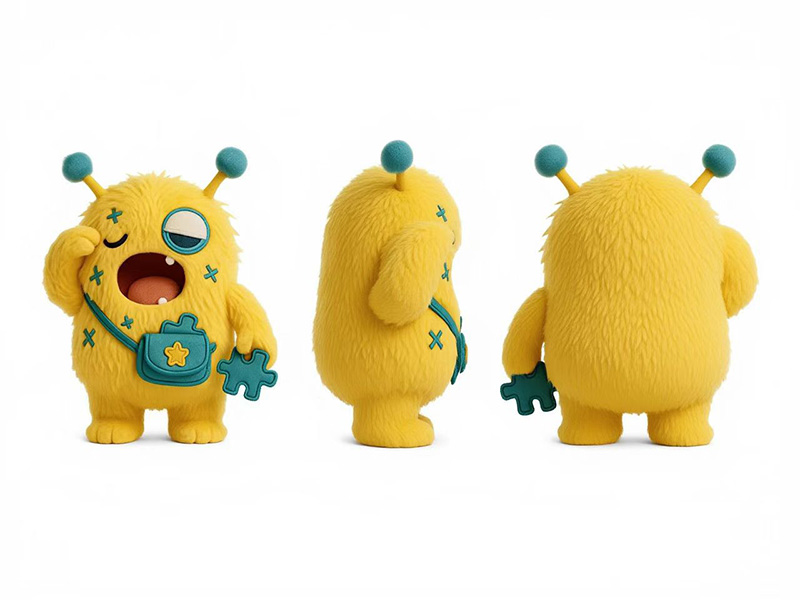
For plush products, the biggest gap between a brand’s concept and the final product usually appears during design translation and sampling. Even strong ideas can fail if the manufacturer lacks the technical ability to convert artwork, sketches, or references into accurate three-dimensional plush forms. This makes design support, pattern making, and sampling capabilities some of the most decisive factors when choosing a plush manufacturer.
Design support goes beyond simply “following instructions.” A capable plush manufacturer actively reviews design inputs and identifies potential risks early—such as shapes that are difficult to sew, proportions that may collapse after stuffing, or details that could cause safety or durability issues. This early feedback helps brands refine designs before time and cost are committed to physical samples.
Pattern making is where plush accuracy is truly determined. Skilled pattern makers understand how fabric stretch, pile direction, seam placement, and stuffing density interact. For character-based or branded plush, small pattern adjustments can significantly affect facial expression, posture, and overall likeness. Weak pattern making often leads to repeated sample revisions, inconsistent results, and frustration on both sides.
Sampling capability reflects how well a factory controls execution. High-level manufacturers can reproduce samples consistently, explain why changes were made, and document each revision clearly. They also understand the difference between development samples and pre-production samples, ensuring that approved samples are realistic representations of mass production rather than one-off craftsmanship.
Brands benefit most from manufacturers that treat sampling as a collaborative engineering process, not a trial-and-error service.
| Capability Area | What Strong Manufacturers Do | Impact on Final Product | Risk if Weak |
|---|---|---|---|
| Design review | Identify feasibility issues early | Fewer late-stage changes | Unrealistic designs |
| Pattern making | Control shape & expression | High character accuracy | Poor likeness |
| Fabric handling | Understand stretch & pile | Clean construction | Distorted forms |
| Sampling process | Document revisions clearly | Predictable results | Endless revisions |
| PPS control | Match bulk production | Consistent mass output | Sample–bulk mismatch |
When a plush manufacturer has strong design support and disciplined sampling processes, brands gain predictability. This reduces development cycles, improves accuracy, and ensures the final product reflects the original design intent—not a compromised version shaped by factory limitations.
What Quality Control Systems Indicate a Truly Reliable Plush Manufacturer?
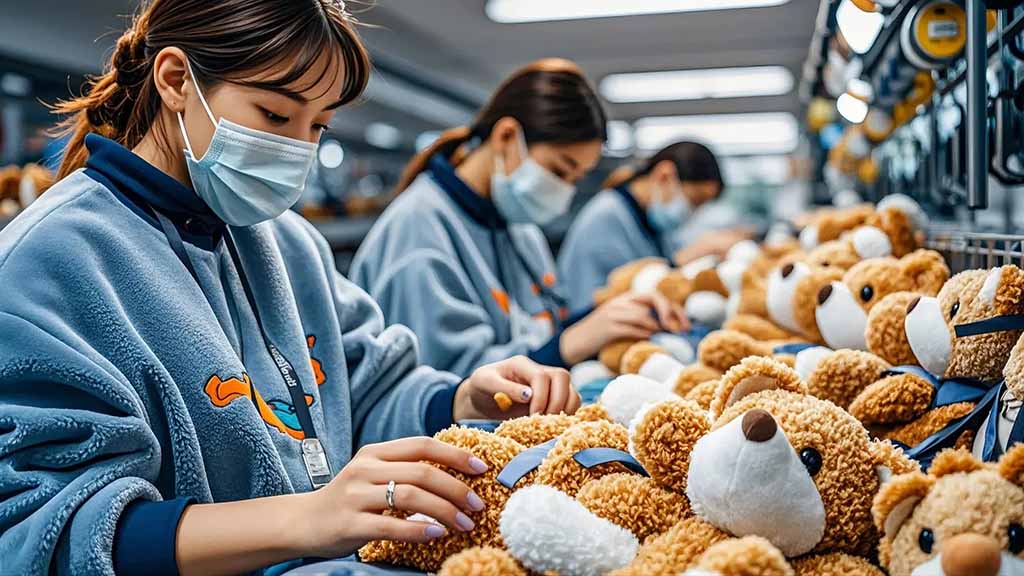
A truly reliable plush manufacturer is defined less by promises and more by the quality control systems embedded in daily production. For brands, consistent plush quality is rarely achieved through final inspection alone—it depends on how quality is managed from material intake to packing. Evaluating a factory’s QC system helps determine whether quality is systematic or accidental.
The first indicator is multi-stage inspection structure. Professional plush manufacturers separate quality checks into clear stages: incoming material inspection (IQC), in-process quality control (IPQC), and final quality control (FQC). This structure ensures problems are identified at the right moment—before defects multiply. For stuffed animals, early detection of fabric defects, stitching issues, or filling inconsistencies can prevent large-scale rework.
The second indicator is defined defect standards and accountability. Reliable factories classify defects into critical, major, and minor categories, often aligned with AQL standards. More importantly, they assign responsibility: operators self-check, line supervisors verify, and QC staff audit. When quality responsibility is shared rather than isolated in a single department, consistency improves.
The third indicator is process discipline and documentation. Strong manufacturers maintain sewing guidelines, sample boards, defect photos, and work instructions at production lines. This is especially important for plush products, where visual consistency—facial placement, embroidery angle, seam alignment—directly affects brand perception.
Finally, quality systems must be repeatable under scale. A factory that delivers a perfect sample but lacks stable QC processes will struggle as volume increases. Brands should look for evidence that the same quality standard is applied across different orders, not just special projects.
| QC System Element | What Reliable Factories Have | Why It Matters for Brands | Risk if Missing |
|---|---|---|---|
| Inspection stages | IQC, IPQC, FQC | Early problem detection | Late-stage defects |
| Defect standards | Clear classification | Objective quality judgment | Disputes & inconsistency |
| Accountability | Multi-level checks | Stable output | Blame shifting |
| Work instructions | Visual & written guides | Consistent appearance | Operator variation |
| Scalability | Same QC at volume | Brand reliability | Quality drop at scale |
A plush manufacturer with a structured, documented, and repeatable quality control system offers brands far more than “good samples.” It provides the confidence that quality will remain stable as orders grow, timelines tighten, and product lines expand.
How Important Are Safety Certifications and Compliance for Your Target Markets?
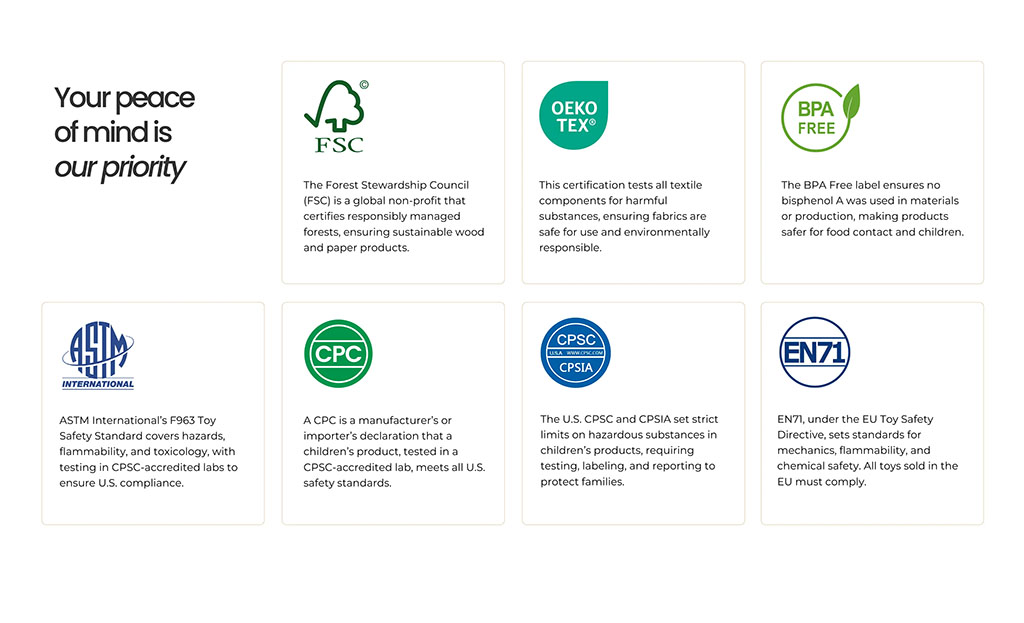
Safety certifications and regulatory compliance are not optional add-ons when selecting a plush manufacturer—they are foundational requirements that directly affect whether your products can legally enter and remain in your target markets. For brands, compliance failures do not just cause shipment delays; they can lead to recalls, penalties, platform bans, and long-term damage to brand credibility.
Different markets impose different compliance frameworks. For example, plush products sold in the United States must meet CPSIA requirements and ASTM F963 standards, while products entering the European Union must comply with EN71 standards and CE marking obligations. These regulations cover mechanical safety, flammability, chemical content, labeling, and traceability. A reliable plush manufacturer should not only recognize these standards by name, but also understand how they apply to specific plush constructions, materials, and age grades.
Equally important is how compliance is managed internally. Strong manufacturers maintain approved material lists, traceability records, and standardized testing workflows. They understand when a material change triggers re-testing and how to align sampling schedules with lab lead times. This operational awareness reduces compliance gaps that often occur when products move from sample to mass production.
Brands should also evaluate the manufacturer’s experience with third-party testing laboratories. Factories that work regularly with accredited labs are more likely to prepare samples correctly, submit accurate documentation, and respond efficiently to test failures. This experience becomes critical when timelines are tight or when products are sold across multiple regions with overlapping regulations.
| Compliance Area | What Brands Should Verify | Why It Matters | Risk if Weak |
|---|---|---|---|
| Market standards | CPSIA, EN71, CE, etc. | Legal market access | Import rejection |
| Internal systems | Material & test tracking | Consistent compliance | Re-testing delays |
| Lab experience | Accredited test partners | Accurate reports | Invalid certificates |
| Change control | Re-test triggers | Ongoing validity | Compliance lapses |
| Documentation | Reports & traceability | Audit readiness | Platform or customs issues |
A plush manufacturer with strong compliance capabilities acts as a risk-management partner rather than a simple supplier. This support becomes increasingly important as brands expand into new markets or scale production volumes.
What Communication Style, Response Speed, and Project Management Ensure Smooth Collaboration?
Even when a plush manufacturer has strong production capability and compliance knowledge, collaboration can still fail if communication and project management are weak. For brands, many delays, quality disputes, and cost overruns are not caused by technical limitations, but by misaligned communication and unclear ownership of tasks throughout the project lifecycle.
Effective communication starts with clarity and structure, not frequency. Reliable plush manufacturers communicate in a way that is precise, documented, and actionable. This includes confirming understanding of requirements, summarizing decisions after discussions, and clearly distinguishing between confirmed points and open questions. Brands benefit most when communication reduces ambiguity rather than creating more back-and-forth.
Response speed also matters, but speed without substance is risky. A manufacturer that replies quickly yet provides incomplete or overly optimistic answers often creates downstream problems. What brands should evaluate is response quality—whether answers address the real issue, reference specifications or samples, and propose realistic solutions. Consistent, thoughtful responses signal internal coordination between sales, sampling, and production teams.
Project management capability becomes increasingly important as products move from development to mass production. Strong manufacturers assign clear project owners, track timelines, manage revision cycles, and proactively flag risks. This is especially critical for plush projects with multiple revisions, seasonal deadlines, or compliance dependencies. When project ownership is unclear, small issues tend to escalate into major disruptions.
Finally, brands should observe how manufacturers handle unexpected problems. Transparent communication during delays or defects often matters more than perfect execution. Factories that escalate issues early and suggest corrective actions tend to be more reliable long-term partners than those that hide problems until they become unavoidable.
| Collaboration Area | What Strong Manufacturers Demonstrate | Benefit to Brands | Risk if Weak |
|---|---|---|---|
| Communication style | Clear, documented updates | Fewer misunderstandings | Rework & delays |
| Response quality | Accurate, solution-based replies | Better decisions | False expectations |
| Project ownership | Named project managers | Controlled timelines | Task confusion |
| Timeline tracking | Milestones & alerts | On-time launches | Missed deadlines |
| Issue handling | Early escalation | Risk containment | Crisis management |
Smooth collaboration depends on communication systems, not individual personalities. For brands seeking long-term success, choosing a plush manufacturer with disciplined communication and project management is as important as evaluating price or capacity.
How Do Production Capacity, Cost Transparency, and Long-Term Support Influence Brand Growth?
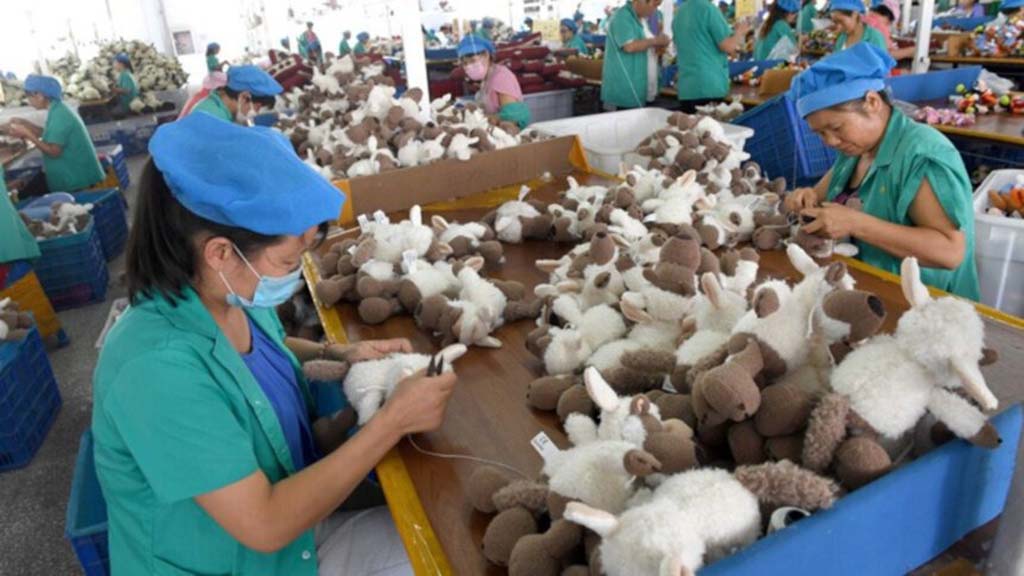
For brands planning sustainable growth, selecting a plush manufacturer is not just about the first order—it is about whether the factory can grow alongside the brand. Production capacity, cost transparency, and long-term support directly affect a brand’s ability to scale product lines, manage margins, and respond to market changes without disruption.
Production capacity should be evaluated in realistic terms, not headline numbers. Brands need to understand how many production lines are dedicated to plush, how capacity is allocated during peak seasons, and whether the factory can handle simultaneous projects without quality dilution. A manufacturer that manages capacity carefully is more likely to deliver stable output than one that simply claims “large scale.”
Cost transparency is equally important. Reliable plush manufacturers are able to break down pricing logic—materials, labor, complexity, packaging—so brands understand where costs come from and what factors influence price changes. This transparency helps brands plan pricing strategies, evaluate design trade-offs, and avoid hidden costs that often appear during revisions or reorders.
Long-term support is where true partnerships are built. Manufacturers that support brand growth invest in understanding the brand’s standards, maintain consistent materials across orders, and proactively suggest improvements in construction or efficiency. Over time, this reduces sampling cycles, improves cost control, and strengthens consistency across product lines. Brands that switch factories frequently often lose these accumulated benefits.
Ultimately, a plush manufacturer that offers scalable capacity, honest pricing, and long-term support becomes a strategic partner, not just a production vendor.
| Growth Factor | What Brands Should Assess | Impact on Brand Growth | Risk if Weak |
|---|---|---|---|
| Capacity planning | Line allocation & peak handling | Scalable launches | Missed opportunities |
| Cost transparency | Clear pricing logic | Margin control | Hidden expenses |
| Material consistency | Stable sourcing | Brand consistency | Quality drift |
| Process memory | Knowledge retention | Faster development | Relearning costs |
| Long-term support | Continuous improvement | Sustainable growth | Short-term thinking |
Conclusion
Identifying the best plush manufacturer for your brand requires more than comparing prices or reviewing samples. By evaluating manufacturing specialization, design and sampling capability, quality control systems, compliance readiness, communication discipline, and long-term scalability, brands can choose partners that support consistent quality, operational stability, and sustainable growth.
📧 Contact: [email protected]
🌐 Visit: https://kinwintoys.com