AI companions are no longer limited to screens or apps. From my experience working with global brands and retail buyers, AI is now entering the plush toy category in a more emotional, more physical, and more approachable form.
Plush toys already represent comfort, familiarity, and trust. When AI capabilities are added carefully, plush products begin to move beyond play and become companions that listen, respond, and adapt. This shift is creating new opportunities—but also new expectations—for brands, manufacturers, and retailers.
To understand this change clearly, we must first look at what is driving the growing demand for AI companion plush toys, and why this category is gaining momentum now.
What Is Driving the Growing Demand for AI Companion Plush Toys?
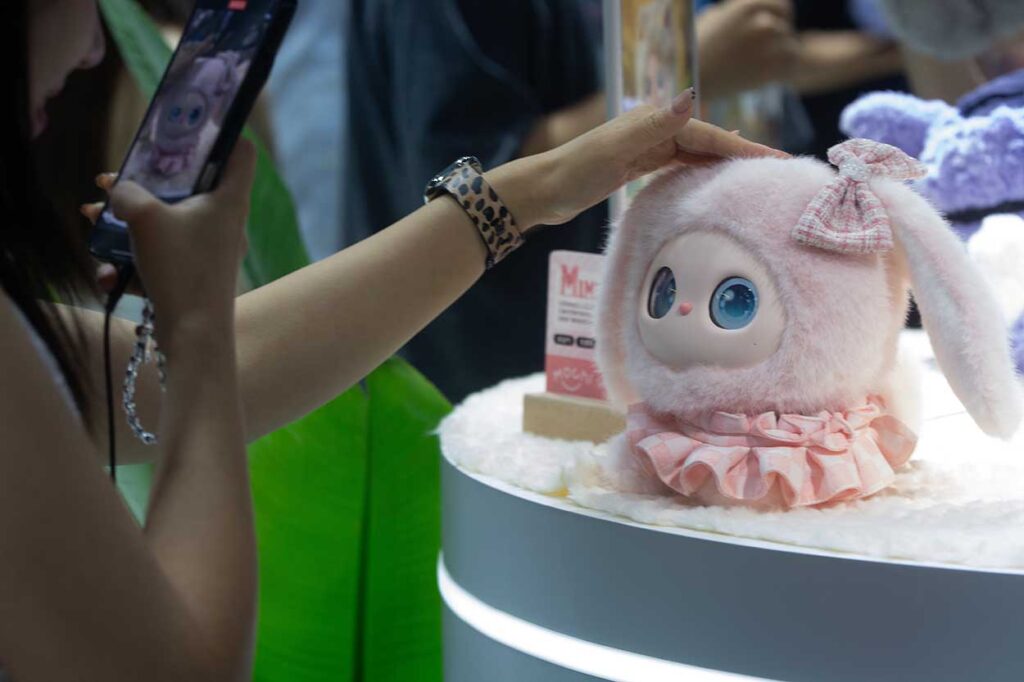
The demand for AI companion plush toys is not driven by technology alone. From my experience, it is driven by changes in consumer behavior, emotional needs, and retail positioning, especially after years of increased digital exposure and social isolation.
One major driver is emotional connection. Parents, caregivers, and even adult consumers are seeking products that offer comfort, interaction, and a sense of presence. AI plush toys respond with voice, behavior, or memory, creating a feeling of companionship that traditional plush toys cannot provide.
Another factor is screen fatigue. Many families want interactive experiences without adding more screen time. AI plush toys offer voice-based or tactile interaction, which feels safer and more natural for children while still delivering intelligent responses.
Retail demand is also shifting. Retailers are looking for products that stand out, justify higher price points, and create stories around innovation. AI companion plush toys meet these needs by combining technology with softness and familiarity, making advanced features less intimidating to buyers.
Finally, advances in lightweight AI technology—such as edge processing, offline voice recognition, and modular AI chips—have reduced cost and complexity. This makes AI plush toys more feasible for mass production and retail distribution.
| Demand Driver | What Is Changing | Why It Matters | Market Impact |
|---|---|---|---|
| Emotional needs | Desire for comfort & connection | Plush fits emotional use | Broader age appeal |
| Screen fatigue | Less screen-based interaction | Voice & touch preferred | Parent acceptance |
| Retail differentiation | Need for innovative products | AI adds narrative value | Higher perceived value |
| Tech accessibility | Smaller, cheaper AI modules | Easier integration | Faster adoption |
| Social trends | Loneliness & interaction gaps | Companion-style products | New product category |
For brands and buyers, this demand signals a shift: plush toys are no longer judged only by softness or design. Manufacturers that understand why AI companions resonate emotionally and commercially are better positioned to develop products that succeed beyond novelty.
How AI Companions Expand Plush Toys from Play Objects to Emotional Support Products
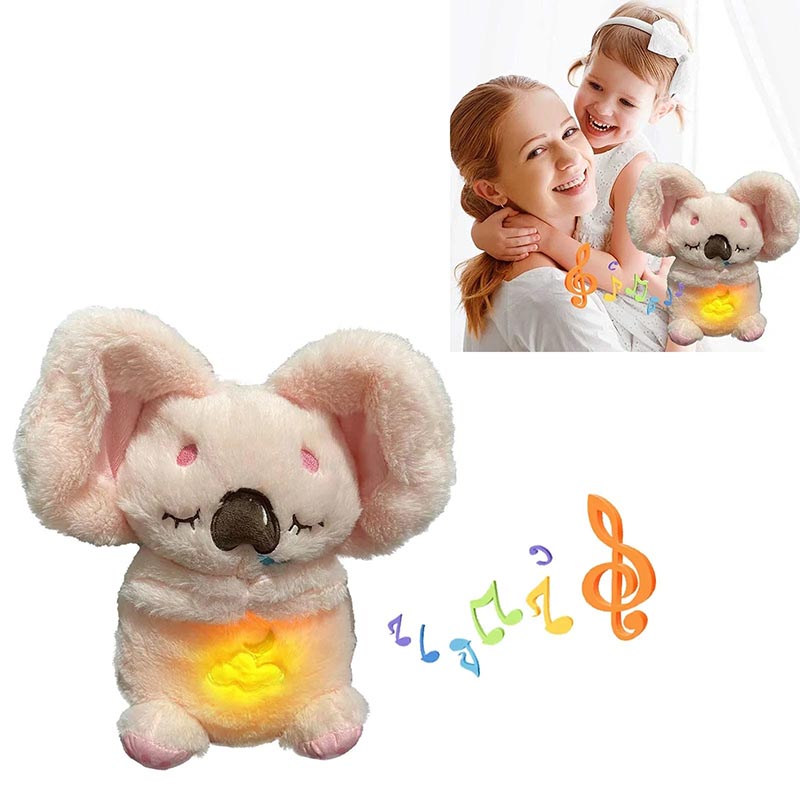
Traditional plush toys have always provided comfort, but AI companions are changing how that comfort is delivered and perceived. From my experience, AI does not replace the emotional role of plush—it amplifies it by adding responsiveness, memory, and presence.
AI companion plush toys move beyond one-way interaction. Instead of being passive objects, they can respond to voice, tone, or routine. This creates a sense of being “heard,” which is especially meaningful for children, elderly users, or individuals seeking emotional reassurance. Even simple behaviors—such as greeting a user by name or responding differently over time—can deepen emotional attachment.
Another key shift is continuity. Traditional plush comfort is situational, while AI plush can offer ongoing interaction. Through basic learning or preset behavioral patterns, AI companions feel more personal. This is why many AI plush products are positioned not just as toys, but as bedtime companions, learning partners, or wellness-oriented products.
Importantly, AI plush reduces emotional barriers. Unlike apps or robots, plush toys feel safe and non-judgmental. The softness and familiar form help users accept AI interaction more naturally, especially in sensitive emotional contexts.
From a market perspective, this transition expands usage scenarios. Plush toys move from short-term play items to long-term emotional products, increasing lifetime value and repeat engagement.
| Plush Role | Traditional Plush | AI Companion Plush | Emotional Impact |
|---|---|---|---|
| Interaction style | Passive comfort | Responsive interaction | Deeper attachment |
| Emotional function | Soothing presence | Active companionship | Ongoing reassurance |
| Usage duration | Situational | Long-term engagement | Higher retention |
| User relationship | Object-based | Relationship-based | Stronger bond |
| Market positioning | Toy category | Emotional support product | Expanded audience |
For brands and retailers, this shift matters. AI companion plush toys are not competing only with toys—they are entering the emotional wellness and lifestyle space. Manufacturers that understand this transformation can help brands design products that feel supportive, trusted, and meaningful—not just interactive.
What Core Technologies Power AI Companion Plush Toys in Today’s Market?
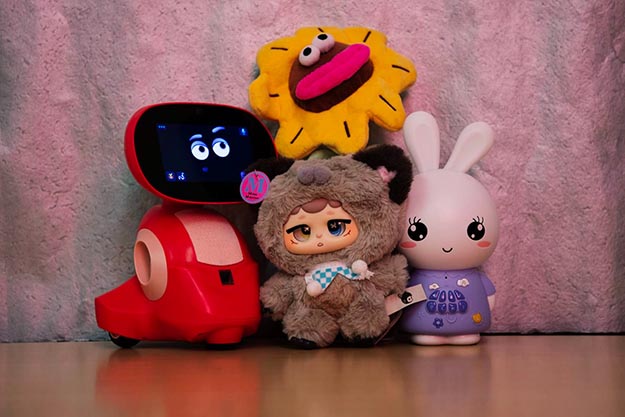
AI companion plush toys feel magical on the outside, but their success depends on a small set of practical, production-ready technologies working reliably inside. From my experience, the most successful products avoid over-complex systems and instead combine stable hardware with focused AI functions.
At the core is voice interaction technology. Most AI plush toys rely on microphones optimized for near-field voice pickup and speakers tuned for soft, fabric-covered output. Voice recognition is often limited to key phrases or wake words to improve accuracy and reduce processing load.
Edge AI processing is another important enabler. Rather than sending all data to the cloud, many AI plush toys process basic commands locally. This reduces latency, improves privacy, lowers connectivity dependence, and makes products more acceptable to parents and retailers.
Connectivity, when used, is usually selective and controlled. Bluetooth or Wi-Fi modules may support content updates or parental settings, but core interaction is designed to work offline. This ensures the plush toy remains functional even without apps or accounts.
Power management is equally critical. AI plush toys must balance responsiveness with battery life. Low-power chips, sleep modes, and event-based activation help extend usage time while maintaining reliable interaction.
Finally, modular system design allows manufacturers to scale. Swappable AI modules, standardized boards, and consistent firmware reduce development cost and simplify mass production.
| Technology Component | Primary Function | Why It’s Used | Production Benefit |
|---|---|---|---|
| Microphone & speaker | Voice input/output | Natural interaction | Familiar user experience |
| Edge AI chip | Local processing | Low latency & privacy | Stable performance |
| Limited connectivity | Updates & settings | Optional enhancement | Retail-friendly |
| Power management | Battery efficiency | Longer usage time | Fewer returns |
| Modular architecture | System flexibility | Easier scaling | Cost control |
For brands and buyers, understanding these core technologies helps separate feasible AI plush products from experimental concepts. Manufacturers that focus on stable, scalable technology stacks enable AI companion plush toys that are not only engaging—but also reliable, compliant, and ready for retail growth.
How Safety, Privacy, and Ethical Concerns Shape AI Plush Toy Development
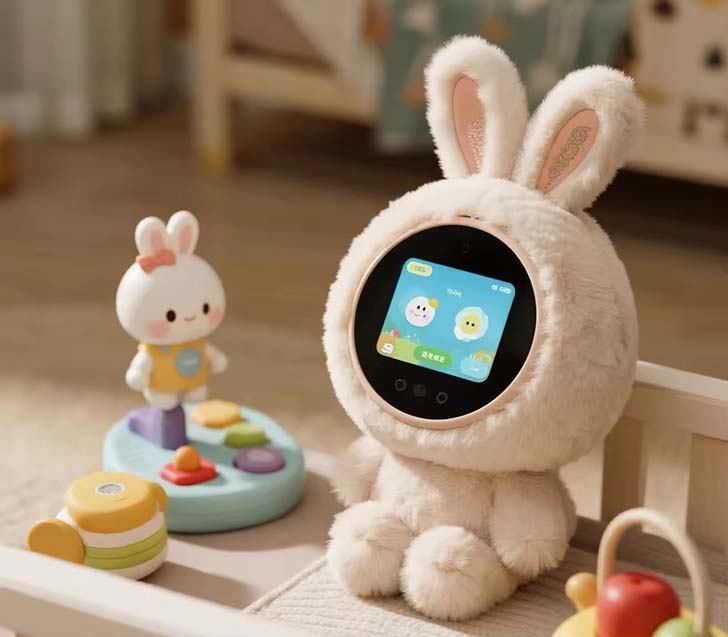
As AI enters the plush toy category, safety is no longer limited to physical risks. From my experience, privacy, data handling, and ethical design choices now directly affect whether an AI plush toy can succeed in retail.
The first concern is child safety at the physical level. AI plush toys still need to meet all traditional toy safety standards, including seam strength, small parts control, battery security, and durability. The addition of microphones, chips, and wiring increases inspection sensitivity, especially for products intended for young children.
Privacy is the next major issue. AI plush toys that use voice interaction raise concerns about what is recorded, where data is processed, and how long it is stored. Many successful products limit or eliminate cloud recording altogether, relying on edge AI processing to avoid transmitting personal data. This approach reduces compliance risk and increases parent trust.
Ethical use of AI is also becoming a design requirement. Retailers and licensors are increasingly cautious about toys that could encourage dependency, inappropriate content, or unclear emotional boundaries. Responsible AI plush design focuses on supportive interaction, not emotional manipulation.
Transparency plays a key role. Clear labeling, parental controls, and simple explanations of AI behavior help buyers feel informed and in control. Products that hide AI behavior or data usage often face resistance, regardless of technical sophistication.
| Concern Area | Common Risk | Responsible Approach | Market Benefit |
|---|---|---|---|
| Physical safety | Electronics failure | Full toy safety compliance | Retail acceptance |
| Voice privacy | Unclear data use | Edge processing | Parent trust |
| Data storage | Cloud dependency | Minimal data retention | Lower compliance risk |
| Ethical interaction | Emotional overreach | Supportive behavior design | Brand credibility |
| Transparency | Hidden AI behavior | Clear communication | Consumer confidence |
For brands, safety and ethics are no longer secondary considerations. Manufacturers that integrate privacy-first architecture, ethical interaction design, and full safety compliance help AI companion plush toys gain acceptance from parents, retailers, and regulators alike.
How Brands and Manufacturers Are Positioning AI Plush for Retail and Licensing
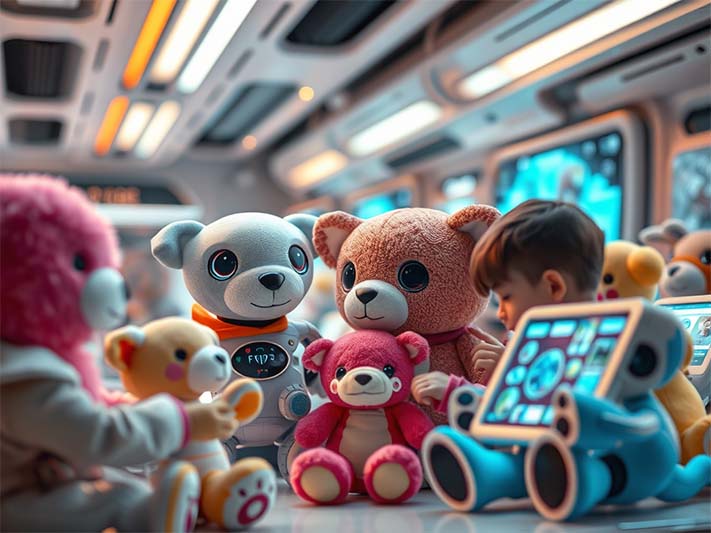
As AI companion plush toys move closer to mainstream retail, positioning becomes as important as technology itself. From my experience, successful brands do not sell AI plush as “smart devices.” Instead, they position them as emotion-first plush products with enhanced intelligence.
In retail, AI plush is often framed around storytelling and purpose. Rather than highlighting technical specifications, brands focus on what the plush can do emotionally—listening, responding, comforting, or guiding simple routines. This approach helps retailers explain value quickly and reduces hesitation from parents who may feel cautious about AI.
Licensing strategy is another major factor. Character IP, educational brands, and wellness-oriented licenses help AI plush gain trust faster. Familiar characters lower adoption barriers and give AI behavior a clear personality framework. From a manufacturing perspective, licensed AI plush also benefit from clearer tone guidelines and content boundaries, which simplify development.
Manufacturers play a critical role in positioning by offering modular AI platforms. This allows brands to apply the same core technology across different characters, themes, or retail channels without rebuilding systems from scratch. Consistency improves scalability and cost control.
Retailers also prefer AI plush that fit existing categories. Products positioned as bedtime companions, learning helpers, or emotional support items integrate more smoothly into current shelf structures than experimental tech toys.
| Positioning Element | Weak Approach | Effective Strategy | Retail Advantage |
|---|---|---|---|
| Product narrative | Tech-focused | Emotion-focused | Faster acceptance |
| AI explanation | Complex features | Simple benefits | Lower hesitation |
| Licensing use | Optional add-on | Trust-building tool | Stronger credibility |
| Platform strategy | One-off builds | Modular systems | Scalable assortment |
| Category fit | New tech category | Familiar plush roles | Easier placement |
For brands and buyers, positioning determines whether AI plush feels approachable or risky. Manufacturers that support clear narratives, licensing alignment, and modular development help AI companion plush toys move from novelty to trusted retail products.
How AI Companion Plush Toys Will Influence the Future of the Plush Toy Industry
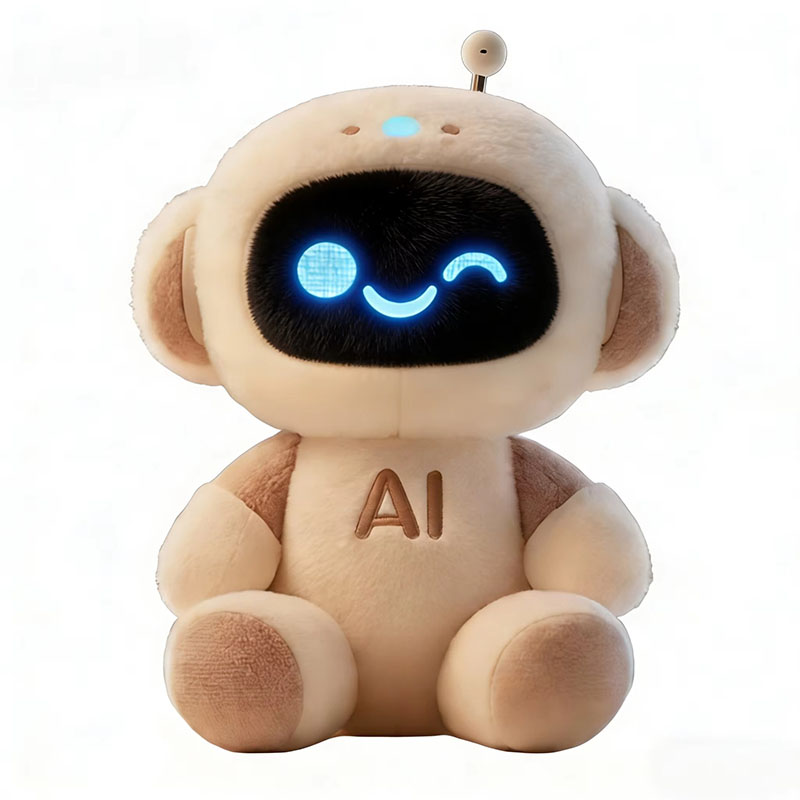
AI companion plush toys are not a short-term trend. From my experience, they are reshaping how plush products are designed, valued, and sustained over time. Their influence goes beyond adding technology—it changes the role plush toys play in both retail and everyday life.
One major shift is product lifecycle extension. Traditional plush toys peak at launch and decline quickly. AI plush, especially those with updateable content or adaptive behavior, can remain relevant longer. This reduces pressure on constant new designs and allows brands to build ongoing product lines rather than one-off items.
Another influence is category expansion. Plush toys are moving into spaces traditionally occupied by educational tools, wellness products, and lifestyle accessories. This opens new distribution channels and attracts older age groups, including teens and adults, without abandoning core child audiences.
AI plush also changes manufacturer capability requirements. Factories are no longer evaluated only on sewing quality and capacity. They are expected to manage electronics integration, firmware consistency, compliance, and privacy-aware design. Manufacturers that evolve with these needs will become long-term strategic partners.
From an industry perspective, AI companions encourage platform thinking. Brands can develop families of plush products that share AI logic while expressing different characters or themes. This improves efficiency, consistency, and brand recognition across markets.
Finally, AI plush elevates expectations. Consumers begin to expect interaction, responsiveness, and emotional intelligence as part of premium plush experiences. This will gradually redefine what “high-quality plush” means in the global market.
| Industry Area | Traditional Plush Model | AI Companion Influence | Long-Term Impact |
|---|---|---|---|
| Product lifecycle | Short & seasonal | Extended & adaptive | Higher lifetime value |
| Target audience | Mainly children | Multi-age segments | Market expansion |
| Manufacturer role | Soft goods focused | Tech-integrated partner | Higher entry barrier |
| Brand strategy | SKU-driven | Platform-driven | Scalable growth |
| Quality perception | Material & finish | Experience & interaction | New value standards |
For brands and buyers, the rise of AI companion plush toys signals a structural shift. Those who prepare early—by choosing the right technology scope, partners, and positioning—will help define the next generation of the plush toy industry rather than react to it.
Conclusion
AI companion plush toys are transforming plush from passive comfort items into interactive, emotional products. Brands that balance technology, safety, ethics, and scalability will lead this evolution with confidence.
📧 Contact: [email protected]
🌐 Visit: https://kinwintoys.com