Skip to content
In plush toy manufacturing, “design capability” is often misunderstood.
Many factories claim they can “design,” but in reality, they may only follow instructions—or rely heavily on external designers. True design capability goes far beyond drawing shapes. It determines whether a plush toy can move smoothly from concept to sample, from sample to mass production, and from idea to a product that sells well and performs reliably.
This guide helps buyers evaluate a factory’s real design capability, focusing on practical execution rather than surface-level claims.
What Does “Design Capability” Mean in Plush Toy Manufacturing?
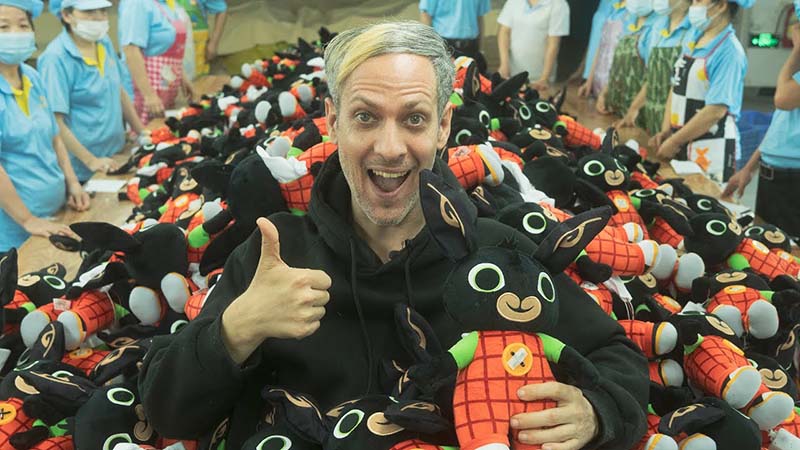
Design capability in plush toy manufacturing is not just about creativity—it’s about translating ideas into producible, repeatable physical products.
Is Design About Aesthetics, or About Manufacturability?
In plush manufacturing, good design balances:
- Visual appeal
- Structural feasibility
- Material behavior
- Production efficiency
A design that looks great on paper may fail in plush form due to:
- Poor shape stability
- Weak seams or stress points
- Incompatible fabrics or embroidery density
Factories with true design capability consider manufacturing constraints from the very beginning, not as an afterthought.
Do They Think Like Designers or Like Problem Solvers?
Strong design capability shows in how a factory approaches challenges.
Instead of saying:
- “This can’t be done”
- “That’s how clients usually draw it”
Experienced design-driven factories ask:
- How can this shape be supported internally?
- Where should seams go to preserve expression?
- Which details must stay, and which can be adjusted?
Manufacturers with integrated design thinking—such as Kinwin—tend to treat design as a problem-solving process, not just an artistic task.
Defining Design Capability Evaluation Table
| Aspect | Strong Design Capability | Weak Design Signal |
|---|---|---|
| Design focus | Feasible & producible | Visual only |
| Early considerations | Structure & materials | Ignored until sampling |
| Problem approach | Offers solutions | Rejects or copies |
| Design mindset | Engineering + aesthetics | Drawing-only |
| Outcome consistency | Sample matches intent | Frequent redesigns |
Do They Have In-House Designers or Rely on Outsourcing?
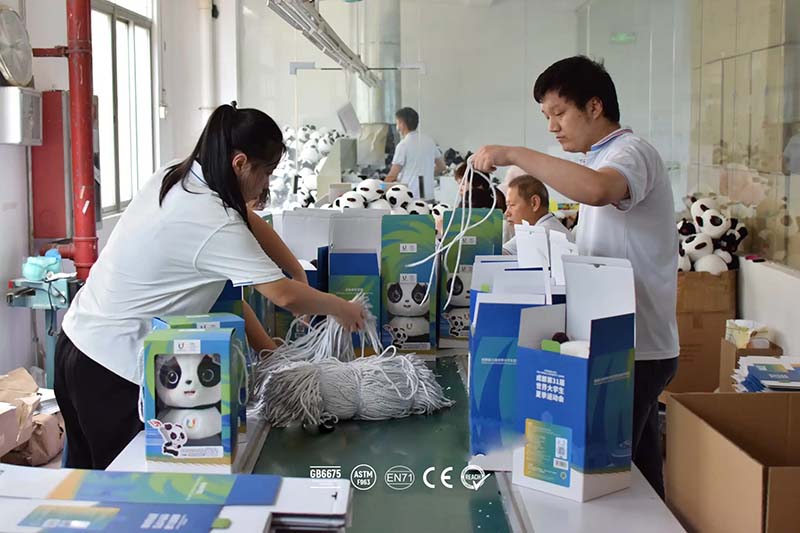
Whether a factory has in-house design capability or depends on external designers makes a huge difference in speed, accuracy, and long-term collaboration.
Why In-House Design Teams Matter for Custom Plush Projects
Factories with in-house designers usually offer:
- Faster feedback on feasibility and revisions
- Better communication between design, sampling, and production
- Fewer misunderstandings during artwork interpretation
- Stronger protection of your design intent
Because designers work closely with pattern makers and production teams, decisions are made with real manufacturing constraints in mind—not just visual preference.
This often leads to:
- Fewer sample rounds
- Lower development risk
- More predictable timelines
What Are the Risks of Fully Outsourced Design?
When design is outsourced, several risks increase:
- Slower revision cycles due to back-and-forth communication
- Designers unfamiliar with the factory’s actual production methods
- Loss of detail or intent during handover
- Limited accountability when issues arise
Outsourced designers may produce attractive drawings, but they are often disconnected from real plush construction and mass production realities.
Factories with integrated design resources—such as Kinwin—can usually respond faster, adjust designs more accurately, and maintain consistency from concept to bulk production.
In-House vs Outsourced Design Comparison Table
| Evaluation Area | In-House Design | Outsourced Design |
|---|---|---|
| Revision speed | Fast & direct | Slower, multi-step |
| Production alignment | High | Often limited |
| Design accuracy | Better intent retention | Risk of misinterpretation |
| Communication | Internal & efficient | Fragmented |
| Long-term support | Continuous improvement | Project-based only |
How Well Can They Translate 2D Artwork Into 3D Plush Structure?
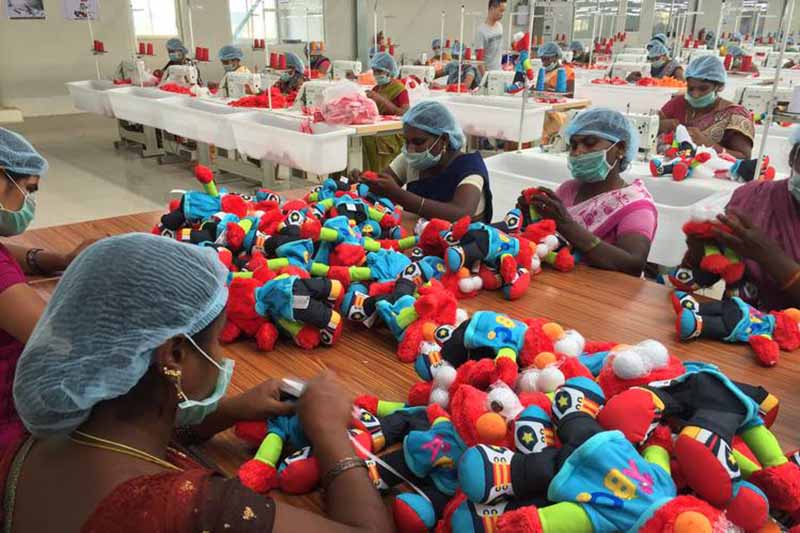
The true test of a factory’s design capability is not how well they understand drawings—but how accurately they turn flat artwork into a stable, expressive 3D plush toy.
Can They Read Between the Lines of 2D Artwork?
Most 2D artwork is incomplete from a manufacturing perspective. It often lacks:
- Side and back views
- Thickness and proportion information
- Seam placement guidance
Factories with strong design capability don’t wait for perfect files. They:
- Ask the right clarification questions
- Infer structure based on experience
- Propose seam layouts and internal shapes
If a factory simply copies the front view without addressing missing information, the resulting plush is likely to look off-balance or lose character.
Do They Control Shape, Proportion, and Expression in 3D?
Successful 2D-to-3D translation requires understanding how:
- Fabric stretch affects facial proportions
- Stuffing density changes expression
- Seam direction influences curvature and symmetry
Experienced design teams can explain why a plush’s face looks right or wrong—and how to fix it.
Manufacturers with hands-on design-to-sample workflows—such as Kinwin—typically iterate structure and pattern together, rather than treating design and sampling as separate steps.
2D to 3D Translation Capability Evaluation Table
| What to Evaluate | Strong Capability | Weak Signal |
|---|---|---|
| Artwork interpretation | Asks clarifying questions | Copies front view only |
| Structural inference | Proposes seams & volume | Waits for instructions |
| Proportion control | Balanced & consistent | Distorted or flat |
| Expression accuracy | Matches design intent | Loses character |
| Iteration efficiency | Pattern-led refinements | Trial-and-error samples |
Can They Simplify Designs for Mass Production Without Losing Character?
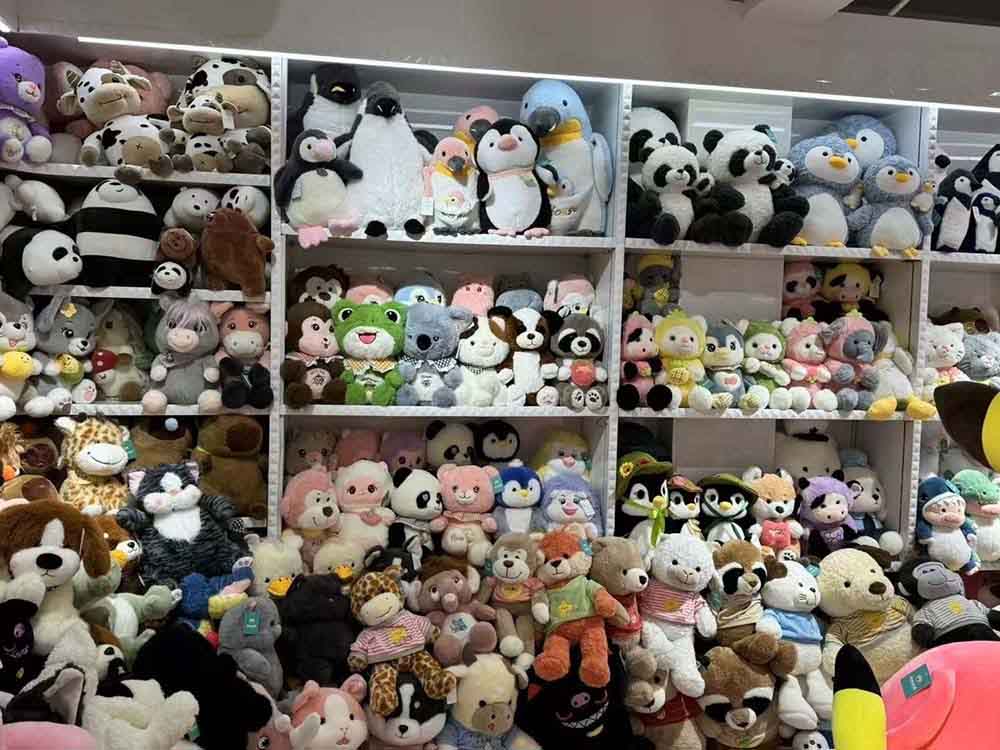
Great plush designs don’t just look good in samples—they survive scale.
A factory’s design capability is proven by how well it simplifies designs for mass production without stripping away personality or brand identity.
Do They Know Which Details Must Stay—and Which Can Be Simplified?
Professional design teams understand that not every detail carries equal weight.
Strong factories can:
- Identify the “character-defining” elements (eyes, mouth, silhouette)
- Simplify secondary details without changing the overall feel
- Explain trade-offs between cost, durability, and appearance
Be cautious if a factory:
- Simplifies randomly to cut cost
- Removes key facial or structural features
- Can’t explain why certain details were changed
Smart simplification is intentional—not just cheaper.
Can They Optimize Design for Efficiency, Consistency, and Yield?
Mass production introduces real constraints:
- Sewing time and error rates
- Fabric utilization and waste
- Consistency across hundreds or thousands of units
Factories with real design capability:
- Reduce unnecessary seams or layers
- Adjust embroidery or printing for production stability
- Improve pattern balance to reduce rework
Manufacturers that design with production in mind—such as Kinwin—tend to deliver samples that scale smoothly into bulk orders with minimal surprises.
Design Simplification for Mass Production Evaluation Table
| What to Evaluate | Strong Design Capability | Risk Signal |
|---|---|---|
| Key detail retention | Character stays intact | Identity diluted |
| Simplification logic | Intentional & explained | Cost-cutting only |
| Production efficiency | Fewer errors & rework | High defect risk |
| Consistency at scale | Stable across batches | Variation increases |
| Cost-quality balance | Transparent trade-offs | Silent downgrades |
How Experienced Are They With Different Plush Styles and Categories?
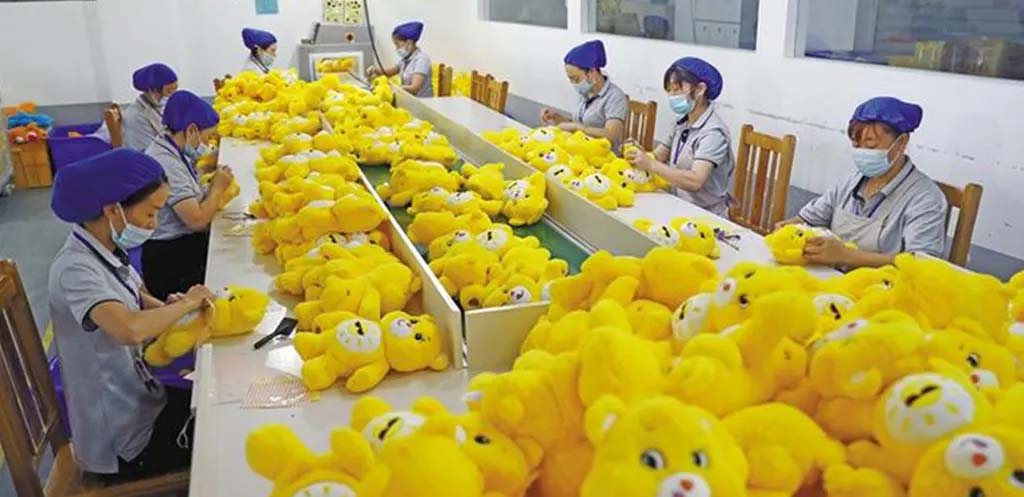
Design capability becomes much more reliable when it’s been tested across multiple plush styles and product categories.
Factories that only handle one narrow style often struggle when a project slightly steps outside that comfort zone.
Have They Designed Plush Toys Across Different Styles?
Ask whether the factory has experience with:
- Cartoon vs. realistic plush styles
- Minimalist vs. detail-heavy designs
- Soft, round shapes vs. structured forms
- Small plush keychains vs. large stuffed animals
Each style introduces different design challenges—especially in facial expression, proportion, and construction balance. Factories with broad design exposure can adapt principles from one style to another instead of starting from zero.
Can They Explain How Design Approach Changes by Category?
True experience shows when a factory can explain why the design approach changes.
For example:
- Why keychain plush need stronger seam reinforcement
- Why large plush require different internal support logic
- Why realistic animal plush demand different pattern segmentation
If explanations stay generic (“we can do all styles”), that often signals limited hands-on design depth.
Factories with accumulated cross-category experience—such as Kinwin—tend to talk about differences, not just similarities.
Plush Style & Category Experience Evaluation Table
| What to Evaluate | Strong Experience | Weak Signal |
|---|---|---|
| Style range | Multiple distinct styles | Single narrow style |
| Category coverage | Various plush formats | One main product type |
| Design adaptability | Adjusts approach logically | One-size-fits-all |
| Explanation depth | Style-specific reasoning | Generic claims |
| Risk awareness | Anticipates category issues | Discovers issues late |
Do They Understand Materials, Patterns, and Construction From a Design Perspective?
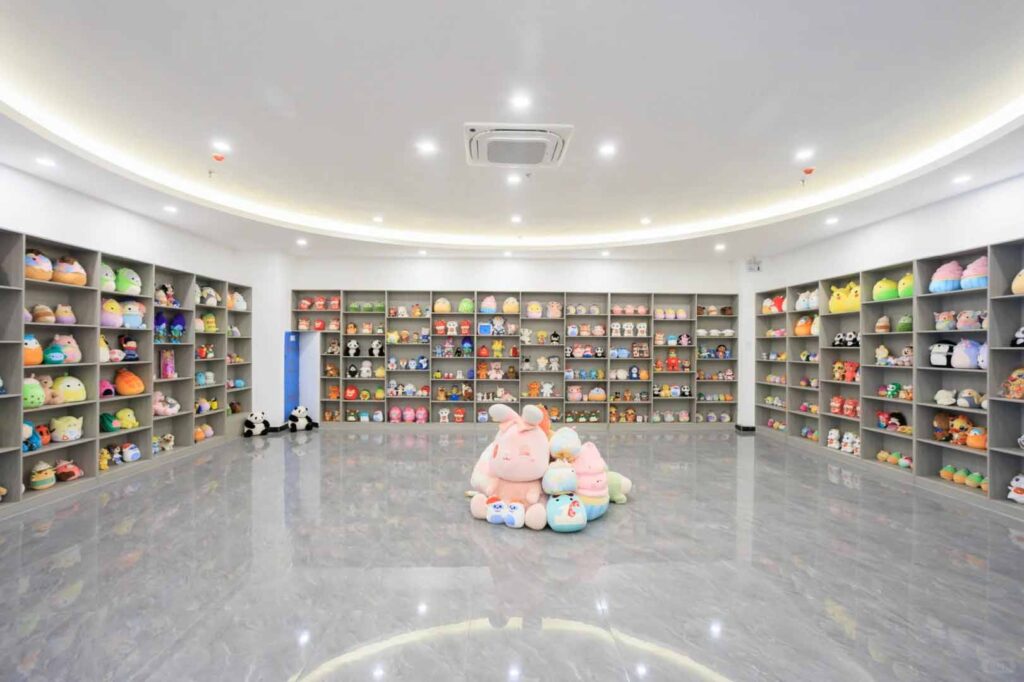
Design capability is fully proven only when a factory can connect material behavior, pattern logic, and construction methods into one coherent design system. This is where experienced design teams stand apart.
Can They Design With Material Behavior in Mind?
From a design perspective, materials are not interchangeable.
Strong design teams understand:
- How pile length affects facial proportion and embroidery clarity
- How fabric stretch changes pattern dimensions
- How different fillings influence shape retention and hand-feel
Instead of offering material options blindly, they explain why certain fabrics or fillings work better for specific designs—and what risks come with each choice.
If material selection is treated as a last step, design quality often suffers during production.
Do Pattern and Construction Decisions Support the Design Intent?
Patterns and construction are not just technical steps—they are design tools.
Experienced factories can:
- Place seams to preserve expression and symmetry
- Adjust pattern balance to improve structure and durability
- Modify construction to support design details without overcomplication
They design patterns for production, not just for samples—ensuring that the original intent survives mass manufacturing.
Factories with integrated design-to-production thinking—such as Kinwin—typically align material choice, pattern logic, and construction method from the earliest design stage.
Design-Level Material & Construction Evaluation Table
| What to Evaluate | Strong Design Capability | Risk Signal |
|---|---|---|
| Material understanding | Explains behavior & impact | Lists options only |
| Fabric–design match | Chosen intentionally | Arbitrary selection |
| Pattern logic | Supports shape & expression | Causes distortion |
| Construction choices | Design-driven | Convenience-driven |
| Scale readiness | Works in mass production | Sample-only thinking |
Conclusion
A factory’s design capability determines far more than how a plush toy looks—it determines whether an idea can become a stable, scalable, and commercially successful product.
Truly capable plush manufacturers understand design as a system: translating 2D artwork into balanced 3D structure, simplifying designs for mass production without losing character, adapting across different plush styles, and aligning materials, patterns, and construction from a design-first perspective.
Factories that lack this capability often rely on trial-and-error sampling, leading to delays, cost overruns, and compromises that weaken the final product.
If you’re evaluating plush manufacturers and want a partner who can design with production, risk, and long-term scalability in mind, Kinwin welcomes open discussions to help you assess design feasibility, reduce development risk, and bring your plush concepts to market with confidence.