Skip to content
Remote factory audits are no longer a backup option—they’re a standard part of modern plush toy sourcing.
Whether you’re working across borders, managing tight timelines, or evaluating multiple suppliers at once, a well-structured remote audit can reveal nearly as much as an on-site visit—if you know what to ask for and how to interpret what you see.
This guide walks you through how to audit a plush toy factory remotely in a practical, buyer-focused way, helping you verify capability, reduce risk, and move forward with confidence before committing to production.
What Information Should You Collect Before a Remote Factory Audit?

A successful remote audit starts before any video call happens.
The goal is to gather enough baseline information to understand who you’re dealing with—and to know what to verify during live reviews.
Have You Collected Complete and Consistent Company Information?
Before scheduling any calls, request core business information, including:
- Full registered company name
- Factory address (not just city or province)
- Business license or registration details
- Official website and company email domain
Consistency matters. If the company name, address, or contact details differ across documents, emails, and invoices, that’s a signal to slow down and verify further.
Established manufacturers—such as Kinwin—typically provide this information proactively because transparency simplifies trust-building.
Do You Understand Their Claimed Capabilities Before Seeing Them?
A remote audit is more effective when you already know what the factory claims to do.
Before live review, ask for:
- Product categories they produce regularly
- Estimated monthly and peak production capacity
- In-house vs. outsourced processes
- Key export markets served
This allows you to compare what they say with what you later see on video. Gaps between the two are often more revealing than any single visual detail.
Pre-Audit Information Checklist
| Information to Collect | Why It Matters | Red Flag if Missing |
|---|---|---|
| Registered company name | Confirms legal identity | Name inconsistencies |
| Factory address | Verifies real location | City-only answers |
| Business documents | Confirms legitimacy | Refusal or delays |
| Product focus | Sets audit expectations | Overly broad claims |
| Capacity claims | Enables later verification | Vague estimates |
How Can You Verify a Factory’s Real Location and Legal Identity Online?
Before trusting what you see on a video call, it’s essential to confirm who the factory legally is and where it actually operates.
Many sourcing risks can be filtered out simply by doing this step carefully.
Can the Factory’s Legal Information Be Cross-Checked Across Sources?
A legitimate plush toy factory should have consistent, verifiable records across multiple channels.
You can cross-check:
- Company name on business license vs. proforma invoice
- Address listed on the website vs. official registration
- Bank account name vs. registered company name
Inconsistencies—such as different company names on documents or requests to pay a personal account—are strong warning signs.
Reliable manufacturers understand this process and cooperate willingly. Companies like Kinwin usually expect buyers to perform these checks and see them as part of normal due diligence.
Does the Online Footprint Match Their Manufacturing Claims?
A factory’s online presence often reveals more than intended.
Look for:
- How long their website has existed
- Whether content focuses on manufacturing processes or just sales language
- Consistent factory photos or videos over time
Be cautious if:
- The website looks newly created with stock images
- Social or online presence is inconsistent or inactive
- Factory photos appear generic or reused
A real factory usually leaves a long-term digital footprint, even if it doesn’t invest heavily in marketing.
Online Identity Verification Table
| Verification Step | Reliable Signal | Risk Indicator |
|---|---|---|
| Company name match | Same across all documents | Name variations |
| Registered address | Specific & consistent | Vague location |
| Payment entity | Company bank account | Personal account |
| Website history | Long-term presence | Newly created site |
| Factory visuals | Consistent, real images | Stock or reused photos |
Which Production Processes Should Be Reviewed via Video or Live Calls?
A remote audit only works if you see the right things.
Office tours, sample displays, or meeting rooms may look professional—but they tell you very little about real production capability.
The goal of a video or live call is to verify whether the factory truly controls the core plush toy manufacturing processes.
Are You Shown the Actual Plush Toy Production Areas?
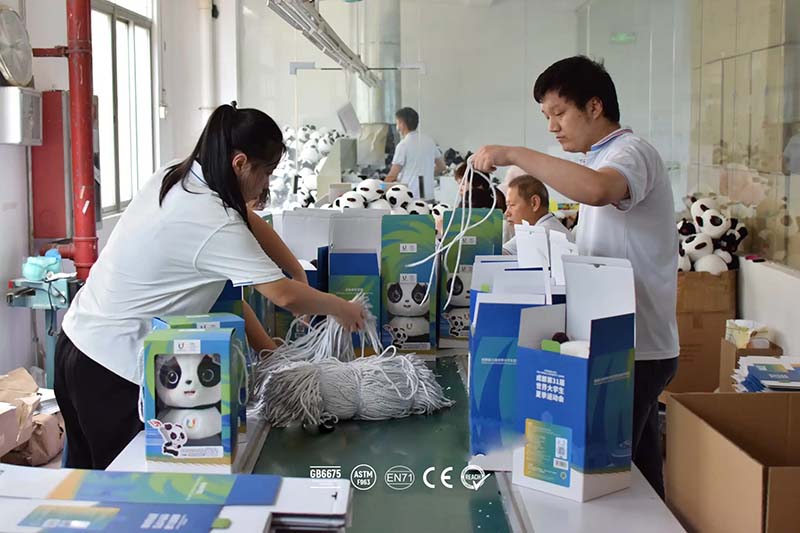
During a live video call, you should specifically request to see:
- Fabric cutting areas
- Sewing and assembly lines
- Stuffing and shaping stations
- Finishing, trimming, and packing areas
Be cautious if the supplier:
- Only shows offices or showrooms
- Avoids walking through production floors
- Uses pre-recorded videos instead of live walkthroughs
A legitimate factory should be able to move through production areas in real time and explain what each section does.
Manufacturers with structured operations—such as Kinwin—are usually comfortable walking buyers through real production environments because it reflects their daily operations.
Can They Explain Processes Clearly While Showing Them Live?
What matters is not just what you see, but how well it’s explained.
While viewing production, listen for:
- Clear explanations of each process step
- Awareness of quality control points
- Consistent answers that match earlier claims
If explanations feel scripted, vague, or disconnected from what’s shown on camera, it may indicate limited process control or reliance on third-party workshops.
Video Audit Production Checklist
| What to Review | What You Should See | Red Flag |
|---|---|---|
| Live walkthrough | Real-time factory tour | Pre-recorded clips |
| Cutting & sewing | Active plush production | Empty or avoided areas |
| Stuffing & finishing | Defined workstations | Unclear processes |
| Process explanation | Clear, confident answers | Vague or rehearsed |
| Consistency | Matches prior claims | Contradictions |
How Do You Assess Equipment, Capacity, and Workforce Remotely?
You don’t need to physically stand on the factory floor to judge production strength—but you do need to ask the right questions and observe the right details.
A remote audit can reveal whether capacity claims are realistic or exaggerated, especially when equipment and workforce are reviewed together.
Can You See Equipment That Matches Their Claimed Production Scale?
During a live video call, ask to see:
- Embroidery machines (quantity and type)
- Cutting machines or fabric spreading areas
- Stuffing machines or stuffing stations
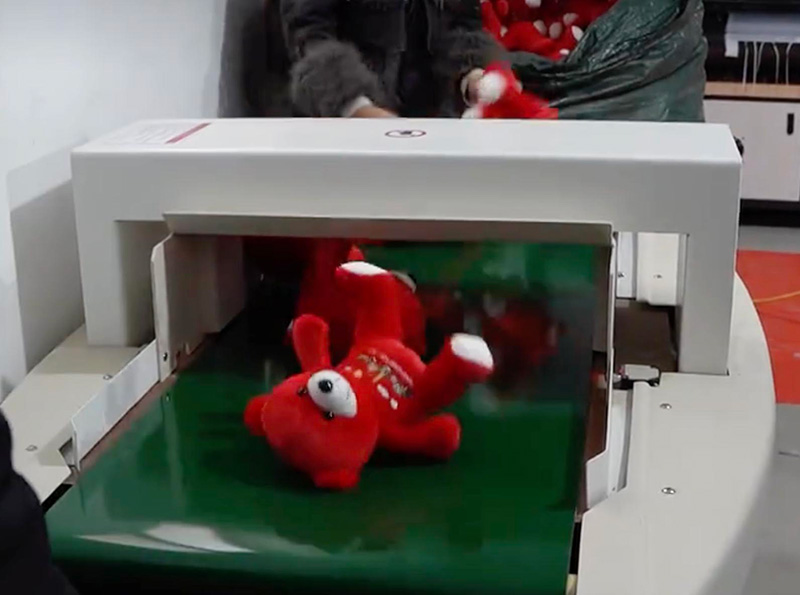
- Needle detectors or metal detectors
Pay attention to:
- Whether machines are actively in use
- The condition and maintenance level
- Whether the number of machines aligns with claimed output
If a factory claims large capacity but only shows minimal or idle equipment, that mismatch is a strong warning sign.
Factories with real production scale—such as Kinwin—can usually explain how each machine supports daily output, not just show it briefly on camera.
Does the Workforce Appear Stable and Structured?
Equipment alone doesn’t produce plush toys—people do.
During the call, observe:
- Approximate number of workers on each line
- Whether roles are clearly divided (sewing, stuffing, QC)
- Whether workers appear experienced and focused
Ask follow-up questions like:
- How many workers are assigned to plush toys full-time?
- How does staffing change during peak season?
Vague answers or reluctance to discuss workforce details often indicate unstable labor arrangements or outsourced production.
Remote Capacity & Workforce Audit Table
| What to Assess | Reliable Signal | Risk Indicator |
|---|---|---|
| Equipment quantity | Matches claimed capacity | Too few machines |
| Machine usage | Actively in operation | Idle or staged |
| Maintenance level | Clean and functional | Poorly maintained |
| Worker presence | Clear, structured teams | Few or unclear roles |
| Staffing explanation | Specific and logical | Vague or evasive |
What Quality Control Points Must Be Checked Without an On-Site Visit?
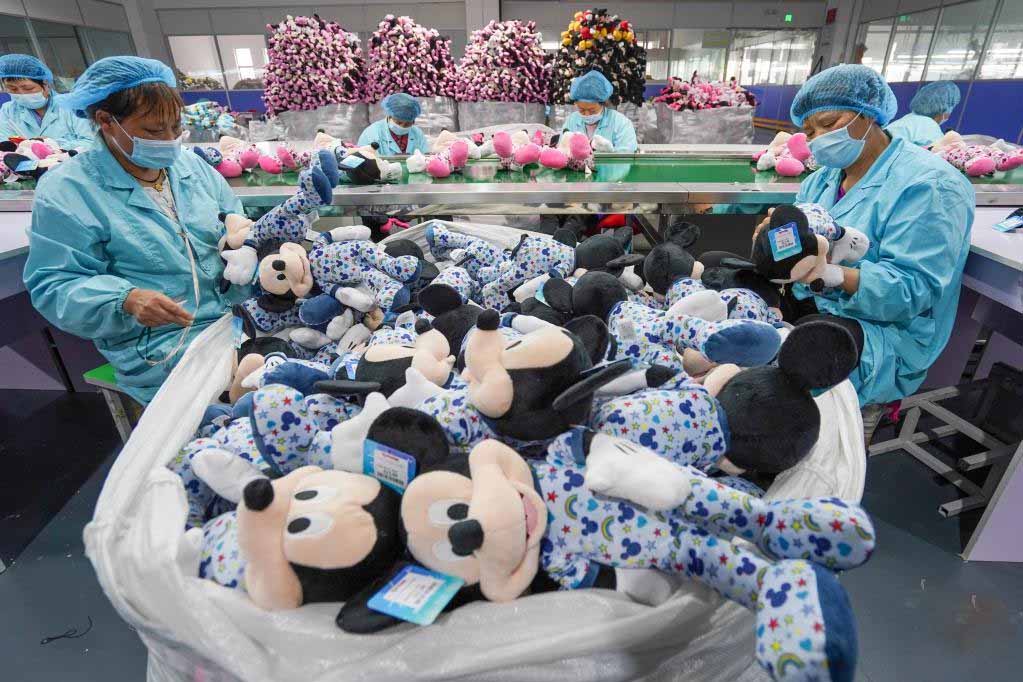
Quality control is often the hardest part to verify remotely—but it’s also where many factories reveal their true standards.
A strong factory doesn’t rely on vague statements like “we check everything.”
They can show, explain, and document how quality is controlled at each key stage.
Do They Have Clear QC Checkpoints Throughout Production?
During a remote audit, ask the factory to explain and show:
- Incoming material inspection (fabric, filling, accessories)
- In-process checks during sewing and assembly
- Final inspection before packing and shipment
Watch for whether QC is:
- A dedicated role, not an afterthought
- Documented with checklists or standards
- Integrated into daily production, not only at the end
If QC is described only as “our workers are experienced,” that usually means there is no formal quality system in place.
Factories with mature processes—such as Kinwin—can usually walk buyers through their QC flow clearly, even over video.
Can They Show Real QC Records or Live Inspection in Progress?
One of the strongest remote signals is evidence.
Ask whether they can:
- Show QC checklists or inspection records
- Walk through a live inspection on camera
- Explain common defects they watch for
If a factory avoids showing records or insists everything is “internal,” it limits transparency and increases risk.
A willingness to show QC in action—even briefly—often indicates confidence in their process.
Remote Quality Control Audit Table
| QC Aspect | Reliable Factory Signal | Risk Indicator |
|---|---|---|
| QC stages | Multiple checkpoints defined | Final check only |
| QC responsibility | Dedicated inspectors | No clear role |
| Documentation | Checklists or records shown | “We just check” |
| Live inspection | Willing to demonstrate | Refuses to show |
| Defect awareness | Explains common issues | Claims no defects |
How Can You Review Safety Compliance and Testing Readiness Remotely?
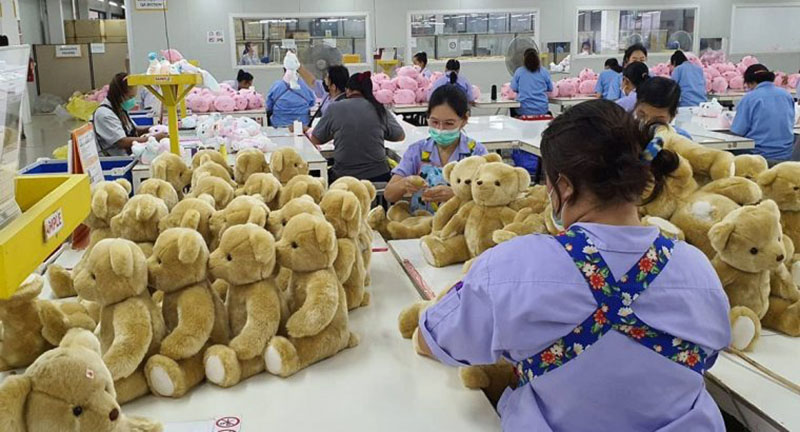
Safety compliance doesn’t start at the testing lab—it starts at the factory.
Even without an on-site visit, you can still evaluate whether a plush toy factory is prepared, knowledgeable, and disciplined when it comes to compliance.
Can the Factory Clearly Explain Applicable Safety Standards?
A factory that is truly compliance-ready doesn’t wait for buyers to instruct them.
They can explain which standards apply based on:
- Target market (US, EU, UK, etc.)
- Product type (toy, gift, promotional item)
- Age grading and intended use
During a remote audit, listen for whether they can:
- Name relevant standards (e.g., ASTM F963, EN71)
- Explain when testing should be conducted
- Describe how design or material changes affect testing
Vague answers like “we always pass tests” are a warning sign. Real compliance knowledge is specific and contextual.
Manufacturers with strong export experience—such as Kinwin—usually discuss compliance as part of the production plan, not as a last-minute task.
Can They Show Evidence of Testing Readiness and Past Compliance?
Remote audits should include proof, not just promises.
Ask whether they can:
- Share past test reports (with sensitive info covered if needed)
- Explain how they prepare samples for testing
- Show internal safety checks for small parts, seams, or materials
Also pay attention to whether:
- Reports match the materials currently used
- Certificates are product-specific, not generic
- The factory welcomes verification with third-party labs
Factories that avoid showing compliance history or discourage verification often lack real testing discipline.
Remote Safety & Compliance Audit Table
| What to Review | Compliance-Ready Factory | Risk Indicator |
|---|---|---|
| Standard knowledge | Explains applicable regulations | Generic answers |
| Testing timing | Planned in production flow | “Test later” |
| Past reports | Real, relevant examples | Reused or vague |
| Material alignment | Matches current specs | Mismatched info |
| Verification attitude | Encourages lab checks | Avoids validation |
Conclusion
Auditing a plush toy factory remotely is not about replacing an on-site visit—it’s about making informed decisions when distance, time, or budget makes travel impractical.
By collecting the right information upfront, verifying legal identity online, reviewing real production processes via live video, assessing equipment and workforce remotely, checking quality control systems, and evaluating safety compliance readiness, buyers can significantly reduce sourcing risks—even without stepping into the factory.
A well-executed remote audit doesn’t rely on trust alone. It relies on structure, transparency, and consistency across what a factory claims, shows, and documents.
If you’re evaluating plush toy factories remotely and want experienced guidance on what to verify—and what risks to watch for—Kinwin welcomes open discussions to help you audit suppliers, interpret findings, and move forward with confidence before production begins.