Sourcing plush toys internationally can be highly rewarding—but it also comes with real risks.
As demand for custom plush toys grows, so does the number of unverified suppliers, trading companies pretending to be factories, and outright scams targeting overseas buyers. Many of these issues don’t look suspicious at first. In fact, they often appear professional, responsive, and convincing—until money has already changed hands.
The key to avoiding scams is not luck. It’s knowing where problems usually start, how they present themselves, and what to check before committing.
This guide breaks down the most common plush toy sourcing scams and shows you how to spot warning signs early—before they turn into losses.
What Are the Most Common Plush Toy Sourcing Scams?
Not all scams look dramatic or obvious.
In plush toy sourcing, most scams are quiet, procedural, and gradual, designed to gain trust step by step.
Are “Factory” Suppliers Actually Middlemen or Non-Existent?
One of the most common scams involves suppliers claiming to be manufacturers when they are not.
Typical patterns include:
- Using generic factory photos taken from the internet
- Avoiding direct answers about production facilities
- Refusing live video calls or factory walkthroughs
- Giving inconsistent answers about factory location or scale
In some cases, the “supplier” is only a trading middleman with no production control. In worse cases, there is no real factory at all.
This becomes dangerous when:
- Quality issues arise and no one takes responsibility
- Timelines slip and explanations keep changing
- The supplier disappears once payment is made
Do Some Suppliers Take Deposits and Then Delay or Disappear?
Another frequent scam pattern happens after initial payment.
Warning scenarios include:
- Asking for full payment or unusually high deposits upfront
- Providing excuses instead of progress updates
- Delaying samples repeatedly without clear reasons
- Suddenly becoming unresponsive after funds are received
These scams often rely on creating urgency (“materials are limited,” “price will go up today”) to rush buyers into paying before proper verification.
Experienced buyers know that pressure is rarely a good sign in manufacturing.
Common Plush Toy Sourcing Scam Patterns Table
| Scam Pattern | How It Usually Appears | Risk to Buyer |
|---|---|---|
| Fake factory identity | Vague or inconsistent factory info | No production control |
| Middleman posing as factory | Avoids facility proof | Quality & timeline risk |
| Deposit-before-verification | Pushes fast payment | Financial loss |
| Endless delays | Repeated excuses | Missed launches |
| Sudden silence | Stops replying after payment | Total loss |
How Can You Verify a Supplier’s Real Factory Identity?
Before discussing price, MOQ, or timelines, the most important step is confirming who you are actually dealing with.
Many plush toy sourcing problems can be avoided simply by verifying whether a supplier truly controls production.
Can They Provide Verifiable Proof of a Physical Factory?
A legitimate plush toy factory should be able to provide specific, verifiable evidence, such as:
- Clear factory address (not just a city name)
- Recent photos or videos of their own production lines
- Live video calls showing cutting, sewing, or stuffing areas
Be cautious if a supplier:
- Reuses generic factory images
- Avoids showing production areas in real time
- Gives inconsistent answers about factory size or location
Real manufacturers are usually comfortable showing their facilities because transparency builds trust. Established factories like Kinwin typically have no issue explaining how their factory is structured and what processes are handled in-house.
Do Their Business Details Match Their Claims?
Another effective verification step is checking whether business information aligns with what they claim.
You can look for:
- Company name consistency across email, invoice, and website
- Business license or registration details matching the supplier name
- Export records or long-term online presence
Red flags appear when:
- The company name changes between documents
- Payment is requested to a personal account
- Online presence looks very new or inconsistent
These mismatches often indicate trading agents or high-risk intermediaries rather than real factories.
Factory Identity Verification Checklist
| What to Verify | Reliable Factory Signal | Warning Sign |
|---|---|---|
| Factory address | Specific & consistent | Vague or changing |
| Facility proof | Live or recent factory videos | Stock images only |
| Process visibility | Shows real production steps | Avoids walkthroughs |
| Company name | Matches documents & website | Name inconsistencies |
| Payment entity | Registered company account | Personal accounts |
Which Warning Signs Appear During Early Communication?
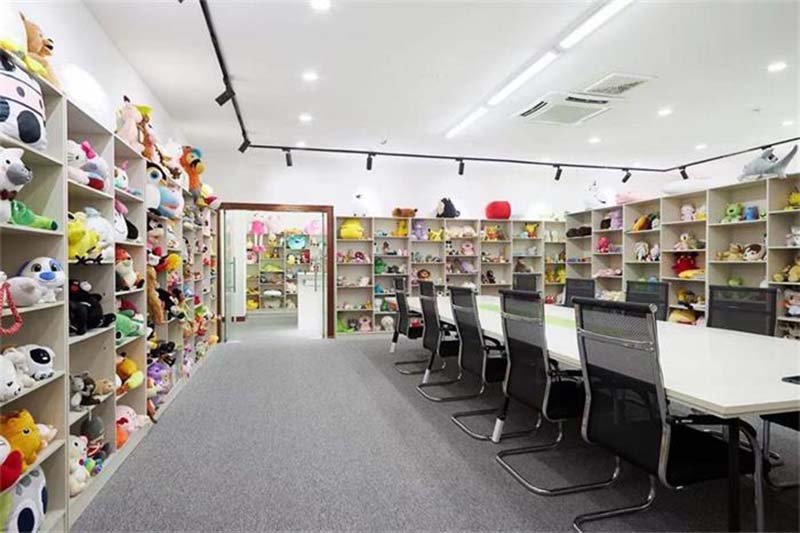
Many plush toy sourcing scams can be detected before any payment is made—often during the very first conversations.
Early communication reveals how a supplier thinks, works, and handles pressure.
Do They Use Pressure Tactics or Overly Perfect Promises?
One of the clearest red flags is manufactured urgency.
Be cautious if a supplier:
- Pushes you to “pay today” to secure pricing
- Claims materials are “almost sold out”
- Guarantees unrealistically fast timelines
- Says “no problem” to every request without questions
Real manufacturing involves planning, trade-offs, and clarification. Suppliers who rush decisions or promise perfection often aim to close payment before verification.
Professional manufacturers—such as Kinwin—typically ask clarifying questions, explain constraints, and avoid pressuring buyers into premature commitments.
Are Answers Vague, Inconsistent, or Evasive?
Another warning sign is communication that sounds responsive but lacks substance.
Watch for patterns like:
- Ignoring specific technical questions
- Changing answers when the same question is asked twice
- Avoiding written confirmation of key details
- Using generic replies instead of project-specific answers
These behaviors often indicate that the supplier lacks real control—or is deliberately avoiding traceable commitments.
Early Communication Red Flag Table
| Warning Sign | How It Appears | Risk Indicator |
|---|---|---|
| Urgency pressure | “Price only valid today” | Payment trap |
| Overpromising | “We can do everything” | Lack of planning |
| Vague answers | Avoids specifics | No real control |
| Inconsistent replies | Details keep changing | Unreliable partner |
| No written confirmation | Verbal-only promises | Dispute risk |
How Do Fake Certificates and Test Reports Usually Look?
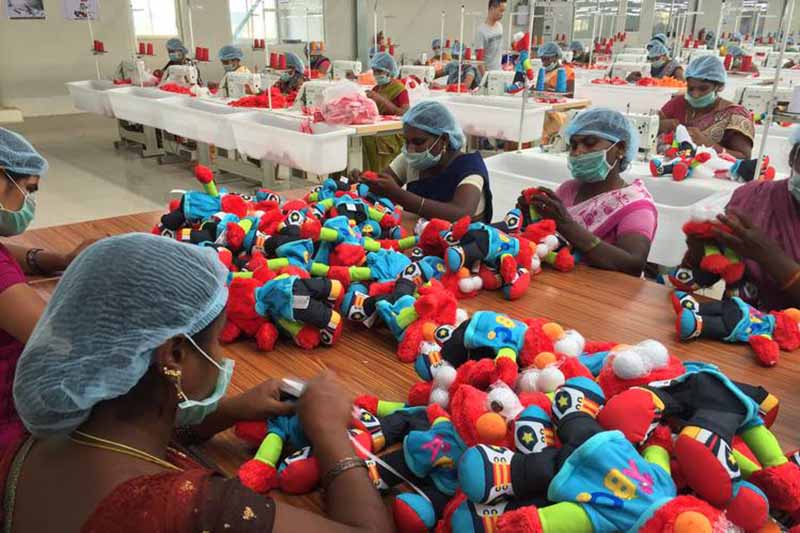
Fake or misleading certificates are a common tactic used to gain trust quickly—especially with overseas buyers who may not verify documents carefully.
These files often look professional at first glance, but once you know what to check, the warning signs become clear.
Do the Certificates Lack Traceable Lab Information?
Legitimate test reports should always be traceable and verifiable.
Red flags include:
- Missing or generic laboratory names
- No report number or unclear issue date
- Lab names that don’t appear in recognized accreditation databases
- Certificates provided only as images, not official PDFs
A real report should clearly state:
- The testing laboratory
- The report number
- The product description and materials tested
- The applicable standards (e.g., ASTM F963, EN71)
Experienced manufacturers—such as Kinwin—typically encourage buyers to verify reports directly with the lab, because legitimate results can withstand scrutiny.
Do the Reports Match Your Actual Product and Materials?
Another common scam is using recycled or mismatched test reports.
Watch out if:
- The product photos in the report don’t match your design
- Materials listed differ from what you discussed
- The report date predates your project by years
- One report is reused for multiple different products
Compliance testing is material- and design-specific. If anything changes—fabric, filling, accessories—the report may no longer be valid.
Suppliers who dismiss these details often lack real compliance capability or hope buyers won’t look closely.
Fake Certificate Detection Table
| What to Check | Legitimate Document | Warning Sign |
|---|---|---|
| Lab name | Recognized & verifiable | Unknown or generic |
| Report number | Clear & traceable | Missing or reused |
| Product match | Matches your design | Generic or unrelated |
| Material listing | Accurate & specific | Vague or incorrect |
| Verification | Encourages lab check | Avoids verification |
What Payment Terms Help Reduce Scam Risks?
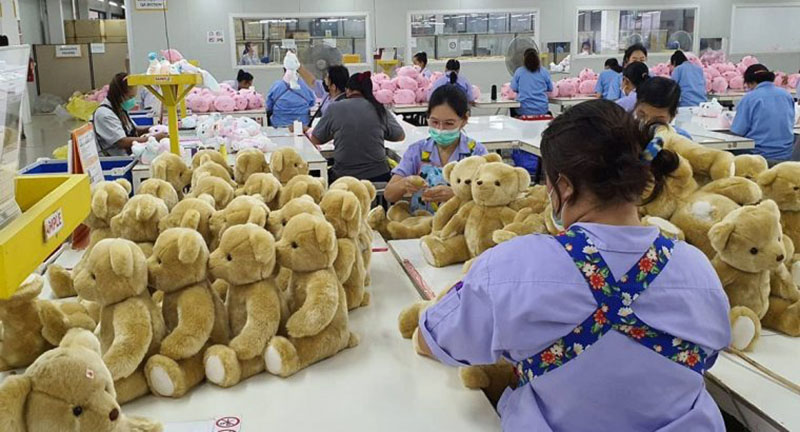
Payment terms are one of the most effective tools you have to protect yourself when sourcing plush toys—especially with a new supplier.
Scammers often rely on unsafe payment structures to secure money quickly and disappear before any real production happens.
Are You Avoiding High-Risk or Irreversible Payment Methods?
One of the biggest red flags is being pushed toward irreversible payments.
High-risk situations include:
- Requests to pay 100% upfront
- Payments to personal bank accounts
- Requests for cryptocurrency or unofficial transfer channels
- Refusal to use company accounts listed on official documents
These methods offer little to no protection if something goes wrong.
Safer sourcing practices usually involve staged payments and company-verified accounts. Legitimate manufacturers rarely object to reasonable, structured payment terms.
Do the Payment Stages Match Real Production Milestones?
A trustworthy plush toy supplier structures payments around real progress, not promises.
Common low-risk structures include:
- Sample fee paid separately and clearly
- Deposit paid only after sample approval
- Balance paid after inspection or before shipment
If a supplier demands large payments before samples, specifications, or timelines are confirmed, it significantly increases your risk exposure.
Professional manufacturers—such as Kinwin—typically align payment stages with tangible production milestones, ensuring accountability on both sides.
Payment Risk Reduction Table
| Payment Term | Lower Risk Practice | High-Risk Warning |
|---|---|---|
| Upfront payment | Partial deposit after approval | 100% before work |
| Payment recipient | Registered company account | Personal account |
| Payment method | Traceable & reversible | Irreversible transfers |
| Payment stages | Linked to production steps | No milestones |
| Supplier attitude | Open to discussion | Pushes urgency |
How Can Samples Reveal Potential Fraud?
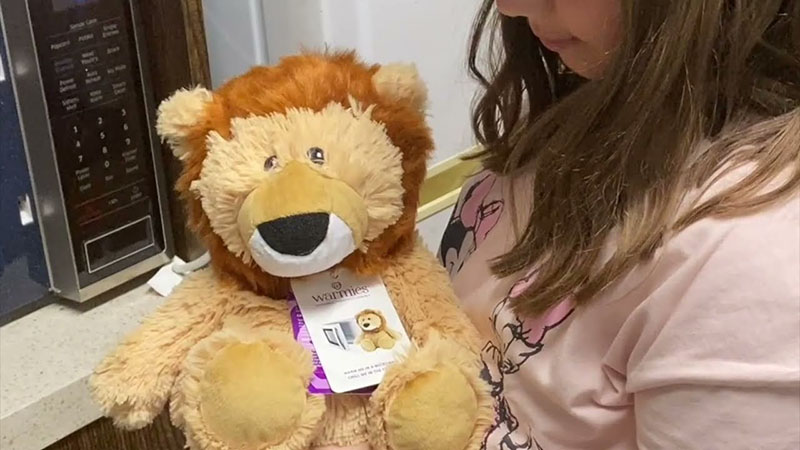
Samples are not just about quality—they are one of the strongest fraud detection tools in plush toy sourcing.
Scammers often struggle to deliver samples that are consistent, transparent, and traceable. If you know what to watch for, samples can quickly expose whether a supplier is legitimate or risky.
Do Sample Delays, Excuses, or Quality Swings Raise Red Flags?
Warning signs often appear during the sampling stage, such as:
- Endless delays with vague explanations
- Repeated changes to sample timelines
- Quality that fluctuates dramatically between versions
- Samples that don’t match agreed specifications
These patterns often indicate that the supplier:
- Does not control production
- Is outsourcing unpredictably
- Is stalling after receiving payment
A reliable factory treats sampling as a structured process, with clear timelines, documented changes, and consistent execution.
Are Sample Materials and Processes Transparent and Traceable?
Another key check is how openly the supplier explains the sample.
Ask:
- What materials were used, and are they production-grade?
- Who made the sample—the same team as bulk production?
- What will change (if anything) in mass production?
Be cautious if the supplier:
- Avoids explaining materials or techniques
- Uses “sample-only” upgrades without disclosure
- Cannot clearly connect the sample to real production
Experienced manufacturers—such as Kinwin—usually encourage buyers to scrutinize samples closely, because transparency builds long-term trust.
Sample-Based Fraud Detection Table
| Sample Behavior | Legitimate Supplier | Potential Scam Signal |
|---|---|---|
| Sample timeline | Clear & realistic | Constant delays |
| Spec consistency | Matches agreed details | Keeps changing |
| Quality stability | Consistent across versions | Large fluctuations |
| Material disclosure | Fully transparent | Vague or evasive |
| Sample-to-bulk link | Clearly explained | “Bulk will be different” |
Conclusion
Avoiding scams when sourcing plush toys is not about being suspicious of everyone—it’s about having a clear verification process and knowing where risks usually hide.
By understanding common scam patterns, verifying real factory identity, watching early communication behavior, checking the authenticity of certificates, using safer payment terms, and carefully evaluating samples, buyers can significantly reduce sourcing risks before any serious loss occurs.
Most scams succeed not because buyers are careless, but because warning signs are subtle and easy to overlook—especially when timelines feel tight or offers seem attractive.
If you’re sourcing plush toys and want a transparent, experience-based perspective before committing to a supplier, Kinwin welcomes open discussions to help you verify suppliers, assess risks, and move forward with confidence.