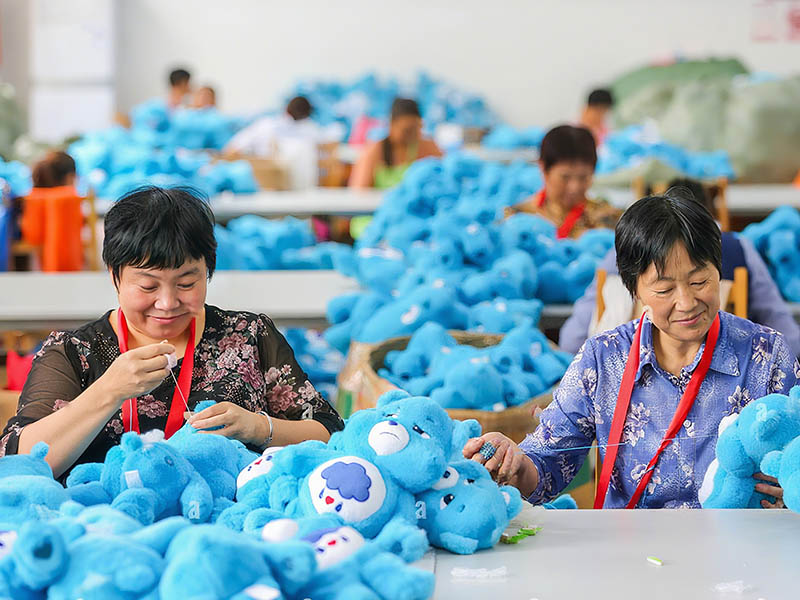
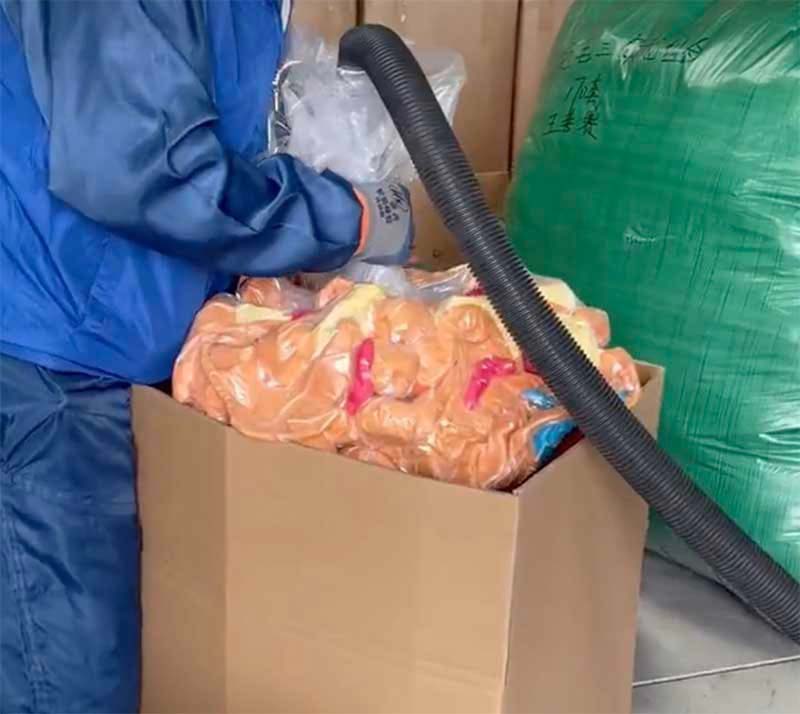
Managing quality across wholesale stuffed animal bulk orders is not about reacting to problems—it is about designing control before volume amplifies risk. From my experience working with brands and retailers handling large orders, most quality failures do not come from a single mistake, but from unclear standards that drift as production scales.
At small quantities, informal checks may seem sufficient. At wholesale volume, however, even minor inconsistencies multiply quickly—leading to returns, rework, or brand damage. That is why professional buyers focus on building a clear quality framework before bulk production begins.
The first and most critical step is setting the right quality standards and specifications early—before materials are ordered or lines are scheduled.
What Quality Standards and Specifications Should Be Set Before Bulk Production Begins?
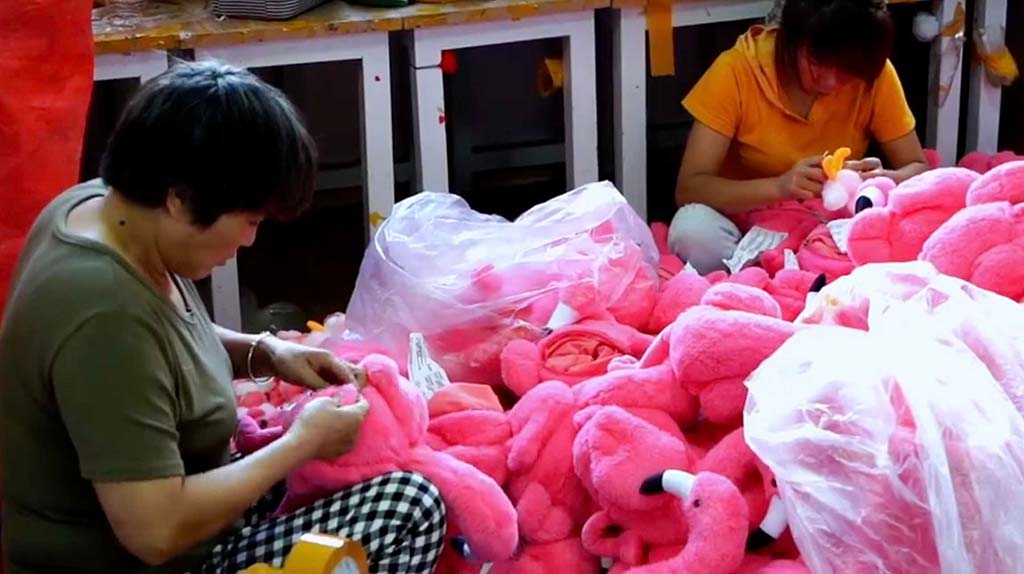
Before bulk production starts, quality must be defined in measurable terms, not left to interpretation. From my experience, wholesale orders fail most often when buyers and factories assume they share the same understanding of “acceptable quality.”
The foundation is a clear product specification. This includes size tolerances, fabric type and weight, filling density, stitch quality, seam strength, color references, and finishing details. Professional buyers document these elements so inspectors and operators work toward the same target.
Workmanship standards are equally important. Buyers should define what is acceptable and what is not—loose threads, minor asymmetry, embroidery alignment, and surface defects. Without written standards, decisions become subjective and inconsistent across lines or shifts.
Safety-related specifications must also be locked early. Requirements for attachment strength, small parts, labeling, and compliance testing should be confirmed before production planning. Changing safety criteria mid-production creates delays and risk.
Another key element is tolerance agreement. Stuffed animals are handmade products, and variation exists. Professional buyers agree on acceptable tolerances in advance, reducing disputes during final inspection.
Finally, standards must be communicated clearly. Specifications should be shared in written form, supported by photos, measurements, or approved samples, so they are understood at every production stage.
| Quality Definition Area | Unclear Practice | Professional Practice | Bulk Order Impact |
|---|---|---|---|
| Product specs | Verbal agreement | Written specifications | Consistent output |
| Workmanship rules | Subjective judgment | Defined accept/reject | Fewer disputes |
| Safety requirements | Confirmed later | Locked before production | Compliance stability |
| Tolerance levels | Not discussed | Agreed in advance | Predictable inspection |
| Communication | Sales-only | Shared across teams | Stable execution |
For wholesale buyers, setting quality standards early turns quality control from a reactive task into a managed system. When expectations are clear before bulk production begins, consistency becomes achievable—even at large volumes.
How Do Approved Samples and Golden Samples Control Consistency Across Large Orders?

In wholesale bulk production, approved samples and golden samples are not formalities—they are the physical standards that anchor quality. From my experience, factories that manage these references well deliver far more consistent results across large orders and repeated runs.
An approved sample defines what the buyer accepts at the development stage. It confirms design, materials, workmanship, and overall feel. However, once production begins, relying only on memory or photos of this sample leads to drift—especially across multiple lines or shifts.
That is why professional operations establish a golden sample. This is the locked reference used on the production floor, in QC rooms, and during inspections. It represents the exact quality benchmark inspectors and supervisors must follow throughout the entire order.
Placement and access matter. Golden samples should be physically present at cutting, sewing, stuffing, and final inspection points. When operators can compare work directly against the reference, deviations are corrected early instead of discovered at the end.
Control also means version discipline. Only one golden sample per SKU should be active at a time. If changes are approved, the golden sample must be updated, labeled, and redistributed. Multiple “reference versions” are a common cause of inconsistency.
Finally, samples support training and alignment. New operators and inspectors use golden samples to understand expectations quickly, which is critical when scaling labor for bulk orders.
| Reference Control Area | Weak Practice | Professional Practice | Consistency Outcome |
|---|---|---|---|
| Approved sample use | Development only | Baseline for golden sample | Clear quality target |
| Golden sample role | Stored away | Used on production floor | Real-time alignment |
| Accessibility | QC only | Line & QC access | Early correction |
| Version control | Multiple references | Single active version | No confusion |
| Training support | Verbal explanation | Sample-based training | Faster consistency |
For wholesale buyers, approved and golden samples turn quality from an idea into a visible, enforceable standard. When every unit is compared against the same physical reference, consistency across large orders becomes manageable rather than accidental.
What In-Process Quality Control Measures Prevent Defects During Mass Production?

For wholesale bulk orders, the most effective quality control happens during production, not after it. From my experience, relying on final inspection alone allows small mistakes to multiply across thousands of units. In-process quality control (IPQC) is what stops defects early, when correction is still low-cost and fast.
The first measure is control point definition. Professional factories identify critical stages—cutting accuracy, embroidery placement, seam strength, stuffing balance, and closure quality—and assign checks at each point. These checks are planned, not random.
Responsibility is clearly assigned. Line leaders or trained IPQC staff inspect work at set intervals, comparing output against golden samples and workmanship standards. This keeps quality decisions consistent across shifts and operators.
Another key measure is early defect isolation. When issues are found, affected pieces are separated immediately. Production is adjusted before defects spread. In weak systems, production continues and problems are only addressed during final inspection—when rework becomes expensive.
Process data also plays a role. Professional operations record defect types and frequencies by line or process. This allows supervisors to identify training gaps, equipment issues, or material problems in real time.
Finally, IPQC must scale with volume. As order size increases, inspection frequency and coverage increase as well. Using the same IPQC level for 1,000 units and 20,000 units is a common failure point.
| IPQC Measure | Weak Practice | Professional Practice | Defect Prevention Effect |
|---|---|---|---|
| Control points | Undefined | Critical stages defined | Early detection |
| Inspection ownership | No clear role | Assigned IPQC/line leaders | Consistent decisions |
| Defect handling | Rework later | Immediate isolation | Limited spread |
| Data tracking | Not recorded | Logged & reviewed | Root-cause control |
| Volume scaling | Fixed checks | IPQC scales with volume | Stable bulk output |
For wholesale buyers, strong in-process quality control turns mass production into a controlled system instead of a gamble. When defects are caught early and processes are corrected in real time, large orders remain consistent and predictable.
How Can AQL Inspections and Third-Party Checks Scale with Wholesale Volumes?
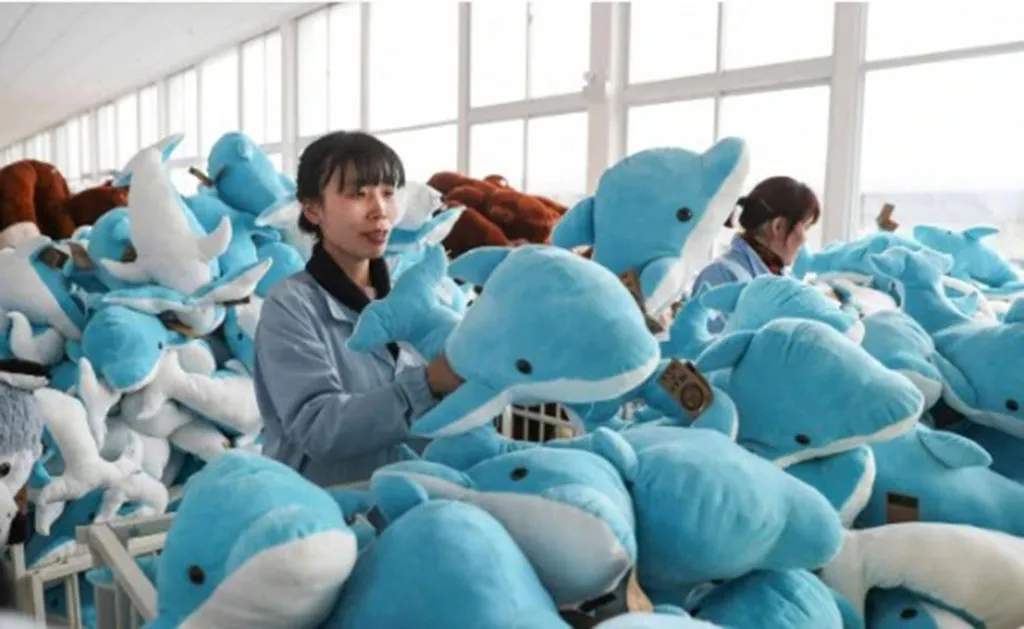
AQL inspections and third-party checks are most effective when they are used as scalable confirmation tools, not as the only quality gate. From my experience, wholesale buyers achieve the best results when AQL is aligned with in-process controls rather than replacing them.
The first step is selecting the right AQL level. Different products and markets tolerate different risk levels. Professional buyers choose AQL levels based on product category, end-use, and customer expectations—not a one-size-fits-all number. Higher-risk items may require tighter AQL thresholds.
Timing also matters. AQL inspections should be scheduled after production stabilizes, not at the very beginning or the last carton. This ensures the inspection reflects true production quality rather than early adjustments or end-of-line rush.
Third-party inspectors add value through independent verification. When inspectors follow buyer-approved checklists and compare against golden samples, they provide unbiased confirmation. Clear briefing is essential; vague instructions reduce inspection effectiveness.
Scaling with volume requires inspection planning. Larger orders may need multiple inspections—by lot, by shipment, or by production phase—rather than a single final check. This reduces the risk of large-scale rejection.
Finally, inspection results should feed back into process control. Findings are most useful when they trigger corrective actions, training updates, or process adjustments—closing the loop between inspection and production.
| Inspection Factor | Basic Approach | Scalable Best Practice | Wholesale Benefit |
|---|---|---|---|
| AQL selection | Fixed default | Risk-based AQL choice | Appropriate control |
| Inspection timing | End-only | Post-stabilization checks | Accurate results |
| Third-party role | Checklist only | Golden-sample comparison | Objective verification |
| Volume handling | Single inspection | Lot-based inspections | Reduced rejection risk |
| Feedback usage | Report only | Corrective action loop | Continuous improvement |
For wholesale buyers, AQL and third-party inspections work best as part of a larger quality system. When scaled thoughtfully, they protect large orders without slowing production or increasing unnecessary costs.
What Communication and Reporting Systems Help Catch Quality Issues Early?

In wholesale bulk orders, quality problems rarely appear suddenly. From my experience, most issues show early warning signs—but they are missed when communication and reporting systems are weak or informal.
The first requirement is structured reporting, not ad-hoc messages. Professional suppliers use simple but consistent reports to share production status, output quantities, and defect trends. These reports allow buyers to see patterns before they become serious problems.
Frequency matters. During bulk production, updates should be regular and predictable—for example, daily or every two to three days—rather than only when issues occur. Silence often hides risk, while steady reporting builds trust and control.
Visual evidence improves clarity. Photos or short videos from production lines, IPQC checks, and packing areas help buyers understand real conditions. Visual reporting reduces misinterpretation and avoids delays caused by long explanations.
Escalation rules are also critical. Professional systems define when and how issues must be reported—for example, defect rates exceeding thresholds, material shortages, or process deviations. Clear escalation prevents teams from “waiting to see” while defects spread.
Another key element is closed-loop communication. When buyers give feedback or corrective instructions, suppliers confirm actions taken and results achieved. This prevents repeated issues and ensures alignment across teams.
Finally, centralized records matter. Reports, inspection results, and corrective actions should be documented and traceable. This history becomes valuable data for future orders and continuous improvement.
| Communication Area | Weak System | Effective System | Quality Impact |
|---|---|---|---|
| Reporting style | Informal messages | Structured reports | Early visibility |
| Update frequency | Irregular | Fixed schedule | Predictable control |
| Information clarity | Text-only | Visual + data | Faster understanding |
| Issue escalation | Delayed | Threshold-based | Limited spread |
| Feedback handling | Assumed | Confirmed actions | Stable correction |
| Documentation | Scattered | Centralized records | Long-term learning |
For wholesale buyers, strong communication and reporting systems act as an early warning radar. When issues are visible early, corrective action is faster, cheaper, and far less disruptive to large orders.
How Do Long-Term Supplier Management and Data Tracking Improve Bulk Order Quality Over Time?
Managing quality across wholesale bulk orders becomes significantly easier when buyers treat suppliers as long-term partners supported by data, rather than short-term order executors. From my experience, stable quality at scale is rarely achieved in one order—it is built through accumulation and learning.
The foundation is historical data tracking. Defect types, frequency, root causes, and corrective actions from previous orders provide clear insight into where risks truly exist. Buyers who review this data before placing new orders can proactively adjust specifications, inspection focus, or production planning.
Consistency improves when suppliers understand they will be evaluated over time, not only per shipment. Long-term cooperation encourages factories to invest in training, process refinement, and internal accountability. Quality stops being a one-time target and becomes a shared performance metric.
Data also supports process optimization. Patterns often emerge—specific fabrics causing issues, certain processes producing higher defects, or particular SKUs requiring tighter control. These insights allow both sides to refine standards and reduce recurring problems.
Another advantage is predictable improvement. When corrective actions are tracked and verified, buyers can measure whether changes actually work. This prevents repeated discussions and builds confidence in future scale-ups.
Finally, long-term management strengthens alignment. Clear KPIs, review cycles, and shared goals turn quality control into a continuous system. Over time, fewer surprises occur because expectations, processes, and responses are already aligned.
| Long-Term Practice | Short-Term View | Data-Driven Partnership | Quality Outcome |
|---|---|---|---|
| Performance tracking | Order-by-order | Historical trend analysis | Fewer repeats |
| Supplier mindset | Transactional | Long-term accountability | Stable quality |
| Issue handling | Reactive | Preventive | Lower defect rates |
| Process improvement | Informal | Data-backed refinement | Predictable output |
| Collaboration | Limited | KPI-driven reviews | Continuous improvement |
For wholesale buyers, long-term supplier management supported by data transforms quality control from damage limitation into steady improvement. As orders repeat, quality becomes more consistent—not more risky.
Conclusion
Managing quality in wholesale stuffed animal bulk orders requires systems, not inspection alone. When standards, samples, process controls, inspections, communication, and data work together, large-scale quality becomes predictable and sustainable.
📧 Contact: [email protected]
🌐 Visit: https://kinwintoys.com