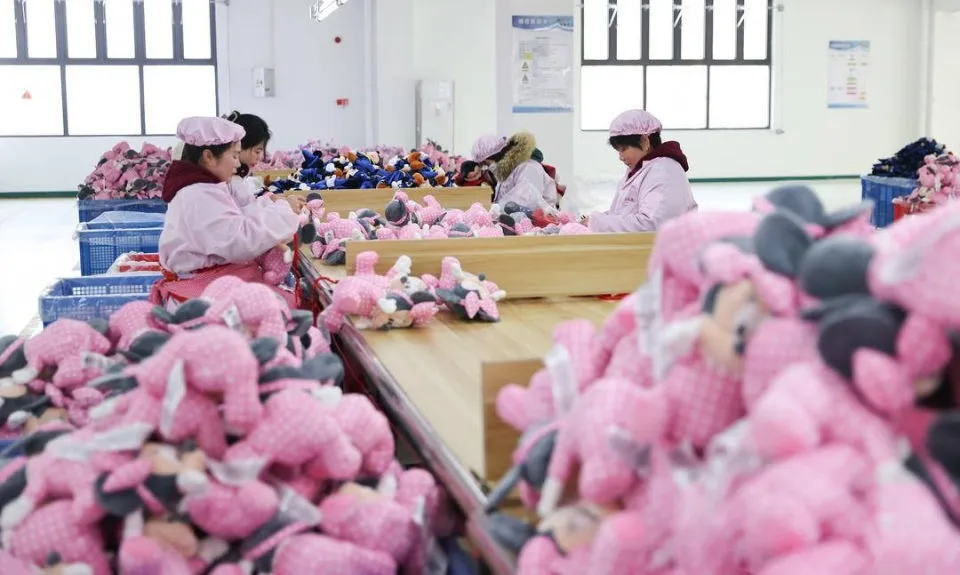
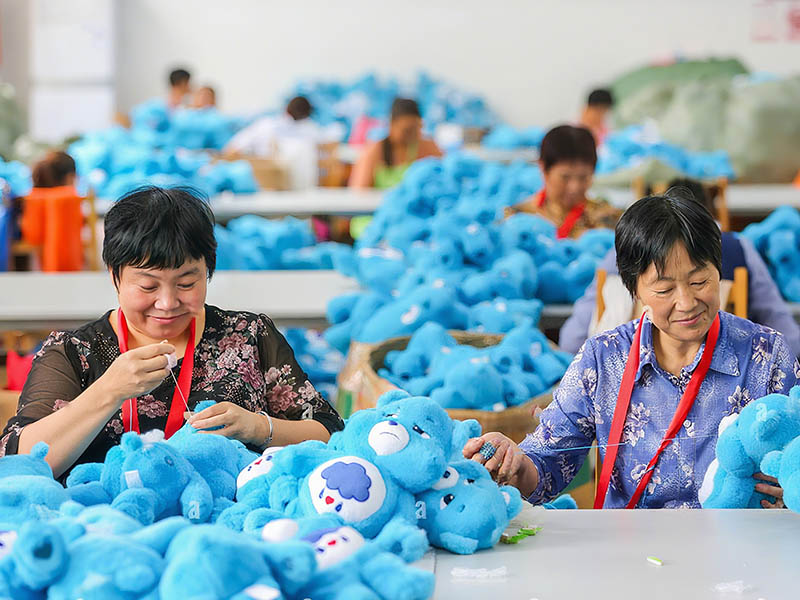
Before mass production begins, choosing the right plush toy manufacturer is one of the highest-impact decisions a brand can make. From my experience working with brands preparing to scale, most production failures do not start on the production line—they start much earlier, during supplier evaluation.
At the sampling stage, many factories look capable. Problems usually appear only after volumes increase: missed deadlines, inconsistent quality, unstable labor, or material substitutions. By that point, correction costs are high and timelines are already under pressure.
That is why reliability must be identified before mass production. Brands should focus on whether a factory is truly production-ready—not just sample-ready. The first step is verifying factory capabilities and overall production readiness before scaling any order.
What Factory Capabilities and Production Readiness Should Be Verified Before Scaling?

Before moving toward mass production, buyers must confirm that a factory can repeat performance under volume pressure. From my experience, many factories can make good samples but lack the systems required for stable scaling.
The first capability to verify is core production capacity. This includes the number of active production lines, trained operators, and realistic monthly output—not theoretical maximums. Factories should clearly explain how capacity is allocated and what happens when multiple projects run in parallel.
Next is process completeness. Reliable manufacturers have in-house control over key steps such as cutting, sewing, stuffing, and finishing. Heavy dependence on outsourcing increases variability and reduces accountability once volumes grow.
Material readiness is another critical factor. Buyers should verify how fabrics, fillings, and accessories are sourced, approved, and replenished. Production-ready factories maintain approved material lists and stable supplier relationships to avoid last-minute substitutions.
Equipment and tooling also matter. Factories should have the right machines for embroidery, cutting accuracy, and safety testing—not just basic sewing equipment. Equipment condition and maintenance routines indicate long-term stability.
Finally, assess production planning discipline. Reliable factories use schedules, line planning, and internal checkpoints. If planning is informal at the early stage, it will collapse under mass production pressure.
| Readiness Area | Weak Signal | Production-Ready Signal | Buyer Benefit |
|---|---|---|---|
| Capacity reality | Vague output claims | Explained line capacity | Predictable scaling |
| Process control | Heavy outsourcing | In-house core processes | Better accountability |
| Material management | Flexible substitution | Approved material lists | Consistent quality |
| Equipment support | Basic machines only | Full production tooling | Fewer bottlenecks |
| Production planning | Ad-hoc scheduling | Structured planning | On-time delivery |
For buyers, verifying production readiness early prevents costly surprises later. Factories that demonstrate real capacity, controlled processes, and disciplined planning are far more reliable partners when it is time to scale into mass production.
How Do Sampling Accuracy and Pre-Production Samples Predict Mass Production Quality?

Sampling accuracy is the clearest early signal of how a factory will perform at scale. From my experience, factories that struggle to match designs during sampling almost always struggle more during mass production—because volume magnifies every small deviation.
The first indicator is design-to-sample accuracy. Buyers should check proportions, facial details, stitching placement, and overall hand feel against the original artwork or specifications. High accuracy shows that pattern making and internal communication are aligned. Repeated “almost right” samples suggest weak control that will worsen under pressure.
Pre-Production Samples (PPS) are even more predictive. A proper PPS must be produced using actual bulk materials, real production lines, and standard operators—not a sample room setup. This confirms whether approved quality is repeatable under production conditions.
Another key factor is revision efficiency. Reliable factories handle feedback systematically: they summarize changes, update specs, and confirm what will be adjusted. Slow or confusing revisions indicate weak internal coordination, which becomes risky during mass runs.
Tolerance understanding also matters. Handmade plush allows variation, but factories must clearly define what is acceptable. When tolerances are discussed and documented at the PPS stage, disputes during final inspection decrease significantly.
Finally, sampling should include process verification, not just appearance. Stitch strength, filling balance, and accessory attachment tested during sampling prevent late-stage quality failures.
| Sampling Indicator | Weak Factory Signal | Reliable Factory Signal | Scale Prediction |
|---|---|---|---|
| Design accuracy | “Close enough” | High-fidelity match | Stable output |
| PPS conditions | Sample room only | Real-line PPS | Repeatability |
| Revision handling | Informal fixes | Documented updates | Controlled changes |
| Tolerance clarity | Not discussed | Defined & agreed | Fewer disputes |
| Process checks | Visual approval | Strength & balance tests | Durable quality |
For buyers, accurate sampling and disciplined PPS approval are predictors, not formalities. When a factory proves it can match designs and repeat quality before mass production, the risk of large-scale failure drops sharply.
What Quality Control Systems Indicate Stability for Large-Volume Orders?

For large-volume orders, stability comes from systems, not inspections. From my experience, factories that rely on final inspection alone often appear fine at low volume but fail when production scales. What buyers should look for is whether quality control is embedded throughout the process and designed to scale.
The first indicator is multi-stage QC structure. Reliable manufacturers implement incoming material inspection (IQC), in-process quality control (IPQC), and final inspection (FQC). Each stage has clear criteria and responsibility. This layered approach prevents defects from traveling downstream and multiplying across batches.
Next is reference-based control. Stable factories use approved golden samples and written workmanship standards on the production floor. Inspectors and line leaders compare output against physical references, not memory. This is essential when multiple lines or shifts are running simultaneously.
Another key signal is data-driven QC, not just pass/fail checks. Factories that track defect types, frequencies, and corrective actions can explain how problems are prevented in future runs. If a factory cannot show how lessons are captured and reused, instability is likely.
Scalability of QC matters as well. As volume increases, inspection frequency and scope should adjust—more in-process checks, line audits, and cross-line comparisons. Using the same QC intensity for 1,000 and 20,000 units is a common failure point.
Finally, transparency strengthens stability. Reliable factories are willing to share QC plans, inspection records, and improvement actions early—before buyers ask. This openness is a strong predictor of long-term reliability.
| QC System Signal | Weak Factory Practice | Stable Large-Volume Practice | Buyer Confidence |
|---|---|---|---|
| QC structure | Final-only checks | IQC + IPQC + FQC | Early defect control |
| Reference usage | Visual judgment | Golden sample on floor | Consistency |
| Data utilization | No trend tracking | Defect analysis & CAPA | Continuous stability |
| Volume scaling | Same QC for all | QC intensity scales | Reliable output |
| Transparency | Limited sharing | Proactive reporting | Predictability |
For buyers, stable QC systems indicate a factory’s ability to protect quality under pressure. When quality is controlled by process, data, and references—not hero inspectors—mass production becomes far more predictable.
How Can Buyers Verify Safety Compliance, Certifications, and Testing Capacity in Advance?
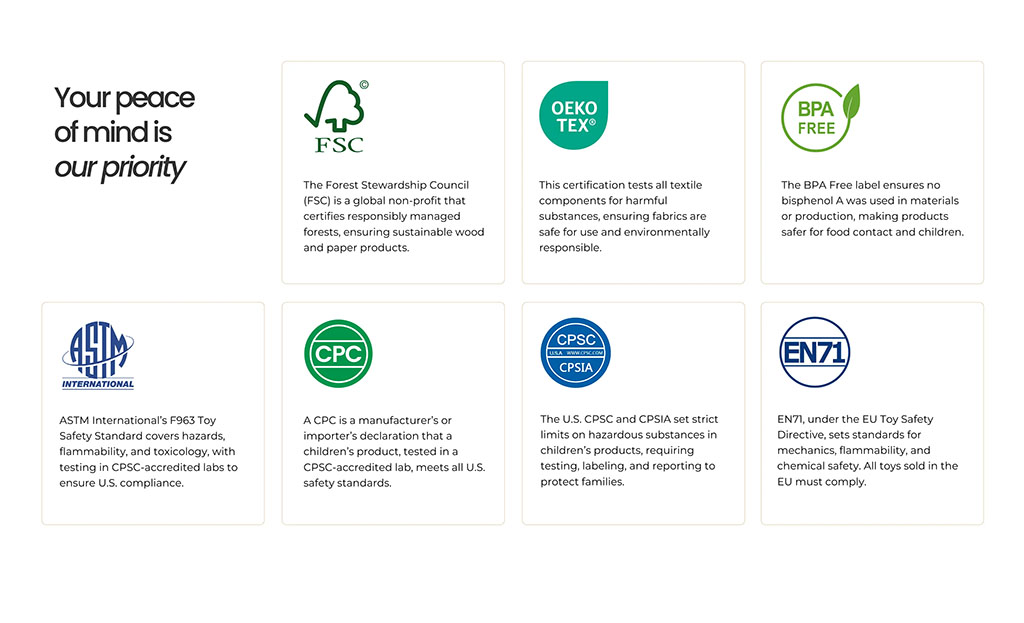
Safety compliance should be verified before mass production—not after problems appear. From my experience, many delays and shipment holds happen because compliance was treated as a paperwork task instead of a production capability.
The first step is market-specific compliance clarity. Reliable manufacturers can clearly explain which standards apply to your target markets (for example, U.S. vs. EU) and how those standards affect materials, construction, and labeling. Vague answers like “we can test later” signal reactive compliance and higher risk.
Next is testing capacity verification. Buyers should confirm whether testing is handled in-house, through long-term partner labs, or ad hoc third parties. Factories with stable testing workflows understand timelines, costs, and retesting triggers—critical for pre-production planning.
Material compliance control is another key area. Production-ready factories maintain approved material lists, batch traceability, and restricted substance controls. This ensures that materials used in mass production match those that were tested and approved.
Documentation readiness matters as much as testing itself. Reliable factories keep organized test reports, conformity declarations, and supplier declarations. Buyers should ask to see sample documents early to assess completeness and accuracy.
Finally, change management protects compliance validity. Any change in fabric, filling, accessory, or process can affect test results. Factories that enforce change approval before implementation reduce the risk of invalid certifications during mass production.
| Verification Area | Risky Practice | Production-Ready Practice | Buyer Protection |
|---|---|---|---|
| Market knowledge | Generic answers | Market-specific guidance | Correct compliance |
| Testing workflow | Ad hoc labs | Stable testing partners | Predictable timelines |
| Material control | Flexible substitution | Approved material lists | Test validity |
| Documentation | On request only | Organized & ready | Faster approvals |
| Change management | Silent changes | Approval-based control | Compliance continuity |
For buyers, early verification of compliance capability turns safety into a planning asset, not a last-minute obstacle. Factories that manage testing and documentation systematically are far more reliable partners when moving toward mass production.
What Communication, Documentation, and Project Management Signals Reliability Early On?

Before mass production, reliability is often visible in how a factory communicates and manages information, not just in what it produces. From my experience, early communication behavior is one of the most accurate predictors of how a project will perform at scale.
The first signal is structured communication. Reliable manufacturers confirm requirements, decisions, and changes in writing. They summarize key points after discussions and clearly state next steps. This reduces ambiguity when multiple revisions, SKUs, or stakeholders are involved.
Documentation discipline is equally important. Production-ready factories maintain organized files for specifications, BOMs, approvals, and compliance documents. Buyers should see version control, clear naming, and traceable approvals—not scattered messages and screenshots.
Project management visibility also matters. Strong factories assign a clear project owner who coordinates sampling, production, QC, and logistics. Buyers know who to contact, how issues are escalated, and how timelines are tracked. When responsibility is unclear, delays multiply during mass production.
Another reliability signal is risk communication. Trustworthy factories flag potential issues early—material lead times, capacity conflicts, or compliance risks—and propose solutions. Silence until problems occur is a major warning sign.
Finally, responsiveness with substance builds confidence. Fast replies are useful, but meaningful replies—answers that resolve questions and confirm actions—are what keep projects moving predictably.
| Early Signal Area | Weak Factory Signal | Reliable Factory Signal | Buyer Benefit |
|---|---|---|---|
| Communication style | Ad-hoc chats | Written confirmations | Fewer misunderstandings |
| Documentation | Disorganized files | Version-controlled records | Execution clarity |
| Project ownership | Unclear roles | Dedicated project owner | Faster decisions |
| Risk disclosure | Reactive | Proactive alerts | Early mitigation |
| Responsiveness | Fast but vague | Fast and decisive | Predictable progress |
For buyers, early communication and project management behavior reveal whether a factory can handle complexity and pressure. Factories that communicate clearly, document carefully, and manage projects transparently are far more reliable when mass production begins.
How Do Trial Orders, Audits, and Risk Assessments Reduce Pre-Production Uncertainty?
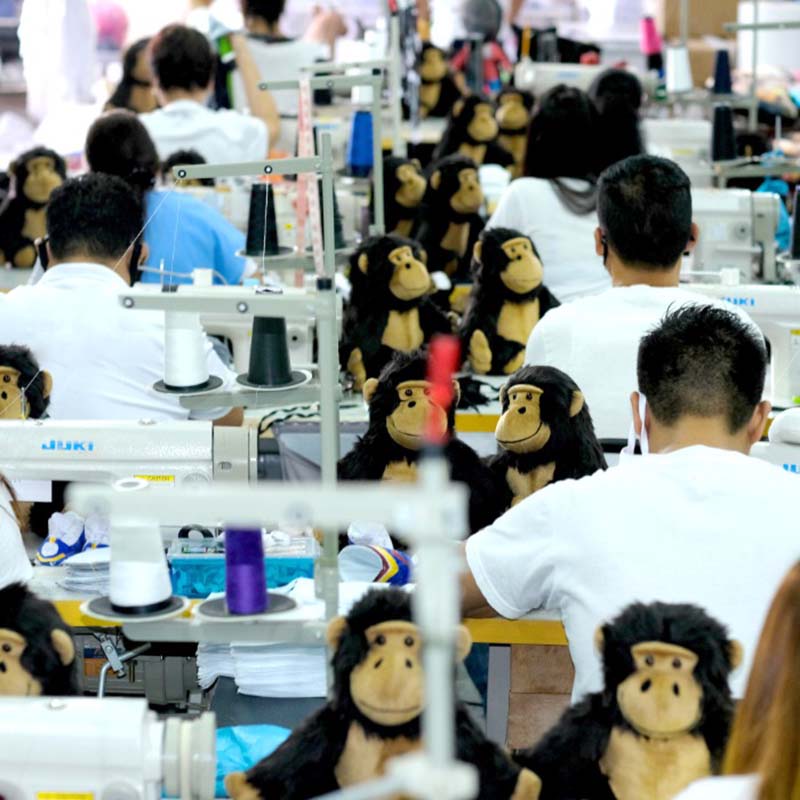
Before committing to mass production, uncertainty should be tested down, not hoped away. From my experience, trial orders, audits, and structured risk assessments are the most practical tools to reveal how a factory performs under real conditions—without exposing the brand to full-scale risk.
Trial orders convert assumptions into evidence. Small-batch runs test scheduling discipline, material consistency, QC execution, and communication under deadline pressure. Reliable factories treat trial orders with the same rigor as large ones—using approved materials, standard lines, and full QC—rather than “special handling” that hides problems.
Factory audits provide system-level visibility. Whether conducted in person or by a third party, audits should focus on process control, QC structure, compliance management, documentation discipline, and capacity planning—not just cleanliness or certifications on the wall. Factories that welcome audits and explain systems transparently tend to be more stable partners.
Risk assessments tie everything together. Buyers should jointly review potential risks—capacity conflicts, material lead times, compliance changes, peak-season pressure—and define mitigation plans. This creates shared expectations and clear escalation paths before issues occur.
Another key signal is how findings are handled. Strong factories respond to audit or trial feedback with concrete corrective actions, timelines, and ownership. Defensive responses or vague promises indicate higher risk during scale-up.
Finally, timing matters. Running trials and audits before locking mass production slots preserves leverage and flexibility. After slots are booked, options narrow and costs rise.
| Risk Tool | Superficial Use | Effective Use | Risk Reduction |
|---|---|---|---|
| Trial order | Cosmetic run | Real-line, real-QC | Predictable scaling |
| Factory audit | Checklist visit | System & process focus | Stability insight |
| Risk assessment | Informal talk | Documented review | Clear mitigation |
| Issue response | Defensive | Action-based CAPA | Fewer repeats |
| Timing | After commitment | Before slot booking | Lower exposure |
For buyers, these tools transform uncertainty into managed risk. When trial orders, audits, and assessments are used together, mass production decisions become evidence-based and far more secure.
Conclusion
Identifying a reliable plush toy manufacturer before mass production requires verifying readiness, repeatability, compliance, communication, and risk control. When reliability is proven early, scaling becomes predictable and brand-safe.
📧 Contact: [email protected]
🌐 Visit: https://kinwintoys.com