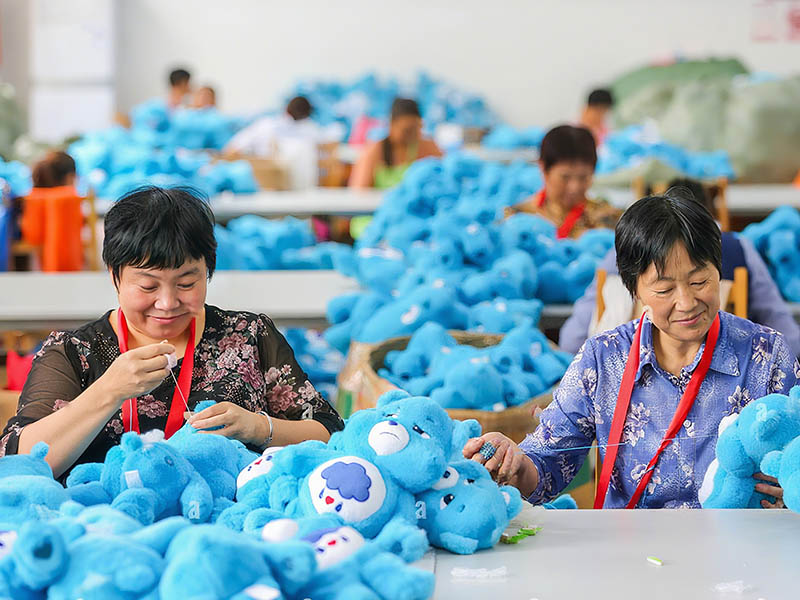
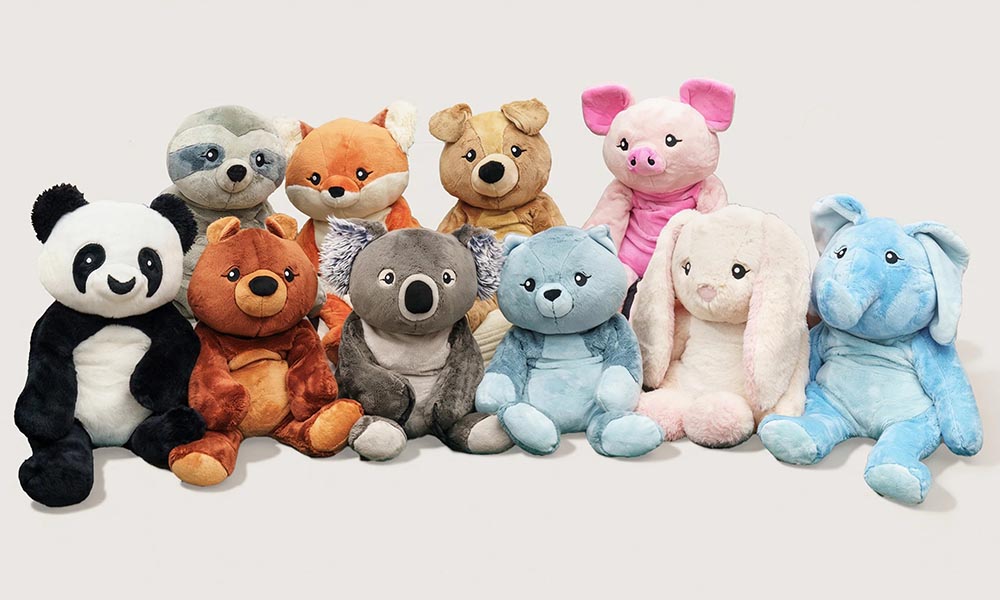
Realistic plush toys occupy a very different position from cute or stylized designs. They rely on material accuracy, proportion control, and fine detailing to create lifelike presence rather than emotional abstraction. In retail, licensing, and collector markets, realistic plushies are often judged more strictly—small mistakes in color, posture, or facial balance can immediately reduce perceived quality.
For brands and buyers, understanding how realism is achieved in plush manufacturing helps set correct expectations for cost, production complexity, and quality control. Below are the first three realistic plush categories that consistently perform well when executed correctly.
Realistic Dog Plush with Lifelike Fur Color Transitions
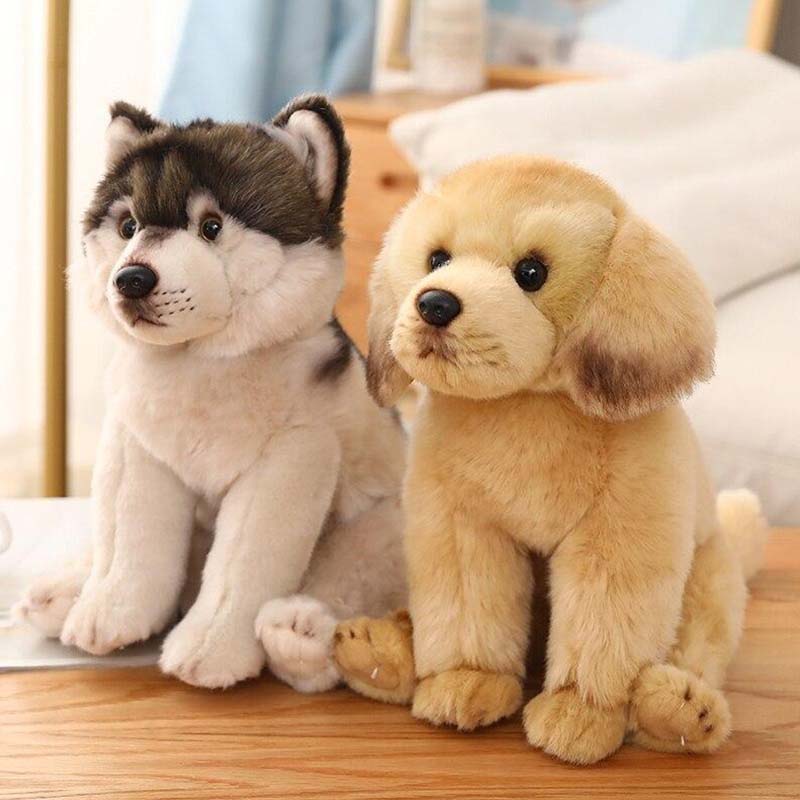
A realistic dog plush is defined by how well it replicates natural fur flow and color transitions, rather than by exaggerated expressions. Unlike kawaii dog plush, realistic versions focus on correct head-to-body proportions, breed-accurate coloring, and subtle facial shaping that reflects a calm, natural demeanor.
One of the most critical technical challenges is fur color transition. Real dogs rarely have flat, single-tone coats. Instead, fur shifts gradually between lighter and darker shades—around the muzzle, chest, legs, and ears. High-quality realistic dog plushies use multi-tone fabrics, carefully positioned panels, or printed plush to simulate these transitions. Poor alignment between pattern pieces can immediately break realism.
From a production standpoint, pile direction must be controlled precisely so that fur flows consistently across seams. Facial embroidery is kept minimal, with eye placement and nose shape doing most of the visual work. These plushies are popular in pet-lover retail, memorial plush, and breed-specific collections, but they require experienced pattern making and strict QC to maintain realism at scale.
| Key Detail Area | Realistic Dog Plush Requirement | Quality Risk if Ignored |
|---|---|---|
| Fur color | Gradual tone transitions | Flat, toy-like appearance |
| Pile direction | Consistent fur flow | Visible seam disruption |
| Proportions | Breed-accurate head/body | Loss of realism |
| Facial detail | Subtle embroidery | Over-cartooning |
| QC focus | Color & panel alignment | High return risk |
Realistic Cat Plush with Natural Facial Proportions
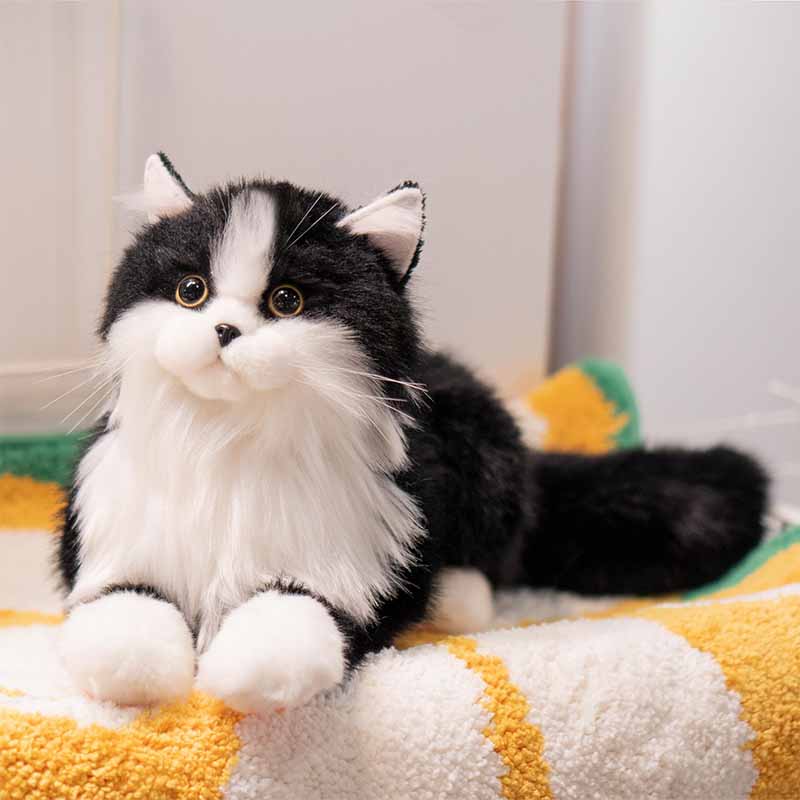
Realistic cat plush toys rely heavily on facial proportion accuracy. Cats have more delicate facial geometry than dogs, and even small errors in eye spacing, muzzle length, or ear angle can make the plush look unnatural. Unlike stylized cats, realistic versions avoid oversized heads or exaggerated expressions.
The eyes are the focal point. Many realistic cat plushies use high-quality plastic safety eyes with correct size and placement, sometimes combined with subtle eyelid shaping to reduce the “wide-eyed” toy effect. The nose and mouth are understated, often created with fine embroidery rather than heavy stitching.
Fur texture also matters. Short-pile plush, brushed plush, or printed fabrics are commonly used to simulate tabby stripes, solid coats, or mixed-color fur. For longhair cat designs, layered pile fabrics may be used, but this increases shedding and maintenance risk. These plush toys perform best in collector markets, gift shops, and pet-themed brands, where buyers value realism over softness alone.
| Facial Element | Realistic Cat Plush Approach | Impact on Perception |
|---|---|---|
| Eye placement | Natural spacing & size | Lifelike expression |
| Muzzle shape | Short, subtle contours | Avoids cartoon look |
| Ear angle | Upright but relaxed | Species accuracy |
| Fur texture | Short or brushed pile | Clean realism |
| QC priority | Face symmetry | Immediate visual judgment |
Realistic Horse Plush with Detailed Mane and Tail
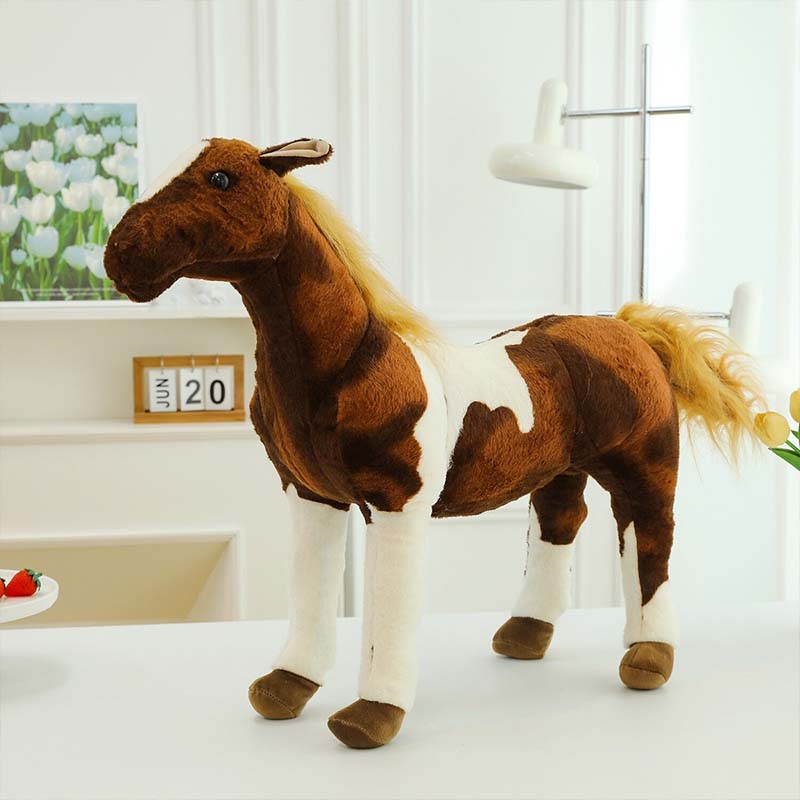
Realistic horse plush toys are among the most technically demanding animal plush categories because of their elongated body proportions and flowing mane and tail. Horses require accurate leg length, neck posture, and head shape to look believable, which makes pattern complexity significantly higher than round-bodied animals.
The mane and tail are the defining features. High-quality realistic horse plushies use layered yarn hair, stitched fabric strips, or controlled long-pile inserts to create movement and volume without tangling excessively. Poor attachment methods can lead to shedding, knotting, or uneven density.
Body posture also affects realism. Standing, grazing, or walking poses must be carefully engineered with internal structure to maintain balance. Over-soft stuffing causes collapse, while overly rigid forms reduce plush appeal. These products are especially popular in equestrian gift shops, educational collections, and premium animal lines, but they require higher tooling and sampling investment.
| Structural Area | Realistic Horse Plush Standard | Production Challenge |
|---|---|---|
| Body proportion | Long torso & neck | Pattern accuracy |
| Mane & tail | Layered, flowing texture | Shedding control |
| Leg structure | Balanced, stable stance | Internal support |
| Fabric choice | Short pile + yarn hair | Material matching |
| QC focus | Posture & hair attachment | Deformation risk |
Realistic Elephant Plush with Textured Skin Look
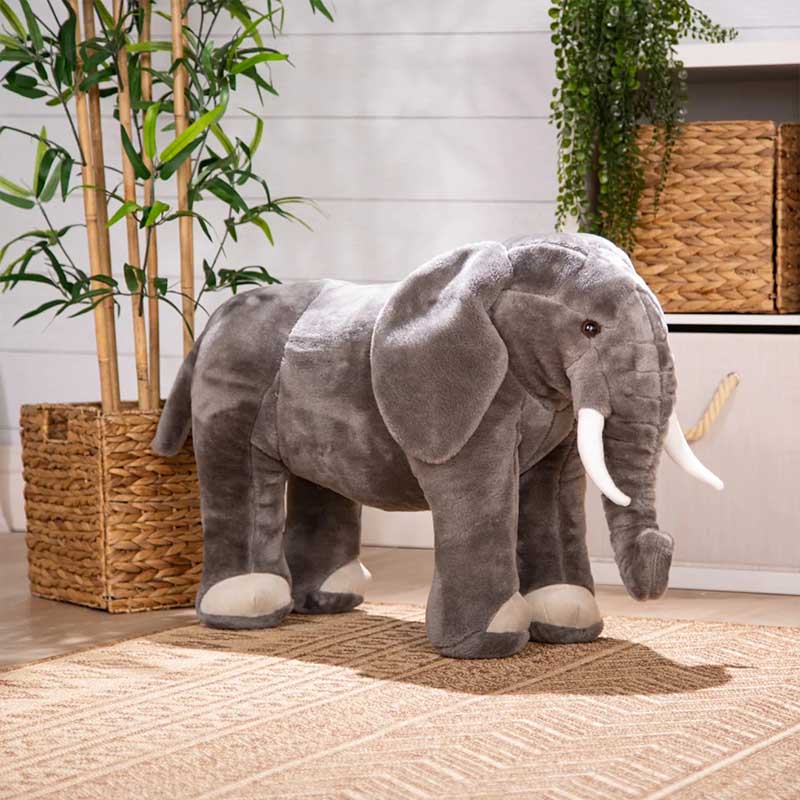
Realistic elephant plush toys depend less on fur simulation and more on surface texture and body mass accuracy. Unlike furry animals, elephants require plush materials and construction methods that can suggest thick skin, subtle wrinkles, and weight without becoming stiff or uncomfortable to touch.
High-quality realistic elephant plush designs use short-pile or microfleece fabrics with printed or embossed texture patterns to simulate skin folds. Pattern segmentation is critical around the trunk, ears, and joints, where curvature must look natural rather than tubular. The trunk, in particular, needs internal structure or reinforced stitching so it holds shape while remaining soft.
From a commercial perspective, realistic elephant plush toys perform well in educational collections, zoo and museum retail, and wildlife-themed décor. Buyers expect anatomical correctness—ear size, trunk length, and leg thickness must align with real proportions. Quality control focuses on seam smoothness and stuffing balance, as uneven filling can quickly destroy the illusion of mass and stability.
| Detail Area | Realistic Elephant Requirement | Quality Risk |
|---|---|---|
| Fabric texture | Short-pile with skin pattern | Flat, unrealistic surface |
| Trunk structure | Reinforced but flexible | Shape collapse |
| Ear proportion | Large, thin, curved | Stiff appearance |
| Body mass | Even, weighted stuffing | Lumpy silhouette |
| QC focus | Seam smoothness | Visual breaks |
Realistic Tiger Plush with Accurate Stripe Patterns
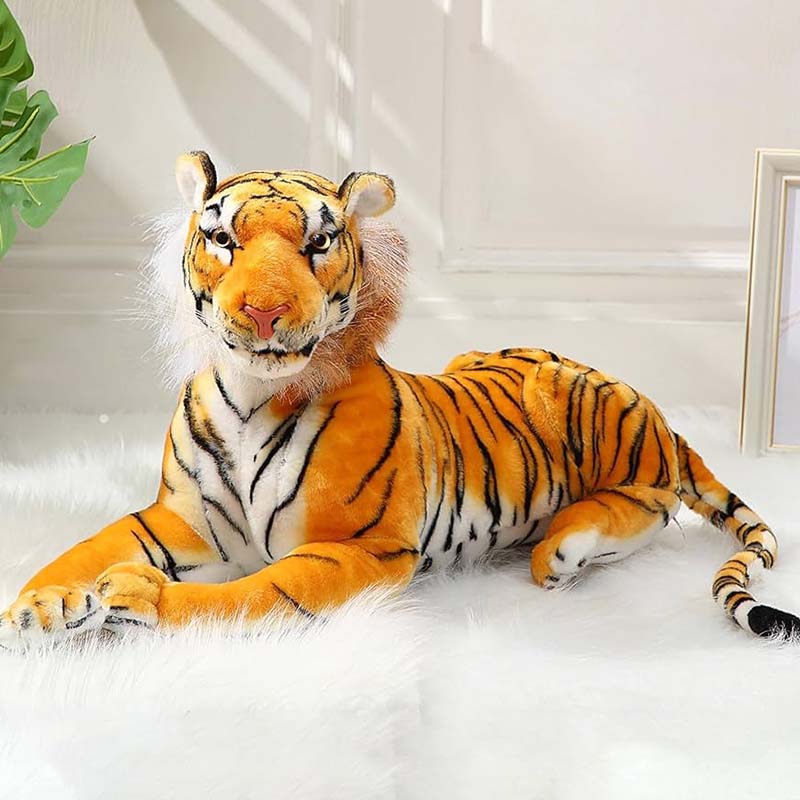
Realistic tiger plush toys are judged primarily on stripe accuracy and color contrast. Tigers have highly specific stripe layouts that vary by subspecies, and poorly placed or mirrored stripes are immediately noticeable to consumers familiar with the animal.
Premium realistic tiger plushies often use custom-printed plush fabrics where stripe patterns are engineered to align across seams. Pattern cutting must be extremely precise so stripes flow naturally from head to body and along the limbs. Using generic orange-and-black fabric without pattern planning results in visual discontinuity and lowers perceived realism.
Facial construction is another key factor. The eyes must be correctly angled and proportioned, with subtle eyebrow shaping to avoid an aggressive look. Whisker pads and nose coloration should be understated. These plush toys are popular in collector markets, wildlife gift shops, and premium décor lines, but they demand tight production control and higher fabric development costs.
| Design Element | Realistic Tiger Standard | Production Challenge |
|---|---|---|
| Stripe layout | Species-accurate flow | Pattern alignment |
| Fabric | Custom printed plush | Higher MOQ & cost |
| Face shaping | Subtle, calm expression | Over-aggressive look |
| Color balance | High contrast, controlled | Color bleeding |
| QC priority | Stripe continuity | Visual defects |
Realistic Lion Plush with Layered Mane Detail
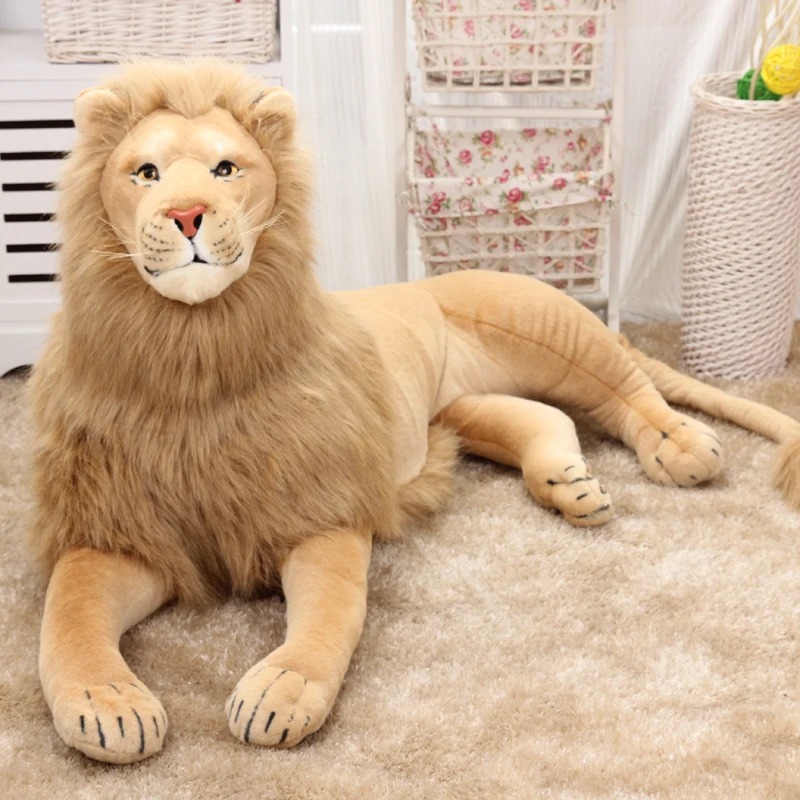
Realistic lion plush toys are defined almost entirely by the mane execution. Unlike stylized lions, realistic designs require layered mane textures that suggest depth, variation, and natural flow without excessive bulk.
High-end lion plushies typically combine short-pile body fabric with layered yarn hair, faux fur strips, or long-pile inserts for the mane. These layers must be graduated in length and density to avoid a helmet-like appearance. Mane attachment is a key durability concern; poor stitching can lead to shedding or uneven wear.
Proportion accuracy is also critical. The head should be strong but not oversized, and the body should appear grounded and muscular. These plush toys are often used as statement pieces in décor, educational sets, and premium animal collections. Quality control emphasizes mane symmetry, shedding resistance, and balanced posture.
| Mane Component | Realistic Lion Approach | Risk if Poorly Done |
|---|---|---|
| Mane layering | Graduated length & density | Flat or bulky look |
| Hair material | Yarn or faux fur blend | Shedding |
| Attachment method | Reinforced stitching | Early wear |
| Body proportion | Muscular, grounded | Toy-like appearance |
| QC focus | Mane symmetry | Uneven presentation |
Realistic Wolf Plush with Natural Posture Design
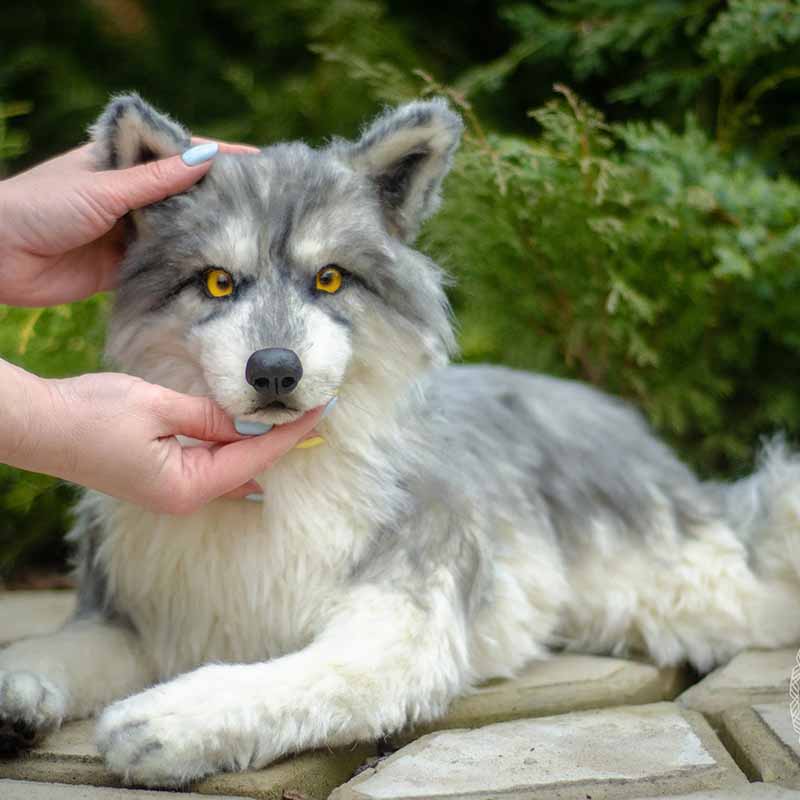
Realistic wolf plush toys are defined by posture accuracy and restrained expression, rather than surface detail alone. Unlike dogs, wolves carry a more alert but calm stance, with longer legs, a leaner torso, and a forward-facing posture that suggests movement and awareness. Achieving this balance in plush form requires precise pattern engineering.
The head shape must avoid exaggeration. Eyes are typically narrower and more forward-facing than in dog plush, and facial embroidery must be subtle to avoid turning the wolf into a cartoon. Ear positioning is also critical—slightly angled upward rather than rounded—which reinforces the natural alertness of the animal.
From a construction standpoint, internal structure plays a larger role. Wolves often require strategic internal reinforcement in the legs and neck to maintain posture without stiffness. These plush toys are popular in wildlife collections, educational programs, and nature-themed décor, where buyers value anatomical credibility. Quality control focuses on posture stability and proportion accuracy across batches.
| Structural Area | Realistic Wolf Requirement | Quality Risk |
|---|---|---|
| Body posture | Lean, forward-oriented | Slouched appearance |
| Facial expression | Subtle, neutral | Cartoon effect |
| Ear position | Upright, angled | Loss of realism |
| Internal support | Light reinforcement | Collapse over time |
| QC focus | Proportion consistency | Visual mismatch |
Realistic Fox Plush with Sharp Color Contrast Fur
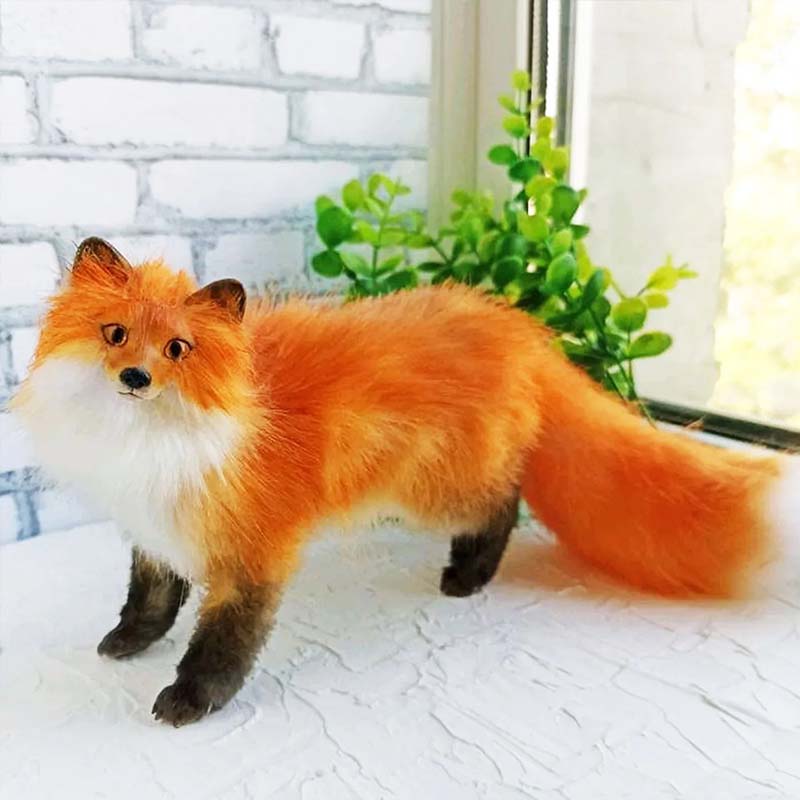
Realistic fox plush toys rely heavily on clean color contrast and fur direction control. Foxes are visually striking animals, and their realism depends on crisp transitions between orange, white, black, and sometimes gray fur zones. Blurred or misaligned color boundaries immediately reduce perceived quality.
High-quality fox plushies often use multi-panel construction with different fabric colors rather than printed patterns. This allows sharper edges around the face mask, chest, and tail tip. The tail, in particular, must be full and properly weighted, as it is a signature feature of fox designs.
From a manufacturing perspective, fur direction consistency is essential. Pile must flow naturally from head to tail, and seam placement must follow color boundaries to remain invisible. Realistic fox plush toys are commonly used in woodland décor, collector plush lines, and premium gift markets, where visual sharpness is expected.
| Design Element | Realistic Fox Standard | Production Challenge |
|---|---|---|
| Color contrast | Clean, sharp boundaries | Panel alignment |
| Fabric usage | Multi-color panels | Increased sewing steps |
| Tail design | Full, weighted tip | Shape control |
| Fur direction | Head-to-tail flow | Seam visibility |
| QC priority | Color edge precision | Visual defects |
Realistic Panda Plush with True-to-Life Body Shape
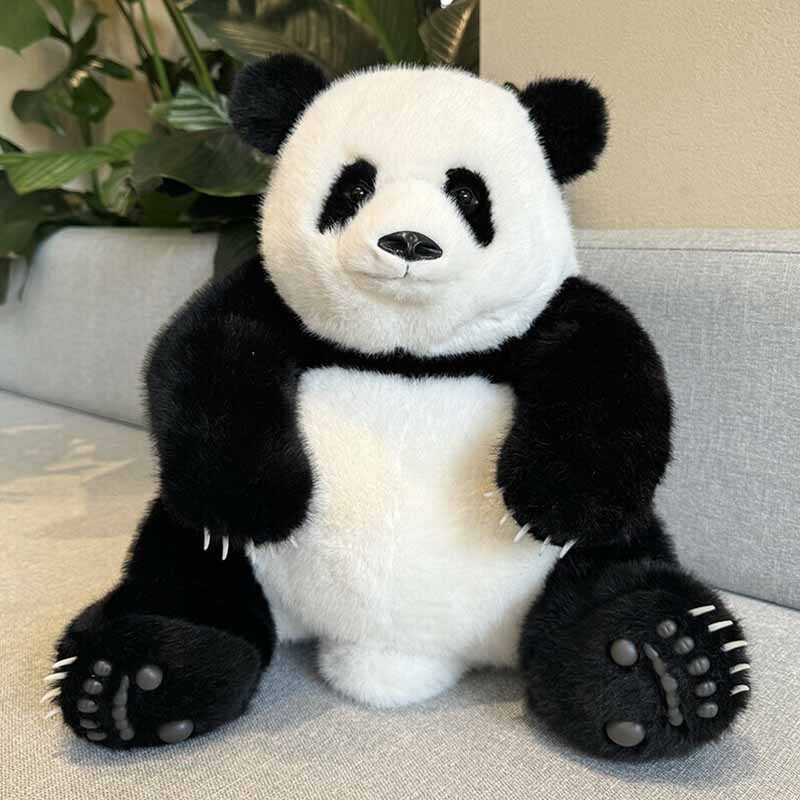
Realistic panda plush toys are deceptively complex. While the color palette is simple, body proportion and weight distribution are critical to achieving a believable panda look. Pandas have a distinctive round torso, shorter limbs, and a relaxed posture that must be reflected without becoming overly cartoonish.
The black-and-white pattern must align precisely around the eyes, ears, arms, and legs. Many high-quality panda plushies use separate fabric panels for black and white sections to maintain clean edges. Eye patches, in particular, require precise symmetry; even small deviations are immediately noticeable.
These plush toys perform well in zoo retail, conservation-themed collections, and premium décor. From a production standpoint, controlling stuffing density is key. Too much filling removes the panda’s relaxed feel, while too little causes collapse. Quality control emphasizes symmetry, posture, and long-term shape retention.
| Key Feature | Realistic Panda Approach | Risk if Ignored |
|---|---|---|
| Body shape | Round torso, short limbs | Toy-like proportions |
| Color blocking | Panel-based construction | Blurred edges |
| Eye patch alignment | High symmetry control | Immediate rejection |
| Stuffing density | Balanced, relaxed | Shape loss |
| QC focus | Pattern symmetry | Visual inconsistency |
Realistic Bear Plush with Natural Standing or Sitting Pose
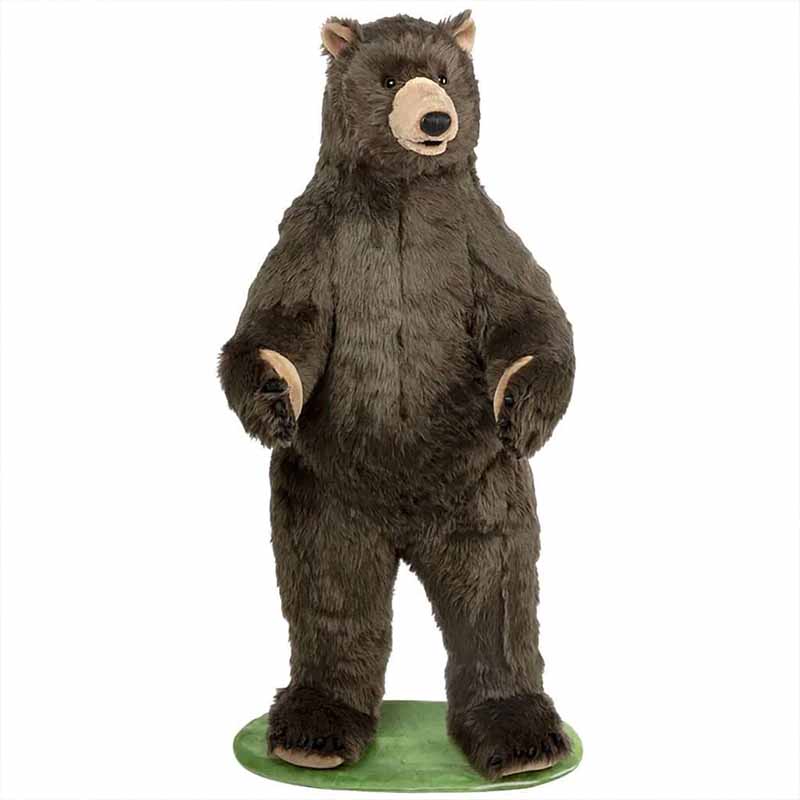
Realistic bear plush toys are distinguished by posture accuracy and weight distribution, rather than facial exaggeration. Unlike classic teddy bears, realistic bear designs aim to reflect natural bear stances—either a grounded sitting pose or a stable standing posture—both of which require careful internal structure planning.
The body proportions are heavier and more compact, with broader shoulders, thicker limbs, and a shorter neck. Facial expressions are calm and neutral, avoiding smiling mouths or oversized eyes. Fur texture is usually medium to long pile, but it must be brushed and trimmed strategically to avoid hiding key contours such as the muzzle and eye area.
From a production standpoint, posture stability is the main challenge. Standing bears often require reinforced foot structure or internal support to prevent tipping, while sitting bears rely on balanced stuffing density to maintain shape over time. These plush toys are popular in nature-themed décor, collector markets, and premium gift programs, where realism and presence matter more than softness alone.
| Structural Aspect | Realistic Bear Requirement | Quality Risk |
|---|---|---|
| Body mass | Heavy, compact proportions | Slouched appearance |
| Posture | Stable sitting or standing | Tipping or collapse |
| Facial detail | Neutral, understated | Cartoon effect |
| Fur handling | Trimmed & brushed | Loss of definition |
| QC focus | Balance & stability | Returns due to posture |
Realistic Rabbit Plush with Soft Ear and Eye Detailing
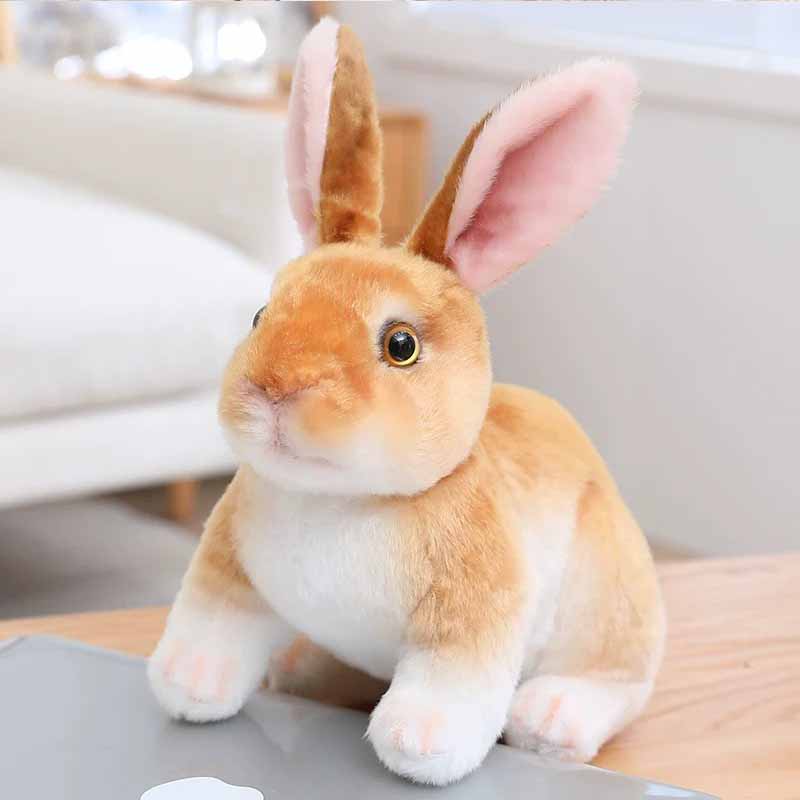
Realistic rabbit plush toys rely on subtle detailing rather than bold features. Rabbits have delicate facial proportions, long soft ears, and gentle expressions that must be translated carefully into plush form. Over-structuring or exaggeration quickly breaks realism.
The ears are the defining feature. High-quality realistic rabbit plushies use layered fabrics or lightly reinforced inner structures so ears hold shape while still drooping naturally. Eye placement is critical—too large or too high creates a cartoon look. Most designs use small safety eyes or fine embroidery combined with soft shading around the eye area.
Fabric choice leans toward short-pile or brushed plush to simulate fine fur. These plush toys perform well in spring collections, educational sets, and gentle home décor, especially when paired with neutral or pastel color palettes. Quality control focuses on ear symmetry, seam smoothness, and consistent facial placement across batches.
| Detail Area | Realistic Rabbit Standard | Production Challenge |
|---|---|---|
| Ear structure | Soft, naturally drooping | Ear deformation |
| Eye size & position | Small, proportionate | Over-cuteness |
| Fur texture | Fine, brushed plush | Uneven nap |
| Color palette | Natural tones | Batch inconsistency |
| QC priority | Ear & face symmetry | Visual imbalance |
Realistic Owl Plush with Feather-Like Surface Design
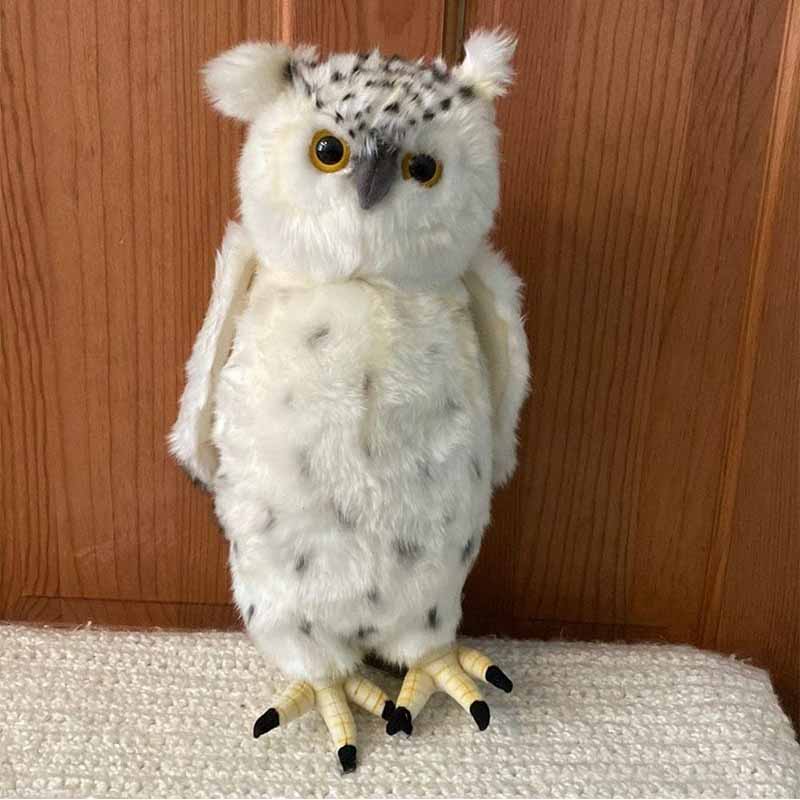
Realistic owl plush toys present a unique challenge because owls are defined by feather layering and facial disk structure. Unlike mammals, owls require surface texture that suggests feathers without becoming rough or overly complex.
High-end owl plush designs often use layered fabric panels, printed feather patterns, or cut-and-sewn plush segments to mimic feather arrangement. The facial disk—the circular area around the eyes—must be clearly defined through stitching or fabric contrast. Eyes are typically larger than those of other birds but must remain proportionate to avoid a toy-like look.
These plush toys are popular in educational retail, wildlife décor, and museum gift shops. From a manufacturing perspective, maintaining feather texture consistency while controlling shedding is essential. Quality control focuses on eye alignment, disk symmetry, and surface texture uniformity.
| Feature Area | Realistic Owl Approach | Risk if Mismanaged |
|---|---|---|
| Surface texture | Layered or printed feathers | Flat appearance |
| Facial disk | Clear circular definition | Loss of species identity |
| Eye proportion | Large but balanced | Over-cartooning |
| Fabric control | Low-shed plush | Fiber loss |
| QC focus | Texture & symmetry | Inconsistent realism |
Realistic Eagle Plush with Detailed Wing Structure
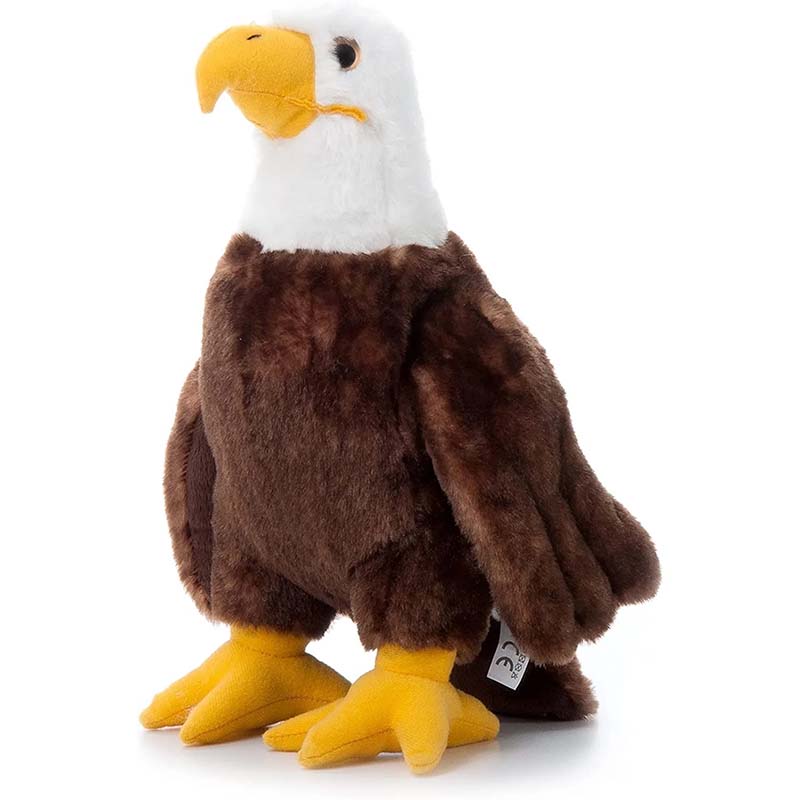
Realistic eagle plush toys are defined by wing construction and overall silhouette, not softness alone. Eagles have a powerful visual presence, and translating that into plush form requires careful balance between anatomical accuracy and material feasibility. The wings must appear layered and expansive without becoming stiff or fragile.
High-quality eagle plush designs use segmented wing panels to suggest feather rows, often combining short-pile plush with layered fabric inserts. Wing angles are engineered to create a natural resting or semi-open posture, which helps the plush feel dynamic even when stationary. Head proportions are kept sharp but controlled—beak shape is simplified to avoid hardness while still maintaining species identity.
From a production standpoint, wing durability is the primary challenge. Poor stitching or weak attachment points can lead to deformation during handling or shipping. These plush toys are commonly used in educational programs, patriotic or wildlife décor, and premium collector lines, where visual impact matters. Quality control focuses on wing symmetry, seam reinforcement, and posture stability.
| Structural Area | Realistic Eagle Standard | Production Risk |
|---|---|---|
| Wing design | Layered, panel-based | Tearing at seams |
| Posture | Resting or semi-open | Awkward silhouette |
| Beak execution | Simplified, safe shape | Hard or sharp feel |
| Fabric mix | Short pile + inserts | Material mismatch |
| QC focus | Wing symmetry | Visual imbalance |
Realistic Deer Plush with Antler and Body Proportion Accuracy
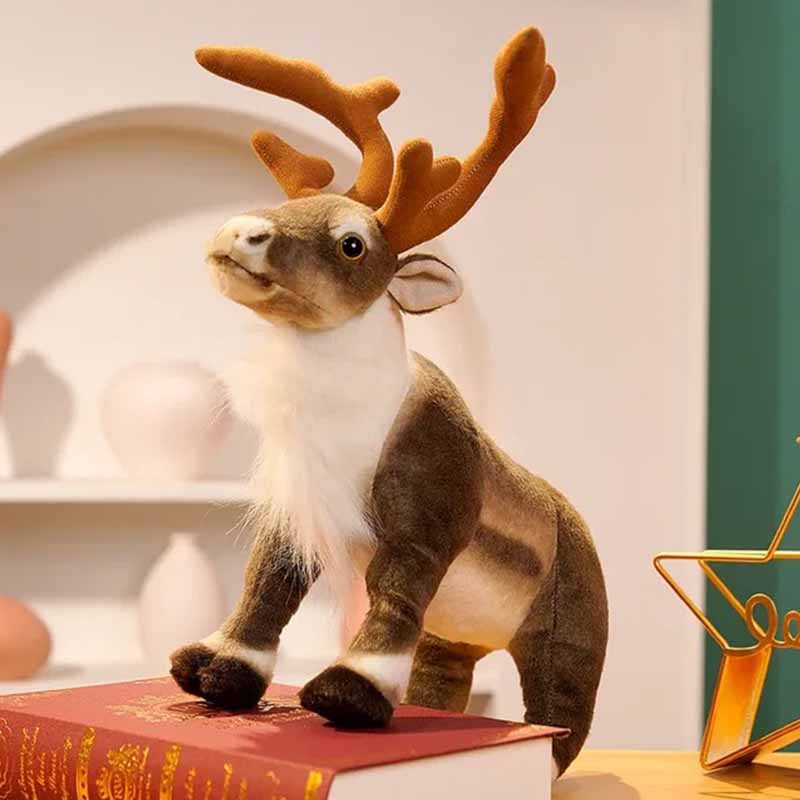
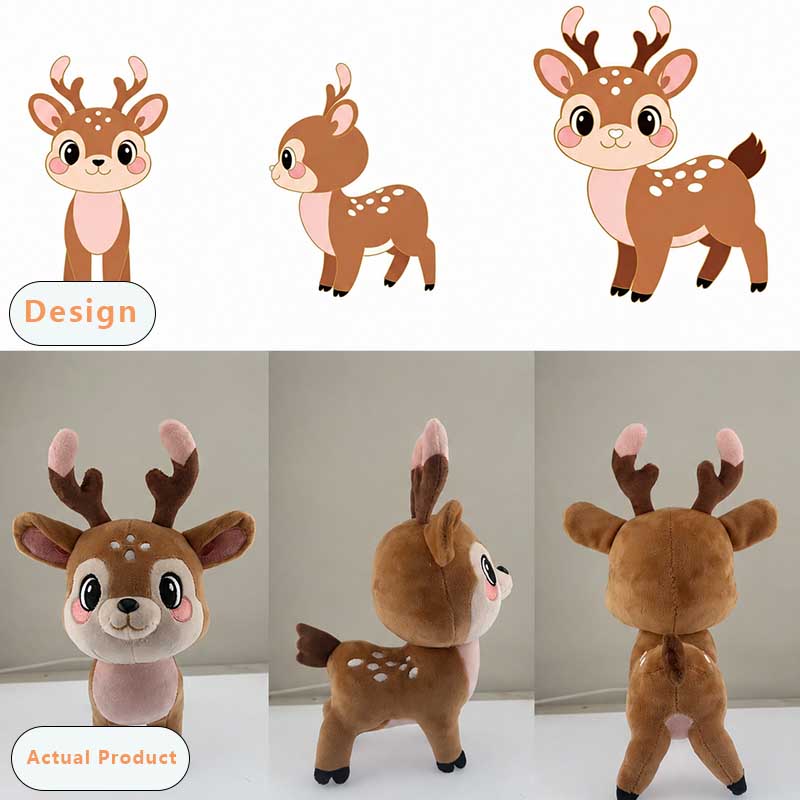
Realistic deer plush toys rely heavily on body proportion control and antler execution. Deer have slender legs, elongated necks, and graceful posture, which are difficult to maintain in plush form without internal support. Achieving realism requires precise pattern making and controlled stuffing.
Antlers are the most sensitive feature. They must appear structured and branched, yet remain safe and soft. High-quality designs use reinforced fabric antlers with internal padding or stitched contouring, avoiding rigid materials. Body fabrics are usually short-pile plush or brushed microfiber to maintain clean lines and reduce bulk.
These plush toys perform well in nature-themed décor, seasonal displays, and premium wildlife collections. From a manufacturing view, maintaining posture during transport and long-term display is critical. Quality control emphasizes antler symmetry, leg stability, and consistent neck angle across production runs.
| Design Element | Realistic Deer Approach | Quality Challenge |
|---|---|---|
| Body proportion | Slender legs & neck | Collapse over time |
| Antler design | Soft, reinforced fabric | Deformation |
| Posture | Upright, balanced | Leaning or tipping |
| Fabric choice | Short-pile / microfiber | Loss of definition |
| QC focus | Antler & leg symmetry | Visual inconsistency |
Realistic Farm Animal Plush (Cow or Sheep Style) with Natural Look
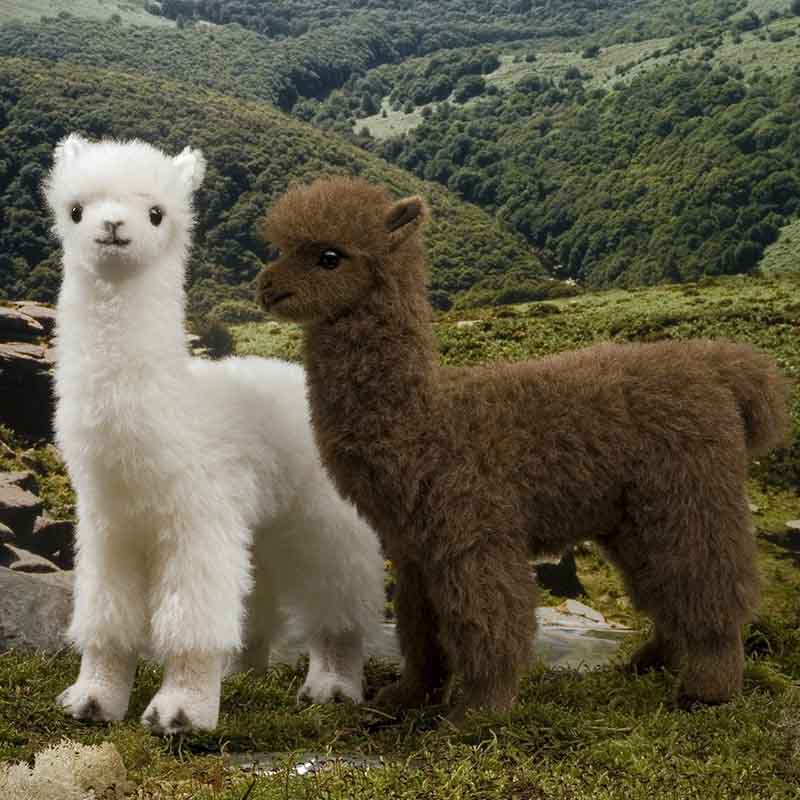
Realistic farm animal plush toys focus on familiarity and authenticity rather than dramatic detailing. Cows and sheep are widely recognized animals, so realism depends on accurate body mass, natural color placement, and calm expressions. Over-stylization quickly reduces credibility in this category.
For cows, correct color blocking—such as black-and-white or brown-and-white patches—must align naturally across seams. Sheep plush toys emphasize texture, often using curly or looped plush to simulate wool while controlling shedding. Facial details are kept simple and neutral, reinforcing a gentle, approachable look.
These plush toys are widely used in educational sets, farm-themed retail, and family-oriented décor. From a production standpoint, fabric selection and stuffing density must balance softness with shape retention. Quality control focuses on pattern alignment, surface texture consistency, and long-term durability under handling.
| Product Type | Realistic Requirement | Production Risk |
|---|---|---|
| Cow plush | Natural color blocking | Patch misalignment |
| Sheep plush | Wool-like texture | Excess shedding |
| Facial style | Calm, neutral | Over-cuteness |
| Body mass | Even, stable stuffing | Lumpy shape |
| QC focus | Fabric & pattern match | Reduced realism |
Conclusion
Realistic plush toys demand a higher level of design discipline, material selection, and production control than stylized or cute plush categories. From fur color transitions and surface texture to posture stability and anatomical proportions, every detail contributes to perceived authenticity. By working with manufacturers who understand these technical requirements and maintain strict quality control, brands can successfully develop realistic plushies that meet the expectations of collectors, educational buyers, and premium retail markets.
📧 Contact: [email protected]
🌐 Visit: https://kinwintoys.com