AI-powered plush toys are entering a new phase by 2026, moving beyond novelty features into structured, scalable product systems. Advances in voice recognition, embedded sensors, and hybrid AI architecture are allowing plush toys to deliver meaningful interaction while remaining safe, soft, and emotionally trusted. For brands and B2B buyers, the key question is no longer whether AI can be added to plush toys, but how it can be integrated responsibly—balancing interactivity, child safety, privacy, manufacturing feasibility, and long-term product value across global markets.
What AI Technologies Are Being Integrated into Plush Toys by 2026?
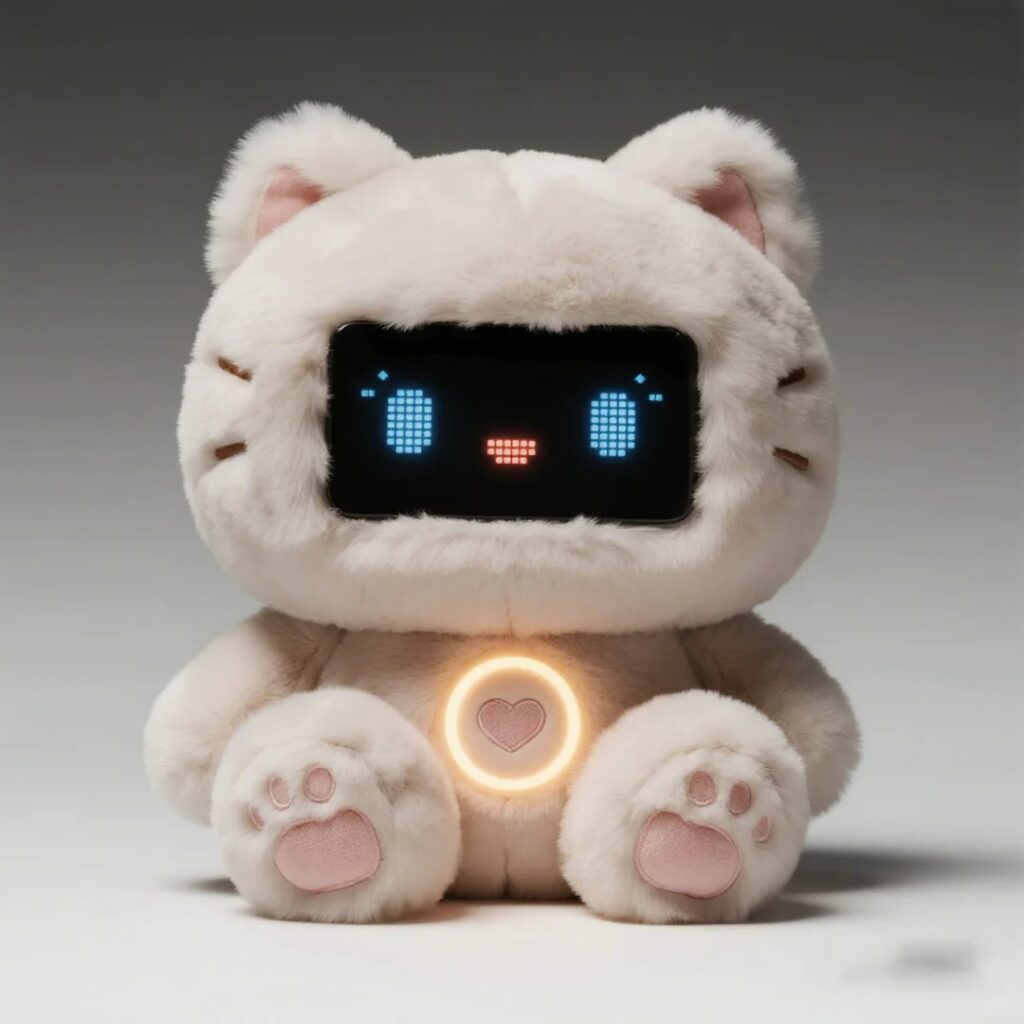
By 2026, AI-powered plush toys are no longer defined by a single “smart” feature. What matters is how multiple technologies are integrated into a stable, manufacturable, and compliant system that still feels like a plush toy—not a gadget wrapped in fabric. In practice, most successful AI plush projects rely on a layered architecture that balances interactivity, safety, cost, and long-term maintainability.
The most important structural shift is the move away from fully cloud-dependent designs toward hybrid AI architecture. Core interaction functions—such as wake-word detection, basic intent recognition, and simple dialogue routing—are increasingly handled on-device using low-power MCUs or edge AI chips. This ensures that the plush remains responsive even without internet access and avoids the “dead toy” experience that frustrated early adopters of smart toys.
Cloud-based AI still plays a role, but its function is changing. Instead of handling every interaction, cloud services are mainly used for content expansion, such as downloading new stories, seasonal dialogue packs, or language updates. This separation allows brands to update content without changing hardware, while keeping sensitive interactions localized. From a compliance perspective, this also reduces the volume of raw audio data transmitted off-device, which directly lowers privacy risk.
Another key integration area is AI-assisted content generation within strict boundaries. By 2026, many plush toys use AI tools to remix pre-approved stories, songs, or learning prompts rather than generate entirely new content. This approach gives children a sense of novelty while ensuring licensors, safety teams, and retailers can fully approve all possible outputs in advance.
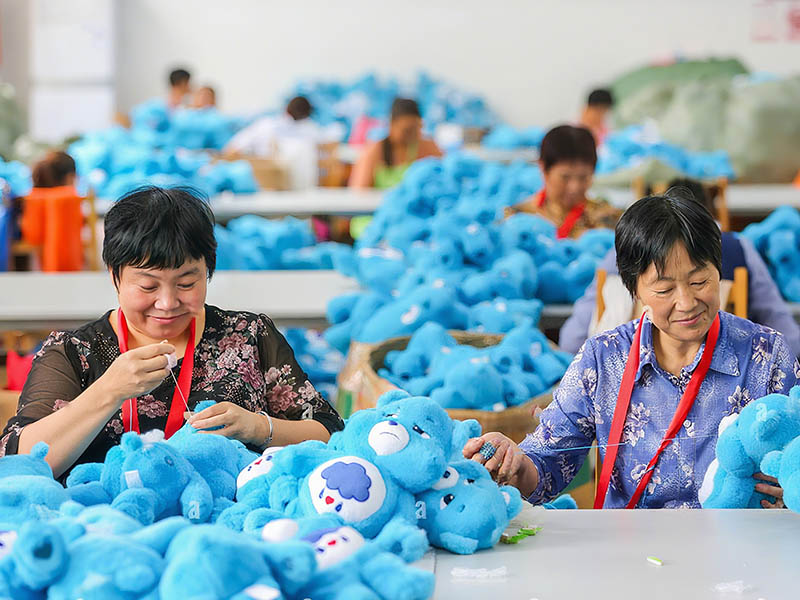
From an OEM and sourcing standpoint, the real complexity is not the AI model itself, but system coordination: microphone placement must work with plush thickness, speakers must be audible without distortion, batteries must meet safety standards, and firmware must remain stable across production batches. Brands that underestimate this integration work often face high defect rates, delayed launches, or compliance rework.
For B2B buyers, the right question is not “How advanced is the AI?” but “How predictable, controllable, and scalable is the AI system when produced at volume?”
| AI Technology Layer (2026) | How It’s Used in Plush Toys | Key B2B Evaluation Questions |
|---|---|---|
| On-device wake word & intent engine | Detects basic commands without internet | Does it work offline reliably? |
| Edge AI / MCU processing | Local speech parsing and logic | Heat, power draw, firmware stability? |
| Scripted dialogue framework | Controlled conversation flows | Are all outputs licensor-approved? |
| AI-assisted content variation | Remixing stories & routines | How are boundaries enforced? |
| Cloud content services | Seasonal updates & expansions | Can updates be frozen per market? |
| Companion app integration | Parental setup & controls | Is the app optional or mandatory? |
| Data minimization layer | Limits stored audio/data | What data is retained, where, and why? |
In short—but strategically important—AI technologies in plush toys by 2026 are less about raw intelligence and more about system discipline. Brands that succeed are those that treat AI as an invisible enabler of emotional interaction, not as a headline feature. When AI works quietly, safely, and consistently in the background, the plush toy remains what it should be: soft, comforting, and trusted.
How Voice Recognition and Conversational AI Change Plush Toy Interaction

Voice recognition is the single most transformative interface for AI-powered plush toys, but by 2026 its value is no longer measured by how much a plush can talk. What truly changes interaction quality is how predictably and appropriately the plush listens and responds. In real-world use, plush toys are handled by children in noisy, emotional, and often chaotic environments. That reality forces voice AI design to prioritize robustness and intent clarity over conversational freedom.
The strongest AI plush products rely on intent-based voice recognition, not open conversation. Instead of allowing unlimited questions, the system recognizes a controlled set of intents—such as greetings, comfort requests, bedtime routines, or learning prompts—and routes them through pre-defined dialogue trees. This design dramatically improves recognition accuracy, reduces user frustration, and prevents unexpected or unsafe responses. From a parent’s perspective, the toy feels “smart enough” without feeling unpredictable.
Conversational AI also reshapes how plush toys are used across time. Voice-enabled plush toys encourage routine-based interaction: morning greetings, bedtime storytelling, calming responses during stress, or simple check-ins. These repeated, emotionally consistent interactions increase long-term attachment and reduce novelty drop-off. Importantly, this is achieved without constant content expansion—good dialogue design does more than endless new phrases.
From a manufacturing and engineering standpoint, voice interaction introduces non-obvious constraints. Microphone placement must account for fabric thickness, stuffing density, and head structure. Noise isolation becomes critical, especially when the toy is hugged or squeezed. Speaker tuning must balance clarity with softness; harsh audio breaks the emotional illusion of a plush companion. Battery consumption also rises sharply with always-on or frequent listening modes, making power management a core design decision, not an afterthought.
For B2B buyers, conversational AI should be evaluated as an experience system, not a feature checklist. The key questions are: Does the plush respond consistently? Can interaction be paused or limited? Are parents clearly informed when the toy is listening? Voice AI that respects emotional context and household boundaries builds trust—and trust directly affects repeat purchase and retailer acceptance.
| Voice & Conversation Element | How It Changes Interaction | Key Evaluation for Brands |
|---|---|---|
| Intent-based recognition | More reliable responses | Is intent scope clearly defined? |
| Guided dialogue trees | Predictable, safe interaction | Are all responses pre-approved? |
| Routine-driven use | Stronger emotional attachment | Does it support daily habits? |
| Microphone placement | Better recognition quality | Tested under real plush conditions? |
| Audio tuning | Softer, comforting voice | Matches plush emotional role? |
| Listening indicators & controls | Increased parental trust | Clear on/off visibility? |
| Power management logic | Longer usable time | How often does charging occur? |
By 2026, voice recognition and conversational AI succeed in plush toys when they disappear into the experience. The child should not feel like they are operating technology; they should feel like they are being gently responded to. Brands that understand this difference design voice interaction as emotional infrastructure—not entertainment technology—and that distinction defines which AI plush products earn long-term market acceptance.
What Smart Sensors and Embedded Systems Enable Responsive Plush Behavior?
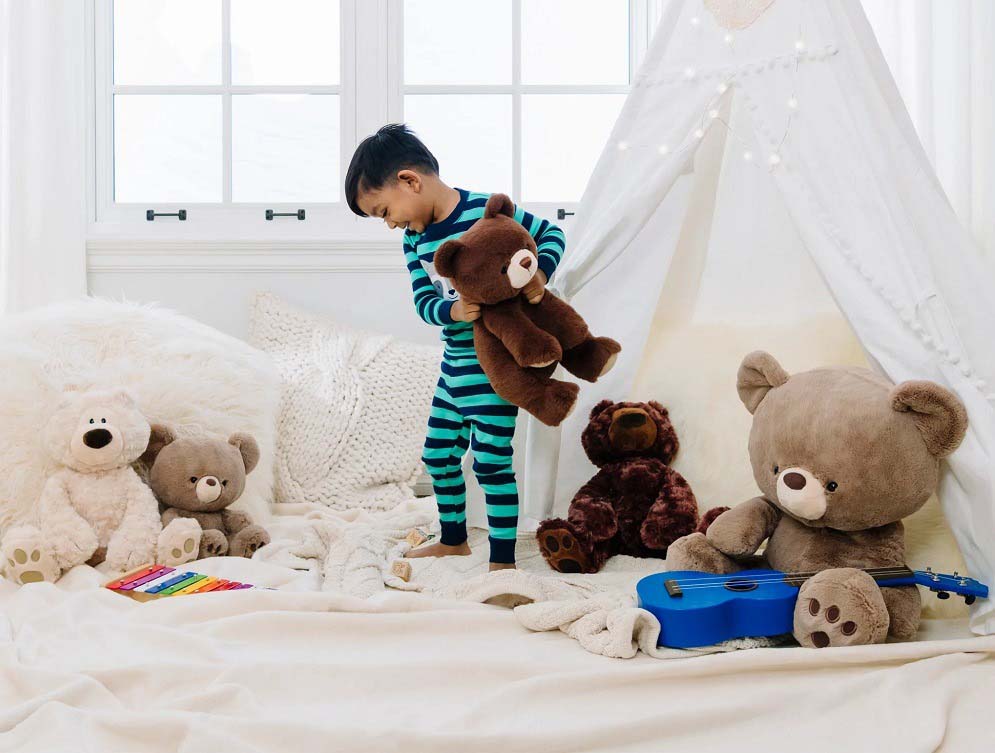
By 2026, many AI-powered plush toys feel “alive” not because they speak well, but because they respond physically and emotionally to touch and movement. Smart sensors and embedded systems are what transform a plush from a passive object into a responsive companion. In practice, these technologies allow plush toys to react to hugging, petting, shaking, rocking, or changes in orientation—behaviors that feel intuitive and emotionally meaningful, especially for young users.
The most widely adopted sensors are pressure sensors, capacitive touch sensors, and motion sensors. Pressure sensors embedded in the torso or belly detect hugs and squeezes, triggering calming sounds, breathing effects, or verbal reassurance. Capacitive sensors placed near the head, ears, or back allow the plush to respond to petting gestures, reinforcing nurturing behavior. Motion sensors such as accelerometers detect rocking, bouncing, or lifting, enabling responses like lullabies when rocked or playful sounds when shaken gently.
What matters is not the number of sensors, but how well they are integrated into the plush structure. Sensors must remain invisible to touch, survive repeated compression, and function consistently across thousands of units. Poor placement creates hard spots, uneven softness, or false triggers—issues that immediately break trust with both children and parents. For this reason, sensor layout must be decided during pattern making and internal structure design, not added late in development.
Embedded systems act as the “translator” between sensor input and plush behavior. A well-designed embedded controller filters noisy signals, prioritizes inputs (for example, ignoring motion while a bedtime routine is playing), and manages power consumption intelligently. In 2026, efficient embedded logic is often more important than advanced AI models because it determines reliability, battery life, and safety.
From an OEM perspective, sensors and electronics significantly affect production complexity. Wiring paths must be strain-relieved, connectors secured, and components fixed to prevent shifting during washing simulation, drop tests, and torque tests. Every added sensor increases assembly steps and quality checkpoints, so brands must balance interactivity with manufacturability. The most successful AI plush toys use just enough sensors to support their emotional role, rather than trying to respond to everything.
For B2B buyers, sensor-driven responsiveness is often easier to scale and certify than voice-heavy interaction. It delivers high perceived intelligence with lower privacy risk and more predictable performance—an important advantage when entering mass retail or international markets.
| Sensor / Embedded System | Enables This Behavior | Key Design & Production Consideration |
|---|---|---|
| Pressure (hug) sensor | Detects hugs and squeezes | Must avoid hard spots in body |
| Capacitive touch sensor | Responds to petting | Sensitive to fabric thickness |
| Accelerometer / motion sensor | Detects rocking or shaking | Requires stable internal mounting |
| Embedded control board | Interprets sensor signals | Filters noise, prioritizes actions |
| LED micro-module | Breathing or mood effects | Heat control and wiring safety |
| Speaker integration | Sound-based feedback | Needs acoustic cavity design |
| Power management system | Controls battery usage | Balances responsiveness vs runtime |
In 2026, smart sensors and embedded systems are the quiet backbone of successful AI plush toys. When executed well, they make interaction feel natural and emotionally reassuring without drawing attention to the technology itself. For brands, this layer is often where long-term product stability is decided—because a plush that responds reliably to touch builds attachment faster than one that simply talks.
What Smart Sensors and Embedded Systems Enable Responsive Plush Behavior?

By 2026, many AI-powered plush toys feel “alive” not because they speak well, but because they respond physically and emotionally to touch and movement. Smart sensors and embedded systems are what transform a plush from a passive object into a responsive companion. In practice, these technologies allow plush toys to react to hugging, petting, shaking, rocking, or changes in orientation—behaviors that feel intuitive and emotionally meaningful, especially for young users.
The most widely adopted sensors are pressure sensors, capacitive touch sensors, and motion sensors. Pressure sensors embedded in the torso or belly detect hugs and squeezes, triggering calming sounds, breathing effects, or verbal reassurance. Capacitive sensors placed near the head, ears, or back allow the plush to respond to petting gestures, reinforcing nurturing behavior. Motion sensors such as accelerometers detect rocking, bouncing, or lifting, enabling responses like lullabies when rocked or playful sounds when shaken gently.
What matters is not the number of sensors, but how well they are integrated into the plush structure. Sensors must remain invisible to touch, survive repeated compression, and function consistently across thousands of units. Poor placement creates hard spots, uneven softness, or false triggers—issues that immediately break trust with both children and parents. For this reason, sensor layout must be decided during pattern making and internal structure design, not added late in development.
Embedded systems act as the “translator” between sensor input and plush behavior. A well-designed embedded controller filters noisy signals, prioritizes inputs (for example, ignoring motion while a bedtime routine is playing), and manages power consumption intelligently. In 2026, efficient embedded logic is often more important than advanced AI models because it determines reliability, battery life, and safety.
From an OEM perspective, sensors and electronics significantly affect production complexity. Wiring paths must be strain-relieved, connectors secured, and components fixed to prevent shifting during washing simulation, drop tests, and torque tests. Every added sensor increases assembly steps and quality checkpoints, so brands must balance interactivity with manufacturability. The most successful AI plush toys use just enough sensors to support their emotional role, rather than trying to respond to everything.
For B2B buyers, sensor-driven responsiveness is often easier to scale and certify than voice-heavy interaction. It delivers high perceived intelligence with lower privacy risk and more predictable performance—an important advantage when entering mass retail or international markets.
| Sensor / Embedded System | Enables This Behavior | Key Design & Production Consideration |
|---|---|---|
| Pressure (hug) sensor | Detects hugs and squeezes | Must avoid hard spots in body |
| Capacitive touch sensor | Responds to petting | Sensitive to fabric thickness |
| Accelerometer / motion sensor | Detects rocking or shaking | Requires stable internal mounting |
| Embedded control board | Interprets sensor signals | Filters noise, prioritizes actions |
| LED micro-module | Breathing or mood effects | Heat control and wiring safety |
| Speaker integration | Sound-based feedback | Needs acoustic cavity design |
| Power management system | Controls battery usage | Balances responsiveness vs runtime |
In 2026, smart sensors and embedded systems are the quiet backbone of successful AI plush toys. When executed well, they make interaction feel natural and emotionally reassuring without drawing attention to the technology itself. For brands, this layer is often where long-term product stability is decided—because a plush that responds reliably to touch builds attachment faster than one that simply talks.
How AI-Powered Plush Toys Balance Interactivity with Child Safety and Privacy

By 2026, child safety and data privacy are no longer “compliance checkboxes” for AI-powered plush toys—they are core product attributes that directly influence retailer acceptance, parent trust, and long-term brand credibility. As plush toys become more interactive through voice, sensors, and connectivity, brands must carefully balance emotional engagement with strict safety and privacy boundaries. When this balance fails, even well-designed products can be rejected by buyers or platforms.
The first challenge is physical safety under electronic integration. AI plush toys contain batteries, circuit boards, wiring, and sometimes charging ports. These components must be fully enclosed, mechanically secured, and protected against impact, compression, and repeated handling. Any internal hard component that becomes detectable through squeezing or hugging undermines both safety and the core “soft toy” promise. For this reason, electronics enclosure design and internal padding strategy are as critical as external fabric selection.
The second—and often more sensitive—challenge is privacy and data governance. Voice-enabled plush toys naturally raise concerns about listening behavior. By 2026, best-in-class products clearly separate “activation” from “passive presence.” This usually means wake-word detection or push-to-talk logic combined with clear visual or physical indicators when audio capture is active. Parents want to know when the toy is listening, and children should never feel that the toy is secretly observing them.
Data minimization is another key principle. Most successful AI plush toys avoid storing raw audio altogether. Instead, they process commands locally or convert them into non-identifiable intent data. When cloud services are used, they are typically limited to content delivery rather than continuous data collection. Parental apps increasingly include permissions dashboards, audio deletion options, and regional compliance settings, especially for markets governed by COPPA, GDPR-K, or similar regulations.
From a B2B standpoint, safety and privacy design decisions directly affect distribution potential. Major retailers, e-commerce platforms, and licensing partners often impose requirements that go beyond legal minimums. A plush toy that technically passes regulation but lacks transparent safety communication may still be refused. Brands that proactively design for privacy-first interaction reduce approval friction and post-launch risk.
Ultimately, interactivity should never compromise trust. The most successful AI plush toys feel emotionally responsive while remaining predictable, controllable, and clearly bounded. This balance reassures parents and allows children to engage freely without hidden risks.
| Safety & Privacy Area | Key Risk | Strong Design Approach |
|---|---|---|
| Internal electronics | Injury or hard spots | Fully padded, fixed enclosures |
| Battery & charging | Overheating or access | Certified packs, protected ports |
| Voice listening behavior | Unclear data capture | Wake-word or push-to-talk only |
| Audio data handling | Privacy violations | Local processing, no raw storage |
| Parental control | Lack of transparency | App-based permissions & indicators |
| Regulatory exposure | Market rejection | Design beyond minimum compliance |
By 2026, AI-powered plush toys succeed when safety and privacy are built into the interaction model, not added after development. Brands that treat trust as part of the user experience—not just a legal requirement—are far more likely to achieve long-term success across global markets.
How Brands Can Strategically Use AI Plush Toys to Differentiate Future Product Lines

By 2026, AI-powered plush toys deliver real value only when they are treated as a long-term product strategy, not a one-off innovation experiment. Brands that succeed do not ask, “What AI feature can we add?” Instead, they ask, “What emotional role should this plush play, and how can AI quietly support that role across a full product line?”
The most effective strategy is platform-based design. Rather than developing unique electronics for every plush character, leading brands build a shared AI and electronics core that can be reused across multiple plush forms. The outer plush—character, size, fabric, and styling—changes, while the internal system remains stable. This dramatically reduces development cost, simplifies certification, and accelerates future launches. It also improves reliability, because the core system is already proven at scale.
AI plush differentiation also works best when interaction is role-driven, not feature-driven. A bedtime plush should focus on calming voice tone, slow responses, breathing or heartbeat effects, and predictable routines. A learning plush may prioritize question prompts, repetition, and encouragement. A fandom or licensed character plush should reinforce personality through voice style and limited, recognizable phrases. AI should enhance the character’s emotional consistency, not distract from it.
From a brand-building perspective, AI plush toys enable extended product lifecycles. With controlled content updates—seasonal stories, holiday routines, or new dialogue packs—a single plush SKU can remain relevant far longer than traditional toys. This supports better inventory planning and reduces pressure to constantly launch new hardware. However, content updates must be governed carefully to avoid fragmenting user experience or violating licensing approvals.
For B2B buyers and retailers, brands that clearly articulate their AI plush strategy are easier to trust. When a brand can explain how AI supports safety, consistency, and long-term value—not just novelty—it reduces buyer hesitation and shortens decision cycles. In 2026, differentiation is not about being the “smartest” plush, but about being the most emotionally reliable and operationally disciplined one.
| Strategic Lever | How It Differentiates Brands | Execution Guidance |
|---|---|---|
| Shared AI platform | Faster line expansion | Reuse core electronics |
| Role-based interaction | Clear product identity | Align AI with use case |
| Character-consistent voice | Strong emotional memory | Limit phrases per role |
| Controlled content updates | Longer product life | Scheduled, approved releases |
| Licensing-friendly AI scripts | Easier approvals | Pre-defined dialogue sets |
| Scalable manufacturing model | Lower long-term cost | Stable BOM & firmware |
In 2026, AI-powered plush toys become powerful brand assets only when they are designed as systems that scale emotionally and operationally. Brands that use AI to quietly reinforce trust, comfort, and character consistency—rather than chasing novelty—are the ones that will build sustainable product lines and long-term customer loyalty.
Conclusion
By 2026, AI-powered plush toys are no longer about adding intelligence for novelty, but about designing emotionally reliable, safe, and scalable interaction systems. Brands that succeed treat AI as supportive infrastructure—enhancing comfort, routine, and character consistency—while maintaining strict control over safety, privacy, manufacturability, and long-term cost. When AI quietly reinforces trust instead of demanding attention, plush toys evolve from smart gadgets into enduring emotional companions.
📧 Contact: [email protected]
🌐 Visit: https://kinwintoys.com