A talk-back plush with a “Press & Hold to Record” belly patch, plus an inside view showing a microphone, speaker, and battery compartment.
Plush toys that repeat what you say look simple, but they succeed or fail on engineering details most shoppers never see. If the voice is muffled, the button triggers randomly in shipping, or the battery door feels unsafe, customers will assume the toy is “broken”—and returns will follow.
I’m Amanda from Kinwin. When I develop repeat-voice plush for B2B buyers (USA, Europe, Japan, and more), I treat it as a complete system: microphone + chip + memory + speaker + switch + battery + plush structure. Below, I’ll explain how the voice loop works, which module technologies are common, how materials affect sound, what safety/privacy/compliance matters, how batteries impact user experience, and how OEM manufacturers customize these products for branding and scale.
How do plush toys record and repeat human voice in real time?
Most “repeat what you say” plush toys don’t truly repeat in real time like a phone call. They usually use a short record → store → playback loop that feels instant to the user:
- Activation: A squeeze/press triggers the module
- Recording: The microphone captures the voice
- Storage: The audio is saved in onboard memory
- Playback: The speaker plays it back, often immediately
From a manufacturing view, the big performance difference is consistency: the mic and speaker must stay in the same position every time. If the module floats inside the stuffing, sound quality and triggering will vary unit to unit.
That’s why I almost always build an internal cradle/pocket to fix the module in place and create a predictable “sound path” from speaker to the outside surface.
| System Part | What It Does | What Customers Notice | OEM Control Point |
|---|---|---|---|
| Microphone | Captures voice | Clear vs muffled recording | Mic opening placement and protection |
| Voice chip + memory | Stores audio | Delay, distortion, repeat stability | Module selection + QC sampling |
| Speaker | Plays audio | Loudness and word clarity | Speaker direction + internal cavity |
| Switch/trigger | Starts record/play | Ease and reliability | Switch type + travel distance |
| Battery + compartment | Powers module | How long it works | Battery type + child-resistant access |
| Internal cradle | Locks module position | Consistent performance | Sewing method + placement tolerance |
Which voice modules and chip technologies are used in repeat-sound plush toys?
In the market, most repeat-voice plush toys rely on compact record/playback sound modules. The technology typically falls into three practical buckets:
- Dedicated voice record/playback IC modules
- Simple, cost-effective, stable for short recordings
- Common in mass retail and promotions
- Microcontroller-based modules (MCU + audio)
- More flexible control (modes, better power management, tuning)
- Better for premium lines and stricter QA programs
- Hybrid modules (preloaded audio + repeat/record)
- Used for branding, licensing, and “story” plush
- More complexity, more battery planning
If your product is for kids, reliability matters more than adding features. A “simple loop that always works” beats a multi-mode product that confuses users.
| Module Type | Typical Strength | Best Fit | Main Risk to Manage |
|---|---|---|---|
| Dedicated record/playback module | Simple + low cost | Value retail, promo plush | Sound clarity depends on plush design |
| MCU-based module | Better control + tuning | Premium gift lines | Higher engineering + test effort |
| Hybrid (preloaded + record) | Branding + story | Licensed/brand programs | Battery drain + complexity |
How do fabric thickness and internal structure affect sound clarity and volume?
This is where many brands lose reviews. The electronics can be fine, but the plush body blocks sound.
Three factors dominate sound quality:
- Fabric thickness / pile height: thicker or long-pile fabrics absorb high-frequency speech, making words less clear
- Stuffing density: too dense blocks speaker vibration; too loose lets the module shift
- Sound path design: mic and speaker need a “breathing route” to the surface
In practice, I control this with a small speaker cavity and a defined mic zone—often under a thin patch or a breathable layer. The goal is to keep the outside soft while letting sound travel.
Image: Internal layout showing a fixed module pocket, a speaker cavity, and a mic opening zone.
| Design Variable | What Happens to Sound | What Customers Hear | Fix That Scales Well |
|---|---|---|---|
| Thick plush over speaker | Absorbs sound | Muffled playback | Create a thinner “speaker window” panel |
| Long fur near mic | Dampens input | Recording sounds “far away” | Move mic to flatter surface zone |
| Dense stuffing around speaker | Blocks vibration | Low volume/distortion | Keep a small cavity near speaker |
| Loose stuffing | Module shifts | Sound changes per squeeze | Add internal cradle + support fill |
| Speaker facing inward | Traps sound | Weak playback | Angle speaker toward outer surface |
If you sell online, I recommend a basic “carton compression test” during development. Many “muffled sound” complaints only appear after shipping compression changes the internal structure.
What safety, privacy, and compliance standards apply to voice-repeat plush toys?
A repeat-voice plush is still a toy, but the electronics and batteries add extra safety layers.
Toy safety (USA)
In the U.S., ASTM F963 is the key toy safety standard, and CPSC business guidance explains that not all sections apply to every toy—brands must identify applicable sections by product type. U.S. Consumer Product Safety Commission
Sound-producing toy requirements also matter. The Federal Register rule mandating ASTM F963 discusses sound limits and testing distances in ASTM F963-23. Federal Register
Electric toy safety (EU)
For Europe, electric toy safety is commonly assessed under IEC/EN IEC 62115 for toys with electrical functions (including battery-operated toys). IEC Webstore+1
Button/coin battery safety (USA)
If your plush uses button/coin cells, the U.S. rule 16 CFR Part 1263 sets performance and labeling requirements intended to prevent child access to these batteries. eCFR+1
A Federal Register notice also explains that 16 CFR 1263 incorporates ANSI/UL 4200A by reference for products containing button/coin batteries. Federal Register
Privacy (only if connected)
Most repeat-voice plush toys store audio locally and do not connect to the internet. Privacy risk rises if the toy is internet-connected or transmits audio. The FTC’s COPPA FAQ addresses toys that use microphones with internet-connected functions and explains when verifiable parental consent may be required. Federal Trade Commission
General consumer warnings about internet-connected toys with microphones also exist (for example, FBI IC3 advisories). ic3.gov
| Risk Area | What It Covers | Why It Matters | What I Build Into the Product |
|---|---|---|---|
| Toy safety | Mechanical hazards, durability | Market access + fewer recalls | Early test plan + age grading discipline U.S. Consumer Product Safety Commission |
| Sound limits | Excessive SPL exposure | Hearing safety | Volume control + validation testing Federal Register |
| Electric toy safety (EU) | Battery/electrical hazards | CE compliance pathway | Design to IEC/EN IEC 62115 IEC Webstore |
| Button/coin battery access | Ingestion risk | Serious child hazard | Child-resistant door + labeling eCFR+1 |
| Privacy (connected) | Audio data collection/transmission | Legal + trust risk | Data minimization + consent planning Federal Trade Commission |
My practical recommendation is simple: if your product doesn’t need connectivity, don’t add it. Local record/playback is easier to keep safe, compliant, and trusted.
How do battery systems, lifespan, and durability impact user experience?

Battery design drives reviews. Most negative feedback falls into three buckets:
- “Arrived dead” (accidental activation during shipping)
- “Stopped working fast” (poor power management or weak switch)
- “Battery door feels unsafe” (access design and materials)
Battery options typically include:
- AAA: longer life, easier replacement, needs more space
- Button/coin cells: compact, but stricter safety compliance expectations in the U.S. under 16 CFR 1263 eCFR
- Rechargeable packs: premium positioning, more design/testing complexity
Durability also depends on:
- press/squeeze cycle life (switch wear)
- wire routing and strain relief
- module fixation (no shifting)
- moisture resistance around the module area
| Battery/Design Choice | User Benefit | Main Risk | Best OEM Fix |
|---|---|---|---|
| AAA batteries | Longer lifespan | Larger compartment affects aesthetics | Hide compartment in back/side with strong structure |
| Button/coin cell | Compact module | Compliance + access control demands eCFR | Child-resistant door + required labeling Federal Register |
| Packaging activation control | Prevent “dead on arrival” | Random triggers in transit | Insert blocker or power switch strategy |
| Fixed module pocket | Stable sound + trigger feel | Shifting reduces clarity | Sewn cradle with tolerance control |
| Strain relief wiring | Longer life | Break after repeated squeezes | Protective routing + slack design |
If you sell on Amazon or high-return channels, battery and packaging decisions often matter more than the “chip brand.”
How can OEM manufacturers customize repeat-voice plush toys for brands?
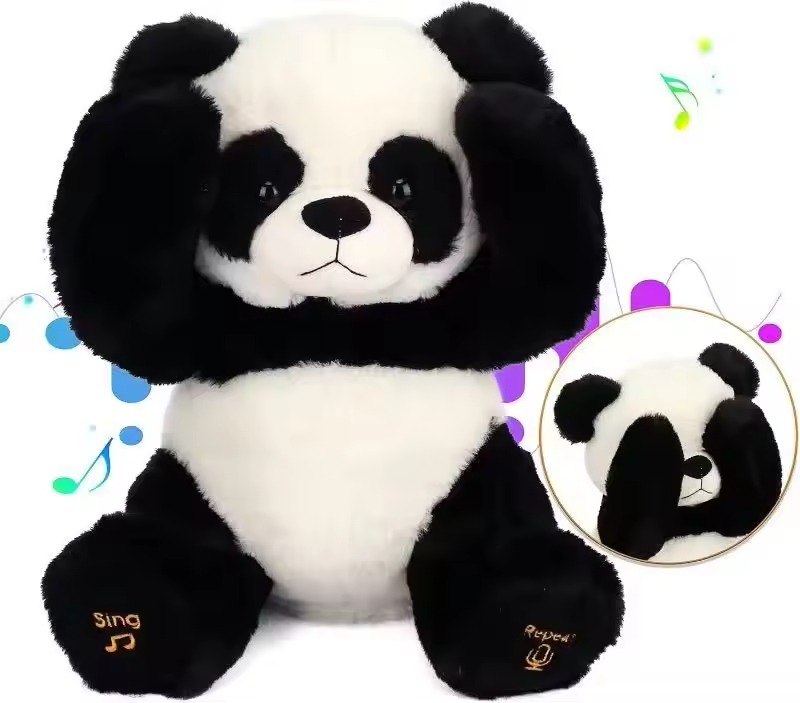
Repeat-voice plush is excellent for branding because the interaction is emotional and shareable. But the best OEM customization is not only adding a logo—it is building a repeatable, scalable product system.
High-value customization options include:
- User flow: press-and-hold record vs press-toggle
- Recording length: short/medium limits to control battery drain
- Trigger location: belly, paw, ear—where users naturally press
- Audio tuning: volume and clarity targets for the age group
- Brand visuals: “Press Here” patch, hang tag, woven label, packaging inserts
- Market documentation: warnings, battery labeling, age grading consistency
- QC plan: sound check + press-cycle sampling + carton simulation
| OEM Custom Area | What You Can Change | Why It Improves Market Performance | What I Need From You |
|---|---|---|---|
| Interaction design | Trigger type + location | Fewer user errors | Target age + usage scenario |
| Recording behavior | Time limit + playback logic | Better battery experience | Message length expectations |
| Sound clarity tuning | Speaker direction + cavity | Better reviews | Final fabric choice + plush size |
| Branding surfaces | Patch/label/packaging | Stronger identity in photos | Brand files + placement rules |
| Scale QC standard | Test points + acceptance criteria | Lower returns | Your channel and risk tolerance |
At Kinwin, we support repeat-voice plush from ODM design to sampling to scalable production, with the goal of stable clarity, safe battery design, and consistent output across large runs. If you’re planning a repeat-voice plush program for retail, promotions, or licensed characters, you can reach me at [email protected] or visit kinwintoys.com.
Conclusion
The best repeat-voice plush combines clear sound, stable structure, safe battery design, and a QC plan that scales. At Kinwin, we help global buyers develop customized voice plush solutions that meet safety expectations and perform consistently in real markets. Contact me at [email protected] or visit kinwintoys.com to discuss your next project.