Skip to content
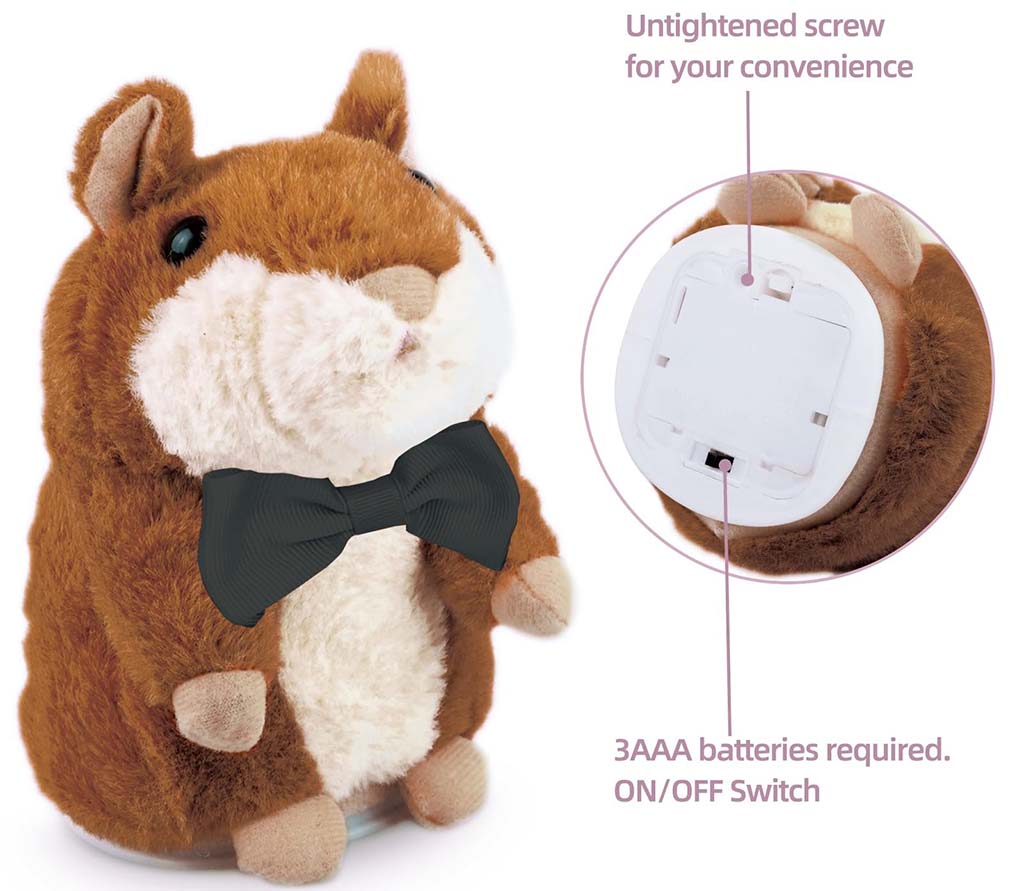
A plush toy with a “Press to Talk” patch and a hidden voice-repeat module.
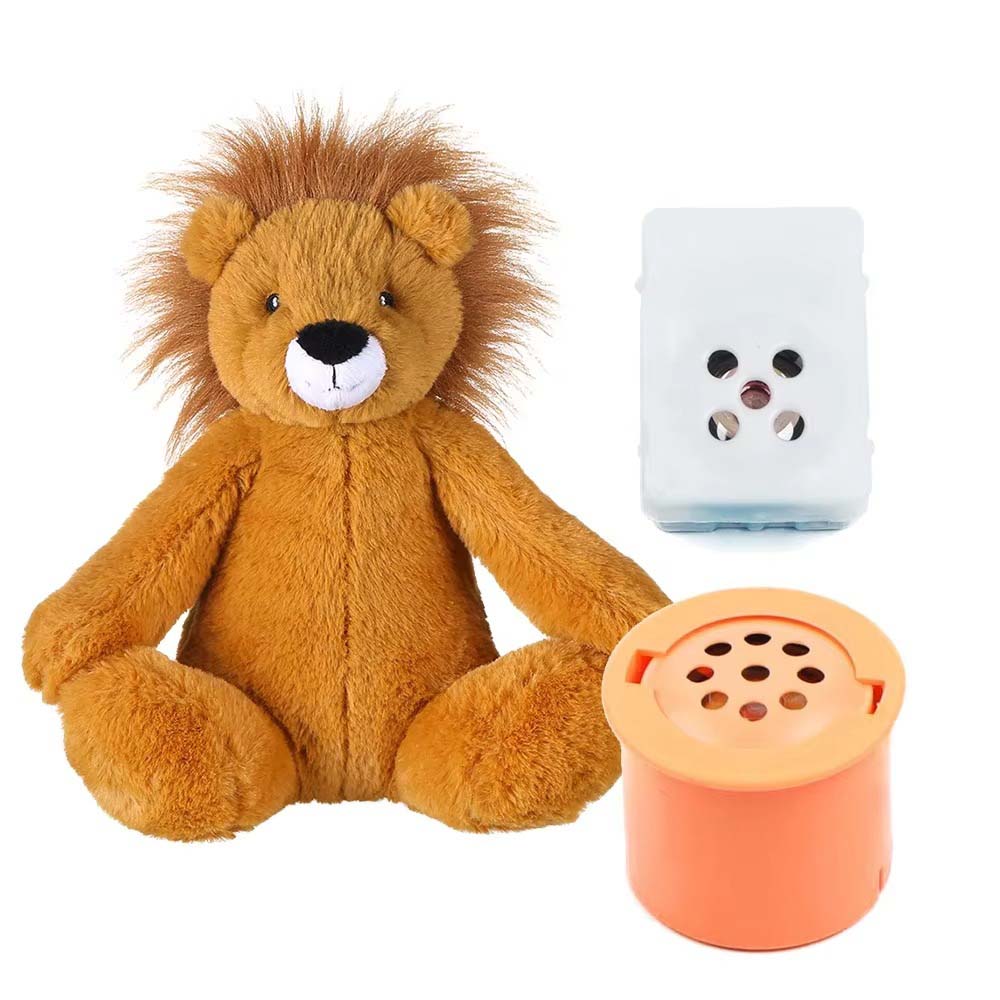
When a talking stuffed animal repeats a child’s voice, it creates an instant “wow” moment. But for brands, the product is only successful if that moment stays consistent after shipping, rough play, and thousands of presses. In my OEM/ODM work at Kinwin, I treat repeat-voice plush as a full system: microphone, chip, speaker, switch, battery, and the plush body acting like a sound chamber.
A repeat-voice plush records sound through a small microphone, stores it on a voice chip, and plays it back through a speaker when the trigger is pressed. The hardest part is not making it work once—it is making it clear, durable, safe, and compliant at scale in the USA and Europe.
How do talking stuffed animals record, store, and repeat user speech?
Most repeat-voice plush toys follow a simple loop: press → record → store → playback. The toy uses a trigger (squeeze belly, press paw, or button) to activate the module. The microphone captures the voice, the chip converts it into a stored audio signal, and the speaker plays it back.
From a manufacturing view, the biggest quality differences come from module placement and airflow design. If the microphone or speaker gets buried under dense stuffing, recordings become muffled. If the module floats inside the plush, it shifts, the trigger feels inconsistent, and the sound changes unit to unit. I solve this by building a stitched inner pocket or cradle that locks the module position and keeps a predictable “record/play” spot for the user.
You will usually see one of these user flows:
- Press and hold to record; release to play back (very intuitive for kids)
- Press once to record; press again to play (more control, but more steps)
Here is the “system map” I use to explain performance to buyers:
| System Part | What It Does | What Customers Notice | What I Control in OEM Assembly |
|---|---|---|---|
| Trigger (switch) | Starts record/play | Ease of activation | Switch type + travel distance |
| Microphone | Captures voice | Clarity of recording | Mic opening placement + protection |
| Voice chip + memory | Stores audio | Delay, stability, repeat accuracy | Module selection + QC sampling |
| Speaker | Outputs sound | Volume and tone | Speaker direction + internal space |
| Battery system | Powers module | How long it works | Battery choice + compartment design |
| Inner cradle/pocket | Fixes module position | Consistency across units | Stitching method + tolerance control |
If you are selling on Amazon or in gift retail, consistency is the “U-shaped” win: fewer returns, fewer “sounds broken” reviews, and stronger repeat orders.
Which sound modules and voice-chip technologies are most commonly used?
In the market, most repeat-voice plush toys use compact record/playback sound modules that combine microphone input, storage, and speaker output into one small unit. The most common approaches fall into three buckets:
- Dedicated voice record/playback IC modules
- Microcontroller-based modules (more features, better tuning)
- Hybrid modules (preloaded audio + user recording)
Dedicated voice chips are widely used because they are simple, cost-effective, and easy to integrate into soft toys. You’ll often see record-and-playback chip families referenced in module listings (for example, ISD-style voice record/playback modules), showing how common this technology category is for short voice recording. Federal Trade Commission
Microcontroller solutions make sense when you need better audio control, multiple modes, or tighter power management. They cost more and require more engineering and testing, but they can support premium performance—especially for branded product lines where customer expectations are higher.
This comparison helps buyers pick the right technology for their price tier:
| Module / Chip Approach | Typical Recording Time | Flexibility | Best Fit | Main Tradeoff to Manage |
|---|---|---|---|---|
| Dedicated voice record/playback module | Short to medium | Medium | Mass retail, promo plush | Sound quality depends heavily on plush design |
| Microcontroller + audio codec | Medium to long | High | Premium plush, better tuning | Higher engineering + QA effort |
| Preloaded sound module (no recording) | None | Medium | Brand slogans, songs | Less interactive value |
| Hybrid (preloaded + repeat) | Both | High | Premium gift lines | Battery drain + complexity |
My rule is practical: if your product promise is “repeat what you say,” do not overload the module with extra features that increase defect risk. A stable, simple repeat function usually wins in real customer reviews.
How do fabric thickness, stuffing density, and design affect sound clarity?
Many buyers assume the sound file or chip is the main factor. In plush, the body is part of the audio system. Fabric thickness, pile height, stuffing density, inner lining, and even where the speaker faces will change how clear the voice sounds.
Thicker plush fabric and long pile can absorb higher frequencies, making speech less crisp. Overly dense stuffing can choke the speaker and reduce volume. On the other hand, under-stuffing can make the module shift and cause inconsistent performance.
When I design repeat-voice plush, I build a controlled “sound path”:
- a clean mic opening area (hidden under a patch or behind a thin layer)
- a small internal cavity near the speaker (so it can vibrate)
- stable stuffing zones around the module (so it doesn’t sink)
Image: Internal layout showing mic area, speaker cavity, and fixed module pocket.
Use this table to predict clarity before sampling:
| Design Variable | Typical Impact on Sound | What Customers Hear | OEM Fix That Works Well |
|---|---|---|---|
| Thick fabric panel | More absorption | Muffled playback | Use a thinner “speaker window” panel area |
| Long pile plush | Less speech definition | Softer, less clear words | Face speaker toward flatter fabric zone |
| High stuffing density | Lower volume, possible distortion | “Blocked” sound | Create a small cavity around speaker |
| Low stuffing density | Module moves, trigger shifts | Sound changes each press | Add inner cradle + support fill |
| Tight inner lining | Dampens output | Lower loudness | Use breathable lining near speaker |
| Speaker facing inward | Sound trapped inside | Weak playback | Angle speaker toward outer surface |
For brands, this is a direct benefit: better clarity means stronger store demos, better unboxing reactions, and fewer returns from customers who think the toy is “defective” when it’s really just muffled design.
What safety, privacy, and compliance standards apply to voice-repeat plush toys?
Repeat-voice plush sits at the intersection of toy safety, electronics safety, battery safety, and sometimes privacy—depending on whether the toy stores audio locally or sends it online.
Toy safety and acoustics
In the USA, toy safety commonly centers on ASTM F963, and the CPSC provides guidance to help firms identify which sections of ASTM F963 apply and which require third-party testing. U.S. Consumer Product Safety Commission+1
Sound-producing toys also have acoustics requirements inside ASTM F963, and CPSC rulemaking activity around ASTM F963-23 highlights sound limits and testing approaches for certain toy categories. regulations.gov+1
Electric toy safety (EU and other markets)
For electric functions in toys (battery powered modules included), EN IEC 62115 is a key safety standard framework used for electric toys in Europe. webstore.iec.ch+2TÜV SÜD+2
Button/coin battery safety
If a toy uses a button cell or coin battery, battery access control becomes a high-focus requirement. CPSC’s business guidance explains Reese’s Law implementation and that a rule incorporates ANSI/UL 4200A as a mandatory safety standard for products containing button/coin batteries. U.S. Consumer Product Safety Commission+1
Privacy and data handling
If your repeat-voice plush is offline (records and plays back locally, with no app and no internet connection), privacy risk is much lower. But if the toy is connected (app/Wi-Fi/Bluetooth storing or transmitting audio), privacy laws and security guidance become important. COPPA is the main U.S. children’s privacy rule for online collection of data from children under 13, and the FTC provides official COPPA FAQs for compliance context. Federal Trade Commission
General warnings about connected toys and microphones also appear in consumer cybersecurity guidance, such as the FBI’s public advisory on internet-connected toys. ic3.gov
This table helps B2B teams plan compliance and messaging:
| Area | What It Covers | Why It Matters | What Brands Should Build In |
|---|---|---|---|
| Toy safety (US) | ASTM F963 sections by toy type U.S. Consumer Product Safety Commission+1 | Market access + reduced recall risk | Identify applicable sections early |
| Acoustics | Sound level / exposure limits regulations.gov+1 | Hearing safety + complaints | Control volume + test plan |
| Electric toy safety (EU) | EN IEC 62115 framework webstore.iec.ch+1 | Electrical hazards control | Battery module design + insulation |
| Button/coin battery safety | UL 4200A pathway via CPSC guidance U.S. Consumer Product Safety Commission+1 | Ingestion risk prevention | Child-resistant compartment, warnings |
| Privacy (connected toys) | COPPA + cybersecurity attention Federal Trade Commission+1 | Brand trust + legal exposure | Data-minimization, clear consent flows |
| Labeling & instructions | Warnings + use guidance | Prevent misuse | Simple, readable instructions |
As Amanda, my practical advice is: if you do not need connectivity, don’t add it. A local record-and-repeat toy is easier to keep safe, compliant, and trusted.
How do battery type, lifespan, and replacement design impact product quality?
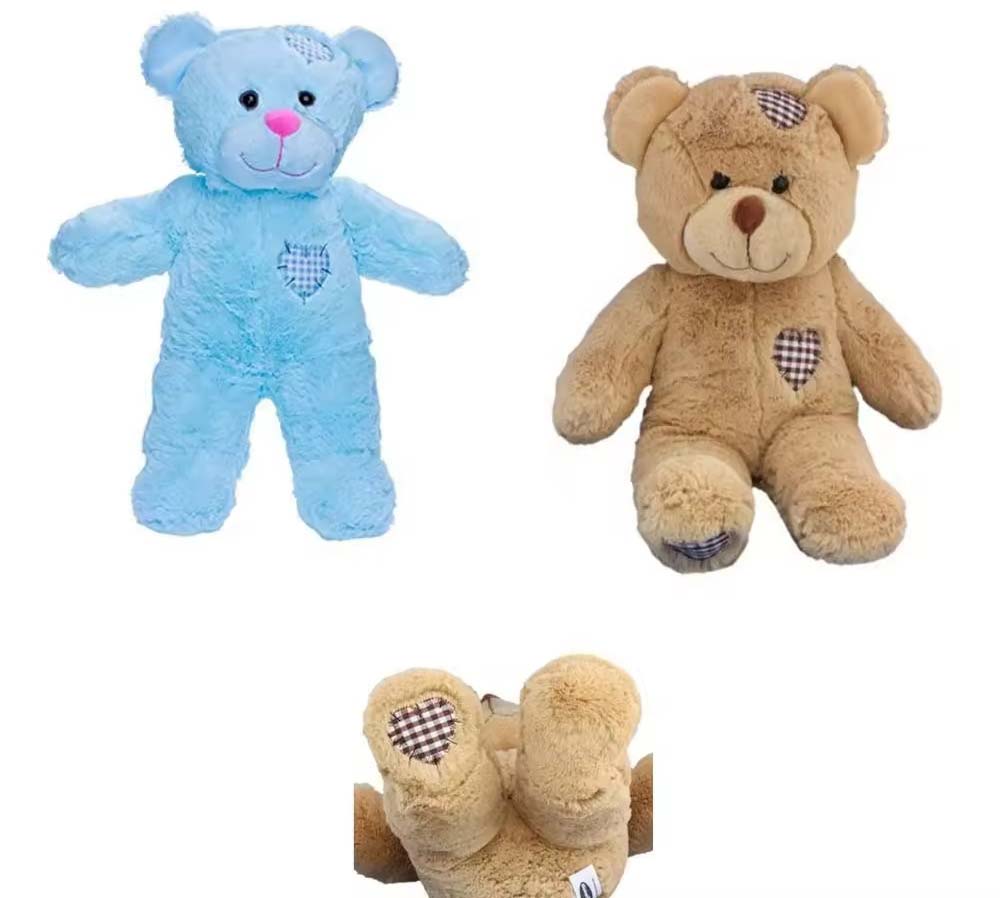
Battery design is one of the biggest drivers of long-term customer satisfaction. Many negative reviews come from: “It stopped working,” “It arrived dead,” or “The battery compartment is unsafe.”
Repeat-voice plush commonly uses:
- AAA batteries (strong power, easier replacement, needs more space)
- Button/coin cells (compact, but stricter safety focus)
- Rechargeable packs (premium option, more complexity)
If the toy is for young children and the plush body is large enough, I often prefer AAA because the performance is stable and the user experience is easier. If a button/coin cell is required for size reasons, I plan the product around strict battery access protection and labeling expectations connected to Reese’s Law / UL 4200A guidance. U.S. Consumer Product Safety Commission+1
Durability is also about cycle life and protection:
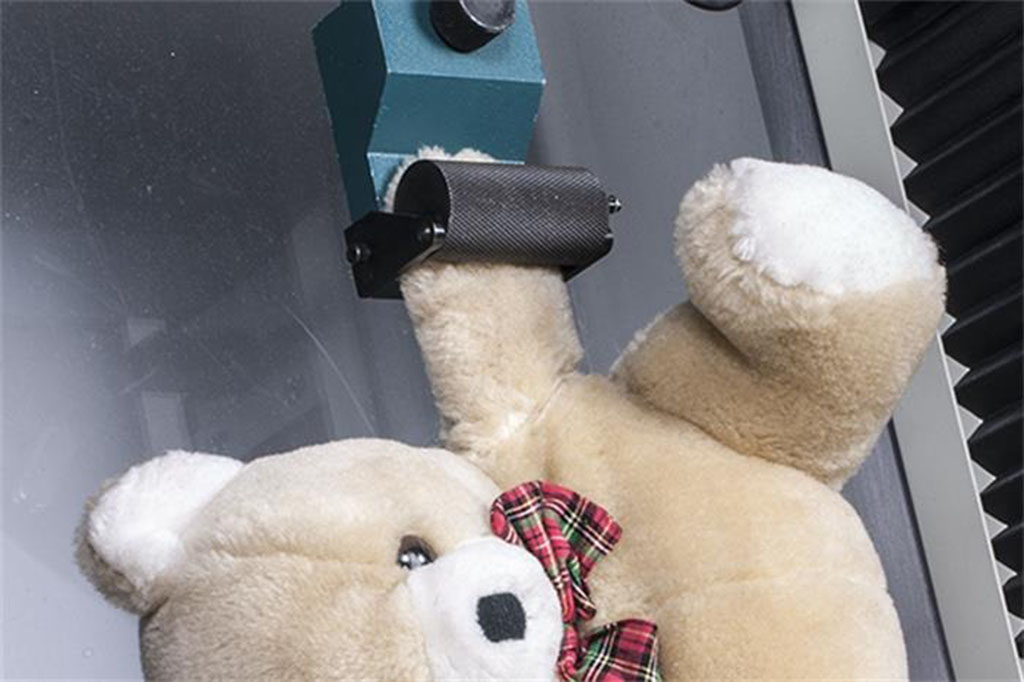
- switch cycle testing (press thousands of times)
- wire routing that avoids bending stress
- moisture resistance (drool happens)
- compartment design that doesn’t crack under drops
Here is a decision table B2B buyers can use:
| Battery System | Pros for Buyers | Cons to Plan For | Best Use Case | Design Priority |
|---|---|---|---|---|
| AAA (alkaline) | Longer lifespan, easy replacement | Needs space | Medium/large plush | Strong compartment + stable placement |
| Button/coin cell | Very compact | High ingestion-risk focus U.S. Consumer Product Safety Commission+1 | Small plush | Child-resistant access + warnings |
| Rechargeable pack | “Premium” feel, less replacement | More electronics + port risk | Higher price tiers | Charging safety + port protection |
| Non-replaceable battery | Simple, low parts | Short product life once drained | Low-use novelty | Clear lifecycle expectations |
If you sell in e-commerce, one simple improvement reduces returns: design packaging to prevent accidental activation in transit. This protects battery life and reduces “dead on arrival” complaints.
How can OEM manufacturers customize repeat-voice plush for branding and scale?
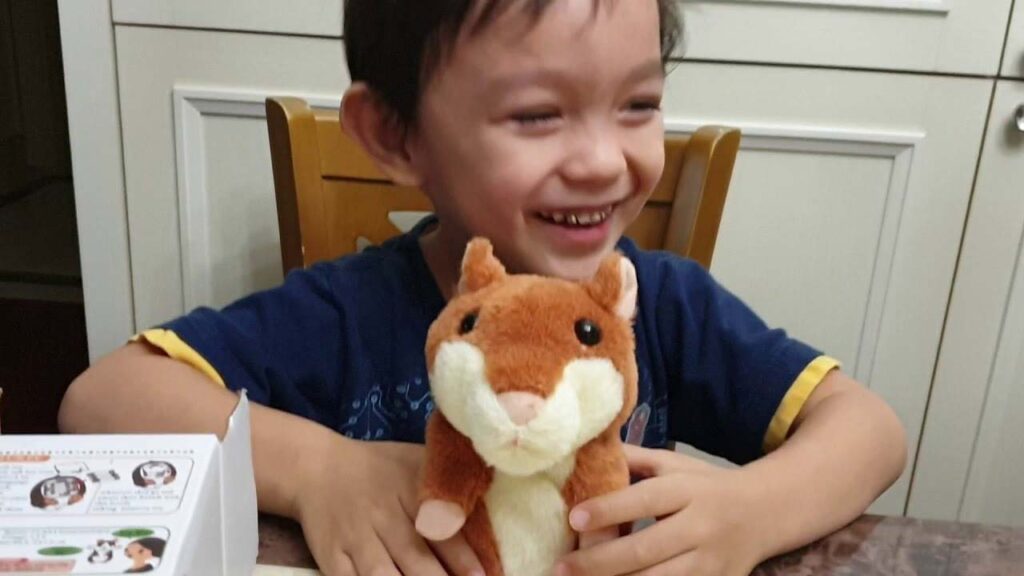
Repeat-voice plush has strong branding power because it creates a personal moment. You can keep the repeat function simple and still build a signature identity through design, materials, packaging, and user flow.
In OEM/ODM projects, customization usually includes:
- trigger location and interaction (belly, paw, ear)
- recording duration limits and playback behavior
- volume tuning (especially for gift and toddler markets)
- custom patch graphics (“Press Here,” brand icon)
- custom character design and facial style
- retail packaging (gift box, insert card, QR story page)
- market-specific warnings and battery labels
- licensed content integration (only with proper authorization)
At scale, buyers care most about repeatability: every unit should sound similar, trigger similarly, and pass the same QC checks. That requires process control, not just a good sample.
This table shows the most useful OEM customization levers for real business results:
| OEM Custom Area | What You Can Change | Why It Helps Your Brand | What I Recommend for Scale |
|---|---|---|---|
| Trigger experience | Squeeze vs press vs hidden button | Better user satisfaction | Choose the simplest action for your age group |
| Record/play flow | Hold-to-record vs press-to-toggle | Fewer user mistakes | Keep the flow intuitive for kids |
| Sound tuning | Volume + speaker orientation | Clearer repeat voice | Build speaker cavity + stable placement |
| Exterior branding | Logo label, embroidery, hangtag | More brand recall in photos | Keep branding consistent across SKUs |
| Packaging | Gift-ready box, inserts | Higher perceived value | Standardize packing to protect switches |
| QC plan | Sound test + press-cycle checks | Lower returns | Define pass/fail criteria per batch |
At Kinwin, we help buyers turn this into a scalable product system: stable module placement, controlled sound clarity through construction, compliance-aware battery compartment design, and repeatable QC steps for mass production. If you want to build a repeat-voice plush line for retail, promotions, theme parks, or brand mascots, email me at [email protected] or visit kinwintoys.com.
Conclusion
A repeat-voice plush wins when sound is clear, triggers stay consistent, and safety is designed into batteries and construction. At Kinwin, we help global buyers create branded repeat-voice plush for OEM scale with stable performance and compliance-ready design. Contact me at [email protected] or visit kinwintoys.com to discuss your next project.