Skip to content
A plush toy with a “Press Here” belly patch and a hidden voice module inside.
A repeat-voice stuffed animal looks simple from the outside, but inside it is a small system: microphone, recording chip, speaker, switch, and battery. If any part is weak, buyers feel it fast—muffled voice, random triggers in shipping, dead batteries, or safety concerns.
When I help brands develop talk-back plush for the USA and Europe, my goal is always the same: clear voice playback, stable activation, safe battery access control, and consistent assembly across every production batch. Below, I’ll explain how these toys work, which chip solutions are common, how materials affect clarity, what compliance standards matter, how battery choices impact durability, and how OEM buyers can customize repeat-voice plush for branding.
How do talking stuffed animals record and repeat user speech?
A repeat-voice plush usually follows a simple loop:
- A child presses a trigger (squeeze belly, press paw, pull tab)
- The toy “listens” using a small microphone
- The audio is saved in a chip’s memory
- The chip plays the sound back through a speaker
Most models use one of two user flows:
- “Hold to record, release to play” (easy and reliable)
- “Press once to record, press again to play” (more steps, but clearer control)
In production, the real success factor is not the electronics alone. It is how the electronics are integrated into a soft product. If the module floats inside the stuffing, the microphone position changes, sound quality drops, and the trigger becomes inconsistent. I solve this by adding a fixed internal pocket or cradle so the module always stays in the same place.
Here is a practical system map I use with buyers:
| System Part | What It Does | What Customers Notice | What I Control in OEM Production |
|---|---|---|---|
| Microphone | Captures voice | Whether recording sounds “clear” | Mic opening placement + dust protection |
| Recording/playback chip | Stores and plays audio | Delay, distortion, repeat accuracy | Chip selection + memory duration |
| Speaker | Outputs sound | Loudness and tone | Speaker direction + cavity space |
| Trigger switch | Activates recording/playback | Ease of use | Switch type + travel distance |
| Battery + compartment | Powers the module | How long it works | Battery choice + child-resistant closure |
| Inner pocket/cradle | Holds module in place | Consistency across squeezes | Stitching method + placement tolerance |
For brands, this structure gives a direct benefit: fewer returns and fewer “it stopped working” reviews. Consistency is what wins repeat orders.
Which sound chip technologies are commonly used in repeat-voice plush toys?
Repeat-voice plush usually uses one of three chip approaches:
- Dedicated voice record/playback IC modules (simple, cost-effective, short recordings)
- Microcontroller + audio codec (more flexible, better sound options)
- Programmable sound modules (audio preloaded by factory; sometimes also recordable)
For most mainstream repeat-voice plush, the market commonly uses dedicated voice record/playback chips because they are stable and easy to assemble. You may see example “record and playback” chips like ISD-series modules in hobby and module listings, which shows how common this category is for short voice recording use cases. 亞馬遜
From an OEM view, I recommend choosing technology based on what you want the toy to do:
- If you want a short, fun repeat function with low cost, a dedicated record/playback module is usually enough.
- If you want better audio quality, longer recording time, or extra functions (multiple modes, volume control, sleep mode), microcontroller-based solutions may fit better.
- If you want licensed content + repeat mode, you may need a module that supports both preloaded audio and user recordings.
Here is how I compare options for buyers:
| Chip/Module Type | Typical Recording Capability | Flexibility | Cost Level | Best For | Main Risk to Manage |
|---|---|---|---|---|---|
| Voice record/playback IC module | Short (often seconds to ~1–2 min) | Medium | Low | Simple “repeat what I say” plush | Limited sound quality if design is weak |
| Microcontroller + audio system | Medium to long | High | Medium–High | Premium plush, better voice clarity | More engineering + more testing |
| Preloaded programmable sound module | No user recording (or limited) | Medium | Medium | Branding songs, phrases, licensed lines | Less interactive if no record mode |
| Hybrid (preloaded + record) | Both | High | Medium–High | Premium interactive plush | Battery drain + complexity |
The “best” technology is the one that matches your target market and price tier. If your customer is a gift buyer, reliability and ease of use matter more than adding too many features.
How do fabric thickness and stuffing density affect voice clarity?
Many brands focus on the chip, but customers judge the product by what they hear. In plush, the body becomes part of the speaker system.
Three physical factors shape voice clarity the most:
- Fabric thickness and pile height (thick plush absorbs sound)
- Stuffing density (too tight blocks vibration; too loose causes module movement)
- Mic and speaker “breathing path” (sound needs a clean route to the outside)
If you use very thick long-pile fabric and pack stuffing tightly around the speaker, the result often sounds muffled. If you reduce stuffing too much, the speaker may sound louder, but the module can shift and the trigger becomes unstable. So I balance clarity and structure by designing a small internal “space zone” around the speaker and mic, while keeping the rest of the body properly filled.
Here is a material-and-sound guide I share with buyers:
| Design Variable | What Happens to Sound | What Customers Feel | Best Practical Fix |
|---|---|---|---|
| Thick plush fabric | More sound absorption | Muffled playback | Add a hidden speaker window layer or thinner panel |
| Long pile fabric | Less crisp voice | Softer, less clear words | Face speaker toward a flatter area |
| Very dense stuffing | Lower volume, distortion | “Blocked” sound | Create a small cavity around speaker |
| Very low stuffing | Unstable module placement | Sound changes each squeeze | Add inner pocket + support fill |
| Tight inner lining | Dampens speaker output | Lower loudness | Use breathable lining near speaker |
| Speaker facing inward | Sound trapped inside | Weak playback | Angle speaker toward surface |
Image: Inside view showing a speaker pocket, mic opening, and controlled stuffing zones.
For your buyers, the benefit is simple: clearer voice means stronger “wow moment” in stores and better unboxing reactions online. That improves conversion and reduces “sounds broken” complaints.
What safety and compliance standards apply to voice-recording plush toys?
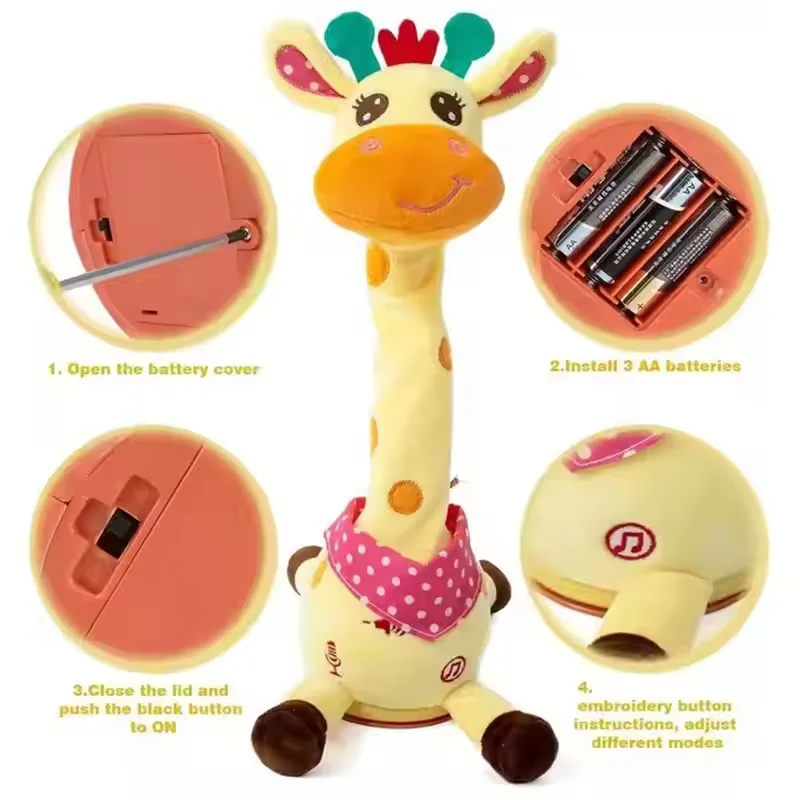
A repeat-voice plush is still a toy, but because it includes electronics and batteries, compliance planning must be more detailed than a standard soft toy.
For the USA, toy safety is strongly tied to ASTM F963. CPSC provides a reference chart showing which ASTM F963 sections may apply to different toy types, and which require third-party testing in a CPSC-accepted lab. U.S. Consumer Product Safety Commission+1 The ASTM F963 standard also includes requirements for sound-producing toys to reduce the risk of hearing damage. 意匠圖片+1 In 2024, the CPSC also issued a Federal Register rule related to mandating the ASTM F963 standard, reflecting ongoing updates and enforcement focus. 聯邦公報
For Europe, electric toy functions are commonly assessed under EN IEC 62115 for electric toy safety (battery-powered toys included). SGSCorp+1
Battery safety has become a major focus area globally, especially when button/coin batteries are used. In the US, CPSC business guidance explains that Reese’s Law led to rules for button cell and coin battery safety, incorporating ANSI/UL 4200A as a mandatory safety standard in 16 CFR Part 1263. U.S. Consumer Product Safety Commission+1
In practice, for voice-recording plush, I treat compliance as a design checklist, not just paperwork.
| Compliance Focus | Why It Matters for Repeat-Voice Plush | Common Requirements to Plan | What Buyers Gain |
|---|---|---|---|
| Mechanical safety | Seams, small parts, stuffing containment | Pull tests, seam strength | Lower recall risk |
| Electrical safety | Battery-powered function in a toy | EN IEC 62115 pathway in EU SGSCorp | Fewer overheating/short issues |
| Battery access control | Prevent child access to batteries | Button/coin battery rules (US 16 CFR 1263) eCFR | Reduced ingestion risk concerns |
| Sound safety | Avoid excessive sound output | Sound-producing toy requirements in ASTM F963 意匠圖片 | Better parent trust |
| Labeling & instructions | Correct warnings and use guidance | Battery warnings, age grading, instructions | Fewer misuse complaints |
| Chemical/material safety | Fabrics, inks, stuffing | Market-required testing set | Wider market access |
If your products sell in the USA and Europe, the best business outcome is to design for compliance early. That avoids costly redesign after samples.
How do battery systems and durability impact long-term performance?
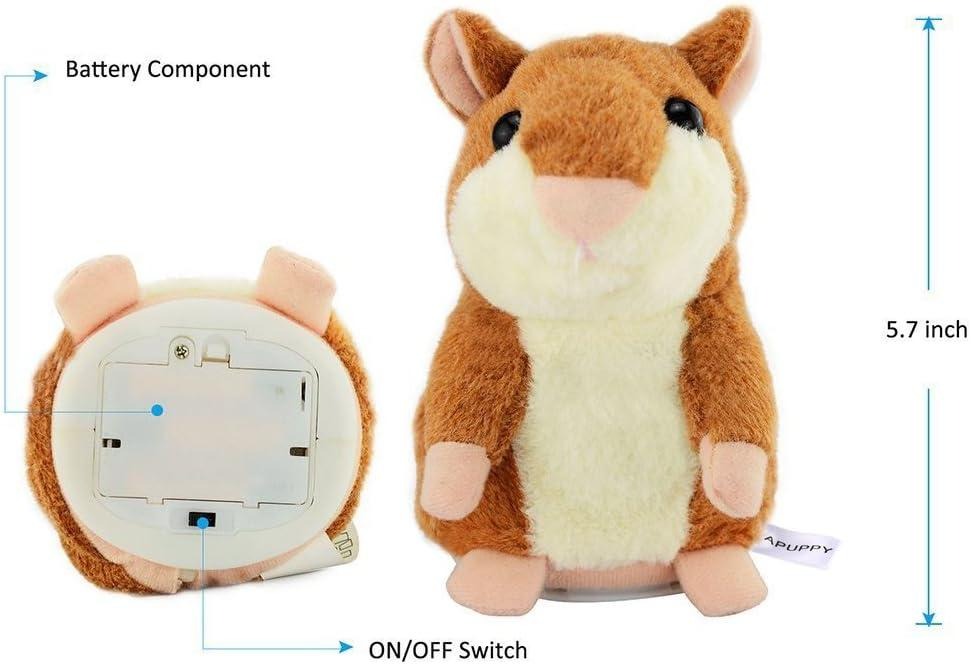
Battery choices shape three things customers care about:
- How long the toy works
- Whether it becomes a safety issue
- Whether it stays reliable after many squeezes
Repeat-voice plush often uses AAA batteries, button/coin cells, or rechargeable solutions. Each option has tradeoffs.
I often prefer AAA for larger plush because they give better power stability and longer life for voice playback. Button/coin batteries allow a smaller module size, but they require stronger child-resistant battery access control and stricter compliance planning under the current regulatory focus. U.S. Consumer Product Safety Commission+1
Durability is not only about battery type. It is also about:
- Switch cycle life (how many presses/squeezes it can take)
- Wire routing and protection
- Module fixation (no shifting)
- Corrosion resistance in battery compartment (humidity and drool exposure)
Here is a practical battery and durability table:
| Battery System | Size Impact | Typical User Benefit | Common Durability Risk | My OEM Control Method |
|---|---|---|---|---|
| AAA (alkaline) | Needs space | Longer run time, easier replacement | Larger compartment affects design | Stable compartment placement + screw closure |
| Button/coin cell | Very compact | Small plush options | Higher ingestion-risk focus eCFR | Strong child-resistant access + warning labels |
| Rechargeable pack | Medium | “Eco” message, no frequent replacement | More electronics + port risks | Extra test plan + port protection |
| Non-replaceable battery | Small | Simple user experience | Short product life if drained | Only for low-use designs |
From a buyer standpoint, the most common failure complaints are “dead on arrival” or “stopped working after a week.” To reduce that risk, I recommend:
- An on/off switch when appropriate
- Packaging that prevents accidental activation during transit
- A controlled playback length (not too long each time)
- Inner structure that keeps the switch and speaker stable
- Moisture-resistant design around the module area
If you sell online, these steps reduce returns dramatically. That is a direct profit improvement, not just a technical detail.
How can manufacturers customize repeat-voice plush toys for branding and OEM use?
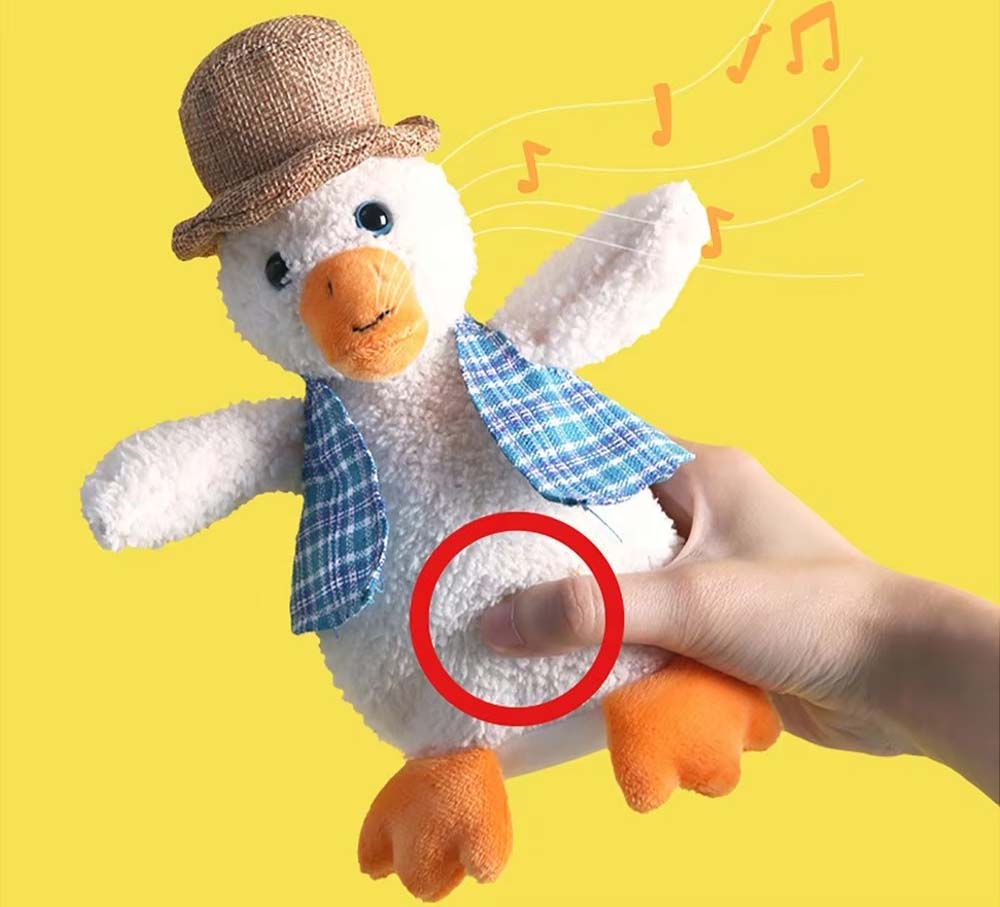
Repeat-voice plush is powerful for branding because it creates a personal moment. A child hears their own voice repeated, or hears a brand phrase, a mascot line, or a short song.
In OEM and ODM projects, customization usually includes:
- Audio behavior (repeat mode, record time limit, playback mode)
- Custom printed belly patch (“Press Here” design)
- Custom character shape and face style
- Custom packaging (gift box, insert card, QR story page)
- Custom labeling and safety messaging for your market
- Licensed audio content integration (only with proper authorization)
If you are building a brand line, I strongly recommend designing your own character and sound scripts rather than copying existing products. That protects your listings and builds long-term value.
Here is a buyer-friendly customization menu:
| OEM Custom Area | What You Can Customize | Why It Helps Your Brand | What I Need From You |
|---|---|---|---|
| Recording time | Short/medium length limits | Controls battery drain + user experience | Target age and usage scenario |
| Trigger method | Squeeze, press paw, pull tab | Better interaction feel | Where kids will naturally press |
| Voice clarity tuning | Speaker direction + cavity design | Better repeat quality | Fabric choice and plush size |
| Exterior branding | Logo label, embroidery, hangtag | Brand visibility in photos | Brand files and placement rules |
| Packaging | Gift-ready set, insert card | Higher perceived value | Sales channel requirements |
| Compliance messaging | Warnings, battery info, age guidance | Reduces misuse and returns | Target market list (US/EU/UK) |
At Kinwin, what global buyers get is a complete solution: stable sound performance, consistent plush feel, compliance-ready structure, and a production plan that can scale. That means you can launch faster, protect your reviews, and grow repeat orders without worrying that “the next batch sounds different.”
If you want to develop a repeat-voice plush line for retail, promotions, theme parks, or brand mascots, you can reach me at [email protected] or visit kinwintoys.com.
Conclusion
A repeat-voice plush succeeds when voice is clear, triggers are stable, and battery safety is designed in from day one. At Kinwin, we help global buyers develop customized talking plush solutions that meet compliance expectations and perform consistently in real markets. Contact me at [email protected] or visit kinwintoys.com to discuss your next OEM project.